When Creams Stop Working
CO2 laser resurfacing is one of the most effective ablative tools we have for wrinkles, acne scars, sun damage, and uneven texture. When topical skincare stops making a difference, CO2 removes the damaged surface and rebuilds collagen from within. At Desert Bloom Skincare in Scottsdale, Dr. Natalya Borakowski performs every CO2 laser procedure personally — with 17 years of clinical experience, an honest assessment of whether CO2 is the right tool for your skin, and clear expectations set before treatment begins.
CO2 is one option in our wider laser resurfacing program, alongside erbium laser resurfacing, CoolPeel, Elluminate Glow, and Alexandrite photofacial. Which tool fits depends on your skin type, the condition being treated, and how much downtime you can plan for — and that conversation begins at consultation.
At a Glance
- What it is
- Ablative carbon dioxide laser at 10,600 nm — vaporizes damaged epidermis and triggers collagen remodeling
- Treats
- Wrinkles, acne scars, sun damage, uneven tone and texture, age spots
- Modes offered
- Fractional CO2 and CoolPeel (Rohrer Phoenix H-Pulse). Full ablative CO2 is not offered at Desert Bloom
- Procedure time
- 30–60 minutes; topical anesthetic applied 30–60 minutes prior
- Downtime
- Fractional: 5–10 days · CoolPeel: 2–3 days
- Results
- Visible by week 3–4; final at 3–6 months; lasts 3–5 years with diligent sun protection
- Candidacy
- Fitzpatrick I–III. For Fitzpatrick IV–VI we recommend erbium or RF microneedling instead
- Cost
- See price list (fractional CO2 and CoolPeel pricing below)
What Is CO2 Laser Resurfacing?
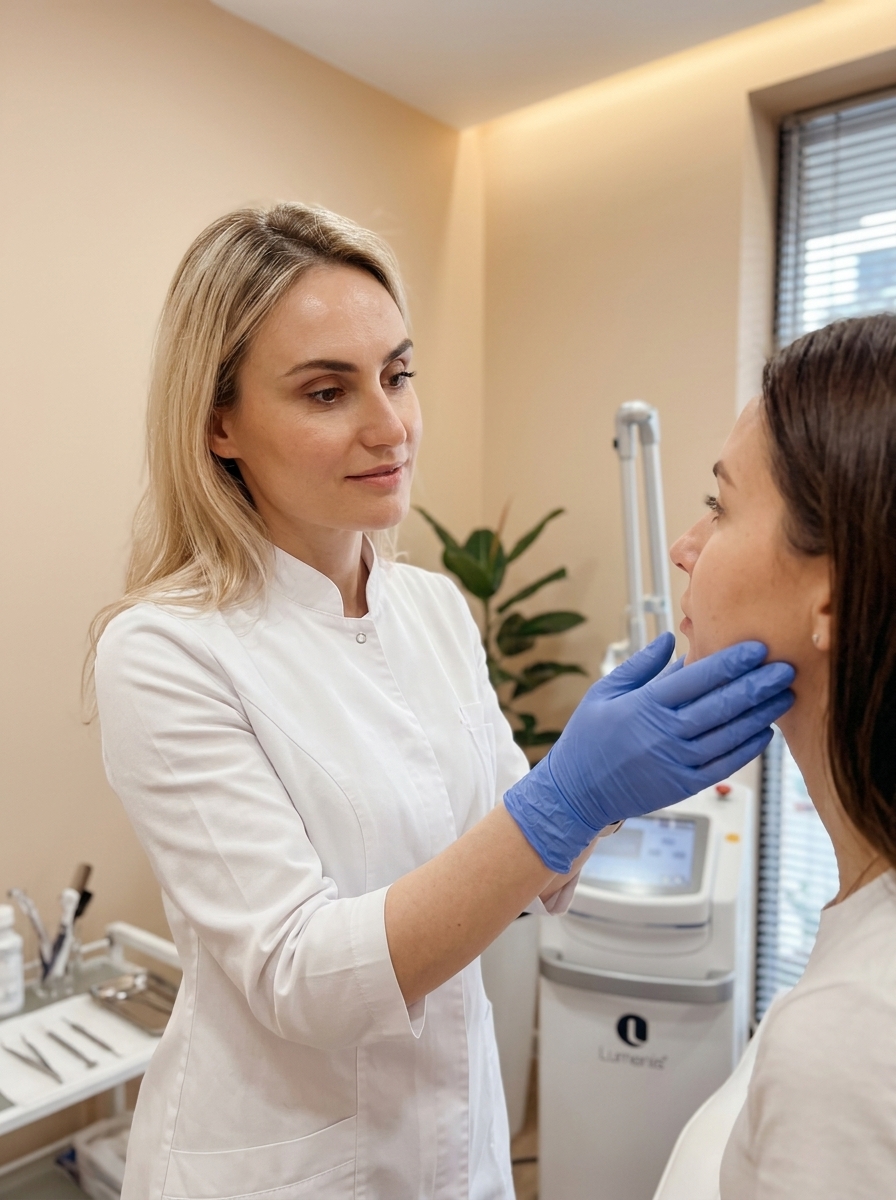
CO2 laser resurfacing is an ablative skin rejuvenation procedure that uses a carbon dioxide laser at 10,600 nm to vaporize damaged epidermis and stimulate new collagen. Each pulse removes 20–30 micrometers of tissue while creating a controlled thermal zone that triggers neocollagenesis. The 10,600 nm wavelength is preferentially absorbed by water in the skin — which is why it vaporizes tissue cleanly with minimal collateral damage and why CO2 outperforms older resurfacing tools for deep wrinkles and scarring.
Non-ablative lasers (fractional 1550 nm, long-pulsed 1064 nm) heat the dermis without removing the surface — gentler, almost no downtime, but less correction per session. Ablative CO2 removes the damaged epidermis outright, which is why results are larger and last longer. The tradeoff is real: more improvement, more recovery. For patients who want one intensive appointment that delivers visible tone and texture improvement, CO2 is the better tool — provided their skin type allows it safely. For darker skin tones, erbium laser resurfacing or RF microneedling is the safer route.
How CO2 Laser Resurfacing Works
- 1
Consultation and Fitzpatrick assessment
Your skin type is evaluated using the Fitzpatrick scale and your medical history reviewed. If you have a history of cold sores, Dr. Borakowski prescribes antiviral prophylaxis — valacyclovir 500 mg twice daily for 10 days, starting the day of treatment — regardless of how long ago your last outbreak was. This is not optional. HSV reactivation on freshly ablated skin is one of the rare complications that can cause scarring, so we prevent it.
- 2
Pre-treatment preparation
Avoid direct sun exposure for four weeks prior; tanned skin is not safe to treat. Stop retinoids 5–7 days before. If you have a history of isotretinoin (Accutane) use, a minimum 12-month washout is required at Desert Bloom. No wax, thread, or hair removal creams for two weeks. Arrive with clean skin, no makeup, no actives.
- 3
Numbing and setup
Topical anesthetic is applied 30–60 minutes before the procedure and left to absorb. Protective eye shields are placed. The treatment area is cleansed, degreased, and prepped. You will feel nothing more than pressure during application.
- 4
Laser treatment
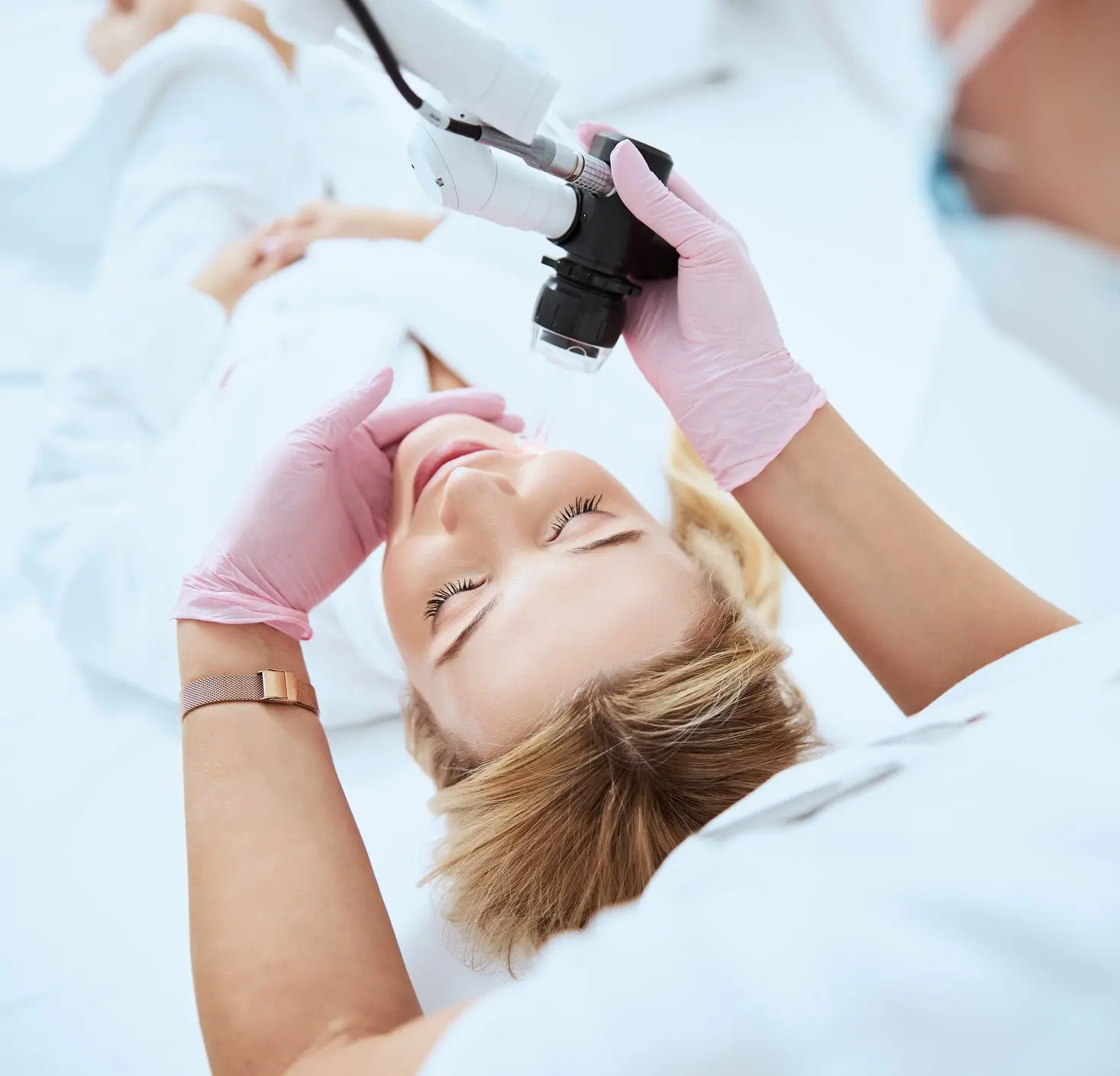
In fractional mode the handpiece delivers laser energy in a grid pattern, vaporizing micro-columns of damaged tissue while leaving intact bridges of skin to speed healing. Settings — fluence, density, pulse duration — are adjusted to your skin type and the condition being treated. A full-face treatment typically takes 30–60 minutes. Dr. Borakowski narrates each pass so you know what is happening.
- 5
Immediate post-care
Petrolatum ointment is applied immediately and continues for the first several days. The skin feels like a significant sunburn — heat, tightness, and redness are expected. You go home with a printed day-by-day recovery sheet, a medical-grade aftercare kit, and a direct number to call if anything concerns you.
Types of CO2 Laser Skin Resurfacing
CO2 laser is not a single procedure — it is a family of delivery modes that range from superficial polishing to deep correction. Three forms are most often discussed: full ablative CO2, fractional CO2, and CoolPeel. Each one hits a different balance between intensity, downtime, and the condition it is best suited for. Desert Bloom performs fractional CO2 and CoolPeel; full ablative CO2 is not offered.
Full Ablative · Fractional · CoolPeel
| Feature | Full Ablative CO2 | Fractional CO2 | CoolPeel |
|---|---|---|---|
| Coverage | 100% of surface | Micro-columns sparing tissue | Superficial fractional |
| Downtime | 2–3 weeks | 5–10 days | 2–3 days |
| Best for | Severe photoaging, typically post-facelift under sedation | Moderate wrinkles, acne scars, sun damage | Fine lines, texture, pore size, early photoaging |
| Sessions | Often 1 | 1–3 | 2–3 |
| Anesthesia | Topical + nerve blocks or sedation | Topical + nerve blocks | Topical typically sufficient |
| At Desert Bloom | Not offered | Offered | Offered |
Full Ablative CO2
- Coverage
- 100% of surface
- Downtime
- 2–3 weeks
- Best for
- Severe photoaging, typically post-facelift under sedation
- Sessions
- Often 1
- Anesthesia
- Topical + nerve blocks or sedation
- At Desert Bloom
- Not offered
Fractional CO2
- Coverage
- Micro-columns sparing tissue
- Downtime
- 5–10 days
- Best for
- Moderate wrinkles, acne scars, sun damage
- Sessions
- 1–3
- Anesthesia
- Topical + nerve blocks
- At Desert Bloom
- Offered
CoolPeel
- Coverage
- Superficial fractional
- Downtime
- 2–3 days
- Best for
- Fine lines, texture, pore size, early photoaging
- Sessions
- 2–3
- Anesthesia
- Topical typically sufficient
- At Desert Bloom
- Offered
CO2 Laser Resurfacing Recovery — Day by Day
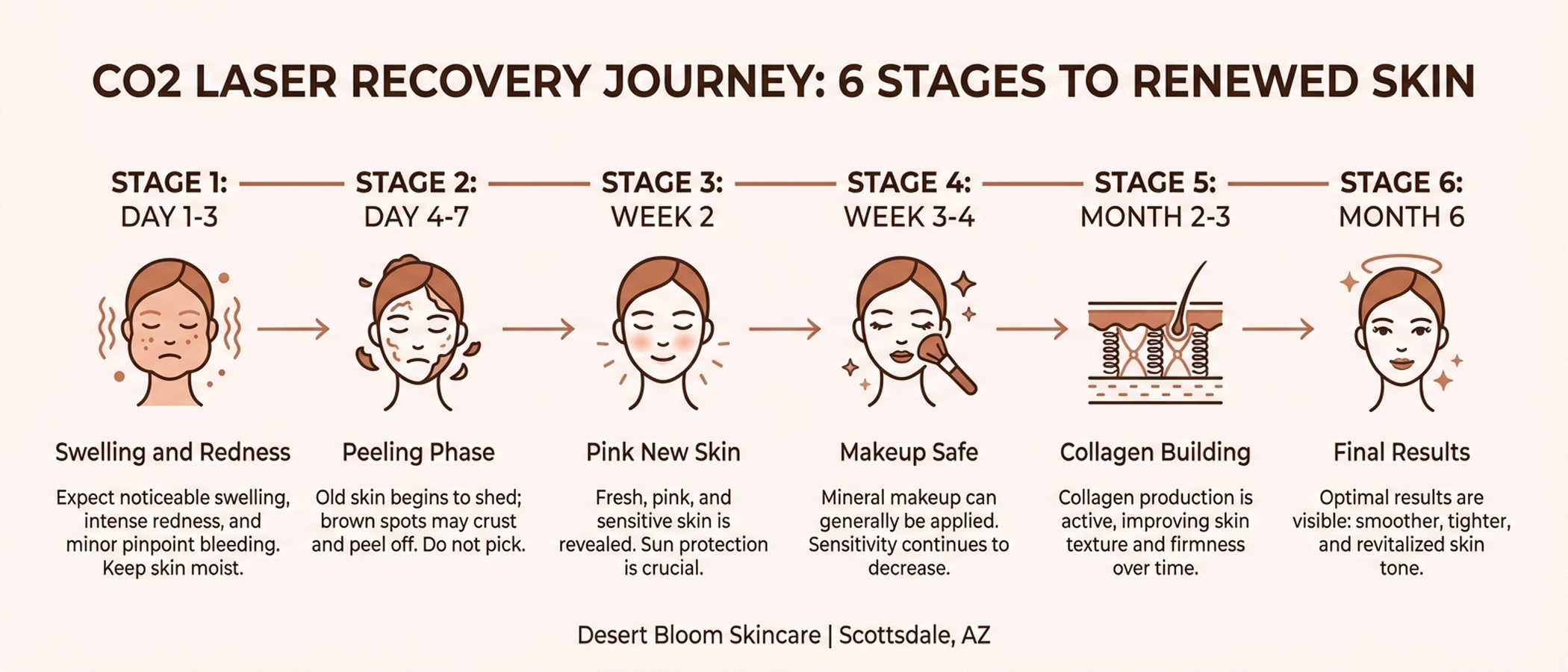
Recovery from fractional CO2 is predictable but demanding. What follows is the timeline most patients experience, assuming strict aftercare. Days three through seven look alarming — that is normal healing, not a complication. Pick up the phone if anything falls outside this pattern.
Fractional CO2 Recovery Timeline
Day 0
Hot, tight, red skin
Swelling begins within hours; the face feels like a bad sunburn. Petrolatum applied immediately; cool (not cold) compresses; rest with head elevated.
Days 1–3
Peak swelling
Especially around the eyes. Serosanguinous (clear-pink) fluid weeping; bronze/red appearance. Gentle saline rinses, petrolatum every 2–4 hours, zero sun, no bending over.
Days 3–7
Crusting and peeling
Re-epithelialization completes by day 6–7. The skin may look alarming at this stage but is healing as expected. Continue petrolatum wound care; do not pick; avoid sunscreen on raw skin until re-epithelialized.
Week 2
Manageable redness
Pink/red but safe to cover with mineral makeup; most people return to light office work. Gentle cleanser + fragrance-free moisturizer; SPF 30+ daily; no actives yet.
Weeks 3–4
Pinkness fading
Tone and texture improvement becomes visible. Cautious reintroduction of retinoids and vitamin C. Continued daily SPF 30+.
Months 1–6
Collagen remodeling
Collagen and elastin production peaks around month 3; remodeling continues up to 12 months. Final results emerge at 3–6 months. SPF 30+ daily; annual CoolPeel maintenance helps prolong results.
CoolPeel recovery is much faster: mild redness on day one, back to normal in 2–3 days. Fewer restrictions and a faster return to regular activity compared to fractional CO2.
Before-and-After Results — What to Expect
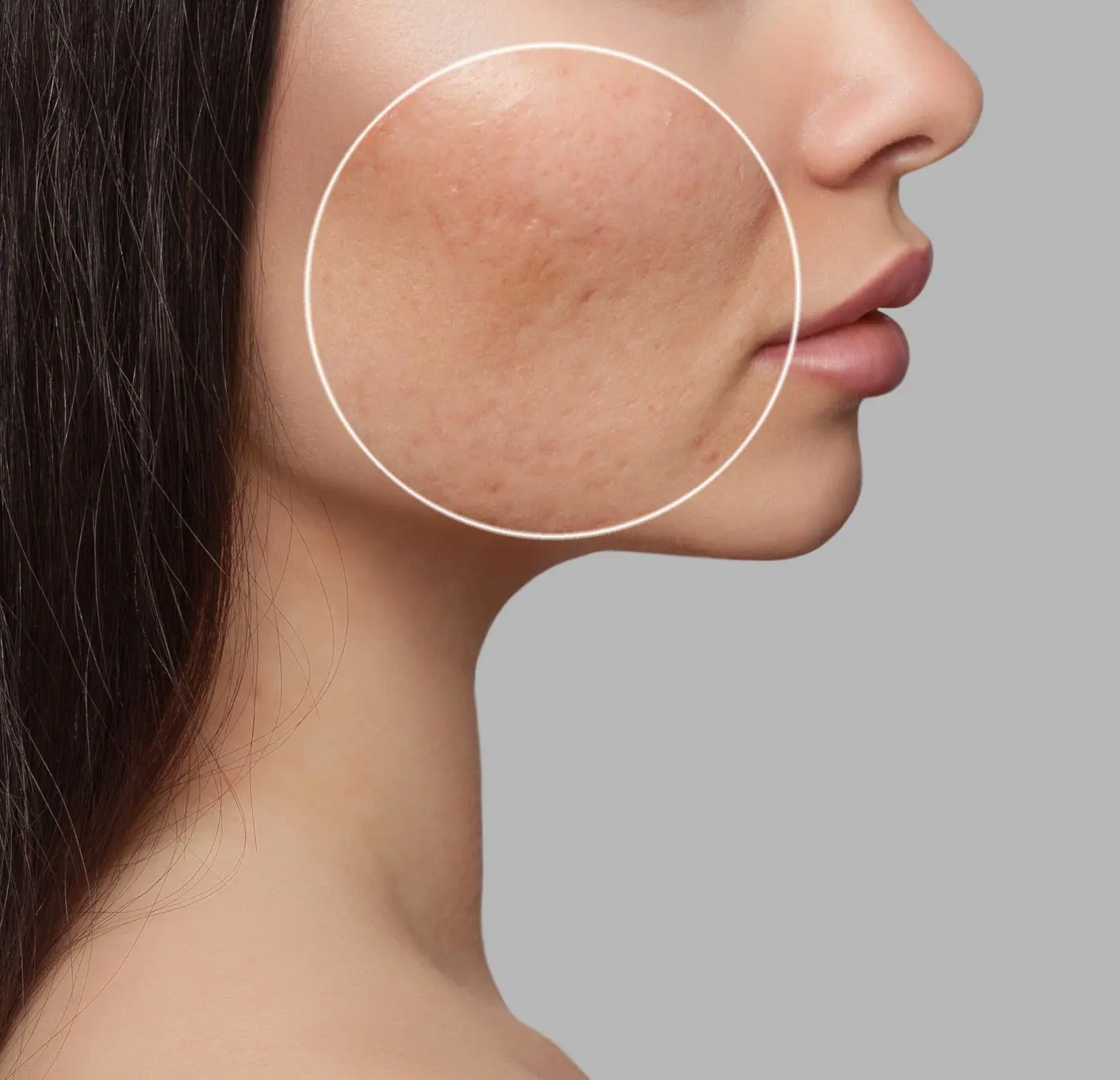
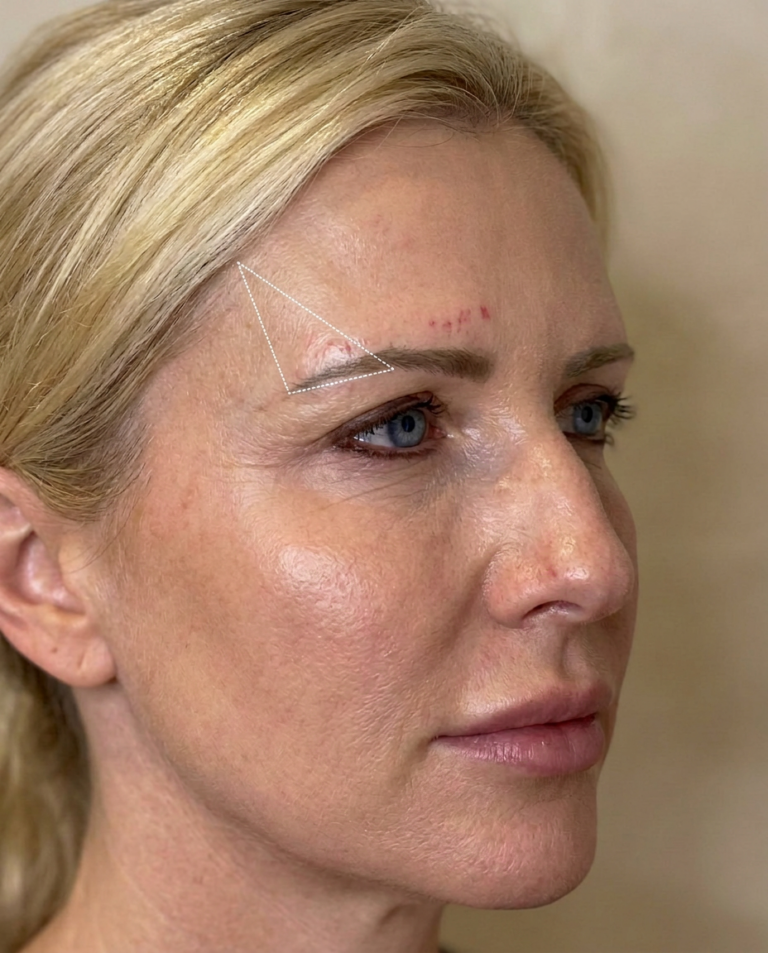
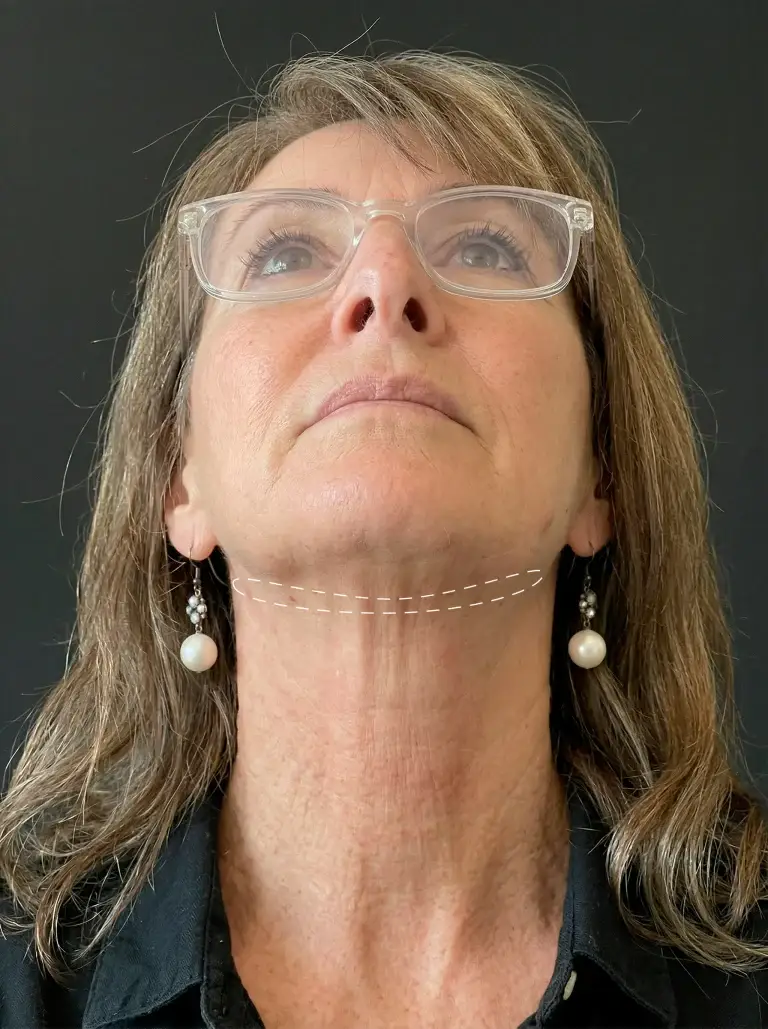
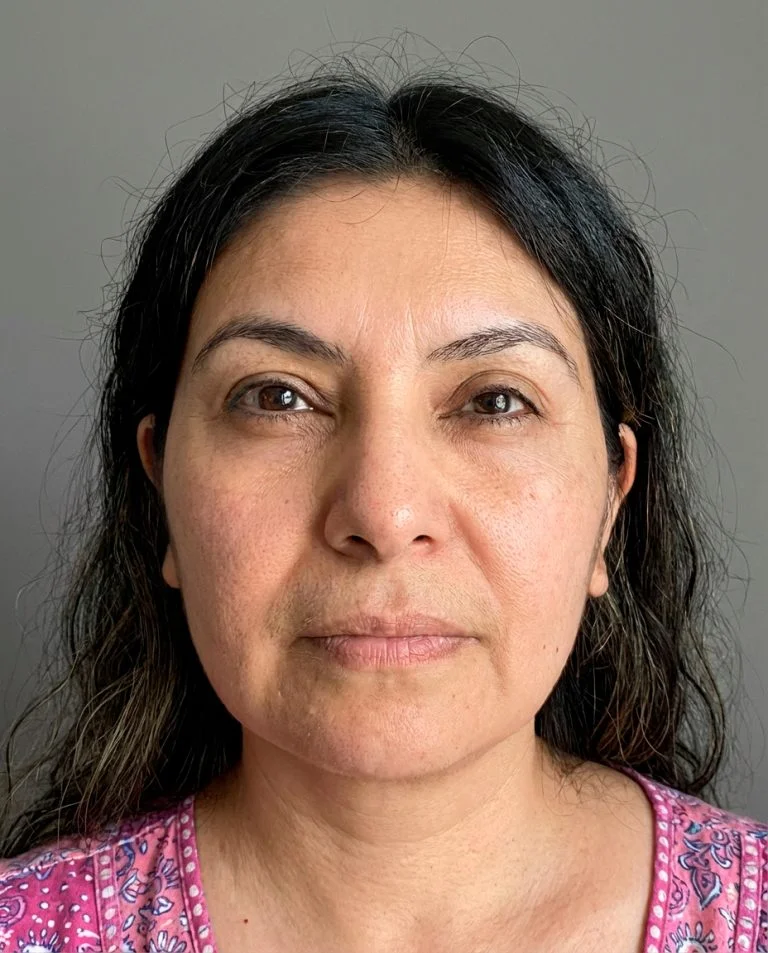
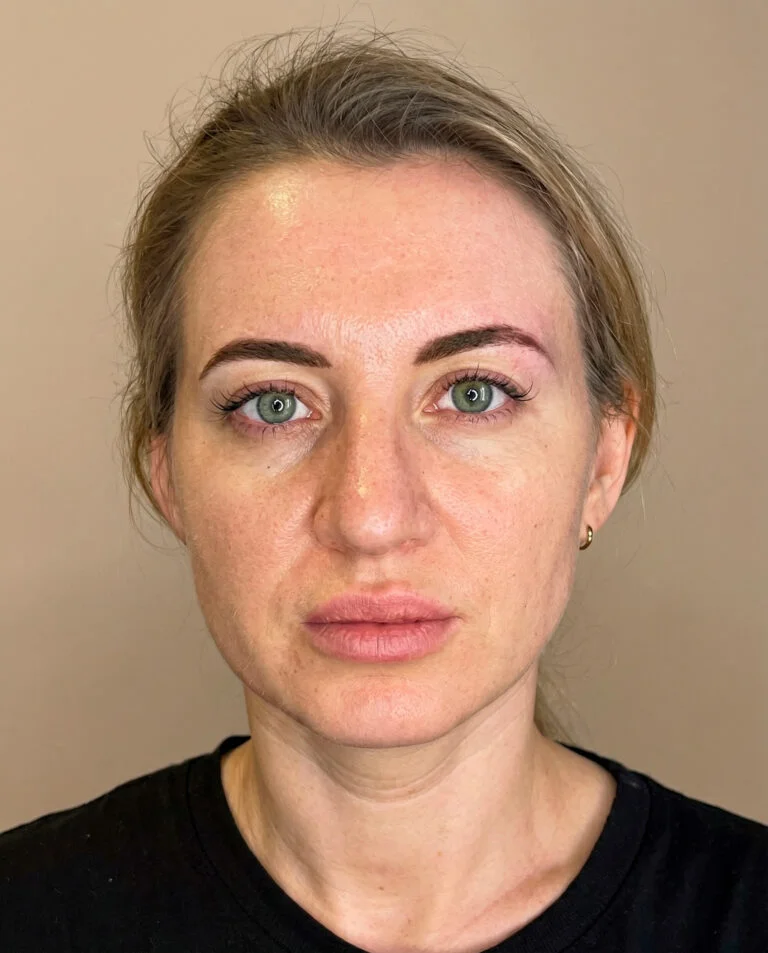
Fractional CO2 achieves 26–50% periorbital wrinkle improvement and 40–75% acne scar improvement in clinical studies. Results are generally visible by weeks 3–4 and continue improving for months as collagen remodels; the final appearance settles between months three and six. In practice, most of our patients notice the inflection point around week four — when the pinkness fades and the new skin texture becomes obvious. Results typically last 3–5 years with consistent sunscreen use; annual CoolPeel sessions help prolong them.
The peer-reviewed literature on fractional CO2 is substantial and generally consistent. Expert consensus suggests Fitzpatrick I is optimal, Fitzpatrick II is acceptable, and the ideal candidate age is 40–60. For atrophic acne scars, fractional CO2 produces 40–75% improvement on the ECCA (Echelle d’Évaluation Clinique des Cicatrices d’Acné) scale at three and six months. Long-term follow-up shows the side effect profile is predictable and improvements durable, with most patients maintaining their gains at 2+ years. CO2 is exceptional for texture, tone, wrinkles, and scarring — but it will not lift volume loss, replace filler in hollow areas, or fix dynamic wrinkles from muscle movement. Those goals require combination planning. See our before-and-after gallery for real patient outcomes.
“CO2 laser delivers some of the most significant skin improvements I see in practice — but it demands precise technique and honest patient selection. My commitment is to recommend CO2 only when it is truly the right tool, and to explain the full picture so you can make an informed decision.”
CO2 Laser Resurfacing Cost in Scottsdale

Pricing depends on the mode chosen and the number of sessions planned. Dr. Borakowski typically recommends three CoolPeel sessions spaced four weeks apart with annual maintenance, or a single fractional CO2 session every one to two years. The national average for fractional CO2 is around $3,169 per session; CoolPeel is significantly more affordable. Financing is available through Affirm, Cherry, and CareCredit. Consultations are complimentary.
Pricing
- CO2 resurfacing$1500
CO2 Combination Treatments
CO2 is often most powerful when combined thoughtfully with other modalities — and timing matters for every combination. These are the pairings Dr. Borakowski uses most often in practice.
Texture + firmness
CO2 + RF Microneedling
RF microneedling performed first, followed by laser, for deep and superficial remodeling in the same treatment cycle. Dr. Borakowski’s most-recommended pairing for moderate photoaging with textural irregularity. See RF microneedling.
Pigment + tone
CO2 + Alexandrite Photofacial
Addresses pigment and vascular components alongside textural correction. Our photofacial uses Quanta EVO Alexandrite 755 nm — not IPL — for cleaner pigment targeting with less downtime. See photofacial.
Dynamic lines
CO2 + Neuromodulators
Botox and CO2 should be scheduled at least two weeks apart. Neuromodulators can be performed before CO2 to reduce dynamic movement during healing. Sequence is planned at consultation. See Botox.
Maintenance
CO2 + Chemical Peels
For lighter resurfacing with less recovery, custom chemical peels offer an alternative that can be performed more frequently and combined with a laser maintenance schedule. See custom chemical peels.
Glow between sessions
CO2 + Elluminate Mini
Elluminate Mini maintains collagen stimulation between CO2 sessions — a no-downtime glow treatment that keeps skin healthy and radiant while allowing full recovery from resurfacing. See Elluminate Mini.
Why Choose Desert Bloom for CO2 Laser Resurfacing

CO2 is a laser where technique determines outcome. Settings that work for Fitzpatrick II would be unsafe for Fitzpatrick III; the difference between a clean result and months of pigment correction is often a matter of fluence selection and aftercare discipline. Dr. Borakowski performs every CO2 procedure personally — not an aesthetician, not a technician — and adjusts settings to your skin’s needs, not a fixed protocol.
Dr. Natalya Borakowski, NMD is a naturopathic physician, IMCAS speaker, and educator with 17 years in aesthetic medicine. Desert Bloom is a clinical-grade practice, not a med-spa — which means honest assessment over upsell. If CO2 is not your safest option (because of skin tone, health history, or goals), we will say so and recommend what is right for you. Patients who come to us for a second opinion frequently tell us that no one took the time to walk through the benefits and risks clearly before.
Frequently Asked Questions About CO2 Laser Resurfacing
What is fractional CO2 — and how is it different from full ablative CO2?
Why is Fitzpatrick IV–VI excluded from CO2 at Desert Bloom?
Why does Desert Bloom prescribe valacyclovir before treatment?
What is the difference between CoolPeel and fractional CO2?
Why is the isotretinoin (Accutane) washout 12 months?
Why doesn't Desert Bloom perform CO2 + PRP?
Medically reviewed by
Founder, Desert Bloom Skincare · 17 Years Experience
References
- 1.
Tajirian AL, Goldberg DJ. Fractional ablative laser skin resurfacing: a review. Journal of Cosmetic and Laser Therapy; 2011;13(6):262-264.
DOI: 10.3109/14764172.2011.630089
Foundational review of fractional ablative resurfacing — mechanism, indications, and recovery profile.
- 2.
Manuskiatti W, Fitzpatrick RE, Goldman MP. Long-term effectiveness and side effects of carbon dioxide laser resurfacing for photoaged facial skin. Journal of the American Academy of Dermatology; 1999;40(3):401-411.
DOI: 10.1016/S0190-9622(99)70489-5
Large-cohort long-term safety and durability data underlying current candidacy and aftercare standards.
- 3.
Beleznay K, Carruthers JDA, Humphrey S, Jones D. Avoiding and treating blindness from fillers: a review of the world literature. Dermatologic Surgery; 2015;41(10):1097-1117.
DOI: 10.1097/DSS.0000000000000486
Cited for vascular-safety framing carried across our laser and injectable consent protocols.
Individual results may vary. CO2 laser resurfacing is a medical procedure with risks including infection, scarring, and pigmentation changes. FDA-cleared devices are used per Dr. Borakowski’s clinical judgment. A consultation determines individual suitability. All laser procedures at Desert Bloom Skincare are performed by Dr. Natalya Borakowski, NMD. Last updated: June 2026.