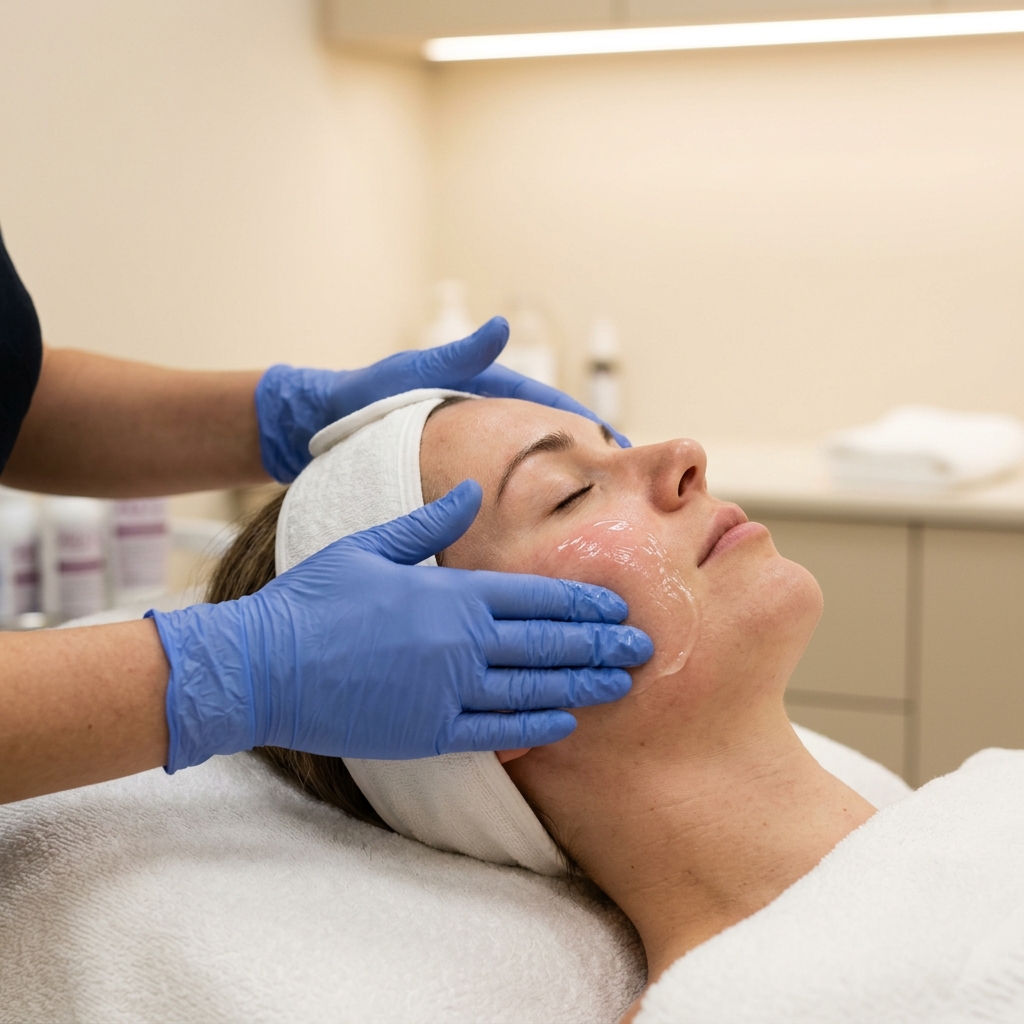
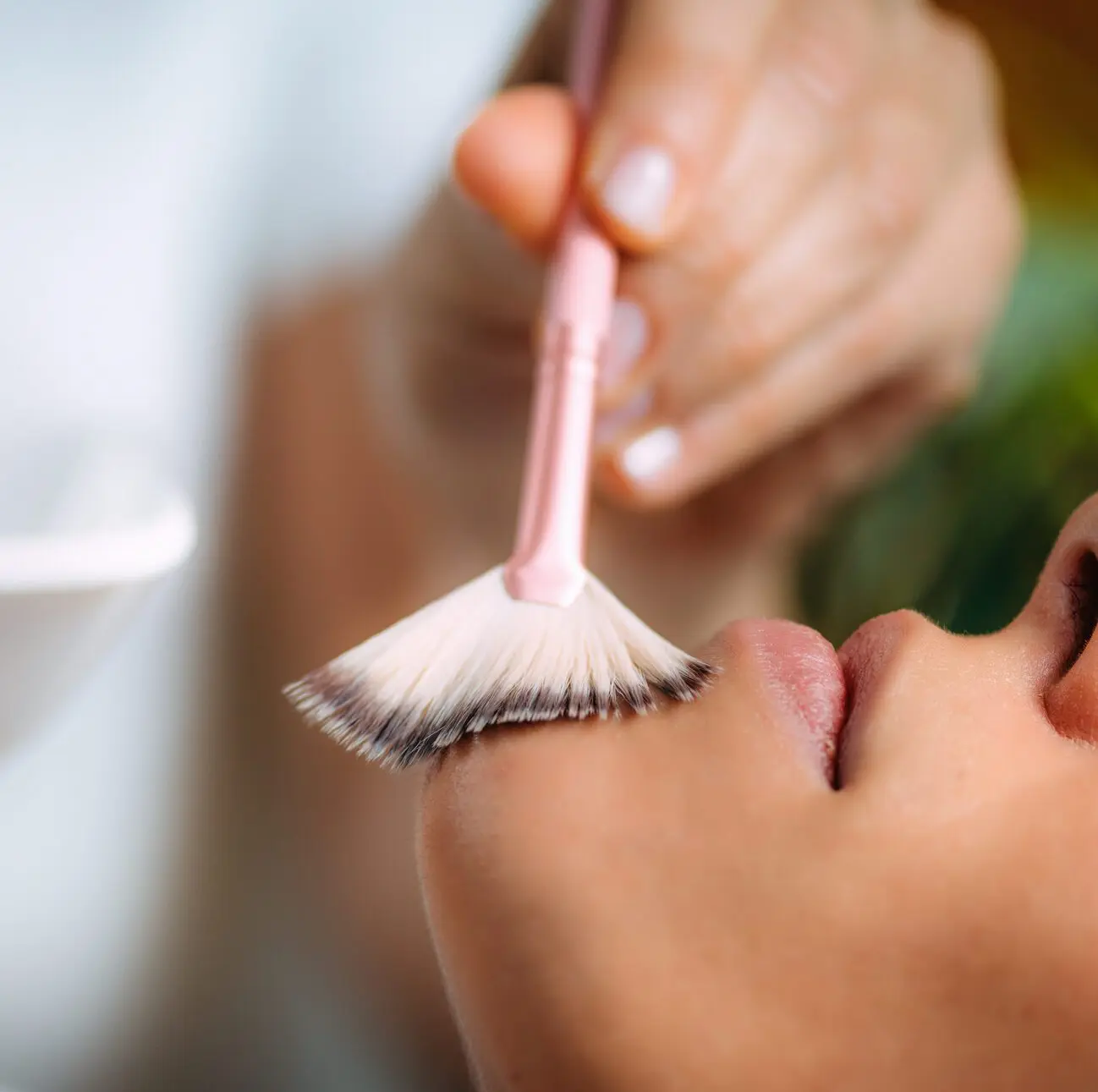
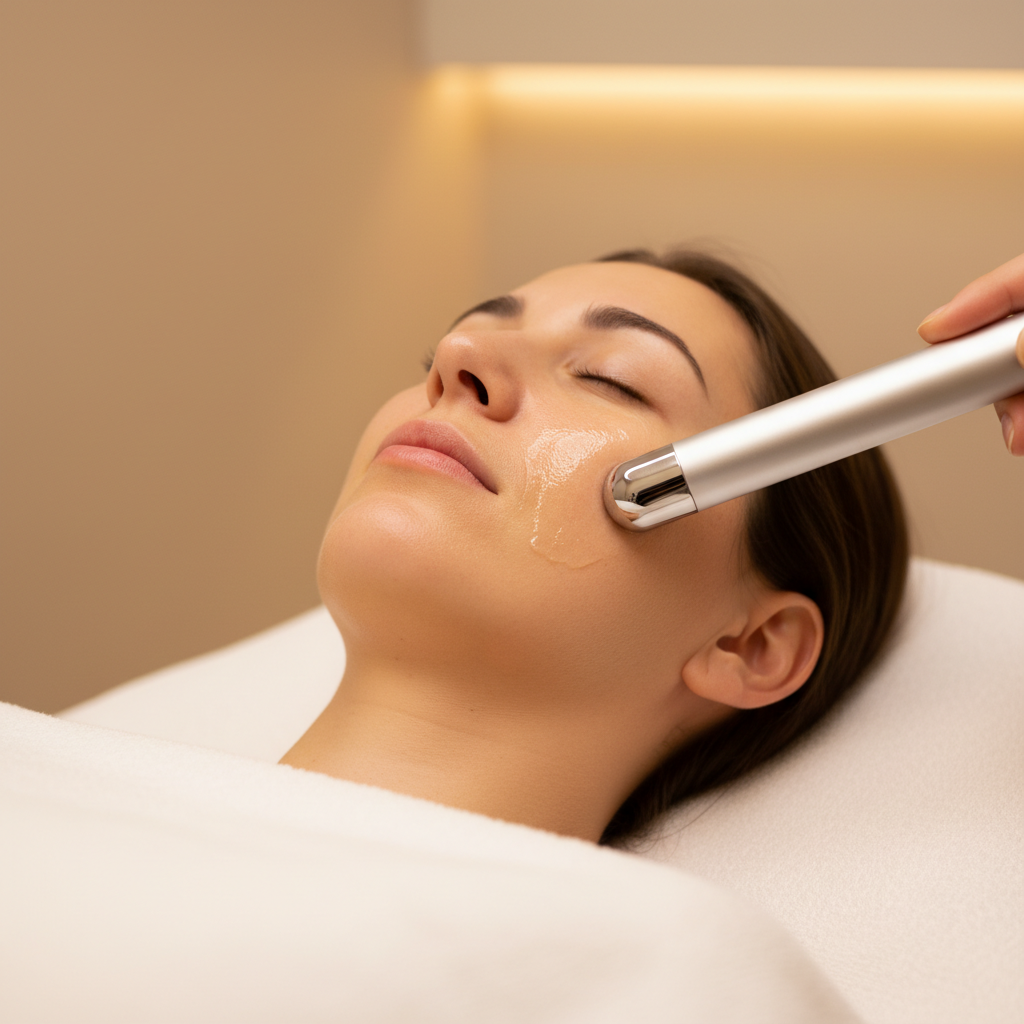
Hyperpigmentation treatment in Scottsdale is rarely one-size-fits-all — dark spots on face, melasma patches, sun-driven discoloration, and post-acne marks all respond to different wavelengths and different active ingredients. At Desert Bloom, we route each patient to one of four in-clinic response categories: laser (Alexandrite 755 nm for Fitzpatrick I–III), multi-wavelength resurfacing for mixed pigment and texture concerns (Quanta EVO platform), biorevitalization and non-laser correction (PRX-T33, Dermaquest peels, iontophoresis — first choice for Fitzpatrick IV–VI pigment), and chemical or surface renewal (peels, HydraFacial, iontophoresis, dermaplaning). The right route depends on pigment type and Fitzpatrick skin tone. The consultation confirms the pattern before any device or peel is chosen — this is not something patients need to self-diagnose.
Hyperpigmentation treatments are part of our broader laser and facials families at Desert Bloom.
Scope. 8 in-clinic hyperpigmentation treatment options across 4 categories — laser and light, biorevitalization, chemical and manual resurfacing, and surface maintenance. Starting at $175 for surface peels and facials; laser series range higher depending on pigment pattern. See price-list for full pricing.
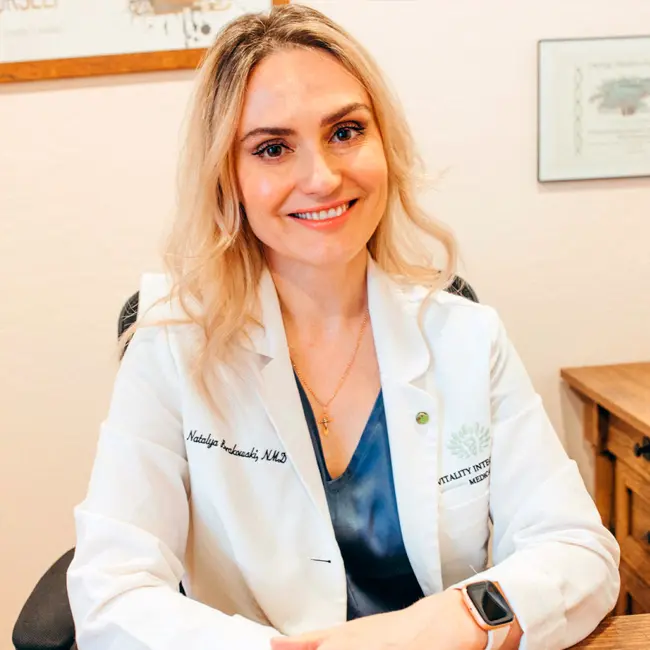
Provider & candidacy. Dr. Borakowski selects the treatment after in-person assessment. Wavelength is gated by Fitzpatrick type — Alexandrite 755 nm for Fitzpatrick I–III only; non-laser routes (PRX-T33, Dermaquest peels, iontophoresis) are first choice for Fitzpatrick IV–VI pigment and for melasma-pattern pigment at any skin tone. Pigment type is diagnosed at consultation — Wood’s lamp used when the pattern is unclear. Heat-based lasers are contraindicated for melasma.
Downtime & how to start. Downtime ranges from none (HydraFacial, dermaplaning, iontophoresis) to 5–7 days for Elluminate Glow. Arizona UV is year-round; a maintenance cadence is built into every corrective plan. Book a consultation — patients do not need to self-diagnose their Fitzpatrick type or pigment pattern before their first visit.
Hyperpigmentation occurs when melanocyte cells in the skin produce more melanin than usual, leading to discoloration — it shows up as discrete brown sun spots and age spots (also called liver spots or solar lentigines), symmetrical melasma patches, post inflammatory hyperpigmentation from acne scars, and broad uneven skin tone without clear borders.
Melasma, a type of hyperpigmentation, is often triggered by hormonal fluctuations and is most commonly seen in women. Common causes of hyperpigmentation include sun exposure, genetics, hormonal changes, and past skin inflammation or skin injury, including acne, which can leave extra melanin behind after the original irritation resolves. Each pattern routes to a different treatment — Photo Facial for discrete sun spots on lighter skin, iontophoresis or PRX-T33 for melasma-adjacent or hormonal pigment, chemical peels for PIH. Darker skin types can develop more stubborn gray-brown patches from the same sun damage that leaves lighter skin with simple freckles, which is why the treating device has to match the tone.

Not all dark spots are the same. Each type responds differently, which is why accurate identification matters before any treatment is recommended.
| Your pigment situation | Fitzpatrick | Primary route | Combine with |
|---|---|---|---|
| Discrete brown sun spots or age spots | I–III | Photo Facial | Custom chemical peel between sessions |
| Sun and age spots on medium-to-deep skin tones | IV–VI | PRX-T33 (Unicorn Facial) | Dermaquest peels + Iontophoresis |
| Melasma-pattern (bilateral, hormonal) — non-heat only | All, more common II–VI | Iontophoresis facial + Unicorn Facial | Custom chemical peel under supervision |
| Mixed pigment plus visible texture or fine lines | II–IV | Elluminate Glow | Unicorn Facial as follow-on |
| Post inflammatory hyperpigmentation from acne | All | Custom chemical peel or Unicorn Facial | Dermaplaning surface prep |
| Dull, uneven skin tone without discrete spots | All | HydraFacial or Dermaplaning | Iontophoresis facial |
A dedicated Melasma page is live. Melasma patients book a consultation and are routed through the non-heat column above — heat-based lasers can worsen melasma, so Photo Facial and Elluminate Glow are not used for that pattern at Desert Bloom.
Four common patient situations — each maps to a different treatment pathway.
Alexandrite 755 nm (Photo Facial) is contraindicated for Fitzpatrick IV–VI skin. The shorter wavelength has high affinity for epidermal melanin — using it on darker skin tones risks causing new post-inflammatory hyperpigmentation rather than clearing existing spots.
For pigment in Fitzpatrick IV–VI, the correct path is non-laser: PRX-T33 (Unicorn Facial) as first-line, followed by Dermaquest chemical peels and iontophoresis with brightening actives. Nd:YAG 1064 nm (Elluminate Mini) is a vascular tool at Desert Bloom — for redness and rosacea — not for pigment correction.
Darker skin is not harder to treat; it simply requires stricter wavelength selection and more conservative pacing. Darker skin types — Fitzpatrick IV through VI — carry higher baseline melanin, which means the same wavelength that clears a sun spot on fair skin can trigger new post inflammatory hyperpigmentation on deeper skin. At Desert Bloom, non-laser routes — iontophoresis, PRX-T33, and carefully selected Dermaquest chemical peels — are the first choice for pigment in Fitzpatrick IV–VI, and also become the first choice for melasma-pattern pigment on any Fitzpatrick type. A test spot is performed before any full-face laser treatment on Fitzpatrick IV–VI. Dr. Borakowski selects the approach after in-person assessment — patients do not need to self-diagnose their Fitzpatrick type.
Treating hyperpigmentation often benefits from stacking modalities — pigment in the dermis, epidermis, and stratum corneum responds to different tools, and a single device rarely clears all three at once. The three combinations below are the patterns we schedule most often:
Each pattern is built case-by-case — the combination is not a package, it is a scheduling pattern your consultation assigns.

“I select the device after I see how your melanin is distributed — surface, dermal, or both. The treatment that clears your neighbor’s spots may be the wrong treatment for yours.”
Book a 30-minute consultation with Dr. Borakowski. We will map your pigment pattern, confirm your Fitzpatrick type, and build a treatment series you can actually follow through on.
We treat all Fitzpatrick skin types. No generic protocols — a skin assessment first, then a recommendation.
Hyperpigmentation treatments are part of our broader laser and facials treatment families.
Medical disclaimer: Information on this page is educational and does not replace in-person evaluation. Individual results vary. Hyperpigmentation treatments described here are cosmetic — if your pigmentation is changing quickly, has irregular borders, bleeds, or looks atypical, consult a dermatologist before any cosmetic procedure. Device use and pricing current as of 2026-04-28.
Content medically reviewed by Dr. Natalya Borakowski, NMD. Last updated: April 2026.
Desert Bloom Skincare Center offers personalized skincare consultation to help you achieve a flawless and radiant complexion. Book your appointment today and let our expert team of skincare professionals address your specific concerns and help you reach your skincare goals.
Phone:(480) 567-8180
E-mail:info@desertbloomskincare.com
Get Directions →Desert Bloom Skincare is conveniently located in the Shea Corridor of North Scottsdale, within Edwards Professional Park I — minutes from HonorHealth Scottsdale Shea Medical Center and the Mayo Clinic Scottsdale Campus.
We proudly provide expert non-surgical rhinoplasty and PDO thread lifts to patients across the Southwest: