Acne Scars
Acne scars — including ice pick, boxcar, and rolling types — form when severe breakouts damage the deeper layers of skin. Professional treatments like RF microneedling, laser resurfacing, and collagen-stimulating injectables can significantly improve texture and tone.
See all treatments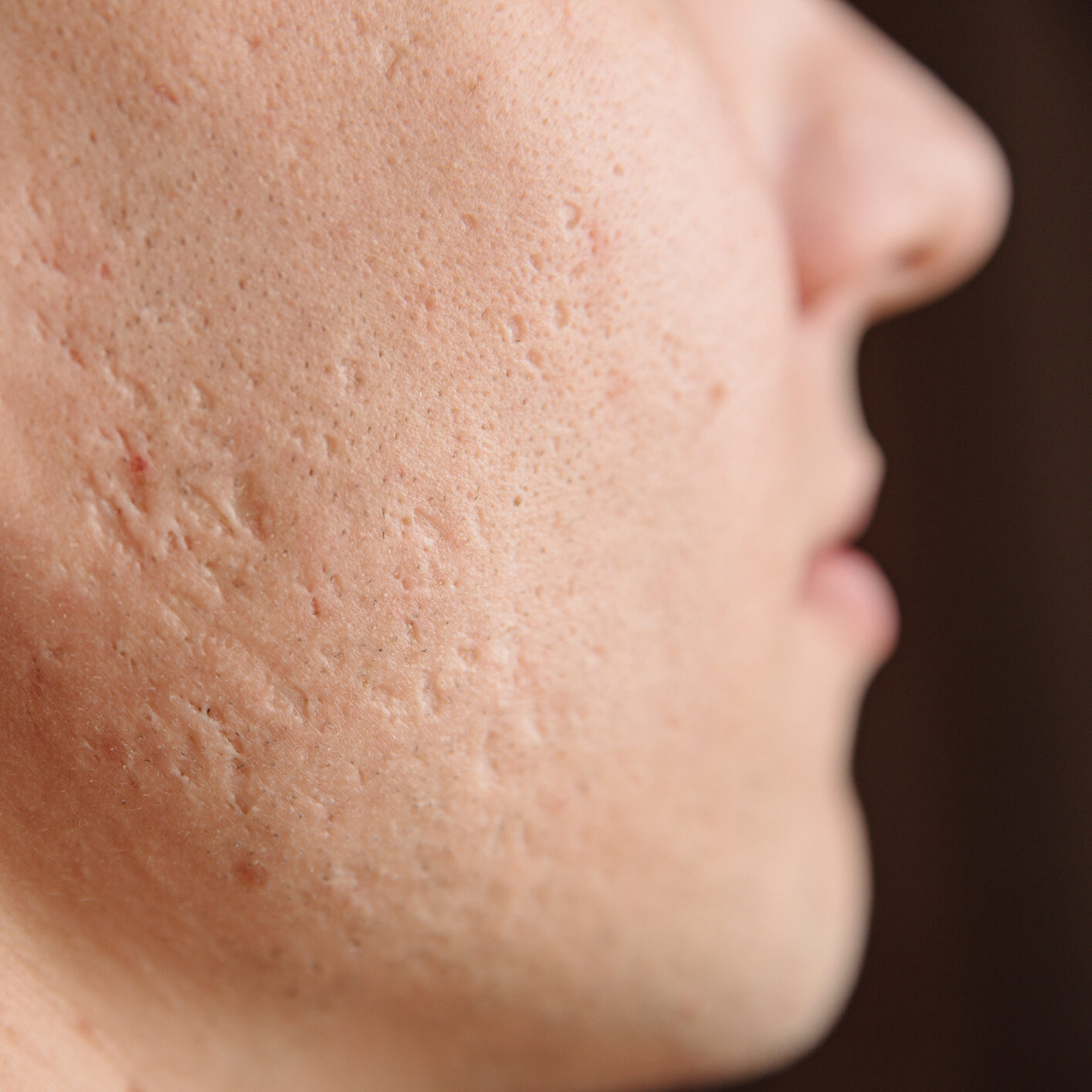
Ice pick, rolling, boxcar, and PIH — physician-led acne scar matching and treatment routing in Scottsdale.
Find Your Treatment
The Scars That Stay After Acne Clears
Acne breakouts heal. Acne scars often do not — not on their own, and not with the same timeline. Ice pick scars, rolling depressions, and boxcar pits are structural changes in the dermis: the collagen-rebuilding process after severe inflammation produced either too little (leaving a pit) or too much (leaving a raised mark). Surface skincare cannot reach them. The wrong treatment — ablative laser on darker skin, for example — can create a new color problem on top of a texture problem. Getting this right starts with correctly classifying what you actually have.
At Desert Bloom, Dr. Natalya Borakowski, NMD distinguishes between true atrophic scars (structural, requiring collagen remodeling) and post-inflammatory hyperpigmentation — PIH — which is a pigment response, not a textural defect. Both commonly follow acne, but they require completely different treatment paths. She assesses scar sub-type, Fitzpatrick skin type, scar age, and whether active acne is still contributing before building any plan.
Scars from surgery, trauma, or burns belong on the Scars hub. For active breakouts still occurring, see Acne. Color-only marks without any textural component fall under Hyperpigmentation.
At a Glance
Scope. Five primary treatment routes cover most acne scar presentations at Desert Bloom: RF Microneedling (Virtue RF — first-line for rolling and boxcar, safe across all Fitzpatrick types), CO2 Laser (deep ice pick and severe boxcar, Fitz I–III only), Microneedling with PRP (newer or mild scars, bridging), Bellafill PMMA filler (FDA-approved for atrophic acne scars — distensible boxcar and rolling that haven’t fully responded to energy devices), and Custom Chemical Peel (PIH, flat discoloration). Subcision for tethered rolling scars is a specialist add-on discussed at consultation.
Provider & candidacy. Dr. Natalya Borakowski, NMD oversees all acne scar planning. RF Microneedling is safe across Fitzpatrick I–VI — including skin tones where ablative laser carries meaningful PIH risk. CO2 and Erbium laser are reserved for Fitzpatrick I–III. For Fitzpatrick IV–VI patients with post-inflammatory hyperpigmentation, the non-laser brightening route (PRX-T33, Dermaquest peels, iontophoresis) is the correct path. Active acne should be controlled before starting scar treatment.
Downtime & how to start. Microneedling with PRP and chemical peel: minimal. RF Microneedling: 24–48 hours redness. Erbium: 3–7 days. CO2 laser: 7–14 days. Bellafill: minimal (injectable, bruising possible). A consultation with Dr. B maps scar sub-type, skin tone, and readiness before any treatment series is scheduled — there is no universal acne scar protocol.
The Four Acne Scar Types
Not all acne scars are the same — and treating the wrong type with the wrong method produces worse results, not better ones. Acne scarring falls into four clinical categories, each defined by how the skin responded to inflammatory damage during the breakout. The first step at a Desert Bloom consultation is identifying which type (or combination of types) is present, because that classification determines the entire treatment plan.
Ice Pick Scars
Narrow, deep channels extending well into the dermis — the result of a hair follicle or cyst rupturing and destroying tissue straight down. The opening at the surface is small but the depth makes ice pick scars among the hardest acne scars to treat. Most resurfacing modalities cannot reach the full depth of the damage in a single session. The TCA CROSS technique (focal high-concentration acid applied precisely into the channel) is one of the few approaches that specifically targets this morphology.
Route to: RF Microneedling series (all Fitz) + TCA CROSS or CO2 for deepest channels (Fitz I–III)Rolling Scars
Wide, shallow to moderate depressions with sloping edges — not sharply defined — that give the skin a wave-like, undulating appearance. Rolling scars form when fibrous tethering bands develop under the skin surface, anchoring the dermis downward. The surface is not missing collagen so much as being pulled down from below. This means that while collagen remodeling helps, the most complete improvement often requires releasing the subdermal bands through subcision (a needle technique that cuts the tethering fibers) before or alongside energy treatment.
Route to: RF Microneedling — all Fitz (first-line); subcision consult for tethered rolling scarsBoxcar Scars
Round or oval depressions with sharply defined vertical walls and a flat base — like a box pressed into the skin. Depth varies from shallow (mostly epidermal) to deep (extending into the mid-dermis). The most clinically important distinction for boxcar scars is whether they are distensible: if the base of the scar rises when the surrounding skin is stretched, the depression is primarily a volume deficit rather than a surface texture problem. Distensible boxcars are excellent candidates for Bellafill (PMMA filler, FDA-approved for atrophic acne scars), which fills the deficit immediately while stimulating long-term collagen. Non-distensible boxcars need resurfacing.
Route to: Bellafill for distensible; RF Microneedling → CO2/Erbium for non-distensible (Fitz I–III)PIH — Post-Inflammatory Hyperpigmentation
Post-inflammatory hyperpigmentation is not a scar in the structural sense — it is a pigment response. The melanocytes over-produce melanin in response to acne inflammation, leaving a flat brown or tan mark on the surface. The skin beneath is smooth; there is no collagen deficit or depth to treat. PIH fades on its own over 3–24 months, faster with targeted brightening treatment. This is the most frequent source of patient confusion: a flat dark mark after a pimple is often called a “scar” but is actually PIH — and the treatment path diverges completely from atrophic scar treatment.
Route to: Chemical Peel + brightening topicals (all Fitz) — PRX-T33 / Dermaquest for Fitz IV–VI; NO ablative laserPIH vs. Atrophic Scars — Two Different Problems
The most common error in acne scar treatment — from patients and providers alike — is treating every dark or imperfect mark after acne as the same problem. PIH (post-inflammatory hyperpigmentation) is a color problem: the skin surface is flat, smooth, and structurally intact, but the melanocytes misfired and left a brown or red mark. An atrophic scar is a structural deficit: the dermis lost collagen and the surface is pitted, depressed, or uneven in texture. These two conditions often occur at the same site after a severe breakout, which is where the confusion compounds — a patient can have both a pitted boxcar scar and overlying PIH discoloration in the same spot.
The treatment path splits completely at this fork. PIH responds to brightening chemistry — chemical peels with alpha hydroxy acids or mandelic acid, lightening serums, PRX-T33 and Dermaquest peel protocols for darker skin tones. For Fitzpatrick IV–VI patients with PIH, ablative laser and IPL are contraindicated: they add thermal or light-based inflammation to already-reactive melanocytes and can worsen the hyperpigmentation significantly. The non-laser brightening route is both safer and more effective for this presentation. Atrophic scars, by contrast, need collagen remodeling — RF Microneedling, Erbium, CO2, or Bellafill filler. No amount of brightening treatment will fill a pitted depression. When both co-exist, the atrophic scar treatment usually leads; collagen remodeling often improves the overlying PIH as a secondary benefit, and any remaining discoloration is addressed with a peel series afterward.
PIH — Pigment / Color Route
Flat surface, no pit or texture. The problem is in the epidermis — pigment chemistry, not collagen architecture. Do not use ablative laser on Fitzpatrick IV–VI for this presentation.
Atrophic Scar — Texture / Structure Route
Pitted, depressed, or volume-deficit surface. The dermis lost collagen. Treatment must reach and remodel the structural deficit — brightening peels do not.
Treatment Options for Acne Scars at Desert Bloom
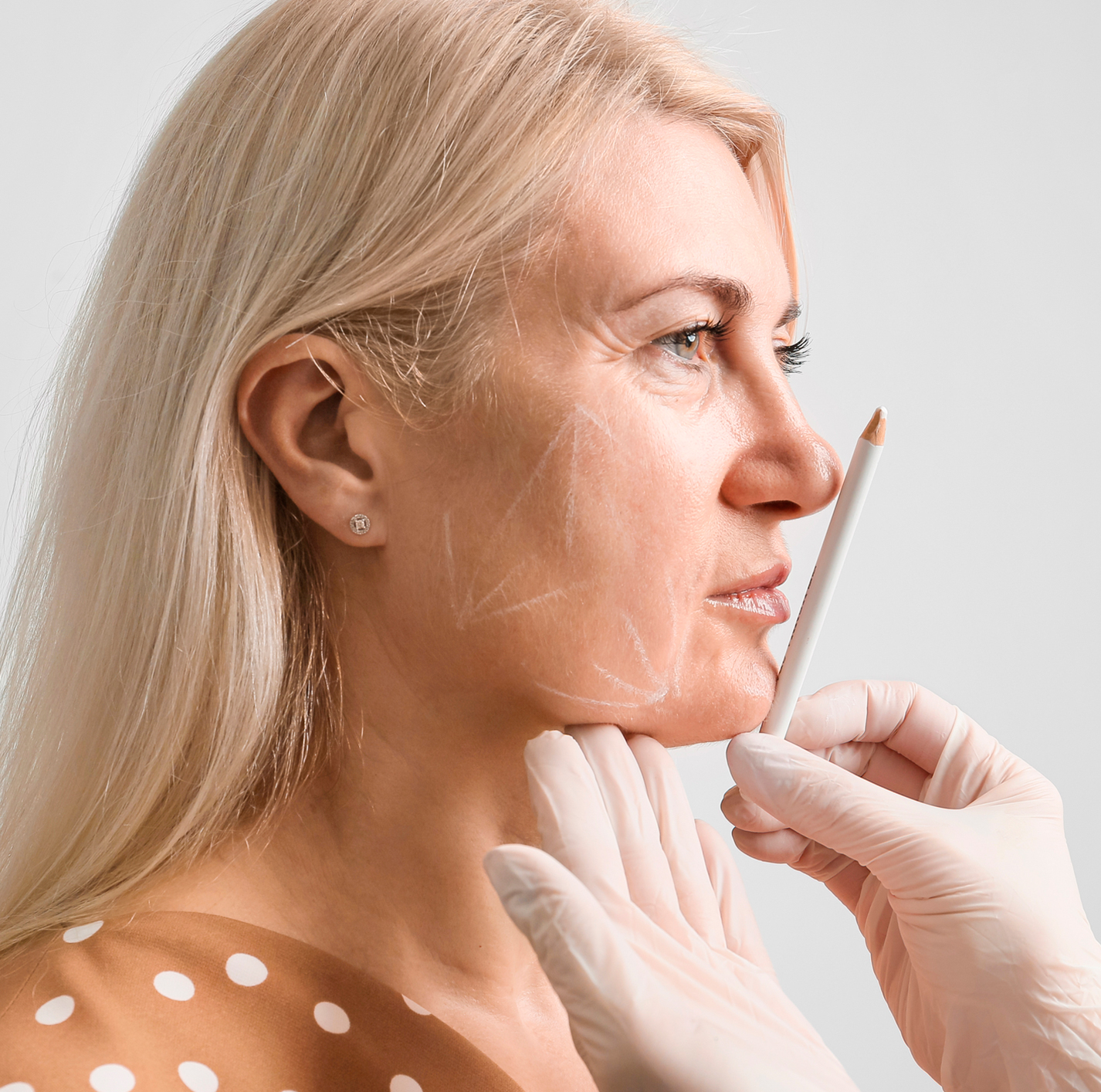
Most acne scar plans at Desert Bloom start with RF Microneedling and layer in targeted modalities based on scar sub-type, skin tone, and how the skin responds over time. The five primary routes below each have a distinct role and a clear patient profile. One option — Bellafill — is worth singling out because it is the only FDA-approved injectable filler specifically for atrophic acne scars, which makes it a different category from the energy-based treatments.
Compare Acne Scar Treatment Options
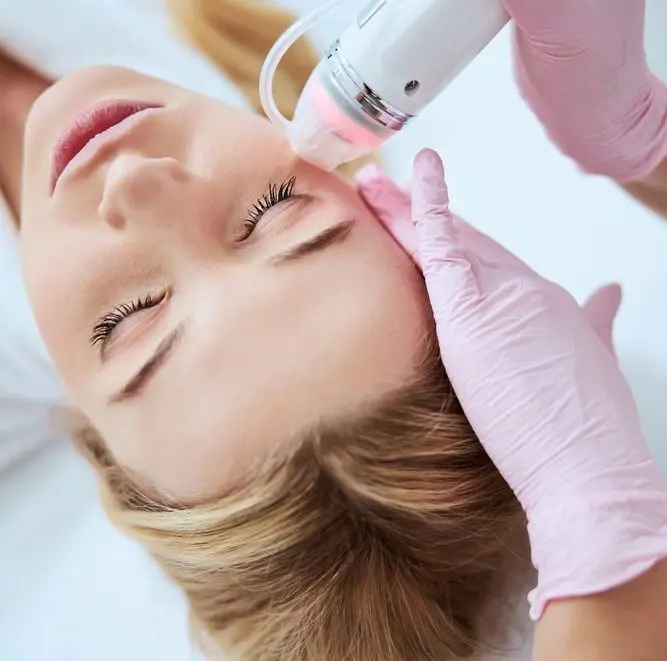
RF Microneedling
- Best for
- Rolling, boxcar — all skin tones
- Mechanism
- RF through microneedles — dermal remodeling, no surface ablation
- Fitzpatrick range
- I–VI (safe all tones)
- Sessions typical
- 3–4 sessions, 4–6 wks apart
- Downtime
- 24–48 hrs redness
- FDA acne scar indication
- Off-label (extensive clinical evidence)
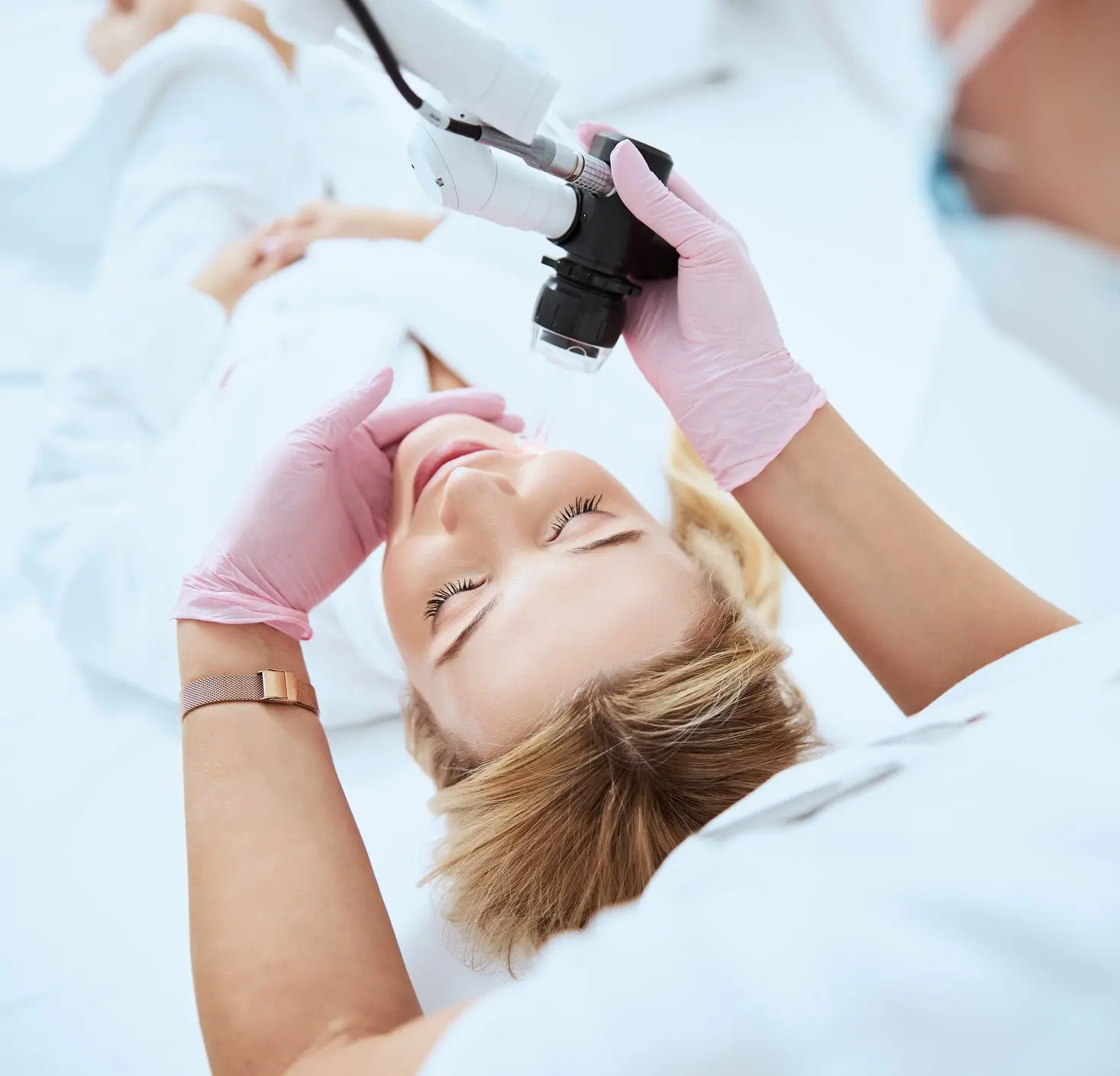
CO2 Laser
- Best for
- Deep ice pick, severe boxcar — lighter skin
- Mechanism
- Ablative vaporization + deep collagen stimulation
- Fitzpatrick range
- I–III only (PIH risk Fitz IV–VI)
- Sessions typical
- 1–2 sessions (high impact)
- Downtime
- 7–14 days
- FDA acne scar indication
- Off-label
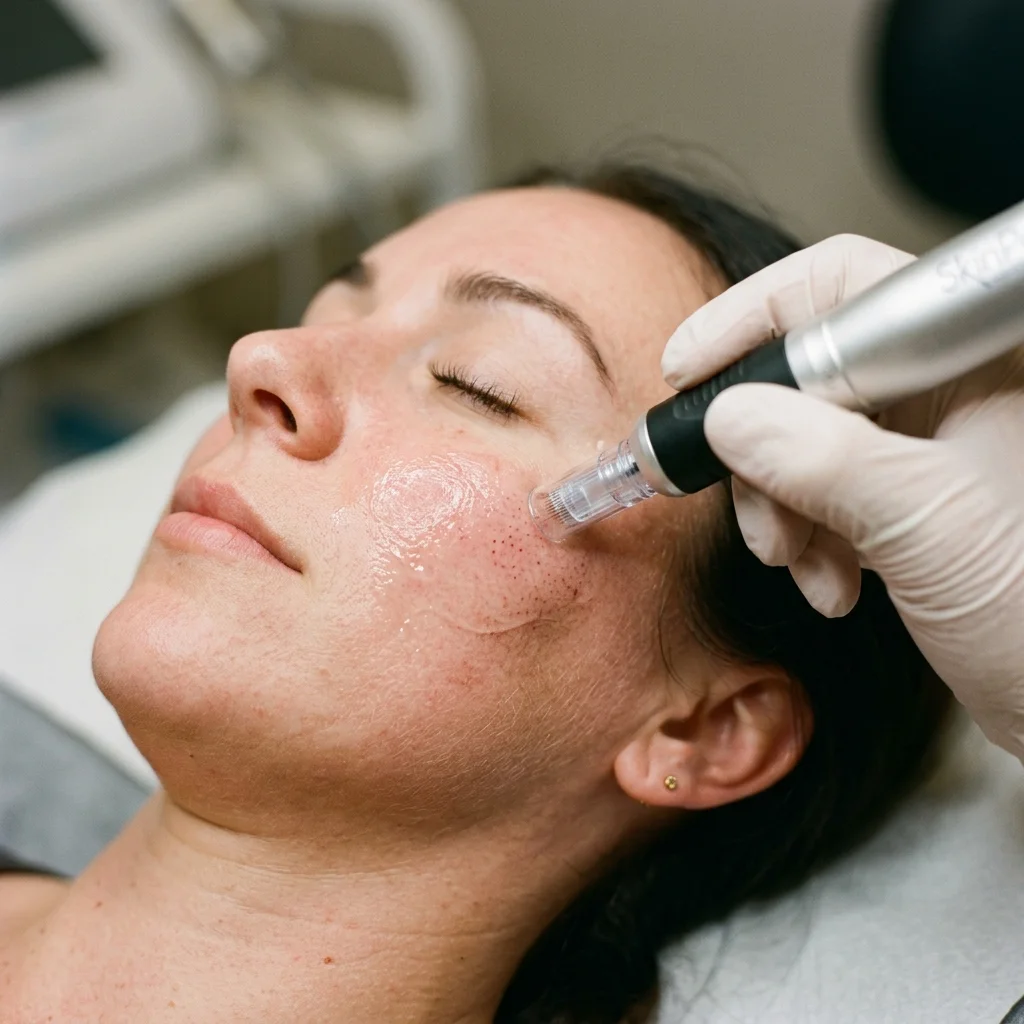
Microneedling + PRP
- Best for
- Mild / newer scars, bridging
- Mechanism
- Microchannel collagen induction + PRP growth factors
- Fitzpatrick range
- I–VI
- Sessions typical
- 3–4 sessions
- Downtime
- Minimal 24 hrs
- FDA acne scar indication
- Off-label
Bellafill
- Best for
- Distensible boxcar + rolling — volume deficit
- Mechanism
- Immediate volume fill + PMMA long-term collagen stimulus
- Fitzpatrick range
- I–VI
- Sessions typical
- 1–2 sessions
- Downtime
- Minimal (injectable)
- FDA acne scar indication
- FDA-approved for atrophic acne scars
Chemical Peel
- Best for
- PIH, flat discoloration — color only
- Mechanism
- Acid exfoliation — epidermal pigment correction
- Fitzpatrick range
- I–VI at appropriate depth
- Sessions typical
- Series of 2–4
- Downtime
- Minimal to 3–5 days (medium peel)
- FDA acne scar indication
- Off-label
Safety, Skin Type, and Timing
Acne scar treatment has hard rules around skin tone, scar age, and whether active acne is still present. The most common clinical errors are treating with ablative laser on Fitzpatrick IV–VI skin (adding a color problem to a texture problem), treating while breakouts are still active (generating new scars and inflammation during treatment), and treating scars that are still remodeling (under six months old). These three situations each require a different approach before aesthetic scar treatment is appropriate.
Active acne flare — treat acne first. Energy devices and chemical peels applied over active inflammatory acne worsen outcomes and can create new scarring from the treatment itself. Stabilize breakouts for at least 1–3 months before scheduling any scar treatment. The consult can happen sooner — the treatment starts when the acne is controlled.
Fitzpatrick IV–VI + PIH — no ablative laser. CO2 and Erbium ablative laser are contraindicated for post-inflammatory hyperpigmentation in darker skin tones. Thermal and light-based energy applied to already-reactive melanocytes can significantly worsen hyperpigmentation. The safe and effective path for PIH in Fitz IV–VI is the non-laser brightening route: PRX-T33 bio-revitalization, Dermaquest peel protocol, iontophoresis, brightening topicals. RF Microneedling remains safe across all Fitzpatrick types for the atrophic scar component.
Scars under 6 months old — wait for stability. Acne scars still in active remodeling are not ready for aggressive treatment. The collagen-breakdown and rebuilding cycle takes roughly 6–12 months to stabilize after a severe breakout. Treating during this window can worsen depth and texture. The exception: mild microneedling or a gentle peel series while waiting for the scar to mature is often acceptable, and can help limit PIH in the interim.
Frequently asked questions
Can acne scars be completely removed?
Most acne scars can be made significantly less noticeable — often 50–80% improvement over a treatment series — but full erasure to the level of surrounding skin is uncommon, particularly for deep ice pick scars and long-standing severe boxcar scarring. Newer scars, mild rolling scars, and distensible boxcar scars treated with Bellafill often come very close to complete correction. The consultation is the time to set realistic expectations for your specific scar type, depth, and skin tone.What is the difference between PIH (dark marks) and actual acne scars?
Post-inflammatory hyperpigmentation (PIH) is a flat discoloration — the skin surface is smooth, but the melanocytes over-produced melanin in response to inflammation, leaving a brown or tan mark. PIH fades over time (3–24 months) and responds well to brightening treatments. An atrophic acne scar is a structural deficit — a pit, depression, or textural irregularity caused by collagen loss. No brightening peel or topical will fill a pitted depression; resurfacing or filler is required. Many patients have both at the same site — a pitted boxcar scar with overlying PIH discoloration. Correct identification determines which treatment leads.Is Bellafill a good option for acne scars?
Bellafill is the only FDA-approved injectable filler specifically indicated for atrophic acne scars. It works best for distensible boxcar and rolling scars — where the primary problem is a volume deficit that can be corrected with fill. PMMA microspheres in the filler stimulate long-term collagen production at the scar floor, extending the result. Bellafill is not ideal for ice pick scars (too narrow for filler correction) or non-distensible boxcar scars (resurfacing is more appropriate). It is also used for patients who have plateaued with energy devices and want additional improvement.What is the best treatment for ice pick scars?
Ice pick scars are among the most difficult acne scars to treat because of their narrow diameter and depth. The TCA CROSS technique (focused application of high-concentration trichloroacetic acid directly into the channel) specifically targets the morphology. For Fitzpatrick I–III patients, CO2 or Erbium laser can reach deeper into the channel than RF Microneedling. RF Microneedling still produces meaningful improvement in a series and is the appropriate choice for darker skin tones. Most ice pick scar plans use a combination of approaches over multiple sessions — no single treatment resolves them completely in one visit.Can acne scars be treated on darker skin — Fitzpatrick IV–VI?
Yes — but the treatment plan is different. RF Microneedling is safe and effective across all Fitzpatrick types, including IV–VI, because it delivers energy through needles into the dermis without ablating the surface. Ablative CO2 and Erbium laser are contraindicated for Fitz IV–VI acne scar patients because surface ablation can trigger post-inflammatory hyperpigmentation. For PIH specifically on darker skin, the non-laser brightening route (PRX-T33, Dermaquest peels, iontophoresis) is both safer and more effective than laser or IPL. Bellafill and Microneedling with PRP are also safe across all skin tones.Do I need to wait until my acne is completely gone before treating scars?
Active inflammatory breakouts should be controlled before starting scar treatment — not necessarily completely eliminated, but stable. Treating over active acne creates new inflammation, can worsen existing scarring, and reduces treatment effectiveness. Dr. Borakowski typically wants to see at least 1–3 months of controlled breakouts before starting a scar series. The consultation can happen sooner — it is a good time to map what you have and build the plan while acne management is in progress.How many sessions does acne scar treatment take?
It depends on scar type, severity, and the treatment selected. RF Microneedling plans typically involve 3–4 sessions spaced 4–6 weeks apart, with the full collagen remodeling benefit visible 3–6 months after the final session. CO2 laser may only need 1–2 sessions but requires longer recovery per session. Bellafill is typically 1–2 sessions. Mild presentations and newer scars may respond in fewer sessions; severe or mixed-type scarring often requires a longer series and combination approach. There is no single-session solution for moderate to severe acne scarring.Working With Dr. Borakowski on Acne Scars
Dr. Natalya Borakowski, NMD has treated acne scarring for over twenty years, and the clinical judgment required here — which scar type, which skin tone, which treatment in which sequence — is the kind of pattern recognition that compounds with experience. A consultation that skips the classification step and goes straight to recommending “laser” or “microneedling” without mapping the sub-type, the Fitzpatrick number, and the scar’s age is a consultation that will produce inconsistent outcomes. She starts every acne scar appointment with the classification before any treatment plan is discussed.
She is also deliberate about contraindications. Patients with active acne are told to stabilize breakouts first. Darker-skin patients with PIH are routed to the non-laser brightening protocol — not pushed toward ablative laser because it is higher-revenue or more familiar. Scars that are still maturing are counseled to wait. The goal is a plan that is right for the scar in front of her, not a standard package applied to every patient who books a scar consult.

“Acne scars are the one area where I see the most mismatched treatments — laser on the wrong skin tone, energy devices on scars that need filler, brightening peels on pitted skin that needs collagen remodeling. The consult is where we sort that out. Most patients see meaningful improvement when we treat the right problem with the right tool.”
Ready to Understand Your Acne Scar Options in Scottsdale?
A scar consultation at Desert Bloom starts with classification — scar type, skin tone, scar age, and whether active acne is still a factor — before any treatment is proposed. There is no standard acne scar package. The plan depends entirely on what you actually have.
Complimentary 30-minute consultations are available. No obligation to start a treatment series. If Dr. Borakowski concludes that your acne needs to be better controlled before scar treatment begins, or that a specialist referral (subcision, for example) should be part of the plan, she will tell you at the first visit.
References
- “Radiofrequency microneedling for acne, acne scars, and more.” Dermatological Reviews. 2020. DOI(Clinical review supporting RF Microneedling as primary acne scar modality across all skin tones)
- “Polymethylmethacrylate Collagen Gel–Injectable Dermal Filler for Full Face Atrophic Acne Scar Correction.” Dermatologic Surgery. 2019. DOI(Bellafill FDA pivotal study — supports on-label Bellafill recommendation for atrophic acne scars)
- “Efficacy of Microneedling Versus Fractional CO2 Laser in Treatment of Atrophic Facial Acne Scar: A Randomized Controlled Trial.” Journal of Population Therapeutics and Clinical Pharmacology. 2023. DOI(Head-to-head comparison supporting routing logic: microneedling first, CO2 escalation for deeper cases)
- “Acne Scarring — Pathogenesis, Evaluation, and Treatment Options.” Journal of Clinical and Aesthetic Dermatology. 2017. (PMID 29344322 — comprehensive acne scar classification review supporting scar sub-type routing section)
Treatments
- Back Facial$10560 minutes
- Bellafill$80030 min
- CO2 Cool Peel$625
- CO2 Laser Resurfacing$625-$150060 minutes
- Custom chemical peel$10045 minutes
- Detox acne treatment$10060 minutes
- Erbium Laser Resurfacing$275-$67545 minutes and up
- HydraFacial$199-$29945 minutes and up
- Laser facial$27560 minutes
- Laser resurfacing treatment$67530 and up
- Microneedling$199-$495120 minutes
- PRP Facial | Biofiller Services$1,50060–90 min
- RF Microneedling$80090 and up
- Salmon DNA Facial (LumEnvy PDRN)$35045–60 min
- Teen facial$5530 minutes
- Unicorn Facial | PRX-T33$1350 / 4 treatments
Consultation in skin care clinic
Desert Bloom Skincare Center offers personalized skincare consultation to help you achieve a flawless and radiant complexion. Book your appointment today and let our expert team of skincare professionals address your specific concerns and help you reach your skincare goals.
Visit Our Scottsdale Aesthetic Center
Address
10752 N 89th Place, Suite 122B,Scottsdale, AZ 85260.
Phone:(480) 567-8180
E-mail:info@desertbloomskincare.com
Get Directions →Location & Directions
Desert Bloom Skincare is conveniently located in the Shea Corridor of North Scottsdale, within Edwards Professional Park I — minutes from HonorHealth Scottsdale Shea Medical Center and the Mayo Clinic Scottsdale Campus.
Areas We Serve
We proudly provide expert non-surgical rhinoplasty and PDO thread lifts to patients across the Southwest:
- ScottsdaleNorth Scottsdale · McCormick Ranch · Gainey Ranch
- Paradise Valley
- PhoenixArcadia · Biltmore · North Phoenix
- Fountain Hills
- Cave Creek & Carefree