Vein and Redness Removal in Scottsdale, AZ 85260

Vein and Redness Removal in Scottsdale, AZ
If you have spent years covering red veins on your nose with concealer, you understand how much visible veins and persistent redness affect daily life. Laser vein removal uses targeted light energy to collapse those vessels from within — no incisions, minimal downtime. We use a KTP 532nm vascular laser on the Quanta EVO platform to treat spider veins, broken capillaries, and other visible vein problems across the face, chest, and legs. For rosacea redness, our 1064nm Nd:YAG laser is more effective. Sessions start at $275, and most patients return to their routine the same day. Schedule a consultation to discuss your concerns — book your vein removal appointment.
At a Glance
KTP 532nm vascular laser on the Quanta EVO platform. Targets spider veins, broken capillaries, and visible redness. Starting at $275 per 15-minute session. Most patients return to normal activities the same day.
Vein and redness removal is one of several laser treatments at Desert Bloom, alongside Elluminate Glow, Elluminate Mini, and IPL Photo Facial.
What Is Laser Vein Removal?
Laser vein removal is a non-invasive vein treatment that uses a KTP 532nm laser to eliminate visible blood vessels from the skin. The laser delivers green-light energy that is selectively absorbed by hemoglobin inside the vessel, causing it to collapse and be reabsorbed by the body. This process — selective photothermolysis — targets the red pigment in blood cells while leaving surrounding tissue largely unaffected.
At Desert Bloom, we use the Quanta EVO platform for our KTP treatments. The KTP is a frequency-doubled Nd:YAG laser with a potassium-titanyl-phosphate crystal — it converts infrared light into a precise 532nm green wavelength near oxyhemoglobin’s absorption peak. That single-wavelength precision is what separates a dedicated vascular laser from general-purpose light devices, and what makes it safe for delicate facial skin.
In a study of 647 patients, 77.6% achieved clearance or marked improvement in appearance [1]. For condition-specific information, see rosacea redness treatment and spider vein removal.
Conditions We Treat with Vascular Laser
Not every type of redness responds the same way, so proper medical diagnosis matters before vein therapy begins. Your doctor will evaluate your symptoms and determine the right approach during your visit.
What KTP laser effectively treats:
- Facial spider veins and telangiectasia — broken capillaries on cheeks, chin, and forehead
- Nasal telangiectasia — red veins on the nose, the most common concern patients bring to us
- Rosacea-related visible capillaries — KTP treats the fixed visible vessels associated with rosacea, but for general rosacea redness, 1064nm Nd:YAG laser (Elluminate Mini) is more effective. See our rosacea treatment page
- Spider angiomas — small, star-shaped vascular lesions
- Cherry angiomas — bright red dome-shaped spots
- Poikiloderma of Civatte — sun-damaged redness on the neck and chest
- Port wine stains — superficial vascular birthmark components
An important distinction: KTP laser treats fixed, visible capillaries — lines or webs of redness that do not come and go. If your redness is primarily flushing that appears with heat or stress and then fades, laser alone may not help. We determine which type you have during your consultation and recommend the most effective care from there.
How KTP Laser Vein Removal Works
Each session is performed in our office using advanced technology designed for vascular targets:
- Skin assessment. Dr. Borakowski evaluates your skin type, identifies specific vessels, and confirms KTP is the right tool for your concerns.
- Preparation. The area is cleansed in-office. Topical numbing is available, though most patients tolerate treatment without it.
- Laser application. Green-light pulses target each visible vessel. Hemoglobin absorbs the energy, vessel walls coagulate, and the vessel collapses. Variable pulse duration (1–10ms) matches vessel size [7], while cryogen spray cooling protects skin.
- Reabsorption. Over 4–8 weeks, the body reabsorbs the treated vessel as it fades progressively. No special equipment is needed at home — care is minimal after leaving our office.
Sessions last 15–30 minutes. Most patients describe a light rubber-band snap — noticeable but brief. The entire time in our clinic is typically under an hour.
Are You a Good Candidate?
Who Is a Good Candidate?
Good candidates for KTP laser vein therapy typically have:
- Fitzpatrick skin types I–IV (fair to moderate complexion)
- Visible spider veins, broken capillaries, or damaged veins on the face, chest, or legs
- Persistent facial redness associated with sensitive skin and rosacea
- Superficial veins close to the skin surface — red veins are typically superficial and respond well to laser, while darker blue veins are too deep
- No active skin infection in the treatment area
When Laser Vein Removal Is Not Recommended
Photosensitizing medications (certain antibiotics, antifungals)
Suspicious vascular lesion requiring biopsy
Pregnancy or active oral isotretinoin (Accutane)
Active blood clots or deep vein thrombosis in the treatment area
We proceed with caution when:
- Fitzpatrick V–VI skin types — 532nm is absorbed by melanin, increasing the risk of burns and hyperpigmentation. Nd:YAG 1064nm may be safer and is a well-studied effective alternative [6].
- Recent sun exposure or tanning (4-week minimum wait)
- Blood thinner use (increased bruising risk; pressure garments may be advised after treatment)
- History of keloid scarring
Before your session: Discontinue retinoids and AHA/BHA products 5–7 days before. Avoid sun exposure for 4 weeks prior. Inform your provider of all medications, including any blood thinners. If you are pregnant, treatment is not recommended — schedule after delivery.
Treatment Areas
Face — Red veins on the nose are the most common concern we treat — fine lines that cluster around the nostrils and nasal bridge. The KTP laser’s precision makes it particularly effective here, and it is the area where patients feel the most visible improvement. We also treat spider veins and broken capillaries on cheeks, chin, and forehead.
Chest and neck — Sun damage often includes a vascular component: redness and visible veins known as poikiloderma of Civatte. We use KTP to address this vascular layer effectively, usually within 1–2 office sessions.
Legs — KTP can treat fine spider veins on the legs sometimes, if they are small enough. However, too large a vessel requires so much energy that the tissue can burn or blister and still not treat the area effectively. Most leg veins we refer out to a vascular specialist. For larger varicose veins, sclerotherapy or Nd:YAG 1064nm laser is more appropriate.
What Results Can You Expect?
Most patients see visible improvement within 4 to 8 weeks after KTP laser vein treatment. In a study of 647 patients, 77.6% achieved clearance or marked improvement after treatment [1] — good results that reflect what we consistently see in our clinic.
Sometimes a single treatment is enough. We offer a free touch-up on the same area 4–6 weeks after your initial session if needed. Per-session improvement ranges from 25% to 75% [2]. For vessels under 0.6mm, data shows 33% complete clearance and 40% decreased diameter per session [2]. Most patients see continued improvement over several weeks as the body fully reabsorbs treated vessels.
Treated capillaries do not return — the vessel is permanently reabsorbed, though new vessels can develop over time from sun exposure, genetics, or aging. Annual maintenance sessions keep results looking their best. For rosacea-related redness, our 1064nm Nd:YAG laser is more effective than KTP, and can be combined with a topical compounding Rx cream including ivermectin for enhanced results. Dr. Borakowski will explain which approach is right for your conditions during your appointment.

“This is one laser treatment that is often immediate. A few pulses of light and the spider veins can disappear under the light in seconds. That is quite rewarding for myself and the patient.”
Recovery and Downtime
Recovery time is minimal. Most patients return to normal activities the same day — no downtime that disrupts work or daily life.
A normal response that resolves on its own within 24–72 hours.
Treated vessels may temporarily darken before fading. Mild crusting over spider angioma sites is possible. Mild itching at the treatment site is normal and resolves on its own.
The body reabsorbs treated vessels. Visible improvement is typically noticeable by week four.
About bruising: Unlike pulsed dye laser (VBeam), which can cause 5–10 days of visible purpura, modern KTP laser treatments rarely bruise. In the 647-patient study, only one patient experienced bruising [1]. Inflammation is also typically minimal — the cryogen cooling system helps protect the skin surface during treatment.
Post-treatment care: SPF 30+ sunscreen daily. Avoid saunas and intense exercise for 48 hours. No retinoids, AHA/BHA, or active skincare for 5–7 days. Our staff will provide written aftercare instructions so you know exactly what to expect and when to reach out if you have questions.
How Much Does Laser Vein Removal Cost in Scottsdale?
Laser vein removal at Desert Bloom Skincare costs $275 to $825, starting at $275 per 15-minute session. Total cost depends on treatment area size, number of vessels, and sessions needed. Many patients need only one session, and we include a free touch-up on the same area 4–6 weeks later if needed. During your consultation, Dr. Borakowski will review the specific areas you want to address and provide a clear estimate so there are no surprises.
Nose vein removal — often the quickest treatment to perform in-office — frequently requires just a single session at $275.
This is a cosmetic procedure — insurance does not cover vein therapy for cosmetic concerns, though insurance coverage may apply if a medical condition such as symptomatic varicose veins is being treated by a vascular specialist. For complete treatment pricing, visit our price list page.
KTP Laser vs Other Vein Treatments
Choosing the right vein therapy matters. Here is how the main options compare:
| Feature | KTP 532nm Laser | IPL (Broadband) | Pulsed Dye Laser (VBeam) | Sclerotherapy |
|---|---|---|---|---|
| Best for | Fine facial veins, rosacea redness | General skin rejuvenation | Facial redness, port wine stains | Leg veins over 1mm |
| Wavelength | 532nm (single, precise) | 500–1200nm (broad) | 595nm (single) | N/A (injection) |
| Hemoglobin targeting | Precise | Non-specific | Good | N/A |
| Bruising risk | Low | Low | Moderate–high (purpura) | Moderate |
| Typical sessions | Often 1 + free touch-up | 3–6+ | 1–3 | 1–3 |
| Downtime | Minimal (24–72h redness) | Minimal | 5–10 days (purpura) | Compression wear, 1–2 weeks |
KTP vs IPL: IPL uses broadband light across multiple chromophores — effective for general skin rejuvenation but less precise for individual blood vessels. For facial veins, a dedicated vascular laser delivers faster results with fewer sessions. We recommend IPL when the goal is broad skin rejuvenation rather than targeted vessel clearance. Learn more about IPL photo facial treatments.
KTP vs Pulsed Dye Laser: Research shows comparable efficacy, but KTP patients report lower pain and less discomfort [3]. The practical difference is bruising: pulsed dye laser frequently causes purpura lasting 5–10 days, while KTP rarely does. For patients who are sensitive to downtime, we typically recommend KTP.
KTP vs Sclerotherapy: Sclerotherapy injects a solution directly into larger veins — the standard for leg veins over 1mm and varicose veins. KTP laser is better for fine facial vessels and superficial spider veins. Neither endovenous laser ablation nor vascular surgery is appropriate for the cosmetic vessels we treat here. If your symptoms point toward deeper vein problems, we will refer you to the right specialist.
Combination Treatments
Some patients benefit from pairing KTP laser with complementary treatments as part of a broader care plan. Our medical team uses a diagnosis-first approach to determine which combinations make sense for your specific skin conditions:
For rosacea redness, 1064nm is more effective than KTP. Combined with compounding Rx cream including ivermectin for enhanced and sustained results.
Learn more →For patients with both vascular concerns (spider veins) and sun damage or pigmentation across multiple layers.
Learn more →Why Choose Desert Bloom?
Many patients come to us after spending money on treatments that did not work. Dr. Natalya Borakowski, NMD brings 17 years of experience and a clinical aesthetics approach that starts with diagnosis — determining whether your concern involves fixed capillaries, rosacea redness, or vascular flushing.
We use a dedicated KTP 532nm vascular laser, not a general-purpose IPL. When KTP is not the right fit, we say so — and if your problems require a vascular surgery specialist or a medical referral, we make that clear too. That honesty is how we work — backed by published clinical research and evidence-based protocols [1][3][4].
Our professional team is small and focused. Every patient is seen by Dr. Borakowski personally — not delegated to staff. That level of care makes a real difference in outcomes and in how comfortable patients feel throughout the process.
Frequently asked questions
How do you remove spider veins from the face?
The KTP 532nm laser delivers green-light pulses absorbed by hemoglobin in the vessel. The vessel walls collapse and the body reabsorbs the treated vein over 4-8 weeks. Sometimes a single session is enough, and we include a free touch-up 4-6 weeks later if needed. The procedure is performed in-office with no surgery and no incisions.How much does nose vein removal cost?
At Desert Bloom Skincare, laser nose vein removal starts at $275 per 15-minute session. Many patients need only one session, and we include a free touch-up 4-6 weeks later if needed. We use a dedicated vascular laser, not a general IPL device, which makes a difference in efficiency and session count.Is facial vein removal permanent?
Treated veins do not return. However, underlying conditions like rosacea or chronic sun exposure can cause new vessels to form over time. Annual maintenance sessions help keep skin clear. During your consultation, Dr. Borakowski will explain what long-term results look like for your specific skin type.Does laser vein removal hurt?
Most patients describe the sensation as a light rubber-band snap, brief discomfort that most people find easy to tolerate. The KTP laser includes cryogen cooling for comfort. Topical numbing cream is available for sensitive areas like the nose.How long does recovery take after laser vein treatment?
There is minimal downtime. Mild redness and swelling typically resolve within 24-72 hours. Unlike pulsed dye laser, KTP rarely causes bruising. Most patients return to normal activities the same day.What is the difference between IPL and KTP laser for facial veins?
KTP is a single-wavelength vascular laser that precisely targets hemoglobin. IPL uses broadband light and is less specific for blood vessels. For facial veins, KTP typically delivers faster results with fewer sessions.How many sessions do I need for rosacea redness?
For rosacea-related visible capillaries, KTP can help and sometimes a single treatment is enough with a free touch-up 4-6 weeks later. For general rosacea redness, we use our 1064nm Nd:YAG laser, which is more effective for this condition. This can be combined with topical compounding Rx cream including ivermectin for enhanced results.Can KTP laser treat veins on the legs?
KTP effectively treats fine spider veins on the legs. For larger varicose veins over 1mm in diameter, sclerotherapy or Nd:YAG 1064nm laser may be more appropriate. A consultation with Dr. Borakowski determines the best approach for your situation.Book Your Vein Removal Consultation
Schedule your complimentary assessment with Dr. Borakowski.
Desert Bloom Skincare
10752 N 89th Place, Suite 122B, Scottsdale, AZ 85260
References
- “Treatment of superficial vascular lesions with the KTP 532nm laser: experience with 647 patients.” Lasers in Medical Science. 2014. (PMID 24401943)
- “Treatment of superficial cutaneous vascular lesions: KTP 532nm experience.” Dermatologic Surgery. 2004. (PMID 15316851)
- “Rosacea treatment: KTP 532nm vs pulsed dye laser 595nm, prospective controlled study.” Journal of Cosmetic Dermatology. 2024. (PMID 38600654)
- “KTP 532nm laser with topical ivermectin for rosacea erythema: randomized split-face trial.” 2026. (PMID 41778357)
- “Systematic review: 532/755nm laser therapy for facial pigmented and vascular lesions.” Journal of Clinical Medicine (MDPI). 2025. (PMC12028165)
- “Light-based devices for facial erythema and telangiectasia: comprehensive review.” 2021. (PMC8611125)
- “New 532nm variable-pulse-structure KTP laser with cryogen spray cooling for rosacea.” Lasers in Surgery and Medicine. 2023.
- “KTP Laser Treatment.” DermNet NZ.
Individual results may vary. Laser vein removal is a cosmetic procedure performed by Dr. Natalya Borakowski, NMD. This content is for educational purposes and does not replace a professional medical consultation.
Content reviewed by Dr. Natalya Borakowski, NMD · Last updated: April 2026
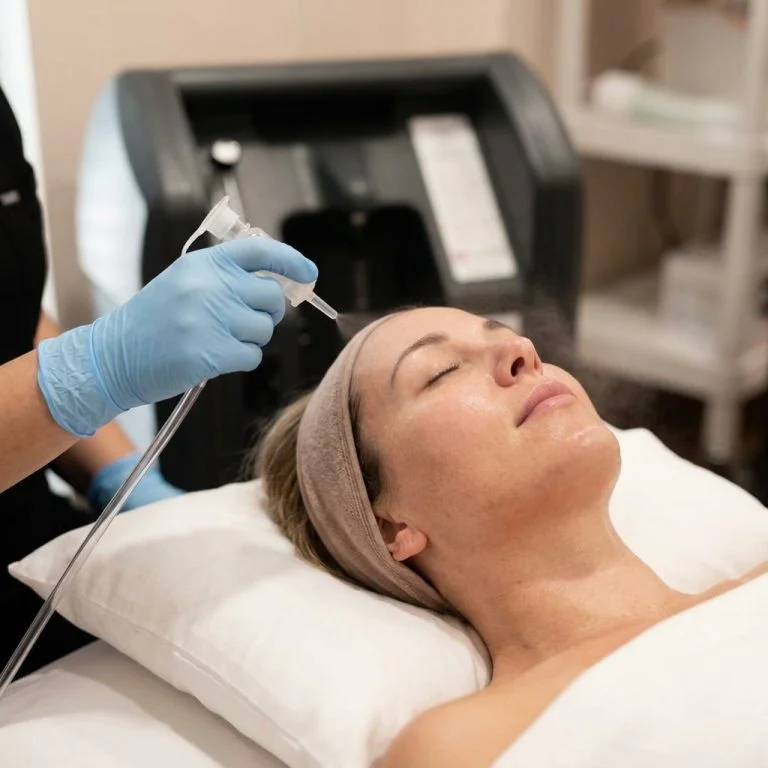
Consultation in skin care clinic
Desert Bloom Skincare Center offers personalized skincare consultation to help you achieve a flawless and radiant complexion. Book your appointment today and let our expert team of skincare professionals address your specific concerns and help you reach your skincare goals.
Similar treatments

Visit Our Scottsdale Aesthetic Center
Address
10752 N 89th Place, Suite 122B,Scottsdale, AZ 85260.
Phone:(480) 567-8180
E-mail:info@desertbloomskincare.com
Get Directions →Location & Directions
Desert Bloom Skincare is conveniently located in the Shea Corridor of North Scottsdale, within Edwards Professional Park I — minutes from HonorHealth Scottsdale Shea Medical Center and the Mayo Clinic Scottsdale Campus.
Areas We Serve
We proudly provide expert non-surgical rhinoplasty and PDO thread lifts to patients across the Southwest:
- ScottsdaleNorth Scottsdale · McCormick Ranch · Gainey Ranch
- Paradise Valley
- PhoenixArcadia · Biltmore · North Phoenix
- Fountain Hills
- Cave Creek & Carefree