Temple Filler in Scottsdale, AZ 85260

Temple Filler in Scottsdale, AZ
It usually shows up in photographs first — a shadow along the side of the forehead that was not there a year ago. The face looks narrower, more angular, tired in a way that sleep does not fix. That shadow is temporal hollowing — often overlooked, because patients tend to notice the brow dropping or an overall tired appearance before they ever identify the volume change itself.
At a Glance
Temple volume restoration with RHA filler, Sculptra, or Bellafill. 15–30 minute procedure, 1 syringe per session. Complimentary consultation. Results last 12 months to 5+ years depending on product.
Temple filler is one of several dermal filler treatments at Desert Bloom, alongside cheek filler, chin filler, jawline filler, and lip augmentation.
What Is Temple Filler?
Temple filler is a dermal filler procedure that adds volume to the temporal region — the area between the outer eye and the hairline. Temples hollow for several reasons: fat pad atrophy, bone density loss, and collagen decline with aging.
Significant weight loss is now one of the most common triggers Dr. Borakowski sees in practice — including rapid loss driven by GLP-1 medications like semaglutide (Ozempic, Wegovy). This pattern, sometimes called “Ozempic face,” causes accelerated fat pad atrophy in the temples and midface, producing hollow temples that look disproportionate to the rest of the face. For a deeper look at how dermal fillers address Ozempic face, or ways to avoid Ozempic face with proactive treatment, those pages cover both in detail.
Dr. Borakowski uses three filler categories for temples, selecting based on the patient’s age, skin thickness, and degree of volume loss:
- Hyaluronic acid fillers (RHA 2 or RHA 3): immediate structural support, particularly effective for younger patients (approximately 35–45) with mild to moderate volume loss. HA filler placed at the periosteal level can lift the tail of the brow and open the eye area. RHA 2 and RHA 3 are both used depending on the patient’s anatomy and treatment goals. Typical dosing varies by anatomy — many patients need about 1 syringe total, while deeper hollowing may require more.
- Sculptra biostimulator stimulates collagen production over time, gradually rebuilding the structural proteins that give the face its youthful fullness — ideal for older patients with thinning skin who need volume rebuilt from within. Sculptra is typically used across 2–3 sessions spaced 4–6 weeks apart; results develop gradually over 2–4 months and tend to last longer than HA in this area.
- Bellafill offers semi-permanent volume restoration through microsphere technology — another option for patients with significant temporal wasting and thinner skin.
The approach differs based on anatomy: younger patients with adequate skin thickness may receive HA filler via needle technique with aspiration and ultrasound screening to visualize the temporal artery. Older patients with thinning skin receive Bellafill or Sculptra subcutaneously via cannula — a safer placement depth when skin cannot support periosteal-level injection.
Benefits of Temple Filler Treatment
Temple filler does more than fill a hollow. It restores facial proportions across the upper face, which changes how the entire face reads, creating a more youthful, balanced appearance without altering the features that define who you are:
- Restores volume to hollow temples, correcting facial imbalance
- Improves facial harmony and facial contours from forehead to cheeks
- Can lift the brow in aging patients who have lost the deep fat pad in the temple, achieved with a specific periosteal injection technique that restores structural support beneath the brow tail
- Creates a smooth transition from forehead through temples to cheeks, helping the face look structurally complete
- Helps reverse the gaunt, hollowed look that results from fat and collagen loss in the temporal area — including the age-related volume loss that GLP-1 weight loss accelerates
- Refreshes a tired or gaunt appearance, non-surgical, minimal downtime
When temples are restored, adjacent areas — the cheek filler zone, jawline filler contour, chin filler projection — often look more balanced without additional treatment. Temple filler plays a key role in aesthetic facial balancing and facial sculpting.
How Temple Filler Works — The Procedure
Every temple filler treatment at Desert Bloom is performed personally by Dr. Natalya Borakowski, NMD, who selects technique based on individual anatomy.
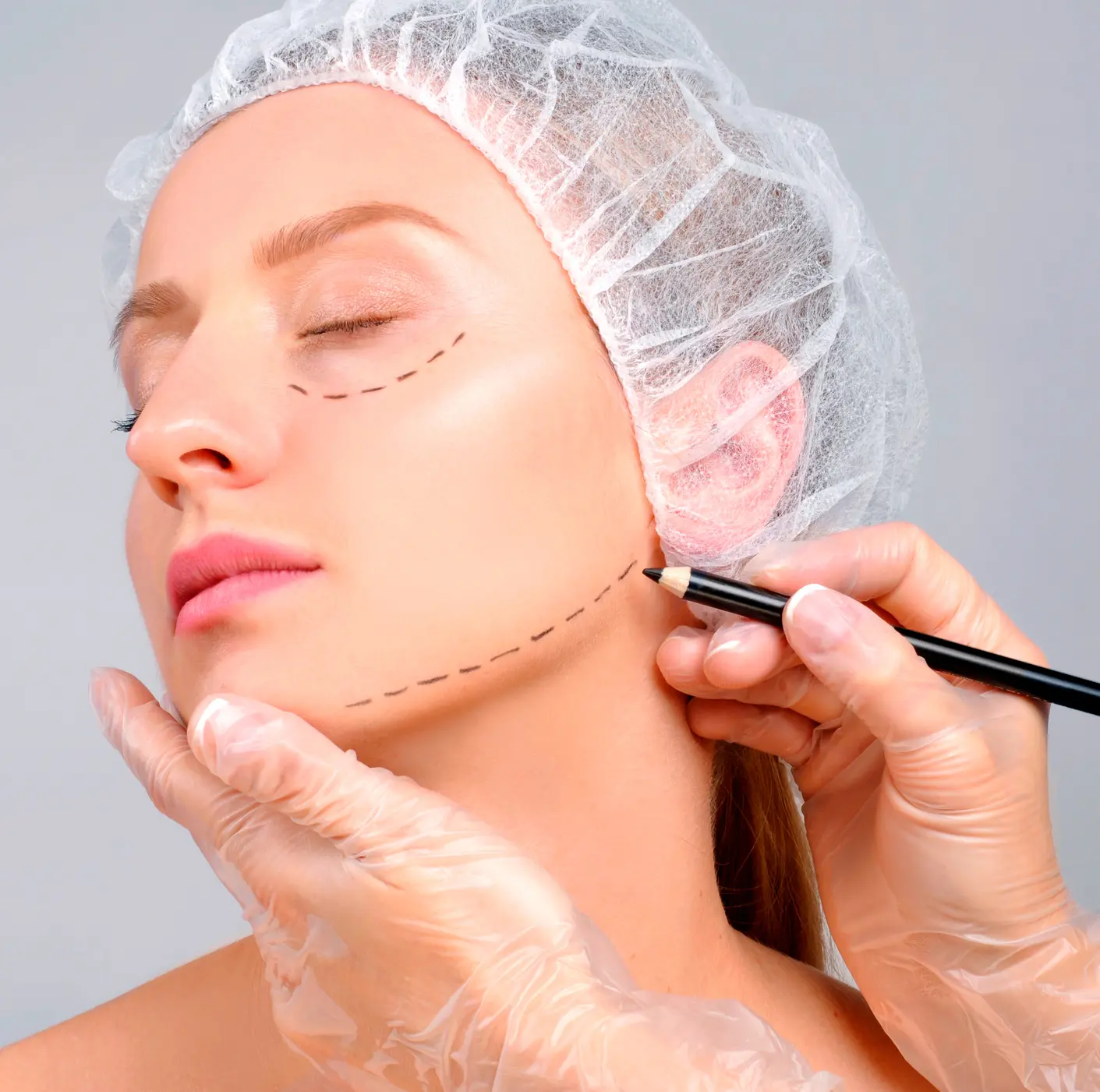
Dr. Borakowski evaluates your temples, bone structure, and facial balance to determine if temple filler is the right approach.
Extra-strength topical numbing cream is applied 45 minutes before injection for comfort. Most filler products also contain lidocaine. Discomfort during the procedure is typically mild.
The choice of technique is not aesthetic preference — it is an anatomy-based safety decision. The temple contains the superficial temporal artery and its branches, which is why this area demands more caution than many other filler zones. Dr. Borakowski’s standard is cannula technique: a blunt-tipped flexible cannula navigates through tissue rather than puncturing in a fixed line, significantly reducing the chance of vessel penetration. For younger patients with adequate skin thickness who require periosteal-level HA placement, needle technique is used — with mandatory aspiration and ultrasound screening before and during injection to visualize the temporal artery in real time. Most patients receive cannula.
Whether periosteal (on the bone) or subcutaneous, filler is placed at the depth appropriate for the patient’s anatomy. Deep placement creates natural-looking volume, helps the product integrate with surrounding tissue, and minimizes migration risk.
The procedure takes 15–30 minutes. Most patients need 1 syringe total per session — half injected into each temple. A complimentary follow-up assessment is available after 6 months; any additional filler is at standard pricing. Patients return to normal activities the same day.
Temple Filler Candidacy
You may be a good candidate if you have:
- Visible temporal hollowing or sunken temples
- Volume loss from aging, weight loss (including GLP-1/Ozempic-related), or naturally thin facial structure
- A desire to restore facial balance and upper face contour
- Realistic expectations about what filler can achieve
Active infection at the injection sites
Current use of blood thinners (bruising risk significantly elevated — discuss with Dr. Borakowski)
Certain autoimmune conditions
Significant skin laxity — a thread brow lift may be more appropriate
Temple Filler Safety — Complication Risks and Side Effects
Common side effects include mild swelling, bruising, and tenderness at the injection sites. These typically resolve within 3–7 days.
Vascular safety matters here — more than most filler zones. The temple is one of the highest-risk areas for filler injection because the superficial temporal artery runs close to the surface and branches into the scalp and orbital region. Vascular occlusion in this zone — where injected product compresses or enters a blood vessel — can have serious consequences, including skin necrosis or, in rare cases, vision complications via retrograde embolism to the ophthalmic artery. This risk is uncommon, but it is real — and technique matters. It is the reason cannula technique is Dr. Borakowski’s standard, and the reason she uses ultrasound to visualize vessel anatomy before needle-based periosteal injections. Dr. Borakowski’s cadaver-based facial anatomy training means understanding where every vessel sits in this area, not estimating from a diagram.
Temple filler removal is possible for HA fillers only — hyaluronidase can dissolve hyaluronic acid filler if the result is suboptimal or if there is a vascular safety concern. Bellafill and Sculptra are not reversible. If you want the option of dissolving the filler, discuss this with Dr. Borakowski at consultation. See dermal filler removal for how that process works.
Bellafill skin test: Bellafill contains bovine collagen. Patients who do not eat red meat (vegan or vegetarian diet) or who have a history of allergies are required to complete a bovine collagen skin test before treatment. This is not required for all patients — Dr. Borakowski will assess this at your consultation.
Temple filler migration — a common concern — is minimized through deep placement at the periosteal level and appropriate product selection. When technique is correct, migration risk is minimal — though not entirely eliminated.
Temple Filler Cost in Scottsdale
Temple filler is priced per syringe. Most patients need 1 syringe per session — half injected into each temple. Sculptra is $850 per vial. Visit our current pricing for per-syringe rates for RHA filler, Bellafill, and Sculptra. Complimentary consultation included, with a free follow-up assessment available after 6 months — any additional filler is at standard pricing.
| HA Filler | Sculptra | Bellafill | |
|---|---|---|---|
| How it works | Adds volume directly with hyaluronic acid gel | Stimulates your own collagen production gradually | Semi-permanent microsphere scaffold + collagen matrix |
| Best for | Younger patients (35–45), mild/moderate loss | Older patients, thinning skin, gradual rebuild | Significant volume loss, long-term correction |
| Results timeline | Immediate volume restoration | Gradual improvement over 2–4 months | Immediate + progressive collagen |
| Duration | Typically 12–18 months | May last 2+ years | Semi-permanent (5+ years) |
| Sessions needed | Usually 1 session | May require 2–3 sessions | 1–2 sessions |
| Reversible | Yes — can be dissolved with hyaluronidase | No | No |
| Technique | Needle (periosteal) with ultrasound | Cannula (subcutaneous) | Cannula (subcutaneous) |
Results — What to Expect from Temple Filler
Volume restoration is visible immediately. The temples look fuller and the upper face appears more balanced from day one — creating a more youthful face contour without dramatic change. Final results settle over 2–4 weeks as swelling resolves.
How long temple filler lasts depends on the product. Hyaluronic acid fillers typically last 12–18 months in the temple area — longer than many zones because temples are low-movement. Sculptra results may last 2 or more years: by stimulating collagen production in the area, Sculptra creates lasting structural improvement rather than simply filling volume. In Dr. Borakowski’s experience, results in the temple area frequently last longer than standard published ranges.
Individual results vary. Dr. Borakowski sets realistic expectations so results restore a youthful appearance without changing who you look like. See our before and after gallery for real patient outcomes.
Restore mid-face volume for comprehensive upper and mid-face rejuvenation.
Learn more →Address volume loss in both the upper and lower face for complete facial balance.
Learn more →Combine volume restoration with PDO thread lifting for enhanced brow elevation.
Learn more →Why Choose Desert Bloom for Temple Filler
Temple injection is a procedure where experience matters directly to both safety and results. The blood vessel proximity in the temporal area means anatomical knowledge directly determines patient safety.

Dr. Natalya Borakowski, NMD brings 17 years in aesthetic medicine, cannula technique expertise, and a clinical aesthetics approach that prioritizes honest assessment over volume. Every temple filler plan begins with a thorough consultation — not a sales pitch.
The philosophy is natural-first: restore what volume loss has taken, do not add what was never there. Helping patients understand which approach, HA filler or Sculptra, best suits their face and their goals is part of every consultation. If temple filler is not the right solution, you will hear that directly.
“Temples are often overlooked — patients tend not to notice the volume change itself, but they notice the eyebrow drop and overall tired appearance. Restoring this area can make a significant difference in how rested and balanced the face looks, and it is one of the most technically sensitive areas to treat safely.”
Frequently asked questions
What does temple filler do?
Temple filler restores lost volume in the temporal region, improving facial balance and reducing a hollow or gaunt appearance. It helps the face look more proportionate and less tired, and can also subtly lift the brow and soften the transition from forehead to cheeks.Is temple filler safe?
Temple filler is generally considered safe when performed by an experienced injector using cannula technique. The temporal region contains the superficial temporal artery and its branches, which requires particular expertise. Serious complications including vascular occlusion are rare but possible. The technique your injector uses in this area has a direct impact on safety outcomes.How long does temple filler last?
Hyaluronic acid temple filler typically lasts 12 to 18 months. The temple area is low-movement, which helps filler longevity. Sculptra results may last longer, often 2 or more years, because it works by stimulating new collagen in the treatment area rather than adding volume directly.Does temple filler help with hooded eyes?
A brow lift effect is possible for aging patients who have lost the deep fat pad in the temple area. Restoring this volume with periosteal-level injections can lift the tail of the brow and reduce hooded eye appearance. Results depend on the degree of volume loss and skin laxity. For significant hooding, a brow lift may produce better results.Can temple filler migrate?
Migration risk is minimal when filler is placed deep at the periosteal level by an experienced injector. Cannula technique and proper product selection further reduce this risk. Correct placement technique is the most important factor in achieving stable, long-lasting results.How much does temple filler cost?
Temple filler typically requires 1 syringe total — half per temple. Sculptra is $850 per vial. Visit our price list for current pricing at Desert Bloom Skincare in Scottsdale. Consultation is complimentary, and a free follow-up assessment is available after 6 months.What is the recovery time for temple filler?
Most patients return to normal activities the same day. Mild swelling or bruising at the injection sites typically resolves within a few days. Avoid strenuous exercise for 24 to 48 hours. Blood thinners should be discussed with Dr. Borakowski before treatment as they increase bruising risk.What causes hollow temples?
Temporal hollowing results from fat pad atrophy, bone density loss, and collagen decline — all natural parts of aging. Rapid weight loss is an increasingly common cause, including GLP-1 medication use such as Ozempic and Wegovy. This volume loss tends to accelerate with time, creating the characteristic hollow or shadow at the side of the face.Can temple filler be dissolved?
Hyaluronic acid temple filler can be dissolved with hyaluronidase if the result is unsatisfactory or if there is a vascular concern — this is one of the key advantages of HA over non-reversible options. Sculptra and Bellafill are not reversible.Book Your Temple Filler Consultation
The right plan starts with an honest conversation about your anatomy and goals. Consultations at Desert Bloom Skincare are complimentary.
Desert Bloom Skincare
10752 N 89th Place, Suite 122, Scottsdale, AZ 85260
(480) 567-8180
← Explore all dermal filler treatments at Desert Bloom
References
- “Upper face: clinical anatomy and regional approaches with injectable fillers.” Plastic and Reconstructive Surgery. 2015. DOI
- “Cannula versus sharp needle for placement of soft tissue fillers: an observational cadaver study.” Aesthetics. 2017.
- “Avoiding and treating blindness from fillers: a review of the world literature.” Dermatologic Surgery. 2015. DOI
Individual results vary. FDA-cleared materials used off-label where applicable. Consultation determines individual suitability. This information is intended for educational purposes only and does not replace professional medical advice.
Content reviewed by Dr. Natalya Borakowski, NMD. Last updated: April 2026.
Temple Filler price
- Temple Filler$800+15-30 min
Consultation in skin care clinic
Desert Bloom Skincare Center offers personalized skincare consultation to help you achieve a flawless and radiant complexion. Book your appointment today and let our expert team of skincare professionals address your specific concerns and help you reach your skincare goals.
Similar treatments



Visit Our Scottsdale Aesthetic Center
Address
10752 N 89th Place, Suite 122,Scottsdale, AZ 85260.
Phone:(480) 567-8180
E-mail:info@desertbloomskincare.com
Get Directions →Location & Directions
Desert Bloom Skincare is conveniently located in the Shea Corridor of North Scottsdale, within Edwards Professional Park I — minutes from HonorHealth Scottsdale Shea Medical Center and the Mayo Clinic Scottsdale Campus.
Areas We Serve
We proudly provide expert non-surgical rhinoplasty and PDO thread lifts to patients across the Southwest:
- ScottsdaleNorth Scottsdale · McCormick Ranch · Gainey Ranch
- Paradise Valley
- PhoenixArcadia · Biltmore · North Phoenix
- Fountain Hills
- Cave Creek & Carefree