Tag

Age Spots

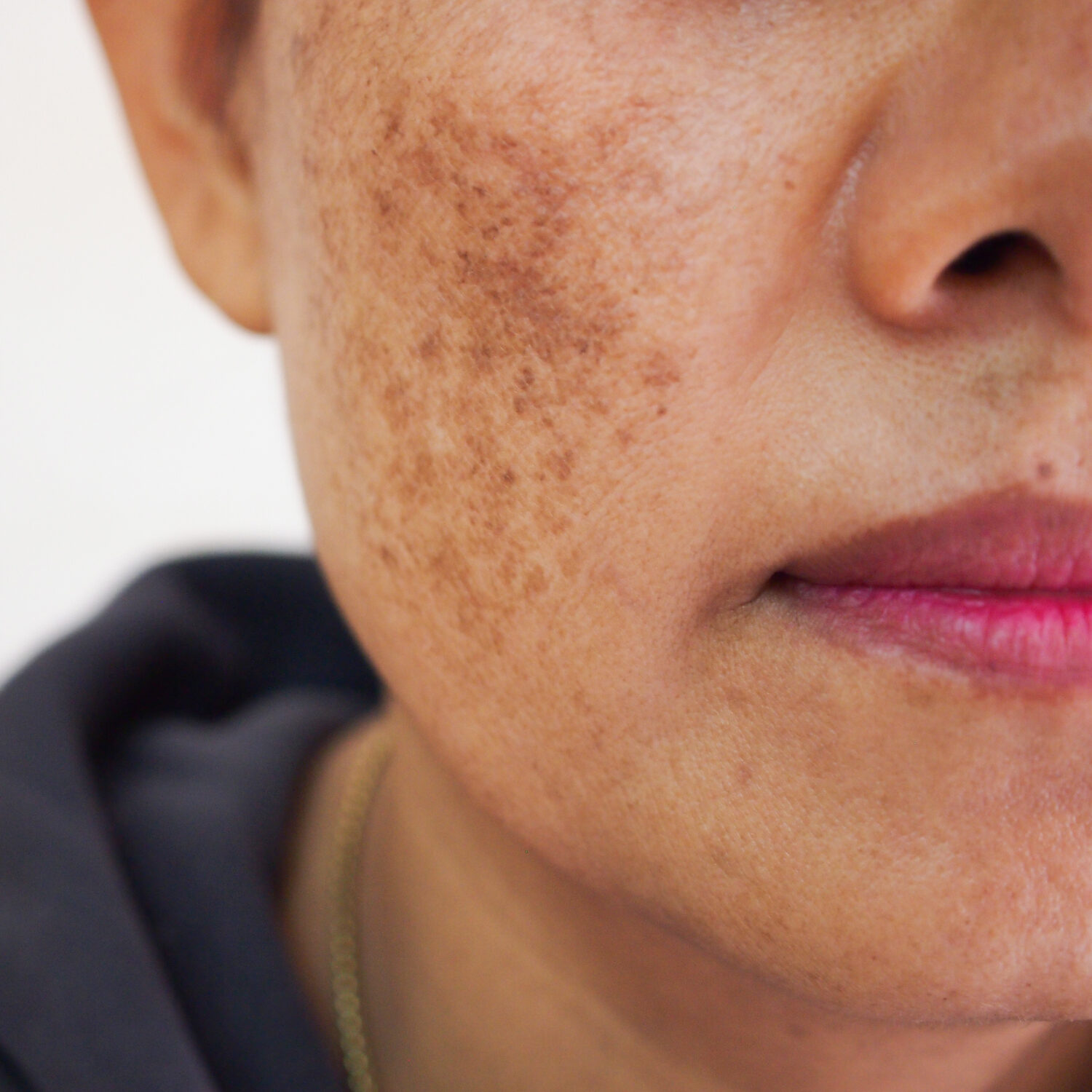
Age spots — also called sun spots or liver spots — are flat, darkened patches caused by years of UV exposure, especially common in the Scottsdale sun. Dr. Borakowski treats them with targeted light-based therapies like PhotoFacial IPL, laser resurfacing, and clinical-grade peels.

See all treatments

Match your age spots to the right treatment — Photo Facial for lighter skin tones, PRX-T33 and peels for darker skin, by Fitzpatrick.


Brown Spots That Won’t Fade on Their Own

Age spots — the clinical term is solar lentigines, though most patients know them as liver spots or sun spots — are flat, well-defined brown patches that form where sun exposure has accumulated over years. They’re not harmful, they’re not freckles, and unlike the flushing that comes and goes, they don’t fade on their own. Each spot is a discrete cluster of melanin sitting in the upper dermis, a record of UV radiation that has outpaced your skin’s natural repair cycle. In Scottsdale, where UV index runs high year-round and decades of Arizona sun compound the effect, they tend to appear earlier and more densely than in lower-UV climates.

At Desert Bloom, Dr. Natalya Borakowski, NMD routes age spot treatment by Fitzpatrick skin tone — because the correct approach for a patient with lighter skin is fundamentally different from the safe approach for darker skin. Alexandrite 755nm Photo Facial targets melanin clusters precisely on Fitzpatrick I–III; for Fitzpatrick IV–VI, that same melanin affinity becomes a liability, and the correct path is PRX-T33 biorevitalization, mandelic chemical peels, and iontophoresis-delivered brightening actives. The consultation determines the routing; there is no single device or product that fits all skin tones for this concern.

Sibling concerns: Hyperpigmentation (broader pigment umbrella), Melasma (hormone-driven symmetrical patches), Sun Spots (diffuse UV-scattered variant).

At a Glance

Scope. Four in-clinic age spot treatment options across two Fitzpatrick-gated paths: Photo Facial (Alexandrite 755nm, Fitz I–III only), Unicorn Facial (PRX-T33, all skin tones), Custom Chemical Peel (mandelic/TCA), and Iontophoresis Facial for brightening maintenance. Starting at $175 for surface peels; laser series range higher based on spot density.

Provider & candidacy. Dr. Borakowski assesses spot depth, density, and Fitzpatrick skin type at consultation. Alexandrite laser is not indicated for Fitzpatrick IV–VI — its melanin affinity creates burn and PIH risk on darker skin. Non-laser routing (PRX-T33, mandelic peels, iontophoresis) is first-line for all medium-to-dark skin tones.

Downtime & how to start. Ranges from none (iontophoresis, PRX-T33 with 3–5 days light peeling) to 7–14 days post-darkening with Photo Facial. Sun protection at SPF 50+ daily is mandatory after any pigment treatment — without it, treated spots return. Book a consultation; you don’t need to self-diagnose your Fitzpatrick type.

What Causes Age Spots?

Age spots form where melanin production has been consistently over-stimulated by UV — and the four cards below map the mechanism to the clinical picture you’ll see in the mirror.

Cumulative UV Exposure

The sun emits UVA and UVB radiation. UVA penetrates the dermis and is the primary driver of solar lentigo formation; UVB drives acute burns. Together, they trigger melanocytes — the pigment-producing cells in the skin’s outer layer — to overproduce melanin as a protective response. Each bout of sun exposure adds to a lifelong tally. Age spots are the visible record of that tally. Arizona’s year-round UV index means the tally accumulates faster than it would in lower-UV regions.

Tanning beds carry the same UV load and accelerate spot formation just as sun exposure does — most patients who develop dense age spots in their forties report a history of indoor tanning in their twenties.

Age and Cumulative Skin Damage

In younger skin, melanin is produced evenly and distributed efficiently. After middle age, melanocyte distribution becomes uneven — some areas accumulate pigment clusters rather than dispersing melanin uniformly. This is why most true age spots appear from the forties onward, even if the UV exposure driving them happened decades earlier. The skin’s natural pigment is no longer reset evenly after each UV hit.

Age spots that appear in early adulthood are more often freckles or early sun spots from high-intensity, repeated sun exposure — not the same pathology as the discrete flat brown clusters of later life.

Site Predilection — Where Spots Form

Solar lentigines concentrate on chronically sun-exposed areas: the face (cheeks, forehead, temples), hands, décolleté, forearms, shoulders, and arms. The chest and upper back appear in patients with a strong history of outdoor sports or sun bathing. Spots rarely appear on areas shielded by clothing year-round — a finding that confirms UV exposure as the driver rather than systemic or hormonal factors.

The outer layer of skin on the hands ages differently than the face — thinner dermis, less sebaceous activity — which is why age spots on hands can look more pronounced even when facial spots are mild.

Risk Factors

  • Fitzpatrick I–II skin: Higher baseline sun sensitivity, most spot-prone, but also the group for whom laser treatment carries the lowest risk.
  • Family history: Natural pigment distribution and melanocyte sensitivity have a genetic component.
  • History of tanning beds or intense sun sports.
  • Incomplete or inconsistent sun protection — broad spectrum SPF 50+ used sporadically is much less protective than daily consistent use.
  • Past radiation therapy — in treated areas, pigment changes can resemble solar lentigines and require dermatologist assessment.

Age Spots vs. Other Dark Spots — Why the Distinction Matters

Most people arrive at a consultation already having self-diagnosed. The problem is that melasma, post-inflammatory hyperpigmentation, freckles, and true age spots all look like “brown spots” in photos — but they route to different treatments. Treating melasma with a heat-based laser, for instance, is a known trigger for worsening. Getting the type right before selecting a device or peel is not a formality — it’s the whole decision.

Age Spots vs. Melasma

Age spots (solar lentigines): Discrete, flat, tan-to-dark-brown, sharply bordered. UV-driven exclusively. Appear on sun-exposed sites. No hormonal component.

Melasma: Symmetrical gray-brown patches on cheeks, forehead, upper lip. Driven by estrogen fluctuation — pregnancy, birth control, HRT — plus UV. Heat-based lasers can trigger post-inflammatory hyperpigmentation in melasma; non-heat approaches are preferred for any patient with melasma-pattern pigment regardless of skin tone.

See melasma treatment at Desert Bloom →

Age Spots vs. Post-Inflammatory Hyperpigmentation (PIH)

Age spots: No preceding injury or inflammation. No acne history at the site. Appear in adults 40+ on sun-exposed areas.

PIH: Dark marks that form after acne breakouts, wound healing, or other skin inflammation. More common and more persistent in medium-to-dark skin tones. The inflammation source must be under control before aggressive treatment; otherwise the treatment itself can generate new PIH. Both conditions may coexist in the same patient.

Full hyperpigmentation routing →

Age Spots vs. Freckles (Ephelides)

Freckles: Appear in childhood and early adolescence, most heavily in Fitzpatrick I–II patients. Fade with age and with reduced sun exposure. Seasonally variable — darker in summer, lighter in winter. Genetic, not purely UV-accumulated.

Age spots: Appear in adults, typically after 40. Don’t fade with reduced sun exposure. Stable in color once formed. Deepen with further UV exposure. Unlike freckles, they persist and often intensify over time without treatment.

Age Spots vs. Sun Spots

Clinically, these are nearly the same condition — both are UV-induced, flat, brown, and occur on sun-exposed skin. The difference is one of pattern and age of onset. “Sun spots” tends to describe diffuse, scattered pigment changes appearing earlier in life from intense acute UV exposure. “Age spots” (or liver spots) describes the more isolated, larger, darker clusters that accumulate after sustained UV over decades.

At Desert Bloom, they route the same way — Fitzpatrick skin type determines the safe device choice, not what you call the spots.

Sun spot treatment options →

Which Treatment Is Right for Your Skin Tone?

Skin tone — measured on the Fitzpatrick scale — is the primary gate for age spot treatment selection. Alexandrite 755nm, used in Photo Facial, works by targeting melanin clusters selectively. That selectivity depends on the contrast between the dark spot and surrounding skin. On Fitzpatrick IV–VI, background melanin density is too high for that contrast to hold safely — the device cannot reliably distinguish spot melanin from skin melanin, and the risk of thermal injury or new post-inflammatory hyperpigmentation is real. The non-laser path exists precisely because it delivers results without that risk.

Fitzpatrick IV–VI: Alexandrite Laser Is Contraindicated for Pigment

Do not schedule Photo Facial for age spot correction if your skin is Fitzpatrick IV or darker. Alexandrite 755nm has high melanin affinity — on medium-to-dark skin tones, it cannot reliably distinguish spot melanin from surrounding skin melanin. The result can be burns, blistering, or post-inflammatory hyperpigmentation worse than the original spots. This is not a precaution — it is a contraindication. Nd:YAG 1064nm is also not indicated for pigment (it targets oxyhemoglobin, not melanin — it is a vascular laser). The correct path for Fitzpatrick IV–VI age spots is: PRX-T33 Unicorn Facial → mandelic chemical peels → iontophoresis brightening. Dr. Borakowski confirms Fitzpatrick type at every consultation.

Age Spot Treatments at Desert Bloom

Four in-clinic options — each card below links to the full treatment page with procedure details, candidacy, downtime, and Scottsdale pricing.

Photo facial treatment — Alexandrite 755nm IPL for age spots
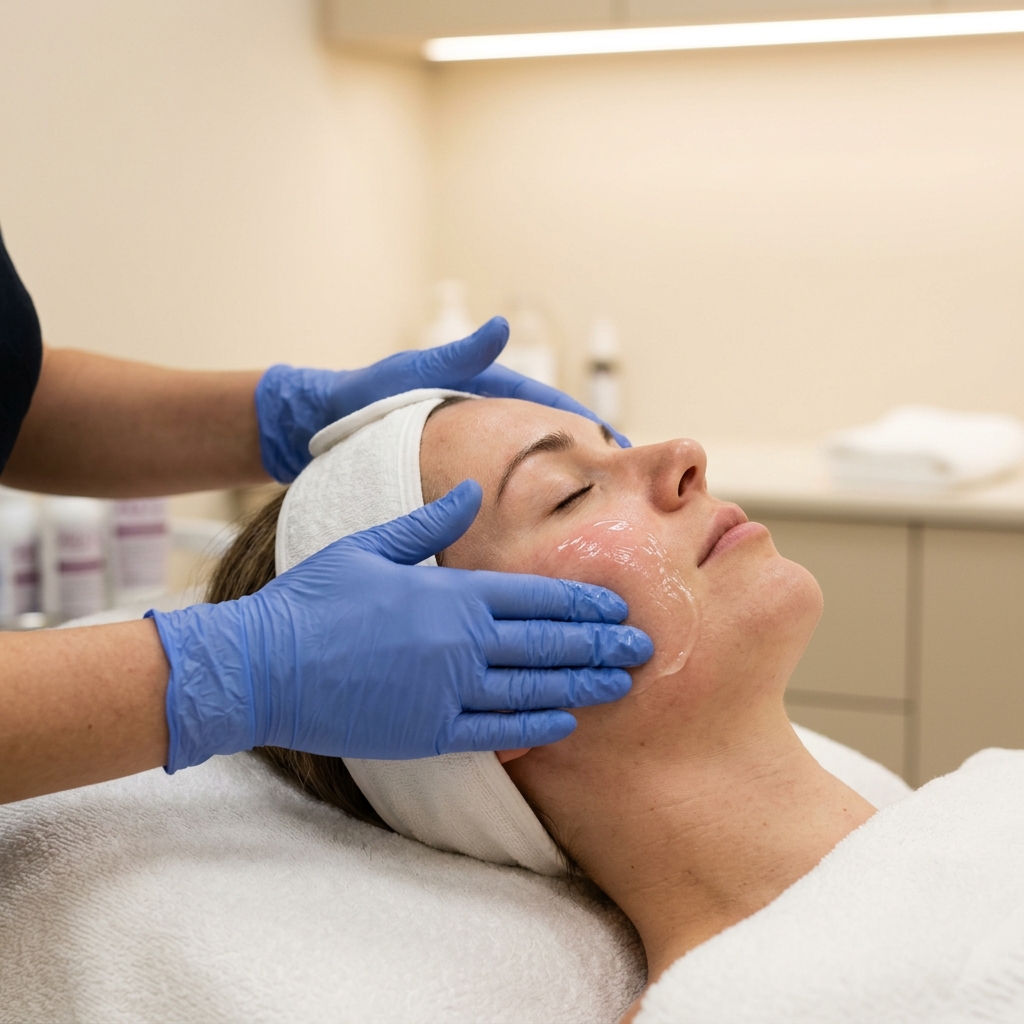
Photo Facial — Alexandrite 755nmThe primary in-clinic treatment for discrete age spots on lighter skin. Selective photothermolysis targets melanin clusters without disrupting surrounding tissue. Spots darken briefly over 7–14 days then shed. Most patients see 80–95% spot reduction in 1–3 sessions. A small area test may be done before a full-face treatment to confirm skin response.Best for: Fitzpatrick I–III · Discrete isolated spots · Minimal downtime · See full Photo Facial details →
Unicorn Facial PRX-T33 biorevitalization treatment in Scottsdale
Unicorn Facial — PRX-T33 BiorevitalizationFirst-line for Fitzpatrick IV–VI age spots and the correct non-laser route for any skin tone where heat is contraindicated. PRX-T33 combines TCA, hydrogen peroxide, and kojic acid to stimulate collagen production and suppress excess melanin production without ablation or thermal injury. Mild surface peeling 3–5 days. Full tone-evening effect over 3–5 sessions. Safe across all Fitzpatrick types.Best for: Fitzpatrick IV–VI · All skin tones · Age spots + overall tone · See full Unicorn Facial details →
Custom chemical peel for dark spots and age spot treatment
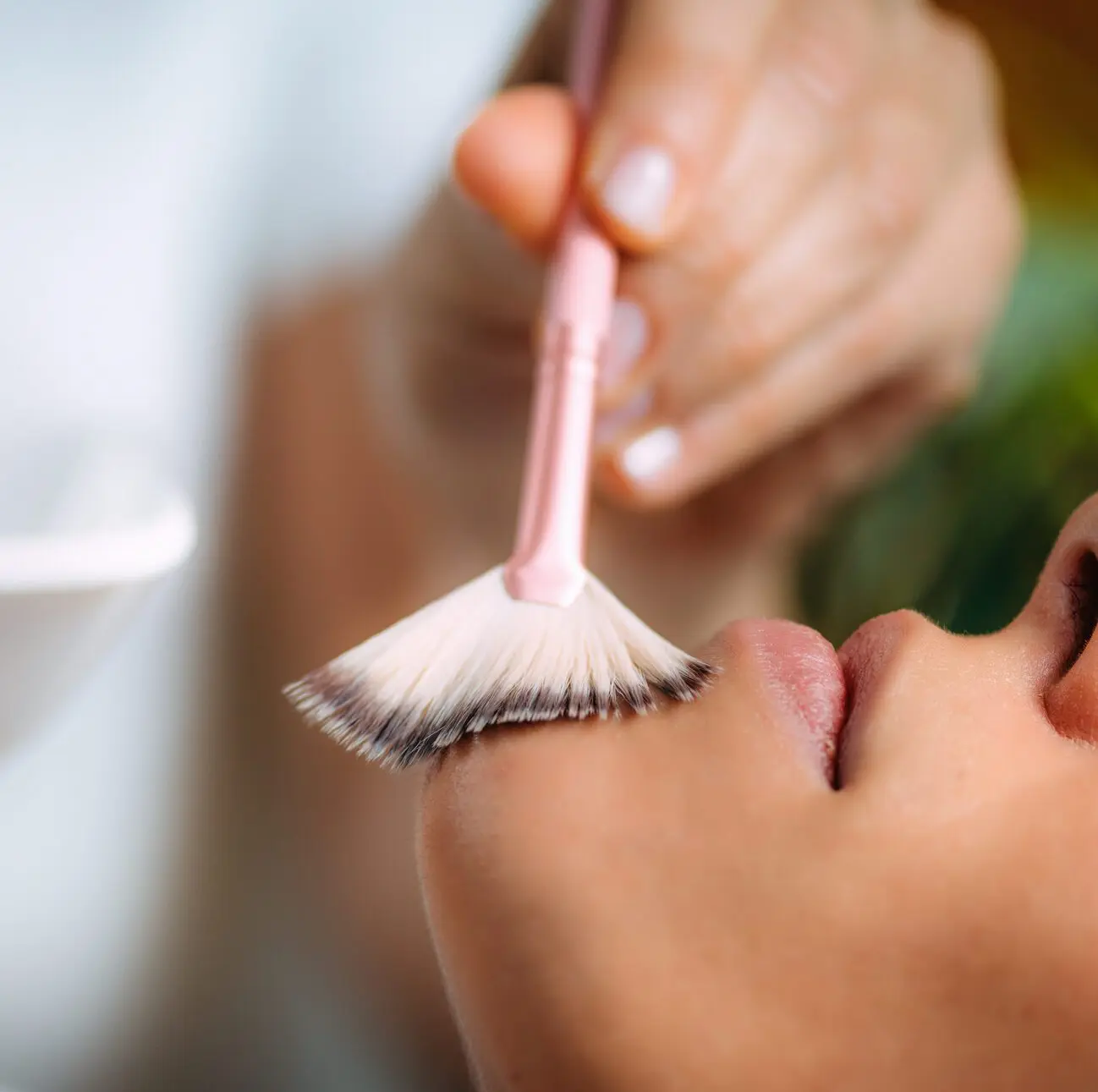
Custom Chemical Peel — Dermaquest Mandelic & TCAMandelic acid peels are selected for Fitzpatrick IV–VI patients needing stepwise pigment correction — the larger molecule size means slower, more controlled penetration with less PIH risk than glycolic or salicylic equivalents. TCA peels address moderate-to-deeper pigment on lighter skin tones. Chemical peels can be used as a primary age spot treatment, as a preparation before Photo Facial, or as ongoing maintenance between laser sessions. 3–7 days light-to-moderate peeling depending on depth.Best for: All Fitzpatrick · Diffuse pigment · Stepwise approach · See full Chemical Peel details →
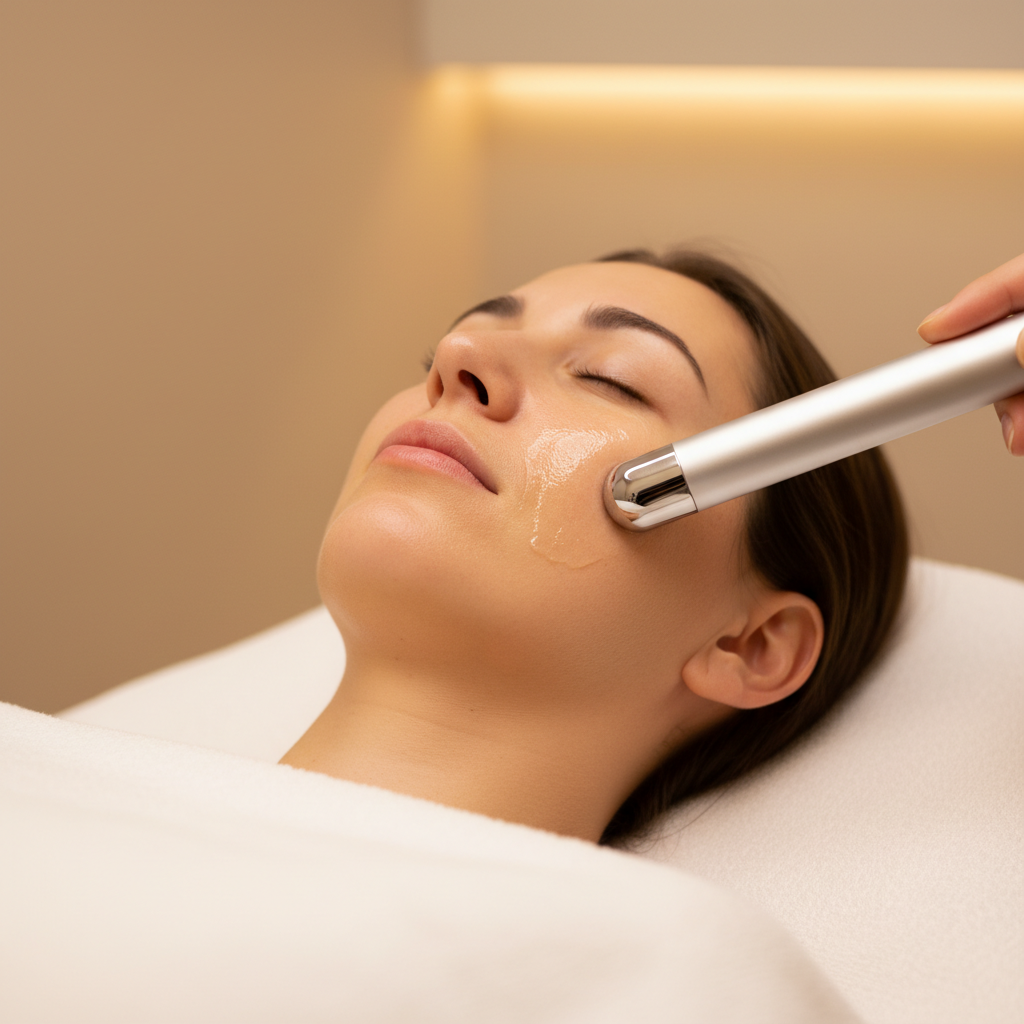
Iontophoresis facial with Environ device for brightening — Scottsdale
Flawless Skin Facial — Iontophoresis BrighteningUses low-level electrical current to drive brightening actives — vitamin C, tranexamic acid, niacinamide — below the surface layer where topical application alone doesn’t reach. Zero downtime. Safe on all Fitzpatrick types, including the darkest skin tones where heat-based treatments are contraindicated. Best used as a monthly maintenance treatment alongside primary corrective work — Photo Facial series for Fitz I–III, PRX-T33 series for Fitz IV–VI. Also helps suppress new pigment formation by supporting the skin’s natural protection mechanisms.Best for: All Fitzpatrick · Zero downtime · Maintenance · Brightening actives · See full Iontophoresis Facial details →

When to See a Dermatologist Instead

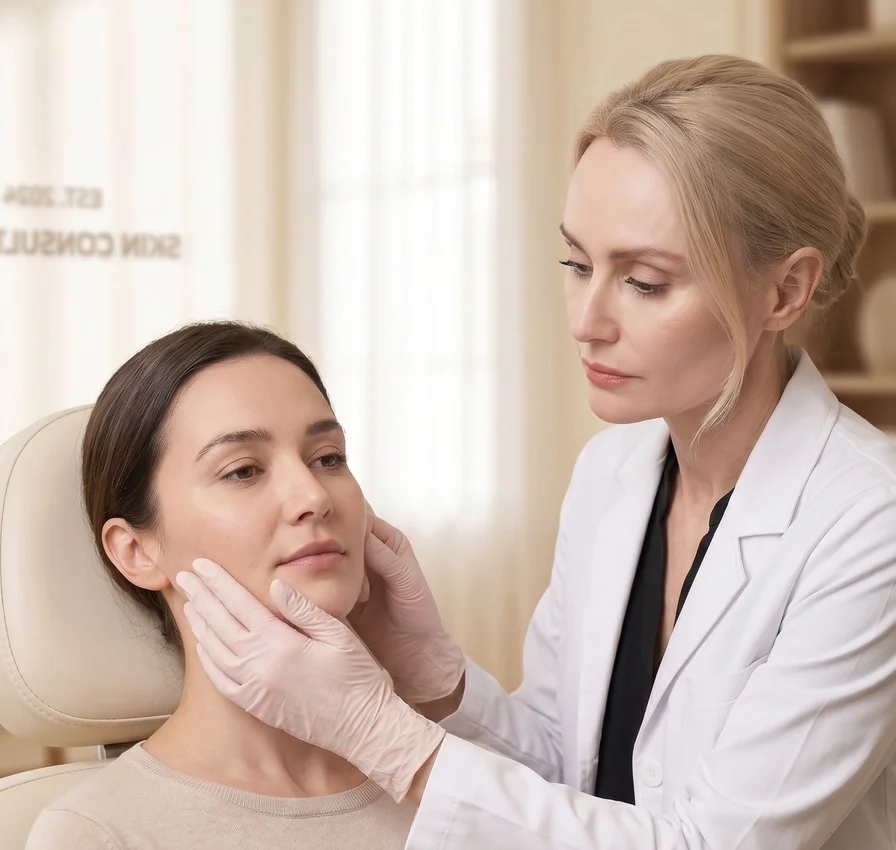
Most true age spots — flat, uniformly tan-to-brown, stable, with regular borders — are straightforward to evaluate and treat in an aesthetic clinical setting. A number of clinical signs, however, should prompt a dermatologist visit before any cosmetic treatment is chosen. Any pigmented lesion needs to be screened to rule out skin cancer before proceeding with cosmetic correction. Apply the ABCDE rule: any spot with Asymmetry, irregular Border, multiple Colors within the same lesion, a Diameter larger than 6mm, or a recent change in size or texture (Evolution) needs dermatologist assessment to rule out lentigo maligna (a melanoma precursor — a form of skin cancer — that mimics age spots), seborrheic keratosis that has changed, or other atypical pigmented lesions. A lesion that bleeds, itches, or has developed raised texture over age spots that were previously flat is also a reason to pause cosmetic treatment and get a medical evaluation first.

At Desert Bloom, Dr. Borakowski reviews the morphology of spots at consultation and will refer to a dermatologist when a lesion shows any atypical features. Aesthetic treatment is not initiated on any pigmented lesion with a suspicious clinical history. For patients with a prior diagnosis of melanoma or lentigo maligna, in-clinic laser or peel treatment on the same site is deferred pending dermatologist clearance. This is not a barrier to treatment — it’s the sequence that keeps it safe.

Prescription-strength topical treatments are part of the medical lane for age spots: hydroquinone at higher concentrations (4%+) requires a physician prescription and is the most evidence-based topical for solar lentigo reduction, working by suppressing tyrosinase activity in melanocytes. Retinoids (tretinoin) accelerate skin cell turnover and help fade superficial pigment over several weeks to months. Tranexamic acid and vitamin C can be used as prescription-adjacent topicals or delivered via iontophoresis in-clinic. For patients whose age spots are mild or who are not yet ready for in-clinic treatment, a topical program supervised by Dr. Borakowski is a reasonable starting point — and is almost always the correct maintenance program even after in-clinic correction is complete.

SPF 50+ broad spectrum sunscreen applied daily is the single most important prevention measure for both new spot formation and maintaining results after treatment. In Arizona, reapplication every two hours during peak sun hours is not optional advice — UV exposure at this latitude can re-trigger melanin production in previously treated spots within months if protection lapses. Wide-brimmed hats and protective clothing on the shoulders and arms extend the protection beyond what sunscreen alone provides on high-activity days.

Dr. Natalya Borakowski photo facial consultation for age spots

Compare Age Spot Treatment Options

Four treatments, two Fitzpatrick-gated paths. The table columns map to the spokes routed from this hub.

FeaturePhoto FacialUnicorn FacialChemical PeelIontophoresis
FitzpatrickI–III ONLYAll (I–VI)All (I–VI)All (I–VI)
MechanismAlexandrite 755nm laser — selective photothermolysisPRX-T33 biorevitalization + kojic acidAcid exfoliation (mandelic / TCA)Electrical brightening active delivery
Downtime7–14 days darkening then shedding3–5 days mild surface peeling3–7 days light-moderate peelingNone
Sessions typical1–3 for isolated spots3–54–6Ongoing monthly
Best forDiscrete sun spots, lighter tonesAge spots + tone, all Fitz incl. IV–VIDiffuse pigment, stepwise, maintenanceBrightening maintenance, zero downtime
Starting price$250+$350+$175+$175+
FitzpatrickI–III ONLY
MechanismAlexandrite 755nm laser — selective photothermolysis
Downtime7–14 days darkening then shedding
Sessions typical1–3 for isolated spots
Best forDiscrete sun spots, lighter tones
Starting price$250+
FitzpatrickAll (I–VI)
MechanismPRX-T33 biorevitalization + kojic acid
Downtime3–5 days mild surface peeling
Sessions typical3–5
Best forAge spots + tone, all Fitz incl. IV–VI
Starting price$350+
FitzpatrickAll (I–VI)
MechanismAcid exfoliation (mandelic / TCA)
Downtime3–7 days light-moderate peeling
Sessions typical4–6
Best forDiffuse pigment, stepwise, maintenance
Starting price$175+
FitzpatrickAll (I–VI)
MechanismElectrical brightening active delivery
DowntimeNone
Sessions typicalOngoing monthly
Best forBrightening maintenance, zero downtime
Starting price$175+
1 / 4
swipe to compare

Fitzpatrick IV–VI: Laser Is Not the Path for Pigment

This is worth restating plainly, because patients on darker skin tones are sometimes offered laser pigment treatments at other clinics and are surprised to encounter this contraindication. The issue is not that lasers can’t be used on darker skin — Nd:YAG 1064nm is safe and effective for vascular concerns (rosacea, spider veins) on all Fitzpatrick types. The issue is specific to pigment lasers: Alexandrite 755nm targets melanin. On Fitzpatrick IV–VI, that targeting is indiscriminate — it cannot reliably distinguish spot melanin from background skin melanin. The result can be thermal burns, post-inflammatory hyperpigmentation (darker patches than the original spots), or hypopigmented white marks. None of these are acceptable cosmetic outcomes.

Safe Pigment Treatment for Medium-to-Dark Skin Tones

Fitzpatrick IV–VI pigment path at Desert Bloom: PRX-T33 (Unicorn Facial) → Dermaquest mandelic peels → Iontophoresis with brightening actives (vitamin C, tranexamic acid, niacinamide). These three options deliver meaningful age spot correction without thermal risk. At-home adjuncts: broad spectrum SPF 50+ daily, prescription hydroquinone if indicated, topical retinoids, vitamin C serum. Dr. Borakowski confirms skin type at every consultation before any device or chemical selection is made.

Frequently asked questions

Can you get rid of age spots completely? Many discrete solar lentigines fade 80–95% after Photo Facial (Fitz I–III) or PRX-T33 series (Fitz IV–VI). Results depend on spot depth, density, and consistent SPF use after treatment. Very deep or densely clustered spots may require additional sessions or maintenance. No treatment permanently prevents new spots from forming with future UV exposure.
Are age spots and liver spots the same thing? Yes — same condition, different names. “Liver spots” is an older lay term (the name came from an incorrect historical association with liver disease — there is no connection to liver health). The clinical term is solar lentigines. “Age spots” and “sun spots” are also used interchangeably in most clinical contexts.
Will age spots come back after treatment? Treated spots fade permanently. However, new spots can form on previously clear skin with continued UV exposure — especially in Arizona where UV index is high year-round. SPF 50+ broad spectrum sunscreen applied daily, with reapplication every two hours during peak sun hours, is mandatory after any pigment treatment to protect results.
Is Photo Facial (IPL / Alexandrite) safe for darker skin tones? No. Alexandrite 755nm has high melanin affinity — it cannot reliably distinguish spot melanin from surrounding skin melanin on Fitzpatrick IV–VI. The risk is burns, blistering, and post-inflammatory hyperpigmentation worse than the original spots. Fitzpatrick IV–VI patients route to PRX-T33 (Unicorn Facial), mandelic chemical peels, and iontophoresis — the non-laser path. This is a clinical contraindication, not a preference.
How many sessions does age spot treatment take? Photo Facial: 1–3 sessions for most isolated discrete spots. Unicorn Facial (PRX-T33): 3–5 sessions. Chemical peels: 4–6 sessions. Iontophoresis: ongoing monthly maintenance. Total depends on spot density, depth, and whether you’re treating a focused area or full-face diffuse pigment. Dr. Borakowski maps a session estimate at your consultation.
What’s the difference between age spots and skin cancer? True age spots are flat, uniformly tan-to-brown, have regular borders, and are stable over time. A pigmented spot that has an irregular or poorly defined border, multiple colors within the same lesion, is asymmetrical, is growing, has changed texture, bleeds, or itches should be evaluated by a dermatologist before any cosmetic treatment is applied. These are the ABCDE warning signs (Asymmetry, Border, Color, Diameter >6mm, Evolution). Lentigo maligna is a melanoma precursor that can mimic a large age spot.

Can topical creams treat age spots at home? Prescription-strength hydroquinone (4%+), tretinoin (retinoids), vitamin C serum, tranexamic acid, and niacinamide can suppress pigment formation and gradually lighten mild superficial spots over several weeks to months. They’re useful as maintenance and as a complement to in-clinic treatment, but they won’t clear well-established deeper solar lentigines the way Photo Facial or PRX-T33 series will. Higher concentrations of hydroquinone require a physician prescription.
Dr. Natalya Borakowski, NMD
Medically reviewed byDr. Natalya Borakowski, NMDFounder, Desert Bloom Skincare
“Age spots are one of the most straightforward concerns I treat — once we know your Fitzpatrick type, the right tool is clear. The bigger issue I see is patients who’ve been offered laser on darker skin at other clinics, or who’ve been told their spots are untreatable. Neither is true. There is a correct path for every skin tone; it just isn’t always the same path.”

Start Your Age Spot Assessment in Scottsdale

Age spots are among the most reliably correctable pigment concerns we see — the right consultation gives you a clear path before you invest in any treatment. Dr. Borakowski assesses spot depth, density, and Fitzpatrick skin tone in person, then maps which treatment (or sequence of treatments) fits your specific presentation.

The consultation is where the routing happens. You don’t need to know your Fitzpatrick type, you don’t need to have tried topicals first, and there’s no obligation after — just a clear plan you can move forward with at your own pace.

References

  1. Ortonne JP, Pandya AG, Lui H, Hexsel D “Treatment of solar lentigines.” J Am Acad Dermatol. 2006. DOI(CORRECTED — DOI in draft (10.1016/j.jaad.2005.10.011) resolved to a Henoch-Schönlein purpura paper (Zurada et al.). Real DOI for Ortonne solar lentigines JAAD 2006: 10.1016/j.jaad.2005.12.043, PMID 16631967 confirmed via PubMed.)
  2. Tse Y, Levine VJ, McClain SA, Ashinoff R “The removal of cutaneous pigmented lesions with the Q-switched ruby laser and the Q-switched neodymium:yttrium-aluminum-garnet laser. A comparative study.” J Dermatol Surg Oncol. 1994. DOI(CORRECTED — DOI in draft (tb01640.x) not found in CrossRef. Real DOI: 10.1111/j.1524-4725.1994.tb03707.x, PMID 7798410 confirmed. Title, authors, journal, year all match.)
  3. Grimes PE, Green BA, Wildnauer RH, Edison BL “The use of polyhydroxy acids (PHAs) in photoaged skin.” Cutis. 2004. (CORRECTED — PMID in draft note (15095905) is a cadmium ecotoxicology paper. Real PMID for Grimes PHA photoaged skin Cutis 2004: 15002656, confirmed via PubMed.)
  4. Passeron T, Picardo M “Melasma, a photoaging disorder.” Pigment Cell Melanoma Res. 2018. DOI(VERIFIED — PMID 29285880 confirmed. DOI matches CrossRef and PubMed.)
  5. Watanabe S “Basics of laser application to dermatology.” Arch Dermatol Res. 2008. DOI(CORRECTED — DOI in draft (0816-4) not valid. Real DOI: 10.1007/s00403-007-0801-6, PMID 17962966 confirmed via PubMed. Author, journal, year match.)

Treatments

  1. CO2 Cool Peel$625
     
  2. CO2 Laser Resurfacing$1500
    60 minutes
  3. Custom chemical peel$100
    45 minutes
  4. Dermaplaning with HydroPeptide$125
    60 minutes
  5. Desert Skin Reset — 3-Step Facial Program299
    45 minutes and up and up
  6. Erbium Laser Resurfacing$675
    45 minutes and up
  7. Iontophoresis Facial Scottsdale AZ | No Downtime Results$249
    90 min
  8. Laser facial$275
    60 minutes
  9. Laser resurfacing treatment$675
    30 and up
  10. Mesotherapy$85
    60 minutes
  11. Photo Facial$575
    15 minutes and up
  12. Restore Desert-Stressed Skin — 3 Treatments. 4–6 Weeks. Real Results.450$
    4–6 Weeks and up
  13. Unicorn Facial | PRX-T33$950 / 4 treatments
     

Consultation in skin care clinic

Desert Bloom Skincare Center offers personalized skincare consultation to help you achieve a flawless and radiant complexion. Book your appointment today and let our expert team of skincare professionals address your specific concerns and help you reach your skincare goals.

Visit Our Scottsdale Aesthetic Center

Address

10752 N 89th Place, Suite 122B,
ScottsdaleAZ 85260.

Phone:(480) 567-8180

E-mail:info@desertbloomskincare.com

Get Directions →

Location & Directions

Desert Bloom Skincare is conveniently located in the Shea Corridor of North Scottsdale, within Edwards Professional Park I — minutes from HonorHealth Scottsdale Shea Medical Center and the Mayo Clinic Scottsdale Campus.

↑↓
From the North / South: Take Loop 101 (Pima Freeway) and exit at E Shea Blvd. We are located just East of the freeway.
From Paradise Valley: Head East on E Shea Blvd toward North 90th Street.
P
Parking: Ample free parking is available directly in front of Suite 122B.

Areas We Serve

We proudly provide expert non-surgical rhinoplasty and PDO thread lifts to patients across the Southwest:

  • ScottsdaleNorth Scottsdale · McCormick Ranch · Gainey Ranch
  • Paradise Valley
  • PhoenixArcadia · Biltmore · North Phoenix
  • Fountain Hills
  • Cave Creek & Carefree

Contact usDo you have any questions?