Dysport in Scottsdale, AZ 85260
Faster Onset, Broader Coverage
Some patients come in asking about Dysport specifically — they heard it works faster, or they want a different botulinum toxin product than Botox. Others are not sure which neurotoxin is right — they just know the lines between their eyebrows are deeper than they used to be.
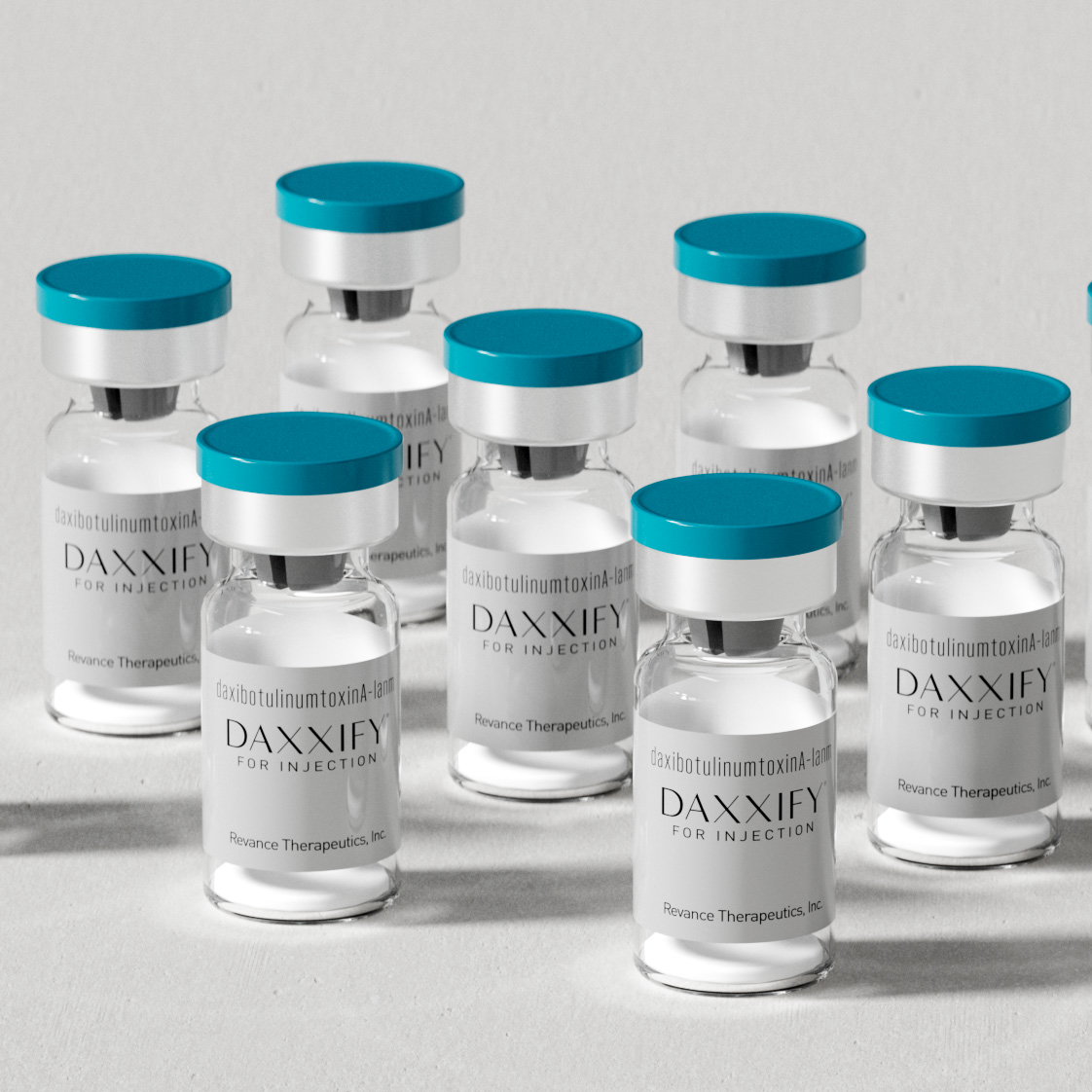
Dysport is one of three botulinum toxin treatments at Desert Bloom, alongside Botox and Daxxify.
At a Glance
Scope. What it is: FDA-approved botulinum toxin (abobotulinumtoxinA) that temporarily relaxes facial muscles to smooth dynamic wrinkles. Results duration: 3–4 months (lip flip 6–8 weeks; masseter 4–6 months).
Provider & candidacy. Recovery: No downtime — return to most activities immediately. Side effects: Mild bruising or tenderness, temporary headache; serious side effects rare.
Downtime & how to start. Ideal candidate: Adults with dynamic wrinkles, especially on larger foreheads where broader diffusion is an advantage. Cost starting: $4.00/unit — frown lines from $144, full upper face from $480.
What Is Dysport?
Made by Galderma Laboratories, Dysport (abobotulinumtoxinA) is a prescription botulinum toxin product in the same drug class as Botox and Daxxify. FDA-approved since 2009 for moderate to severe frown lines (glabellar lines) and since 2022 for crow’s feet (lateral canthal lines), it works by temporarily blocking nerve signals to targeted facial muscles, preventing acetylcholine release at the neuromuscular junction — the chemical signal that tells a muscle to contract.
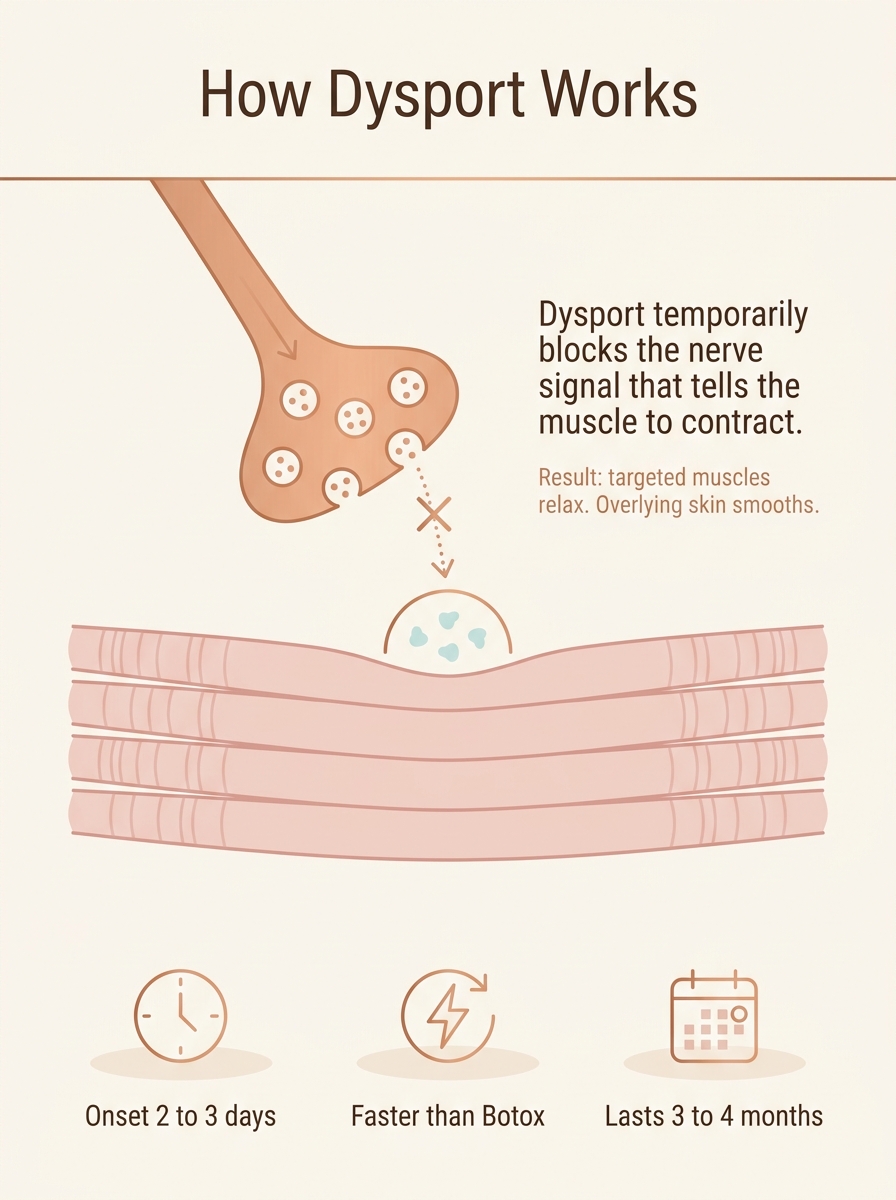
When those muscles relax, the dynamic wrinkles and fine lines that form with facial expression — the lines that appear when you frown, squint, or raise your eyebrows — soften and smooth. Dysport is approved for cosmetic purposes in adults and has also been used therapeutically for muscle-spasm conditions like cervical dystonia and spasticity in cerebral palsy or stroke patients.
Dysport belongs to the same drug class as Botox and Daxxify — all three are botulinum toxin type A products. What distinguishes Dysport is its formulation and diffusion: it tends to diffuse more broadly from the injection site than other botulinum toxin products, which can be advantageous when treating large, flat muscles like the frontalis — particularly on patients with a tall or large forehead. The broader spread creates even coverage, though it requires careful assessment on smaller foreheads to avoid brow heaviness. Dysport is one of three neurotoxins Dr. Borakowski offers at Desert Bloom.
How Does Dysport Work?
The injection process is straightforward: a fine 30–32 gauge needle delivers small amounts into specific facial muscles via intramuscular injection. The drug temporarily blocks the nerve signal that tells a muscle to contract — and when the muscle relaxes, the skin above it smooths out.
What makes the product behave differently from Botox is its diffusion pattern — how far it spreads from each injection point. The broader spread creates even results across larger muscle groups. The effect lasts 3–4 months as nerve function gradually returns through new neuromuscular connections.
Dysport Treatment Areas
Two cosmetic indications are FDA-approved: moderate to severe frown lines (glabellar) and crow’s feet. Several additional treatment areas are used off-label based on clinical evidence and standard of care in aesthetics. At Desert Bloom, Dr. Borakowski tailors the injection placement and dosage to your specific facial anatomy — not a fixed template.

Forehead Lines
Dysport’s broader diffusion can be an advantage on the forehead — particularly for patients with a tall or large forehead, where even coverage across the frontalis creates uniform relaxation. On a smaller forehead, that same diffusion can cause brow heaviness or droopy eyelids, which is why assessment matters more than product selection. A typical treatment ranges from 36 to 60 units, always in conjunction with the glabellar area. Off-label.
Frown Lines (Glabellar / “11s”)
This is Dysport’s primary FDA-approved cosmetic indication for severe glabellar lines. The vertical lines between the eyebrows — sometimes called “11 lines” — form when the procerus and corrugator muscles contract repeatedly. The standard dose ranges from 36 to 60 units depending on muscle strength and age, injected across 5 points (one midline procerus, two per corrugator). Duration is typically 3–4 months, comparable to Botox.
Crow’s Feet
FDA-approved for Dysport since 2022. The fine lines that radiate from the outer corners of the eyes during smiling are caused by the orbicularis oculi muscle. Typical treatment: 48–72 units total (both eyes), injected in a fan pattern lateral to the orbital rim. Duration: 3–4 months.
Lip Flip, Brow Lift, Bunny Lines and More
- Lip flip — 6–12 units along the upper lip border for a subtle eversion of the upper lip without adding volume (unlike filler). Duration is shorter (6–8 weeks) due to constant muscle activity from eating and speaking. Off-label.
- Brow lift (chemical brow lift) — 12–24 units (both brows) as an add-on to glabellar treatment. By relaxing the depressor muscles around the brow, the frontalis lifts unopposed, producing a subtle 1–3mm brow elevation. Off-label.
- Bunny lines — 12–24 units to the nasalis muscle. These lines along the nose often become more noticeable after glabellar treatment as patients compensate with nasal scrunching. Off-label.
- Straw lines (upper lip) — 12–24 units to smooth the fine vertical lines above the upper lip. Off-label.
- Gummy smile — 4–8 units to the levator labii superioris to reduce excessive gum exposure when smiling. Off-label.
- Chin dimpling (“orange peel” chin) — 12–18 units to the mentalis muscle. Off-label.
- Masseter / jaw slimming — 54–72 units total (both sides), depending on muscle density. Slims a square jawline and may relieve bruxism/TMJ-related clenching. Results compound with repeated treatments as the muscle progressively reduces in size. Duration: 4–6 months. Off-label.
- Platysma (neck bands) — 60–72 units. Softens prominent vertical neck bands. Off-label.
Dysport Dosing by Area
| Treatment Area | Typical Range | Botox Equiv. | FDA Status |
|---|---|---|---|
| Forehead lines | 36–60 units | 12–20 units | Off-label |
| Frown lines (glabellar) | 36–60 units | 12–20 units | FDA-approved |
| Crow's feet (both eyes) | 48–72 units | 16–24 units | FDA-approved |
| Brow lift (both brows) | 12–24 units | 4–8 units | Off-label |
| Bunny lines | 12–24 units | 4–8 units | Off-label |
| Lip flip | 6–12 units | 2–4 units | Off-label |
| Gummy smile | 4–8 units | 2–4 units | Off-label |
| Chin dimpling | 12–18 units | 4–6 units | Off-label |
| Masseter / jaw (both sides) | 54–72 units | 18–24 units | Off-label |
| Platysma (neck bands) | 60–72 units | 20–24 units | Off-label |
Dysport and Botox units are not interchangeable — each product is manufactured and measured differently, so one brand’s units don’t translate 1:1 to another. Dysport potency units are lower per unit than Botox, which is why the typical ratio is approximately 3:1 (150 units of Dysport ≈ 50 units of Botox). This ratio applies across all treatment areas.
Who Is a Good Candidate for Dysport?
Ideal Candidate Profile
Patients who may benefit most from Dysport injections
- Dynamic wrinkles that appear or deepen with facial expressions — not static lines caused by sun damage or volume loss
- Adults seeking a faster-acting neurotoxin — Dysport shows results in 2–3 days versus 3–5 for Botox
- Patients with a larger forehead, where Dysport’s broader diffusion can create even coverage
- Current Botox users interested in a different neurotoxin — Dysport is priced lower per unit with comparable duration
- Good overall health with no neuromuscular disorders
- Realistic expectations about temporary results that last 3–4 months
- Not pregnant or breastfeeding
Candidacy is not determined by age or gender. Some patients begin Dysport injections in their late 20s to prevent facial wrinkles and fine lines from becoming etched at rest. Others start in their 40s or 50s when lines have become more prominent. The right time depends on your anatomy, your concerns, and what you want the treatment to accomplish. Dr. Borakowski assesses each patient individually — reviewing your medical history, current medications, underlying conditions, and treatment goals before recommending whether Dysport is appropriate.
Good overall health without neuromuscular disorders and realistic expectations about temporary improvement are the baseline. Patients currently pregnant or breastfeeding are not candidates. Patients on muscle relaxants, certain anticholinergic drugs, or other agents interfering with neuromuscular transmission require discussion before treatment because drug interactions can potentiate the effects of botulinum toxin.
When Dysport Is NOT the Right Treatment
Static wrinkles (visible without muscle movement) are not caused by muscle contraction and require a different approach — dermal fillers for volume loss, or laser resurfacing for texture.
All botulinum toxin products carry a boxed warning for rare distant spread of toxin effect — discussed in the Safety section below.
Dysport Results — Day by Day
One of the most common questions about Dysport is what to expect after treatment. Here is a realistic timeline based on clinical trials and standard treatment observations across Dysport injections in adult patients.
Small bumps at injection sites fade within 30–60 minutes. Mild redness is possible. No visible wrinkle improvement yet — the product needs time to bind to nerve terminals.
Muscle movement in treated areas begins to decrease. Frown lines start to soften. Most patients notice changes within the first few days — this faster onset is one of Dysport’s distinct advantages over Botox.
Significant smoothing visible. Dynamic wrinkles are markedly reduced. Some areas may still be settling. Minor bruising (if any) has typically faded.
Full results develop by 2 weeks. This is when results should be evaluated. A 2-week follow-up is recommended — especially for first-time patients — to assess results and perform any touch-ups if needed.
Wrinkles begin to reappear as nerve terminals regenerate, but often less severely than before treatment. Muscle activity returns gradually over several weeks.
Dysport Before and After
Results may include a visibly smoother forehead appearance, relaxed frown lines, softened crow’s feet, and natural facial expression preserved. The goal is not to eliminate all movement — it is to reduce the repetitive muscle contractions that create and deepen wrinkles, while keeping your face expressive. Patients frequently describe the result as looking rested.
The goal is reduced contraction in targeted areas — not paralysis. View more results in our Before and After Gallery.
How Long Does Dysport Last?
Results typically last 3 to 4 months, depending on the treatment area, dosage, metabolism, and treatment history. The lip flip has a shorter duration — typically 6–8 weeks — because the muscles around the mouth are in constant use. Masseter treatment often lasts 4–6 months, in part because the muscle atrophies with repeated treatment.
First-time patients may notice a shorter duration as their muscles are still at full strength. Both Dysport and Botox typically last 3–4 months. Daxxify lasts the longest at a median of 6 months, a longer duration than either Dysport or Botox. The ideal retreatment window is when some movement has returned but before the full effect has worn off — typically re-treatment every 3–4 months.
Dysport vs Botox vs Daxxify
Dysport, Botox, and Daxxify are all botulinum toxin type A neurotoxins that block muscle contraction to smooth dynamic wrinkles. The differences are clinically meaningful: Dysport shows initial results in 2–3 days — faster than Botox (3–5 days) — and diffuses more broadly, which can be advantageous for larger foreheads and other large muscle groups. Botox has the longest clinical track record with 20+ years of data and the broadest range of FDA-approved indications. Daxxify lasts the longest at a median of 6 months and uses a synthetic peptide stabilizer instead of human serum albumin. Unit dosing differs between products and units are not interchangeable across brands — each toxin is manufactured and measured differently, so one brand’s units don’t translate 1:1 to another. Dr. Borakowski offers all three at Desert Bloom and recommends based on your anatomy and goals.
| Feature | Dysport | Botox | Daxxify |
|---|---|---|---|
| Active Ingredient | AbobotulinumtoxinA | OnabotulinumtoxinA | DaxibotulinumtoxinA |
| Manufacturer | Galderma | Allergan (AbbVie) | Crown Labs |
| FDA Approval (Cosmetic) | 2009 | 2002 | 2022 |
| Onset | 2–3 days | 3–5 days | ~2 days |
| Full Effect | 2 weeks | 2 weeks | 2 weeks |
| Duration | 3–4 months | 3–4 months | 6 months median |
| Diffusion | Broader spread | Moderate | More localized |
| Glabellar Dose | 36–60 units | 12–20 units | 24–40 units |
| Unit Ratio (to Botox) | ~3:1 | 1:1 (reference) | 2:1 |
| Price at Desert Bloom | $4.00/unit | $11.50/unit | $6/unit |
| Frown Lines Cost | $192 (48u) | $184 (16u) | $192 (32u) |
| Best For | Faster onset, broad coverage for larger foreheads, value-conscious patients | Precision near delicate areas, broadest evidence base | Longest duration, fewer visits per year |
There is no single “best” neurotoxin. Each has strengths depending on the patient’s priorities:
- Dysport may be a good fit if you want faster results (2–3 days), broad coverage for a larger forehead, or a cost-effective option per treatment area.
- Botox may be preferred if you value the longest safety track record, broadest FDA-approved indications, or need precise placement near delicate areas like the eyelids.
- Daxxify may be worth considering if you want the longest duration between treatments (approximately 6 months) or want to minimize appointments per year.
Dr. Borakowski carries all three at Desert Bloom and recommends based on your individual assessment — not a one-size-fits-all protocol.
How Much Does Dysport Cost?
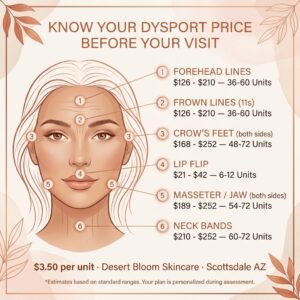
Dysport costs $4.00 per unit at Desert Bloom ($3.50 for Desert Reset members). Because Dysport requires roughly 3 times the number of units as Botox, the per-unit price is significantly lower — but the total treatment cost is what matters, and it is often comparable or slightly less than Botox for the same area.
| Treatment Area | Dysport Units | Cost ($4.00/unit) |
|---|---|---|
| Forehead lines | 36–60 | $144–$240 |
| Frown lines (glabellar) | 36–60 | $144–$240 |
| Crow's feet (both eyes) | 48–72 | $192–$288 |
| Full upper face (all three) | 120–192 | $480–$768 |
| Brow lift (both brows) | 12–24 | $48–$96 |
| Bunny lines | 12–24 | $48–$96 |
| Straw lines (upper lip) | 12–24 | $48–$96 |
| Lip flip | 6–12 | $24–$48 |
| Chin dimpling | 12–18 | $48–$72 |
| Masseter / jaw (both sides) | 54–72 | $216–$288 |
| Platysma (neck bands) | 60–72 | $240–$288 |
For example, frown lines typically cost $144–$240 with Dysport — comparable to Botox for the same area, despite the different unit count. Full pricing for all neurotoxins is available on our complete treatment pricing page.
Galderma offers the ASPIRE loyalty program for Dysport patients. Patients earn points on Dysport treatments and other Galderma products (including Restylane fillers and Sculptra) that are redeemable for savings on future treatments. Ask about enrollment during your consultation.
Dysport Calculator
Each treatment area requires a different number of units — and the cost depends on your anatomy, not a fixed menu. Select your areas and see a personalized estimate at Desert Bloom’s current rates.
What to Expect — Your Dysport Appointment
If this is your first visit, Dr. Borakowski evaluates your facial anatomy, muscle movement patterns, and skin quality. She discusses your goals, reviews your medical history — including underlying conditions, new medicines, over the counter medicines, supplements, and any prior reaction to botulinum toxin injections — and recommends a treatment plan, which may or may not include Dysport. There is no fee for the consultation.

Dr. Borakowski reviews your medical history and facial muscle movement patterns, discusses goals, and determines whether Dysport is the right choice. There is no fee for the consultation.
The treatment area is cleansed with antiseptic. Topical anesthetic is typically not needed — Dysport injections use very fine-gauge needles (30–32 gauge) and are quick.
Small amounts of Dysport are injected intramuscularly into the targeted muscles at precise points. Most patients describe the sensation as brief pinpricks. The entire injection portion takes approximately 15 minutes.
Small bumps at injection sites resolve within 30–60 minutes. Mild redness may be present. You can return to most daily activities immediately — no significant downtime required.
Dysport Aftercare
Post-treatment instructions are straightforward. Following them helps ensure the product stays where it was placed and reduces the risk of side effects.
- First 4 hours: Stay upright — do not lie down. Do not rub, press, or massage the treated areas.
- First 24 hours: No strenuous exercise or heavy lifting. No hot tubs, saunas, or alcohol. Avoid facials or other facial treatments. Makeup can typically be applied 4–6 hours after treatment with gentle application.
- First 1–2 weeks: Avoid facial massages. Avoid extended dental work if possible. Sleep on your back the first night if you can.
A 2-week follow-up is available after your Dysport treatment — recommended but not required. This allows Dr. Borakowski to evaluate the results, assess symmetry, and perform any minor adjustments if needed.
Dysport Side Effects and Safety
FDA-approved since 2009, Dysport has a well-established safety profile consistent with other botulinum toxin products, supported by large randomized clinical trials. Most adverse reactions are mild, localized, and temporary.
Common Side Effects
Mild bruising or tenderness at the injection site, temporary headache (typically resolves within a day or two), pain, discomfort, or swelling at the injection site. Bruising is more likely if you take blood thinners. Less frequent common adverse reactions reported in clinical trials include nasopharyngitis, upper respiratory tract infection, sore throat, sinusitis, dry mouth, nausea, and eye pain. These were documented in pivotal studies evaluating both glabellar lines and other indications.
Uncommon Side Effects
Temporary eyelid drooping (ptosis), brow heaviness, minor asymmetry (correctable at follow-up), blurred vision, diplopia, dry eyes, muscular weakness near the injection site, or a mild allergic reaction such as itching or urticaria. These typically resolve on their own within several weeks.
Rare and Serious Side Effects
Serious hypersensitivity reactions, including anaphylaxis, have been reported rarely.
In cosmetic doses, clinically significant distant spread is exceedingly rare — reports come primarily from high-dose therapeutic settings (cervical dystonia, pediatric spasticity), not cosmetic doses.
Seek immediate medical attention or call 911 if you experience any of these symptoms after Dysport treatment.
Tell Dr. Borakowski about all medications, supplements, and muscle relaxants you take so potential interactions can be reviewed before treatment.
Human Albumin and Theoretical Disease Transmission
Dysport contains albumin derived from human blood. Donor screening and manufacturing controls make transmission of viral diseases or variant Creutzfeldt-Jakob disease extremely unlikely, and no cases have ever been reported — but this theoretical risk is disclosed in the product label.
Why Provider Experience Matters
Because Dysport has greater diffusion than Botox, precise injection technique is especially important. This characteristic is an advantage for coverage — it creates even results across large areas — but it requires thorough knowledge of facial anatomy. Dysport administration should always be performed by a qualified healthcare provider.
Maintenance
Most patients schedule Dysport every 3–4 months — approximately 3–4 sessions per year, with an estimated annual cost of $500–$2,000 depending on the areas treated. The best time to retreat is when some movement has returned but before the full effect has worn off.
A small number of patients may develop neutralizing antibodies over time with repeated treatment, which can reduce effectiveness. If you notice that results are wearing off faster or the effect feels weaker, bring this up at your next visit — switching to a different neurotoxin product sometimes resolves the issue because each brand has a different immunogenic profile.
Combination Treatments
Dysport addresses one specific concern: dynamic wrinkles caused by muscle movement. For a comprehensive approach to facial aging, it works best in combination with other treatments.
Combination Treatments
Dysport relaxes the muscles that create dynamic wrinkles; injectable fillers restore volume that has been lost in the cheeks, temples, or under-eye area. Together they address two different aspects of facial aging in a single visit.
Learn more →Dysport smooths expression lines from above; RF microneedling improves skin texture, pore size, and firmness from below by stimulating collagen production. The two treatments complement each other — one addresses muscle-driven wrinkles, the other addresses skin quality.
Learn more →Dysport for upper face dynamic wrinkles (forehead, frown lines, crow’s feet) combined with PDO thread lifting for mid and lower face structural support. A thread brow lift can complement Dysport by adding mechanical lift where neurotoxin alone may not be sufficient.
Learn more →Why Desert Bloom for Dysport
Many clinics offer neurotoxin injections. What differs is who performs the injection, what products they carry, and whether they are willing to tell you when a different product — or no treatment at all — is the more appropriate choice.

At Desert Bloom, all three major neurotoxins are available: Botox, Dysport, and Daxxify. Dr. Borakowski selects the product based on your anatomy, treatment goals, lifestyle, and budget. Every injection is performed by Dr. Borakowski or a licensed nurse under her direct supervision. She has 17 years of experience in aesthetic medicine, a naturopathic medical degree from Southwest College of Naturopathic Medicine, and teaches aesthetic medicine to licensed practitioners at the University of Bridgeport.
This is a clinical aesthetics practice — transparent pricing ($4.00/unit, published), individualized assessment, and honest candidacy. If Dysport is not the right option, Dr. Borakowski will say so.
“There is no universally better neurotoxin. Dysport, Botox, Daxxify — each has a clinical reason to exist. My job is to match the right product to your anatomy, not to push whatever is on promotion this month.”
Frequently asked questions
How long does Dysport last?
Dysport results typically last 3 to 4 months for most treatment areas — comparable to Botox. Lip flip is shorter (6–8 weeks). Individual results depend on metabolism, muscle strength, and treatment area.How long does Dysport take to work?
Most patients see initial results in 2–3 days, with full results developing by 2 weeks. This is faster than Botox, which typically takes 3–5 days to start working.What is the difference between Dysport and Botox?
Both botulinum toxin products relax muscles to smooth wrinkles, but Dysport works faster (2–3 days vs 3–5) and spreads more broadly — an advantage for larger foreheads. Duration is the same (3–4 months). Dysport uses roughly 3 times more units at a lower per-unit price, so total costs are comparable.How much does Dysport cost?
Dysport costs $4.00 per unit at Desert Bloom. Frown lines typically run $144–$240 (36–60 units). Total costs are comparable to Botox. Try our Neurotoxin Cost Calculator for a personalized estimate.How many units of Dysport do I need?
It depends on the area and your muscle strength — not a fixed number. Forehead: 36–60 units. Frown lines: 36–60 units. Crow’s feet: 48–72 units. Dr. Borakowski customizes dosage during your consultation.Does Dysport last longer than Botox?
No — duration is comparable at 3–4 months. If longer duration is the priority, Daxxify (median 6 months) is the better option.What are Dysport side effects?
Most common: mild bruising, temporary headache, and injection site tenderness or swelling. Less common: temporary eyelid drooping or brow heaviness, which typically resolves on its own within several weeks. Serious side effects such as distant spread of toxin effect are extremely rare at cosmetic doses.What should I avoid after Dysport?
Stay upright for 4 hours, don’t rub the treated area. Avoid exercise, alcohol, and hot tubs for 24 hours. No facial massages for 1–2 weeks.Is Dysport safe?
Yes. FDA-approved since 2009, with a well-established safety profile from large clinical trials. The most important safety factor is choosing an experienced provider who understands facial anatomy and proper injection technique.Can I receive Dysport if I am pregnant?
No. Women who are pregnant or breastfeeding should not receive Dysport or any botulinum toxin injection — safety data in these groups are limited, and the standard of care is to avoid. Tell your doctor if you are pregnant, planning pregnancy, or breastfeeding before any appointment.Can Dysport interact with other medications?
Yes, drug interactions are possible. Certain medicines — aminoglycoside antibiotics, muscle relaxants, anticholinergic drugs, and other agents interfering with neuromuscular transmission — can potentiate the effect of Dysport. Tell your doctor about all medications you are taking, including over-the-counter medicines and supplements, before receiving Dysport injections.Book a Dysport Consultation
Schedule a complimentary Dysport consultation at Desert Bloom Skincare. Dr. Borakowski evaluates your anatomy and helps determine whether Dysport, Botox, Daxxify, or a different approach is the right fit.
Desert Bloom Skincare
10752 N 89th Place, Suite 122, Scottsdale, AZ 85260
(480) 567-8180
← Compare Botox, Dysport, Daxxify — all neurotoxin treatments at Desert Bloom
References
- “Full Prescribing Information.” Galderma Laboratories, LP. 2019. DOI(FDA label — cosmetic and therapeutic indications, dosing, safety, boxed warning)
- “Randomized, Placebo-Controlled Study of a New Botulinum Toxin Type A for Treatment of Glabellar Lines: Efficacy and Safety.” Dermatologic Surgery. 2009. DOI(Phase III pivotal trial for Dysport FDA approval)
- “Evaluation of Variable-Dose Treatment with AbobotulinumtoxinA (Dysport) for Glabellar Lines.” Dermatologic Surgery. 2009. DOI(Dose-ranging study supporting variable dosing approach)
- “Botulinum Toxin — Injectables.” ASPS.org. 2025. DOI(Professional organization resource — safety overview and unit conversion context)
- “A Prospective, Double-Blind, Randomized, Parallel-Group, Dose-Ranging Study of Botulinum Toxin Type A in Female Subjects with Horizontal Forehead Rhytides.” Dermatologic Surgery. 2003. DOI(Foundational botulinum toxin dosing research for forehead lines)
Individual results vary. Dysport is FDA-approved for moderate to severe glabellar lines (frown lines) and lateral canthal lines (crow’s feet) in adults. Other treatment areas described on this page are off-label uses performed at provider’s clinical judgment. All medical treatments carry risks. A consultation with a qualified provider is required before treatment.
Content reviewed by Dr. Natalya Borakowski, NMD. Last updated: April 2026.
Dysport price
- Dysport$4.00/unit 15 minutes
Consultation in skin care clinic
Desert Bloom Skincare Center offers personalized skincare consultation to help you achieve a flawless and radiant complexion. Book your appointment today and let our expert team of skincare professionals address your specific concerns and help you reach your skincare goals.
Similar treatments

Visit Our Scottsdale Aesthetic Center
Address
10752 N 89th Place, Suite 122,Scottsdale, AZ 85260.
Phone:(480) 567-8180
E-mail:info@desertbloomskincare.com
Get Directions →Location & Directions
Desert Bloom Skincare is conveniently located in the Shea Corridor of North Scottsdale, within Edwards Professional Park I — minutes from HonorHealth Scottsdale Shea Medical Center and the Mayo Clinic Scottsdale Campus.
Areas We Serve
We proudly provide expert non-surgical rhinoplasty and PDO thread lifts to patients across the Southwest:
- ScottsdaleNorth Scottsdale · McCormick Ranch · Gainey Ranch
- Paradise Valley
- PhoenixArcadia · Biltmore · North Phoenix
- Fountain Hills
- Cave Creek & Carefree