
Tear Trough Treatment with Filler or PRP in Scottsdale, AZ
Under eye filler for dark circles and hollowing. Restylane, PRP, and cannula technique by Dr. Borakowski in Scottsdale. Book a complimentary consultation.
Cost$475 and upProcedure time30 minutes and up
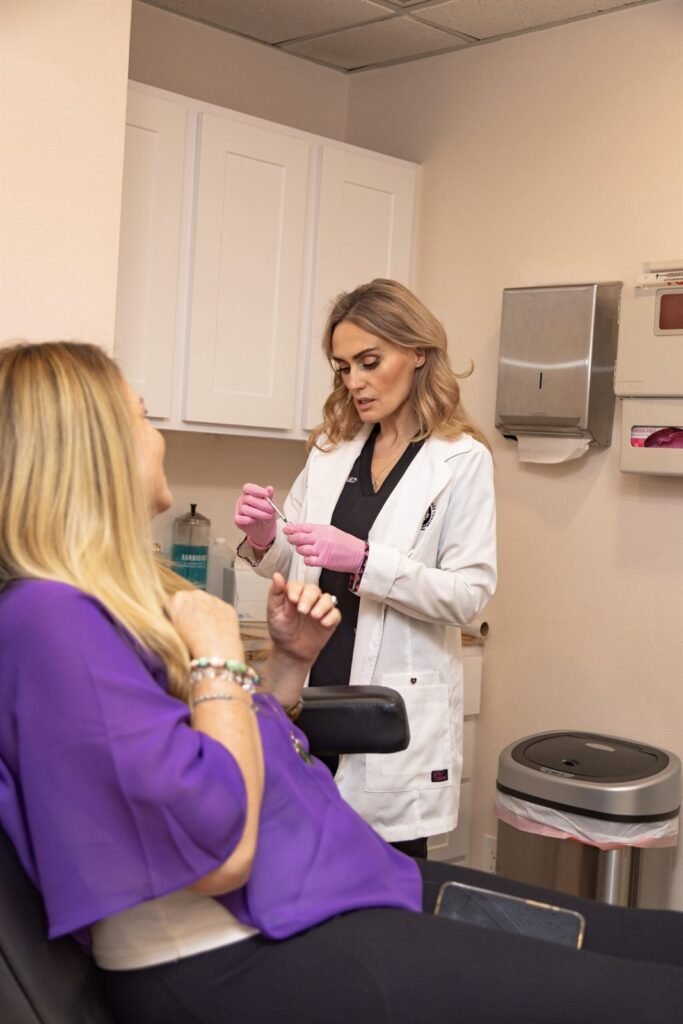
Key facts about tear trough filler
Treatment time: 30–45 minutes
Results visible: Immediately
Duration: Often 5+ years in Dr. Borakowski’s experience (individual results vary)
Downtime: Minimal (1–3 days)
Consultation: Complimentary
Tear trough filler is one of several dermal filler treatments at Desert Bloom, alongside facial sculpting, Sculptra, and Radiesse.
What is tear trough filler?
You can sleep eight hours and drink plenty of water and still see a tired look in the mirror, with a shadow beneath your eyes that makes you look exhausted when you are not. That hollowed appearance under the eyes is one of the most common concerns people bring to our Scottsdale office, and can be one of the most correctable.

Tear trough filler is an injection of hyaluronic acid (a substance naturally found in the body) into the hollows beneath the eyes. The treatment restores lost volume in the tear trough area where fat pad descent and bone resorption create a visible depression, reducing dark circles and creating a smoother transition between the lower eyelid and cheeks.
This lid-cheek junction is where facial aging first becomes visible to most people. The skin around the eyes is remarkably thin, roughly 0.5 mm, which means every fraction of a millimeter matters during placement. Technique matters a great deal here, and injector skill directly determines whether the outcomes look natural or produce visible complications.
At Desert Bloom, Dr. Natalya Borakowski, NMD selects injectables based on individual anatomy. We use Restylane products, chosen for the delicate periorbital skin. This falls within our broader dermal fillers practice, where product selection is driven by facial structure and patient goals.
Why We Use Restylane-L and Restylane Eyelight
Not all hyaluronic acid fillers behave the same under the eyes. The periorbital area demands a product with specific properties. Softer, more water-absorbing hyaluronic acid fillers are generally not the first choice for this zone.
| Property | Restylane-L / Restylane Eyelight | Softer, more water-absorbing HA fillers |
|---|---|---|
| Hydrophilicity (water absorption) | Lower (tends to stay where placed) | Higher (absorbs more water in tissue) |
| Swelling tendency | Generally minimal under thin skin | More pronounced in the periorbital zone |
| Tyndall effect risk | Lower with appropriate placement | Higher risk with superficial placement |
| Tissue integration | Firmer, holds contour in place | Softer, tends to spread in thin skin |
Restylane products are chosen because they absorb less water and hold a more natural contour in the delicate under-eye skin. RHA Redensity is formulated with the periorbital area in mind and behaves well in this delicate zone. Restylane-L and Restylane Eyelight are FDA-approved for treatment under the eyes and are typically used by Dr. Borakowski in tear trough procedures.
Restylane-L and Restylane Eyelight are the same filler. Under the eyes the skin is thin with no fat buffer, so even modest swelling becomes visible. A filler with lower hydrophilicity reduces that risk and helps achieve cleaner, longer-lasting results.
Wondering if tear trough filler suits your skin? Book a consultation with Dr. Natalya Borakowski, NMD
Who is a good candidate for tear trough filler?
What Tear Trough Filler Improves and When It May Not Be Enough
What It Improves
Tear trough filler helps people dealing with:
- Under-eye hollowing and shadowing caused by volume loss beneath the eyes
- Dark circles driven by depth and shadow rather than pigmentation
- A persistent tired, fatigued look that makes you appear exhausted despite good rest
- Fine lines and mild to moderate tear trough deformity
- An uneven transition between the lower eyelid and cheeks (the lid-cheek junction)
For many patients, treating the tear trough hollows alone creates a noticeable improvement across the entire face. The eyes carry disproportionate weight in how rested and alert a person looks, so a refreshed eye area can change the overall facial impression.
When It May Not Be Enough
Tear trough filler is not the right solution for every kind of under-eye concern.
- Prominent fat herniation: true eye bags, which typically require blepharoplasty by a plastic surgeon
- Aging, thinning skin: for patients over 40 with sagging, lines, or skin laxity, PRP or PRF is more appropriate. Filler is better suited for younger patients with true volume loss. See our dark circles page for more on these concerns.
- Significant skin laxity in the lower eyelid. A plastic surgeon should evaluate whether blepharoplasty would improve results
- Malar festoons: fluid-related puffiness over the cheekbone, which can worsen with filler
- Deep crepey skin without volume loss may need a combination approach, and PRP or gentle CO2 laser may be recommended
If under-eye puffiness and bags are the primary concern, a different treatment plan may serve you better. A consultation determines which approach matches your anatomy and creates the best results.
Good Candidates
You may be a good candidate if you have:
- Under-eye hollowing or shadowing from volume loss (anatomy, more than age, determines fit)
- Dark circles caused by depth rather than pigmentation alone
- Good overall health with realistic expectations about results
- Mild to moderate tear trough deformity without significant fat herniation
- No active skin infection or autoimmune conditions in the treatment area
- Looking for a non-surgical solution to restore a refreshed, rested look
- Prominent fat herniation (eye bags that protrude). A plastic surgeon should evaluate whether blepharoplasty is the better solution
- Pregnancy or nursing
- Active skin infection near the under-eye area
- Bleeding disorders or anticoagulant therapy that cannot be paused
- Thin, crepey skin with significant laxity and no true volume loss. PRP may produce better results (most commonly patients over 40 where tissue quality matters more)
- History of allergic reactions to HA filler products
- Moderate sagging or significant skin laxity: surgical consultation recommended
If under-eye puffiness from fluid retention is the primary concern, a different approach may be needed. Dr. Borakowski will assess what is actually driving the concern and match the treatment to your anatomy. A full-face volume assessment may also be recommended to improve overall facial harmony.
What to expect during tear trough filler
Every filler treatment begins with a complimentary consultation. Dr. Natalya Borakowski, NMD assesses under-eye anatomy, evaluates skin quality, and discusses your goals before any decision is made. Patients should avoid blood thinners, NSAIDs, ibuprofen, aspirin, and alcohol for 48 hours prior. Our staff will provide a complete preparation guide before your appointment.
A topical anesthetic (numbing cream) is applied to the eye area. For patients who experience anxiety, nitrous oxide sedation is available for $75, a comfort option most Scottsdale offices do not offer. Dr. Borakowski uses both needles and cannulas based on patient anatomy. A sharp needle places filler at the periosteal level; a blunt-tip cannula (25G preferred generally; 27G for subdermal placement) handles placement depending on patient anatomy and reduces bruising, swelling, redness, and the risk of vascular complications. Volume is conservative, typically 0.1–0.3 mL per side, placed precisely for natural-looking results. The procedure takes approximately 30–45 minutes.
Mild swelling, possible minor bruising, and some redness are normal side effects, typically resolving within one to three days. You may apply ice packs gently to reduce swelling, but avoid direct pressure. Final results settle at about two weeks. Most patients return to normal activities the same day. Avoid touching the eye area, strenuous exercise, makeup, extreme heat, and saunas for 48 hours. Avoid drinking alcohol for 24 hours post-procedure.
What results can you expect from tear trough filler?
Before and after photos


These are real patient results from tear trough filler procedures at our Scottsdale office. Each shows a visible improvement based on individual facial anatomy and goals. Many patients describe the outcome as looking refreshed and natural, not overdone.
Tear Trough Before & After: see additional cases in our full gallery.
How Long Does Tear Trough Filler Last?
In Dr. Borakowski’s clinical experience, hyaluronic acid filler in the tear trough often lasts five years or more, which is longer than most other facial regions. The under-eye area experiences less muscle movement than areas like the lips, cheeks, and nasolabial folds where repeated movement breaks filler down faster. Individual anatomy, skin quality, and volume placed all influence how long results last for any given patient.
PRP results follow a different timeline. Skin improvement develops gradually and may last six to twelve months. PRP helps with lines, texture, and overall eye area quality.
There are no touch-ups on tear trough procedures, but the treatment can be repeated after three months if more correction is desired. The goal is always natural, refreshed results rather than accumulation over time.
Tear Trough Treatment with Filler or PRP at Desert Bloom
Price: $475 and up. Your consultation covers your goals, the plan and the exact cost before anything is booked.
Book Tear Trough Treatment with Filler or PRPCall (480) 567-8180
What is recovery like after tear trough filler, and what are the risks?
Safety, Risks, and Side Effects
The under-eye area is the highest-risk zone for facial filler injections. The periorbital region sits near blood vessels supplying the eye. Vascular occlusion, where filler inadvertently enters or compresses a vessel, can in rare cases cause blindness or serious vision changes. Every patient should understand this risk before treatment.
Dr. Borakowski holds advanced training in facial anatomy specifically to minimize this risk. Her approach emphasizes deep knowledge of periorbital vascular anatomy, conservative volumes, careful depth and plane selection, and technique chosen to match each patient’s anatomy. She keeps hyaluronidase on hand at all times. HA fillers like Restylane can be dissolved with hyaluronidase, but a true vascular event requires immediate emergency intervention beyond dissolution. Anatomy training is what allows an injector to recognize the difference and act fast.
A thorough consultation and complete medical history review are standard at Desert Bloom before any filler treatment. Deep tissue placement, careful product selection, and thorough knowledge of facial vascular anatomy all factor into how we approach this procedure. If correction is ever needed, dermal filler removal with hyaluronidase is available.
Questions about downtime or aftercare? Call us on (480) 567-8180
How does tear trough filler compare with other treatments?
Tear Trough Filler vs. PRP vs. Blepharoplasty
The right approach depends on what is making the eyes look tired. The three main categories compare as follows:
Choosing between filler, PRP, and surgery depends on what is actually driving the tired appearance. Volume loss responds to filler. Skin quality issues such as thinning, pigmentation, and crepiness respond better to PRP. Fat herniation (true eye bags) requires a surgical evaluation. Many patients benefit from a combination approach.
Desert Bloom offers both filler and PRP categories. Some patients benefit from filler to restore volume and PRP for longer-term skin quality improvement. If you are weighing options, dermal filler removal is available when reversal is needed. Mesotherapy as an alternative may also help in some cases.
| Factor | HA Filler | PRP | Lower Blepharoplasty |
|---|---|---|---|
| Best for | Volume loss, hollowing (typically patients under 40) | Aging/thinning skin, pigmentation, lines, skin quality (typically patients over 40) | Fat herniation, excess skin, severe hollowing (performed by a plastic surgeon) |
| Results visible | Immediately | Gradually (weeks to months) | After healing (2–4 weeks) |
| Duration | Often 5+ years in Dr. Natalya’s experience | 6–12 months (skin quality) | 10+ years |
| Sessions | 1–2 sessions, 6–12 months apart | 1–3 sessions, can be repeated every 3 months | 1 surgical procedure |
| Downtime | Minimal (1–3 days) | Minimal | 1–2 weeks |
| Cost range | $595 | $475 | $3,000–$8,000+ |
| Reversible | Yes, HA filler can be dissolved with hyaluronidase | N/A | No |
If you are not sure which approach is right, schedule a complimentary consultation and Dr. Borakowski will assess your facial anatomy and recommend the best path forward.
Who performs tear trough filler at Desert Bloom?
Why Choose Desert Bloom Skin Care in Scottsdale

There are many places in Scottsdale offering under eye filler. What distinguishes Desert Bloom is the clinical approach behind it. Every treatment plan starts with a careful assessment. If the anatomy calls for PRP, a combination, or a referral to a plastic surgeon instead of filler injections, Dr. Borakowski will say so. The goal is the right result, not the easiest sale.
Product selection reflects the same philosophy. Restylane products are chosen for their behavior around the eyes: lower water absorption, less swelling risk, better contour retention in thin under-eye skin. That is a clinical decision based on how fillers tend to behave in the periorbital zone, not a brand preference.
For procedure technique, Dr. Borakowski uses both needles and cannulas, and blunt-tip cannulas reduce bruising and vascular risk during filler injections. The approach requires more skill but produces safer, more natural results.
As a naturopathic physician, she also considers what many injectors overlook: skin quality, nutrition, hydration, lifestyle. That whole-person perspective shapes both the treatment plan and long-term results.
Patients who visit our Scottsdale office consistently describe the experience as different from other clinics: thorough, kind, and straightforward. Desert Bloom Skin Care is a clinical aesthetics practice where our staff prioritize results over volume, serving Scottsdale and the greater Phoenix area.
“The undereye area is very delicate and high skill to treat. Most women asking for tear trough correction do not need volume replacement but instead need skin quality improvement. For women over 40, PRP or PRF treatments deliver better results. We might also recommend gentle CO2 laser. Dermal filler injections can last for many years but are only appropriate for patients with true volume loss under eyes. Correct patient selection is the key for successful tear trough treatment outcome.”
Price
How much does tear trough filler cost in Scottsdale?
- Tear trough filler$59545 minutes
- PRP Tear Trough$47530 minutes
| Treatment | Price | Time |
|---|---|---|
| Tear Trough Filler | $595 | 30–45 min |
| PRP Tear Trough | $475 | 30 min |
Pricing is per session. A complimentary consultation is included to determine which approach is right for your eyes. The cost of under eye filler at Desert Bloom is straightforward, with no upselling and no surprise fees. Visit our treatment pricing page for full pricing on all injectables and filler treatments.
Members of the Desert Reset membership receive preferred pricing on many treatments. See the full price list.
Questions
Frequently asked questions
How long does tear trough filler last?
In Dr. Borakowski’s clinical experience, often five years or more, which is longer than most other facial areas. The under-eye area sees far less muscle movement than the lips or cheeks, which slows breakdown. Individual results depend on anatomy, skin quality, and volume placed.
How much does tear trough filler cost?
At Desert Bloom in Scottsdale: $595 for dermal filler, $475 for PRP. A complimentary consultation is included with every procedure.
Is tear trough filler safe?
It has a strong safety profile when performed by a trained injector with proper technique and deep knowledge of facial anatomy. HA filler can be dissolved with hyaluronidase, but rare vascular events, including potential vision changes or blindness, require immediate emergency intervention beyond dissolution. Dr. Borakowski keeps hyaluronidase on hand and is trained in emergency protocols.
What is the best filler for tear troughs?
Restylane-L or RHA Redensity. Both tend to absorb less water than softer hyaluronic acid fillers in this zone, which reduces swelling risk in the thin skin of the under-eye area. These hyaluronic acid fillers generally hold their contour better in the periorbital zone.
Is tear trough filler painful?
A topical anesthetic is applied before the procedure. For patients who experience discomfort or anxiety, nitrous oxide sedation is available for $75, an option most Scottsdale offices do not offer.
Who is not a good candidate?
People with prominent fat herniation (true eye bags), active infection near the eye area, bleeding disorders that cannot be paused, or thin crepey skin without volume loss. Tissue quality and anatomy, not age alone, determine fit. In those cases, a different approach such as surgery, CO2 laser, PDO threads or PRP can produce better results.
What is the difference between filler and PRP for tear troughs?
Filler adds immediate volume to hollow areas. PRP improves skin quality gradually over weeks and months. Patients with true volume loss typically benefit more from filler injections. Patients with thinning skin and laxity (most commonly women over 40) often see better results with PRP or PRF treatments. We can use PRP and dermal filler in combination for the best results.
Can tear trough filler be dissolved?
Yes. HA filler can be dissolved with hyaluronidase if needed, which makes it a more reassuring option for people concerned about long-term effects near the eyes. A true vascular event, however, is a medical emergency that requires urgent intervention beyond dissolution. Dermal filler removal is available at Desert Bloom for standard reversal needs.
What are the risks specific to the eye area?
The periorbital zone sits near blood vessels that supply the eye. Vascular occlusion (filler entering or compressing a vessel) is rare but can cause blindness in extreme cases. For this reason, injector training in facial anatomy is essential for this procedure. Dr. Borakowski uses cannulas, conservative volumes, and careful depth selection to minimize this risk.
Ready to talk it through? Book a consultation and we will look at your goals, explain your options and give you a clear plan and price.