


Combination SkinNormal Combination Skin Treatments at Desert Bloom Skin Care Center
Ten facials, grouped by goal — maintenance, reset, and resurfacing — for skin that's oily in the T-zone and normal-to-dry everywhere else.
Find Your Facial
Your face isn’t oily. Half of it is.
Combination skin is the most common skin type in Scottsdale — and the most often mis-treated. One zone behaves like oily skin; the other behaves like normal or dry. Mattifying products that save the T-zone strip the cheeks. Rich cremes that save the cheeks leave the forehead shining by noon. Home care only goes so far when two zones need two strategies.
A professional facial for combination skin does one of three things: resets congestion without stripping drier zones, deposits hydration where it’s needed, or resurfaces texture that a home routine can’t reach. Dr. Natalya Borakowski and Sadie Luna Kearns select from ten facials — not one — and build the plan around your T-zone, your cheeks, and the season.
Combination and normal skin sit alongside oily skin and dry skin inside the Desert Bloom facial treatments program.
At a Glance
Scope. Ten facials routed by zone, goal, and Fitzpatrick skin type across three decision clusters: maintenance & glow, reset & rebalance, and resurfacing & firming. Price range: $100 (Pure Oxygen) to $800 (RF Microneedling series).
Provider & candidacy. Dr. Natalya Borakowski, NMD (medical oversight + laser / RF) and Sadie Luna-Kearns — Master Aesthetician, Certified Laser Technician & Educator with 17+ years of experience (facials). All Fitzpatrick types served — Nd:YAG 1064nm and non-energy facials safe across all skin tones; Erbium resurfacing and RF microneedling for Fitz I–III only.
Downtime & how to start. Zero-downtime maintenance available at $100–$275 (Pure Oxygen, HydroGlass, HydraFacial, Elluminate Mini). Start with a consultation to build a zone-specific plan.
What Is Combination Skin?
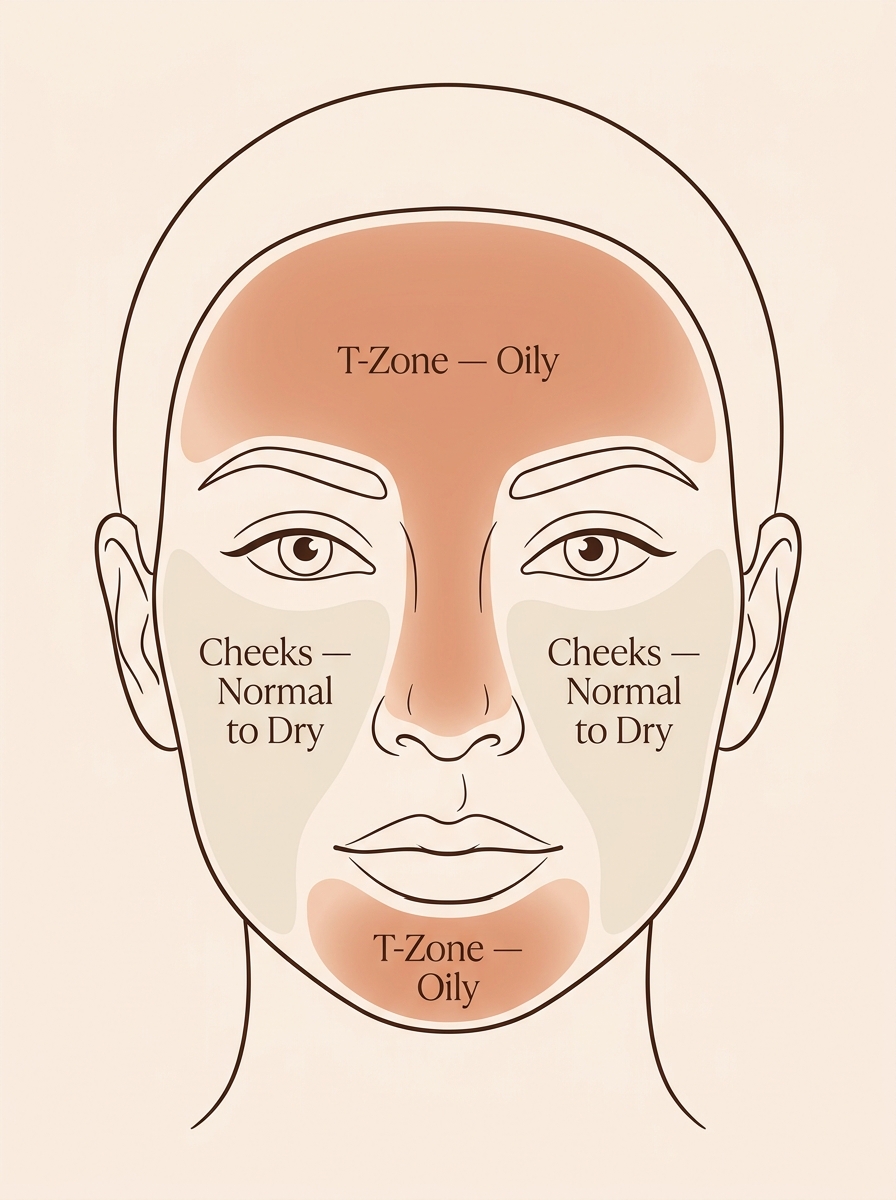
Combination skin means different areas of your face have different oil and moisture levels. The T-zone — forehead, nose, and chin — has a higher concentration of sebaceous glands and tends to run oily. The cheeks and jawline produce less oil and often lean normal to dry, especially in dry climates like Scottsdale.
The result: one-size-fits-all skin care products solve one zone while worsening the other.
Combination skin is the most common skin type. Many people who have it do not realize it — they just know that nothing they try works across their entire face.
Quick self-check: Wash your face with a gentle cleanser. Wait 30 minutes without applying anything. If your nose is shiny but your cheeks feel normal or tight, you likely have combination skin.
Not on this page: If your entire face is oily, you may have oily skin. If your face feels tight or flaky all over, see our dry skin page. If your skin is reactive, stings easily, or flushes with redness, see our rosacea and sensitive skin page.
Combination skin is sometimes called “combo skin.” It can overlap with sensitive skin — some people have both a reactive T-zone and dry, easily irritated cheeks — but the zone distinction is the defining characteristic.
Why Your Skin Has Different Zones
Combination skin is not a problem to fix. It is a skin type determined by biology and amplified by your environment.
Genetics & Hormones
Sebaceous gland density is naturally higher in the T-zone — your T-zone produces more oil because it has more oil glands. Hormonal fluctuations amplify T-zone oil production, which is why combination skin often worsens around menstrual cycles, stress, or hormonal life transitions.
Arizona Climate
Scottsdale’s dry desert air draws moisture out of the cheeks through evaporation while the T-zone compensates by producing excess oil. The contrast between oily and dry zones is often more pronounced here than in more humid climates. Seasonal shifts matter too: combination skin can tilt oilier in summer and drier in winter.
Product Misuse
Harsh cleansers strip the cheeks, which triggers more oil production in the T-zone as a defense response. Over-cleansing creates the very imbalance you are trying to correct. A gentle cleanser that respects the skin barrier is the first correction.
Skin Barrier Damage
A compromised skin barrier makes dry areas drier and oily areas oilier. When the barrier is weakened, moisture escapes from already dry cheeks while sebum production escalates in the oily T-zone. Restoring barrier function is the foundation of any combination skin correction.
A Combination Skin Care Routine That Actually Works
The foundation of the best skin care routine for combination skin is zone awareness. You do not need two separate routines — you need a core routine plus zone-specific adjustments.
Morning routine steps: (1) Gentle gel or foaming cleanser that rinses clean without stripping. (2) Alcohol-free balancing toner — not astringent. (3) Lightweight hyaluronic acid serum applied to the whole face. (4) Zone moisturizer: lightweight gel on T-zone, slightly richer formula on dry cheeks. (5) Non-comedogenic SPF every morning — heavy formulas worsen T-zone congestion.
Evening routine: Double cleansing (oil-based first to dissolve SPF and makeup, then gentle cleanser) prevents pore-clogging residue overnight. Follow with niacinamide serum across the T-zone; add gentle lactic acid 2–3 nights per week for texture improvement in dry areas.
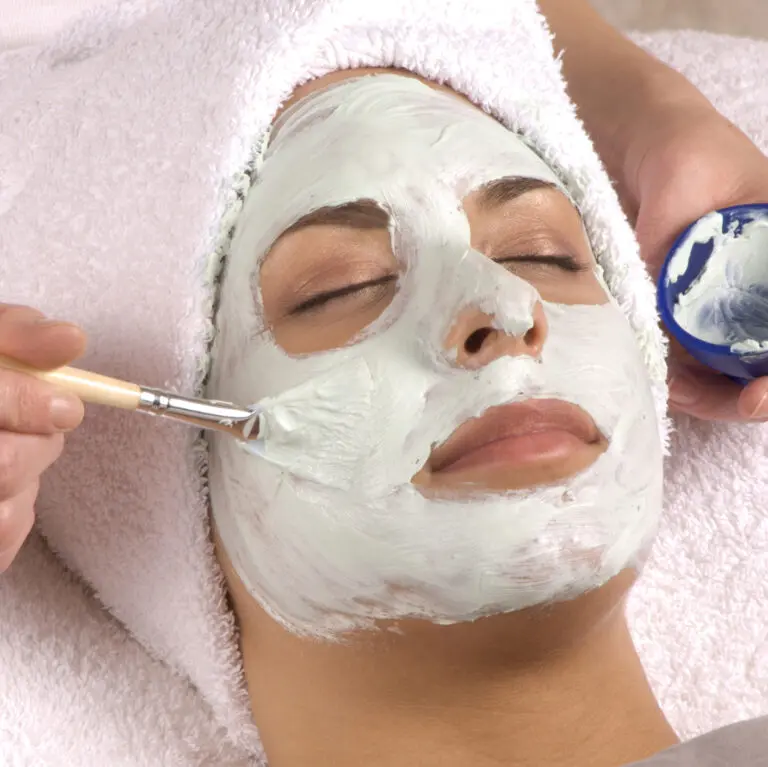
Multi-masking tip: Apply a clay mask to the T-zone to absorb excess oil and clear pores. Apply a hydrating mask to the cheeks at the same time. This is the most direct way to treat each zone according to what it actually needs in one session.
Ingredients That Work for Combination Skin
Use these across the whole face.
What to Avoid
These make combination skin worse.
The Ten Facials for Combination and Normal Skin
Desert Bloom offers ten facial treatments that work for combination and normal skin, grouped into three decision clusters. Every card links to a dedicated spoke page with full protocol, ingredients, provider, and pricing.
Cluster 1 — Maintenance & Glow
Quiet, non-stripping facials for skin that behaves most days and needs routine upkeep. Zero downtime, monthly cadence.
HydroGlass Facial — $149
Best for
Radiance maintenance on combination skin — gentle vitamin C peel and peptide mask layering without device work or blade contact.
What makes it distinct
HydroPeptide-based, no-device, no-blade — vitamin C, shikimic acid, peptide mask, LED. Combines peel and mask layering in one session.
Choose this if
You want radiance from a gentle peel-and-mask layering without active T-zone work.
Pure Oxygen Soothing Facial — $100
Best for
Reactive weeks, post-retinol skin, post-laser sensitivity, or a same-week pre-event refresh when other treatments are too much.
What makes it distinct
ECHO2Plus device delivering pressurized oxygen with 87-active Oxyceuticals serum. No exfoliation, no heat — pure barrier support.
Choose this if
Your cheeks are reactive this week, you’re post-retinol or post-laser, or it’s a pre-event refresh.
Organic Signature Facial — from $100
Best for
Combination skin needing a full rebalancing session with zone-specific organic botanical products. Restorative rather than corrective.
What makes it distinct
Farm-sourced botanicals, AHA fruit exfoliation, CBD pressure-point massage. 60 or 90 minute options.
Choose this if
You prefer organic and natural ingredients and want a restorative rather than corrective facial.
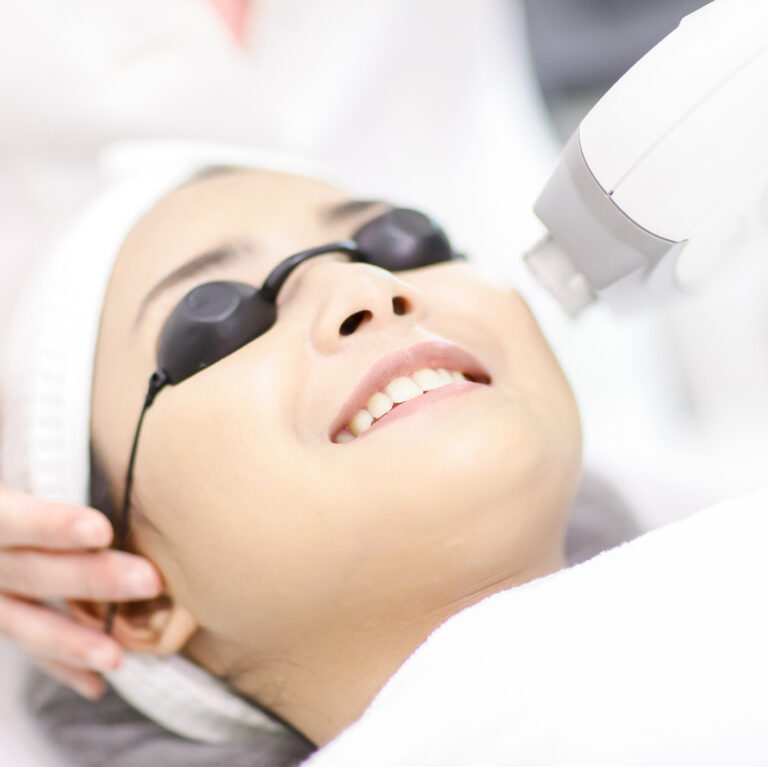
Elluminate Mini Laser Facial — $275
Best for
Maintenance glow with a true laser result and zero downtime. All Fitzpatrick types — the default laser facial for darker skin tones.
What makes it distinct
Nd:YAG 1064nm on the Quanta platform. Safe for all Fitzpatrick types. 5-pack $1,075.
Choose this if
You want a true laser facial with zero downtime and it’s your first laser — safe for all Fitzpatrick types.
Cluster 2 — Reset & Rebalance
The workhorse cluster for combination skin — active T-zone congestion, clogged pores, and uneven texture handled without stripping the drier zones. Monthly-to-quarterly cadence.
HydraFacial — from $149
Best for
Combination skin with active T-zone congestion and dry cheek patches. The default starting facial for most combination-skin patients.
What makes it distinct
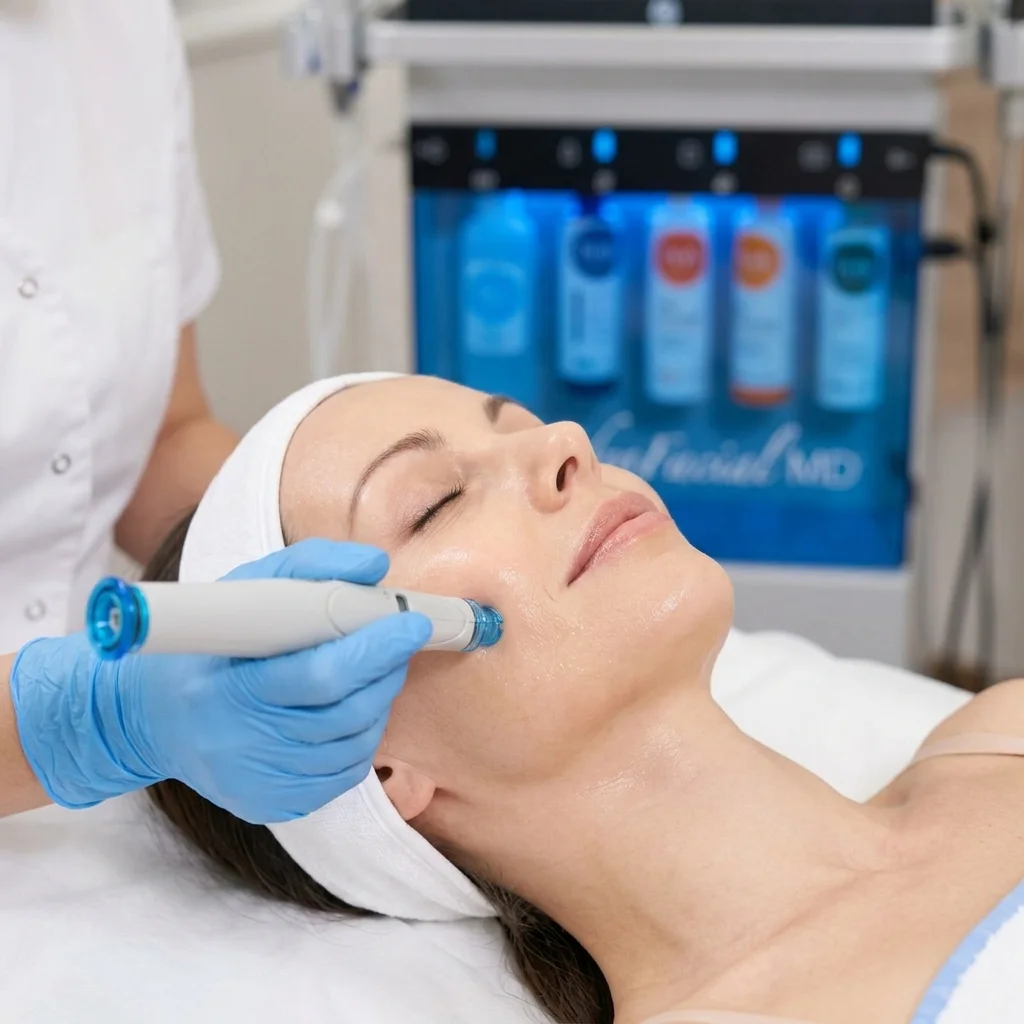
BeautyHealth HydraFacial MD — vortex extraction + glycolic/salicylic peel + peptide infusion. Treats each zone differently in one 30–45 min session.
Choose this if
Your T-zone is congested or breaking out and your cheeks feel tight or flaky after cleansing.
Custom Chemical Peel — $125
Best for
Combination skin with enlarged pores, uneven texture, and dull dry patches. When home routine has plateaued.
What makes it distinct
PCA Skin and Dermaquest superficial-to-medium peels, formulation selected at the visit. Dual-acid approach possible: salicylic for T-zone pores, lactic acid for dry cheek areas.
Choose this if
You want to address skin texture and pore size across the whole face without a one-size peel.
Flawless Skin Facial — $249
Best for
Combination skin committing to a 4–6 session series for cumulative barrier and texture change — deeper than a single facial.
What makes it distinct
Environ DF device delivering vitamin-A and vitamin-C serums through galvanic current and low-frequency ultrasound. Not for claustrophobic patients.
Choose this if
You’ll commit to a 4–6 session series for cumulative barrier and texture change.
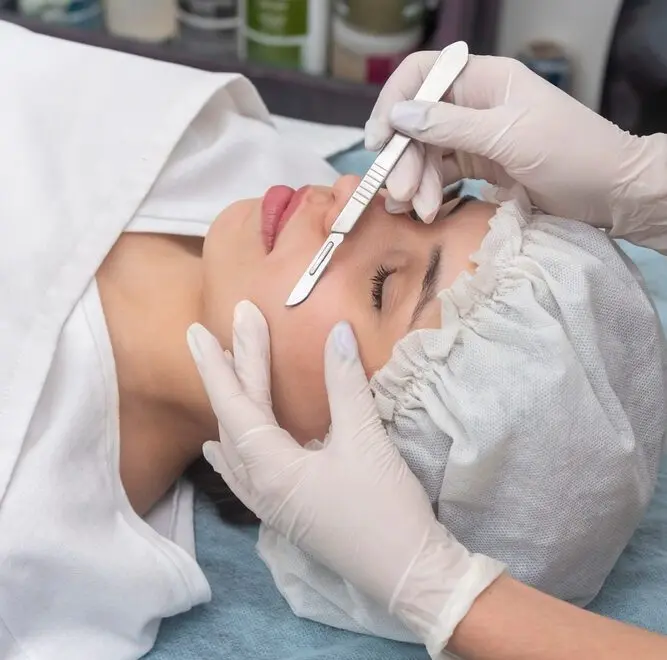
Dermaplaning — $125
Best for
Combination skin with rough, flaky cheek surface and fine vellus hair trapping dead skin. Surface treatment for dullness that combination skin causes in dry areas.
What makes it distinct
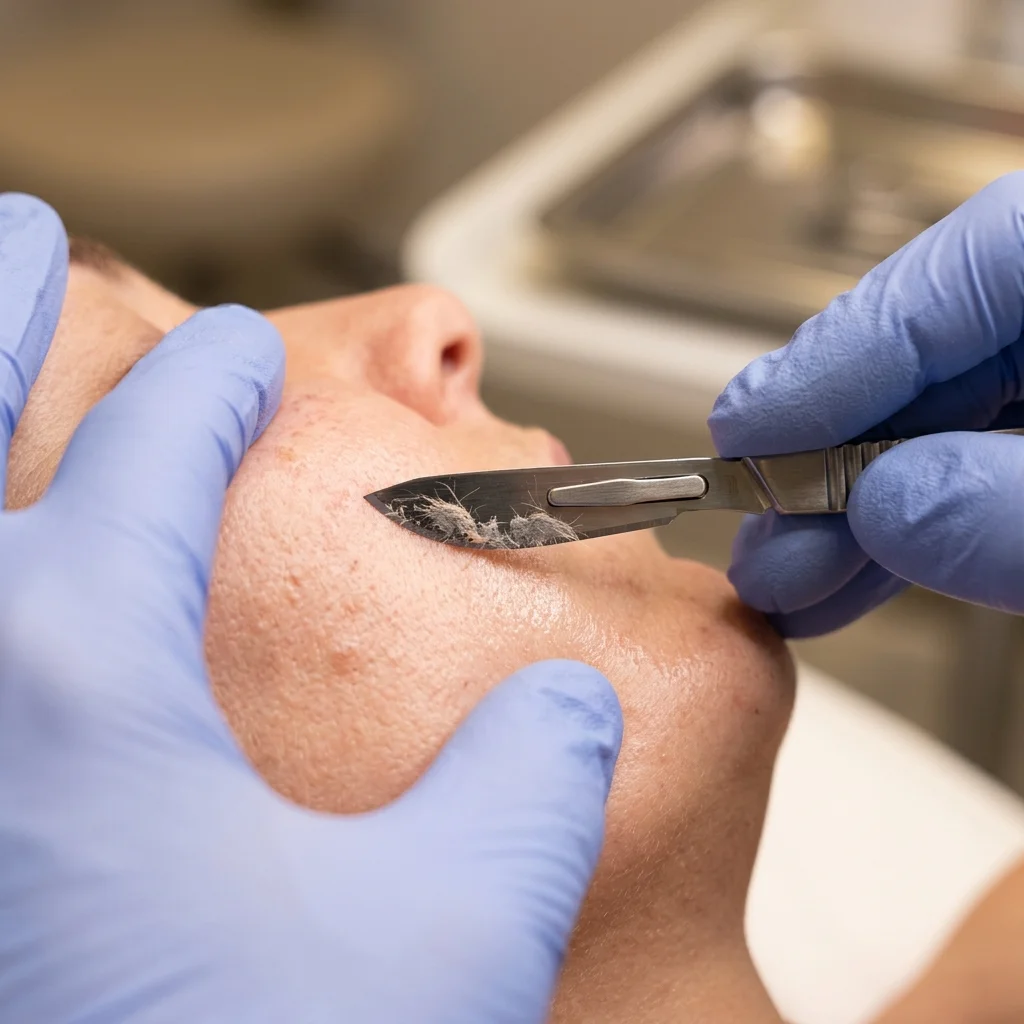
Sterile surgical-scalpel exfoliation + HydroPeptide mask. Removes surface buildup on dry cheeks without triggering oil overproduction in the T-zone.
Choose this if
Your cheeks feel rough or dull but your T-zone is relatively controlled and not actively breaking out.
Cluster 3 — Resurfacing & Firming
Energy-based treatments for deeper concerns: enlarged pores topicals can’t reach, early fine lines, surface scarring. Quarterly or series-based.
Erbium Laser Resurfacing — from $275
Best for
Fitzpatrick I–III with texture concerns, fine lines, or mild scarring — when you want a step-change in surface quality and accept 3–7 days downtime.
What makes it distinct
Quanta EVO Erbium. $275 cool peel / $675 deep resurfacing. More downtime, more visible change than any surface facial.
Choose this if
You have Fitz I–III skin and accept 3–7 days of social downtime for a step-change in texture and fine lines.
RF Microneedling — from $800
Best for
Combination skin with enlarged T-zone pores and early laxity — a structural, collagen-level change. Fitz I–III only.
What makes it distinct
Virtue RF delivered by Dr. Borakowski. Series of 3–4 sessions. Refines pore size over time at a structural level rather than just on the surface.
Choose this if
Pore size is your primary concern after getting oiliness and dryness under control. Fitzpatrick I–III only — not performed on Fitz IV–VI.
How to Choose Your Facial
Most combination-skin readers don’t need ten facials. They need the right one for this season, this budget, and this Fitzpatrick type. Use the shortcuts below.

How to Determine Your Skin Type
Not sure whether you have combination skin? Try the wash test.
The 30-minute test: (1) Wash your face with a gentle cleanser. (2) Do not apply any products. (3) Wait 30 minutes, then examine your face in natural light.
Read your results:
- T-zone shiny, cheeks normal or tight → combination skin (you are on the right page)
- Entire face oily → oily skin care
- Entire face tight, flaky, or uncomfortable → dry skin treatment
- No excess oil, no tightness, minimal concerns → normal skin
- Redness, stinging, or flushing → rosacea and sensitive skin
Combination skin can also be sensitive — some people have both reactive zones and dry areas. If your skin stings when you apply products or flushes easily, mention this when you book a consultation.
Still unsure? A skin assessment at Desert Bloom identifies your skin type and tells you exactly what each zone needs. Book here or call (480) 567-8180.
Managing Large Pores in the T-Zone
Enlarged pores in the T-zone are one of the most common combination skin concerns. Excess sebum in the T-zone stretches pores over time, making them appear larger — especially around the nose and forehead.
What helps: niacinamide (regulates sebum and reduces pore appearance), regular professional extraction to prevent congestion, and microneedling for longer-term pore refinement. See full options at our large pore treatment page.
What does not help: pore strips (temporary and surface only), harsh scrubs (cause irritation that worsens the skin barrier), and heavy creams on the T-zone (feed the oil problem).
Safety, Candidacy & What These Facials Can’t Do
Fitzpatrick skin type determines which energy-based treatments are available. All non-energy facials in the menu — HydroGlass, Pure Oxygen, Organic Signature, HydraFacial, Chemical Peel, Dermaplaning, and Flawless Skin Facial — are available for all Fitzpatrick types.
Fitzpatrick Boundaries
| Treatment | Fitz I–III | Fitz IV–VI | Notes |
|---|---|---|---|
| Pure Oxygen Soothing Facial | ✓ | ✓ | |
| Organic Signature Facial | ✓ | ✓ | |
| HydroGlass Facial | ✓ | ✓ | |
| HydraFacial | ✓ | ✓ | |
| Custom Chemical Peel | ✓ | ✓ | Optional hydroquinone prep for Fitz IV–VI or melasma |
| Dermaplaning | ✓ | ✓ | Not during active acne, rosacea, or dermatitis |
| Flawless Skin Facial | ✓ | ✓ | 4–6 session series |
| Elluminate Mini (Nd:YAG 1064nm) | ✓ | ✓ | Safe for all types — default laser for darker skin |
| Erbium Laser Resurfacing | ✓ | Consult only | Cool-peel settings with test spot at higher Fitz |
| RF Microneedling (Virtue RF) | ✓ | Not performed | Risk-benefit does not favor at Desert Bloom for Fitz IV–VI |
Contraindications and Combination Rules
- Active cold sores — defer or start antiviral prophylaxis.
- Active inflammatory acne or dermatitis — defer Dermaplaning and deeper peels; HydraFacial or Pure Oxygen may still be appropriate.
- Accutane (isotretinoin) — 6-month washout before RF Microneedling; 12-month before resurfacing lasers.
- Pregnancy — defer energy-based treatments; Dermaplaning and Pure Oxygen are generally safe (confirm at the visit).
- Dermaplaning + chemical peel: never same session — alternate visits.
- RF Microneedling + filler: RF first, filler later. Never RF over fresh filler.
- Home retinols: pause 3–5 days before a peel, laser, or RF session.
What a Facial Can and Can’t Do
Facials address surface, mid-dermal, and (with energy) foundational skin quality. They do not lift sagging tissue, replace lost volume, or soften expression-muscle wrinkles — those belong to dermal fillers, botulinum toxin, and PDO thread lifts. Melasma is a special case: heat-based lasers are avoided; a custom chemical peel with optional hydroquinone prep is the safer start.
Frequently asked questions
What is the best facial for combination skin in Scottsdale?
There isn’t one — there’s the right facial for your current concern. For most patients, the HydraFacial is the best starting point: it treats an oily T-zone and drier cheeks in the same 30-minute session. Rough cheeks with a quiet T-zone? Dermaplaning or HydroGlass. Pores dominating? Custom Chemical Peel or RF Microneedling.How do I know if I have combination skin?
Wash your face with a gentle cleanser and wait 30 minutes without applying anything. If your T-zone looks shiny but your cheeks feel normal or tight, you have combination skin. If your skin stings easily or flushes, you may have a combination of combination skin and sensitive skin. A skin assessment at Desert Bloom confirms your skin type and tells you what each zone needs.What is the best skin care routine for combination skin?
A gentle cleanser, alcohol-free balancing toner, lightweight hyaluronic acid serum, and zone-specific moisturizer form the core combination skin care routine. Use a lighter gel moisturizer on the T-zone and a richer formula on dry cheek areas. Avoid coconut oil and heavy creams on the oily zones.Should I use different products on different parts of my face?
Yes — this is the key principle for combo skin. A lightweight gel moisturizer on the T-zone and a richer cream on the cheeks helps each zone get what it needs without making the other zone worse. Multi-masking (clay on T-zone, hydrating on cheeks) is the most direct version of this approach.What ingredients are good for combination skin?
Niacinamide balances oil production and minimizes pore appearance without drying other areas. Hyaluronic acid hydrates without heaviness and works across all zones. Gentle AHAs like lactic acid improve texture in dry areas without over-stripping. Avoid heavy oils like coconut oil on the oily T-zone — they are comedogenic and will clog pores.How often should I get a facial if I have combination skin?
Every 4–6 weeks for maintenance facials. Corrective series (Flawless Skin, Elluminate Mini, RF Microneedling) run a tighter cadence at the start — usually 3–6 sessions, 3–4 weeks apart — then step down to monthly. A skin assessment at Desert Bloom determines the right treatment interval and sequence for your specific skin profile.Can I combine two facials in one visit?
Some yes, some no. HydraFacial stacks with LED add-ons. Dermaplaning combined with a chemical peel in the same session is too much — alternate visits. Any combination plan is confirmed at the visit.What if my skin is also sensitive or reactive?
Start with Pure Oxygen or the Organic Signature Facial. Avoid mechanical exfoliation during a rosacea flare. Dr. Borakowski confirms a sensitive-skin plan at the visit based on your current reactivity.
“Combination skin isn’t two problems — it’s one anatomy with two zones. Treat each zone on its own terms — the right facial, the right cadence — and skin settles to a new baseline within three sessions.”
Hands-on facials are performed by Sadie Luna Kearns, Licensed Aesthetician (17+ years in aesthetics). Laser and RF work is performed by Dr. Borakowski. Plans are confirmed at the visit based on skin analysis.
Not sure which facial fits your skin this season?
Schedule a skin analysis at Desert Bloom Skincare. Ten facials, grouped by goal, chosen at the visit — not sold at the door.
Your skin does not need to be fixed. It needs to be understood. Dr. Borakowski and Sadie will identify your zones, current concerns, and the right treatment sequence — no pressure, no obligation.
Desert Bloom Skincare
10752 N 89th Place, Suite 122B, Scottsdale, AZ 85260
Medically reviewed by Dr. Natalya Borakowski, NMD. Desert Bloom Skincare, Scottsdale, AZ. Page last updated April 2026.
References
- “The science behind skin care: Moisturizers.” Journal of Cosmetic Dermatology. 2018. DOI
- “Skin anti-aging strategies.” Dermato-Endocrinology. 2012. DOI(PMID 22977548)
- “The clinical relevance of maintaining the functional integrity of the stratum corneum in both healthy and disease-affected skin.” Journal of Clinical and Aesthetic Dermatology. 2011. (PMID 21938268)
- “Skin Moisturization.” Marcel Dekker. 2002.
- “Safety assessment of salicylic acid, butyloctyl salicylate, calcium salicylate, C12-15 alkyl salicylate, capryloyl salicylic acid, hexyldodecyl salicylate, isocetyl salicylate, isodecyl salicylate, magnesium salicylate, MEA-salicylate, ethylhexyl salicylate, potassium salicylate, methyl salicylate, myristyl salicylate, sodium salicylate, TEA-salicylate, and tridecyl salicylate.” International Journal of Toxicology. 2003. (PMID 14617432)
Combination Skin
- Custom chemical peel$10045 minutes
- Dermaplaning with HydroPeptide$12560 minutes
- Erbium Laser Resurfacing$275-$67545 minutes and up
- HydraFacial$199-$29945 minutes and up
- Iontophoresis Facial Scottsdale AZ | No Downtime Results$24990 min
- Laser facial$27560 minutes
- Organic Desert Bloom Signature Facial$100-$13560 minutes and up
- Pure oxygen soothing facial$12560 minutes
- RF Microneedling$80090 and up
- Unicorn Facial | PRX-T33$1350 / 4 treatments
Consultation in skin care clinic
Desert Bloom Skincare Center offers personalized skincare consultation to help you achieve a flawless and radiant complexion. Book your appointment today and let our expert team of skincare professionals address your specific concerns and help you reach your skincare goals.
Visit Our Scottsdale Aesthetic Center
Address
10752 N 89th Place, Suite 122B,Scottsdale, AZ 85260.
Phone:(480) 567-8180
E-mail:info@desertbloomskincare.com
Get Directions →Location & Directions
Desert Bloom Skincare is conveniently located in the Shea Corridor of North Scottsdale, within Edwards Professional Park I — minutes from HonorHealth Scottsdale Shea Medical Center and the Mayo Clinic Scottsdale Campus.
Areas We Serve
We proudly provide expert non-surgical rhinoplasty and PDO thread lifts to patients across the Southwest:
- ScottsdaleNorth Scottsdale · McCormick Ranch · Gainey Ranch
- Paradise Valley
- PhoenixArcadia · Biltmore · North Phoenix
- Fountain Hills
- Cave Creek & Carefree