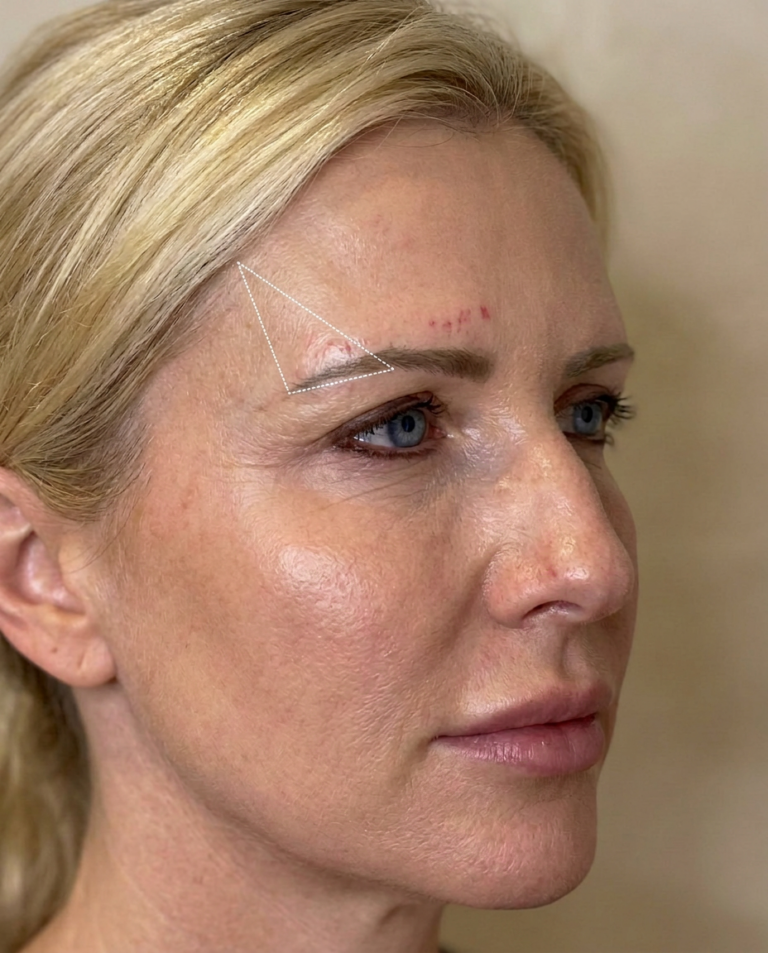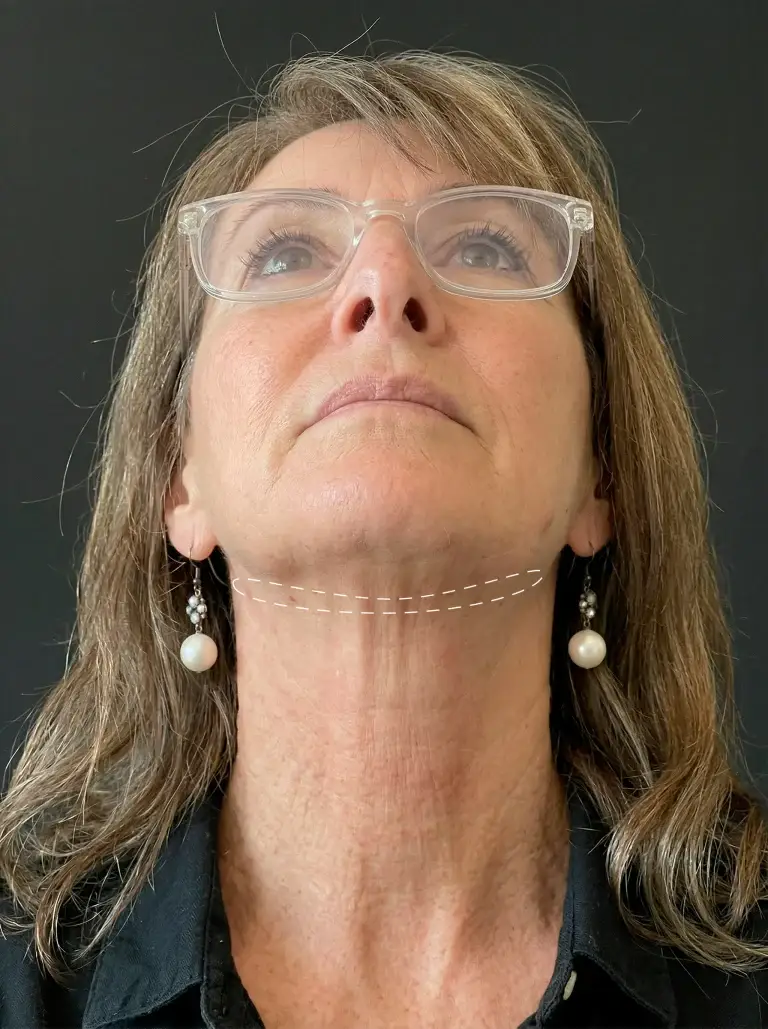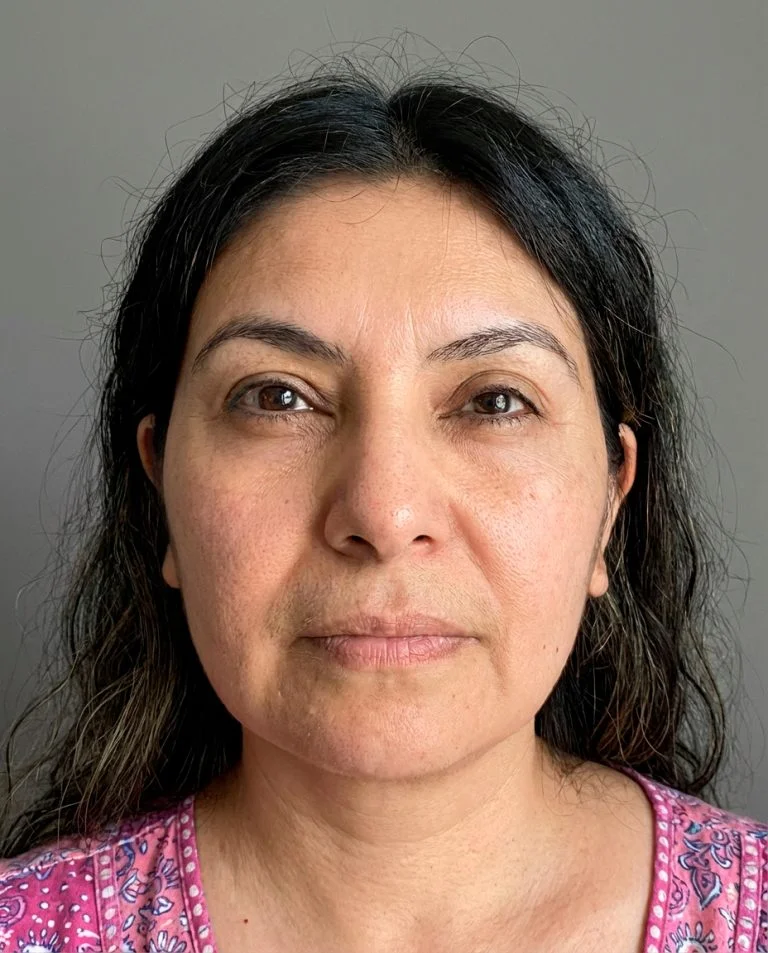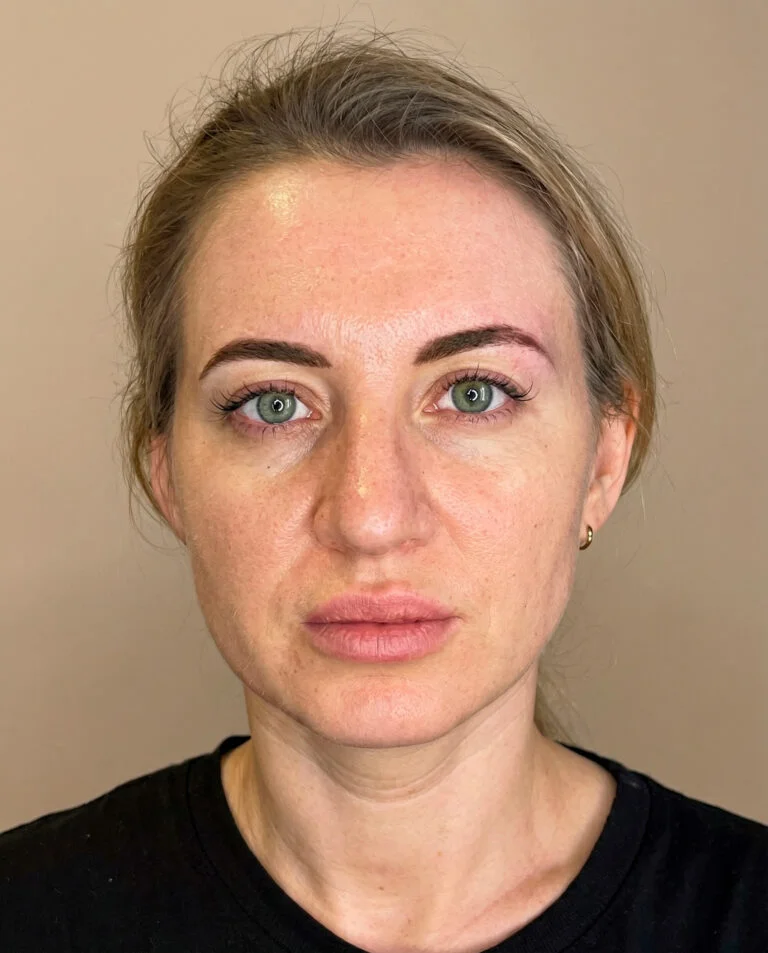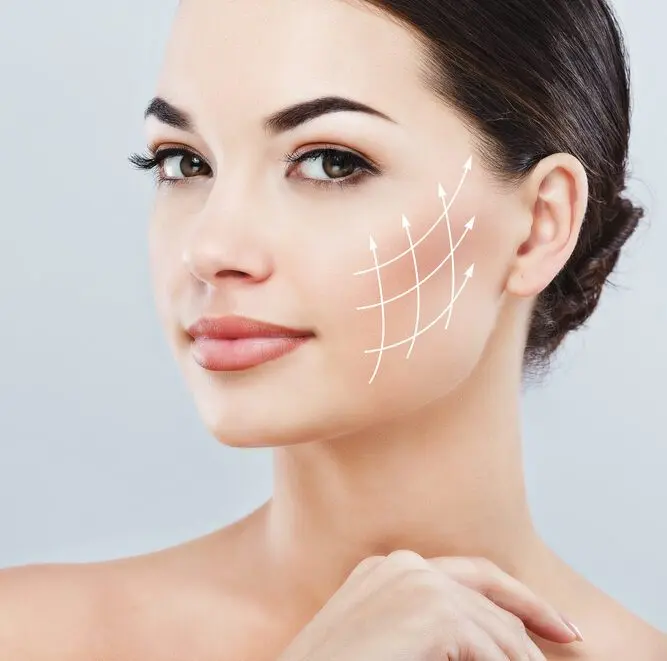
Thinner Skin, Finer Wrinkles, a Subtle Hollow Forming
The under-eye area is one of the first places skin loses its bounce. Fine surface wrinkles deepen, the texture turns slightly crepey, and the area can look tired even when nothing else has changed. Many patients arrive asking about tear-trough filler — but for the right candidate, a different answer fits better: mono PDO threads placed in a criss-cross pattern to thicken the dermis and stimulate collagen, without adding volume.
Under-eye PDO at Desert Bloom Skincare in Scottsdale is a skin-biostimulation procedure — not a thread lift, and not a tear-trough fix. Dr. Natalya Borakowski places very thin collagen-boosting mono threads through blunt dull cannulas, chosen specifically to avoid trauma to fragile peri-orbital tissue. The goal is dermal remodeling — over time, fine wrinkles soften and the skin reads as thicker and more resilient. If the issue is volume loss, herniated fat pads, or significant skin laxity, this procedure is not the right tool — and we will tell you so directly at consultation.
At a Glance
- What it is
- Very thin mono PDO threads placed in a criss-cross pattern under the eyes to thicken the dermis and stimulate collagen — skin biostimulation only, not a lift
- Best for
- Mild-to-moderate under-eye skin laxity and surface wrinkles in patients with adequate skin thickness
- Not for
- Significant laxity, herniated fat pads (eye bags), deep-set or sunken eyes, very thin peri-orbital skin
- Technique
- Blunt dull cannulas only — never sharp needles in the peri-orbital zone
- Results
- Gradual collagen-driven improvement over 2–3 months; PDO dissolves over 6–9 months while collagen sustains 12–18 months
- Combines with
- Tear-trough PRP, tear-trough filler, or CO2 laser — each addresses a different problem
What Is Under-Eye PDO?
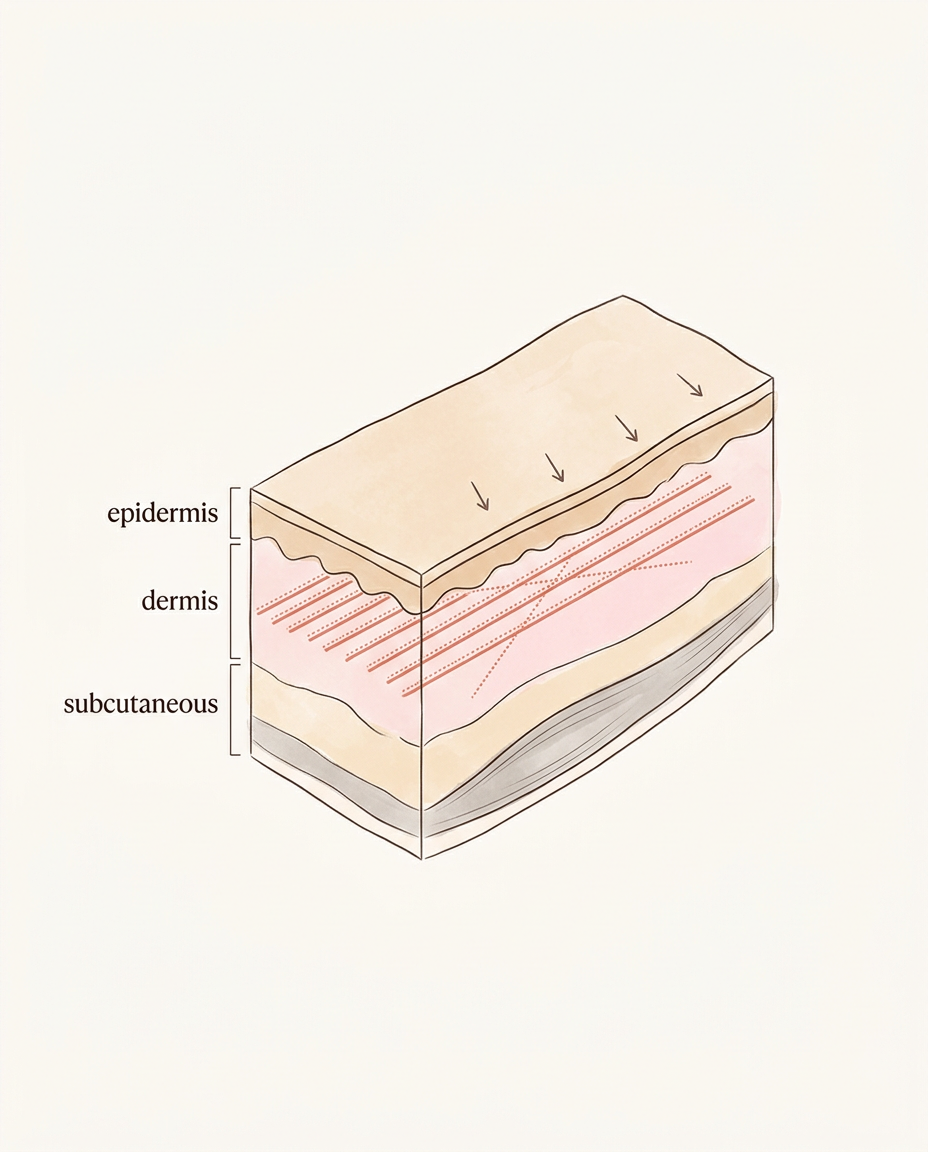
Under-eye PDO uses very thin polydioxanone (PDO) mono threads — the same biocompatible suture material used in surgery, fully absorbable over 6–9 months — placed in a fine criss-cross pattern directly under the eyes. Unlike thread lifts elsewhere on the face, these threads do not have cogs or barbs and do not lift tissue. They sit in the dermis and trigger a controlled collagen and elastin response as the body absorbs them.
The mechanism is biostimulation. As PDO mono threads dissolve, they prompt fibroblasts to lay down new type-I collagen and elastin along the path of each thread. The criss-cross pattern creates a fine internal mesh that thickens the dermis over the following weeks — the skin reads as more resilient, fine wrinkles soften, and surface crepiness improves. This is the same principle behind PDO mono threads used elsewhere on the face for skin quality, applied with extra caution to the under-eye area’s thin, fragile skin.
The criss-cross pattern matters. A single row of parallel threads would create directional tension; the crossed pattern distributes the collagen-stimulating effect evenly across the under-eye zone and reduces the chance of any one thread becoming visible or palpable. Dr. Borakowski uses only blunt dull cannulas in this area — never sharp needles — because the peri-orbital region has dense small vessels and the cannula technique navigates through tissue rather than puncturing in a fixed line.
When the right answer is something else, the right answer is tear trough treatment with hyaluronic acid filler or PRP for volume restoration, or CO2 laser for deeper skin resurfacing. Threads can be combined with any of those — but they do not replace them. See the combinations section below for honest routing.
How Under-Eye PDO Works — The Procedure
- 1
Consultation and honest assessment
Dr. Borakowski examines the under-eye area to determine whether skin quality is the actual problem — or whether volume loss, fat-pad herniation, or significant laxity calls for a different approach. If threads are not the right tool, you will hear that directly.
- 2
Topical numbing applied
Extra-strength topical anesthetic is applied to the under-eye area for comfort. The peri-orbital skin is sensitive — adequate numbing time is important before any threads are placed.
- 3
Blunt cannula entry
Small entry points are made at the lateral under-eye area. A blunt dull cannula — never a sharp needle — is introduced. The cannula's blunt tip pushes vessels aside rather than puncturing them, which is the central safety choice for this anatomically delicate zone.
- 4
Criss-cross thread placement
Very thin mono PDO threads are advanced through the cannula and placed in a fine criss-cross pattern across the under-eye zone. Each thread sits in the dermis, where it will stimulate collagen as it dissolves. Threads are positioned to distribute the biostimulation effect evenly and minimize the chance of any single thread becoming visible.
- 5
Session complete
The procedure typically takes 30–45 minutes. Most patients return to normal activities the same day with mild swelling or minor bruising at entry points. Standard PDO thread aftercare applies — gentle handling of the under-eye area for the first week, no aggressive facials or peels for 4 weeks.
Safety, Complications, and Aftercare
Common, expected side effects include mild swelling, minor bruising at the cannula entry points, and short-term tenderness in the under-eye area. These typically resolve within 3–7 days. The under-eye zone bruises more easily than most facial areas — bruising is more visible here even when it is not more severe.
Aftercare: standard PDO thread protocol applies. Sleep with the head elevated for the first 2–3 nights, avoid pressure on the under-eye area (no face-down sleeping, no heavy eye creams), skip aggressive facials, chemical peels, and laser treatments for 4 weeks, avoid strenuous exercise for 48 hours, and use sun protection diligently. If a thread becomes visible, palpable as a firm cord, or is causing persistent discomfort beyond the first week, return to the clinic — these issues can usually be addressed in a brief in-office visit.
Combine With — Not Replace

Volume / hollowing
Tear Trough Treatment
Hyaluronic acid filler or PRP placed in the tear-trough hollow to address volume loss and shadowing. This is the correct tool when the issue is visible hollowing — not skin quality.

Lasers & Energy
CO2 Laser Resurfacing
Aesthetic balance
Facial Balancing
When the under-eye is one of several concerns, a staged plan across multiple areas — not a single procedure — usually produces a more proportionate result.
“Under-eye PDO is a skin treatment, not a tear-trough treatment. When patients understand that distinction, the right plan becomes obvious. Sometimes that plan includes threads. Often it does not.”
Under-Eye PDO Cost in Scottsdale

Under-eye PDO pricing is set per session and is based on thread count and area treated. Most patients see meaningful collagen-driven improvement after a single session, with a follow-up assessment at 8–12 weeks to determine whether an additional pass is warranted. Consultation is complimentary. See current per-session pricing below; all treatments are performed by Dr. Borakowski personally.
Pricing
- Under-Eye PDO ThreadsOn request
Frequently Asked Questions About Under-Eye PDO
Is under-eye PDO a thread lift?
Will under-eye PDO fix my dark circles or tear troughs?
Are PDO threads safe under the eyes?
How long do under-eye PDO results last?
What is the downtime?
Can I combine under-eye PDO with filler or PRP?
Who is not a candidate?

Medically reviewed by
Founder, Desert Bloom Skincare · 17 Years Experience
References
- 1.
Funt D, Pavicic T.. Dermal fillers in aesthetics: an overview of adverse events and treatment approaches. Clinical, Cosmetic and Investigational Dermatology; 2013;6:295-316.
DOI: 10.2147/CCID.S50546
Peri-orbital vascular anatomy and complication-avoidance principles relevant to thread placement near the orbital region.
- 2.
Sundaram H, Voigts B, Beer K, Meland M.. Comparison of the rheological properties of viscosity and elasticity in two categories of soft tissue fillers. Plastic and Reconstructive Surgery; 2013;132(4 Suppl 2):5S-21S.
DOI: 10.1097/PRS.0b013e31829d1d40
Dermal biostimulation and tissue-integration principles that inform PDO mono thread technique selection.
- 3.
Beleznay K, Carruthers JDA, Humphrey S, Jones D.. Avoiding and Treating Blindness From Fillers: A Review of the World Literature. Dermatologic Surgery; 2015;41(10):1097-1117.
DOI: 10.1097/DSS.0000000000000486
Vascular safety review underlying our blunt-cannula-only standard for the peri-orbital region.
Individual results may vary. Under-eye PDO is a biostimulation procedure for skin quality — not a treatment for volume loss, fat-pad herniation, or significant laxity. Consultation determines individual suitability. All treatments at Desert Bloom Skincare are performed by Dr. Natalya Borakowski, NMD. Last updated: June 2026.