Large Pores
Large pores are most visible on the nose and cheeks, often worsened by oil production, sun exposure, and the Arizona heat. While pores cannot be permanently shrunk, treatments like RF microneedling and chemical peels can significantly reduce their appearance by tightening the collagen structure around each pore.
See all treatments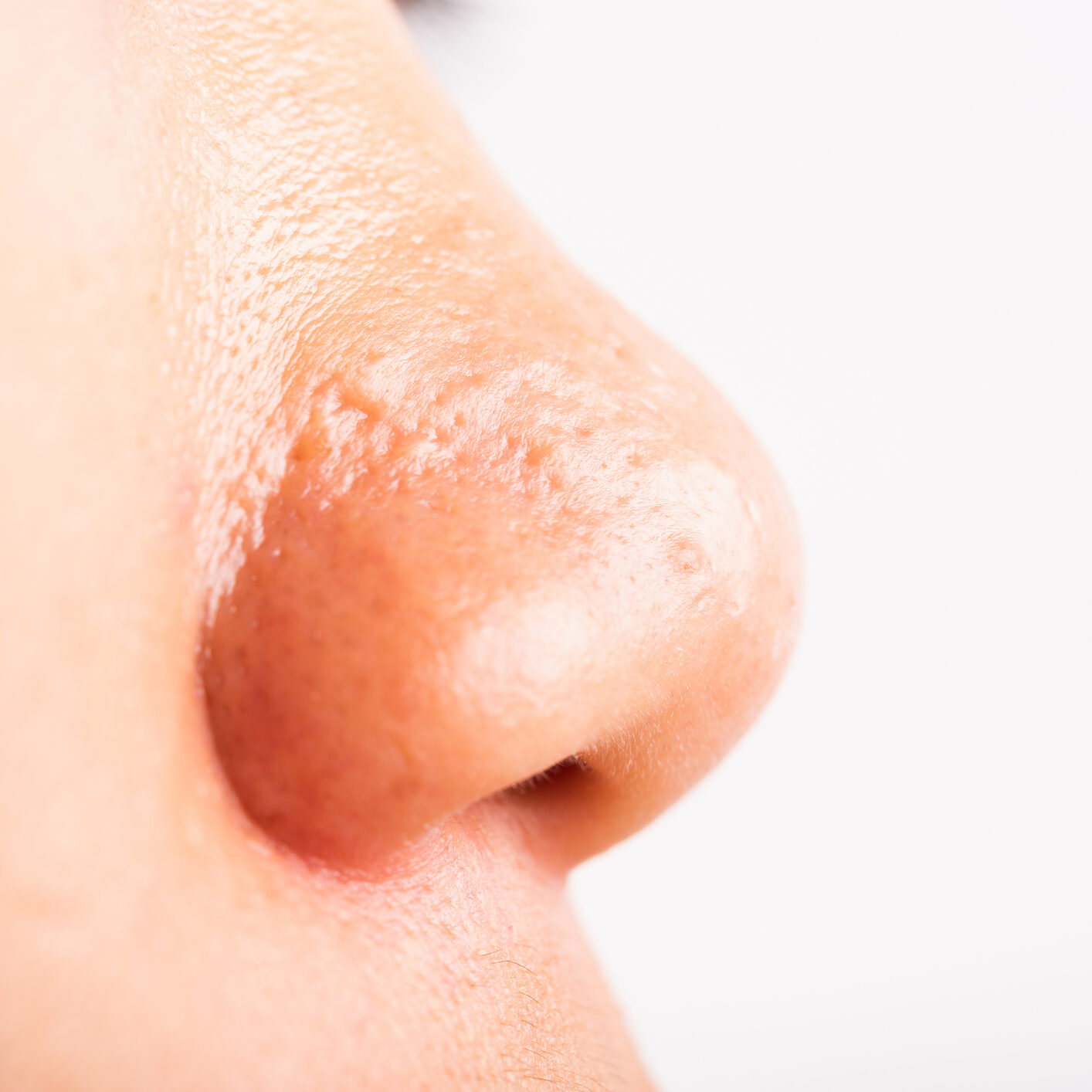
From RF microneedling to chemical peels — pore treatment matched to your dominant driver, not a generic skincare routine, in Scottsdale.
Find Your Treatment
Pores You Can See in the Mirror — and Can’t Seem to Shrink
Large pores on the nose, cheeks, and forehead are one of the most common complaints we hear at Desert Bloom. No cleanser, toner, or pore strip will permanently change pore size — pore appearance is driven by the support ring of collagen around each follicle, oil production, and years of Arizona sun exposure working beneath the surface. These are structural and biological factors. They don’t respond to $14 drugstore serums.
Dr. Natalya Borakowski, NMD identifies your dominant pore driver first — structural laxity, excess sebum, or cumulative photodamage — because the approach that works for one subtype routinely underperforms for another. A congestion-clearing peel does nothing for a collagen-loss pore. RF microneedling won’t empty a follicle packed with sebum and dead skin cells. Sequencing is matched to the actual cause.
See also: Oily Skin, Uneven Texture, and Acne for related concern hubs.
At a Glance
Scope. Four treatment routes matched to pore driver: RF Microneedling, Custom Chemical Peel, HydraFacial, and CO2/Erbium Laser Resurfacing. Most patients see meaningful pore size reduction over 3–4 sessions of the right modality.
Provider & candidacy. Dr. Borakowski and Sadie Luna-Kearns, Master Aesthetician. All skin types. Ablative laser resurfacing is for Fitzpatrick I–III only — RF Microneedling and chemical peels are the safe structural and clearing options for Fitz IV–VI.
Downtime & how to start. HydraFacial: none. Chemical Peel: 2–5 days. RF Microneedling: 1–3 days. CO2/Erbium: 5–10 days. Start with a pore consult — Dr. B maps the driver before any treatment is scheduled.
What Causes Large Pores?
Pore size is largely set by genetics — but four drivers cause pores to look progressively larger over time. Identifying which one dominates changes the treatment entirely.
Oil & Sebum Production
Sebaceous glands pump oil up each follicle; when sebum output runs high — a common pattern in oily skin and during hormonal changes — the excess oil stretches pore openings. Dead skin cells and makeup debris collect inside clogged pores, oxidize into blackheads and whiteheads, and make facial pores look darker and wider. Sweat glands sit nearby but don’t drive pore enlargement the way sebaceous glands do — a distinction patients are often surprised to learn.
Treatment direction: Custom Chemical Peel, HydraFacialCollagen Ring Laxity
A supportive ring of collagen and elastin holds each pore opening in shape. As this ring loses firmness — the typical pattern in patients over 35 — the pore wall sags open and stays wider. Genetics set the baseline; age accelerates the breakdown. A daily skincare routine built around salicylic acid, niacinamide, or retinol can slow the process but won’t rebuild the structural framework beneath the surface.
Treatment direction: RF MicroneedlingSun Damage & Photoaging
Cumulative UV exposure dissolves the collagen and elastin proteins around pore walls faster than the skin can replace them. Chronic sun exposure — a daily reality for Scottsdale patients — degrades the support ring and allows pores to sag progressively wider. This is why pores on sun-exposed areas (nose, cheeks, forehead) look larger than those in shade-protected zones, and why SPF is non-negotiable after any pore treatment.
Treatment direction: RF Microneedling, CO2/Erbium Laser (Fitz I–III)Comedonal Congestion & Dead Skin Cells
Impurities, oxidized sebum, and dead skin cell debris physically pack inside pores and stretch them from within. Closed comedones and blackheads make pores look visibly larger and darker. This is surface-level congestion — addressable without structural rebuilding — but it recurs without a consistent exfoliation routine. Beta hydroxy acids (BHAs) like salicylic acid are oil-soluble and reach inside the follicle; most gentle cleansers don’t.
Treatment direction: Custom Chemical Peel, HydraFacialTreatment Options for Large Pores at Desert Bloom
Pores cannot be permanently closed. They can be made to look smaller — and that reduction can last — but only when the treatment targets the actual cause. Four options cover the full range from structural collagen rebuild to surface congestion clearing.
Which pathway you start with depends less on the pores themselves and more on your overall skin type. If your skin runs oily and congestion is the daily issue, the Oily Skin hub maps the right treatment sequence. If you have combination skin with enlarged pores concentrated on the T-zone, the Normal & Combination Skin approach fits better. If rough texture or bumps are bothering you more than pore size itself, the Uneven Texture page is a better starting point. Scar-driven pore-like openings — ice-pick and boxcar scars — are covered on Acne Scars. Beyond the four featured treatments, the tagged list below includes microneedling (a gentler collagen-induction alternative to RF), the Unicorn Facial (PRX-T33) for adjunct collagen stimulation, and dermaplaning to remove surface buildup.
Collagen Tightening vs Surface Clearing
Structural pores need collagen rebuild. Congestion-driven pores need clearing. Most patients benefit from both at different points — but starting with the wrong approach wastes sessions.
Collagen Tightening
When pores look larger because the structural support has weakened — age, sun damage, genetic baseline. Rebuilds the ring around each pore opening.
Surface Clearing
When pores look larger because they’re packed with sebum, dead cells, and impurities. Clears congestion and refines pore openings without structural rebuild.
Compare All Pore Treatment Options
| Feature | RF Microneedling | Chemical Peel | HydraFacial | CO2 Laser | Microneedling |
|---|---|---|---|---|---|
| Primary pore driver | Collagen ring laxity, structural sag | Sebum congestion, dead cells, blackheads | Surface congestion, maintenance | Pores + photodamage + broad sun damage | Mild structural laxity, surface texture |
| Depth addressed | Mid-to-deep dermal (collagen) | Surface to follicle depth | Surface only | Deep ablative resurfacing | Mid-dermal collagen induction |
| Fitzpatrick suitability | All types incl. Fitz IV–VI | All types (formulation adjusted) | All types | Fitz I–III ONLY | All types |
| Sessions typical | 3–4 (spaced 4–6 wks) | 2–4 (spaced 4 wks) | Monthly maintenance | 1–2 | 3–6 (spaced 4 wks) |
| Downtime | 1–3 days | 2–5 days (depth dependent) | None | 5–10 days | 1–2 days |
| Best candidate | Structural laxity; Fitz IV–VI needing deep treatment | Oily/combo skin; congestion-driven pores | Maintenance; zero-downtime; entry point | Pores + sun damage + photoaging; Fitz I–III | Mild structural texture; all skin types |
Skin Type and Treatment Fit
Most pore treatments at Desert Bloom suit all skin types — but ablative laser has Fitzpatrick restrictions, and some pore patterns are better addressed through a sibling concern hub than a pore protocol alone.
Active or persistent comedonal acne: If blackheads, whiteheads, and clogged pores return quickly after every clearing treatment, the underlying acne cycle needs to be addressed — pore treatment alone won’t break it. The Acne hub maps the right treatment sequence.
Chronically oily skin: If excess sebum and shine are the dominant daily concern (not just pore size), the Oily Skin hub provides a better treatment frame before choosing a single modality.
Fitzpatrick IV–VI: CO2 and Erbium ablative laser resurfacing are contraindicated due to post-inflammatory hyperpigmentation risk on medium-to-deep skin tones. RF Microneedling (Virtue RF) and custom chemical peels address structural and congestion-driven pore concerns safely across all Fitzpatrick types. Dr. Borakowski confirms Fitzpatrick type at consultation before any resurfacing recommendation.
Frequently asked questions

“Pores can’t be closed. That’s architecture. What we can do is rebuild the support around them, clear what’s stuck inside them, and stop pretending a $14 toner is going to do either of those things.”
Book Your Large Pores Consultation in Scottsdale
Dr. Borakowski and Sadie Luna-Kearns assess your pore drivers at the first appointment — identifying whether the issue is structural laxity, congestion, sun damage, or a combination, and which treatment depth is appropriate. No generic protocol.
Complimentary consultation. No obligation. Honest referral if the best option for your skin type isn’t offered at Desert Bloom.
References
- “Sebum output as a factor contributing to the size of facial pores..” British Journal of Dermatology. 2006. DOI(Foundational study establishing sebum output as a primary driver of facial pore size — anchors oil/sebum driver card and Chemical Peel routing.)
- “Facial skin pores: a multiethnic study..” Clinical, Cosmetic and Investigational Dermatology. 2015. DOI(Multiethnic pore-size study documenting age, UV exposure, and T-zone distribution patterns — anchors sun damage driver card and Arizona UV context.)
- “Efficacy and safety of fractional micro-needling radiofrequency for the treatment of enlarged pores on the cheeks: a retrospective study..” Lasers in Medical Science. 2024. DOI(2024 clinical evidence for RF microneedling reducing enlarged pores — anchors RF Microneedling as first-line structural option.)
- “Fractional microneedle radiofrequency treatment for enlarged facial pores: a real-world retrospective observational study on 75 patients..” Journal of Cosmetic Dermatology. 2022. DOI(75-patient cohort demonstrating fractional RF microneedling efficacy for pore reduction — reinforces 3–4 sessions expectation language.)
Treatments
- Back Facial$10560 minutes
- CO2 Cool Peel$625
- CO2 Laser Resurfacing$625-$150060 minutes
- Custom chemical peel$10045 minutes
- Detox acne treatment$10060 minutes
- Erbium Laser Resurfacing$275-$67545 minutes and up
- HydraFacial$199-$29945 minutes and up
- HydroGlass Facial (HydroPeptide)$14960 min
- Iontophoresis Facial Scottsdale AZ | No Downtime Results$24990 min
- Laser facial$27560 minutes
- Laser resurfacing treatment$67530 and up
- Microneedling$199-$495120 minutes
- Organic Desert Bloom Signature Facial$100-$13560 minutes and up
- Photo Facial$175-$57515 minutes and up
- Pure oxygen soothing facial$12560 minutes
- RF Microneedling$80090 and up
- Restore Desert-Stressed Skin — 3 Treatments. 4–6 Weeks. Real Results.450$4–6 Weeks and up
- Teen facial$5530 minutes
- Unicorn Facial | PRX-T33$1350 / 4 treatments
Consultation in skin care clinic
Desert Bloom Skincare Center offers personalized skincare consultation to help you achieve a flawless and radiant complexion. Book your appointment today and let our expert team of skincare professionals address your specific concerns and help you reach your skincare goals.
Visit Our Scottsdale Aesthetic Center
Address
10752 N 89th Place, Suite 122B,Scottsdale, AZ 85260.
Phone:(480) 567-8180
E-mail:info@desertbloomskincare.com
Get Directions →Location & Directions
Desert Bloom Skincare is conveniently located in the Shea Corridor of North Scottsdale, within Edwards Professional Park I — minutes from HonorHealth Scottsdale Shea Medical Center and the Mayo Clinic Scottsdale Campus.
Areas We Serve
We proudly provide expert non-surgical rhinoplasty and PDO thread lifts to patients across the Southwest:
- ScottsdaleNorth Scottsdale · McCormick Ranch · Gainey Ranch
- Paradise Valley
- PhoenixArcadia · Biltmore · North Phoenix
- Fountain Hills
- Cave Creek & Carefree