It Usually Shows Up in a Photograph First
The brow descends gradually enough that most women notice it in a photograph before they notice it in the mirror. You do not feel tired — but something around the eyes has started reading that way. The brow sits lower than it used to. The upper lid looks heavier. You want it addressed without surgery, without weeks of recovery, without looking like something was done.
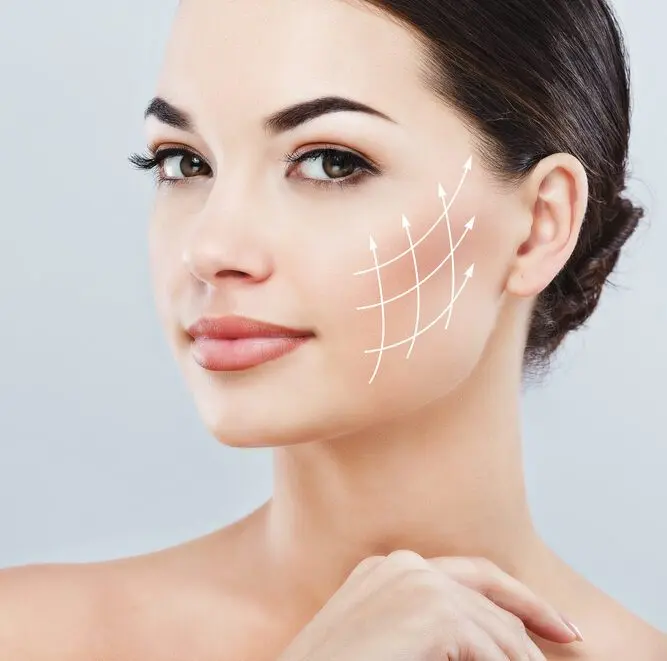
A thread brow lift uses fine, dissolvable PDO sutures placed under the skin to reposition the brow and trigger new collagen formation. At Desert Bloom Skincare in Scottsdale, Dr. Natalya Borakowski performs the procedure under a required protocol: Botox or Dysport to the frontalis two weeks before threading, then vector-planned thread placement at the temporal anchor. The lift is immediate; the collagen response sustains it for around 12–15 months.
At a Glance
- What it is
- Fine, barbed PDO sutures placed under the skin to reposition the brow and stimulate collagen production. No incisions, no general anesthesia.
- Procedure time
- ~60 minutes under local anesthesia, after a required Botox visit two weeks prior
- Threads used
- Typically 2–4 per side; count and vector are anatomy-driven, not packaged
- Results
- Visible lift immediately; collagen response develops over 3–6 months
- Duration
- ~12–15 months; individual response varies with skin quality and muscle activity
- Recovery
- Office work in 2–3 days; mild swelling/bruising resolves within ~1 week
- Cost at Desert Bloom
- $1,800 flat — includes consultation, procedure, and post-procedure check (Botox visit billed separately)
What Is a PDO Brow Lift?
A PDO brow lift is a non-surgical way to reposition a brow that has started to descend — the shift most patients notice not as “aging” but as looking more tired or less open around the eyes. The technique uses fine, dissolvable barbed sutures placed under the skin to gently lift the brow into a more rested position, with no incisions and no general anesthesia.
PDO (polydioxanone) has been used in medical sutures for over three decades, originally developed for cardiovascular surgery before moving into aesthetic thread lifting. What makes it useful here is not just that it lifts — it signals the body to rebuild. As the threads dissolve over six months, the skin responds by producing new collagen (Suh et al., 2015).
Two things happen at once: an immediate, structural repositioning of the eyebrows, and a slower improvement in skin quality that develops over months. The lift is what you see first. The collagen is what makes it last. PDO sutures are FDA-cleared medical devices for soft tissue approximation; their use in aesthetic thread lifting is an off-label application performed by trained medical professionals.
How the Thread Brow Lift Works
- 1
Preparation — two weeks before
Before any threads are placed, the frontalis muscle (which constantly lifts the forehead) is relaxed with Botox, Dysport, or Daxxify two weeks prior to threading. Most clinics skip this step. Dr. Borakowski requires it: if the brow is still being actively pulled by a strong frontalis during the critical healing phase, the threads work against constant movement. In her experience, relaxing the forehead first produces a more stable, longer-lasting result. This visit is also where your anatomy is assessed honestly — not every brow should be threaded, and she will tell you that.
- 2
The procedure (~60 minutes)
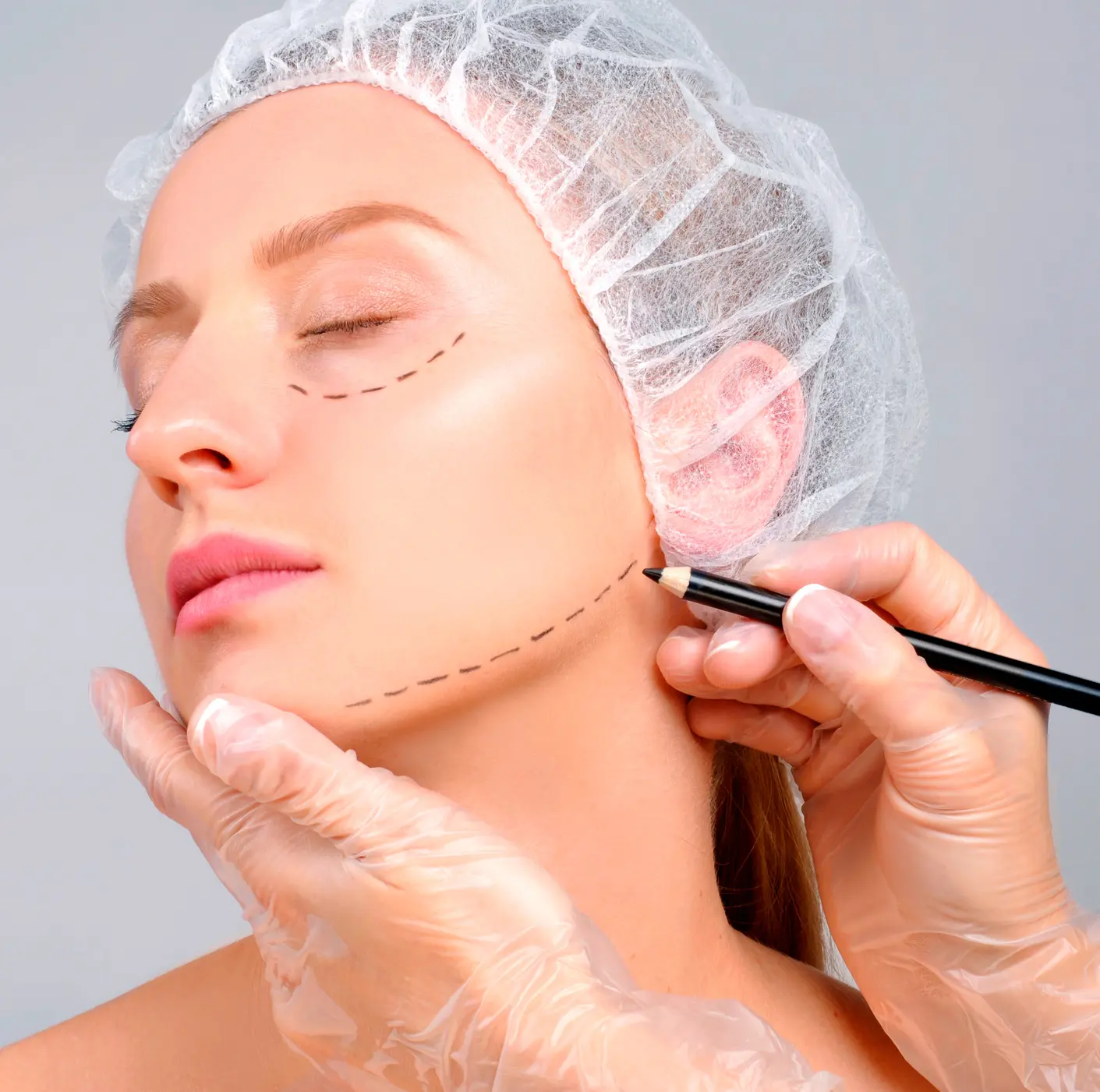
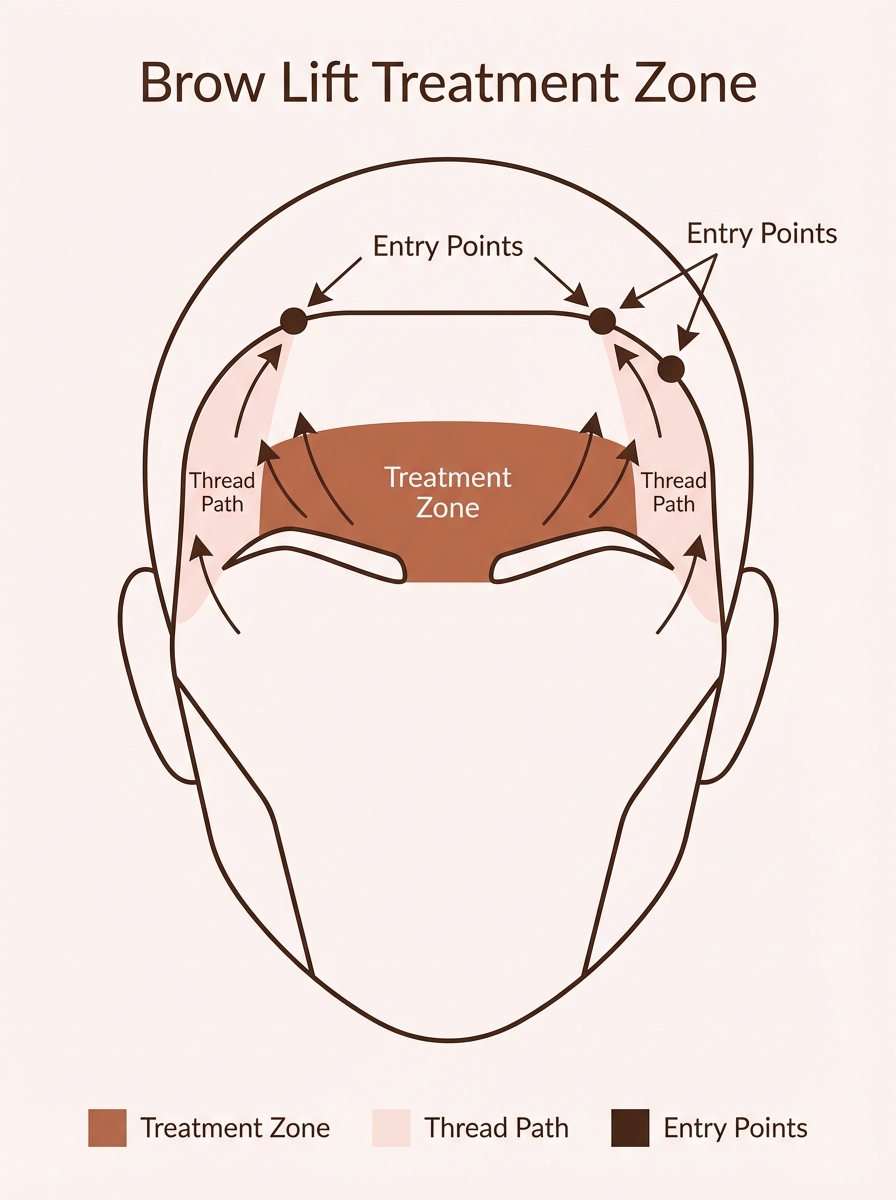
On the day of treatment, the area is numbed with local anesthesia near the hairline. Thin cannulas guide barbed PDO threads beneath the skin along specific lifting vectors planned at the temporal anchor (the deep temporal fascia). The threads are gently tensioned, immediately repositioning brow tissue, and entry points close with gentle pressure — no sutures required. You see the lift immediately. No sedation, no general anesthesia. Typically 2–4 threads are used per side; the count and direction depend entirely on your anatomy.
- 3
As the threads dissolve
Over the following six months, the PDO sutures break down through a natural metabolic process into water and carbon dioxide. The real value is what happens because they were there: the body responds to their controlled placement by activating fibroblasts — the cells responsible for collagen production. This leads to gradual new collagen formation and improvement in skin density and firmness in the brow and forehead area (Suh et al., 2015). The lift gets the attention. The collagen does the long-term work.
Thread Brow Lift Results — What to Expect
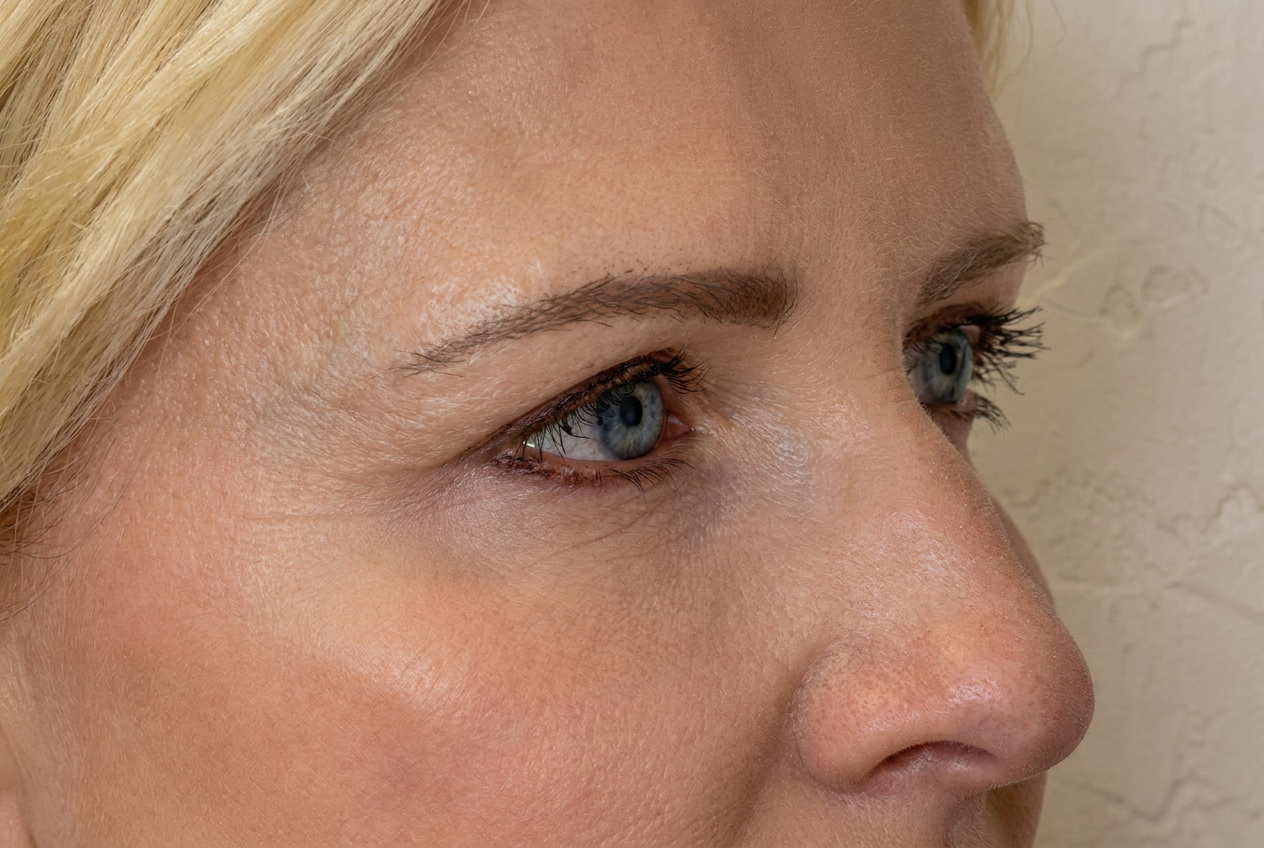
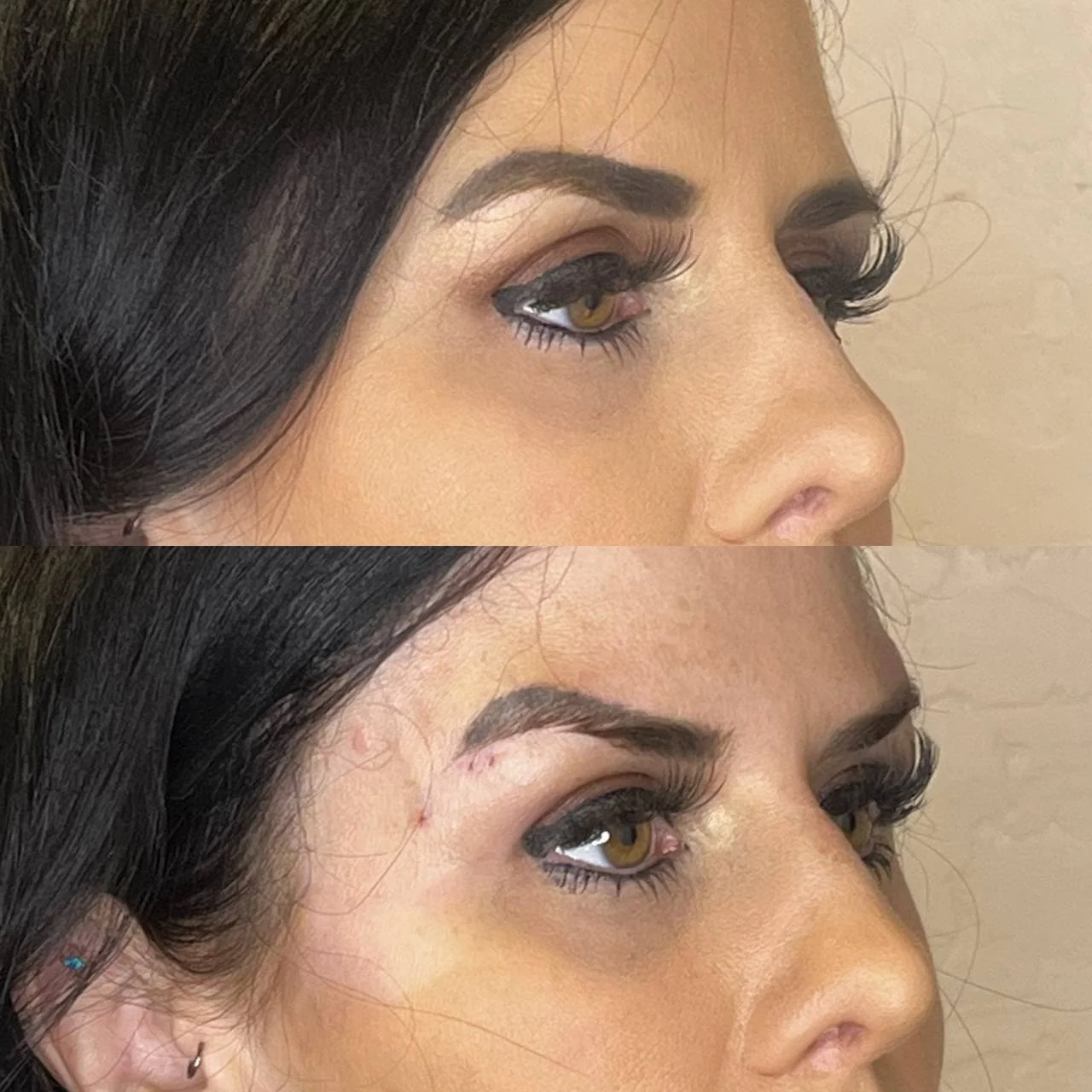
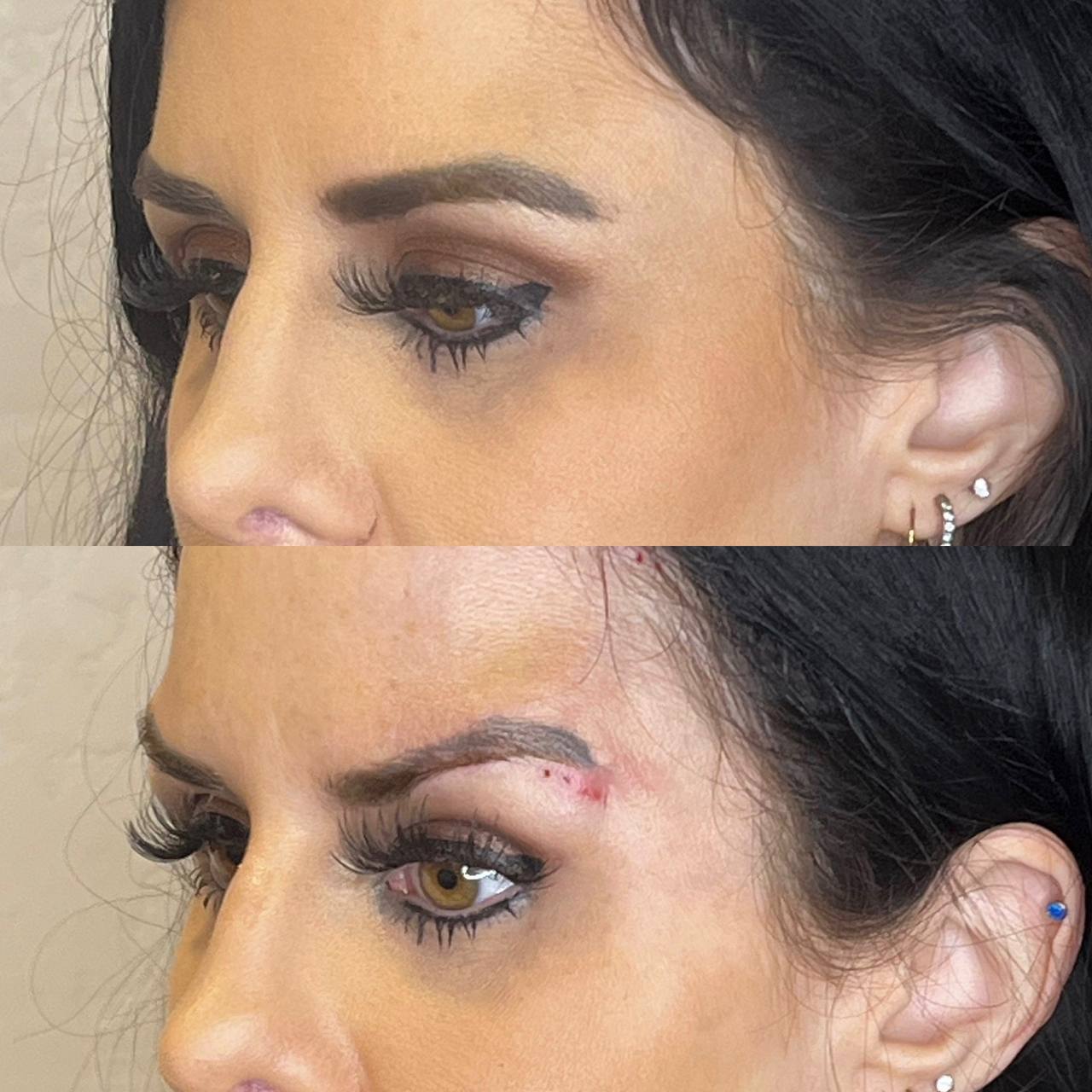
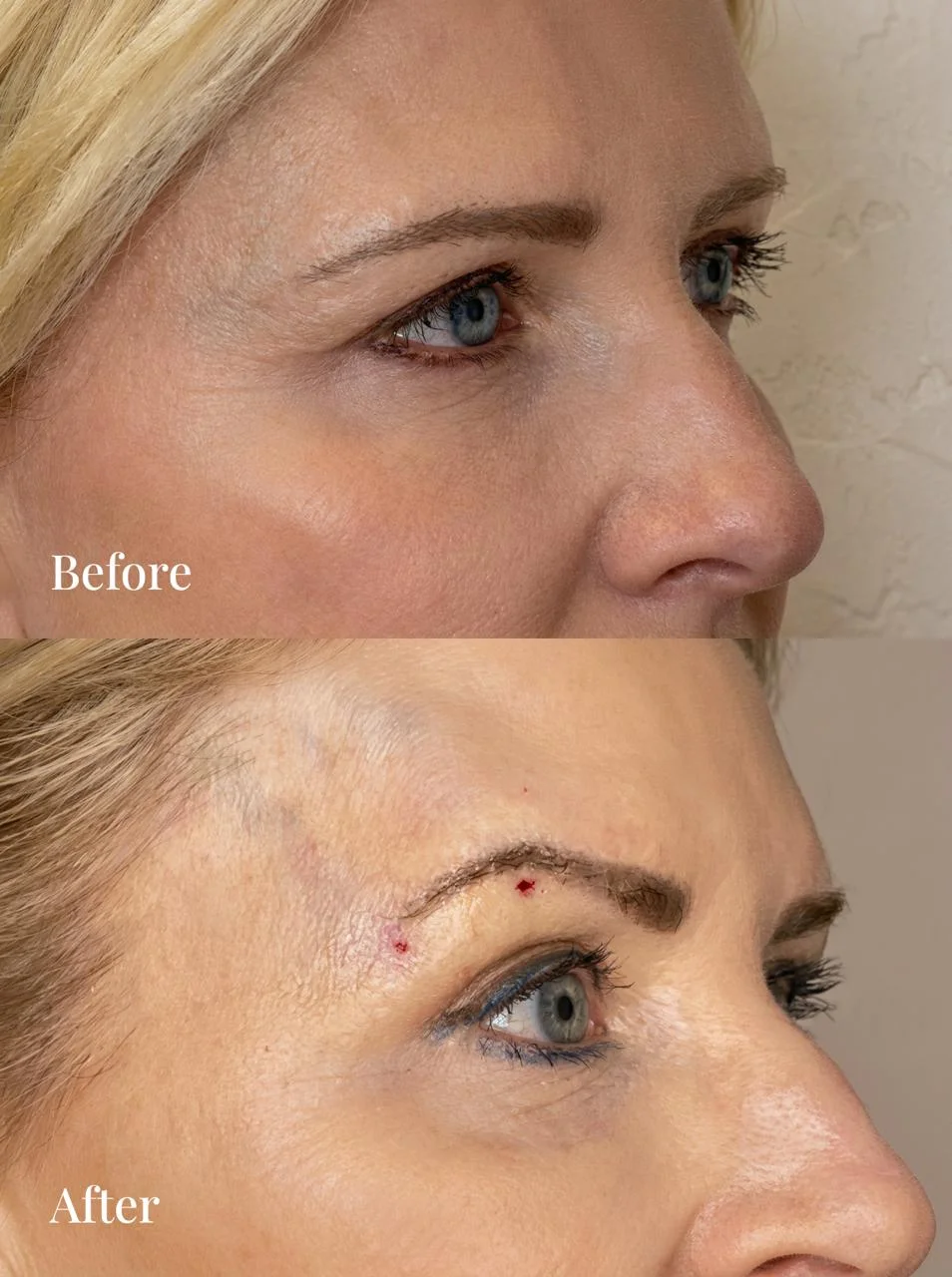
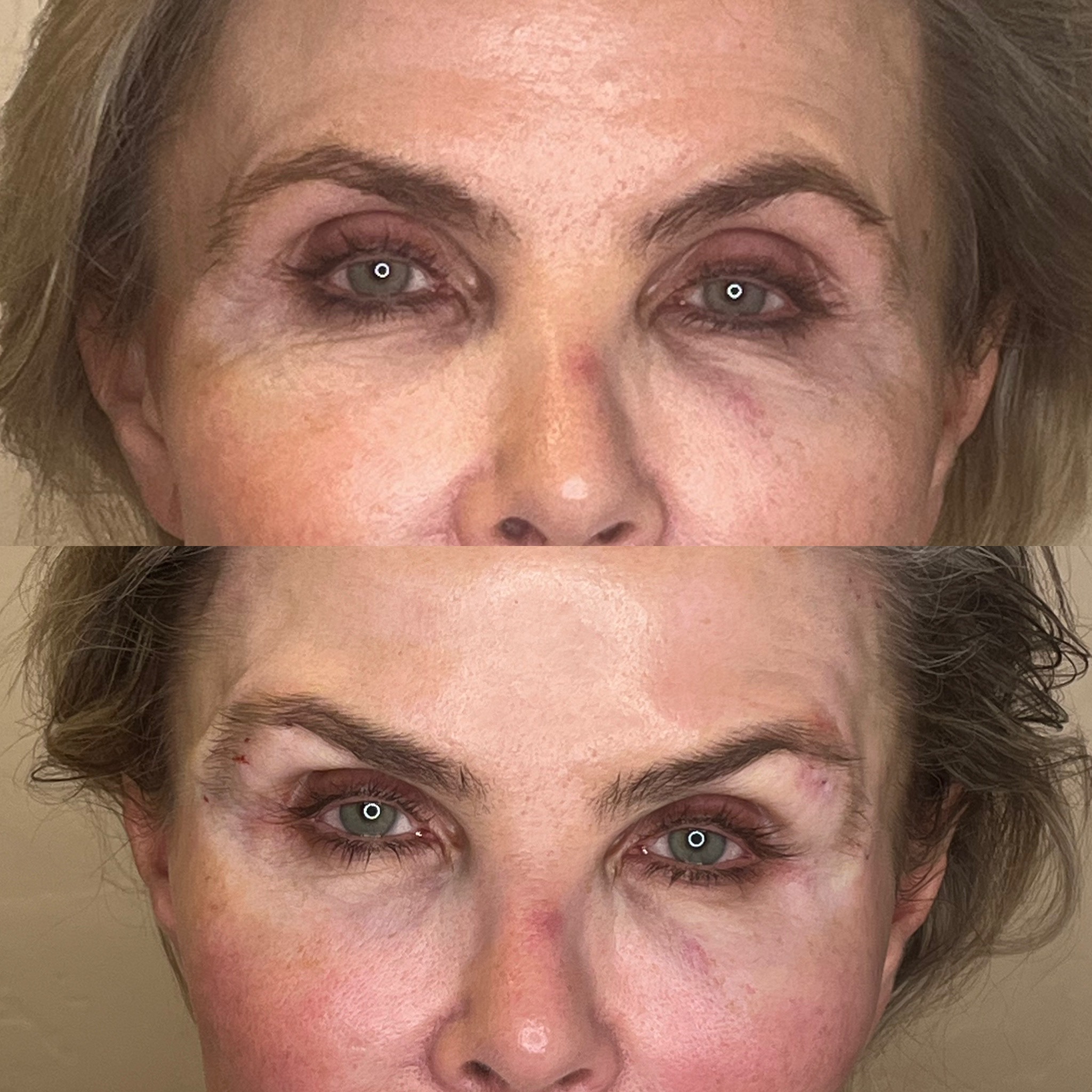
Visible brow elevation is immediate after the procedure — typically 2–4 mm at the lateral brow tail in appropriate candidates. Some swelling and mild asymmetry are common in the first days and will resolve. The final outcome continues to develop over 3–6 months as collagen builds, and most patients describe it as a subtle but meaningful improvement: the brow sits higher, the upper lid looks less heavy, and the expression appears rested rather than tired.
How long results last: typically around 12–15 months — slightly shorter than face threads, because the brow zone has more dynamic muscle activity (frontalis, corrugators, orbicularis) constantly working against the lift vector. Younger patients with good skin elasticity tend to see longer-lasting results. The procedure can be repeated when effects fade; most patients schedule an annual maintenance treatment.
Before & After
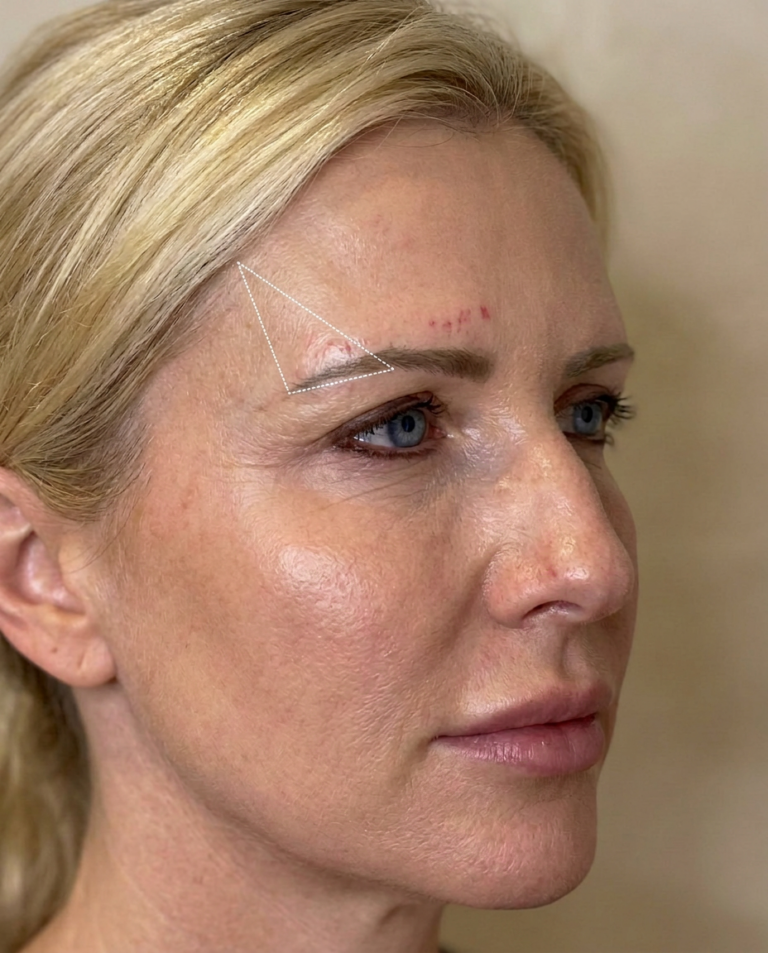
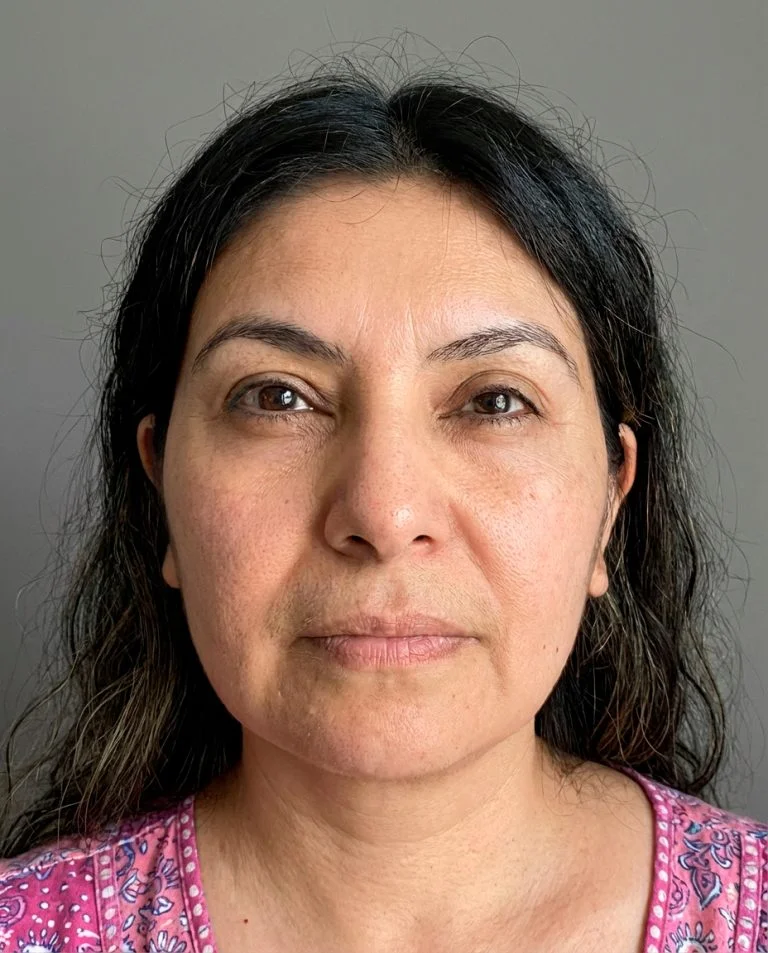
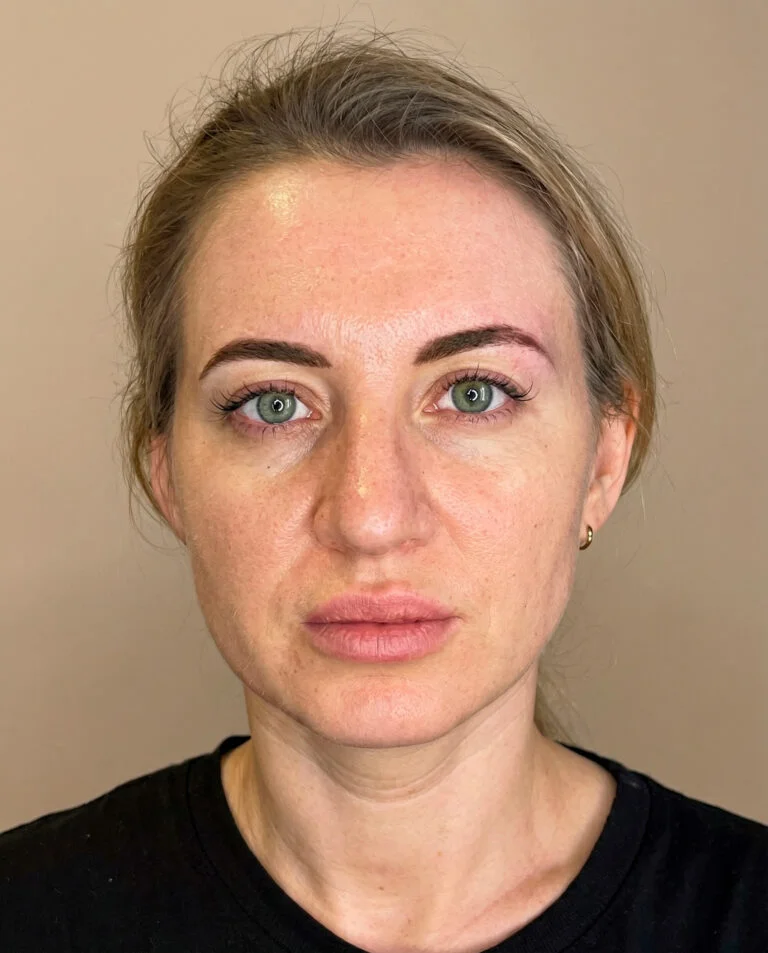
Brow-tail elevation and arch refinement after thread brow lift at Desert Bloom Scottsdale.
 BeforeAfter
 BeforeAfter
 BeforeAfter
 BeforeAfter
What a Thread Brow Lift Can — and Cannot — Address
A PDO brow lift can address:
- Measurable elevation of the eyebrows, typically 2–4 mm at the lateral tail in appropriate candidates (Suh et al., 2015)
- Reduced hooding of the upper lids caused by brow descent (not by skin excess)
- Improved symmetry between left and right brow position
- A rested, open-eyed appearance without a pulled or surgical look
A PDO brow lift cannot address:
- Significant excess upper-lid or forehead skin requiring surgical excision
- True eyelid ptosis (drooping lid from levator muscle dysfunction)
- Deep forehead wrinkles or frown lines unrelated to brow position — better addressed with resurfacing or neurotoxin
- Dramatic structural change comparable to an endoscopic or coronal surgical brow lift
Recovery — Day by Day
First 48 hours
Mild soreness and pulling sensation
Mild soreness, swelling, and bruising at the insertion points occur in some cases. A sensation of tightness or mild pulling in the brow and forehead is normal as the threads settle. Sleep on your back with your head elevated. Avoid makeup, facial massage, and alcohol.
Days 3–7
Swelling peaks then fades
Swelling and bruising typically peak around day two or three and then fade. You may notice slight asymmetry or subtle skin dimpling as the threads settle — this is expected and resolves on its own. Office-based work usually resumes by day two or three; physically demanding jobs should allow five to seven days.
Weeks 2–6
Visible recovery resolves
Most visible recovery effects resolve within the first two weeks. Avoid strenuous exercise, facials, facial massage, intense heat (sauna, steam room), and heavy lifting for 30 days. “Jarring activity” means high-impact cardio and heavy lifting — not walking or gentle daily movement.
Months 3–6
Collagen response develops
As the threads dissolve, fibroblast activity builds new collagen in the brow and forehead area, refining skin density and firmness. Final results settle and your expression takes on the rested, subtly elevated look that defines a well-planned brow lift.
Thread Brow Lift vs. Other Brow Lifting Options
Thread lifting is neither the most aggressive option nor the least. Understanding where it sits relative to Botox brow lift and surgical brow lift is usually the most useful thing to take away from a first consultation. For severe brow ptosis or heavy upper-eyelid skin excess, a plastic-surgery consultation is the more appropriate starting point — not threads.
| Property | Thread Brow Lift | Surgical Brow Lift | Botox Brow Lift |
|---|---|---|---|
| Mechanism | Barbed PDO sutures reposition tissue + stimulate collagen | Incisional repositioning of brow soft tissue | Relaxes depressor muscles for passive elevation |
| Anesthesia | Local | General | Topical numbing only |
| Downtime | 3–7 days | 2–4 weeks | None |
| Scarring | None (entry points ≤2mm) | Small incisions behind the hairline | None |
| Result duration | ~12–15 months | 5–10 years | 3–4 months |
| Best for | Mild–moderate positional descent, surgery-averse | Severe descent, significant skin excess | Dynamic descent from active depressors |
| Cost at Desert Bloom | $1,800 flat | Not offered (surgical) | Per area; see Botox pricing |
Thread Brow Lift
- Mechanism
- Barbed PDO sutures reposition tissue + stimulate collagen
- Anesthesia
- Local
- Downtime
- 3–7 days
- Scarring
- None (entry points ≤2mm)
- Result duration
- ~12–15 months
- Best for
- Mild–moderate positional descent, surgery-averse
- Cost at Desert Bloom
- $1,800 flat
Surgical Brow Lift
- Mechanism
- Incisional repositioning of brow soft tissue
- Anesthesia
- General
- Downtime
- 2–4 weeks
- Scarring
- Small incisions behind the hairline
- Result duration
- 5–10 years
- Best for
- Severe descent, significant skin excess
- Cost at Desert Bloom
- Not offered (surgical)
Botox Brow Lift
- Mechanism
- Relaxes depressor muscles for passive elevation
- Anesthesia
- Topical numbing only
- Downtime
- None
- Scarring
- None
- Result duration
- 3–4 months
- Best for
- Dynamic descent from active depressors
- Cost at Desert Bloom
- Per area; see Botox pricing
Thread Brow Lift vs. Botox Brow Lift
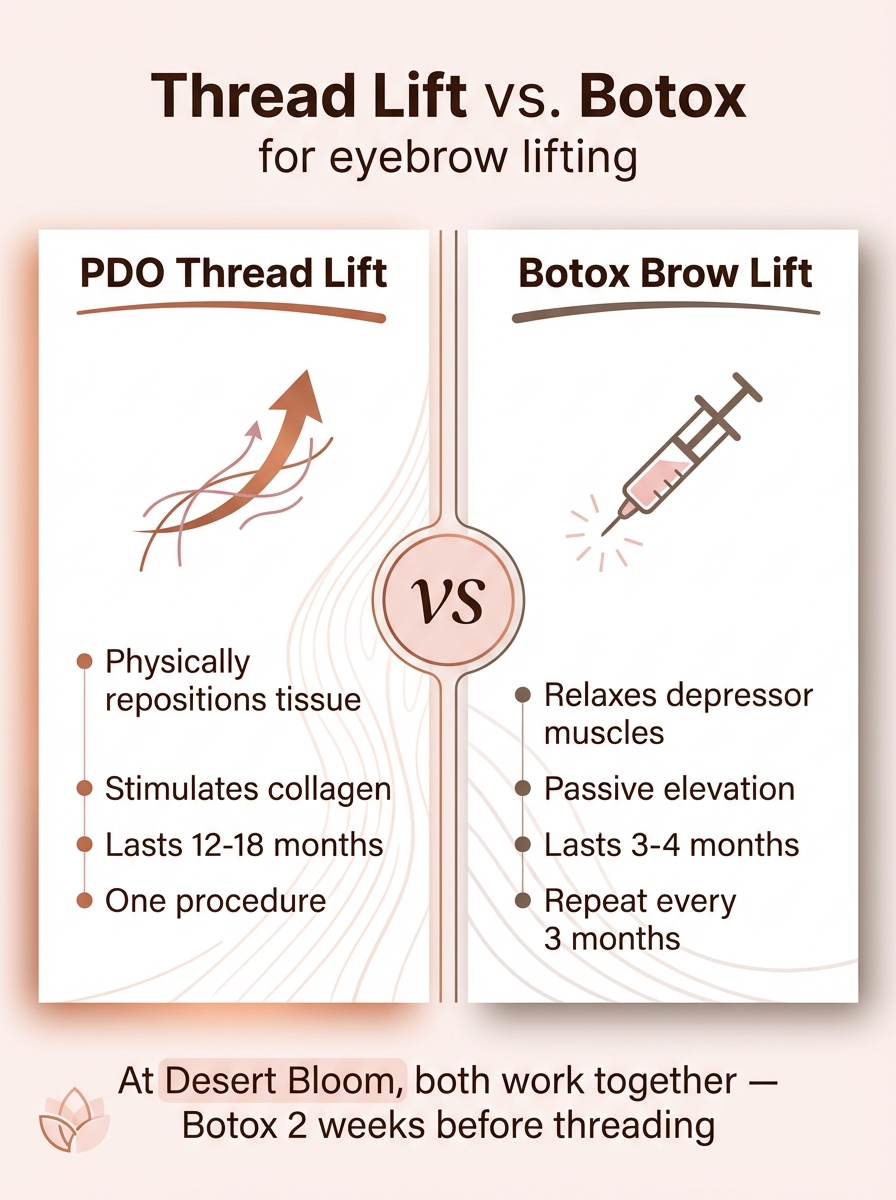
A Botox brow lift relaxes the muscles that pull the brow downward, producing a passive elevation that lasts around three to four months. A thread lift physically repositions the eyebrows and stimulates collagen — lasting around 12 to 18 months for most patients.
At Desert Bloom the neurotoxin visit comes first — required, not optional. With the forehead muscles relaxed, threads work against less movement during early healing, which may support a more stable result than threading alone in appropriate candidates.
Thread Brow Lift Cost in Scottsdale
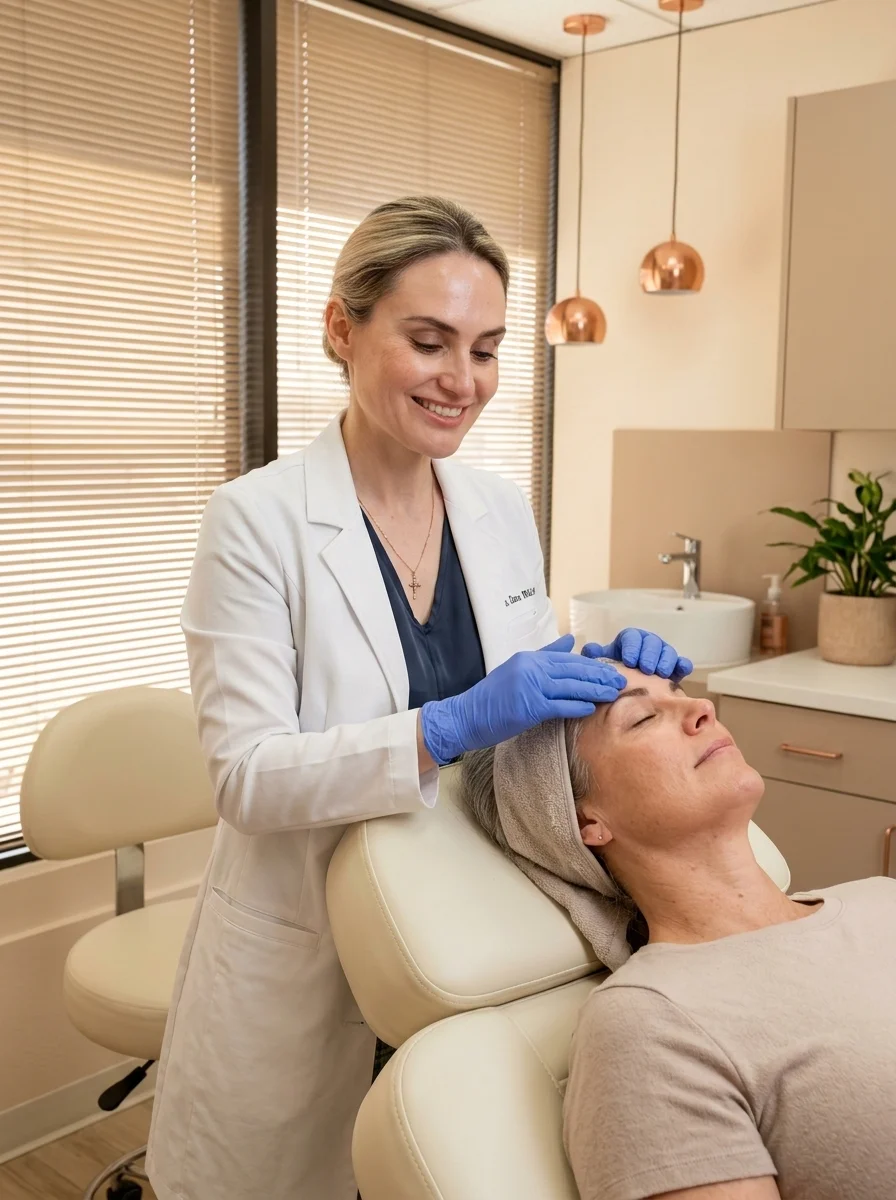
At Desert Bloom Skincare, the Thread Brow Lift is $1,800 — a flat number that includes Dr. Borakowski’s pre-procedure assessment, local anesthetic, PDO threads, and a post-procedure check. The required Botox or Dysport visit two weeks before threading is billed separately. Every patient receives a written quote at consultation; the quote may rise if temporal-zone correction or pronounced unilateral asymmetry expands the plan, but it does not start at a higher number for arbitrary reasons.
Pricing
- Thread Brow Lift$1800
Why Choose Desert Bloom for Your Thread Brow Lift

The brow is one of the more anatomically demanding zones in thread lifting. The margin between a natural result and an over-elevated look is narrow, vectors that work for one anatomy do not transfer to another, and the frontal branch of the facial nerve runs through the planned thread path. Vector planning at the temporal anchor — not thread count — is what determines whether the result looks natural at 8 weeks.
Dr. Borakowski trained directly with Dr. Murat Tsintsadze, plastic surgeon and one of the world’s foremost authorities on thread-lifting technique, with specific focus on vector planning and anatomical precision for the brow and temporal area. She trained on cadavers, which means her knowledge of where threads should and should not go is grounded in actual anatomy rather than clinical approximation.
The Botox-first protocol here is not standard across clinics — most providers thread without it. Relaxing the forehead muscles beforehand reduces the mechanical pull that works against thread integration during early healing, and gives her a clear picture of how your brow actually moves before she selects lifting vectors. In January 2025, she presented PDO thread techniques at IMCAS World Congress in Paris. She serves as adjunct faculty at the University of Bridgeport and has been practicing in Scottsdale for 17 years.
“The brow is one of the most anatomically nuanced areas to thread. I rely on the specific vector geometry from my advanced thread-lifting training — not generic patterns. And if a patient’s anatomy tells me they need a surgical consultation instead, that is the conversation we have.”
Frequently Asked Questions About Thread Brow Lift
Thread brow lift vs. Botox brow lift — which one do I need?
What does recovery look like?
What is the difference between a thread lift and a brow lift?

Medically reviewed by
Founder, Desert Bloom Skincare · Adjunct Faculty, University of Bridgeport · 17 Years Experience
References
- 1.
Suh DH, Jang HW, Lee SJ, et al.. Outcomes of polydioxanone knotless thread lifting for facial rejuvenation. Dermatologic Surgery; 2015;41(6):720-725.
DOI: 10.1097/DSS.0000000000000375
Foundational outcomes data for PDO thread lifting and the collagen-induction mechanism referenced throughout this page.
- 2.
Sykes JM, Cotofana S, Trevidic P, et al.. Upper Face: Clinical Anatomy and Regional Approaches with Injectable Fillers. Plastic and Reconstructive Surgery; 2015;136(5 Suppl):204S-218S.
DOI: 10.1097/PRS.0000000000001830
Anatomy reference for the temporal anchor, frontal branch of the facial nerve, and upper-face injection-and-thread planning.
- 3.
Beleznay K, Carruthers JDA, Humphrey S, Jones D.. Avoiding and Treating Blindness From Fillers: A Review of the World Literature. Dermatologic Surgery; 2015;41(10):1097-1117.
DOI: 10.1097/DSS.0000000000000486
Vascular-safety review for the temporal region, underlying conservative placement protocols when filler and threads share the same zone.
PDO sutures are FDA-cleared medical devices for soft tissue approximation. Their use for aesthetic thread brow lifting is an off-label application performed by trained medical professionals. Individual results vary. This page is for informational purposes only and does not constitute medical advice. All treatments at Desert Bloom Skincare are performed by Dr. Natalya Borakowski, NMD. Last updated: June 2026.