
When "Drooping Eyelid" Is Rarely What It Looks Like
Ptosis is the medical term for a drooping upper eyelid — a downward displacement of the lid margin caused by impairment of the levator muscle or its tendon. In an aesthetic practice, true levator ptosis is uncommon. The far more frequent finding is pseudo-ptosis: brow descent pushing forehead tissue downward, temporal fat-pad deflation pulling the lateral brow down, or excess upper eyelid skin (dermatochalasis) draping over a lid that is actually working fine.
These are different anatomy, different mechanisms, and different treatments. At Desert Bloom, Dr. Natalya Borakowski, NMD begins every ptosis evaluation by separating medical ptosis from cosmetic pseudo-ptosis. If the lid margin position, levator function, or clinical history suggests a neurogenic or structural levator problem, she refers to an oculoplastic surgeon — the right specialist for that lane. If you would describe the concern as "tired" or "hooded" rather than as a medical condition, the broader umbrella page is Droopy Eyelid.
At a Glance
- Scope here
- Non-surgical options for cosmetic pseudo-ptosis only — brow descent, temple deflation, eyelid skin laxity.
- What we do NOT treat
- True levator ptosis, neurogenic ptosis, congenital ptosis, ptosis with vision changes — all referred out.
- Routes available
- Botox brow lift, PDO Thread Brow Lift, Temple Filler, CO2 Laser (Fitzpatrick I–III) — sequenced to the actual driver.
- Provider
- Dr. Natalya Borakowski, NMD — every plan starts with a clinical exam to rule out a medical cause.
- How to start
- 30-minute consultation. If a referral is the right answer, you leave with that clarity instead of a booking.
What 'Ptosis' Actually Means
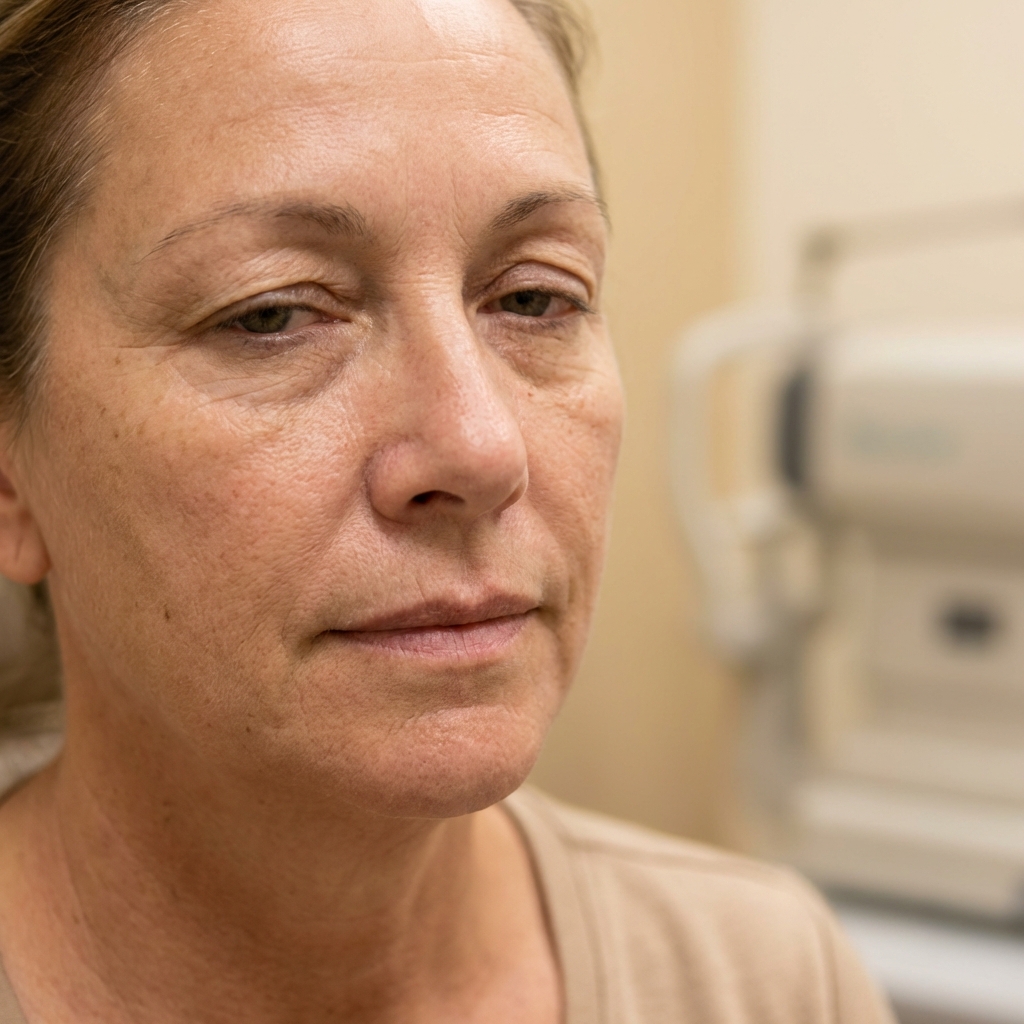
Strictly, ptosis is downward displacement of the upper eyelid margin caused by impairment of the levator palpebrae superioris muscle or its aponeurosis. The lid itself drops because the lifting mechanism is weakened. That is different from a lid that looks low because brow tissue or excess upper-lid skin is hanging over it — which is the much more common finding in cosmetic consultations.
Types of Ptosis — and Which Ones We Can Treat
Ptosis is classified by the mechanism causing the drop. The four categories below have very different implications. Most patients seeking aesthetic treatment for "drooping eyes" fall into the fourth category — pseudo-ptosis — which is the only one we address non-surgically.
Aponeurotic Ptosis — Age-Related Levator Stretching
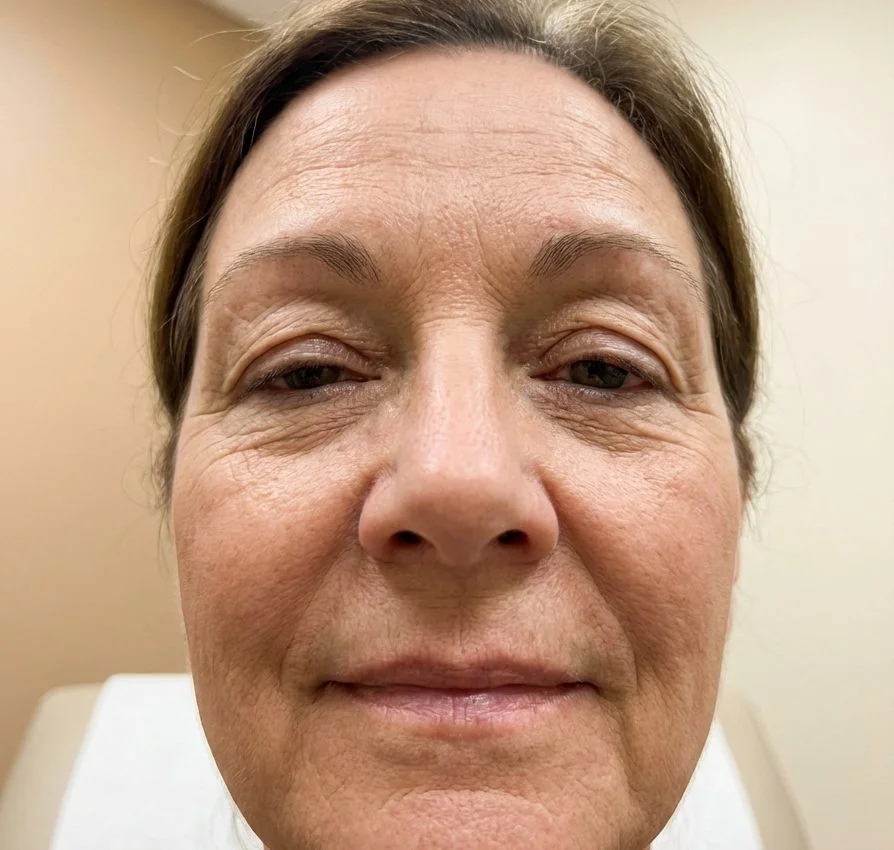
The levator aponeurosis (the tendon connecting the lifting muscle to the eyelid plate) stretches or thins with age. The lid margin gradually drops over years, usually on both sides. The muscle still contracts, but the connection to the tarsal plate has weakened. This is the most common adult cause and the primary indication for surgical ptosis repair — typically levator advancement performed by an oculoplastic surgeon.
Neurogenic and Myogenic Ptosis — Medical Red Flags
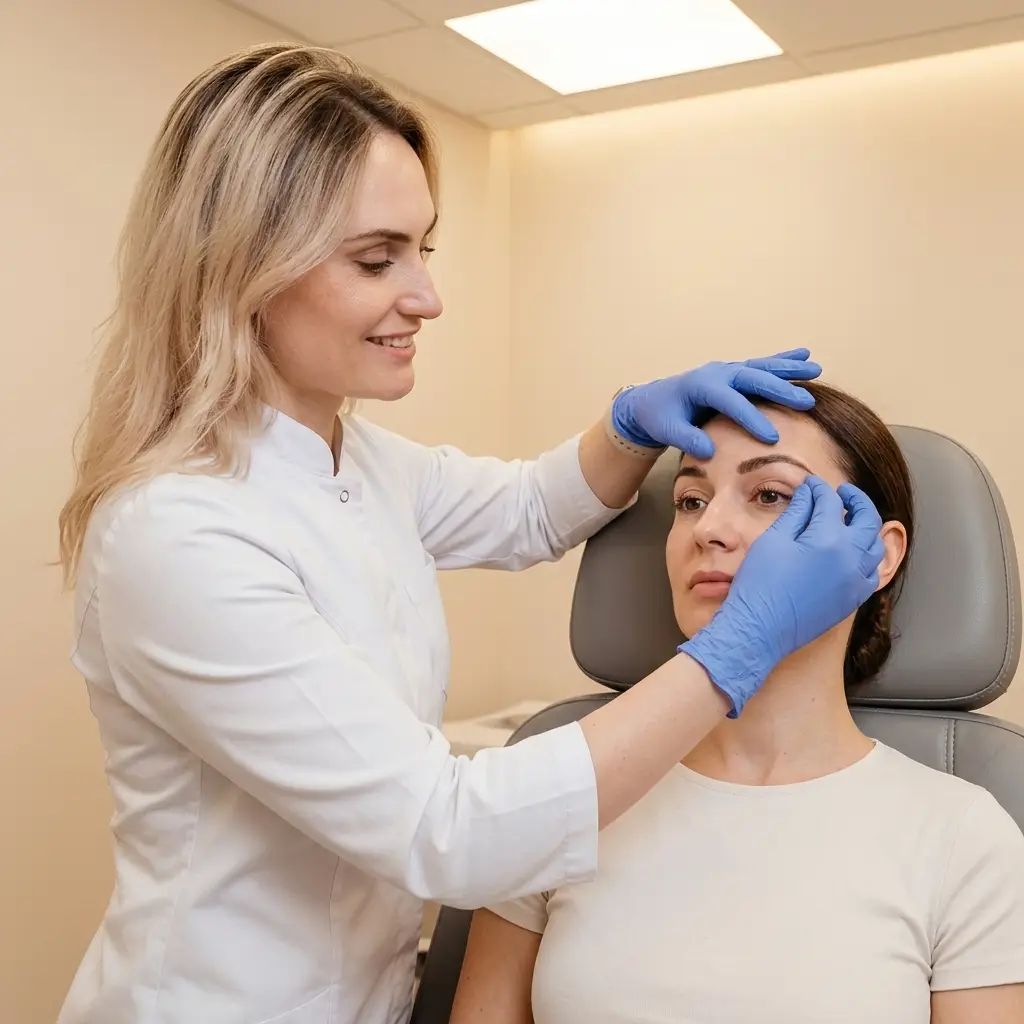
Third-nerve palsy, Horner syndrome, and myasthenia gravis can all present as a drooping eyelid. These are neurologic or neuromuscular conditions, not aesthetic ones, and they require urgent medical evaluation. Key signs are sudden onset, double vision (diplopia), asymmetric pupils, restricted eye movements, or ptosis that worsens through the day. Aesthetic treatment is contraindicated until a medical cause is excluded.
Pseudo-Ptosis — What Most Aesthetic Patients Have
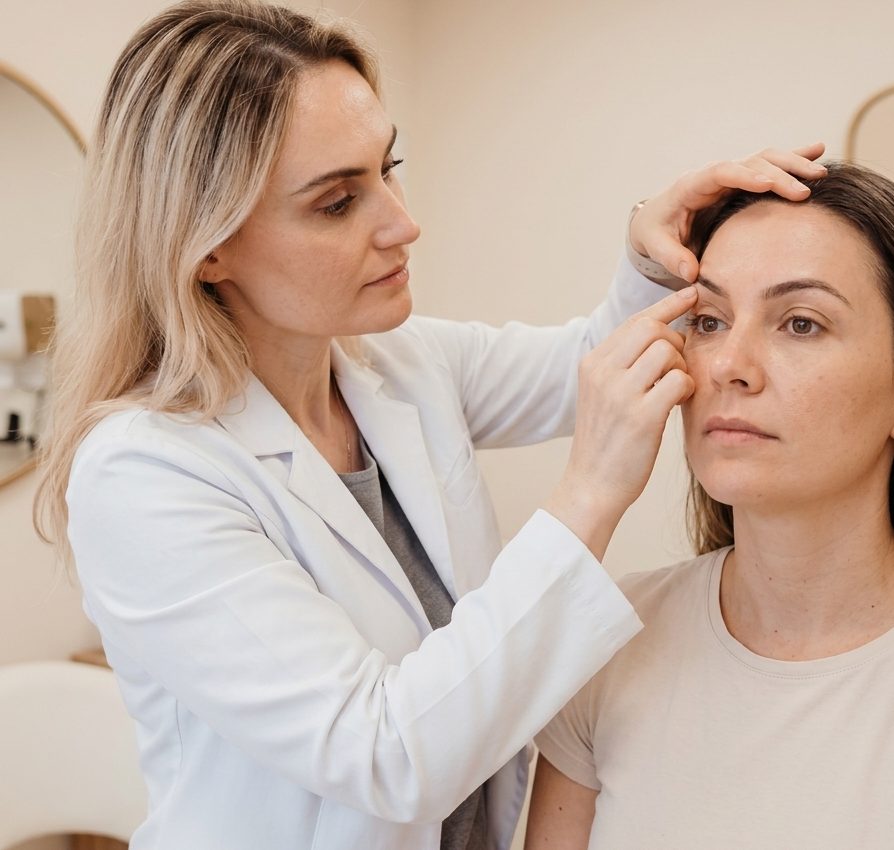
The eyelid itself is working normally; the apparent droop comes from tissue above or around the lid. Brow descent from fat-pad deflation and frontalis fatigue, temporal hollowing pulling the outer brow down, or excess upper-lid skin (dermatochalasis) all create the look of ptosis without true levator impairment. This is the only category where non-surgical aesthetic treatment is appropriate — and even then, only after a clinical exam confirms that the levator and lid margin are normal.
What We Treat — Routes for Pseudo-Ptosis
First-line · diagnostic
Botox Brow Lift
When the heaviness comes from a brow pressing down rather than the lid itself, a small dose of Botox relaxing the brow depressor muscles (corrugator, procerus, lateral orbicularis) lets the frontalis lift the brow more freely. Least invasive, most titratable — and the response tells Dr. Borakowski how much lift your anatomy can reach without structural intervention. Dysport and Daxxify are alternatives. Wears off 3–4 months.
Structural · 12–18 months
PDO Thread Brow Lift
When brow descent has passed what a neuromodulator can correct, the PDO Thread Brow Lift physically repositions and holds the brow for 12–18 months — delivering lift that toxin alone cannot. Dr. Borakowski reaches for this once a Botox trial has confirmed the ceiling of muscular lift. Threads also stimulate collagen over time.
Lateral support · 12–18 mo
Temple Filler
When the temporal fat pad has deflated, nothing holds the outer brow up. Temple Filler with Restylane or RHA restores volume in the temple hollow and passively re-elevates the lateral brow without manipulating the brow tissue itself. Right call when hollow temples are clearly part of the picture; often combined with Botox or threads.
Skin envelope · Fitz I–III
CO2 Laser Resurfacing
When the brow position is normal and the actual problem is heavy, crepey upper lid skin (dermatochalasis), CO2 Laser Resurfacing contracts redundant eyelid skin and stimulates collagen. Addresses the skin envelope rather than the brow. Fitzpatrick I–III only; 7–10 days of social downtime.
What We Do NOT Treat — Routes That Require a Surgeon
Surgical
Levator Advancement
The oculoplastic procedure that tightens or reattaches the levator aponeurosis. Standard surgical correction for aponeurotic ptosis with reduced lid margin position. Not performed at Desert Bloom — referral to a board-certified oculoplastic surgeon.
Surgical
Tarsal / Müller Muscle Resection
Posterior-approach ptosis repair for mild-to-moderate cases with good levator function. Outpatient procedure under local anesthesia. Not performed at Desert Bloom — referral required.
Surgical
Blepharoplasty (Eyelid Surgery)
Surgical removal of excess upper-lid skin, sometimes combined with ptosis repair when both findings coexist. When dermatochalasis is severe or covers the upper visual field, blepharoplasty (not CO2 resurfacing) is the right answer — referral.
Medical workup
Neurology / Ophthalmology
Sudden onset, double vision, pupil asymmetry, fatigability, or any pediatric presentation belongs in neurology or ophthalmology before any aesthetic consideration. We do not start cosmetic treatment until a medical cause has been excluded.
Which path fits you
Functional Concern vs Cosmetic Descent
The first decision on a ptosis consultation is medical vs cosmetic. Use this to orient where you fit — the actual route still comes from a clinical exam.
Sudden onset · vision change · diplopia · pupil asymmetry · fatigability · pediatric
→See ASOPRS Find a Surgeon — This is not the right page or the right practice. Possible neurogenic or myogenic ptosis requires urgent ophthalmology or neurology evaluation. ASOPRS.org maintains a Find a Surgeon directory for oculoplastic referrals. Aesthetic treatment is contraindicated until a medical cause is excluded.
Cosmetic · descentGradual heaviness over years · normal vision · 'tired' or 'hooded' look · no neurologic signs
→See Droopy Eyelid — Likely cosmetic pseudo-ptosis from brow descent, temple deflation, or eyelid skin laxity. The broader consumer-facing umbrella page covers the same options from a non-medical angle. Start there if 'drooping eyelid' is how you would describe it, not 'ptosis.'
| Feature | Botox Brow Lift | Thread Brow Lift | Temple Filler | CO2 Laser | Oculoplastic Referral |
|---|---|---|---|---|---|
| Zone addressed | Brow (muscular depressors) | Brow (structural descent) | Lateral brow / temple | Upper eyelid skin | True levator / neurogenic |
| Mechanism | Neuromodulator relaxes depressors | PDO threads reposition tissue | HA filler scaffolds temple | Ablative skin contraction | Levator advancement (surgery) |
| Longevity | 3–4 months | 12–18 months | 12–18 months | 1–3 years | Long-term |
| Fitzpatrick range | I–VI | I–VI | I–VI | I–III | Surgeon-assessed |
| Downtime | None | 24–48 h social | 24–48 h social | 7–10 days | Outpatient · 1–2 wk |
| Best for | Modest pseudo-ptosis, first-line | Structural brow descent | Lateral brow with hollow temple | Normal brow, excess lid skin | True ptosis, vision obstruction |
Botox Brow Lift
- Zone addressed
- Brow (muscular depressors)
- Mechanism
- Neuromodulator relaxes depressors
- Longevity
- 3–4 months
- Fitzpatrick range
- I–VI
- Downtime
- None
- Best for
- Modest pseudo-ptosis, first-line
Thread Brow Lift
- Zone addressed
- Brow (structural descent)
- Mechanism
- PDO threads reposition tissue
- Longevity
- 12–18 months
- Fitzpatrick range
- I–VI
- Downtime
- 24–48 h social
- Best for
- Structural brow descent
Temple Filler
- Zone addressed
- Lateral brow / temple
- Mechanism
- HA filler scaffolds temple
- Longevity
- 12–18 months
- Fitzpatrick range
- I–VI
- Downtime
- 24–48 h social
- Best for
- Lateral brow with hollow temple
CO2 Laser
- Zone addressed
- Upper eyelid skin
- Mechanism
- Ablative skin contraction
- Longevity
- 1–3 years
- Fitzpatrick range
- I–III
- Downtime
- 7–10 days
- Best for
- Normal brow, excess lid skin
Oculoplastic Referral
- Zone addressed
- True levator / neurogenic
- Mechanism
- Levator advancement (surgery)
- Longevity
- Long-term
- Fitzpatrick range
- Surgeon-assessed
- Downtime
- Outpatient · 1–2 wk
- Best for
- True ptosis, vision obstruction
When Ptosis Requires a Surgeon — Referral Thresholds
Desert Bloom is an aesthetic practice, not an ophthalmology clinic. If any of the following applies, the correct next step is medical evaluation, not a cosmetic plan. Dr. Borakowski tells patients this directly in consultation.
- Sudden onset. A drooping eyelid that developed within hours or days — not gradually over years — is a neurologic red flag. Treat as urgent.
- Double vision or pupil asymmetry. Ptosis with diplopia, anisocoria, or restricted eye movements can indicate third-nerve palsy or Horner syndrome. Emergency or same-day eye care, not a cosmetic clinic.
- Fatigability. Ptosis that is mild in the morning and worsens through the day — or worsens with sustained upward gaze — is a possible sign of myasthenia gravis and requires a neurology workup.
- Obstructed upper visual field. When the lid margin blocks the upper field on formal visual-field testing, ptosis repair becomes a functional (often insurance-covered) procedure. Oculoplastic surgeon.
- Pediatric ptosis. A drooping eyelid in a child requires pediatric ophthalmology assessment. Untreated congenital ptosis can interfere with normal visual development and cause amblyopia.
- Post-surgical or traumatic ptosis. Best evaluated by the surgeon who knows your anatomic history; otherwise an oculoplastic referral.
“The most important question in any ptosis consultation isn't which procedure — it's whether you even need one of ours. If your eyelid needs a surgeon, I will tell you. If it doesn't, we will build you a plan that actually matches your anatomy.”
FAQ
Frequently Asked Questions
What is the difference between true ptosis and a drooping eyelid that just looks tired?
Can Botox fix ptosis?
When does ptosis require surgery?
What causes ptosis in adults?
Is ptosis a sign of a serious medical condition?
Can ptosis go away on its own?
What if only one eyelid droops?

Content on this page is educational and reflects the non-surgical cosmetic options Desert Bloom offers for pseudo-ptosis and brow descent. It is not medical advice. True levator ptosis, neurogenic ptosis, congenital ptosis, and ptosis with vision obstruction require evaluation by an ophthalmologist or oculoplastic surgeon and are beyond the scope of this practice. Individual results vary. Reviewed by Dr. Natalya Borakowski, NMD.
References
- 1.
Finsterer J.. Ptosis: causes, presentation, and management. Aesthetic Plastic Surgery; 2003;27(3):193-204.
DOI: 10.1007/s00266-003-0127-5
Classification of aponeurotic, neurogenic, myogenic, mechanical, traumatic, and congenital ptosis.
- 2.
Cahill KV, Bradley EA, Meyer DR, et al.. Functional indications for upper eyelid ptosis and blepharoplasty surgery: a report by the American Academy of Ophthalmology. Ophthalmology; 2011;118(12):2510-2517.
DOI: 10.1016/j.ophtha.2011.09.029
AAO guideline on functional surgical indications and visual-field thresholds for ptosis repair.
- 3.
SooHoo JR, Davies BW, Allard FD, Durairaj VD.. Congenital ptosis. Survey of Ophthalmology; 2014;59(5):483-492.
DOI: 10.1016/j.survophthal.2014.01.005
Pediatric ptosis, amblyopia risk, surgical indications.
- 4.
Funt D, Pavicic T.. Dermal fillers in aesthetics: an overview of adverse events and treatment approaches. Clin Cosmet Investig Dermatol; 2013;6:295-316.
DOI: 10.2147/CCID.S50546
Adverse-event framework relevant to temple filler safety and brow region anatomy.