CO2 Laser Resurfacing in Scottsdale, AZ 85260
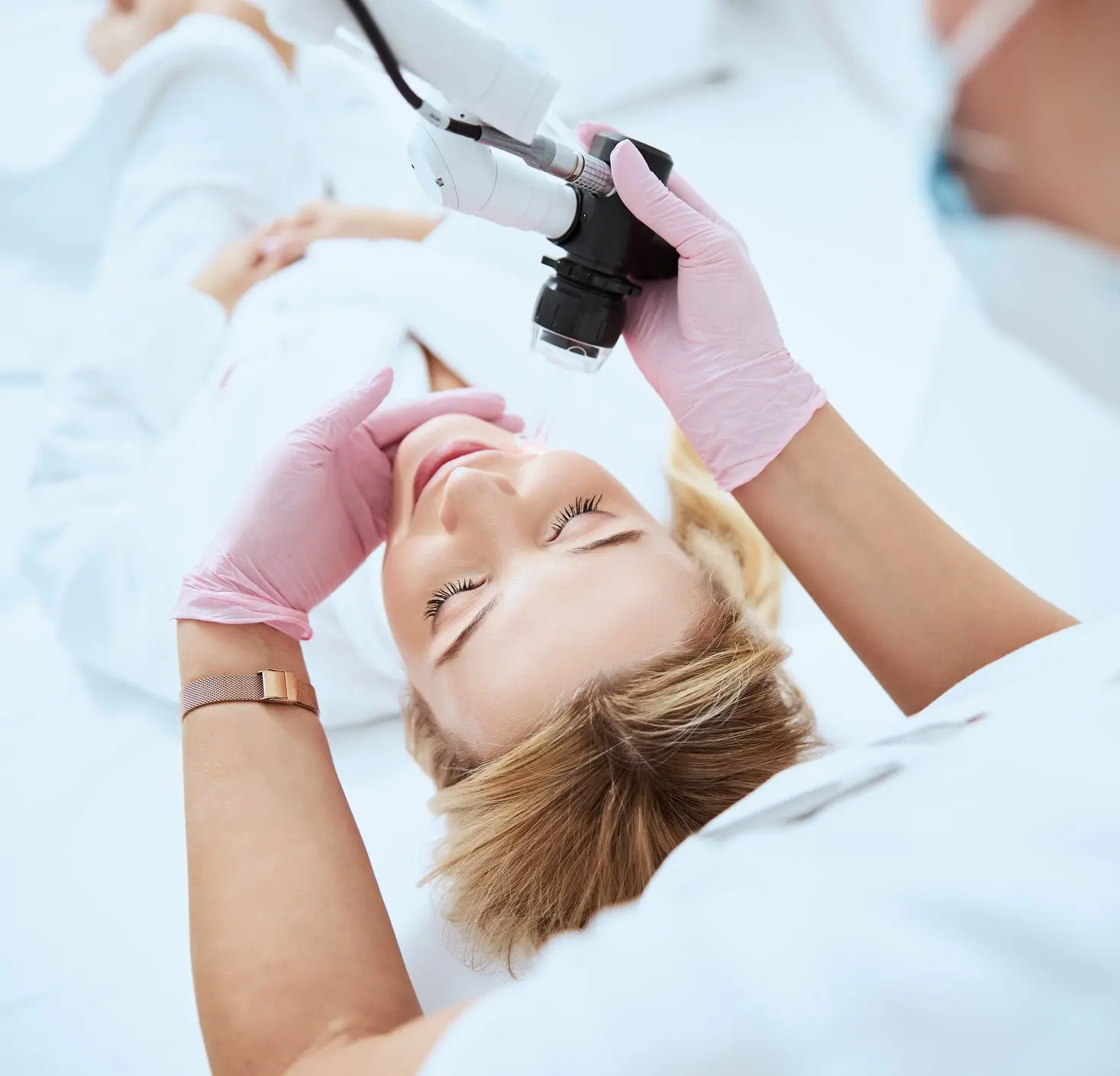
CO2 Laser Resurfacing in Scottsdale, AZ
CO2 laser resurfacing is one of the most effective ablative treatments for wrinkles, acne scars, sun damage, and uneven texture. When topical skincare stops making a difference, CO2 laser removes damaged layers and rebuilds collagen from within. At Desert Bloom, we perform CO2 laser skin resurfacing with 17 years of experience — and we will always explain your options and set clear expectations before any treatment begins.
At a Glance
CO2 laser resurfacing uses a carbon dioxide laser at 10,600 nm to vaporize damaged skin and trigger neocollagenesis. Treats wrinkles, acne scars, sun damage, and uneven tone. Fractional mode spares surrounding tissue for faster healing — 5–10 days vs. 2–3 weeks for full ablative. Results last 3–5 years with sun protection.
CO2 laser is one of the laser treatments at Desert Bloom, alongside erbium laser resurfacing, CoolPeel, and Elluminate Glow.
What Is CO2 Laser Resurfacing?
CO2 laser resurfacing is an ablative skin resurfacing procedure using a carbon dioxide laser at 10,600 nm to vaporize damaged skin and stimulate collagen production. Each pulse removes 20–30 micrometers of tissue while creating a thermal zone that triggers neocollagenesis.

The fractional delivery method targets columns of skin while leaving surrounding tissue intact — which is what makes recovery faster compared to older full-ablative techniques. It treats wrinkles, acne scars, age spots, melasma, and uneven skin tone with FDA-cleared Class II devices, and it generally improves complexion in ways that topical products cannot replicate.
How CO2 Laser Resurfacing Works
Your skin type is evaluated using the Fitzpatrick scale. Medical history, medications, and conditions that affect candidacy are reviewed. Antiviral medication (valacyclovir 500 mg twice daily for 10 days, starting day of treatment) is prescribed for patients with a history of cold sores.
Avoid sun exposure four weeks prior. Stop retinoids as directed. If you have a history of isotretinoin use, discuss the washout period with your provider (typically 12 months minimum).
A topical anesthetic is applied 30–60 minutes before the procedure. Protective eye shields are placed. The treatment area is cleansed and prepped.
In fractional mode, the handpiece delivers laser energy in a grid pattern, vaporizing micro-columns while leaving intact tissue for faster healing. Full face treatment typically takes 30–60 minutes depending on the area.
Petrolatum ointment is applied immediately. Skin feels like a sunburn — heat, tightness, and redness are expected. You will receive detailed aftercare instructions for home care.
Types of CO2 Laser Skin Resurfacing
| Feature | Full Ablative | Fractional CO2 | CoolPeel |
|---|---|---|---|
| Downtime | 2–3 weeks | 5–10 days | 2–3 days |
| Best for | Severe damage; typically post-facelift under sedation | Moderate wrinkles, acne scars, sun damage | Fine lines, texture, pores, early photoaging |
| Sessions | 1 | 1–3 | 2–3 |
| At Desert Bloom | Not offered | Offered | Offered |
At Desert Bloom, we prefer multiple CoolPeel treatments over full ablative resurfacing. CoolPeel uses H-Pulse microsecond technology on the Rohrer Phoenix CO2 laser — ablation with minimal thermal spread, typically associated with fewer side effects and shorter downtime. Full ablative CO2 is most often performed after facelift under sedation or general anesthesia and is not offered at our clinic. Not sure which CO2 treatment is right for you? Compare CoolPeel options.
CO2 Laser Resurfacing Recovery: Day by Day
Hot, tight, red skin. Swelling begins. Petrolatum applied. Most people feel significant warmth and pressure around the eyes and cheeks for the first several hours.
Peak swelling, especially around the eyes — this is expected and resolves on its own. Clear fluid weeping is normal. Cold compresses, petrolatum every 2–4 hours. Keep the area clean and follow aftercare instructions.
Crusting, peeling, itching — all normal healing signs. Do not pick. Re-epithelialization completes by day 6–7. The skin may look alarming at this stage but is healing as expected.
Redness is manageable with mineral makeup. Gentle skincare only. You can typically resume light work and office activities.
Pinkness fades significantly; tone and texture improvement becomes noticeable; cautious reintroduction of active skincare products. Most people look and feel like themselves again.
Collagen and elastin production peaks at month 3; remodeling continues up to 12 months. Daily sunscreen (SPF 30+) is essential — sun exposure during this period can cause hyperpigmentation that is difficult to reverse.
CoolPeel recovery: Mild redness day one, back to normal in 2–3 days. Fewer restrictions and a faster return to regular activity compared to fractional CO2.
• Increasing pain after day 3
• Yellow or green discharge
• Worsening blisters or spreading redness
• Fever above 101°F
• Grouped vesicles (possible HSV reactivation)
CO2 Laser Resurfacing Before and After Results
What to Expect From CO2 Results
Fractional CO2 achieves 26–50% periorbital wrinkle improvement and 40–75% acne scar improvement in clinical studies — a 2024 study (n=68) showed 60% mean improvement at three months.
Results are generally visible by weeks 3–4 and continue improving as collagen remodels. Results typically last 3–5 years with consistent sunscreen use and sun protection; annual CoolPeel sessions help prolong and maintain them. See our before and after photos. RealSelf rating: 86% “Worth It” (92% for CoolPeel).
Who Is an Ideal Candidate for CO2 Laser Resurfacing?
Who Is a Good Candidate?
Per 2025 expert consensus (PMID: 39434507), ideal candidates meet most of these criteria:
- Fitzpatrick skin types I–III (fair to medium-fair complexion)
- Moderate-to-severe wrinkles, acne scars, sun damage, or uneven texture
- Age 40–60 (82% expert consensus on optimal age range)
- Non-smoker or willing to stop before and after treatment
- No active skin infections or open wounds in treatment area
- Willing to commit to sun protection, SPF 30+, and full aftercare protocol
- Not currently pregnant or breastfeeding
- No isotretinoin use within past 12 months
Desert Bloom treats the face and neck area primarily, as well as hands. CO2 laser is highly effective for acne scars, melasma, and age spots. For chest sun damage, photofacial (IPL) is generally preferred.
When CO2 Laser Resurfacing Is Not the Right Choice
• Active bacterial or fungal infection, or open wounds
• Active acne with open lesions
• Pregnancy or breastfeeding
• Vitiligo or psoriasis in the treatment area (Koebner risk)
• Fitzpatrick IV–VI skin type — elevated risk of hyperpigmentation and hypopigmentation
• Keloid or hypertrophic scarring history
• Immunosuppression or collagen vascular disease
Alternatives include erbium laser resurfacing or RF microneedling, depending on your skin type and goals.
CO2 Laser Resurfacing Cost in Scottsdale
The national average cost for CO2 laser resurfacing is $3,169 per session (RealSelf data). CoolPeel is significantly more affordable and is generally recommended as a series of sessions rather than a single treatment. See our price list for current CoolPeel and CO2 laser resurfacing pricing at Desert Bloom. Dr. Borakowski typically recommends 3 CoolPeel sessions spaced 4 weeks apart, depending on the condition being treated and your skin’s response.
Financing is available through Affirm, Cherry, and CareCredit. Consultations are complimentary.
CO2 Laser Combination Treatments
RF microneedling performed first, followed by laser, for deep and superficial remodeling in the same treatment cycle. Improves skin tone, texture, and firmness together.
Learn more →Addresses pigment and vascular components alongside textural correction. Useful when sun damage includes both pigment and tone irregularities across a larger area.
Learn more →Botox and CO2 should be scheduled at least 2 weeks apart. Neuromodulators can be performed before CO2 to reduce dynamic movement during healing. Your provider will plan the timing.
Learn more →For lighter resurfacing with less recovery time, chemical peels offer an alternative that can be performed more frequently and combined with a laser maintenance schedule.
Learn more →Elluminate Mini laser facial maintains collagen stimulation between CO2 sessions — a no-downtime glow treatment that keeps skin healthy and radiant while allowing full recovery from resurfacing.
Learn more →Why Choose Desert Bloom for CO2 Laser Resurfacing
Dr. Natalya Borakowski, NMD is a naturopathic physician, IMCAS speaker, and educator with 17 years in aesthetic medicine. Desert Bloom is a clinical-grade practice, not a med-spa.

Our approach means laser settings and energy are adjusted to your skin’s needs, not a protocol. If CO2 is not your safest option — because of skin tone, health history, or goals — we will explain why and recommend what is right for you. People who come to our clinic for a second opinion frequently tell us that no one took the time to go through the benefits and risks clearly before.
“CO2 laser resurfacing delivers some of the most significant skin improvements I see in practice, but it demands precise technique and honest patient selection. My commitment is to recommend CO2 only when it is truly the right tool — and to explain the full picture so you can make an informed decision.”
Frequently asked questions
How much does CO2 laser resurfacing cost?
CO2 laser resurfacing cost depends on the treatment type (CoolPeel, fractional, or full ablative), treatment area, and number of sessions. See our price list at desertbloomskincare.com/price-list/ for current Desert Bloom pricing. National averages range around $3,169 per session. Financing is available through Affirm, Cherry, and CareCredit.How long does CO2 laser resurfacing take to heal?
Fractional CO2 laser resurfacing typically takes 5–7 days for initial healing, with full recovery in 2–3 weeks. CoolPeel recovery is 2–3 days of mild redness followed by a return to normal activity. Collagen remodeling continues for up to 12 months after treatment, producing progressively better results over time.Is CO2 laser resurfacing painful?
Most patients describe the sensation as a significant sunburn — intense heat and tightness during the procedure. A topical anesthetic is applied before treatment begins. Nerve blocks or sedation may be used for deeper resurfacing. Discomfort is manageable and generally subsides within hours after the procedure.How long do CO2 laser resurfacing results last?
Results typically last 3–5 years or longer with proper sun protection and skincare. Annual maintenance sessions such as CoolPeel or light fractional CO2 can extend results. Collagen continues remodeling for up to 12 months after treatment, so the final result is seen gradually.Is CO2 laser resurfacing worth it?
CO2 laser resurfacing has an 86% Worth It rating on RealSelf (92% for CoolPeel). It delivers significant improvement in wrinkles, acne scars, and skin texture for appropriate candidates. A consultation with an experienced provider helps determine whether it matches your specific goals, skin type, and health history.When can I wear makeup after CO2 laser resurfacing?
Mineral makeup can typically be applied 7–10 days after fractional CO2 resurfacing, once re-epithelialization is complete. After CoolPeel, mineral makeup is generally safe within 2–3 days. Avoid active skincare ingredients such as retinoids and acids for 2–4 weeks post-treatment.What is fractional CO2 laser resurfacing?
Fractional CO2 laser resurfacing delivers laser energy in a grid of micro-columns, treating only a fraction of the skin surface while leaving surrounding tissue intact for faster healing. It achieves comparable wrinkle and scar reduction to full ablative CO2, with 5–10 days of downtime instead of 2–3 weeks.How often can you get CO2 laser resurfacing?
Dr. Borakowski typically recommends 3 CoolPeel sessions spaced 4 weeks apart, then annual maintenance to prolong results. Full fractional CO2 is generally performed once every 1–2 years depending on your goals and skin condition. All patients receive post-care instructions and a medical-grade aftercare kit.Book Your CO2 Laser Resurfacing Consultation
Schedule a complimentary consultation with Dr. Borakowski to discuss your skin concerns, learn what to expect, and create a personalized treatment plan based on your goals, skin condition, and health history.
Desert Bloom Skincare
10752 N 89th Place, Suite 122, Scottsdale, AZ 85260
References
- “Expert Consensus on Fractional Ablative CO2 Laser Resurfacing.” Lasers in Surgery and Medicine. 2025. (PMID: 39434507)
- “Long-term Efficacy and Side Effects of Full-Face Laser Skin Resurfacing with the CO2 Laser.” Archives of Dermatology. 1999. (PMID: 9507801)
- “Fractional Ablative Laser Skin Resurfacing: A Review.” Journal of Cosmetic and Laser Therapy. 2011. (PMC3580980)
- “Post-inflammatory Hyperpigmentation after CO2 Laser Resurfacing: Review and Prevention Strategies.” Dermatology Online Journal. 2023. (PMC10777097)
- “Fractional CO2 Laser Monotherapy for Atrophic Acne Scars.” Journal of Dermatological Treatment. 2014. (PMC4134658)
- “CO2 Laser Combined with PRP for Periorbital Rejuvenation.” International Surgery. 2025. DOI
- “Laser Carbon Dioxide Resurfacing.” StatPearls. 2023. (NBK560544)
Individual results vary. CO2 laser resurfacing is a medical procedure with risks including infection, scarring, and pigmentation changes. A consultation with a qualified provider is required to determine candidacy. This content does not constitute medical advice.
Content reviewed by Dr. Natalya Borakowski, NMD — Founder, Desert Bloom Skincare. Last updated April 2026.
CO2 Laser Resurfacing price
- CO2 resurfacing $150060 minutes
- CO2 Cool peel$62560 minutes
Consultation in skin care clinic
Desert Bloom Skincare Center offers personalized skincare consultation to help you achieve a flawless and radiant complexion. Book your appointment today and let our expert team of skincare professionals address your specific concerns and help you reach your skincare goals.
Similar treatments

Visit Our Scottsdale Aesthetic Center
Address
10752 N 89th Place, Suite 122,Scottsdale, AZ 85260.
Phone:(480) 567-8180
E-mail:info@desertbloomskincare.com
Get Directions →Location & Directions
Desert Bloom Skincare is conveniently located in the Shea Corridor of North Scottsdale, within Edwards Professional Park I — minutes from HonorHealth Scottsdale Shea Medical Center and the Mayo Clinic Scottsdale Campus.
Areas We Serve
We proudly provide expert non-surgical rhinoplasty and PDO thread lifts to patients across the Southwest:
- ScottsdaleNorth Scottsdale · McCormick Ranch · Gainey Ranch
- Paradise Valley
- PhoenixArcadia · Biltmore · North Phoenix
- Fountain Hills
- Cave Creek & Carefree