When You Want Refinement, Not Surgery
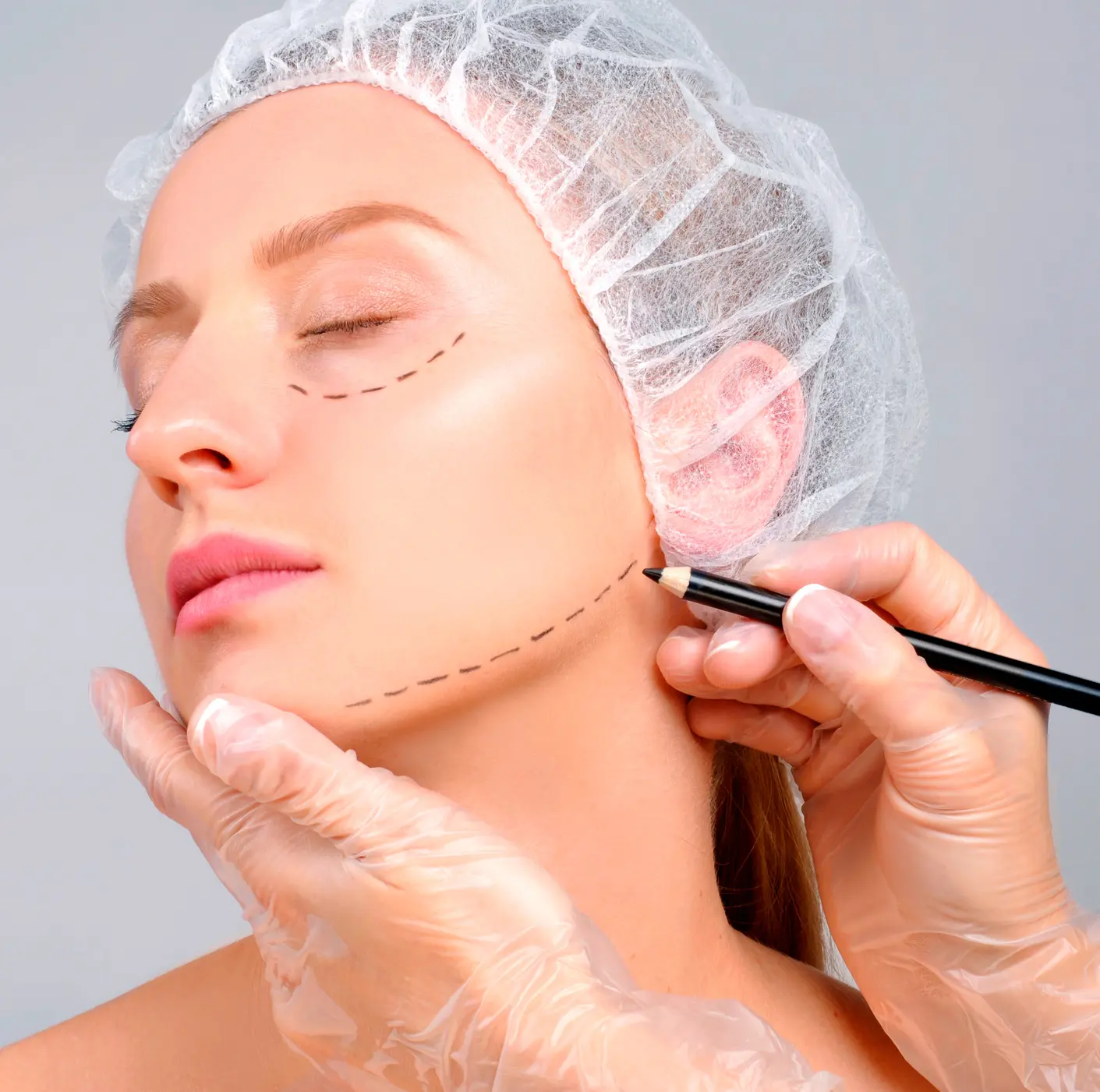
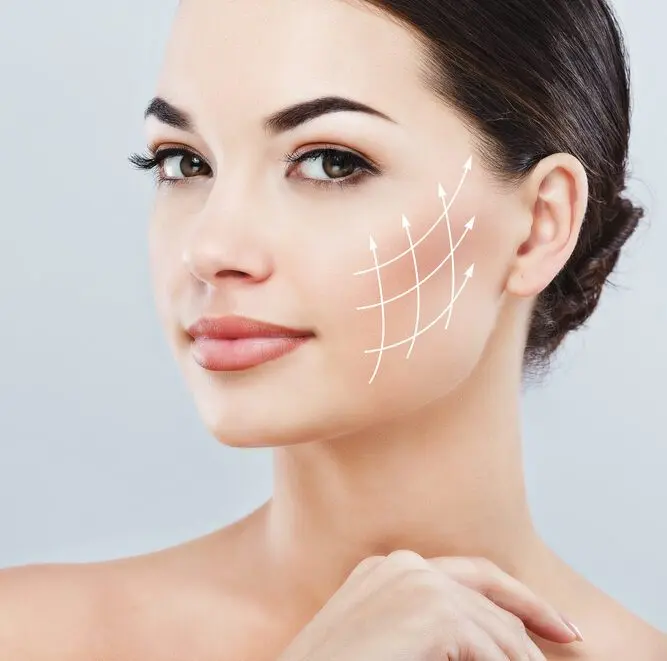
Non-surgical rhinoplasty — also called a PDO nose thread lift or non-surgical nose job — uses absorbable sutures to refine the nose without incisions or general anesthesia. Most patients who ask about this approach have something specific in mind: a tip that drops when they smile, a bridge that looks flat in photos, a small asymmetry. They want refinement, not transformation.
This page covers the PDO thread lift approach to non-surgical nose refinement. If you arrived searching for a hyaluronic acid filler-based nose job, see our liquid rhinoplasty page — that is a different procedure with different mechanics. At Desert Bloom in Scottsdale, Dr. Natalya Borakowski generally prefers threading for nasal augmentation on vascular-safety grounds, when the patient is a candidate. Non-surgical rhinoplasty cannot reduce overall nose size or correct a deviated septum — those require surgical intervention.
Related PDO procedures at Desert Bloom: PDO Thread Lift for full-face contouring, Neck Thread Lift for jaw-neck transition, Brow Lift for brow elevation. See all options on our PDO Threads hub.
At a Glance
- What it is
- Absorbable PDO (polydioxanone) threads placed in the soft tissue of the nose to lift and define the tip or bridge — no incisions, no general anesthesia
- Procedure time
- 30–45 minutes under local anesthetic; topical numbing applied first
- Technique
- Cannula-placed through a single entry point at the base of the tip; threads sit in soft tissue, not bone
- Threads per session
- Typically 4–6 across bridge and columella; complex anatomy may require more
- Results
- Visible same day; stabilize over 3–4 weeks; collagen response continues for several months
- Duration
- Typically 12–18 months; threads dissolve at 4–6 months, collagen scaffold sustains structure beyond
- Cost
- From $1,250 at Desert Bloom (see pricing below)
What Is a PDO Nose Thread Lift?
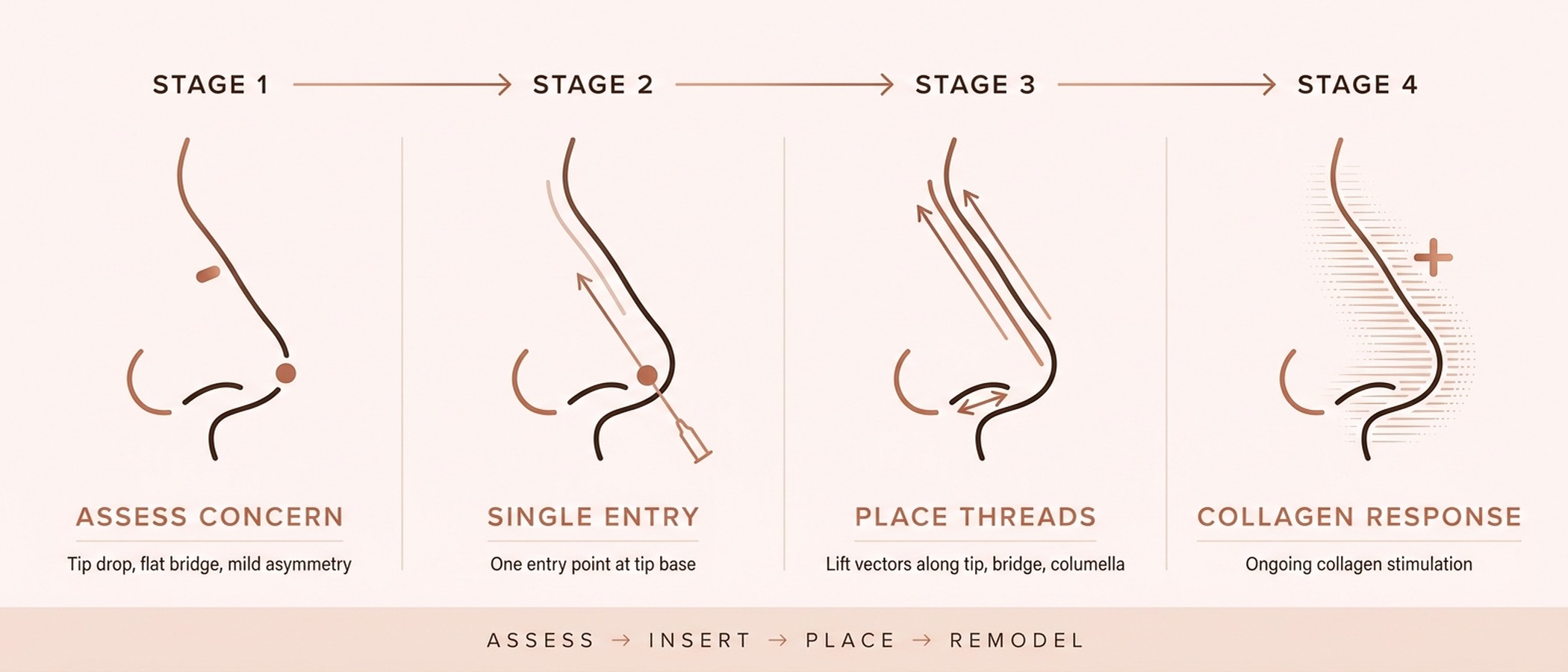
A PDO nose thread lift uses absorbable medical sutures to reposition the nasal tip or bridge — no incisions, no general anesthesia, no surgical recovery. The procedure takes under an hour and works on soft tissue, not bone. That distinction defines both its potential and its limits.
PDO (polydioxanone) is a synthetic, absorbable polymer used in surgical sutures for more than 30 years. It dissolves over approximately four to six months and leaves no permanent material behind. In nasal threading, smooth PDO sutures are guided through a single small entry point at the base of the nasal tip via cannula. No bone is altered, no cartilage is removed, and no scalpel injections are involved at the dorsum.
Two things happen when threads are placed. First, a mechanical effect: the tissue is repositioned immediately, visible the same day. Second, a biological effect: as the sutures dissolve, they stimulate a controlled healing response that increases collagen production. A 2018 systematic review in Plastic and Reconstructive Surgery found that this response contributes to aesthetic improvement that outlasts the physical presence of the thread (Gulbitti et al., 2018). That is why results soften gradually rather than disappear suddenly.
Certain PDO thread systems are FDA-cleared for soft tissue approximation. Their use for aesthetic nasal thread lifting depends on the specific device, indication, anatomy, and clinical judgment — a distinction that matters clinically and legally.
“HIKO Nose Lift” — Same Procedure, Different Name
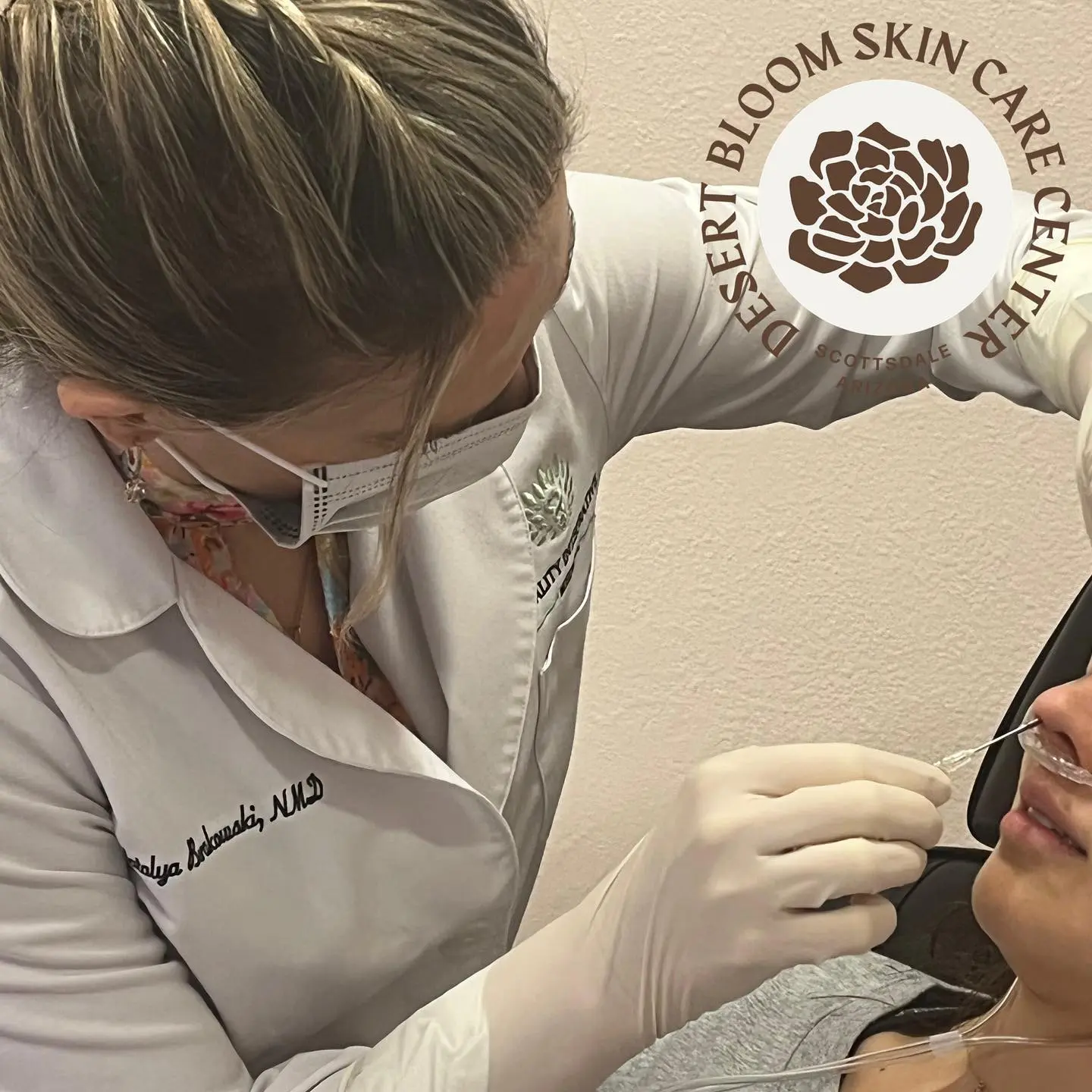
You may have come across the term “HIKO nose lift” or “Hiko thread lift” while researching non-surgical options. HIKO is a Korean word that loosely translates as “lifted nose” — it is a marketing name used by some clinics, not a separate technique or branded protocol. The procedure behind the label is exactly what is described on this page: a PDO nose thread lift, performed under local anesthetic, using absorbable threads placed through a small entry at the base of the tip to support the bridge and tip.
When you compare prices or providers offering a “HIKO nose lift,” you are comparing a PDO nose thread lift. The substance to compare is the provider’s training and technique — not the marketing language used on the page.
What a PDO Nose Thread Lift Can — and Cannot — Do
Threading delivers proportionate, anatomy-led refinement — not transformation. Understanding what the procedure can and cannot achieve is the foundation of a realistic result.
What it can address
- Drooping nasal tip (ptotic tip): the most common indication, particularly noticeable during smiling or speaking — though for dynamic tip drop, Botox is often the first-line treatment and may resolve the concern without threads
- Tip projection: building forward projection without adding width
- Bridge height: adding vertical definition to a flat nasal bridge, especially with a low dorsum
- Subtle asymmetry: minor positional correction of soft tissue asymmetry (not septal asymmetry)
- Tip refinement: narrowing the appearance of a wide tip through soft tissue repositioning — not reduction
- Small surface bumps: minor irregularities can be visually softened by repositioning surrounding tissue, though structural bumps in cartilage are outside scope
What it cannot do
- Reduce overall nose size: threads do not remove tissue
- Narrow the nasal bones: bone structure is not addressed by sutures in soft tissue
- Correct a deviated septum: functional septal deviation requires surgery
- Fix severe asymmetry: significant asymmetry from cartilage irregularity or trauma is outside scope
- Address breathing problems: this is a cosmetic procedure, not a functional one
If you have had previous nose filler — especially permanent or unknown filler — disclose it before treatment. Prior filler can change tissue planes and may alter whether threading is safe or appropriate. If the primary concern is a nasal tip that drops only when you smile, Botox is often the most effective first-line treatment — the depressor septi nasi muscle pulls the tip downward during expression, and a small amount of botulinum toxin can relax that pull. Dr. Borakowski assesses this at consultation and will recommend Botox first when the anatomy supports it.
When surgical rhinoplasty is the more appropriate path: the nose is too large for the face and reduction is the goal; cartilage reshaping is required; the deviation is structural and affects breathing; or a previous rhinoplasty created an outcome that needs corrective structural work. When goals exceed what threading can deliver, Dr. Borakowski says so directly and refers to skilled rhinoplasty surgeons in the region.
PDO Threads vs. Dermal Fillers for the Nose

The nose is the highest-risk injection zone in aesthetic medicine. The nasal dorsum, tip, and columella sit near blood vessels with direct anatomical connections to the ophthalmic circulation. An intravascular injection — even by an experienced injector — can result in retrograde embolization, ophthalmic artery occlusion, and permanent vision loss (Beleznay et al., 2015).
Threads placed subcutaneously do not share that intravascular injection mechanism. They are not injectable — they are guided into the soft tissue via a cannula. Standard procedural risks (bruising, infection, prolonged swelling) still apply, but the catastrophic vascular event pathway differs fundamentally.
PDO Threads vs. Hyaluronic Acid Filler for the Nose
Two different mechanisms for non-surgical nose refinement. The choice is anatomy-based, not preference-based.
| Feature | PDO Nose Threads | Hyaluronic Acid Filler |
|---|---|---|
| Mechanism | Cannula-placed in soft tissue; does not share the intravascular injection pathway | Injectable into tissue planes — anatomically connected to ophthalmic artery |
| Placement | Soft tissue via cannula through a single entry | Injectable via needle or cannula |
| Migration | Does not spread like filler; visibility or shifting can occur if placed too superficially | Can migrate or spread over time |
| Duration | 12–18 months typical | 6–12 months (HA), varies |
| Reversibility | Not reversible before dissolution | HA reversible with hyaluronidase |
| Tissue response | Collagen stimulation as threads dissolve | Volume fill only |
PDO Nose Threads
- Mechanism
- Cannula-placed in soft tissue; does not share the intravascular injection pathway
- Placement
- Soft tissue via cannula through a single entry
- Migration
- Does not spread like filler; visibility or shifting can occur if placed too superficially
- Duration
- 12–18 months typical
- Reversibility
- Not reversible before dissolution
- Tissue response
- Collagen stimulation as threads dissolve
Hyaluronic Acid Filler
- Mechanism
- Injectable into tissue planes — anatomically connected to ophthalmic artery
- Placement
- Injectable via needle or cannula
- Migration
- Can migrate or spread over time
- Duration
- 6–12 months (HA), varies
- Reversibility
- HA reversible with hyaluronidase
- Tissue response
- Volume fill only
PDO Nose Thread Lift vs. Surgical Rhinoplasty
| Feature | PDO Nose Thread Lift | Surgical Rhinoplasty |
|---|---|---|
| Anesthesia | Local (topical + injectable) | General |
| Recovery | Days | 2–4 weeks initial; months for full resolution |
| Results | Subtle structural improvement | Significant structural change possible |
| Duration | 12–18 months | Permanent |
| Size reduction | Not possible | Possible |
| Bone reshaping | Not possible | Possible |
| Revision | Repeat procedure when results attenuate | Revision surgery carries higher complexity |
| Best for | Tip ptosis, bridge flatness, minor asymmetry | Structural reduction, functional correction |
PDO Nose Thread Lift
- Anesthesia
- Local (topical + injectable)
- Recovery
- Days
- Results
- Subtle structural improvement
- Duration
- 12–18 months
- Size reduction
- Not possible
- Bone reshaping
- Not possible
- Revision
- Repeat procedure when results attenuate
- Best for
- Tip ptosis, bridge flatness, minor asymmetry
Surgical Rhinoplasty
- Anesthesia
- General
- Recovery
- 2–4 weeks initial; months for full resolution
- Results
- Significant structural change possible
- Duration
- Permanent
- Size reduction
- Possible
- Bone reshaping
- Possible
- Revision
- Revision surgery carries higher complexity
- Best for
- Structural reduction, functional correction
Before your appointment
- Stop anti-inflammatory medications (ibuprofen, aspirin) and blood-thinning supplements 5–7 days before
- Avoid vitamin E, vitamin K antagonists, and fish oil for one week prior — these increase bruising risk
- Eat a proper meal before your appointment
- Inform the clinic of any known allergies to materials used
During the Procedure
- 1
Preparation
A topical numbing cream is applied to the nasal skin. After it takes effect, a small injectable anesthetic block is placed at the insertion site.
- 2
Entry Point
A single small entry point is created at the base of the nasal tip. There are no incisions.
- 3
Thread Placement
Smooth PDO sutures are guided through the entry point and positioned within the soft tissue via a cannula. Most patients describe pressure rather than sharp pain.
- 4
Assessment
Dr. Borakowski assesses symmetry and positioning, making adjustments as needed.
- 5
Completion
Mild swelling and firmness are noticeable immediately after. No surgical dressing is required. You leave the clinic the same day.
Pro-Nox (nitrous oxide) is not used for nose procedures — the anatomy of the treatment area does not allow gas delivery during placement.
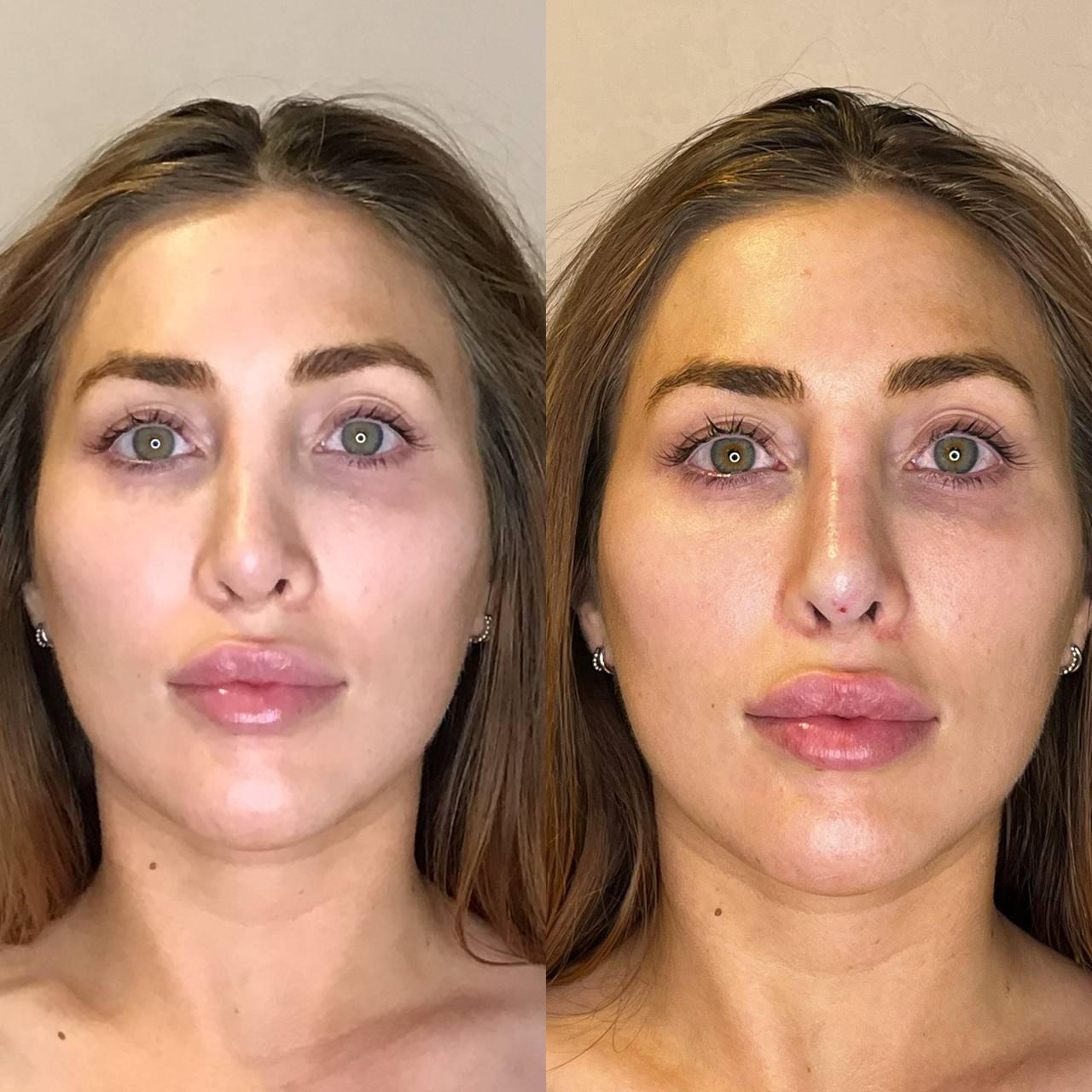
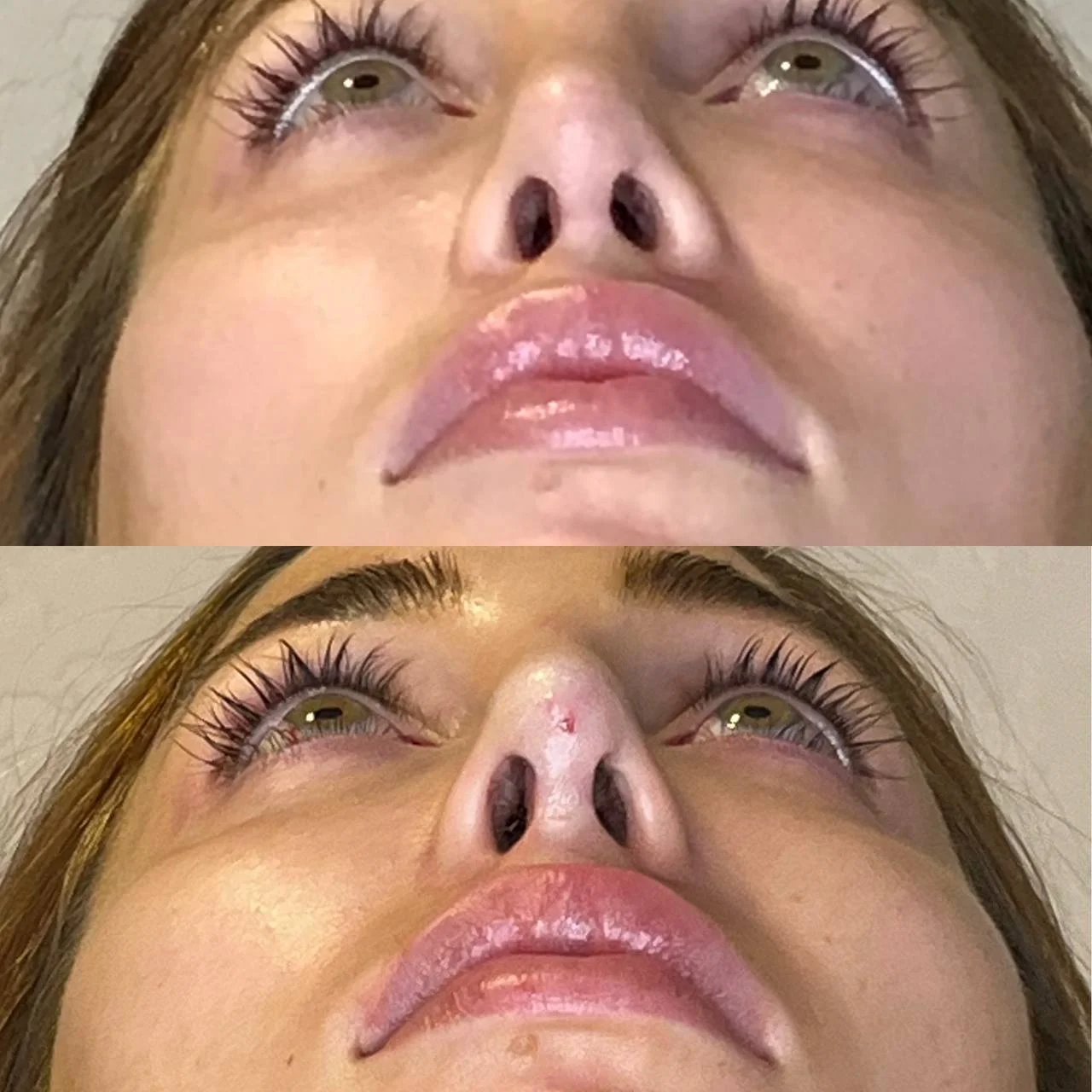
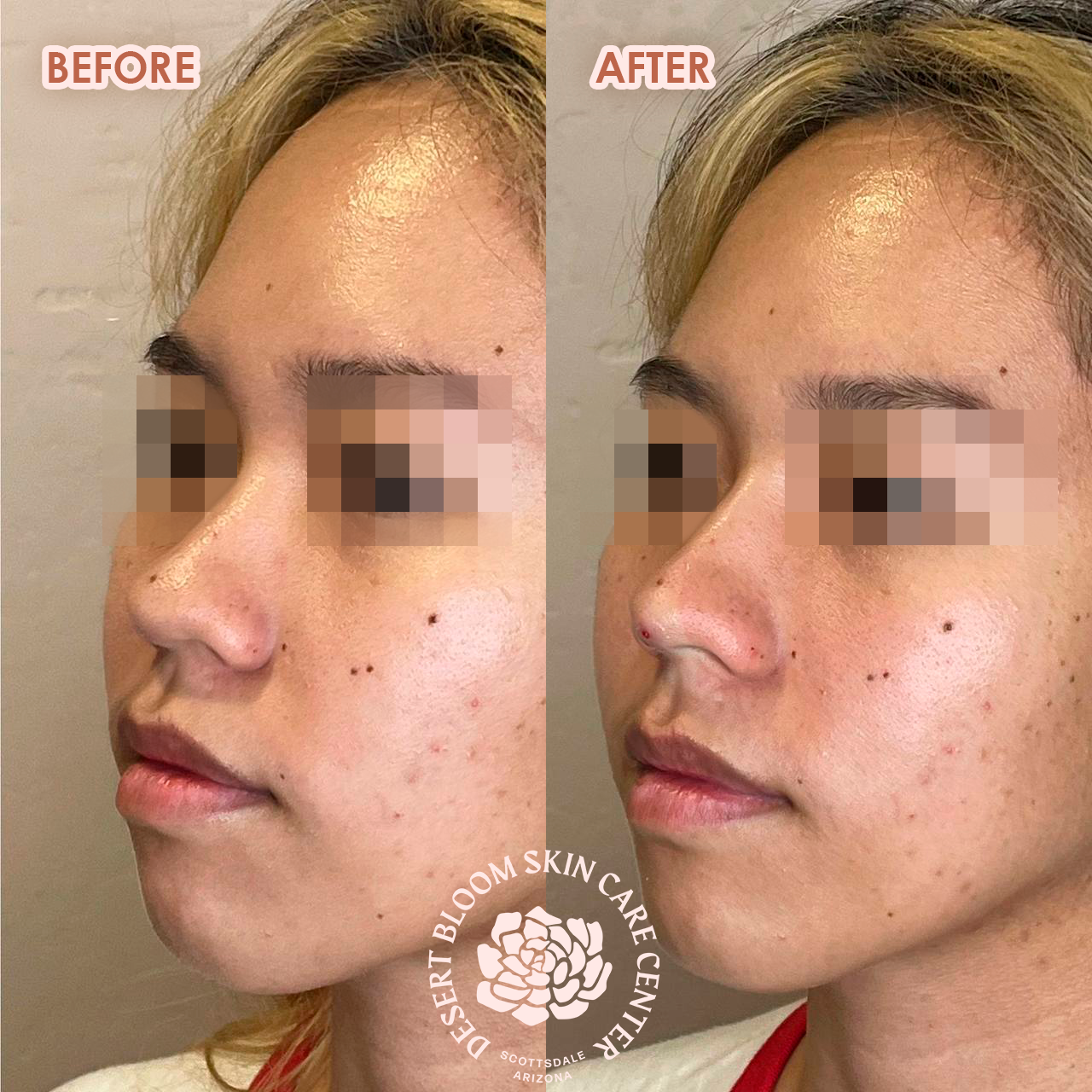
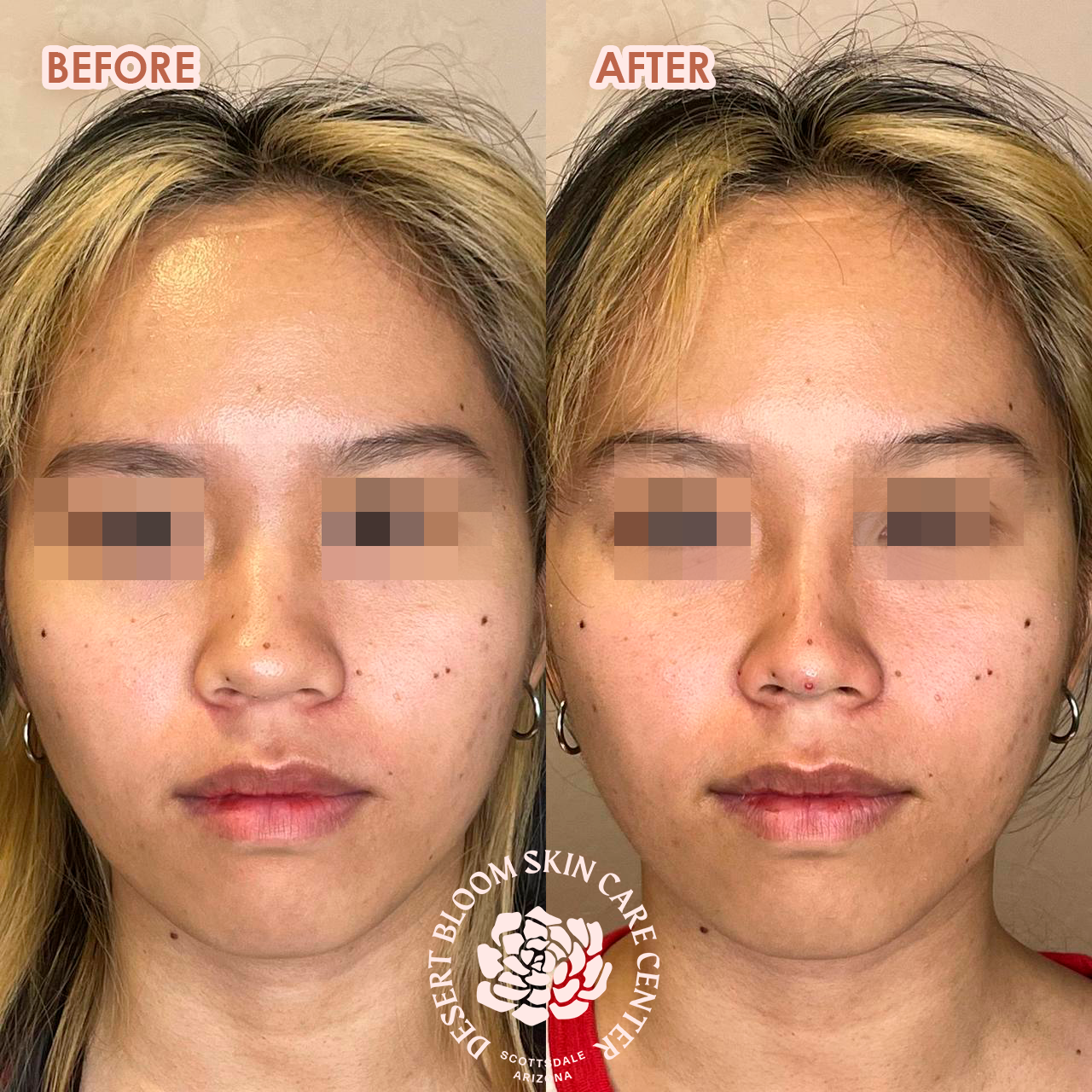
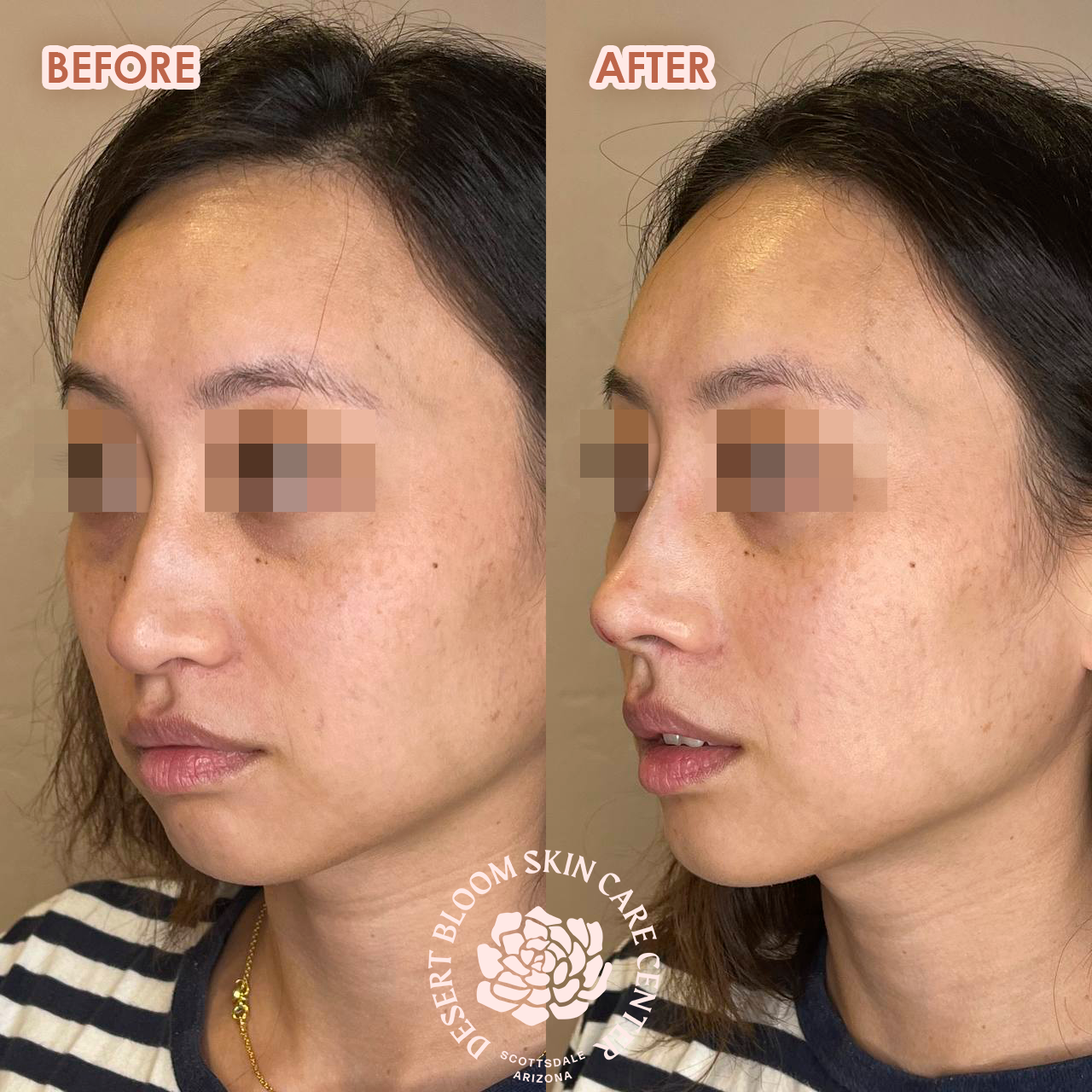
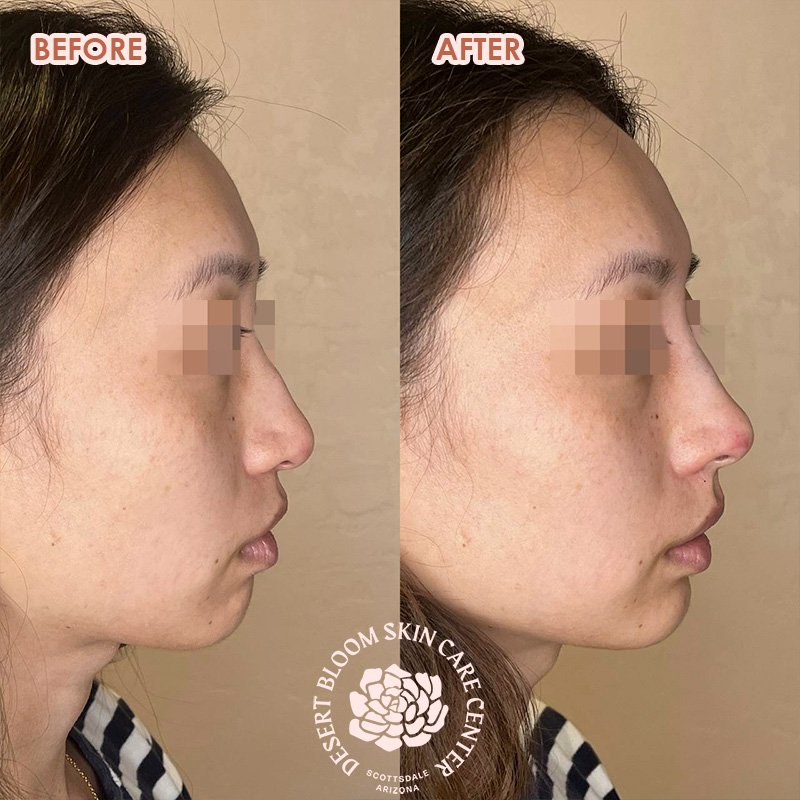
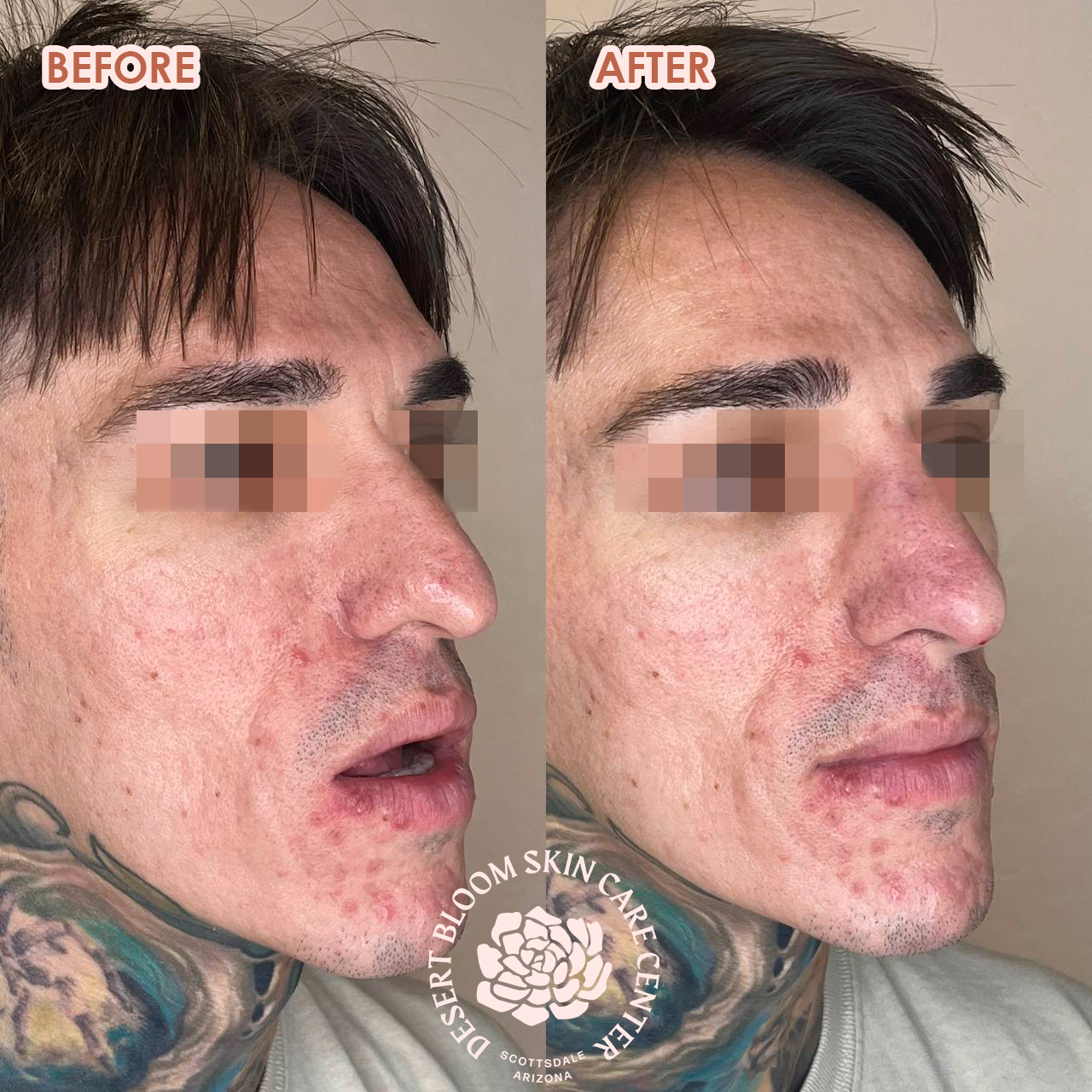
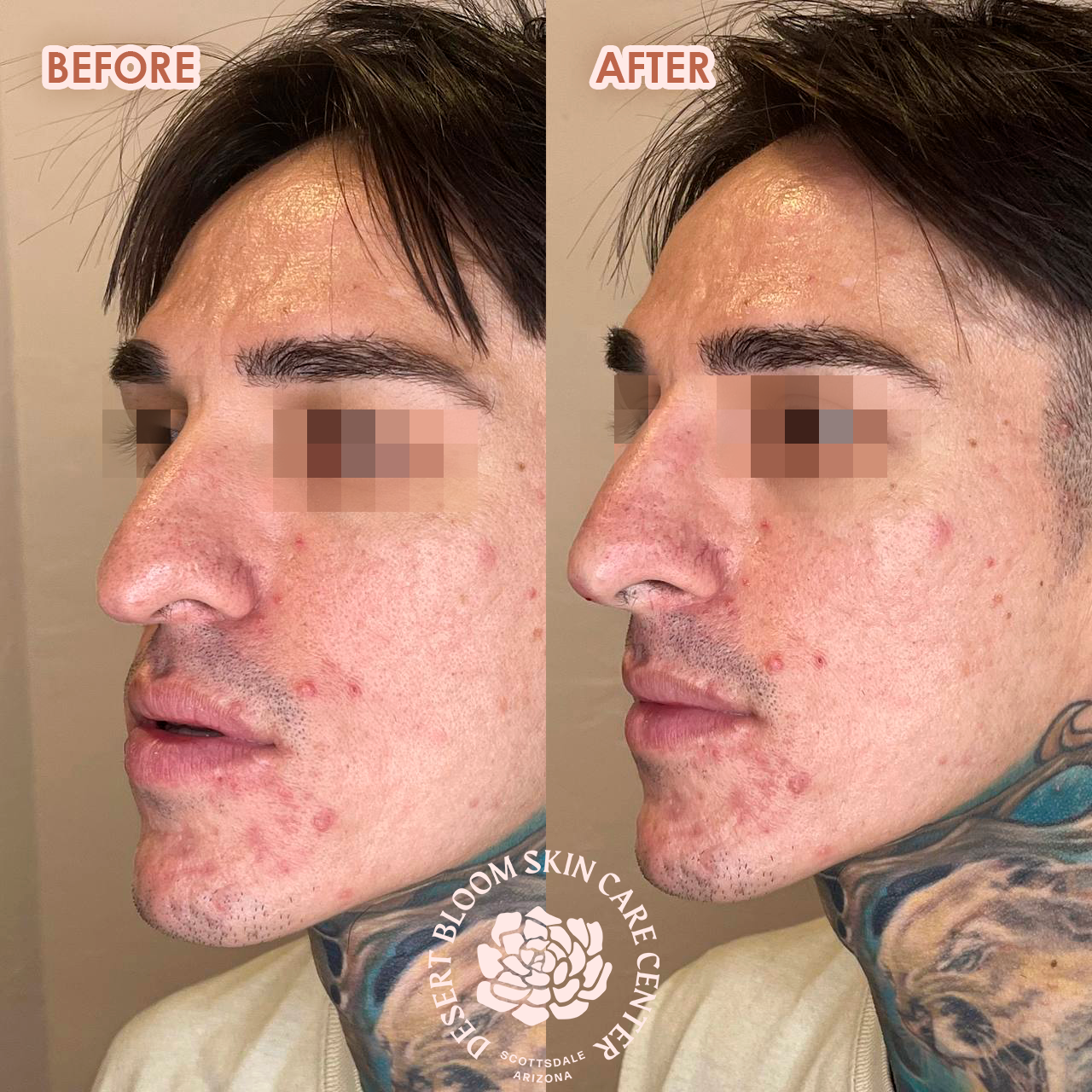
Before & After Gallery
Real non-surgical rhinoplasty results from Dr. Borakowski at Desert Bloom — PDO thread nasal-tip lifts and bridge augmentation for Asian noses (women and men).
 BeforeAfter
 BeforeAfter
 BeforeAfter
 BeforeAfter
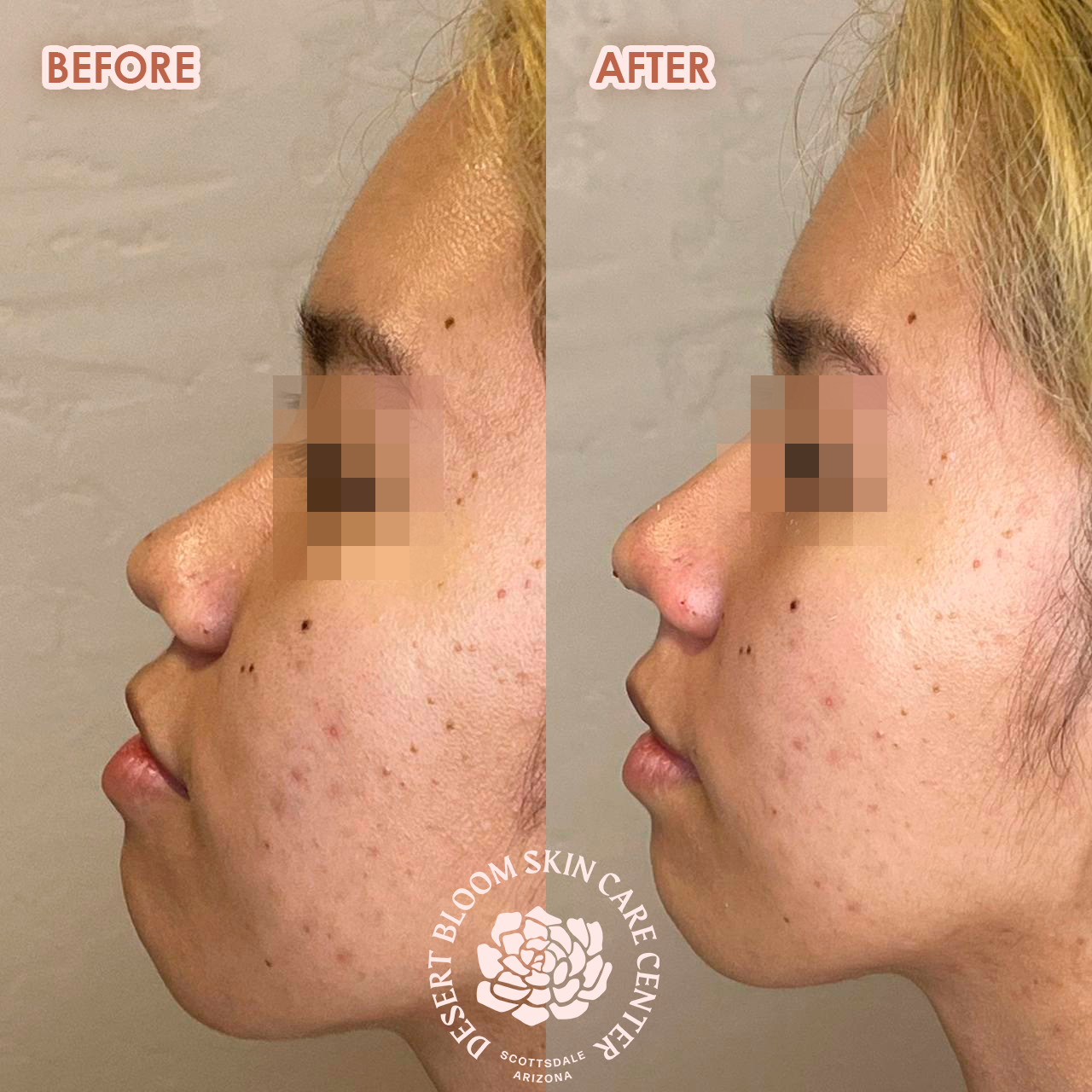 BeforeAfter
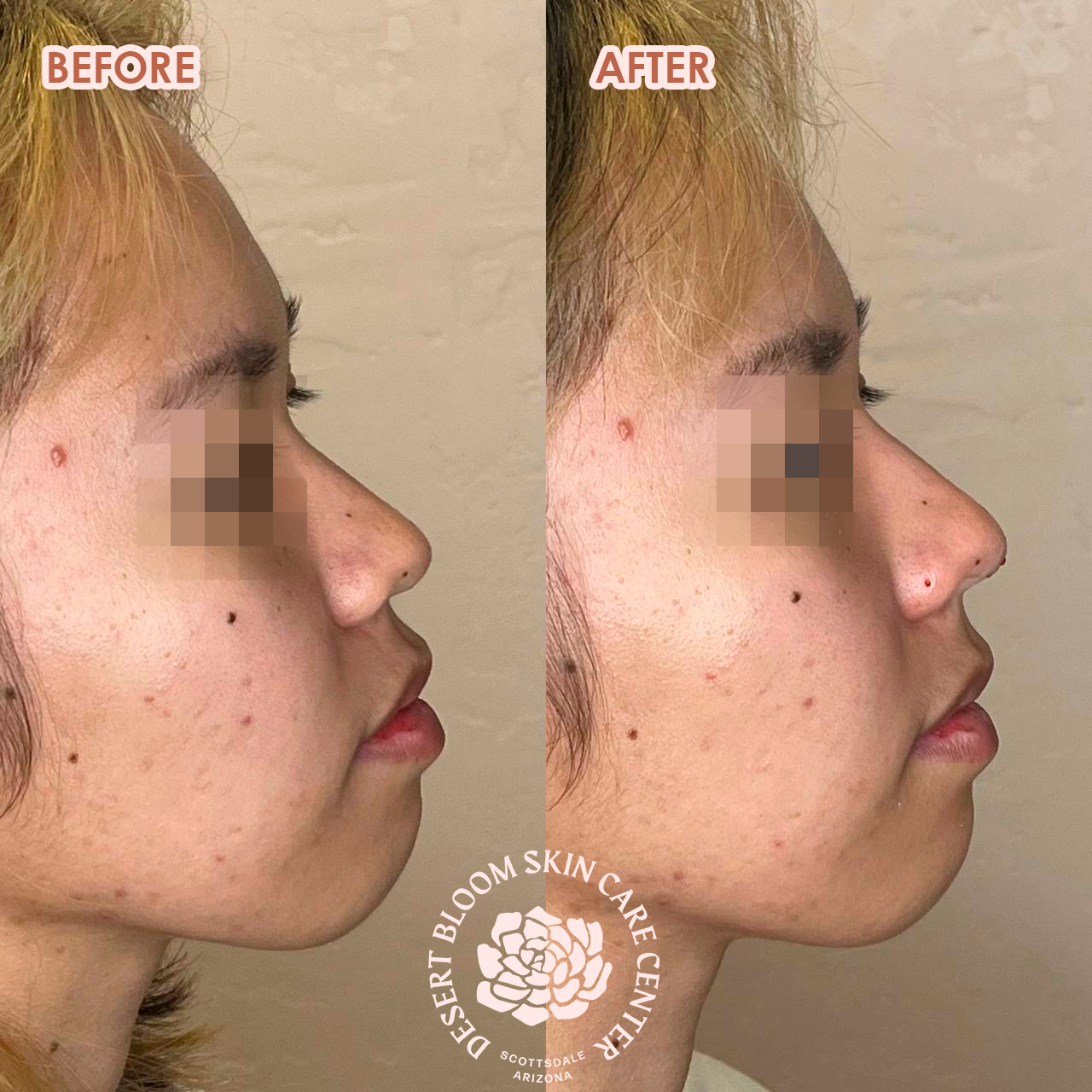 BeforeAfter
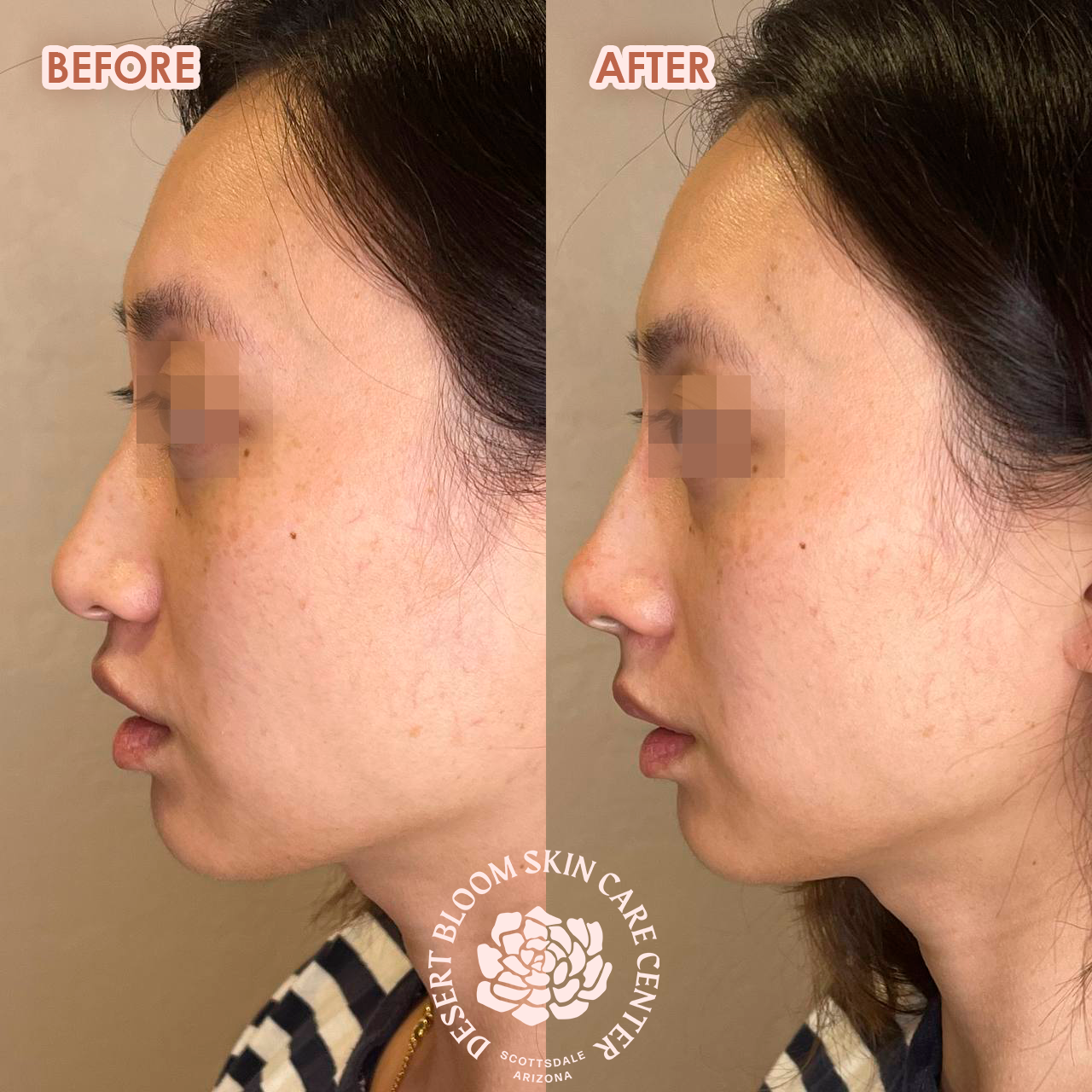 BeforeAfter
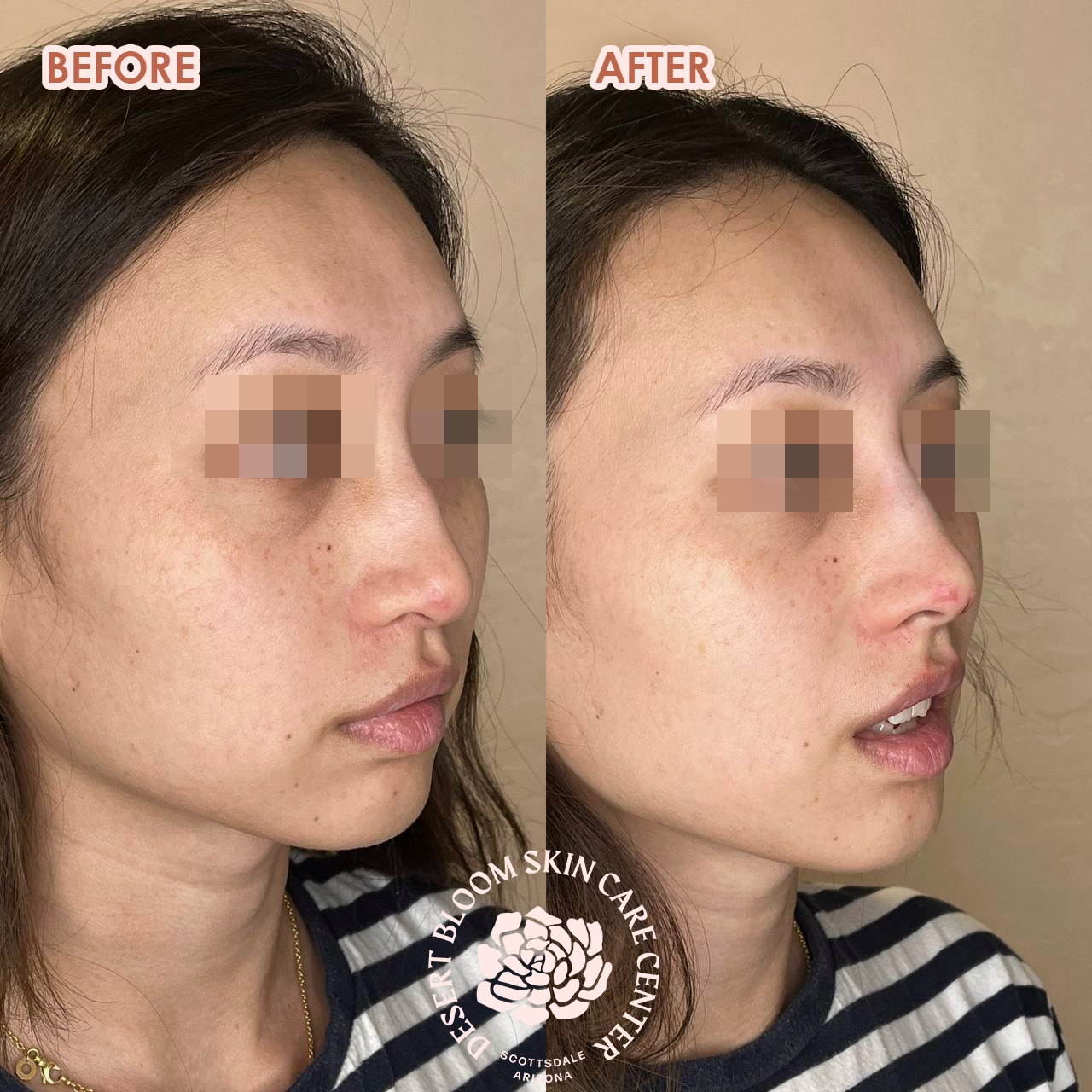 BeforeAfter
 BeforeAfter
 BeforeAfter
 BeforeAfter
 BeforeAfter
Recovery — Day by Day
Day 1–3
Initial Recovery
Swelling at the tip, mild tenderness, possible bruising at the insertion point. Sleep with head elevated.
Days 4–7
Early Results
Swelling begins to resolve. Early structural results become visible. The nose may feel firm.
Week 2
Settling
Threads settle into position. Minor dimpling or skin irregularity, if present, typically resolves.
Weeks 3–4
Stabilization
Results stabilize into a natural appearance. Most social restrictions lift.
Month 2–3
Collagen Phase
Collagen formation phase. Structural support deepens as fibroblast activity peaks.
Month 6+
Peak Result
Peak result. Gradual softening begins as threads complete dissolution.
What to avoid
- Glasses resting on the bridge: OK after 2–3 days if there is no bruising; if bruising is present, wait until it resolves
- Strenuous activity and exercise: 2 weeks
- Nose manipulation and rubbing: 2 weeks
- Facial massages or procedures involving pressure on the nose: 4 weeks
Side Effects and Risks
Common
- Temporary swelling at the entry point
- Bruising, particularly in patients who are bruising-prone or taking blood thinners
- Tenderness or mild discomfort for 3–5 days
Uncommon
- Mild asymmetry that resolves as threads settle
- Temporary palpable thread under the skin
- Allergic reaction to anesthetic or PDO material (very rare with polydioxanone)
- Prolonged swelling beyond one week
Serious complications are uncommon, but risk is reduced by careful patient selection, nasal anatomy assessment, sterile technique, correct placement depth, and a provider who knows how to recognize and manage complications early. Dr. Borakowski completed cadaver-based nasal anatomy training and has performed nose threading in Scottsdale since 2019. If you notice sudden vision change, severe pain, skin blanching, worsening redness, or discharge, contact the clinic immediately.
Results — What to Expect
Results are visible the same day. Initial appearance includes mild swelling that resolves over the first week; the final result stabilizes within three to four weeks as threads settle and the early collagen response begins.
Typical improvement lasts 12–18 months. Threads dissolve at four to six months; the collagen scaffold continues to provide structural support beyond that, softening as it remodels. Patients with thicker skin and realistic expectations tend to see the most sustained results. See our before and after gallery for real patient outcomes.
Cost of Non-Surgical Rhinoplasty in Scottsdale
At Desert Bloom, the PDO Nose Thread Lift starts at $1,250. The total depends on the number of threads needed — most patients need 4–6 across the bridge and columella; complex tip work or asymmetry correction can require more. Every patient gets a written quote at consultation, based on a full nasal pyramid assessment and prior filler history. Consultation is complimentary.
Pricing
- PDO Nose Thread Lift$1250 and up
Financing is available with Affirm, Cherry, and Care Credit. The monthly payment varies by purchase amount and credit rating. Apply at consultation — there is no obligation to book.
Why Choose Desert Bloom for Non-Surgical Rhinoplasty
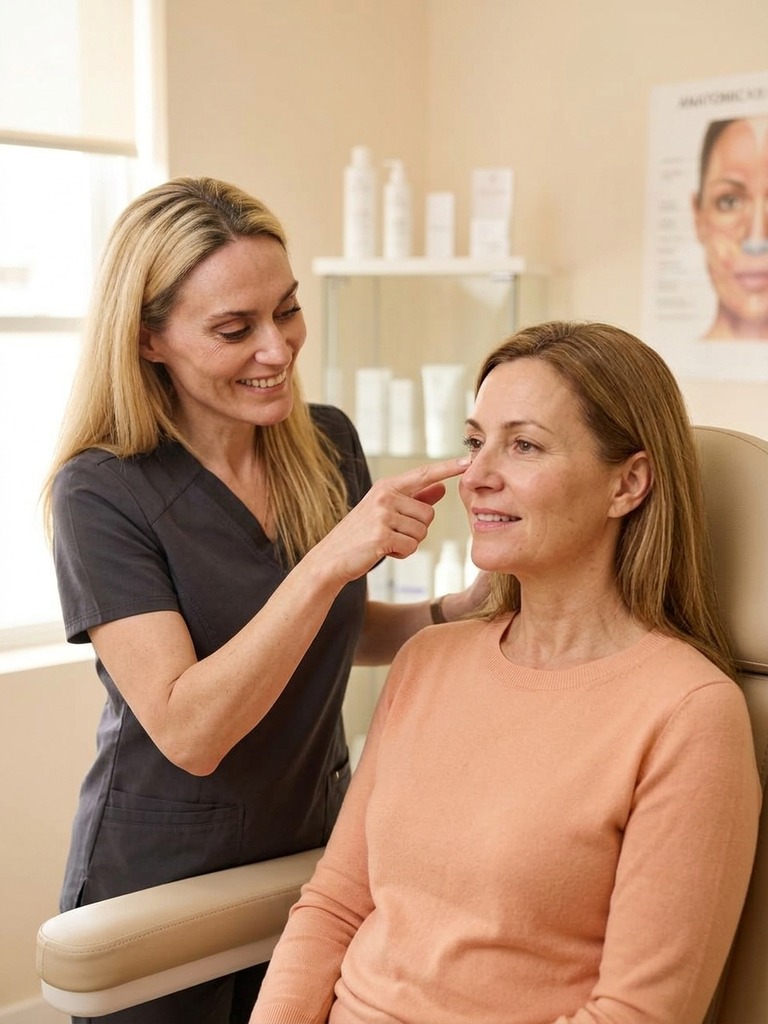
Nose threading is one of the highest-stakes thread-lift zones — thin skin, rigid bone-cartilage frame underneath, dense vascular anatomy at the columellar base. The single biggest factor in outcome is the person performing it. At Desert Bloom, the approach is conservative by design: a correction that improves proportion without drawing attention to itself.
Dr. Natalya Borakowski, NMD brings 17 years in aesthetic medicine. She trained directly with Dr. Murat Tsintsadze — one of the world’s foremost authorities on thread lifting — in Tbilisi, Georgia, and in January 2025 presented a hands-on rhinoplasty masterclass at IMCAS World Congress in Paris. Her clinical aesthetics approach prioritizes honest assessment over volume — if threading is not the right answer for your anatomy, she will say so directly and refer when surgery is the better path.
“When I assess a patient for nose threading, the first question I ask is not ‘what do you want changed’ — it is ‘what specifically bothers you.’ Sometimes the answer is a tip that drops when they smile — and the right treatment for that is often Botox, not threads. Getting that distinction right before we begin is more important than the procedure itself.”
Frequently Asked Questions About Non-Surgical Rhinoplasty
Is a HIKO nose lift the same as a PDO nose thread lift?
Why does Dr. Borakowski prefer PDO threads over fillers for the nose?
Can a PDO nose thread lift fix a crooked or asymmetrical nose?
What happens when the PDO threads dissolve?
Am I a good candidate if I have had rhinoplasty before?
What if a nose thread lift goes wrong?
How much does a PDO nose thread lift cost in Scottsdale?

Medically reviewed by
Founder, Desert Bloom Skincare · 17 Years Experience
References
- 1.
Funt D, Pavicic T.. Dermal Fillers in Aesthetics: An Overview of Adverse Events and Treatment Approaches. Clinical, Cosmetic and Investigational Dermatology; 2013;6:295-316.
DOI: 10.2147/CCID.S50546
Reference for non-surgical aesthetic safety profile and adverse-event landscape underlying our cannula-default approach.
- 2.
Sundaram H, Cassuto D.. Biophysical Characteristics of Hyaluronic Acid Soft-Tissue Fillers and Their Relevance to Aesthetic Applications. Plastic and Reconstructive Surgery; 2013;132(4 Suppl 2):5S-21S.
DOI: 10.1097/PRS.0b013e31829d1d40
Filler material-property foundations informing why thread-based augmentation has a different safety pathway than HA injection in nasal anatomy.
- 3.
Beleznay K, Carruthers JDA, Humphrey S, Jones D.. Avoiding and Treating Blindness From Fillers: A Review of the World Literature. Dermatologic Surgery; 2015;41(10):1097-1117.
DOI: 10.1097/DSS.0000000000000486
Vascular-safety review documenting the ophthalmic-artery risk pathway that drives our threading-first protocol for nasal augmentation.
This page is for informational purposes only and does not constitute medical advice. Individual results may vary. All medical procedures carry risks. A consultation with a qualified provider is required before any treatment. Certain PDO thread systems are FDA-cleared for soft tissue approximation; their use for aesthetic nasal thread lifting depends on device, indication, anatomy, and clinical judgment. All treatments at Desert Bloom Skincare are performed by Dr. Natalya Borakowski, NMD. Last updated: June 2026.