Lift
PDO Thread Lift
Coordinated multi-zone face lift using a mix of barbed and smooth threads.
Downtime5–7 days
Duration12–18 months
Best forMid-face descent, jowls, jawline softening
in Scottsdale, AZ
PDO thread treatments in Scottsdale — find the right option across brow, face, neck, nose, and non-surgical facelift. Honest routing from Dr. Borakowski, NMD.
Or explore: Dermal fillers · PDO threads · Lasers
A category of five thread protocols — pick the path that fits your anatomy.
PDO threads are a family of absorbable thread-based treatments used for lifting, support, and collagen stimulation. Different thread protocols serve different goals: lifting a specific area, full-face rejuvenation, improving skin texture, or comparing threads with fillers and other treatments.
Whether you're considering a thread lift for the first time, comparing options against fillers, or trying to figure out which area to address first — this page is your starting point. Every treatment is designed and performed by Dr. Natalya Borakowski, NMD, a naturopathic physician with over a decade of experience in non-surgical aesthetics.
Want the full science breakdown? Read What Are PDO Threads — The Complete Science Guide →
At a Glance
Navigator
Four ways to approach PDO threads. Pick the one that matches your goal.
Lift a Specific Area
→See the 5 zones below — Choose this if you want to lift one specific area — brow, neck, nose, smile lines, or fox-eye contour. Each zone has its own protocol; choose the area below to see the full treatment page.
Multi-zoneFull-Face Rejuvenation
→View the full PDO Thread Lift treatment — A coordinated multi-zone PDO thread protocol designed to refresh the whole face in one plan. The most common reason patients book threads at Desert Bloom.
LearnCompare Thread Types
→Read the complete PDO science guide — Smooth, twist, barbed — different thread architectures serve different goals. The complete guide covers how they differ in lift vs collagen stimulation, longevity, and best use case.
ComparePDO vs Other Treatments
→PDO Threads vs Dermal Fillers — Not sure if threads are the right tool? Sometimes filler, RF microneedling, or a combination is a better fit. The full side-by-side comparison covers when each modality is the better choice.
Zone-specific paths
Each anatomical zone has its own thread protocol. Select the area that matches your concern — the full treatment page for that zone opens in place.
Brow Lift
Lift the lateral brow without surgery — barbed threads elevate the brow without touching the eyelid.
Neck Thread Lift
Tighten neck laxity and platysmal banding — treated with a separate protocol from the face.
Non-Surgical Rhinoplasty
Reshape and refine the nose without surgery — drooping tip, dorsal asymmetry, or weak bridge.
Fox-Eye Lift
Almond-shape outer-eye reposition — subtle outer-corner elevation for an open-eye look.
Marionette Line Lift
Address downward smile lines — threads gently elevate corners of the mouth and soften marionette grooves.
Under-Eye PDO
Skin-quality biostimulation for mild under-eye laxity and fine wrinkles — mono threads, not a lift, not a tear-trough fix.
Procedure menu
Every PDO thread treatment at Desert Bloom is designed and performed by Dr. Natalya Borakowski, NMD. Cards below open the full treatment page — protocol detail, candidacy, recovery, and pricing live there.
Lift
Coordinated multi-zone face lift using a mix of barbed and smooth threads.
Lift
Targeted threads for the platysma and lower jaw line.
Lift
Subtle lateral brow elevation without injectable repositioning.
Reshape
Thread-and-filler reshape for nasal tip, dorsum, or asymmetry.
Lift
Multi-zone PDO program for patients who are not ready for — or not candidates for — a surgical facelift.
Skin biostim
Very thin collagen-boosting mono threads in a criss-cross pattern via blunt cannula. NOT a thread lift, NOT a tear-trough fix — pure skin biostimulation.
Anatomy-first
Good candidacy depends less on the word "threads" and more on what changed anatomically. The right path depends on whether your concern is tissue descent, skin texture, brow position, neck laxity, or volume loss.
Tissue descent in midface or jowls
→Start with PDO Thread Lift — Sagging cheeks, early jowling, or jawline softening — barbed-thread lifting reanchors the soft tissue. The foundational facial thread treatment.
NeckNeck laxity or platysmal banding
→Start with Neck Thread Lift — Loose skin along the neck, softened jaw-to-neck transition, or visible vertical bands — a separate protocol from the face.
BrowLateral brow drop
→Start with Brow Thread Lift — Heavy upper lids, dropped outer brow, or tired-looking eyes — threads elevate the brow without touching the eyelid itself.
NoseNose contour, tip, or dorsum
→Start with Non-Surgical Rhinoplasty — Drooping nasal tip, mild dorsal asymmetry, or weak bridge — reshaped with threads, no incisions.
Outer eyeFox-eye / almond-shape outer corner
→Start with Fox-Eye Lift — Subtle outer-corner elevation for an open-eye look — when the goal is shape, not lift of the brow itself.
Under-eye skinMild under-eye skin laxity or fine crepe (NOT hollowness)
→See Under-Eye PDO — Surface crepiness or fine wrinkles under the eye with intact volume — mono PDO biostimulation may help. Strict candidacy: not for eye bags, deep-set eyes, very thin skin, or volume loss.
Honest routingTear-trough hollowing or under-eye volume loss
→See Dermal Fillers — This is NOT a thread procedure. Tear-trough hollowing is a volume issue addressed with PRP or hyaluronic-acid filler — we deliberately do not roll this into the PDO cluster.
Out of clusterLoss of facial volume (not laxity)
→Consider Dermal Fillers instead — If your concern is mid-face volume loss, hollow temples, or lip volume — filler is the correct tool, not threads.
Deep dive
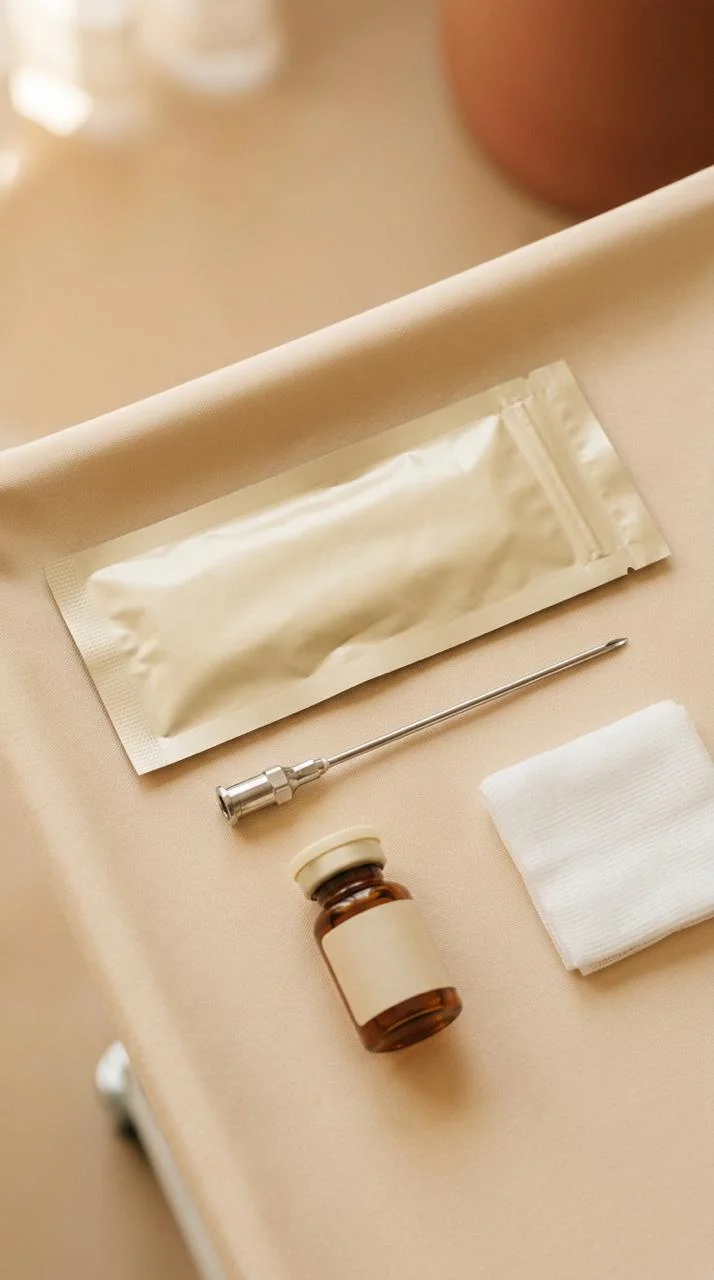
If you want to understand how PDO threads actually work — the polymer chemistry, FDA history, collagen stimulation timeline, and how they compare to PLLA and PCL — we've broken it all down in a complete guide.
This hub is the navigator. The science guide is the textbook.
Read: What Are PDO Threads? The Complete Guide
Screening, not selling

Not sure which option fits your goals or anatomy? That's exactly what the consultation is for. Schedule a complimentary 30-minute screening with Dr. Borakowski — we'll walk through your face, your goals, and the most conservative path that gets you the result you're after.
Book a ConsultationKalra R. Use of Barbed Threads in Facial Rejuvenation. Indian Journal of Plastic Surgery; 2008.
PMC2840911
Suh DH, Jang HW, Lee SJ, et al.. Outcomes of polydioxanone knotless thread lifting for facial rejuvenation. Dermatologic Surgery; 2015.
DOI: 10.1097/DSS.0000000000000368
PMID 25993611
Kang SH, Byun EJ, Kim HS. Vertical Lifting: A New Optimal Thread Lifting Technique for Asians. Dermatologic Surgery; 2017.
DOI: 10.1097/DSS.0000000000001169
PMID 28430736
Sarigul Guduk S, Karaca N. Safety and Complications of Absorbable Threads Made of Poly-L-Lactic Acid and Poly Lactide/Glycolide. Journal of Cosmetic Dermatology; 2018.
DOI: 10.1111/jocd.12519
PMID 29607627
Reviews
“I had face threading and some fillers done by Dr. Natalya Borakowski. Great experience 👍 She is very knowledgeable, very professional. She is just a beautiful person inside and out. I would highly recommend Desert Bloom skin care ❤”
“I had the best experience with Desert Bloom skincare. Excellent staff, no pain. Had pdo threads and Botox. Would definitely recommend. Dr. Natalya was so sweet and is very knowledgeable.”
“I found Dr Natalya to be very informative in many areas. I had the PDO threads done. I will see how I like the treatment after a week or so.”
Scottsdale, Arizona
Dr. Borakowski evaluates which thread protocol — or which alternative — fits your anatomy. If threads aren't right for you, she'll say so directly and point you toward filler, surgery, or no treatment.
Book a consultationAddress
10752 N 89th Place,
Ste 122B · Scottsdale, AZ 85260
Phone: (480) 567-8180
E-mail: info@desertbloomskincare.com
Get directionsLocation & directions
Conveniently located in the Shea Corridor of North Scottsdale, within Edwards Professional Park I — minutes from HonorHealth Scottsdale Shea and the Mayo Clinic Scottsdale Campus.
From the North / South: Take Loop 101 and exit at E Shea Blvd, just East of the freeway.
Parking: Ample free parking directly in front of Suite 122B.
Areas we serve
Scottsdale
North Scottsdale · McCormick Ranch · Gainey Ranch
Paradise Valley
Cave Creek & Carefree