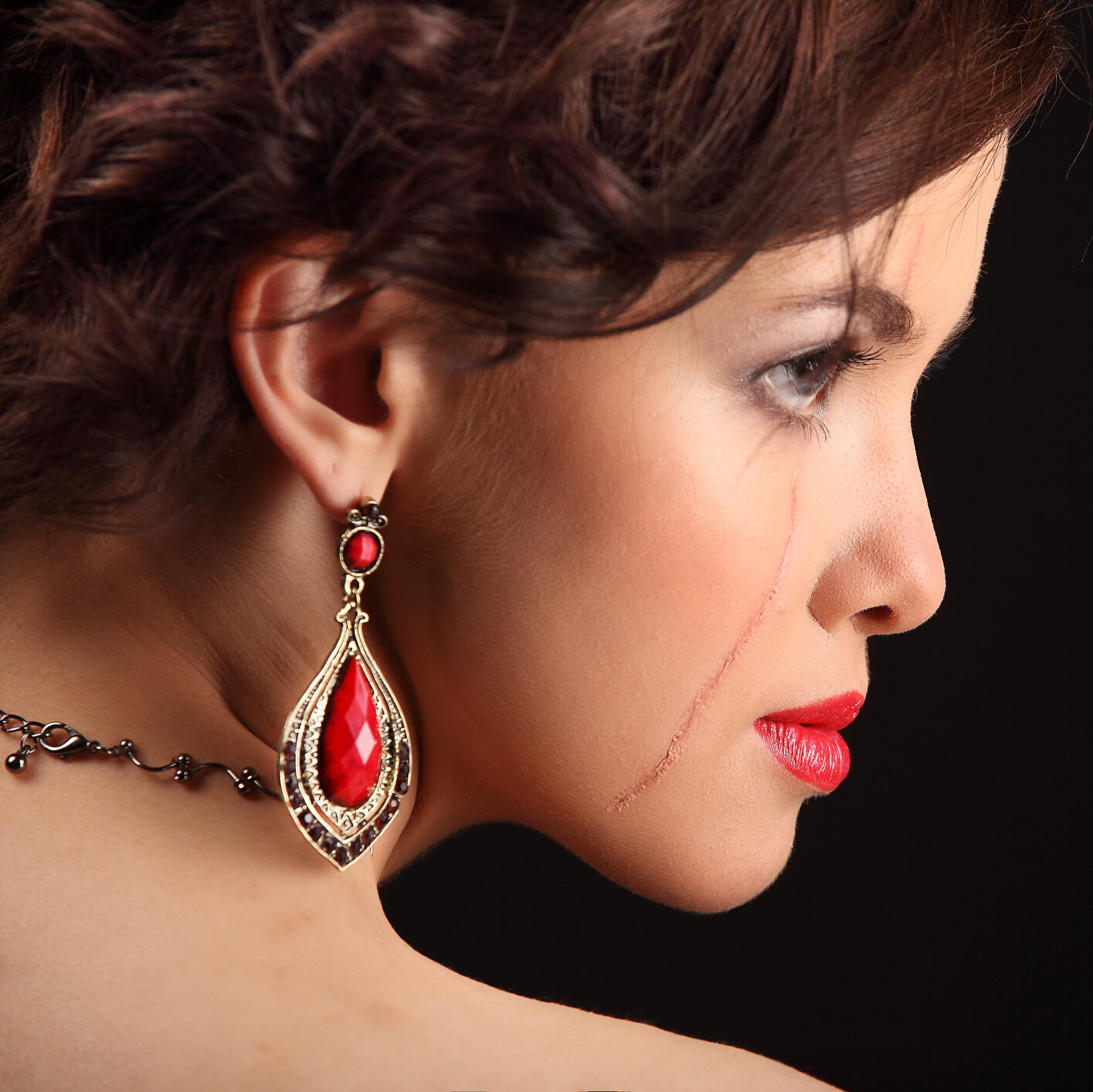
Finish the healing the body could not complete on its own.
Most scars improve on their own for about a year, then stop. That is the point many patients come in — a surgical scar that is still thick, a healed injury that looks different from the surrounding skin, a burn mark that never quite settled. Scar treatment is not about erasing the past. It is about classifying what you have — scar type, age, and skin tone together — and matching the right tool to it.
At Desert Bloom in Scottsdale, Dr. Natalya Borakowski, NMD routes surgical, trauma, burn, hypertrophic, and pigmented presentations differently. A single approach does not cover all scars. See full pricing or browse all treatments.
If your scars are specifically from acne — ice pick, boxcar, rolling — the Acne Scars page covers that pathway in detail. For color-only concerns that are not scar-related, see our Hyperpigmentation hub.
At a glance
- Scope
- Atrophic, hypertrophic, keloid, pigmented, surgical, trauma, burn, and stretch-mark scars. Acne-specific scarring routed to the dedicated Acne Scars page.
- Methods
- RF Microneedling (all skin tones), CO2 or Erbium laser resurfacing (Fitz I–III, deeper scars), Microneedling with PRP (newer or mild scars), Custom Chemical Peel (pigment-only).
- Fitzpatrick
- RF Microneedling and chemical peels — all types incl IV–VI. Ablative laser (CO2, Erbium) — Fitz I–III only. Active keloids referred to dermatology first.
- How to start
- Complimentary 30-minute consultation. Dr. Borakowski classifies scar type, skin tone, and scar age before building a plan. Scars under six months are typically not treated.
How scars form — and why the type drives the treatment
A scar is what the skin leaves behind when the dermis is damaged and the body's repair process does not produce a perfect match to the original tissue. Instead of the woven collagen of healthy skin, scar tissue lays down collagen in parallel bundles. Whether the body lost collagen, overproduced it, or kept growing past the wound margin determines the scar type — and the scar type is the first thing that decides which treatment belongs in the plan.
Why type matters
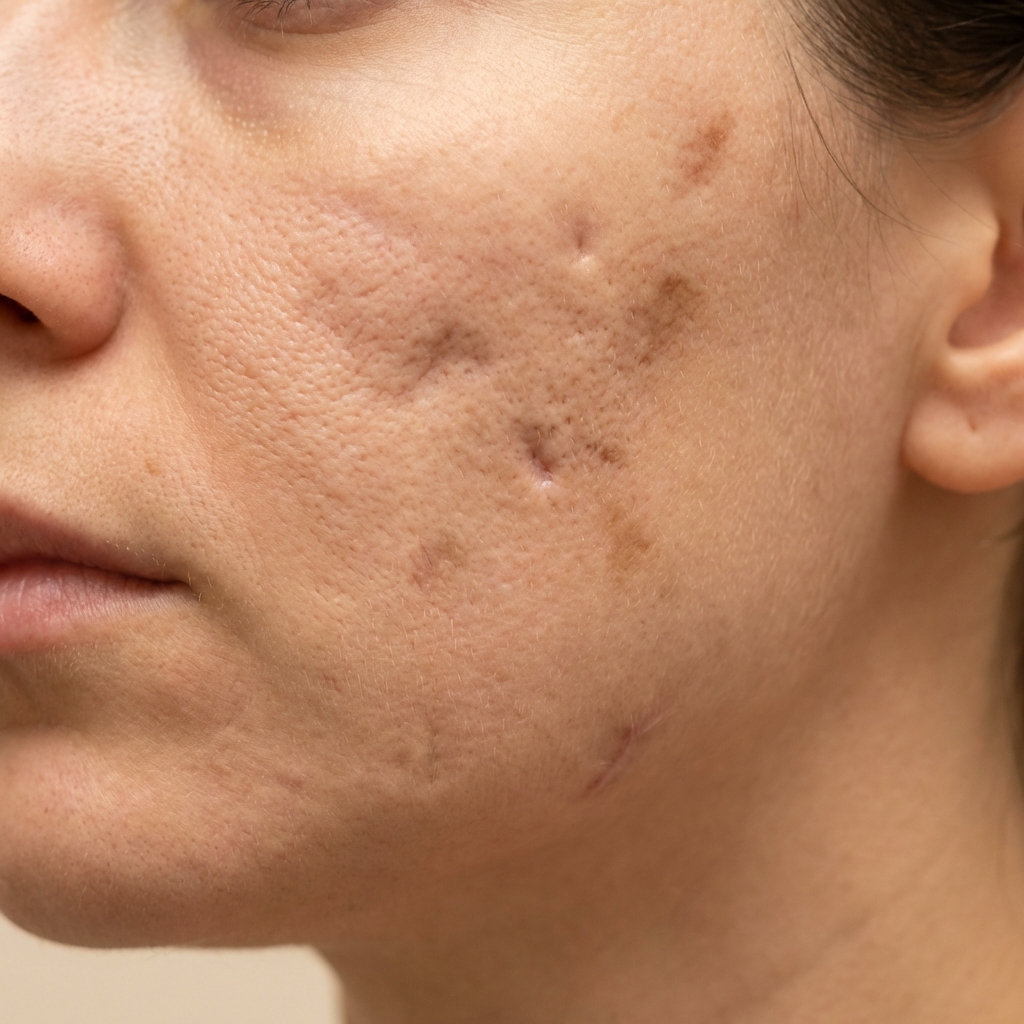
- Atrophic — depressed, too little collagen replaces the wound
- Hypertrophic — raised, too much collagen, stays inside the wound
- Keloid — raised, keeps growing past the original wound boundary
- Pigmented — flat, healed smooth, residual color only
Understand the structure
The four clinical scar types
Each type has a different structural cause, and effective treatment targets that cause specifically. Many patients have more than one type — mixed presentations are common, and the plan addresses each component in sequence.
Atrophic (depressed) scars
→Route: RF Microneedling primary — Too little collagen replaces the wound — pitted or sunken. Common after acne, chickenpox, trauma, and surgical sites. Treatment must stimulate new collagen from underneath.
Hypertrophic scars
→Route: Silicone + RF Microneedling — Too much collagen — but the scar stays within the original wound boundary. Raised, red or pink, firm. Many soften over 12–24 months; persistent cases respond to silicone + RF Microneedling, with dermatology steroid injections if needed.
Referral firstKeloid scars
→Route: Dermatology first — Raised, like a hypertrophic at first — but keeps growing past the original wound boundary, sometimes years after the injury. Most common in darker skin tones. Active keloids are NOT primary-treated with aesthetic laser — dermatology referral comes first for intralesional corticosteroid management.
Pigmented (color-only) scars
→Route: Chemical Peel / non-laser brightening — Healed flat and smooth but with residual red or brown mark. Skin architecture is intact; only the pigment signal is dysregulated. Fitz IV–VI follows the non-laser brightening path; IPL and ablative laser are not appropriate.
Start with what you see
What does your scar look like?
Use the descriptions below to identify your likely scar type before your consultation. Final classification and treatment planning happen in person — many patients have mixed presentations that need a staged approach.
A surgical scar from C-section, appendix, or cosmetic surgery that is still thick or raised.
→See RF Microneedling — Surgical scars are the most common non-acne reason patients come in. Routing depends on type — thick raised surgical scars usually start with silicone + RF Microneedling. Wait at least six months post-surgery before aesthetic treatment.
A trauma or laceration scar from an accident or injury.
→See RF Microneedling — Trauma scars follow the same routing logic as surgical scars — type determines the tool. Atrophic depression usually responds to RF Microneedling first; raised scars start with silicone + RF.
A burn scar — raised, discolored, or uneven texture.
→See RF Microneedling — Burn scars are heterogeneous. Hypertrophic components respond to silicone + RF Microneedling. Pigment changes follow the non-laser brightening path in Fitz IV–VI. Severe contracture cases are referred to plastic surgery.
A scar that has healed flat but left a red or brown mark.
→See Custom Chemical Peel — Color-only scars are not texture problems — they are pigment problems. Custom Chemical Peel addresses pigment residue at the epidermal level. Resurfacing lasers are not the right tool here.
Referral firstA keloid — raised, growing, extending past the original wound.
→Dermatology referral — Active or growing keloids are NOT primary-treated with aesthetic laser — ablative energy can trigger the same over-healing response that caused the keloid. Dermatology referral comes first for intralesional corticosteroid injection.
Acne scars — ice pick, boxcar, rolling, or post-acne discoloration.
→See Acne Scars — Acne scarring has its own dedicated pathway with TCA Cross, Bellafill, and acne-specific routing. Start at the Acne Scars page rather than here.
Methods at Desert Bloom
Treatment options for scars
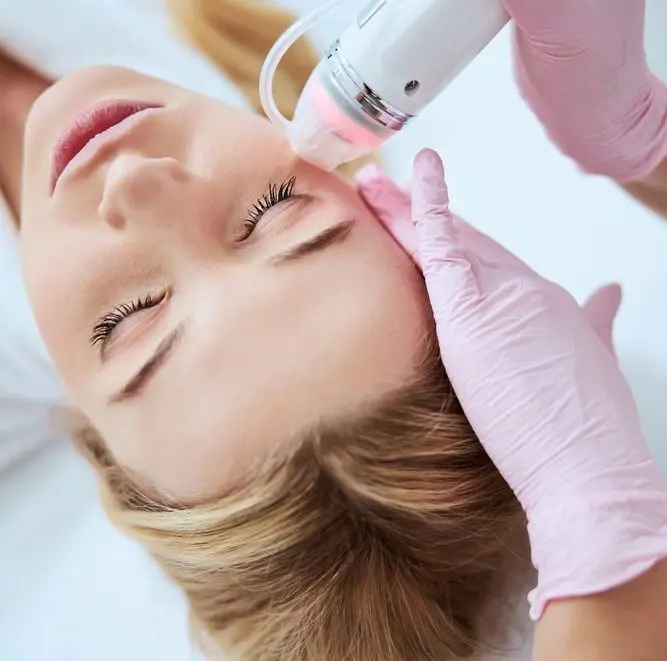
First-line · All skin tones
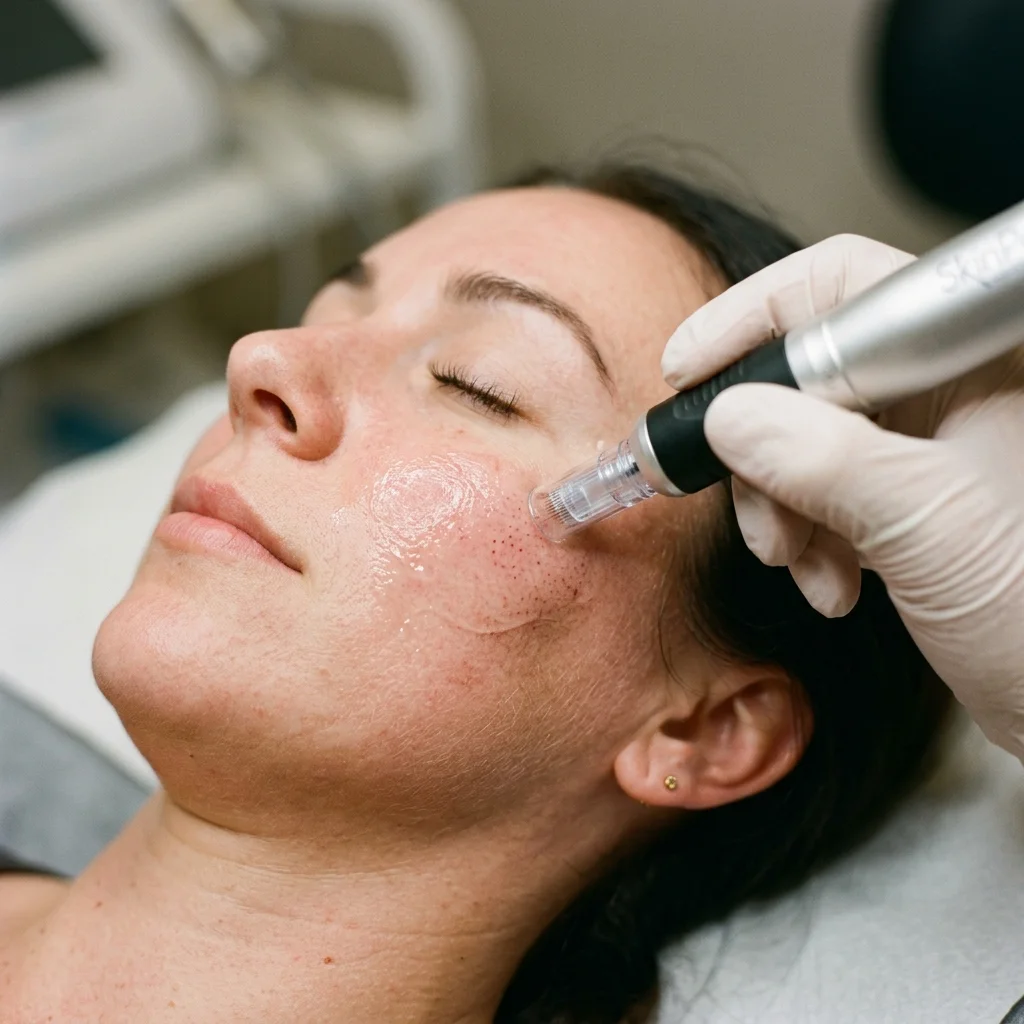
RF Microneedling
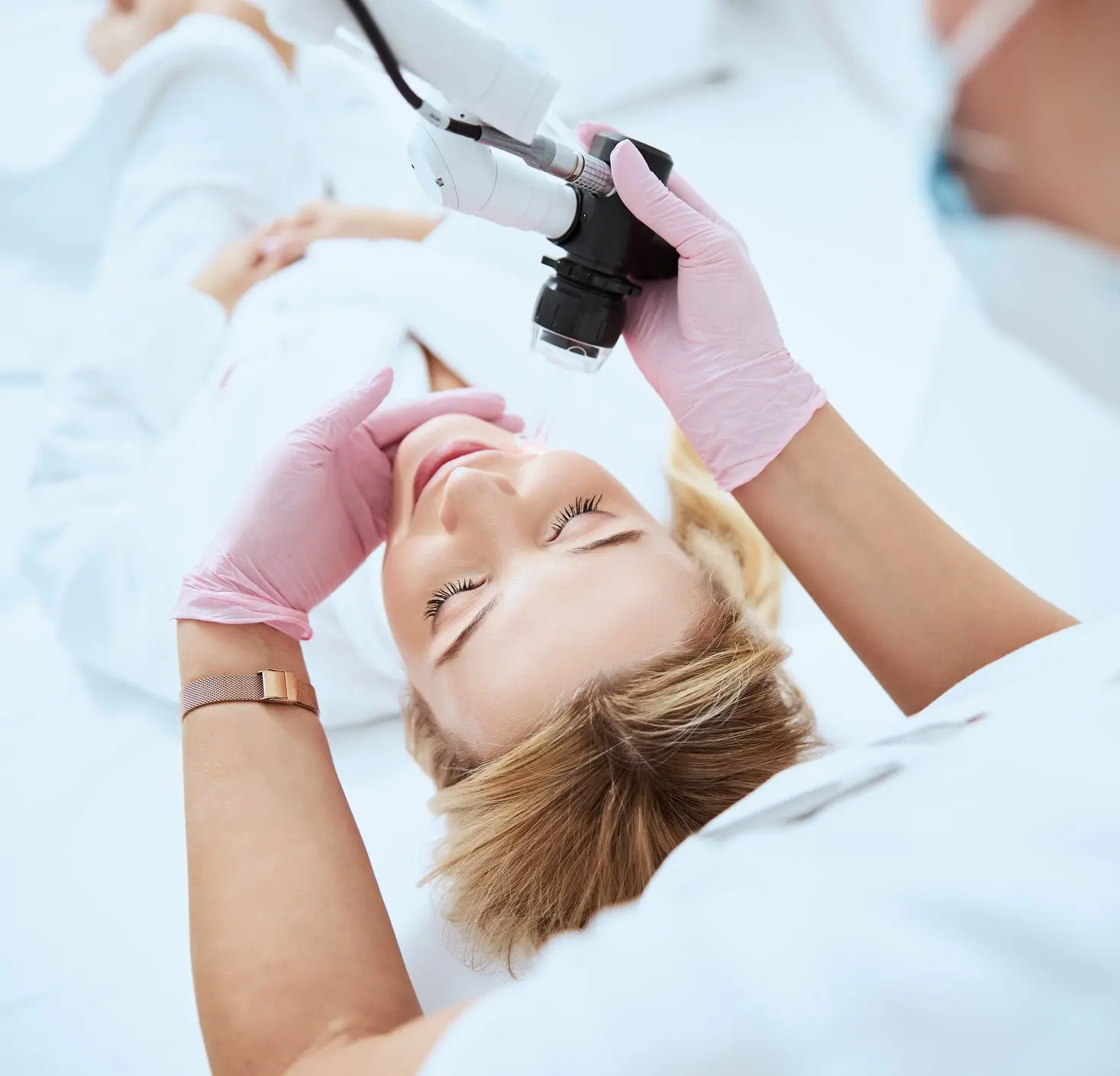
Escalation · Fitz I–III only
CO2 Laser Resurfacing
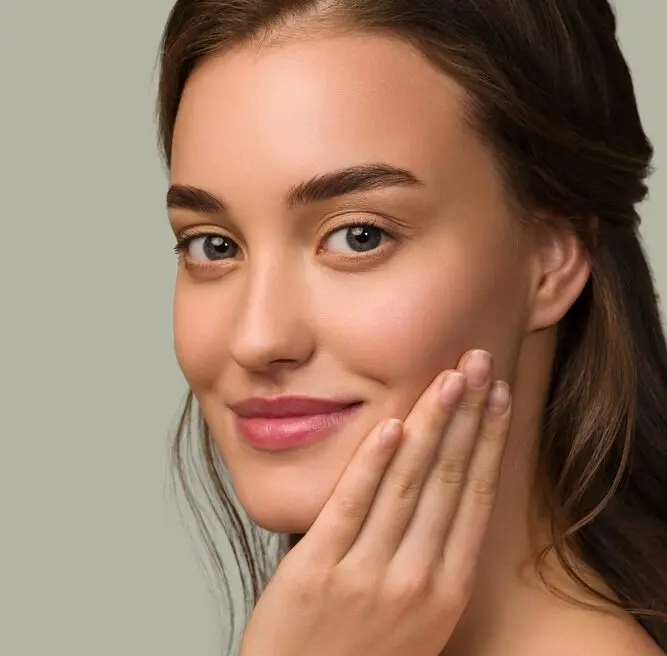
Alternative ablative · Fitz I–III
Erbium Laser Resurfacing
Adjunct · Bridge or gentler entry
Microneedling with PRP
Pigment adjunct · Color-only
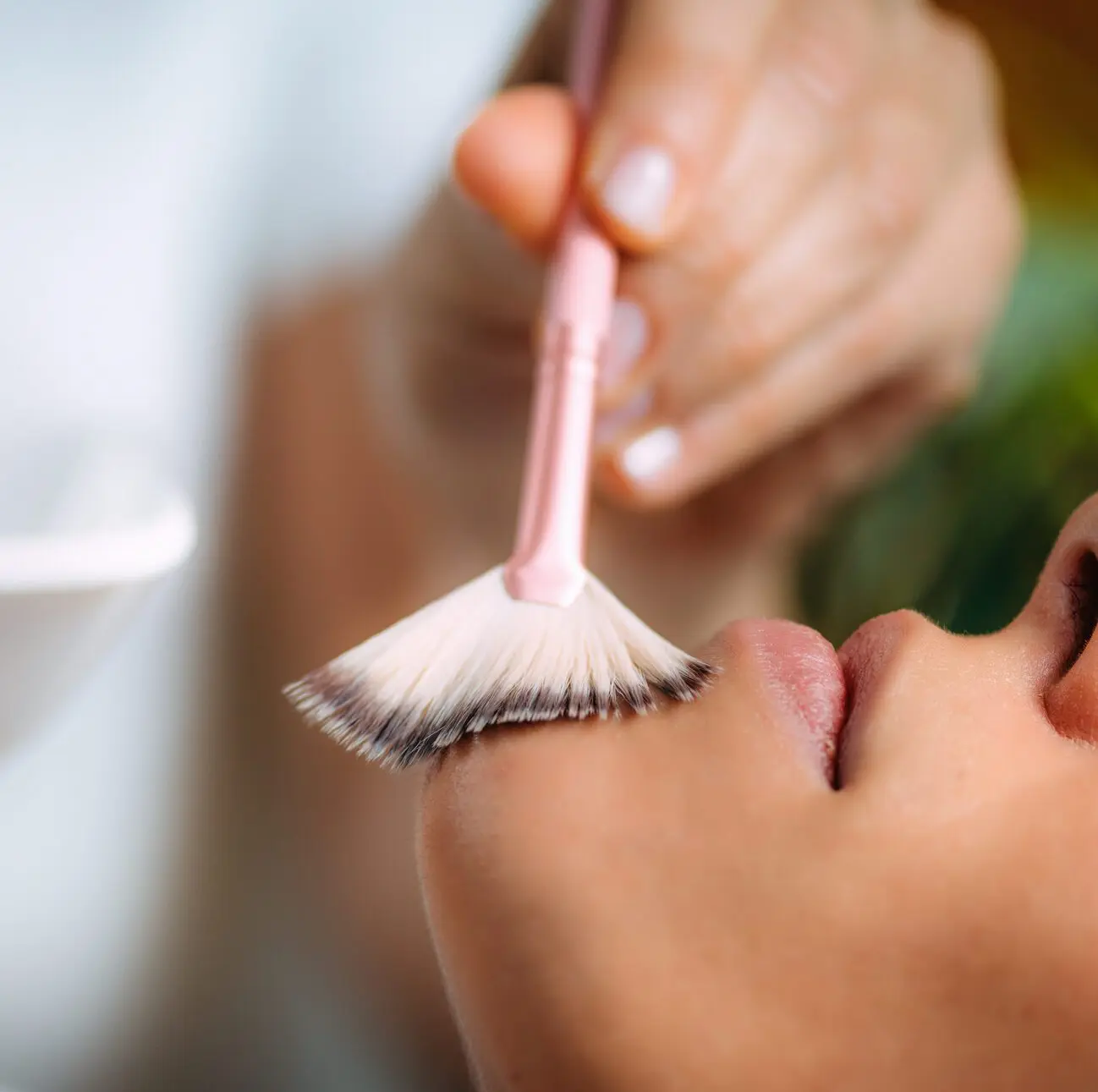
Custom Chemical Peel
Compare
Compare scar treatments side-by-side
Match scar type and skin tone to the right starting point. Most plans use RF Microneedling first and add ablative laser or PRP-enhanced microneedling depending on depth and response.
| Feature | RF Microneedling | CO2 Laser | Erbium Laser | MN + PRP | Chemical Peel |
|---|---|---|---|---|---|
| Best for | Atrophic, hypertrophic, surgical, trauma — all skin tones | Deep atrophic scars, lighter skin | Moderate atrophic, medium skin | Newer scars, mild texture, bridging | Flat pigmented / color-only scars |
| Mechanism | RF energy through microneedles — dermal collagen remodeling, no surface ablation | Ablative CO2 vaporizes surface + deep collagen stimulation | Erbium:YAG ablates thin precise layer — less thermal spread | Microchannel induction + platelet-rich plasma healing boost | Acid exfoliation — epidermal pigment correction |
| Fitzpatrick | I–VI (safe all tones) | I–III only (PIH risk in IV–VI) | I–III | I–VI | I–VI at appropriate depth |
| Sessions | 3–4, 4–6 weeks apart | 1–2 sessions | 1–2 sessions | 3–4 sessions | Series of 2–4 |
| Downtime | 24–48 hrs redness | 7–14 days | 3–7 days | Minimal 24 hrs | Minimal to 3–5 days |
RF Microneedling
- Best for
- Atrophic, hypertrophic, surgical, trauma — all skin tones
- Mechanism
- RF energy through microneedles — dermal collagen remodeling, no surface ablation
- Fitzpatrick
- I–VI (safe all tones)
- Sessions
- 3–4, 4–6 weeks apart
- Downtime
- 24–48 hrs redness
CO2 Laser
- Best for
- Deep atrophic scars, lighter skin
- Mechanism
- Ablative CO2 vaporizes surface + deep collagen stimulation
- Fitzpatrick
- I–III only (PIH risk in IV–VI)
- Sessions
- 1–2 sessions
- Downtime
- 7–14 days
Erbium Laser
- Best for
- Moderate atrophic, medium skin
- Mechanism
- Erbium:YAG ablates thin precise layer — less thermal spread
- Fitzpatrick
- I–III
- Sessions
- 1–2 sessions
- Downtime
- 3–7 days
MN + PRP
- Best for
- Newer scars, mild texture, bridging
- Mechanism
- Microchannel induction + platelet-rich plasma healing boost
- Fitzpatrick
- I–VI
- Sessions
- 3–4 sessions
- Downtime
- Minimal 24 hrs
Chemical Peel
- Best for
- Flat pigmented / color-only scars
- Mechanism
- Acid exfoliation — epidermal pigment correction
- Fitzpatrick
- I–VI at appropriate depth
- Sessions
- Series of 2–4
- Downtime
- Minimal to 3–5 days
“Scars can almost always be improved. They cannot always be erased — and I'd rather tell you that at the consultation than have you disappointed three sessions in.”
Home care is part of most scar plans. Three things have held up in clinical research: silicone gel sheeting (Cochrane-level evidence — apply daily, minimum 12 hours, for several months), daily sunscreen (broad-spectrum SPF 30+ is the most effective OTC scar product — UV darkens scars and reverses in-office progress), and topical retinoids (retinoic acid softens scar texture when paired with in-office treatment). What does not work as advertised: vitamin E oil (mixed evidence, contact dermatitis risk), onion extract gels (modest effect at best), and most OTC creams without active ingredients.
Acne-specific scarring — ice pick, boxcar, rolling — overlaps with this page but is not identical. The Acne Scars page covers acne-specific scarring in more depth, including TCA Cross, Bellafill, and the post-inflammatory hyperpigmentation that often accompanies acne-derived scarring. Everything else — surgical, trauma, burn, general keloid or hypertrophic, and scars of unknown cause — belongs on this page.
FAQ
Scar treatment — frequently asked
Can scars be completely removed?
Usually not. Most scars can be made significantly less noticeable — often a 50–80% improvement over a treatment series — but full erasure to match the surrounding skin is rare. Very superficial or very new scars sometimes come close. Deep atrophic scars, old keloids, and large surgical scars have realistic improvement ceilings. The goal is a meaningful softening of the scar's appearance, not disappearance.
What is the best treatment for raised or keloid scars?
For hypertrophic scars contained within the original wound, RF Microneedling combined with silicone gel sheeting is the starting point; stubborn cases need intralesional corticosteroid injections via a dermatology referral. Active keloids require dermatology first — aesthetic laser alone can worsen keloid formation and should not be the primary treatment for an active or growing keloid. Once a keloid is stable under medical management for 6–12 months, aesthetic resurfacing may be added.
Is laser or microneedling better for scars?
It depends on scar depth and skin tone. For darker skin (Fitzpatrick IV–VI) or moderate-depth scars, RF Microneedling is usually the safer, more appropriate starting point. For deep, mature atrophic scars on lighter skin (Fitzpatrick I–III), fractional CO2 or Erbium laser resurfacing is more powerful. Many treatment plans use both in sequence — RF Microneedling first, ablative laser later if the scar warrants escalation and the skin tone is appropriate.
How long does it take to see results from scar treatment?
Collagen remodeling is slow. Some improvement is noticeable a few weeks after each session, but the full result of a treatment series typically takes three to six months after the final session. Patients who expect to see optimal results immediately after treatment underestimate how much of the improvement happens in the weeks and months that follow.
Can scars on darker skin (Fitzpatrick IV–VI) be treated?
Yes — the plan is different. Darker skin is more prone to post-inflammatory hyperpigmentation from aggressive ablative laser, so treatment prioritizes RF Microneedling and PRP-enhanced microneedling, with chemical peels as adjuncts. Ablative laser (CO2, Erbium) is used sparingly on Fitzpatrick IV–VI and only for specific indications where the benefit is clear. For pigmented flat scars in darker skin, the non-laser brightening route is the correct path — not IPL or ablative resurfacing.
How soon after surgery can I treat a scar?
Most scars need to mature before aesthetic treatment — usually at least six months, often twelve. Treating during the active remodeling window can worsen the appearance. The exception is silicone gel sheeting, which can be started two to four weeks post-surgery to prevent hypertrophic scar formation before it becomes established. For cosmetic surgery scars, consult with your original surgeon before scheduling.
Will insurance cover scar treatment?
Usually no. Aesthetic scar treatment is generally considered cosmetic. Exceptions may apply for functional scars — contractures limiting range of movement, scars causing medical complications, or severe burn reconstruction — which are typically handled through plastic surgery or dermatology and may have coverage through those specialties. Desert Bloom does not bill insurance.
What is the difference between this page and the Acne Scars page?
This page covers surgical scars, trauma scars, burn scars, hypertrophic scars, keloids, pigmented scars, and scars of unknown origin. The Acne Scars page covers scarring specifically from acne — ice pick, boxcar, and rolling — along with the post-inflammatory hyperpigmentation that commonly accompanies acne-derived scarring. The treatment modalities overlap, but consultation flow and selection priorities differ.

Treatment plan led by
Founder, Desert Bloom Skincare · 17 years experience
References
- 1.
Zhang L, Liu C, Li L. An Overview of the Mechanisms of Fractional CO2 Laser in Scar Treatment. Lasers in Medical Science; 2026.
DOI: 10.1007/s10103-026-04846-z
Mechanism review — supports CO2 laser routing for deep atrophic scars.
- 2.
Kesty K, Goldberg D. Radiofrequency microneedling for acne, acne scars, and more. Dermatological Reviews; 2020.
DOI: 10.1002/der2.9
Clinical review — supports RF Microneedling as primary scar modality across skin tones.
- 3.
Mukhtar M. Efficacy of Microneedling Versus Fractional CO2 Laser in Treatment of Atrophic Facial Scars. Journal of Population Therapeutics and Clinical Pharmacology; 2023.
DOI: 10.53555/jptcp.v30i19.3766
Head-to-head comparison — supports staged routing (RF/microneedling first, CO2 for deeper).
- 4.
Burch J, Fernandez-Peñas P. Is there randomized controlled trial evidence to support the use of silicone gel for scarring?. Cochrane Clinical Answers; 2016.
DOI: 10.1002/cca.784
Cochrane-level evidence supporting silicone gel/sheeting in home-care recommendations.
- 5.
Wild T, Aljowder A, Aljawder A. From Wound to Scar: Scarring Explained — Pathophysiology of Wound Healing. Scars (Springer); 2024.
DOI: 10.1007/978-3-031-24137-6_2
Pathophysiology chapter — supports the scar-formation framing.
- 6.
Halim A, Heng S, Saipolamin A. Scoping review for pain mitigation during intralesional injections of corticosteroids for keloid scars. BMJ Open; 2025.
DOI: 10.1136/bmjopen-2024-092800
Supports keloid management-by-referral and corticosteroid injection recommendation.