Facial Balancing in Scottsdale, AZ 85260
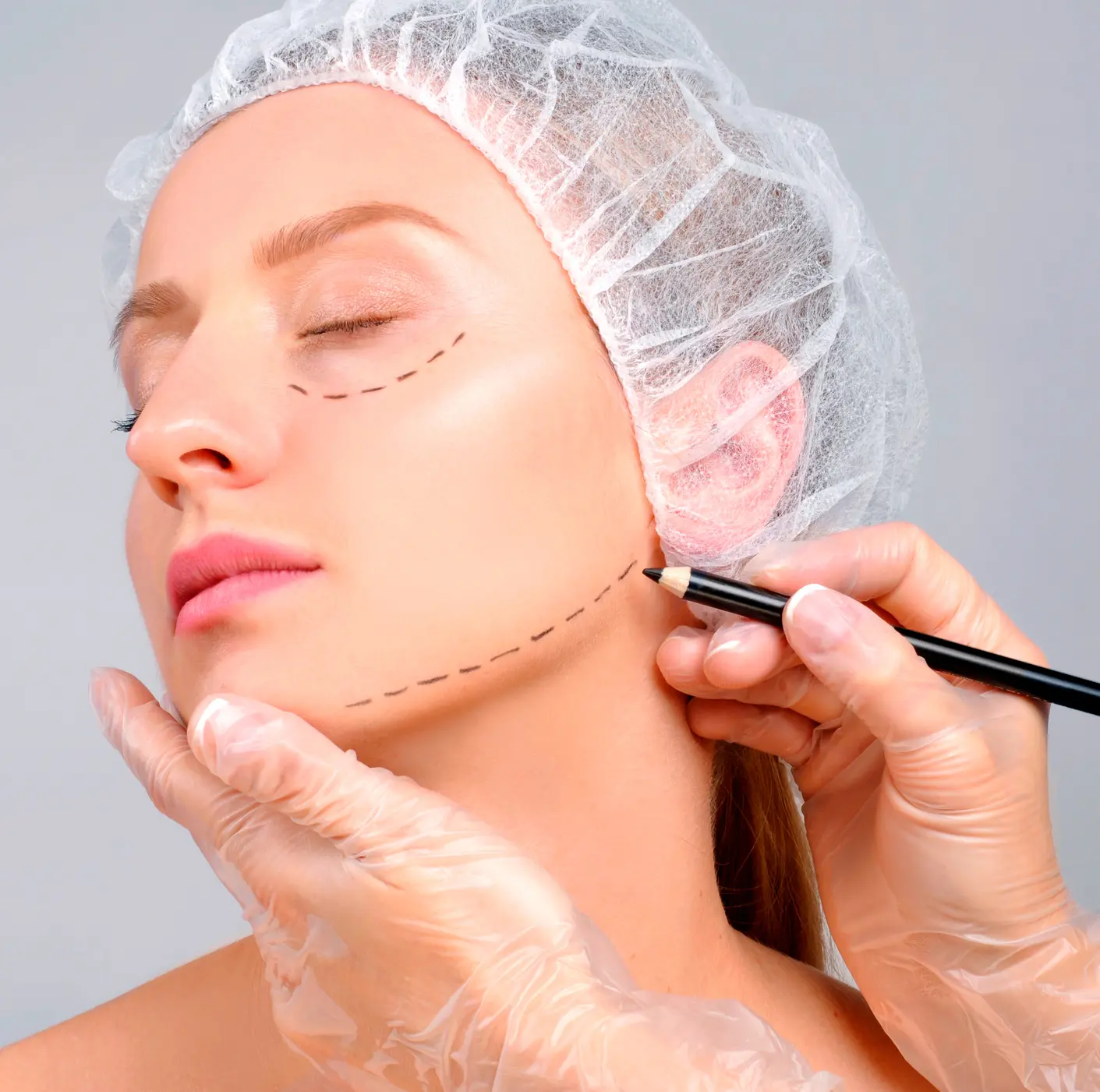
Facial Balancing in Scottsdale, AZ
Maybe one side photographs differently than the other. Maybe filler in the lips looked great on its own, but now something about the chin or cheeks feels off. Or maybe nobody else sees it — but you notice it every time you catch your reflection at a certain angle.
Facial balancing treats the face as a connected whole, not one feature at a time. At Desert Bloom Skincare in Scottsdale, AZ, every session begins with understanding your specific facial structure — and what would actually make a meaningful difference.
Book a Facial Balancing Consultation
Complimentary consultation. No obligation. Or contact us to learn more.
At a Glance
Facial balancing is a non-surgical approach using dermal fillers and Botox to bring multiple facial zones into proportion. Sessions typically take 45 minutes for a single syringe (including numbing), or 60–120 minutes when multiple syringes are involved. Results last 12–24 months for filler areas, 3–4 months for Botox components. Recovery is minimal — most patients return to normal activities the same day.
Facial balancing is one of several dermal filler treatments at Desert Bloom, alongside Lip Augmentation, Liquid Rhinoplasty, and Chin Augmentation.
What Is Facial Balancing?
Facial balancing — also known as facial harmonization — is a non-surgical cosmetic approach that uses dermal fillers and injectables like Botox to bring multiple facial zones into proportion. Rather than focusing on a single area in isolation, your injector evaluates the entire facial structure in a single session so that each adjustment supports the others.
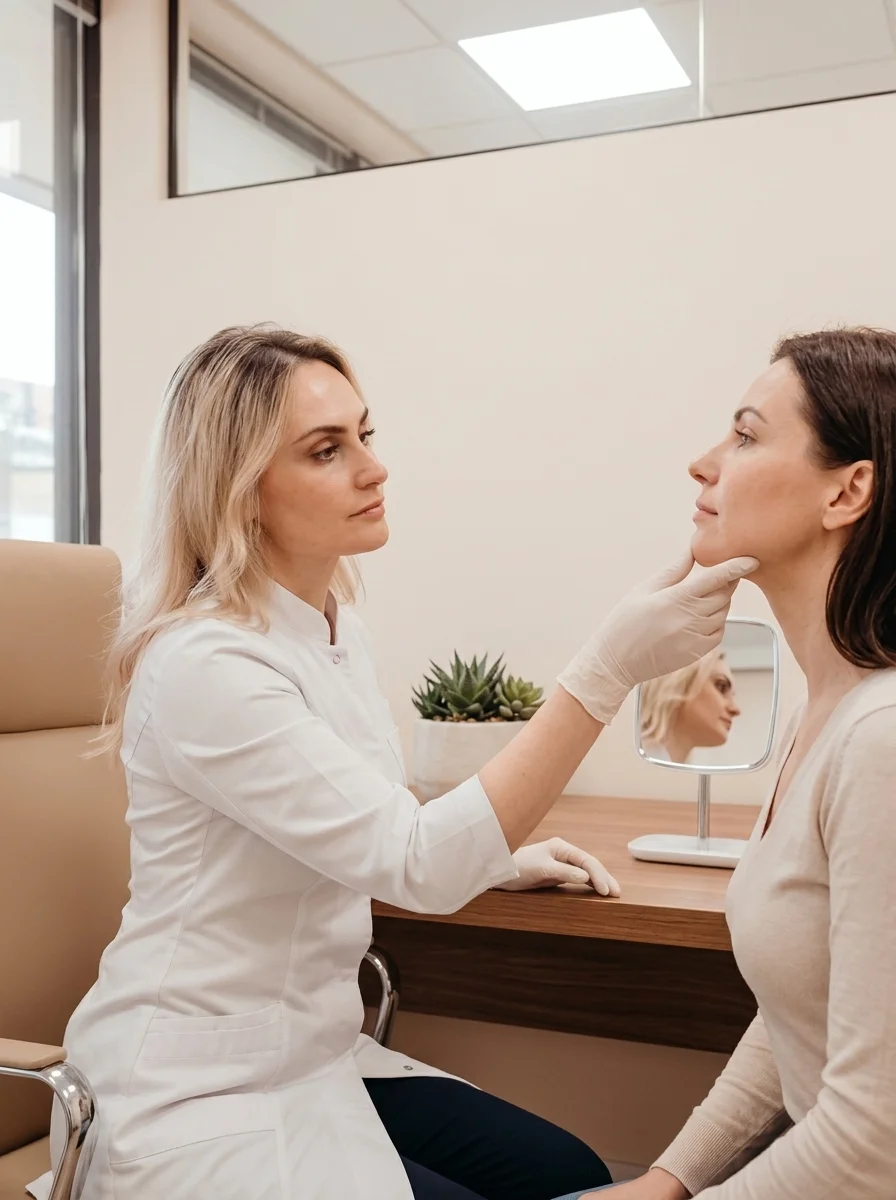
Dermal fillers used in facial balancing are composed of hyaluronic acid (HA) based gels that instantly restore lost volume, define features, and smooth deep lines. Because HA fillers are reversible — they can be dissolved with hyaluronidase if needed — they are the standard choice for facial balancing treatments. Neurotoxins like Botox and Dysport play a different role: they relax overactive muscles, soften dynamic wrinkles, and refine the balance of facial features by addressing muscle activity rather than volume.
The underlying principle is straightforward: facial features are interdependent. Adding chin projection can make a nose appear less prominent and improve overall facial contour. Restoring midface volume can soften nasolabial folds and wrinkles without treating them directly. Enhancing cheekbones changes the way the entire midface reads in both profile and frontal views. This is why treating the whole face produces more natural-looking results than addressing one feature at a time.
During a consultation, I evaluate facial contours from multiple angles, often referencing the golden ratio as a guide to ideal proportions for a patient’s unique anatomy. The goal is harmony, not dramatic change.
Midface treatment is one of the most common applications of filler in facial balancing, serving as the structural foundation that influences how every other zone appears.
Areas Treated with Facial Balancing
Facial balancing evaluates and treats multiple zones based on each patient’s unique anatomy, aesthetic goals, and individual facial structure. The most common treatment areas:
| Zone | What It Addresses |
|---|---|
| Cheeks / midface | Volume loss, sunken cheeks, flat midface, nasolabial fold depth |
| Chin | Weak chin augmentation, recessed chin, profile balance |
| Jawline | Soft definition, early jowling, lower face framing |
| Lips | Lip augmentation, lip fillers for proportion relative to other features |
| Nose (non-surgical) | Liquid rhinoplasty — dorsal hump, tip refinement, profile balancing |
| Temples | Hollowing, upper-face volume loss, fat pad depletion |
| Under-eye / tear troughs | Tear trough treatment — hollowing beneath the eyes |
| Forehead / brow | Volume loss, brow position |
Choosing Your Treatment Areas
Not every patient needs all areas treated. The consultation determines which specific areas improve your appearance the most — sometimes two or three subtle adjustments achieve more than a single large-volume injection ever could.
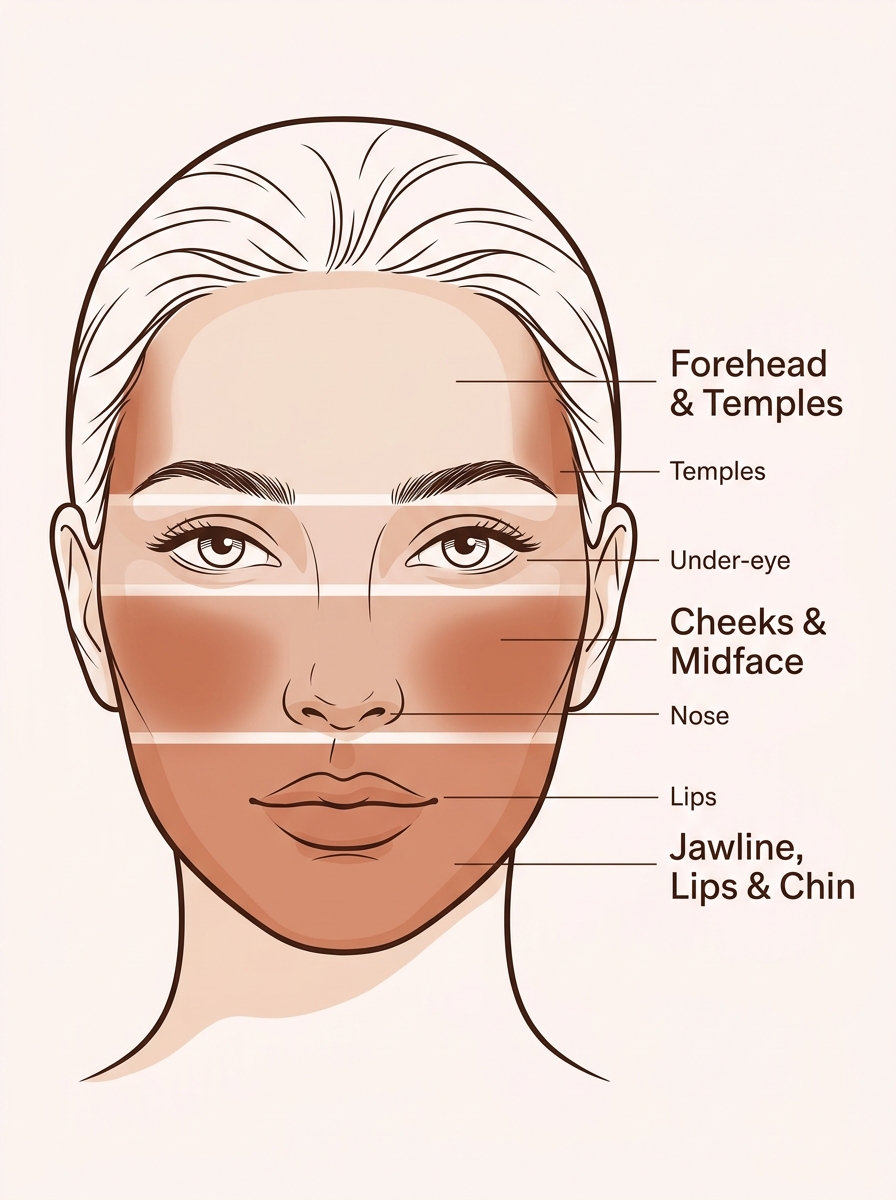
The chin and jawline work together to frame the lower face and influence profile harmony. The cheeks support the midface and affect how deep the nasolabial folds appear. Lips balance relative to chin projection. Every zone plays a vital role in the overall picture. Understanding these relationships is what separates facial balancing from a simple filler appointment.
Botox and Fillers for Facial Balance
Fillers restore volume and contour where the face has lost structure. Botox relaxes muscles that pull features downward or create asymmetry. Together, these injectable treatments address different causes of facial disharmony, and a skilled practitioner determines which tools serve each patient’s goals best.
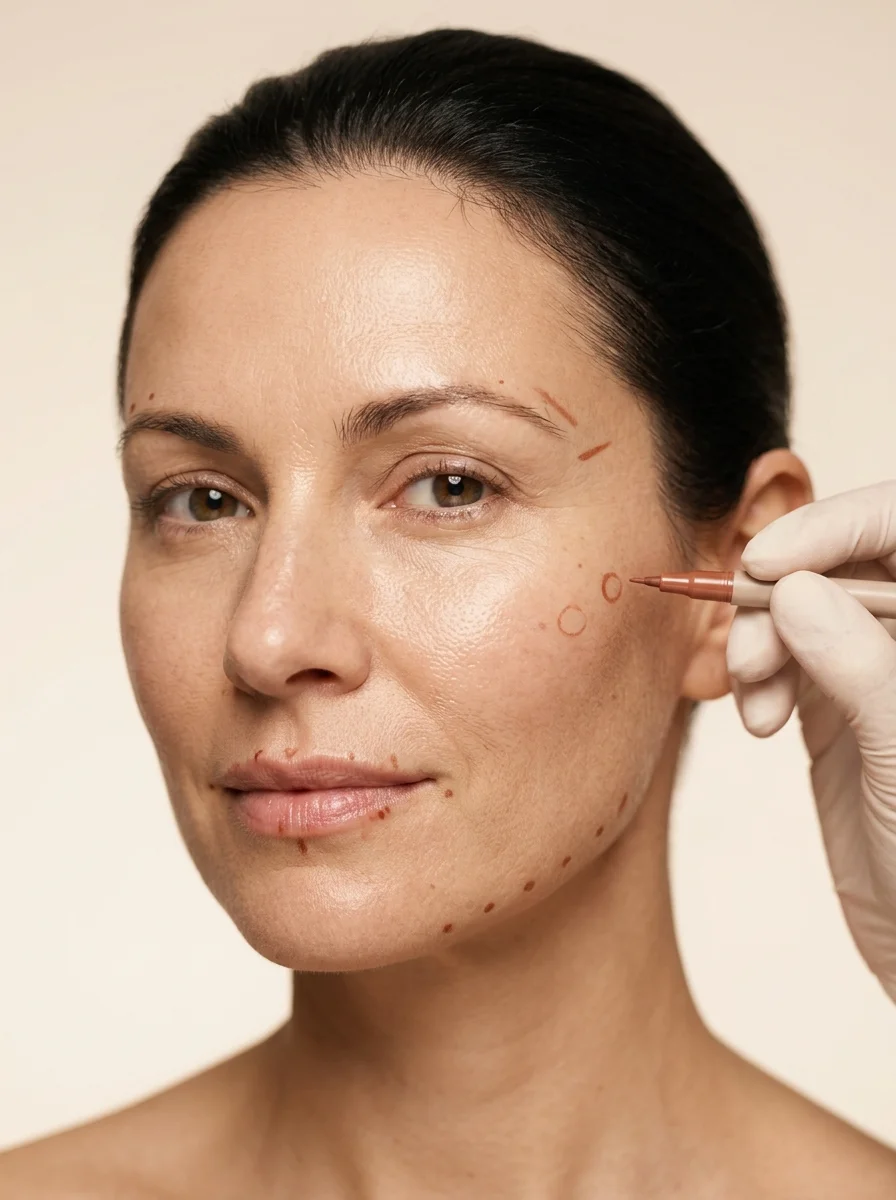
Common combinations in facial balancing:
- Masseter Botox or chin/jawline filler — For patients concerned about a wider jaw from strong masseters, Botox temporarily atrophies the muscle and slims the lower face. Women often benefit more from chin filler for projection rather than jawline filler. In most cases, masseter Botox and jawline filler should not be combined — patients benefit from one approach or the other.
- Brow Botox + temple filler — Opens the eye area and restores upper-face volume, improving the shape and appearance of the brow and creating a more lifted appearance overall.
- Lip flip (Botox) or lip filler — A lip flip uses a neurotoxin on the upper lip only to subtly roll the lip outward — this addresses upper-lip exposure and is distinct from, though sometimes used alongside, gummy smile correction (which uses Botox and may also include filler). Lip filler adds volume and enhances the shape of the lips independently.
- Cheek filler + chin augmentation — Restoring cheek volume while adding chin projection achieves full-face profile balancing and is one of the most requested combinations.
The hyaluronic acid filler used in each zone is selected based on how that tissue needs to behave — a firm filler for chin and jaw definition, a softer, more diffuse filler for tear troughs and lips. At Desert Bloom, we use Restylane and RHA Collection fillers across facial balancing zones — products chosen for their specific rheological properties and clinical track records. Different formulations (such as Restylane Lyft for midface volume, Restylane Defyne for jawline definition, or RHA 2 for lips and delicate areas) have distinct properties suited to each region.
What separates effective facial balancing from simply layering fillers is understanding interdependence: how a chin adjustment shifts the nose in profile, how cheek volume affects the apparent depth of the nasolabial folds, how the jawline reads differently once the midface is restored. Every decision in this session has a ripple effect — and planning for that is half the work.
A multicenter study found 96.5% patient satisfaction at the 3-week mark and 92.9% at 6 months when Botox and fillers were combined across multiple facial zones (Dermatologic Surgery, 2015; PMID 26618460). By adding subtle adjustments across zones rather than focusing on one area, combination techniques achieve higher overall satisfaction and more natural-looking results.
Learn more about Botox treatments at Desert Bloom.
The Facial Balancing Procedure
Here is what to expect from a facial balancing procedure at Desert Bloom:
Your injector assesses your face from multiple angles, discusses your goals and concerns, and creates a customized treatment plan specific to your proportions and facial anatomy. There is no standard “package.” Every plan is individualized. The consultation includes a thorough evaluation of your medical history and current health status to ensure safety and effectiveness.
If you take OTC blood-thinning products — including fish oil, aspirin, or similar supplements — pause them 3 days before your appointment to reduce bruising risk. Prescription blood thinners require a separate conversation with your prescribing physician.
Topical numbing is applied to all injection sites before treatment begins. Treatment takes 45 minutes for a single syringe; 60–120 minutes when multiple syringes are involved. Multiple filler products may be used — specific areas respond to different formulations and injection techniques.
Expect temporary swelling and possible bruising in treated areas for a few days post-treatment. Avoid strenuous exercise, direct sun exposure, and makeup on treated areas for 24–48 hours. Reduce swelling by keeping your head elevated and avoiding alcohol immediately after treatment. Most patients return to daily activities the same day.
By week 2–4, product integrates with tissue and final results settle into place. Many patients notice an immediate improvement, with results continuing to refine as temporary swelling subsides.
Because hyaluronic acid fillers are reversible with hyaluronidase, the effects are not permanent if you change your mind. For the right candidate, facial balancing can be a lower-downtime minimally invasive option compared with surgery — and because results are reversible, there is a meaningful safety net if your goals change.
How Long Do Facial Balancing Results Last?
Facial balancing results typically last 12–24 months depending on the area treated and products used. Because a full session involves multiple zones, different areas may need maintenance on different schedules.

| Zone | Typical Duration |
|---|---|
| Cheeks / midface | 12–24 months |
| Chin / jawline | 12–18 months |
| Lips | 6–12 months |
| Under-eye / tear troughs | 12–18 months (many years, 5+ in select cases — see note) |
Botox components (if included) last 3–4 months and require separate follow-up appointments. Maintenance treatments for facial balancing are typically recommended every 6–18 months as fillers gradually metabolize.
Note: These are standard accepted timeframes — but in practice, hyaluronic acid filler can last much longer, sometimes for several months beyond these ranges or years in certain zones. Individual results depend on metabolism, age, lifestyle, and the specific product used. The under-eye / tear trough zone is particularly notable: when performed on the right candidate, Dr. Borakowski has observed HA filler persisting 5 or more years. Correct patient selection is key — tear trough filler is most appropriate for select patients with true volume loss, not skin laxity or atrophy.
An 18-month multicenter trial found that 95% of subjects maintained improved aesthetic scores at the 18-month mark (Dermatologic Surgery, 2015; PMID 26606436). Many patients return for touch-ups not because effects have disappeared entirely, but to maintain the facial symmetry and harmonious balance they achieved.
See facial balancing before and after results from Desert Bloom patients.
Facial Balancing Cost
Facial balancing cost typically ranges from $1,600 to $5,000+ depending on three factors: the number of zones treated, the number of syringes used, and the specific products selected for each area. A full session may involve 2–6+ syringes across multiple zones.
Because every face is different, cost varies by individual goals and treatment plan. There is no one-size-fits-all price. Facial balancing is a financial commitment that reflects the skill, time, and product involved — and the results are meaningfully different from a single-area filler appointment.
View complete pricing on our price list for current per-syringe rates. For patients who need reversal after treatment elsewhere, dermal filler removal is also available at Desert Bloom.
There is no fee for the consultation. Come in, let me look at your face, and we’ll talk through what would actually move the needle — and what wouldn’t.
Am I a Good Candidate?
Good Candidates for Facial Balancing
You may benefit from facial balancing if you notice:
- Natural facial asymmetry — one side fuller, higher, or differently shaped than the other
- Multi-zone volume loss from the aging process, including wrinkles, hollowing, and fat pad depletion
- Profile imbalance, particularly chin relative to nose, or jawline relative to cheeks
- Sunken cheeks or midface flattening that changes the way you photograph
- Post-weight-loss facial hollowing
- Dissatisfaction with previous single-area filler injections that didn’t achieve overall harmony
- Desire for a refreshed appearance without surgery
Patients who want to correct facial asymmetries — whether congenital or age-related — are among the most common candidates for this approach. When asymmetries are addressed as part of an overall facial balance plan, the result is a natural appearance rather than an obviously “corrected” one.
Your Facial Balancing Provider in Scottsdale
Dr. Natalya Borakowski, NMD is the founder of Desert Bloom Skincare in Scottsdale, AZ, and a practitioner with 17 years of expertise in aesthetic medicine. She is a naturopathic physician trained at Southwest College of Naturopathic Medicine — which means her approach to facial balancing draws on holistic medical training and a deep understanding of facial anatomy, not just injection techniques.

Dr. Borakowski serves as adjunct faculty at the University of Bridgeport, where she teaches aesthetic injection techniques to licensed practitioners. Her training in facial anatomy and her artistic vision for facial proportions shape every treatment plan. The goal is restraint. Results that look like you, not like work.
This is not a treatment I approach as “filler in one area.” Facial balancing requires anatomical judgment, restraint, and a clear plan for how the entire face will read afterward — in profile, not just straight on. Done well, this work follows your face rather than rewriting it.
Content reviewed by Dr. Natalya Borakowski, NMD. Last updated: April 2026.

“Facial balancing evaluates overall facial symmetry, proportions between upper, mid and lower face, as well as profile harmony, including level of chin protrusion compared to tip of the nose and lips.”
Frequently asked questions
What is facial balancing?
Facial balancing — also called facial harmonization — is a non-surgical cosmetic approach using dermal fillers and Botox (or other neurotoxins) to bring multiple facial zones into proportion. Rather than treating one area in isolation, your injector evaluates the entire facial structure and creates a customized treatment plan so each adjustment supports overall harmony. The result is a balanced appearance that works with your unique facial features, not against them.How much does facial balancing cost?
Typically $1,600 to $5,000+ depending on zones treated and syringes used (2–6+ syringes across multiple areas). The specific products selected for each area also affect cost. See our price list for current rates. The consultation is complimentary.How long do results last?
Filler results typically last 12–24 months depending on the area. Botox components last 3–4 months. Maintenance treatments are usually recommended every 6–18 months. In practice, hyaluronic acid fillers often last beyond the typical range — individual results vary by metabolism, age, and the product used. In certain zones, such as the tear troughs in appropriately selected patients, results have been observed to last 5 or more years.Is facial balancing painful?
Topical numbing is applied to all injection sites before treatment begins. Most patients describe mild pressure at injection sites, not significant pain. Temporary swelling and redness are the most common post-treatment experiences. Discomfort typically resolves within hours; swelling subsides within a few days to a week.Can facial balancing fix asymmetry?
Yes. Correcting asymmetries is one of the most common reasons patients seek facial balancing. As Dr. Borakowski explains, each side of the face are sisters, not twins. By adding different volumes on each side — or relaxing specific muscles — your injector can achieve better symmetry while respecting the natural character of your face.What is the difference between facial balancing and regular filler?
Regular filler treats one area in isolation. Facial balancing evaluates the entire facial structure and uses various dermal fillers and injectables across specific areas in a coordinated way — the key difference is anatomical judgment: understanding how each adjustment changes the rest of the face, especially in profile. The comprehensive approach and the results it achieves are meaningfully different.How many syringes do I need for facial balancing?
Typically 2–6+ syringes depending on zones treated and the degree of correction needed. Your injector determines what is needed during the consultation — there is no standard number and no set package. The chin and jawline, lips, and cheeks may each require different volumes and formulations.Can facial balancing results be reversed?
Yes. Hyaluronic acid fillers can be dissolved with hyaluronidase if needed — this reversibility is one reason HA fillers are the standard choice for facial balancing treatments. Dermal filler removal is available at Desert Bloom if you ever want results adjusted or removed.Is facial balancing safe?
When performed by a skilled practitioner with proper training in facial anatomy, facial balancing has a favorable risk profile. Common side effects include temporary swelling or bruising at injection sites. More serious risks — including vascular occlusion — are rare and are mitigated by deep anatomical knowledge, careful technique, and use of FDA-approved hyaluronic acid based fillers. At Desert Bloom, patient safety is the first consideration in every treatment plan.What is the golden ratio in facial balancing?
The golden ratio is a mathematical proportion (approximately 1:1.618) that appears throughout nature and in aesthetically balanced facial features. Many experienced injectors reference it as a guide when assessing facial proportions — not to create a formulaic ideal, but to understand how your unique features relate to each other and where targeted enhancements can create a more harmonious overall appearance.Book Your Facial Balancing Consultation
A consultation is the best next step. There is no fee and no obligation — just a careful assessment of your facial proportions and an honest conversation about what to expect from treatment.
Desert Bloom Skincare
10752 N 89th Place, Suite 122B, Scottsdale, AZ 85260
(480) 567-8180
References
- “Patient Satisfaction and Efficacy of Full-Facial Rejuvenation Using a Combination of Botulinum Toxin Type A and Hyaluronic Acid Filler.” Dermatologic Surgery. 2015. (PMID 26618460. 96.5% satisfaction at 3 weeks, 92.9% at 6 months confirmed in abstract.)
- “High Patient Satisfaction of a Hyaluronic Acid Filler Producing Enduring Full-Facial Volume Restoration: An 18-Month Open Multicenter Study.” Dermatologic Surgery. 2015. (PMID 26606436. 95.0% of subjects had improved full-face GAIS at 18 months confirmed in abstract.)
Disclaimer: Individual results may vary. Facial balancing is a medical procedure that should be performed by a qualified provider. The information on this page is for educational purposes and does not replace a professional consultation. All treatments at Desert Bloom Skincare are performed by Dr. Natalya Borakowski, NMD.
Facial Balancing price
- Facial Balancing$1,600+60 min
Consultation in skin care clinic
Desert Bloom Skincare Center offers personalized skincare consultation to help you achieve a flawless and radiant complexion. Book your appointment today and let our expert team of skincare professionals address your specific concerns and help you reach your skincare goals.
Similar treatments


Visit Our Scottsdale Aesthetic Center
Address
10752 N 89th Place, Suite 122B,Scottsdale, AZ 85260.
Phone:(480) 567-8180
E-mail:info@desertbloomskincare.com
Get Directions →Location & Directions
Desert Bloom Skincare is conveniently located in the Shea Corridor of North Scottsdale, within Edwards Professional Park I — minutes from HonorHealth Scottsdale Shea Medical Center and the Mayo Clinic Scottsdale Campus.
Areas We Serve
We proudly provide expert non-surgical rhinoplasty and PDO thread lifts to patients across the Southwest:
- ScottsdaleNorth Scottsdale · McCormick Ranch · Gainey Ranch
- Paradise Valley
- PhoenixArcadia · Biltmore · North Phoenix
- Fountain Hills
- Cave Creek & Carefree