Thread Lift Before and After: A 6-Month Case Study on Facial Fatigue
A 37-year-old woman traveled to Scottsdale seeking a non-surgical solution for facial fatigue—a tired, flat appearance that didn’t match how refreshed she felt. This case study shows how PLLA/PCL absorbable threads can create an immediate lift with progressive collagen stimulation, with the clearest improvement seen at six months.
Article's contents
- Consultation & Clinical Assessment
- Treatment Details: Mechanical Lift vs. Collagen Response
- Who Is a Good Candidate for This Type of Thread Lift?
- Recovery & Results Timeline
- Thread Lift Before and After Photo
- Clinical Insights from this Case
- Frequently asked questions
- If You’re Not Sure What’s Right, Let’s Talk
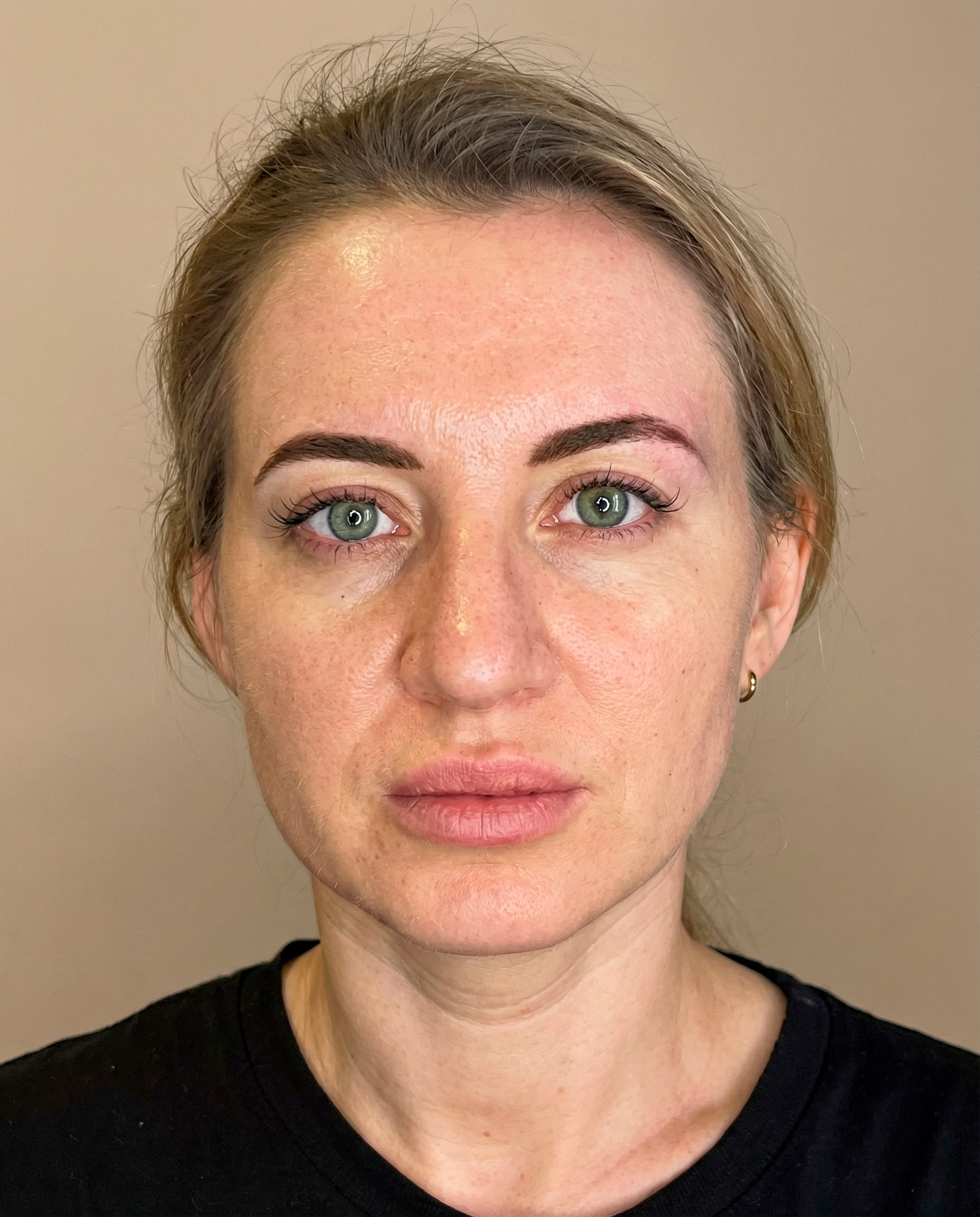
Patient Profile: 37-Year-Old Caucasian Woman
Primary Concern: A persistent tired, flat appearance that did not align with how refreshed she felt internally.
Many patients searching for thread lift before and after results are looking for a solution to facial fatigue rather than advanced sagging. This patient traveled to Scottsdale seeking a minimally invasive procedure for early intervention, prioritizing a subtle, refreshed result over aggressive surgical changes.
Consultation & Clinical Assessment
The consultation focused on clinical appropriateness rather than just technique. We performed a detailed assessment of the patient’s skin type and skin quality to ensure the dermal foundation could support the threads. Aligning aesthetic goals is a critical step; we discussed how individual results vary based on anatomy and lifestyle. A thread lift is not a universal solution; it is not the best option for patients with significant tissue heaviness or very fragile skin quality.
We addressed what the procedure can and cannot achieve:
- Expected outcomes over time and alternatives, including the option of no treatment.
- Risks and Limitations:Infection, while uncommon, was discussed as the most serious potential complication.
- Mechanism: It was clarified that threads reposition soft tissue (subcutaneous fat) and do not remove loose skin like a surgical facelift.
Treatment Details: Mechanical Lift vs. Collagen Response
While patients often inquire about a pdo thread lift, this case utilized PLLA/PCL absorbable threads (5 per side). These materials provide an immediate mechanical lift, but their primary value lies in progressive collagen stimulation and dermal support over time.
The procedure is not a “magic fix” but a progressive treatment. While the visible lift is immediate, facial contours continue to refine over several months as the threads trigger a regenerative response. The full results are not evaluated on the day of the procedure but at the 6-month mark, once the production of collagen has significantly improved skin firmness and dermal quality. This approach ensures the longevity of the results, typically lasting 1.5–2 years as the threads gradually dissolve.

Who Is a Good Candidate for This Type of Thread Lift?
Choosing the right procedure is a clinical decision based on the signs of aging present:
- Good Candidates:Younger patients (30s–50s), those with early soft-tissue descent, and individuals with good skin condition.
- Less Suitable Candidates: Patients with significant skin laxity, extreme volume loss, or those expecting the dramatic “skin-tightening” results of plastic surgery.
- Clinical Referral: If excess skin is the primary concern, a referral to a plastic surgeon for a traditional facelift is the more ethical and effective path.
Recovery & Results Timeline
A structured recovery plan was used in this case to support healing, minimize infection risk, and protect early thread stabilization.
Days 1–3 (Acute Healing):
The patient was advised to focus on infection prevention during the earliest healing phase. She was instructed to keep the port sites clean, apply antibiotic ointment as directed, and avoid makeup, saunas, steam rooms, public pools, and intense exercise. Mild swelling was expected; bruising was not typical in this case.
Week 1 (Early Healing):
As recovery progressed, the patient was able to resume most normal activities. She was also advised to continue avoiding activities that could increase facial strain or heat exposure during early healing, based on clinical guidance.
Months 1–3 (Collagen Remodeling):
Early visible improvements in skin texture began to emerge as the PLLA material stimulated a regenerative response in the treated tissues.
Month 6 (Follow-Up Comparison):
In this case, the six-month comparison photos showed the clearest improvement in lift, skin texture, and overall facial freshness. This is why long-term thread lift before and after photos are often more clinically meaningful than immediate post-procedure images alone.
Thread Lift Before and After Photo
Clinical Insights from this Case
Frequently asked questions
How do PDO thread lift results compare to traditional facelift results?
Patients often compare pdo thread lift before and after photos to surgery. However, threads reposition fat and tissue without excision. For patients with mild tissue descent, threads offer a refreshed look with minimal downtime, whereas a surgical facelift is required for significant skin removal.Are there noticeable differences in thread lift before and after photos for the face versus the neck?
Yes. Before-and-after results can look different depending on the treated area. In facial cases, the visual change often comes from soft-tissue repositioning and improved facial contours, especially in patients with early tissue descent. In neck-focused cases, improvements are often more related to skin quality and firmness, and outcomes depend heavily on the degree of skin laxity. The most accurate way to interpret before-and-after photos is to compare patients with a similar anatomy and treatment goal.Is there any swelling or bruising visible after a thread lift?
Mild swelling is a normal part of early recovery after a thread-based procedure. In this specific clinical case, it was noted that bruising is not typical, though individual healing responses vary.What should I expect during the immediate recovery period?
For the first 48–72 hours, clinical safety is the priority. Patients must keep the port sites clean, use antibiotic ointment, and strictly avoid high-heat environments and intense physical strain to ensure the best results.Can I see real patient testimonials or stories alongside their thread lift before and after images?
Yes—when available and shared with patient consent, real case stories can be very helpful. Before-and-after photos show visual change, but the patient story adds important context: what bothered them most, why they chose treatment, what recovery felt like, and how their results evolved over time. In clinical practice, both images and case narratives are valuable because they help set realistic expectations and highlight that individual results vary based on anatomy, skin quality, and treatment goals.If You’re Not Sure What’s Right, Let’s Talk
If you’re feeling the change in your face but aren’t sure what the right next step is, you’re not alone—and you don’t have to guess. We’re here to help you explore your options with clarity, honesty, and a treatment plan that fits your anatomy and goals.