Cheek Filler in Scottsdale, AZ 85260

Cheek Filler in Scottsdale
It usually starts with a photograph — something about the midface looks different, flatter than you remember, and the nasolabial folds seem deeper than they did a year ago. That shift in cheek volume is one of the earliest visible signs of facial aging.
At a Glance
Cheek filler is a non-surgical cosmetic procedure that restores midface volume using hyaluronic acid dermal fillers. Treatment takes approximately 45 minutes, results begin to appear immediately — though mild swelling may take one to two weeks to fully resolve — and most patients return to normal activity the same day. At Desert Bloom Skincare in Scottsdale, Dr. Natalya Borakowski, NMD evaluates each patient’s facial anatomy individually before recommending a treatment plan — because cheek filler works best when placed with precision.
Cheek filler is one of the most requested dermal filler treatments offered at Desert Bloom, alongside jawline filler, chin filler, temple filler, and lip augmentation.
What Is Cheek Filler?
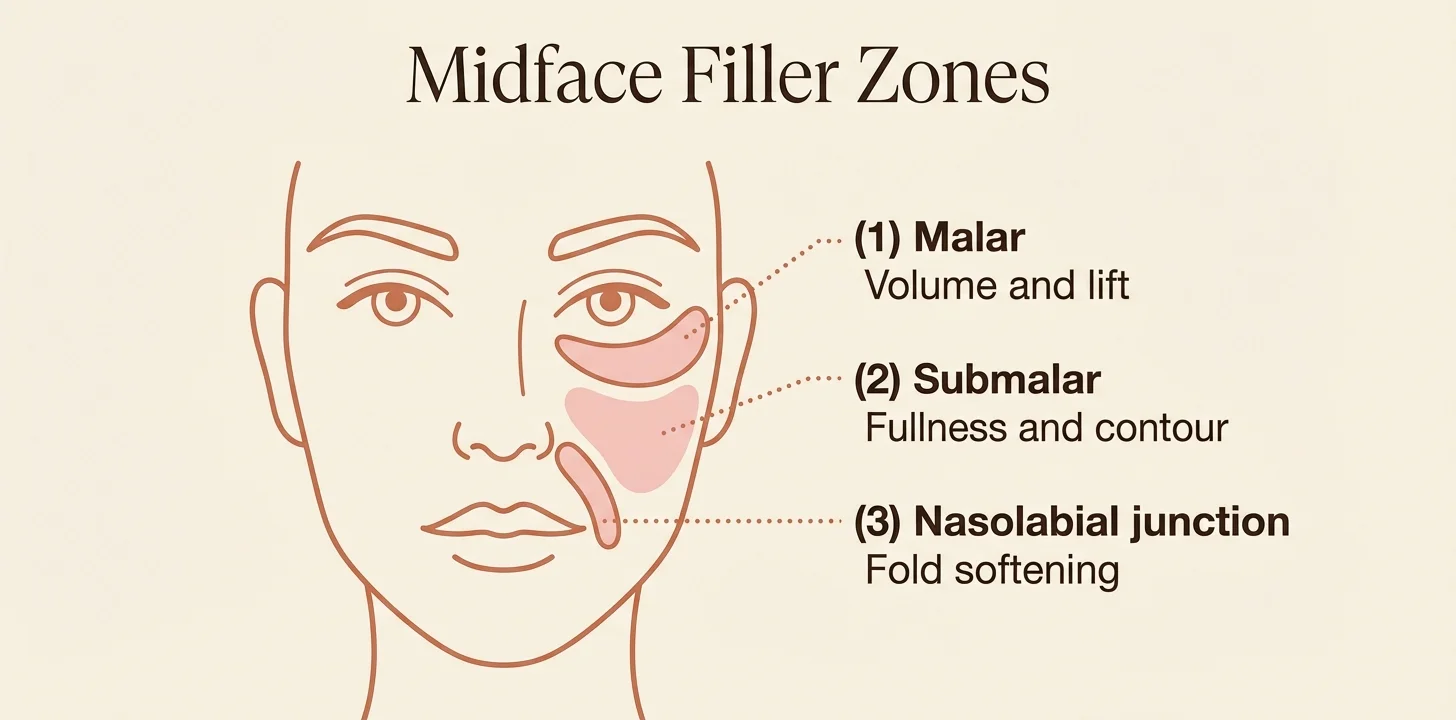
Cheek filler is an injectable cosmetic enhancement that places dermal fillers into the midface to restore volume, define cheekbones, and improve facial contours. The most commonly used products are hyaluronic acid fillers — a naturally occurring substance already present in your skin and connective tissue. At Desert Bloom, Dr. Borakowski primarily uses Restylane Lyft and Restylane Contour for cheek augmentation — selected for their structural lift and natural integration with midface tissue. When injected into targeted cheek areas, these fillers add volume beneath the skin, lifting tissue and softening nasolabial folds.
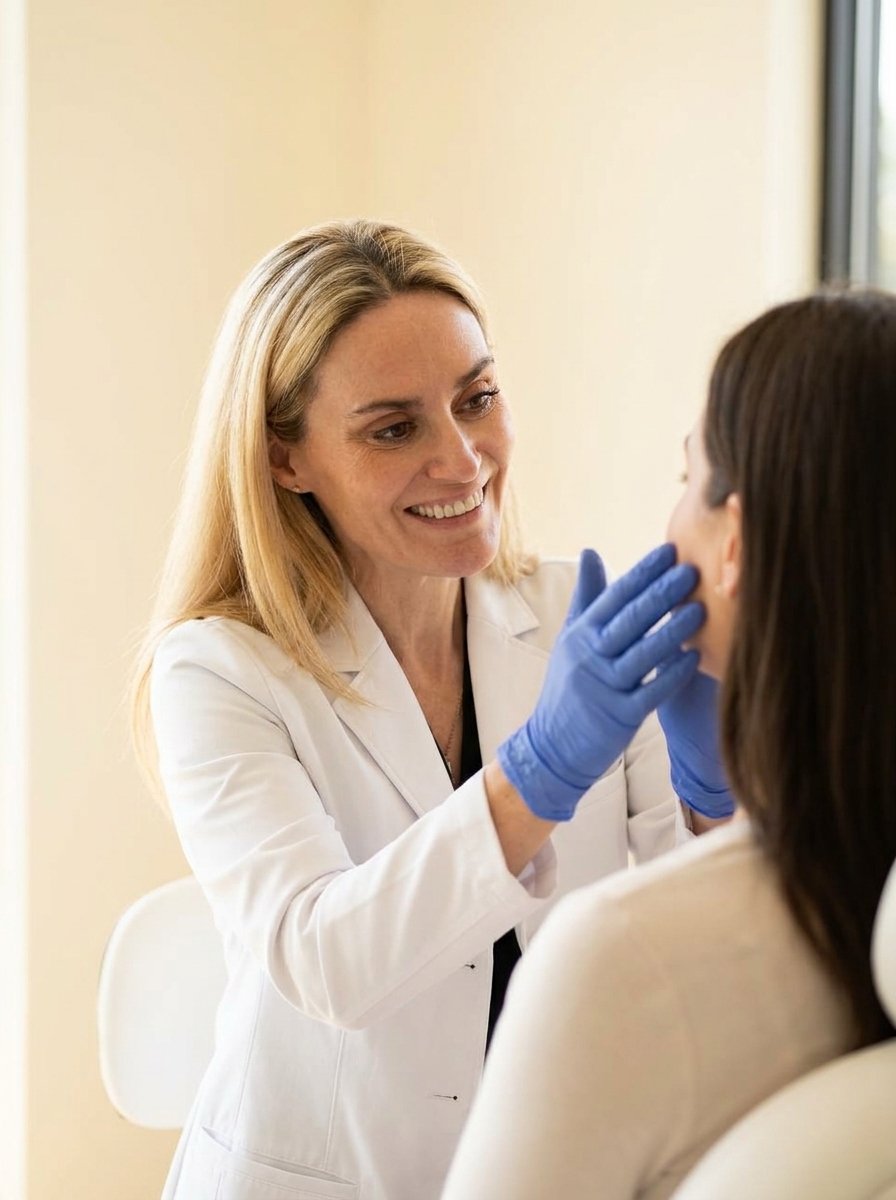
Unlike surgical options such as fat grafting or autologous fat injections, cheek filler requires no incisions and no general anesthesia. HA fillers can be dissolved with hyaluronidase (an enzyme that breaks down hyaluronic acid) if needed — a safety advantage that surgical cheek augmentation does not offer. This reversibility matters. It is one of the most requested dermal fillers at Desert Bloom treatments, and it is one of the few cosmetic procedures where the injector can course-correct if results are not what the patient expected. Beyond volume, restoring midface fullness can also improve skin texture and create more youthful contours across the cheek areas.
Types of Cheek Fillers
The right type of filler depends on your anatomy, aesthetic goals, and the treatment plan developed during your initial consultation. Here is how the most common options compare.
| Product | Type | Duration | Best For |
|---|---|---|---|
| Restylane Lyft | Hyaluronic acid filler (FDA-approved for midface) | 12–18 months | Deep midface volume, cheekbone lift |
| Restylane Contour | Hyaluronic acid filler | 12–18 months | Cheek contour and definition |
| Radiesse | Calcium hydroxylapatite (CaHA) biostimulator | 12–18+ months | Structural volume + collagen biostimulation; not reversible |
| Sculptra | Poly-L-lactic acid (PLLA) biostimulator | Gradual, over multiple sessions | Collagen stimulation, broad volume restoration |
Restylane Lyft and Restylane Contour are the products most frequently chosen at our practice — selected for their structural properties and natural-looking results in the cheeks. For patients who want structural volume combined with collagen biostimulation, Radiesse (calcium hydroxylapatite) is a non-HA option Dr. Borakowski uses in appropriate cases, particularly for sculpting and volumizing applications. For patients who want gradual rebuilding rather than immediate volume, Sculptra uses poly-L-lactic acid to stimulate collagen production over time.
Dr. Borakowski discusses filler options — including which HA fillers versus non-HA products are appropriate for your goals — during consultation.
Cheek fillers are often combined with jawline filler, chin filler, or temple filler as part of broader facial sculpting — addressing the midface alone sometimes shifts attention to adjacent areas that also need support.
Who Is a Good Candidate for Cheek Filler?
You may be a right candidate for cheek fillers if you have:
- Lost cheek volume from aging, weight loss, or medications (sometimes called “Ozempic face”)
- A flat midface or barely visible cheekbones you want more defined
- Deepening nasolabial folds or fine lines around the mouth
- Facial asymmetry you would like to improve
- Mild-to-moderate volume loss with healthy skin
- Realistic expectations about what filler can achieve
Severe skin laxity: significant sagging may require a surgical procedure rather than filler
Active infection at or near the injection site
Blood thinners or fish oil use — pause OTC blood-thinning products (fish oil, aspirin) at least 3 days before treatment; for prescription blood thinners, get clearance from the prescribing doctor and schedule accordingly
Unrealistic expectations: filler adds volume but does not replace a surgical lift
Pregnancy or breastfeeding
Known allergy to hyaluronic acid fillers or filler components
Chronic health conditions that affect healing — discussed during your consultation
Before Your Appointment
If your concern is broader than the cheeks alone, involving the jawline, temples, or overall proportions — aesthetic facial balancing may be a better starting point. Honest candidacy assessment is part of what we do. Not every patient needs cheek filler, and we will tell you.
Vascular occlusion — where filler inadvertently enters a blood vessel — is a rare but serious risk. The facial artery and infraorbital vessels run through the midface treatment zone, which is why Dr. Borakowski’s advanced anatomical training matters. Risk increases significantly with less experienced practitioners, which is why provider selection matters more than price.
The Cheek Filler Procedure — What to Expect
Getting cheek filler is a quick procedure, typically completed in approximately 45 minutes. Here is what happens at each step.
Dr. Borakowski evaluates your facial anatomy and bone structure, discusses your goals, and creates an individualized treatment plan.
Extra-strength topical numbing cream is applied 30 minutes before injection, and the face is cleaned and sterilized.
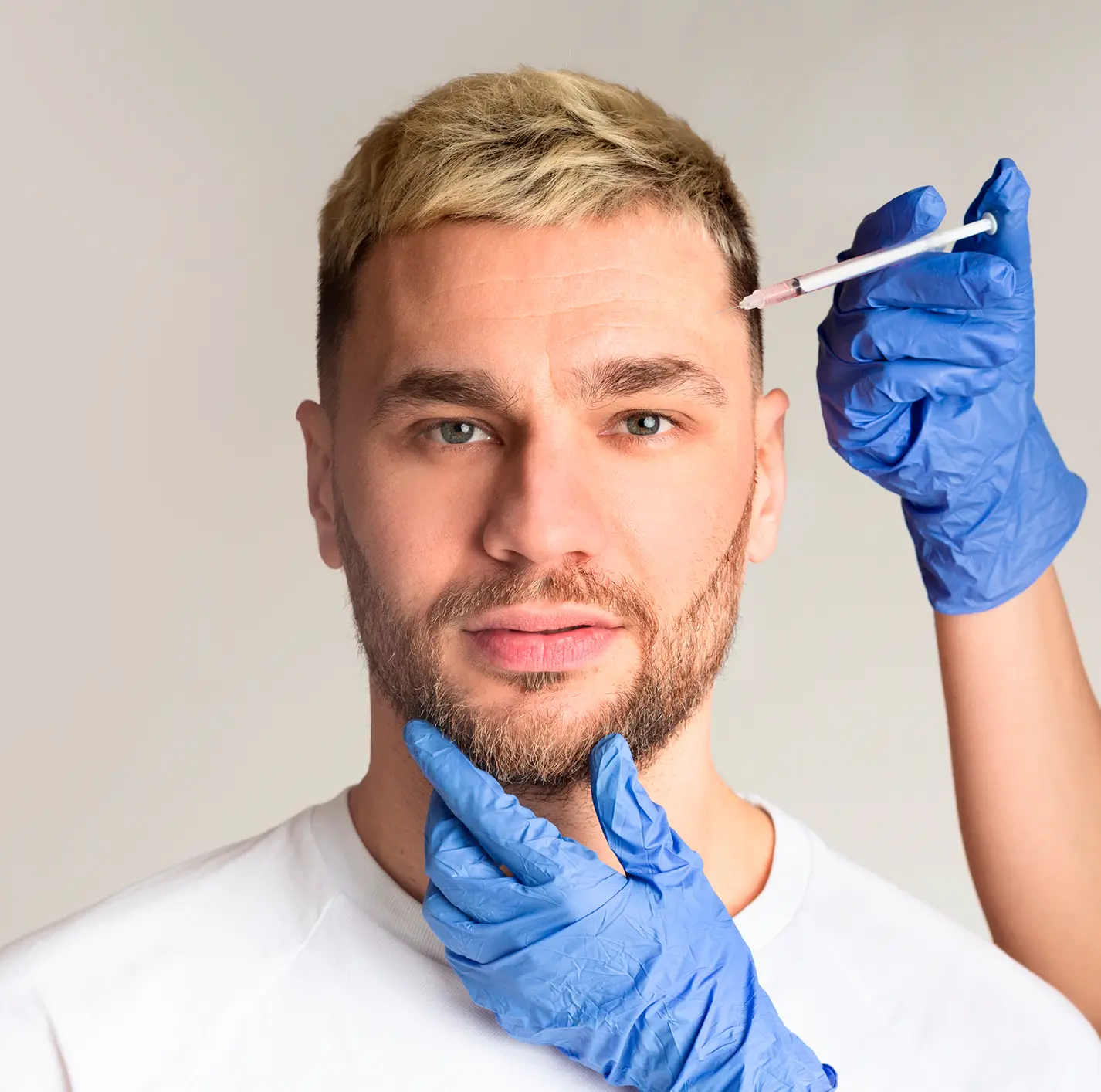
Filler is placed into targeted cheek areas using the technique best suited to the patient’s anatomy — with attention to depth, placement, and the skin layer most appropriate for the product being used. Takes approximately 45 minutes.
Results begin to appear immediately. Dr. Borakowski assesses symmetry and contour from multiple angles before you leave.
Avoid strenuous exercise for 24–48 hours. Do not touch the injection site unless directed. Avoid sleeping face-down for the first night.
Unlike board-certified plastic surgeons performing surgical cheek augmentation, this is an in-office procedure with minimal downtime compared with surgery — one reason cheek fillers have become one of the most popular non-surgical cosmetic procedures for midface volume restoration.
Cheek Filler Recovery and Results
One of the reasons patients choose cheek fillers over surgical alternatives is the smooth recovery. Here is what to expect in the days and weeks following treatment.
Minor swelling and possible bruising at the injection site. Some tenderness is normal. Avoid strenuous exercise for 24–48 hours and blood thinners during this period.
Swelling subsides significantly. Most patients resume all normal activity. Any bruising typically fades during this window.
Filler settles into final position. You will see results refine over one to two weeks as residual swelling resolves. This is when the true outcome becomes clear.
How long does cheek filler last? Duration depends on the product. Restylane Lyft and Restylane Contour typically last 12 to 18 months. Some patients find results last longer than standard published ranges — though duration varies by product, anatomy, metabolism, and placement. Individual results vary. Touch-ups help maintain long-lasting results — many patients find consistent maintenance means fewer syringes over time.
View cheek filler before and after results from Desert Bloom patients.
Recovery time for cheek fillers is minimal compared to surgical procedures like fat grafting. Most patients describe a smooth recovery with results close to what was discussed during consultation — though individual outcomes vary and some patients benefit from a follow-up to refine symmetry.
Cheek Filler Cost in Scottsdale
Cheek filler cost depends on several factors: the type of filler selected, the number of syringes needed, and whether the treatment plan includes other areas of the face. Most patients need one to two syringes per session, though actual cost and syringe count vary with the degree of volume loss and individual anatomy.
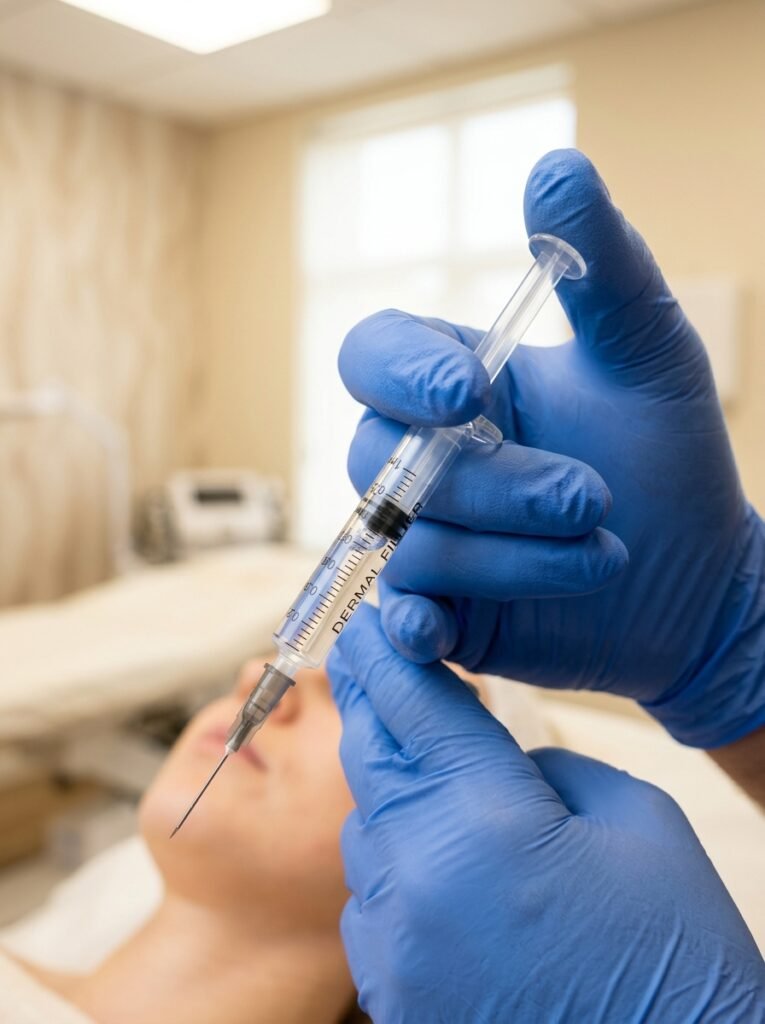
Cheek fillers at Desert Bloom are $600 to $720 per syringe, depending on the product selected. Other factors that affect total cost include whether multiple sessions are recommended and whether cheek filler is combined with lip augmentation or other filler injections. If you are considering combining procedures — for example, pairing cheek fillers with tear trough filler or jawline filler — a personalized estimate from a qualified healthcare provider will give you the most accurate picture.
Visit our cheek filler pricing page for current rates, or schedule a free consultation for a personalized estimate.
Restoring midface volume alongside jawline definition creates balanced lower-face proportions and a more cohesive profile.
Learn more →Combining cheek volume with chin projection improves overall facial harmony — especially in patients with a recessed chin or flat midface.
Learn more →Addressing both the midface and temples restores fullness across the upper and middle face for a more youthful frame.
Learn more →Why Choose Desert Bloom for Cheek Filler
Dr. Natalya Borakowski, NMD brings 17 years of experience and naturopathic physician training to every cheek filler procedure. That background means she evaluates the whole patient — skin quality, facial proportions, health history — not just the area requesting treatment.
This is not a one-size-fits-all practice. Dr. Borakowski’s philosophy is to build results gradually — adding volume in stages so patients can observe how their face responds, rather than over-correcting in a single session. Every cheek filler treatment starts with an honest assessment of whether filler is the right approach. Some patients benefit more from aesthetic facial balancing, and Dr. Borakowski will recommend that path if it better serves your goals. This is clinical aesthetics — natural-looking results grounded in actual patient assessment, not a volume-driven menu.
The difference: an aesthetic eye trained by years of studying facial proportion — combined with a willingness to say “not yet” or “not this” when the situation calls for it. If filler is not the right solution, she will tell you. A good consultation does not always end with a procedure.
Prefer to read more about how HA fillers work — or explore dermal filler removal if you have existing filler and want to discuss options? Both are straightforward conversations here.
“We use an individualized approach to any cheek filler treatment. Some patients might benefit from filler, and others might need to address their skin quality first.”
Frequently asked questions
What does cheek filler do?
Cheek filler adds volume to the midface, defines cheekbones, and softens nasolabial folds and fine lines around the cheek area. Results begin to appear immediately and refine over one to two weeks as swelling resolves. Results are not guaranteed — individual anatomy and the degree of volume loss determine the outcome.How long does cheek filler last?
Restylane Lyft and Restylane Contour typically last 12 to 18 months. Some patients find results last longer depending on metabolism and how the face responds over time. Frequent touch-ups help maintain results; many patients find maintenance becomes more efficient as they learn how their face responds.Is cheek filler painful?
Most patients describe mild pressure, not pain. Extra-strength topical numbing cream is applied 30 minutes before injection, and many HA fillers contain lidocaine for additional comfort during the procedure.How much does cheek filler cost?
Cheek fillers at Desert Bloom are $600 to $720 per syringe, depending on the product. Most patients need one to two syringes per session, though actual cost depends on your anatomy and goals. Visit our price list or schedule a complimentary consultation for personalized pricing.What is the best filler for cheeks?
At Desert Bloom, Dr. Borakowski primarily uses Restylane Lyft and Restylane Contour for cheek augmentation — both FDA-approved hyaluronic acid fillers designed for midface volume restoration. For patients with sculpting or biostimulation goals, Radiesse may also be an option. The best type of filler for you is determined during consultation.Can cheek filler fix hollow cheeks?
In many cases, yes. Hyaluronic acid fillers can help restore volume to hollow or sunken cheeks caused by aging, weight loss, or genetics. The degree of improvement depends on the extent of volume loss and individual anatomy. A consultation is the best way to assess whether fillers are the right approach for your specific presentation.What are the side effects of cheek filler?
Common side effects include minor swelling, bruising, and tenderness at the injection site — typically resolving within a few days. Serious complications such as vascular occlusion are rare when injections are performed by a qualified healthcare provider with advanced anatomical training. Allergic reaction to filler components is uncommon but possible, and should be discussed before treatment.Can cheek filler improve facial asymmetry?
Cheek filler can improve symmetry by adding targeted volume to specific cheek areas. Dr. Borakowski evaluates facial proportions and bone structure during consultation to determine whether fillers can meaningfully address your asymmetry.What is the difference between HA and non-HA cheek fillers?
Hyaluronic acid fillers (Restylane Lyft, Restylane Contour) are reversible — they can be dissolved with hyaluronidase enzyme if needed. Non-HA options like Radiesse (calcium hydroxylapatite) and Sculptra (poly-L-lactic acid) are not dissolvable and work by stimulating collagen over time. The trade-off is longevity vs. reversibility — Dr. Borakowski discusses both categories during consultation.Book Your Cheek Filler Consultation
Schedule a complimentary consultation to discuss your cheek filler goals with Dr. Borakowski. Every treatment plan begins with an honest assessment of your facial anatomy and what will work best for you.
Desert Bloom Skincare
10752 N 89th Place, Suite 122, Scottsdale, AZ 85260
(480) 567-8180
References
- “Dermal fillers in aesthetics: an overview of adverse events and treatment approaches.” Clinical, Cosmetic and Investigational Dermatology. 2013. DOI
- “Volumizing hyaluronic acid filler for midface volume deficit: 2-year results from a pivotal single-blind randomized controlled study.” Dermatologic Surgery. 2013. DOI
- “Practical approach and safety of hyaluronic acid fillers.” Plastic and Reconstructive Surgery Global Open. 2019. DOI
- “Injectable filler techniques for facial rejuvenation, volumization, and augmentation.” Facial Plastic Surgery Clinics of North America. 2015. DOI
Individual results vary. Cheek filler treatments are medical procedures that should be performed by a qualified healthcare provider. The information on this page is for educational purposes and does not constitute medical advice. Restylane Lyft is FDA-approved for midface volume correction. Schedule a consultation to discuss whether cheek filler is appropriate for your needs.
Content reviewed by Dr. Natalya Borakowski, NMD. Last updated April 2026.
Cheek Filler price
- Cheek Filler$600–720 per syringe~45 min
Consultation in skin care clinic
Desert Bloom Skincare Center offers personalized skincare consultation to help you achieve a flawless and radiant complexion. Book your appointment today and let our expert team of skincare professionals address your specific concerns and help you reach your skincare goals.
Similar treatments
Visit Our Scottsdale Aesthetic Center
Address
10752 N 89th Place, Suite 122,Scottsdale, AZ 85260.
Phone:(480) 567-8180
E-mail:info@desertbloomskincare.com
Get Directions →Location & Directions
Desert Bloom Skincare is conveniently located in the Shea Corridor of North Scottsdale, within Edwards Professional Park I — minutes from HonorHealth Scottsdale Shea Medical Center and the Mayo Clinic Scottsdale Campus.
Areas We Serve
We proudly provide expert non-surgical rhinoplasty and PDO thread lifts to patients across the Southwest:
- ScottsdaleNorth Scottsdale · McCormick Ranch · Gainey Ranch
- Paradise Valley
- PhoenixArcadia · Biltmore · North Phoenix
- Fountain Hills
- Cave Creek & Carefree