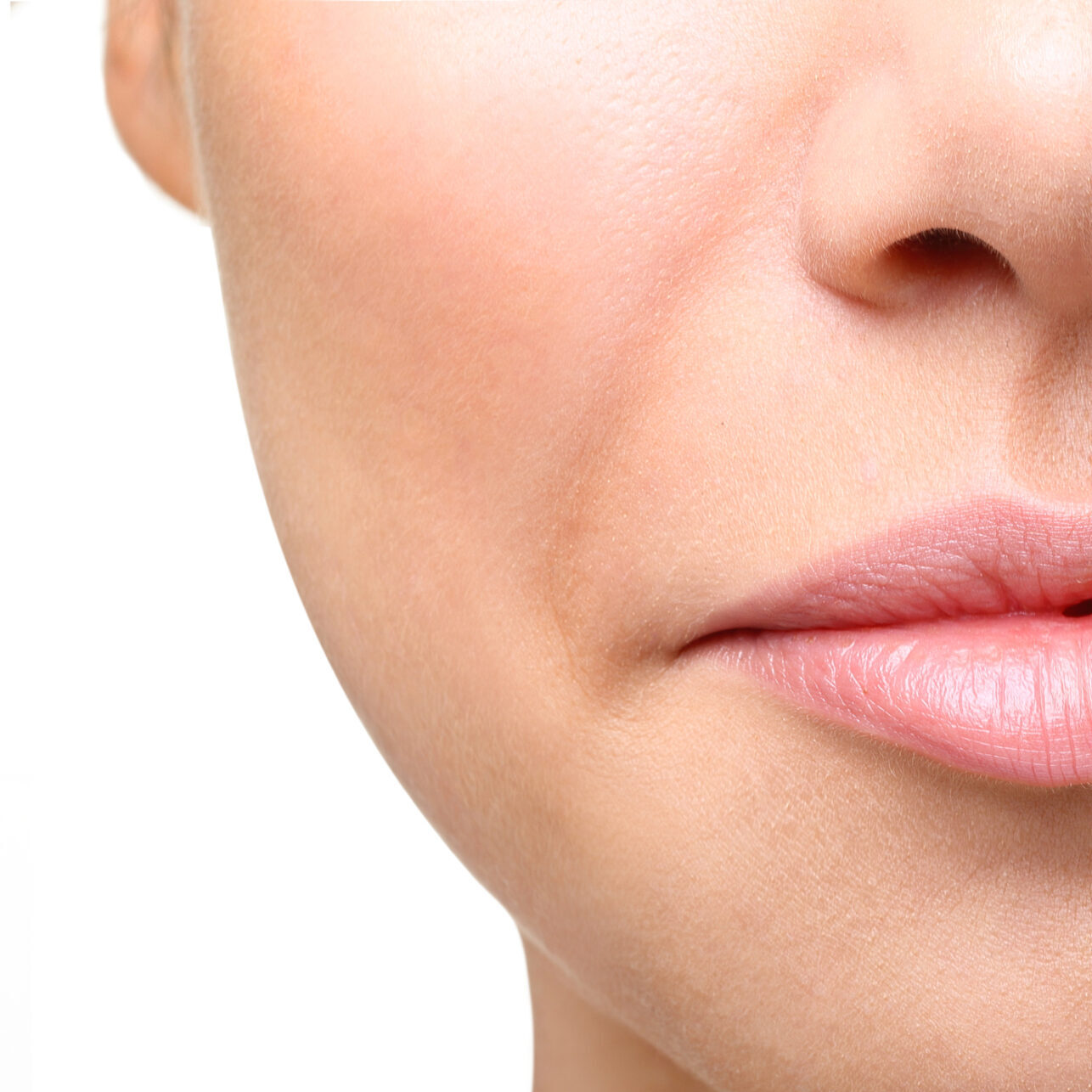
Deep lines from nose to mouth — the non-surgical paths that soften them.
Nasolabial folds — the creases that run from each side of the nose down to the corners of the mouth — are one of the earliest signs patients notice in the mirror. You might call them smile lines or laugh lines, but in most adults they are not driven by expression alone. They are the visible meeting point of three structural processes: mid-face volume loss, collagen and elastin decline in the dermis, and downward migration of the cheek fat pads as the face loses its support scaffold.
Dr. Natalya Borakowski, NMD treats nasolabial folds the way she treats every structural concern at Desert Bloom: identify which driver — or combination of drivers — is dominant, then choose the modality that addresses the actual mechanism. Filling the line directly works for a shallow, isolated fold. Deeper folds with significant mid-face descent need a strategy that restores the structure above the crease, not just the crease itself.
See also: Volume Loss — the most common underlying driver. And Aesthetic Facial Balancing for multi-driver mid-face plans.
At a Glance
- Scope
- Five non-surgical routes address nasolabial folds depending on the driver: Cheek Filler for mid-face volume loss above the crease, Radiesse for moderate folds with biostimulation, Sculptra for diffuse mid-face deflation, PDO Thread Lift for tissue descent, and Aesthetic Facial Balancing for multi-driver plans.
- Investment
- Single-syringe treatments start at $650; biostimulator and combination plans typically $1,200–$3,500 across one or several sessions.
- Provider & candidacy
- Dr. Borakowski treats nasolabial folds across all Fitzpatrick types. Best candidates have visible folds with identifiable anatomical drivers — volume loss, laxity, or descent — and want to avoid surgery.
- Downtime
- Filler / biostimulator: 24–48 hrs mild swelling or bruising. PDO threads: 3–5 days tenderness. Most patients return to normal activity the same or next day.
- Best first step
- Complimentary 30-minute consultation — Dr. Borakowski maps the dominant drivers (volume vs. laxity vs. descent) before any treatment is booked.
WHY IT HAPPENS
What Causes Nasolabial Folds? The Three Drivers
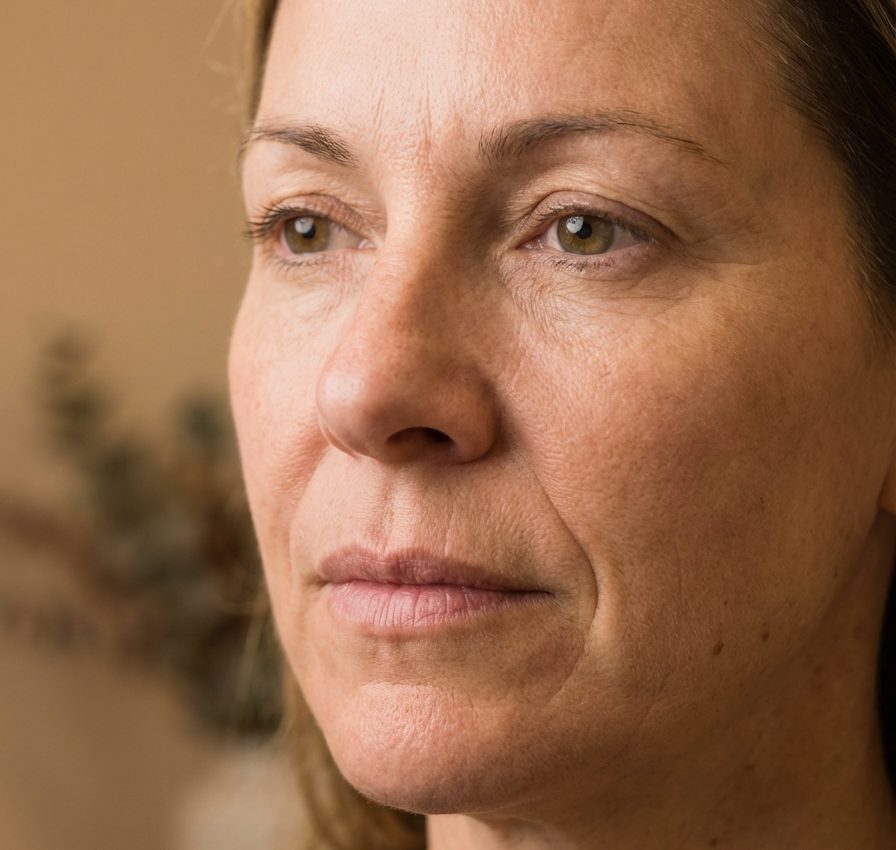
Nasolabial folds are rarely a single-factor problem. Most adults present with two overlapping drivers — which is why simply "filling the line" produces uneven results. Mapping the dominant cause shapes every recommendation that follows.
The Three Drivers of Nasolabial Folds
Each driver responds to a different mechanism. Identifying which one is dominant at your consultation is what separates a natural correction from an over-filled look.
- 01
Mid-Face Volume Loss
The malar (cheek) and deep mid-face fat pads deflate beginning in the mid-30s. As the volume above the fold disappears, the cheek loses its forward projection and the nasolabial crease deepens by contrast. Restoring volume in the cheek apex — not the fold itself — is often the most natural correction for early-to-moderate folds.
- 02
Skin Quality & Collagen Loss
Collagen production peaks in the mid-20s and declines about 1% per year. As collagen and elastin slow and breakdown accelerates — amplified by UV exposure and smoking — the skin loses tensile strength across the entire mid-face. Biostimulators like Radiesse and Sculptra address the underlying tissue deficit rather than just the visible crease.
- 03
Mid-Face Tissue Descent
The SMAS layer and overlying soft tissue lose elasticity and migrate inferiorly. As the cheek pads slide down toward the nasolabial fold, they pile against the crease and deepen it from above. When descent is the dominant driver, adding filler directly to the fold makes the lower face look heavier — mechanical repositioning is the correct answer.
TREATMENT PATHS
Non-Surgical Nasolabial Fold Treatments at Desert Bloom
Five treatment modalities address the different mechanisms driving nasolabial folds. Each targets a distinct layer or process — volume restoration above the fold, biostimulation across the mid-face, mechanical lift of descended tissue, or coordinated multi-driver correction. The right starting point depends on your dominant driver and how long you want results to hold.

VOLUME ABOVE THE FOLD
Cheek Filler
Hyaluronic acid filler placed in the malar (cheek) apex restores the forward projection that disappears with mid-face deflation. By lifting the cheek scaffold, the nasolabial fold softens by anatomical relationship — without direct injection into the crease itself. The result reads as a more youthful mid-face, not a filled line. Often the strongest first move for early-to-moderate folds. Results 12–18 months.

BIOSTIMULATION
Radiesse
Calcium hydroxylapatite delivers immediate volume correction like a traditional filler, but also stimulates your own collagen production over 12–18 months. The right fit when the fold is moderately deep and the patient wants longer-lasting correction without committing to a multi-year permanent product. Dr. Borakowski often uses Radiesse in the lateral cheek and deep mid-face — not the fold line itself.
DIFFUSE MID-FACE DEFLATION
Sculptra
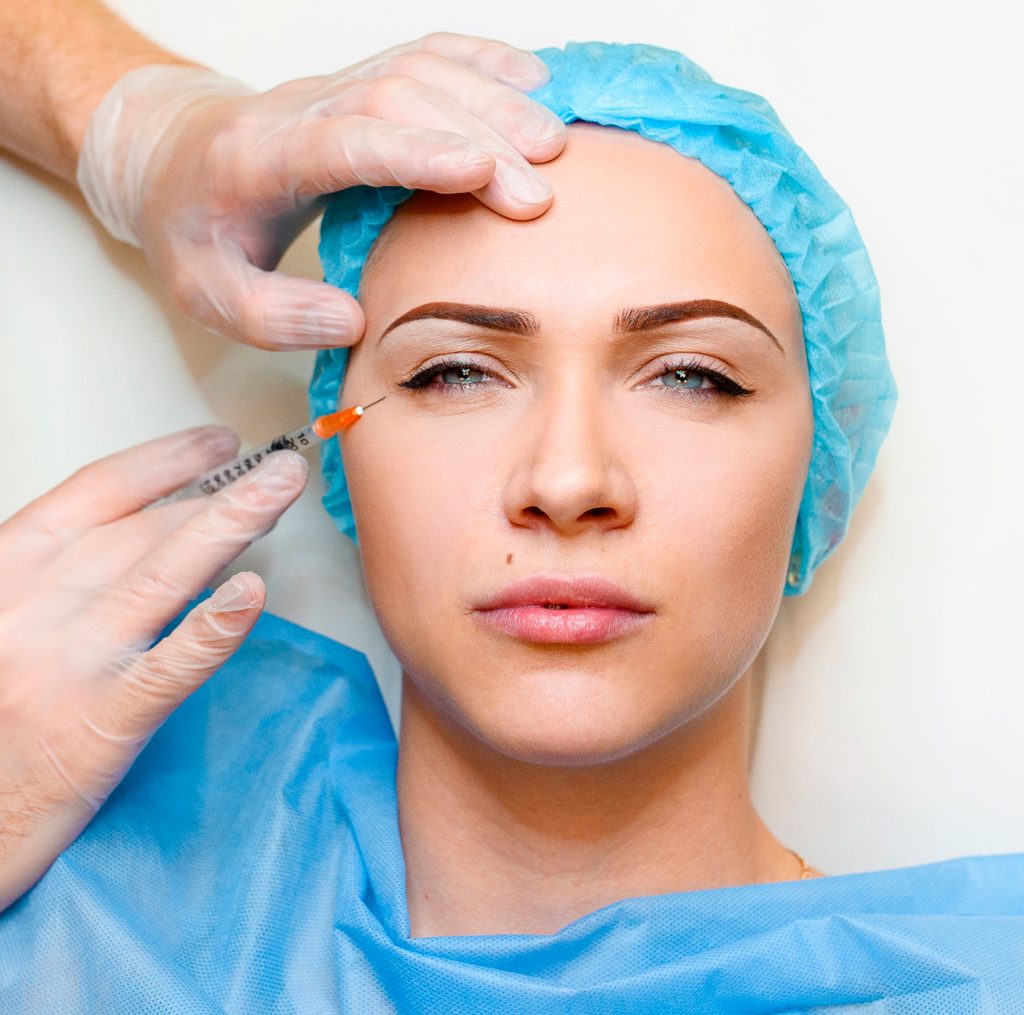
Poly-L-lactic acid gradually rebuilds collagen across the entire mid-face over a series of sessions. The right choice when the nasolabial fold is a symptom of broader facial deflation, not an isolated crease. Results develop over months and last 2+ years — the modality of choice when the goal is structural restoration rather than line correction. Typically 2–3 sessions spaced 4–6 weeks apart.
TISSUE REPOSITIONING
PDO Thread Lift
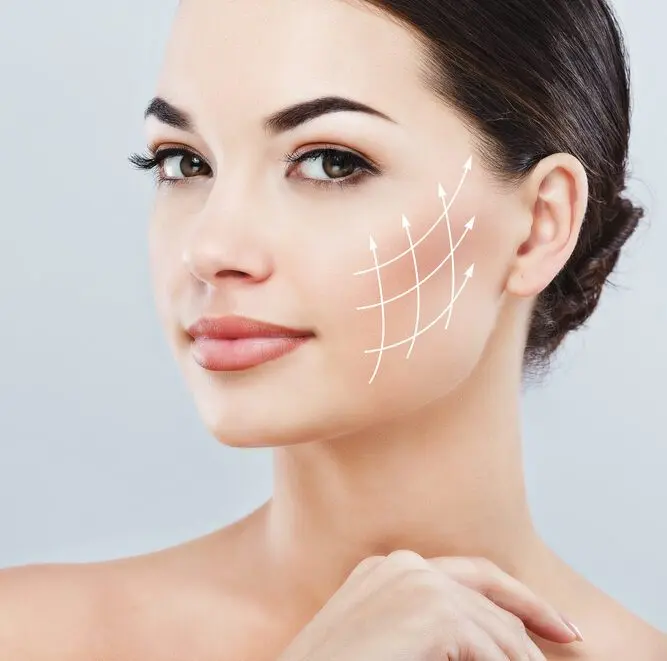
Dissolvable polydioxanone threads physically re-anchor descended mid-face tissue. When the fold is driven by laxity rather than volume — and adding filler would make the lower face look heavy — threads address the mechanical cause that filler cannot replicate. As threads dissolve over 4–6 months, they stimulate collagen along the placement path. Results 12–18 months. Minimal downtime — 3–5 days of mild tenderness.
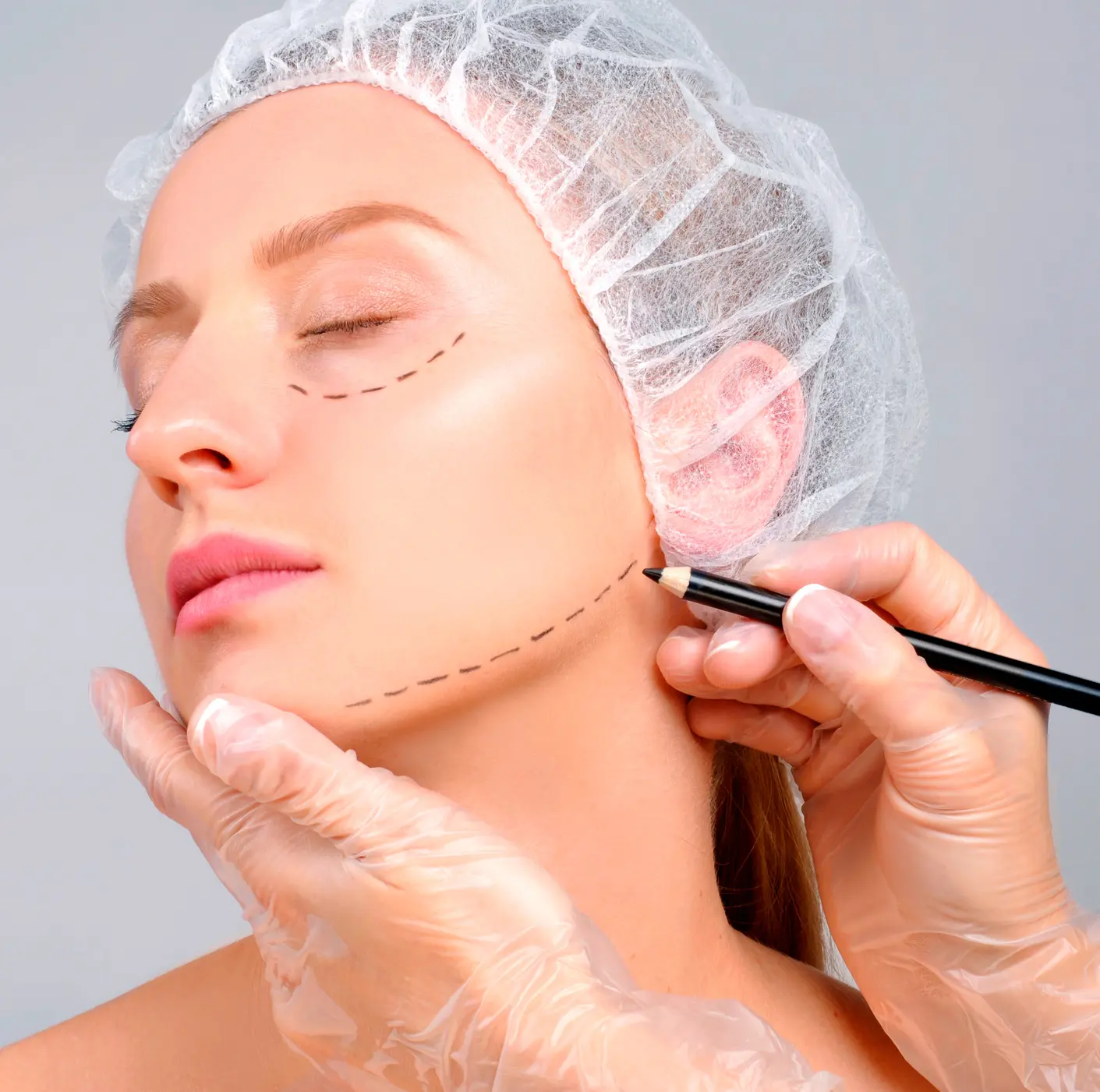
MULTI-DRIVER PLAN
Aesthetic Facial Balancing
When the nasolabial fold is one of several concerns — co-presenting with volume loss elsewhere, jawline softening, or asymmetry — Aesthetic Facial Balancing coordinates multiple modalities in a single planned session. Dr. Borakowski combines filler, biostimulator, and threads strategically so the whole face reads in balance, not as a series of corrected zones.
Most nasolabial fold plans combine two routes — for example, cheek filler to restore mid-face projection plus targeted biostimulator to support skin quality over time. Related concerns that often co-present: Volume Loss, Jowling, and Marionette Lines. For patients who prefer an all-natural approach, PRP Biofiller may complement biostimulation as part of a longer-horizon plan.
DECIDE YOUR ROUTE
How Deep Is Your Fold?
Mild creases, moderate folds, and deep structural folds each have a different entry point.
My folds are just starting to show — barely visible at rest.
→Start with Cheek Filler — Cheek volume restoration above the fold prevents deepening and preserves natural mid-face.
ModerateMy folds are clearly visible even when my face is relaxed.
→Cheek Filler + Radiesse — Combine volume above the fold with biostimulation across the mid-face for durable results.
DeepDeep folds, visible mid-face descent, or significant volume loss across the face.
→Plan Facial Balancing — Multi-modality plan addressing volume, biostimulation, and tissue repositioning together.
Compare Nasolabial Fold Treatment Categories
| Feature | HA Filler (Cheek) | Biostimulator (Radiesse / Sculptra) | PDO Thread Lift |
|---|---|---|---|
| Best for | Mid-face volume loss above the fold; early-to-moderate folds | Moderate folds with skin-quality decline; longer-horizon correction | SMAS and mid-face descent driving the fold from above |
| Mechanism | Restores cheek scaffold; softens fold by anatomical relationship | Stimulates new collagen production over 12–24 months | Mechanical repositioning of descended tissue plus collagen stimulation |
| Onset | Immediate — final shape settles 1–2 weeks | Radiesse immediate + builds 3–6 mo; Sculptra builds 3–6 mo | Immediate lift + collagen support over 4–6 months |
| Duration | 12–18 months | Radiesse 12–18 mo; Sculptra 2+ years | 12–18 months structural; collagen support ongoing |
| Downtime | 24–48 hrs mild swelling / bruising | 24–48 hrs mild swelling | 3–5 days mild tenderness |
| Sessions | 1 (touch-up 12–18 mo) | Radiesse 1–2; Sculptra 2–3 spaced 4–6 weeks | 1 (touch-up at 6–9 mo optional) |
HA Filler (Cheek)
- Best for
- Mid-face volume loss above the fold; early-to-moderate folds
- Mechanism
- Restores cheek scaffold; softens fold by anatomical relationship
- Onset
- Immediate — final shape settles 1–2 weeks
- Duration
- 12–18 months
- Downtime
- 24–48 hrs mild swelling / bruising
- Sessions
- 1 (touch-up 12–18 mo)
Biostimulator (Radiesse / Sculptra)
- Best for
- Moderate folds with skin-quality decline; longer-horizon correction
- Mechanism
- Stimulates new collagen production over 12–24 months
- Onset
- Radiesse immediate + builds 3–6 mo; Sculptra builds 3–6 mo
- Duration
- Radiesse 12–18 mo; Sculptra 2+ years
- Downtime
- 24–48 hrs mild swelling
- Sessions
- Radiesse 1–2; Sculptra 2–3 spaced 4–6 weeks
PDO Thread Lift
- Best for
- SMAS and mid-face descent driving the fold from above
- Mechanism
- Mechanical repositioning of descended tissue plus collagen stimulation
- Onset
- Immediate lift + collagen support over 4–6 months
- Duration
- 12–18 months structural; collagen support ongoing
- Downtime
- 3–5 days mild tenderness
- Sessions
- 1 (touch-up at 6–9 mo optional)
Common Questions About Nasolabial Fold Treatment
What actually causes nasolabial folds — is it just aging?
Should I get filler injected directly into the fold?
How long do nasolabial fold treatments last?
Are nasolabial fold treatments safe for darker skin tones?
What is the difference between Radiesse and Sculptra for nasolabial folds?
Can PDO threads alone fix deep nasolabial folds?
Can losing weight worsen nasolabial folds?
When is non-surgical not enough?
“When I see a nasolabial fold, the first question I ask is what is creating it — is it volume loss above the line, descent from above, or skin quality across the mid-face? The right treatment answers that question. Filling the line itself is sometimes the answer, but it is rarely the whole answer.”

Medically reviewed by
Founder, Desert Bloom Skincare · 17 Years Experience
References
- 1.
Rohrich RJ, Pessa JE. The fat compartments of the face: anatomy and clinical implications for cosmetic surgery. Plast Reconstr Surg; 2007;119(7):2219-2227.
DOI: 10.1097/01.prs.0000265403.66886.54
Foundational anatomy paper on the discrete facial fat compartments — underpins the mid-face volume-loss rationale for cheek-first nasolabial fold correction.
- 2.
Shaw RB Jr, Katzel EB, Koltz PF, et al.. Aging of the Facial Skeleton: Aesthetic Implications and Rejuvenation Strategies. Plastic and Reconstructive Surgery; 2011;127(1):374-383.
DOI: 10.1097/PRS.0b013e3181f95b2d
Maxillary bone resorption and its contribution to mid-face soft-tissue collapse and nasolabial fold deepening.
- 3.
Funt D, Pavicic T. Dermal fillers in aesthetics: an overview of adverse events and treatment approaches. Clin Cosmet Investig Dermatol; 2013;6:295-316.
DOI: 10.2147/CCID.S50546
Trusted anchor reference for HA dermal filler safety and adverse-event profile in mid-face structural correction.
- 4.
Sundaram H, Cassuto D. Biophysical Characteristics of Hyaluronic Acid Soft-Tissue Fillers and Their Relevance to Aesthetic Applications. Plast Reconstr Surg; 2013;132(4 Suppl 2):5S-21S.
DOI: 10.1097/PRS.0b013e31829d1d40
Rheology and tissue-integration data for Restylane and RHA filler families — supports cheek-apex placement for nasolabial fold softening.
- 5.
Beleznay K, Carruthers JD, Humphrey S, Jones D. Avoiding and Treating Blindness From Fillers: A Review of the World Literature. Dermatol Surg; 2015;41(10):1097-1117.
DOI: 10.1097/DSS.0000000000000486
Vascular safety reference for filler placement in the mid-face and nasolabial region — anchors patient-safety rationale.