PDO Thread Lifts help you Say Goodbye to Marionette Lines

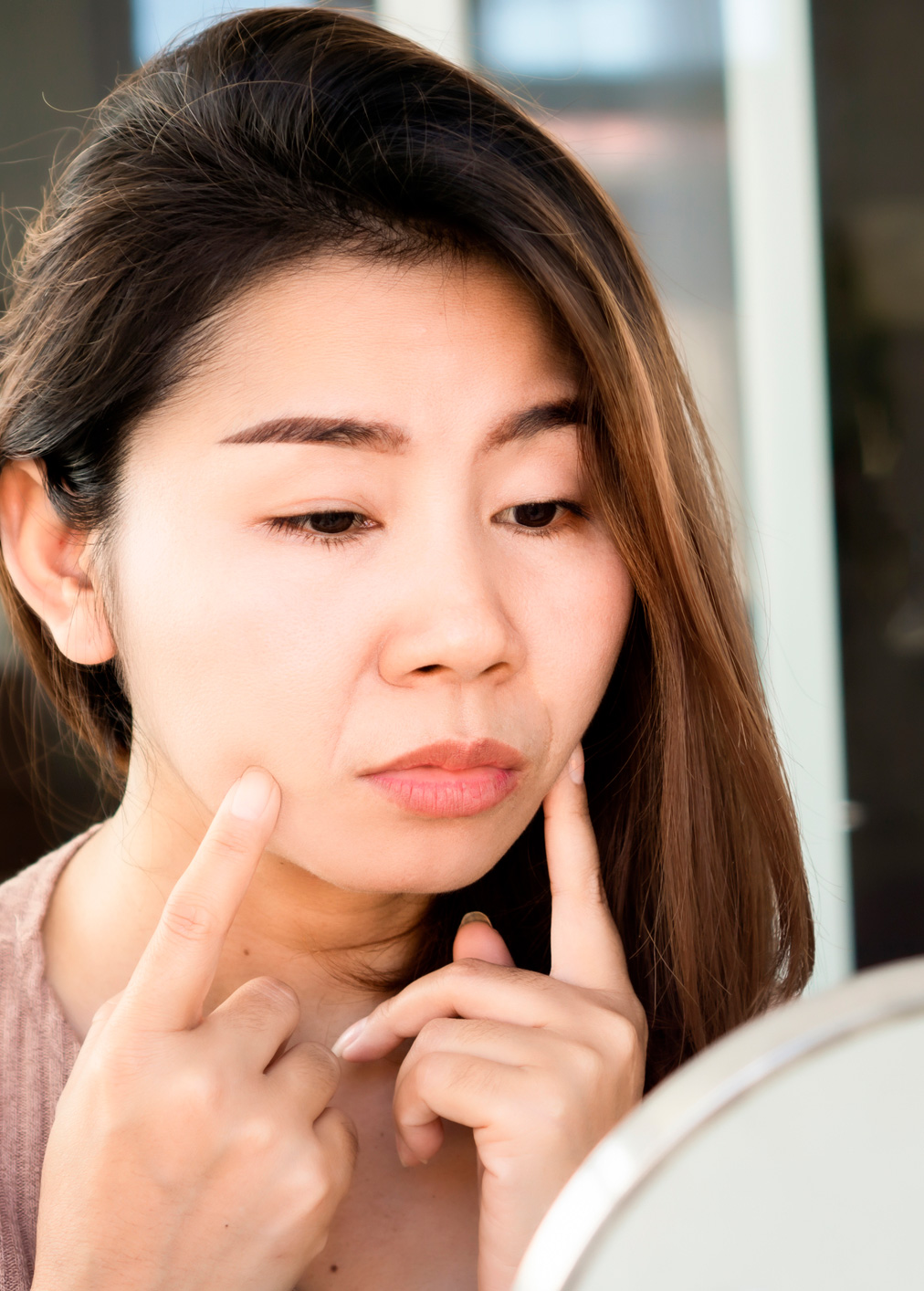
PDO thread lifts can help you combat marionette lines and achieve a more youthful appearance. Our blog will guide you in selecting the ideal treatment for your specific needs. We'll also discuss the advantages, drawbacks, and pricing of PDO thread lifts.
Understanding Marionette Lines
Marionette lines — the vertical creases that run from the corners of the mouth toward the chin — are a structural shift that often becomes noticeable in the lower face as soft tissue descends and skin elasticity changes. PDO thread lifts offer a minimally invasive alternative to surgery for the right candidate: lifting and repositioning the soft tissue, stimulating collagen, and producing natural-looking results without scars or significant downtime.
PDO Threads for Marionette Lines at a Glance
- What It Is
- A non-surgical lift using PDO threads to soften marionette lines (the lines from mouth corners to chin) by repositioning soft tissue and stimulating collagen
- Best For
- Mild to moderate marionette lines, early jowling, patients who want minimal downtime and natural-looking refresh
- Results Last
- 12–18 months — biostimulatory collagen response continues after threads dissolve
- At Desert Bloom
- Smooth threads from $480, barbed PDO threads from $2,500
- Related Reads
- PDO Thread Lift · Dermal Fillers · Jowling · Thread Lift Gone Wrong
Can PDO Threads Help with Marionette Lines?
Yes — for the right candidate. The candidacy gate matters: PDO threads work best on mild to moderate marionette lines paired with early to moderate jowling. Patients with very deep static creases, advanced laxity, or thin tissue overlying bone often need a different approach (filler, surgical referral, or combination plan). Honest candidacy assessment is the difference between a refresh and a disappointing outcome.
How the Procedure Works
The procedure takes 30 to 60 minutes under local anesthetic. Threads are inserted with a fine cannula (a dull, hollow needle) at planned vector points along the lower face. Once placed, the threads are gently engaged to lift the descended tissue and reposition the soft-tissue plane. Over the following months, the body absorbs the threads while the collagen response continues — supporting the lift well beyond the initial mechanical effect.
PDO is a biocompatible suture material with decades of use in surgical settings (cardiovascular, gynecological), so the safety profile is well established when the procedure is performed by a qualified injector. For patients seeking a longer collagen-stimulation window, PLLA (poly-L-lactic acid) threads are also an option for marionette lines — dissolving more slowly and extending the biostimulatory effect over a longer period. Thread material is selected at consultation based on your tissue quality and goals. Our complete guide on what PDO thread complications look like and how to handle them is at Thread Lift Gone Wrong.
Recovery and Aftercare
Day of Procedure
Thread Placement
Performed under local anesthesia in a single visit. Mild pressure or pulling sensation during placement is normal. Patients leave the clinic the same day.
Days 1–3
Immediate Recovery
Mild swelling and tenderness around insertion points. Apply cold compresses, avoid strenuous activity, and avoid exaggerated facial expressions for the first 48 hours.
Week 1
Initial Settling
Most swelling resolves. Tightness and pulling sensations are normal as tissue accommodates the threads.
Weeks 2–6
Tissue Integration
Threads integrate with surrounding tissue. Initial mechanical lift is visible and refining. Resume normal exercise routines after week 2.
Months 3–6
Collagen Response
Biostimulation phase. New collagen forms gradually, improving skin firmness and the contour around these creases.
Months 12–18
Maintenance
Final outcome stabilized for 12–18 months. Reassessment recommended around the 12-month mark to plan maintenance treatments.
Other Procedures for Marionette Lines
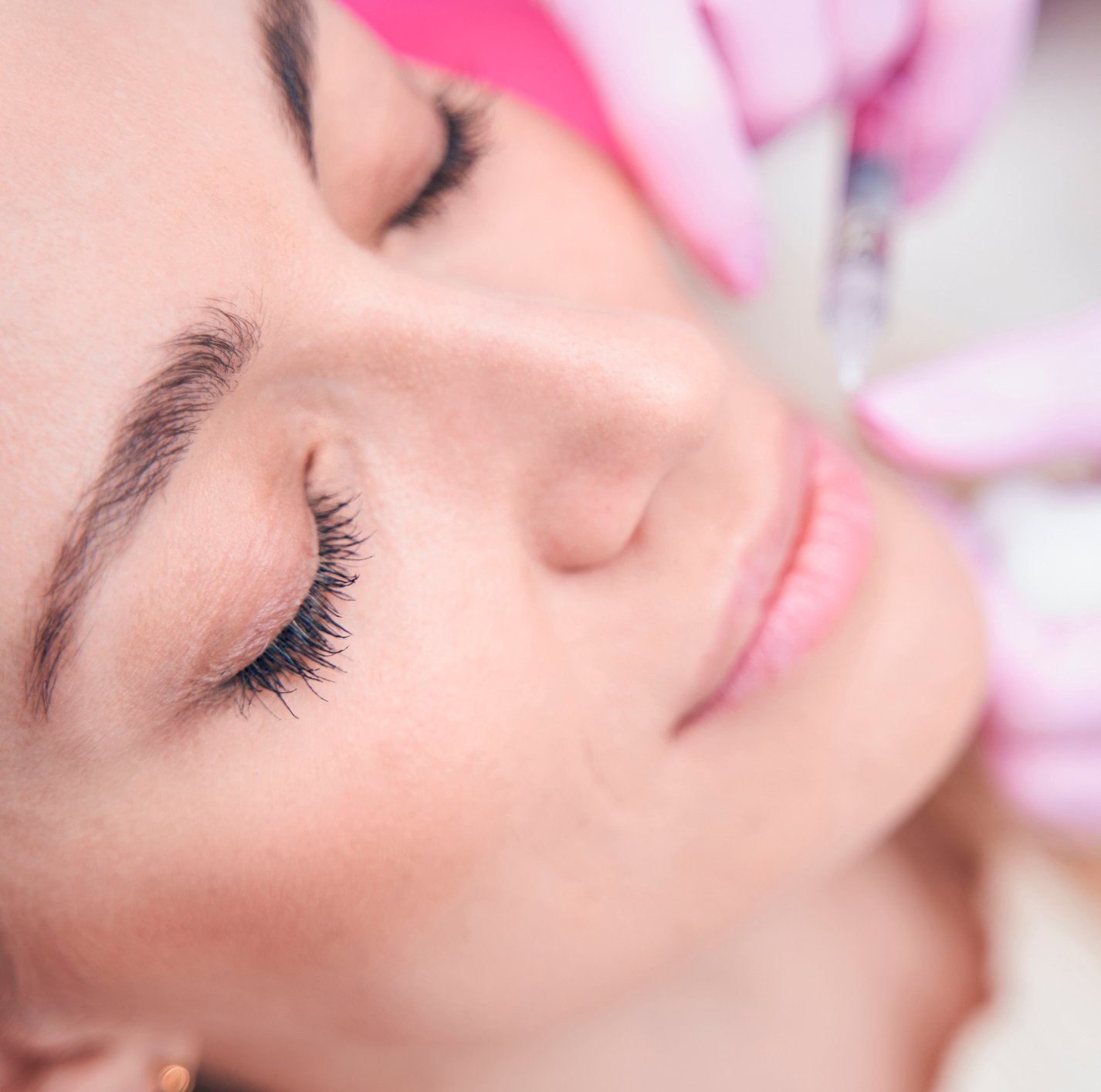
PDO threads are one option — and not always the right one. Dermal fillers (HA-based, like Restylane and the RHA Collection) plump and smooth the area with immediate results lasting 6 to 18 months. Botulinum toxin (Botox, Dysport, Daxxify) targets the depressor muscles that pull the corners of the mouth downward — useful when muscle activity is the dominant driver.
Elluminate Glow stimulates collagen and improves surface texture, helping mild cases and the surrounding skin. For advanced laxity with significant excess skin, surgical facelift remains the definitive correction — and we refer to a board-certified plastic surgeon when that’s the right answer.
Comparing Treatment Options for Marionette Lines
| Treatment | PDO Thread Lift | HA Filler (Restylane / RHA) | Botox / Dysport | Laser Resurfacing | Surgical Facelift |
|---|---|---|---|---|---|
| Best for | Mild–moderate descent + early jowling | Static creases, soft tissue volume | Muscle-driven downward pull | Surface texture, mild lines | Advanced laxity, excess skin |
| Mechanism | Tissue lift + collagen induction | Volumizes and smooths | Relaxes depressor muscles | Stimulates dermal collagen | Excises and repositions tissue |
| Onset | Immediate, refines 3–6 months | Immediate | 3–14 days | Gradual over weeks | Visible after swelling resolves |
| Lasts | 12–18 months | 6–18 months | 3–4 months | 6–12 months | Years (definitive) |
| Recovery | Days | Hours–days | Hours | 3–7 days | 2–4 weeks |
PDO Thread Lift
- Best for
- Mild–moderate descent + early jowling
- Mechanism
- Tissue lift + collagen induction
- Onset
- Immediate, refines 3–6 months
- Lasts
- 12–18 months
- Recovery
- Days
HA Filler (Restylane / RHA)
- Best for
- Static creases, soft tissue volume
- Mechanism
- Volumizes and smooths
- Onset
- Immediate
- Lasts
- 6–18 months
- Recovery
- Hours–days
Botox / Dysport
- Best for
- Muscle-driven downward pull
- Mechanism
- Relaxes depressor muscles
- Onset
- 3–14 days
- Lasts
- 3–4 months
- Recovery
- Hours
Laser Resurfacing
- Best for
- Surface texture, mild lines
- Mechanism
- Stimulates dermal collagen
- Onset
- Gradual over weeks
- Lasts
- 6–12 months
- Recovery
- 3–7 days
Surgical Facelift
- Best for
- Advanced laxity, excess skin
- Mechanism
- Excises and repositions tissue
- Onset
- Visible after swelling resolves
- Lasts
- Years (definitive)
- Recovery
- 2–4 weeks
Benefits of PDO Threads for Marionette Lines

PDO thread lifting combines an immediate mechanical effect with a longer-term collagen response. The lifting is visible the same day, and skin firmness continues improving over the following months as biostimulation progresses. Unlike products that only address volume, threads physically reposition descended tissue — which is what produces the change in marionette-line depth and lower-face contour.
The procedure uses local anesthesia, takes about an hour, and most patients return to normal activities within 2–3 days. Threads can be combined with neuromodulators (Botox, Dysport, Daxxify) for the depressor muscles or with HA filler for residual creases — a coordinated plan often produces the most natural result.
Potential Complications and Side Effects
PDO thread lifts have a generally favorable safety profile when performed by a qualified injector, but no procedure is risk-free. The most common short-term effects are mild swelling, tenderness, and bruising — typically resolving within a week.
- Swelling and bruising — common, resolves in days. Cold compresses help.
- Infection — uncommon, treated with antibiotics if it occurs.
- Asymmetry or visible threads — typically a technique issue. Most cases are correctable with massage, repositioning, or filler camouflage.
- Thread migration — when threads shift from original placement. Most often related to candidacy (very thin tissue) or technique. Correctable in most cases.
- Nerve-related issues — rare, more often associated with placement that’s too deep. A well-trained injector reduces this risk significantly.
The single most important variable in your outcome is the practitioner. For more on what thread complications look like, when they need urgent attention, and how to handle them, see Thread Lift Gone Wrong.
Cost at Desert Bloom Skincare
At Desert Bloom Skincare in Scottsdale, PDO thread treatment for this area starts at $480 with smooth threads (suitable for collagen stimulation in mild cases) and $2,500 with barbed PDO threads for full lifting and repositioning. Price alone shouldn’t drive this decision. It rarely does in our consult room — the right product depends on the depth of the creases, surrounding tissue quality, and your overall lower-face plan. Practitioner experience matters more than upfront cost — complications and unsatisfying outcomes are far more often a technique issue than a product issue.
Frequently Asked Questions
How long do PDO thread lift results last for marionette lines?
Are PDO threads better than fillers for marionette lines?
Can I combine threads with Botox?
Is the procedure painful?
What if the threads migrate or look uneven?
Who isn't a good candidate?
Personalized Marionette-Line Planning
The face tells a story. Reading it well — what’s descent, what’s volume loss, what’s muscle pull — is what makes the difference between a refresh and a “treatment look.”
The right approach to marionette lines isn’t a single procedure — it’s a clinical assessment. If you’re exploring options in Scottsdale and want a clear-eyed assessment of whether PDO threads, fillers, neurotoxins, or a combined plan is right for your anatomy, explore PDO thread lift at Desert Bloom Skincare. We start with anatomy and tissue quality, then choose the right tool — including honest referral when threads aren’t the right answer.
“Marionette lines respond differently depending on what's actually causing them — descent, volume loss, muscle pull, or some combination. Threads work beautifully when the dominant driver is descent. When the driver is volume or muscle, the right answer is filler, neurotoxin, or both. Mapping the cause comes first; choosing the tool comes second.”
For documented thread-lift outcomes, see our patient case studies — including a six-month thread-lift case and a jawline contouring case.
Individual results vary. Content reviewed by Dr. Natalya Borakowski, NMD. Last updated May 2026.