Best Wrinkle Fillers for Mature Skin | Desert Bloom Scottsdale

Comparing effective fillers for deep wrinkles and mature skin — Restylane, RHA, Sculptra. See cost and real results at Desert Bloom Scottsdale.
Overview
Wrinkle fillers correct what skincare cannot — they restore lost volume, smooth deep folds, and refine contour. But not every wrinkle responds to a filler, and not every filler works on every wrinkle. Choosing the right product matters more than choosing the most expensive one. This guide walks through the five filler options we use at Desert Bloom Skincare, what each is genuinely best for, and where a different treatment (or a different specialist) is the more honest answer.
Wrinkle Fillers at a Glance
- Top 5 at Desert Bloom
- Restylane · RHA Collection · Radiesse · Sculptra · Bellafill
- By Material
- HA fillers (Restylane, RHA), bio-stimulators (Sculptra, Radiesse), semi-permanent PMMA (Bellafill)
- Best For
- Static wrinkles, volume loss, deep folds, lip and cheek contour, jawline definition
- Not Right For
- Dynamic expression lines (use Botox / Daxxify), advanced laxity (surgical referral), thin skin overlying bone
- Related Reads
- Dermal Fillers Hub · Wrinkles · Aesthetic Facial Balancing · Botox
Understanding Wrinkle Fillers: Materials and Mechanisms
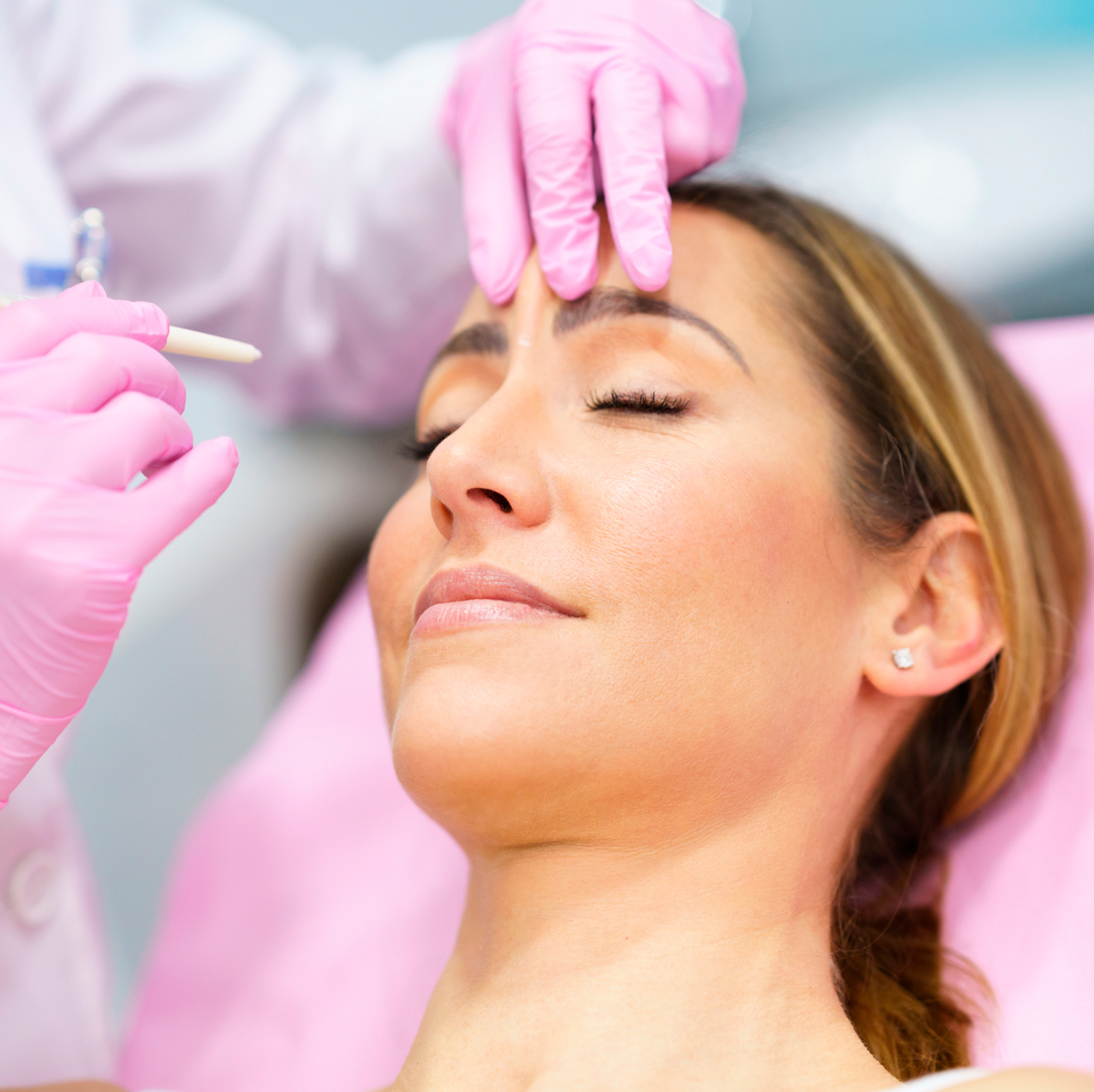
Wrinkle fillers are injectable products that smooth lines, restore volume, or stimulate the skin’s own collagen production. The single most important distinction is the material — because material determines longevity, mechanism, where the product works best, and what the recovery looks like.
The three families we use at Desert Bloom: hyaluronic-acid (HA) fillers — soft, dissolvable, immediate-effect; calcium hydroxylapatite (Radiesse) — denser, longer-lasting, biostimulatory; and poly-L-lactic acid (Sculptra) — collagen-stimulating bio-stimulator that works gradually over months. Bellafill (PMMA microspheres) is a fifth, semi-permanent option used selectively for specific indications.
The Top 5 Wrinkle Fillers We Use at Desert Bloom
Each filler family has its strengths. Below, the five products we trust for static wrinkles, volume loss, and contour correction at Desert Bloom Skincare in Scottsdale — with the realistic best-use case for each.
| Filler | Restylane | RHA Collection | Radiesse | Sculptra | Bellafill |
|---|---|---|---|---|---|
| Material | Hyaluronic acid | Hyaluronic acid (resilient) | Calcium hydroxylapatite (CaHA) | Poly-L-lactic acid (PLLA) | PMMA microspheres + collagen |
| Best for | Lips, tear trough, cheeks, lower face | Dynamic areas, expressive faces, mouth-area lines | Cheeks, jawline, hands — denser support | Diffuse volume loss, gradual collagen build | Atrophic acne scars, deep nasolabial folds (semi-permanent) |
| Onset | Immediate | Immediate | Immediate | Gradual (3–6 months) | Immediate + collagen builds over 12 months |
| Lasts | 6–18 months | 12–18 months | 12–18 months | 2+ years | 5+ years (semi-permanent) |
| Reversible | Yes (hyaluronidase) | Yes (hyaluronidase) | No | No | No |
Restylane
- Material
- Hyaluronic acid
- Best for
- Lips, tear trough, cheeks, lower face
- Onset
- Immediate
- Lasts
- 6–18 months
- Reversible
- Yes (hyaluronidase)
RHA Collection
- Material
- Hyaluronic acid (resilient)
- Best for
- Dynamic areas, expressive faces, mouth-area lines
- Onset
- Immediate
- Lasts
- 12–18 months
- Reversible
- Yes (hyaluronidase)
Radiesse
- Material
- Calcium hydroxylapatite (CaHA)
- Best for
- Cheeks, jawline, hands — denser support
- Onset
- Immediate
- Lasts
- 12–18 months
- Reversible
- No
Sculptra
- Material
- Poly-L-lactic acid (PLLA)
- Best for
- Diffuse volume loss, gradual collagen build
- Onset
- Gradual (3–6 months)
- Lasts
- 2+ years
- Reversible
- No
Bellafill
- Material
- PMMA microspheres + collagen
- Best for
- Atrophic acne scars, deep nasolabial folds (semi-permanent)
- Onset
- Immediate + collagen builds over 12 months
- Lasts
- 5+ years (semi-permanent)
- Reversible
- No
Restylane — Versatile HA
Restylane is the workhorse of our HA-filler practice. The line includes products designed for specific zones: Restylane Kysse (lips), Eyelight (tear trough), Lyft (cheeks and structural support), Refyne and Defyne (lower-face dynamic lines). Each is calibrated for a different tissue depth and movement pattern. Restylane is fully reversible with hyaluronidase, which is why we trust it as a first-line option for HA placement in expressive areas.
RHA Collection — Resilient HA for Dynamic Faces
RHA (Resilient Hyaluronic Acid) is engineered for dynamic facial zones — the mouth, cheeks, and lower face that move constantly with expression. The crosslinking pattern allows it to flex naturally rather than pull or distort. RHA 2 and RHA 3 are our go-to for moderate to severe dynamic wrinkles in patients who don’t want the “frozen” filler look.
Radiesse — Calcium Hydroxylapatite
Radiesse uses calcium hydroxylapatite microspheres suspended in a gel carrier. Beyond the immediate volume effect, the product stimulates the patient’s own collagen response over 6–12 months. Best for cheek and jawline contour, hand rejuvenation, and patients who want a longer-lasting, denser correction than HA can provide. Not reversible — placement and candidacy matter.
Sculptra — Poly-L-Lactic Acid Bio-Stimulator
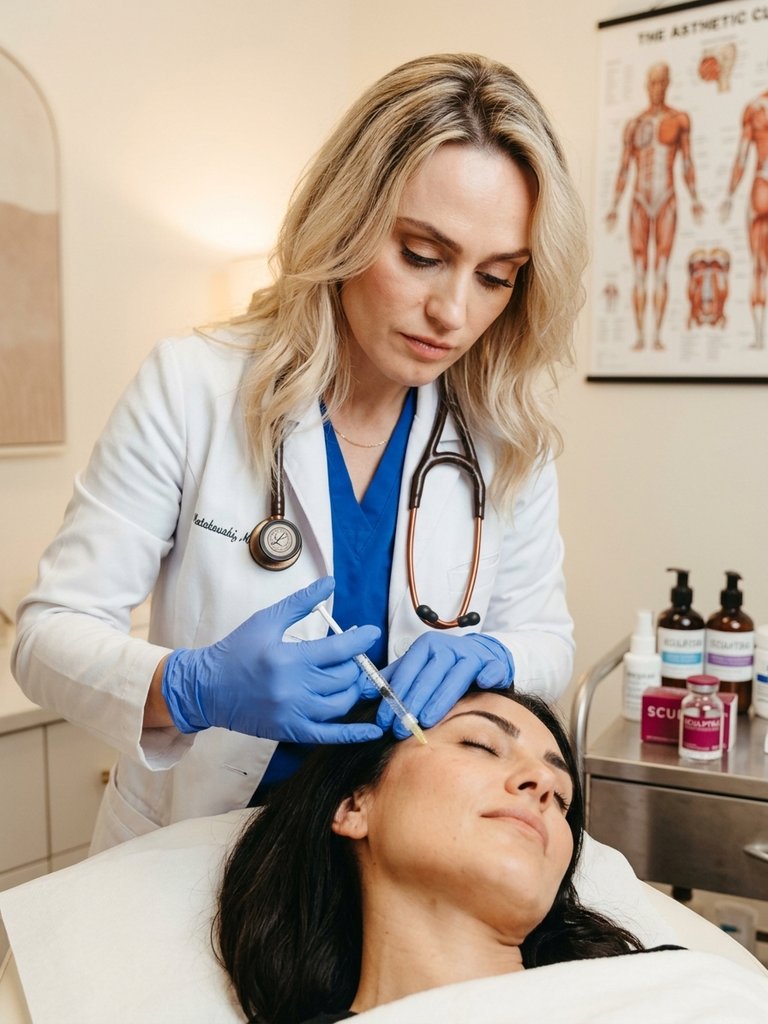
Sculptra is not a traditional filler — it’s a collagen stimulator. Poly-L-lactic acid (PLLA) microparticles trigger the skin’s own fibroblast activity, building new collagen gradually over 3 to 6 months. The result is a refresh that looks like rest and good genetics, not “treatment”. Best for diffuse mid-face volume loss, generalized hollowing, and patients in their 40s+ who want a long-game approach. See Sculptra for details.
Sculptra is also not reversible. Series of 2–3 sessions are typical, spaced 4–6 weeks apart. Final result is evaluated at 6 months, with effects lasting 2+ years.
Bellafill — Semi-Permanent PMMA
Bellafill combines PMMA (polymethylmethacrylate) microspheres with bovine collagen. Because the PMMA microspheres are not absorbed by the body, the result is semi-permanent — typically 5+ years. FDA-approved specifically for atrophic acne scars and deep nasolabial folds, Bellafill is reserved for selective indications where long-lasting correction is the priority. Skin testing for collagen sensitivity is required before treatment.
Choosing the Right Filler for the Wrinkle
The product is half the decision. The other half is matching it to the type of wrinkle and the patient’s anatomy.
- Dynamic wrinkles (lines that appear with movement — frown, crow’s feet, forehead): These are muscle-driven. Filler is rarely the right answer; Botox, Dysport, or Daxxify are. RHA is the exception when a static residual line persists at rest.
- Static wrinkles (visible at rest — nasolabial folds, marionette lines): HA fillers (Restylane, RHA) or Radiesse, depending on depth. Bellafill for deep nasolabial folds when long-term correction is the goal.
- Volume loss (mid-face flattening, tear trough hollowing, temple deflation): Restylane Lyft or Sculptra are the two main answers. Sculptra for diffuse loss, Restylane for specific zone correction.
- Lips and lip lines: Restylane Kysse for soft, expressive volume. RHA 2 for natural movement.
- Acne scars: Bellafill is FDA-approved for atrophic scars; RF microneedling is the non-permanent alternative. See acne scars hub.
Combining Fillers with Other Treatments
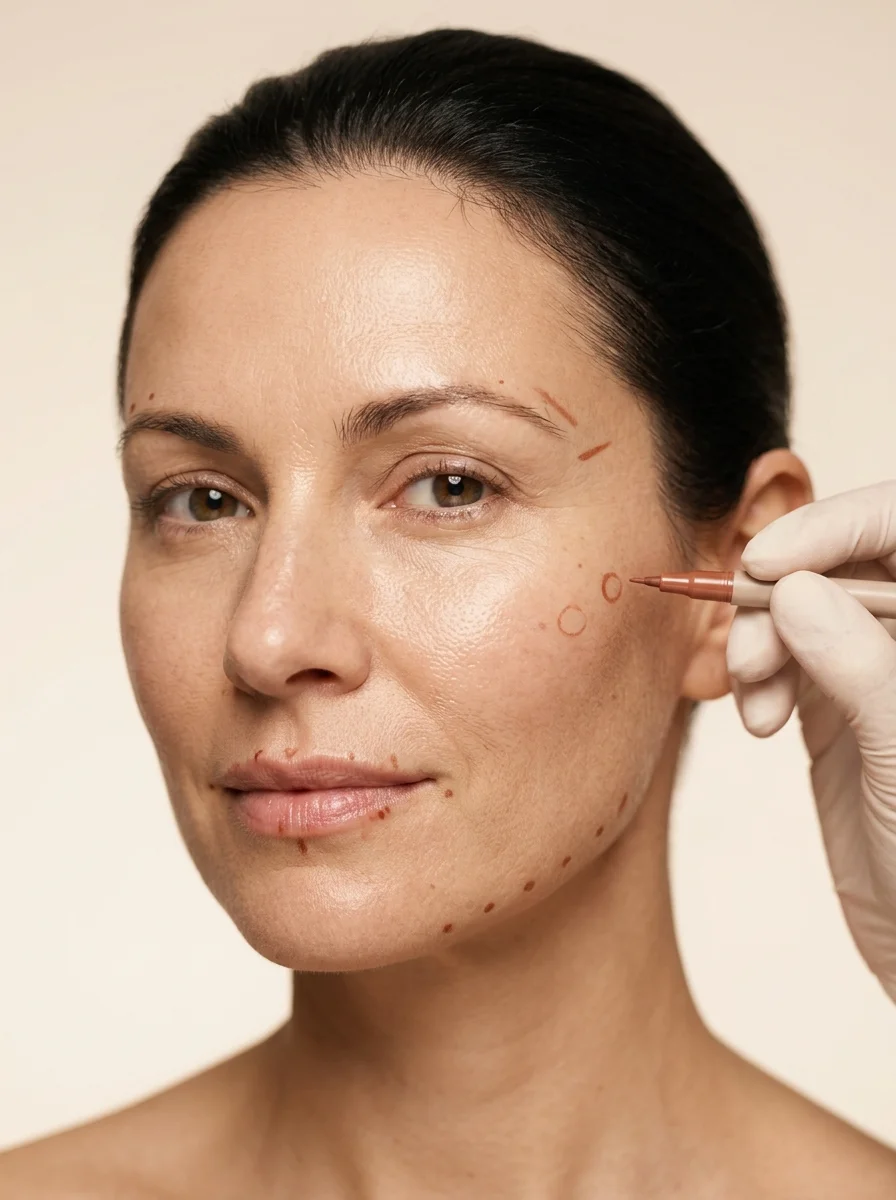
The best results often come from a coordinated plan, not a single product. Common combinations: filler plus Botox for the upper face, where toxin handles dynamic lines and filler addresses static volume. Filler plus RF microneedling for laxity and texture. Filler plus CO2 laser for deep texture correction in the right candidate.
The principle: treat the right tissue layer with the right tool. Filler corrects volume and structure. Toxin relaxes muscle. Energy devices stimulate collagen and resurface skin. They complement each other — but only when the underlying mapping is correct.
What to Expect: From Consultation to Results
Consultation
Anatomy and Candidacy Mapping
Discussion of goals, medical history, areas of concern, and review of options. The provider maps zones for treatment based on tissue quality, anatomy, and the type of wrinkle or volume loss present.
Treatment Day
Filler Placement
Topical or local anesthetic applied. Most filler treatments take 30–60 minutes depending on areas. Mild pressure or pinching during injection is normal.
Days 1–3
Initial Recovery
Mild swelling, possible bruising at injection sites. Avoid strenuous exercise, alcohol, and heat exposure. Most patients return to social activity within 24–48 hours.
Week 2
Settling
Final HA filler shape becomes apparent. For Sculptra, gradual collagen response begins.
Months 3–6
Final Outcome
For HA fillers: stable result. For Sculptra: collagen-driven volume becomes visible. For Radiesse: combined immediate-and-biostimulatory effect at peak.
Maintenance
Reassessment
HA fillers: top-up every 6–18 months. Radiesse and Sculptra: 1–2 years. Bellafill: typically 5+ years for selective use.
Key Considerations Before Getting Wrinkle Fillers
Choosing the Right Specialist
Filler complications — asymmetry, lumps, vascular events — are far more often a technique issue than a product issue. Verify your injector’s credentials, training, and patient outcomes. Ask about how they handle complications when they occur. The most important variable in your filler outcome is the person holding the cannula.
Realistic Expectations and FDA-Approved Products
All fillers used at Desert Bloom are FDA-approved for cosmetic use. We do not use unapproved products, off-label injections in unapproved zones, or “filler dissolution at home” workarounds. Realistic expectations matter: filler can refine and refresh, but it cannot replace what surgery does for advanced laxity. Honest candidacy is built into every consultation here — not a box we check, the question we start with.
When Filler Isn’t the Right Answer
Filler is the wrong tool for: thin skin overlying bone (consider thread lift or biostimulator); advanced facial laxity (surgical referral); pure muscle-driven dynamic lines (Botox or Dysport); pure submental fat (RF microneedling, Kybella, or referral). The honest answer is sometimes “not yet” or “not at all” — and that’s part of responsible care.
Personalized Consultation Matters
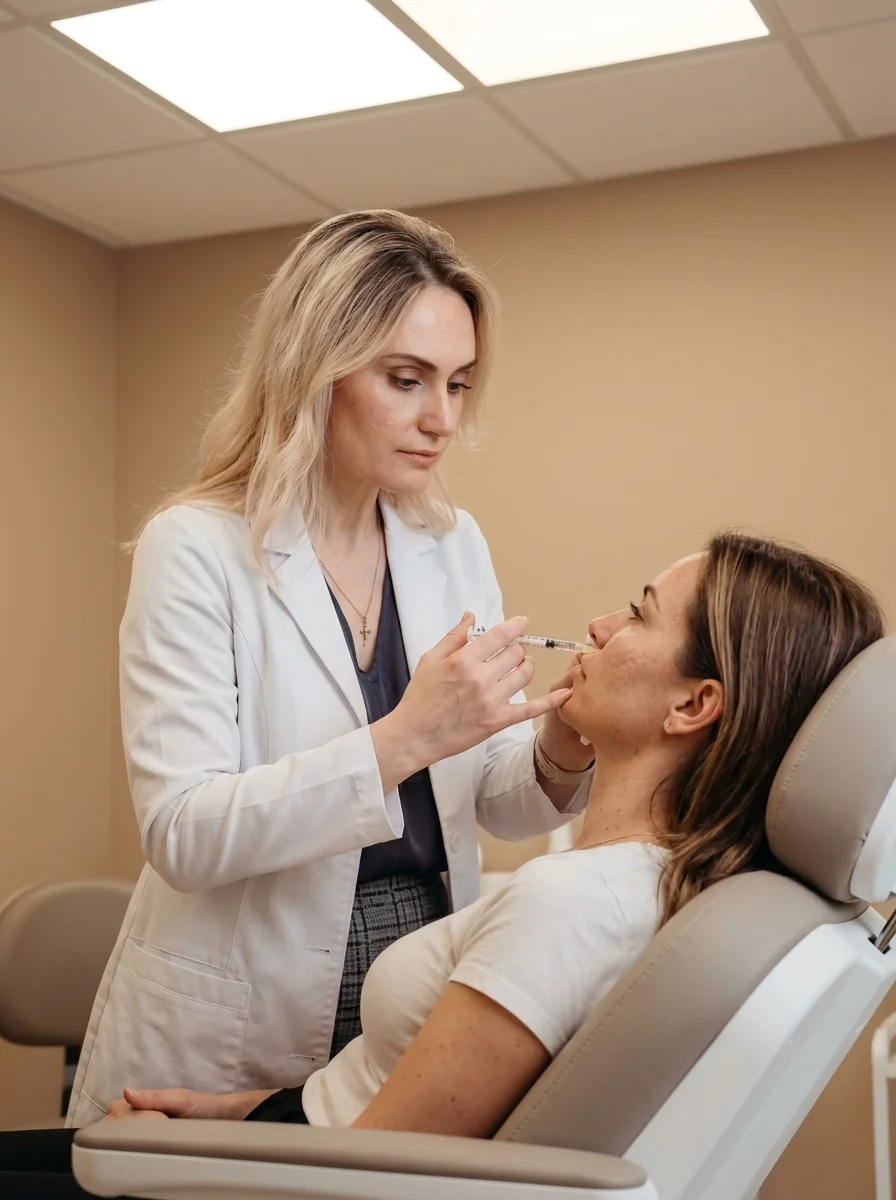
The right filler isn’t the most popular one or the most marketed one — it’s the one that matches your anatomy, your concern, and your goals. Dr. Natalya Borakowski, NMD at Desert Bloom Skincare maps each patient’s case before product selection — anatomy first, technique second.
This is also why we do not perform fat grafting at Desert Bloom — for patients who want autologous (own-fat) volume restoration, we provide referral to a board-certified plastic surgeon. If you want an honest map of what would actually help — and what wouldn’t — that’s exactly what our filler consultations are for.
Frequently Asked Questions
Which filler lasts the longest?
Are fillers reversible?
What's the difference between fillers and Botox?
How do I choose between Restylane, RHA, and Radiesse?
What can go wrong with wrinkle fillers?
Why don't you offer Juvederm?
Choosing the right filler isn’t really about the product. It’s about reading the anatomy in front of you. The right filler in the right hands produces a result that looks like rest, not treatment.
“Filler is a precision tool. It's not about which product is best in general — it's about which product is best for the millimeter you're treating, at the depth you're treating it, in the patient in front of you. When that mapping is correct, the result speaks softly. When it isn't, no product can save the outcome.”
For documented patient outcomes from filler-adjacent procedures, see our patient case studies. For complications and second-opinion guidance, see our thread lift complications guide and botched treatment hub.
Individual results vary. Content reviewed by Dr. Natalya Borakowski, NMD. Last updated April 2026.