DNA Based Skincare: Your Genes for Personalized Beauty
Discover how DNA based skincare transforms your routine with personalized insights from your genes. Learn how the Spotlight on Skin test reveals your skin’s unique needs — from acne and pigmentation to collagen and elasticity — and how Desert Bloom turns those results into expert-guided care.
Article's contents
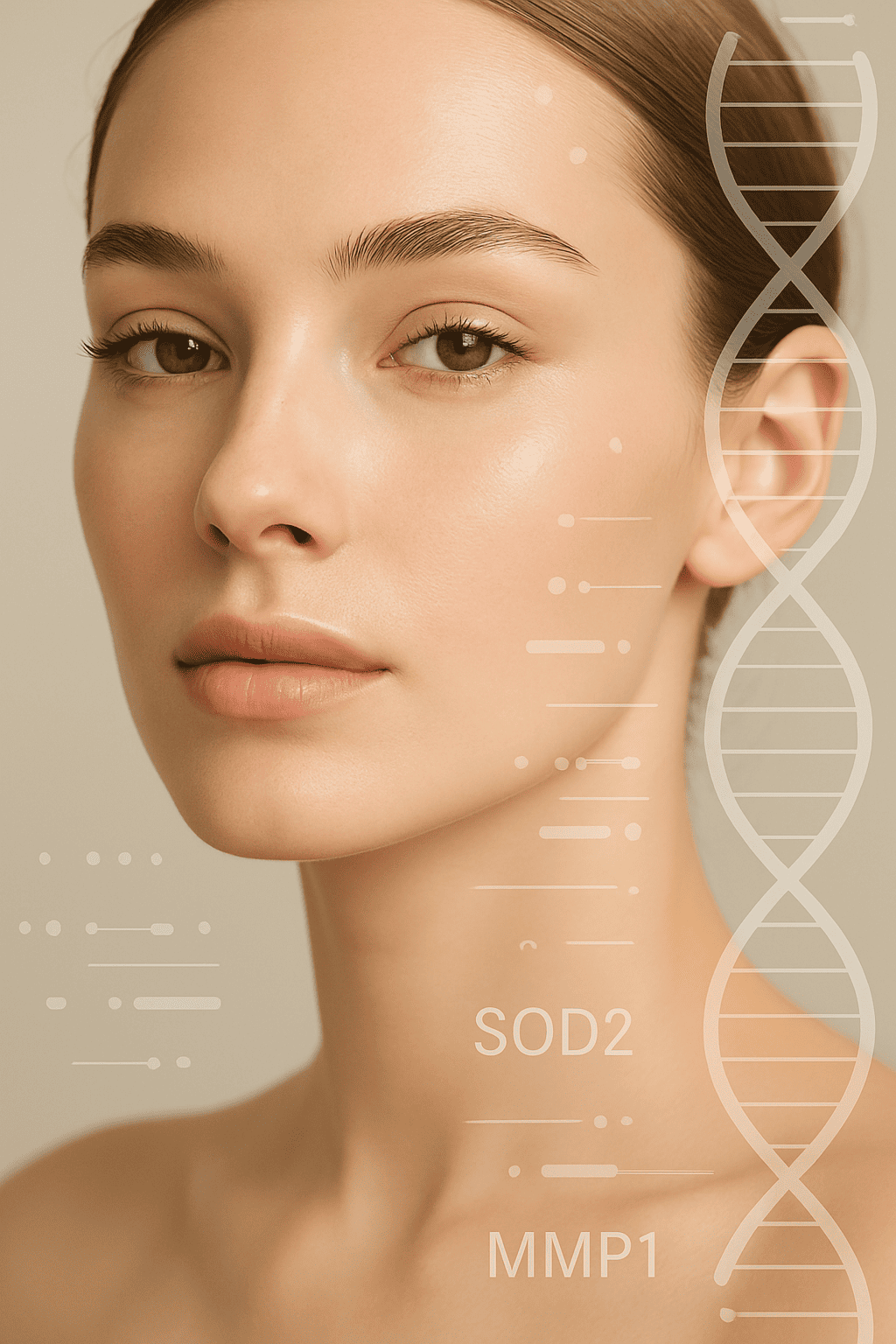
Here’s something most skincare brands will never tell you: the reason your routine isn’t working might not be a product problem. It might be a biology problem. Your skin has a genetic blueprint — specific predispositions toward collagen breakdown, inflammation, oxidative stress, and pigmentation — and most routines are built as if that blueprint doesn’t exist. This genetic approach changes that equation entirely.
What a Genetic Skin Test Actually Reads
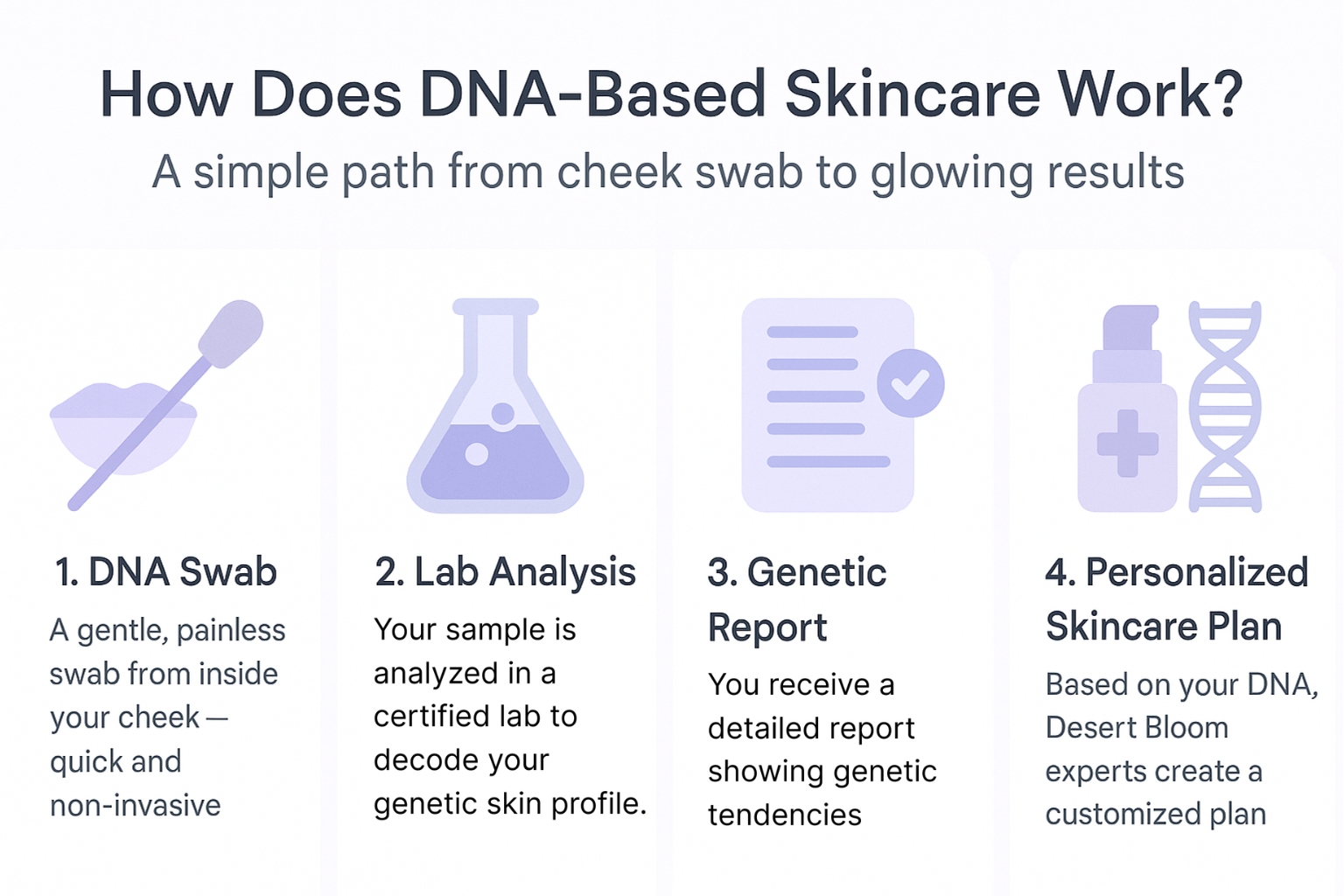
The Spotlight on Skin™ test analyzes key genetic markers that drive how your skin ages, responds to stress, and handles the ingredients you put on it. The process is straightforward: a cheek swab, a certified lab, and a report that tells you things your bathroom mirror never could. What comes back isn’t a raw data dump — it’s a clinically interpreted map.
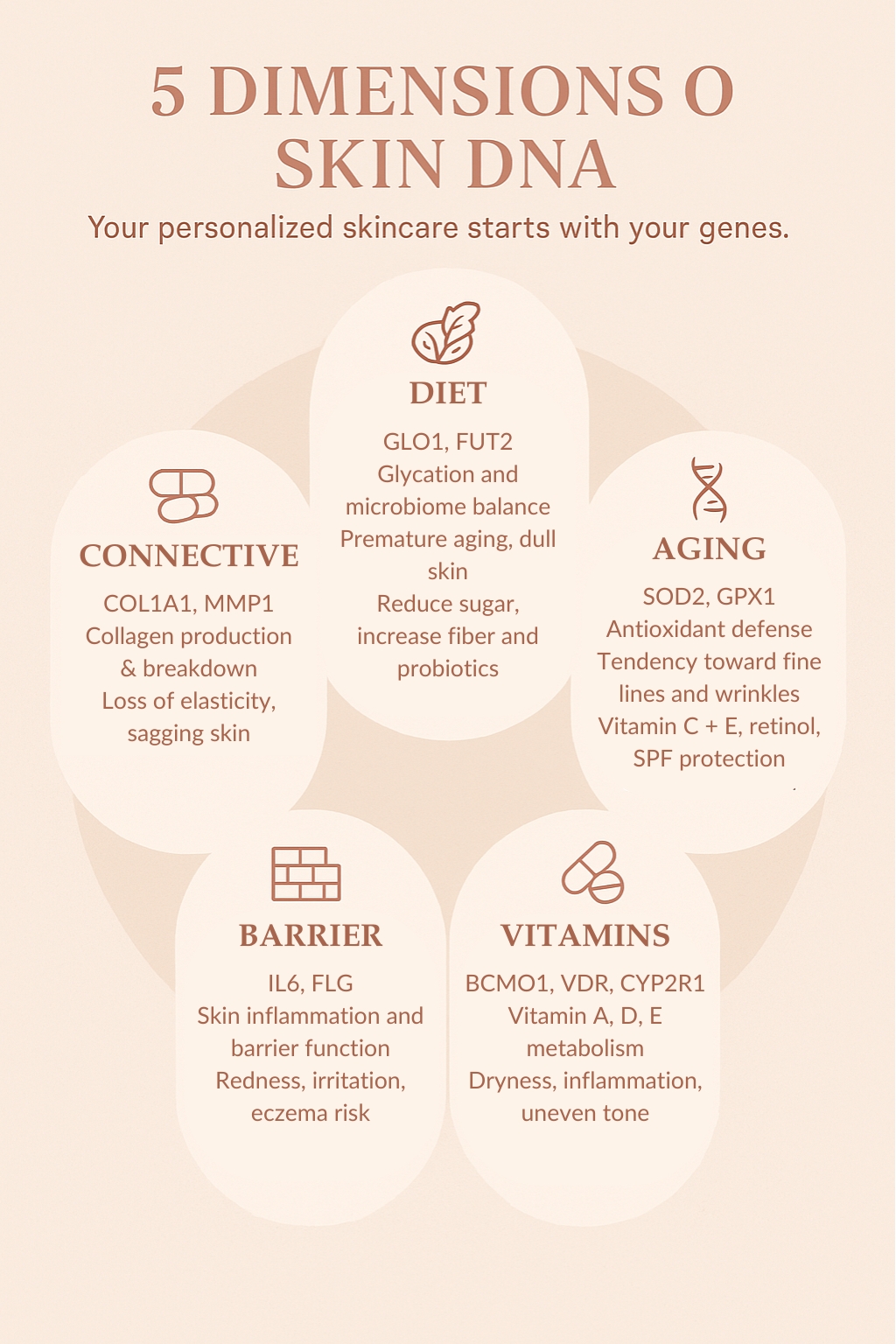
Among the variants the test examines: MMP1 (collagen breakdown rate), SOD2 (antioxidant defense capacity), IL6 (inflammatory tendency), TYR and SLC45A2 (pigmentation and UV response), and COL1A1 (collagen structure and skin firmness). Each variant shifts what “ideal skincare” looks like for you — sometimes dramatically. A person with high MMP1 activity and low SOD2 function needs a very different approach than someone with the opposite profile. Generic serums don’t account for that.
Why Generic Routines Miss the Point
Most skincare advice is built around the concept of “skin type” — oily, dry, combination, sensitive. These are useful shorthand categories, but they describe symptoms, not causes. Two people with “sensitive skin” can have completely different underlying drivers: one is genetically prone to elevated IL6-mediated inflammation; the other has a compromised barrier due to a skin-structure gene variant. They need different interventions. Treating them identically — the standard approach — means one of them gets results and the other keeps cycling through products wondering what she’s doing wrong.
I see this pattern constantly in consultations. Clients who have been “good about skincare” for years — consistent routine, quality products, no major lifestyle red flags — still dealing with redness, changes you’re starting to notice, or stubborn pigmentation. When we run the genetics, the answer is usually right there. It wasn’t the wrong effort. It was the wrong direction. That distinction matters, because it means the path forward is clear — not a longer trial-and-error list, but a specific, targeted plan.
| Factor | Generic Skincare | DNA-Guided Skincare |
|---|---|---|
| Starting point | Skin type (oily/dry/combo) | Genetic variant profile |
| Ingredient selection | Best-sellers, trend-driven | Matched to your metabolic pathways |
| Inflammation approach | Avoid known irritants | Guided by IL6 and TNF variant status |
| Collagen support | General peptides and retinoids | Targeted by MMP1 / COL1A1 activity |
| Pigmentation strategy | Broad-spectrum brighteners | Calibrated to TYR and SLC45A2 variants |
| Result timeline | Weeks to months of guessing | Confident plan from week one |
| Downside risk | Wrong product → reactive skin | Minimized — treatment fits your biology |
What Your Report Actually Tells You
Your report isn’t a glossy brochure of general skin advice repackaged with your name on it. It breaks down specific genetic findings and translates them into actionable guidance: which antioxidants your skin needs most, how aggressively you can use exfoliants, whether retinoids are your best collagen ally or a potential irritant, how important daily SPF is given your UV-response genetics, and which in-clinic treatments are likely to deliver the strongest returns for your profile. Vitamins C, D, and E absorption — also flagged, because nutrient metabolism is partly genetic too.
This is where the test separates itself from the wave of direct-to-consumer DNA kits. Those kits hand you raw data. This one hands you a plan — processed in a certified lab, then interpreted by trained providers. The difference between knowing your MMP1 variant and knowing what to do about it is exactly the gap that clinical interpretation fills. We don’t hand you a PDF and wish you luck.
How We Use It at Desert Bloom
Your genetic report becomes one layer of a larger clinical picture. We look at your results alongside your current skin presentation, lifestyle factors, and treatment history. That combination tells us something a swab alone can’t: not just what your genes predict, but what’s actually happening, and why now.
Depending on your profile, we may recommend adjustments like:
- Antioxidant-rich mesotherapy for clients with SOD2 variants linked to low oxidative defense — supporting what your skin struggles to produce on its own.
- Biorevitalization or collagen-stimulating treatments for those with elevated MMP1 activity, where the focus shifts to preserving firmness early rather than responding to loss later.
- Modified peel protocols or avoidance of aggressive exfoliation for clients with IL6-linked inflammation sensitivity — because the same peel that’s ideal for one person can trigger weeks of redness in another.
- Tailored pigmentation strategies for TYR and SLC45A2 variant carriers — adjusting both topical brighteners and in-clinic light-based approaches based on your actual melanin transport profile (Fitz I–III appropriate; darker skin tones use non-laser pigment protocols — PRX-T33, peels, iontophoresis).
None of this is about selling you more treatments. Some clients come in expecting a full protocol and leave with a simpler plan than they imagined — because their genetics show a well-functioning baseline that just needed a few targeted corrections. Knowing that is also valuable. (More valuable, arguably, than three new serums you’ll probably abandon by month two.)
A quick cheek swab collected at your consultation. Sample is sent to the certified lab — non-invasive, takes about two minutes, no special prep required.
Your DNA is analyzed across dozens of skin-relevant genetic markers in the same compliant facility. Results are typically ready within two weeks.
We walk through your report together — translating each variant into plain clinical language and connecting findings to what we observe in your current skin presentation.
A care plan is built: topical recommendations, any relevant supplements, and in-clinic treatments matched to your profile. We prioritize, so you’re not starting ten things at once.
Follow-up assessment to evaluate response. The genetic picture doesn’t change, but your skin does — so we refine the plan based on what’s working and where there’s more room to support.
Who Benefits Most
This testing is particularly useful if you recognize yourself in any of these:
- You’ve tried “good” routines for years and still deal with persistent redness, early texture shifts, or stubborn discoloration — and you’re tired of guessing.
- You react to products more than your friends do, and nobody has ever explained why on a biological level.
- You want a proactive plan before visible changes stack up — grounded in something more specific than “use sunscreen and peptides.”
- You want to make informed decisions about professional treatments — and you want those decisions to be based on your actual biology, not a trend cycle.
This isn’t a medical diagnostic test. It doesn’t diagnose disease or replace a dermatology evaluation. What it does is give you a remarkably precise starting point for aesthetic and preventive skincare — one that most people never get access to, because most providers never offer it.
Frequently asked questions
How is Spotlight on Skin™ different from a consumer DNA kit like 23andMe?
Consumer kits are primarily ancestry-focused and return raw genetic data with limited health guidance. Spotlight on Skin™ is a clinically validated test designed specifically for aesthetic and dermatologic applications, processed in a CLIA-certified lab and interpreted by trained providers. You’re not getting a data file — you’re getting a clinical consultation built around your results.Does my DNA determine how my skin will age? Is the outcome fixed?
No. Genetics reveal predispositions, not certainties. Think of your gene variants as factors that raise or lower your starting risk in certain areas — collagen breakdown, inflammation, pigmentation. Environment, lifestyle, sun exposure, and the care you provide all shape the actual outcome. Knowing your predispositions means you can work with your biology rather than against it.I already have reactive, sensitive skin. Is it safe to do additional treatments after genetic testing?
Genetic testing itself — a cheek swab — carries no skin risk. What the results often do is clarify which treatments are safer for your specific inflammatory profile and which to approach more carefully. For clients with IL6-related inflammation sensitivity, knowing that upfront actually reduces the risk of reactive responses from in-clinic procedures.How long do the results stay relevant? Do I need to retest?
Your DNA doesn’t change, so the genetic findings remain valid indefinitely. What does change is your skin’s condition over time — so while the report doesn’t expire, the care plan built from it should be reviewed periodically (typically every 12–18 months) as your skin evolves and new treatments become available.Can genetic testing help with persistent pigmentation or melasma?
Yes, this is one of the areas where genetic profiling is especially useful. TYR and SLC45A2 variants directly influence melanin production and transport. Understanding your specific pigmentation genetics helps us select brightening strategies — topical, supplement, and in-clinic — that are aligned with your biology rather than applied generically.Is my genetic data kept private?
The test is processed under HIPAA-compliant protocols in a certified laboratory. Your data is encrypted and is not shared with third parties. Only licensed providers involved in your care have access to your results.What’s the first step if I’m interested?
A consultation at Desert Bloom — where we assess your current skin presentation, discuss your concerns, and determine whether genetic testing is the right tool for your goals. The swab itself takes minutes. The conversation around your results is where the value is.Clarity Is a Result Too
Most people who come to us for genetic-guided skincare are not looking for a miracle. They’re looking for an answer. They’ve been paying attention to their skin, trying to do the right things, and hitting a wall they can’t explain. Understanding what your genes are actually doing — and why certain approaches have worked while others haven’t — is its own kind of result. Sometimes the most valuable thing a consultation produces isn’t a product list. It’s the end of a very long guessing game.

“Genetics give us the most honest starting point I’ve found in 20 years of practice. Your skin isn’t failing you — it’s working exactly as your biology designed it to. Our job is to understand that design and work with it, not override it.”
Ready to stop guessing? Start with a conversation at Desert Bloom — we’ll look at what your skin is doing today and whether genetic testing makes sense as part of your next step.
Individual results vary. Genetic testing provides predisposition data, not diagnostic certainty. Clinical content reviewed by Dr. Natalya Borakowski, NMD. Last updated April 2026.