Structural Lower Face Lift: A Case Study in Professional Neck Rejuvenation

Can a non-surgical lower face lift preserve your professional authority? Explore this clinical case study of a 69-year-old physician who utilized PLLA threads to restore jawline definition and maintain executive presence without the downtime of traditional surgery
Case Overview
A 69-year-old retired female physician — still professionally active and frequently in conversation with department chairmen and hospital CEOs — presented at Desert Bloom with concerns about progressive neck laxity, loss of jawline definition, and softening of the submental contour. Her stated goal was not vanity-driven enhancement. It was professional presence. Authority. Competence signaling. This distinction matters, and it shaped the entire treatment plan. This case explores a non-surgical lower face lift approach to neck rejuvenation for the mature patient, focusing on structural support and anatomical restoration over volume replacement. Learn more about our non-surgical facelift options.
Case Snapshot
- Patient
- 69-year-old retired female physician (professionally active)
- Presenting Concerns
- Progressive neck laxity, loss of jawline definition, softening of submental contour
- Treatment
- PLLA thread sling under the neck
- Follow-Up
- Two-week patient-reported outcome
Clinical Assessment
Clinical Assessment at 69: Anatomical Realities

At 69, several anatomical realities must be acknowledged: thinning dermis, reduced collagen density, decreased skin elasticity, platysmal laxity, and submental tissue descent. Her skin quality showed moderate laxity and reduced recoil. She was not a surgical candidate by her preference, and her expectations were realistic.
Due to age-related tissue fragility, this was technically a more challenging case than treating a patient in her 40s or early 50s. There is less margin for aggressive tension. There is greater risk of visible irregularities. Precision becomes critical.
Patient Goals: Professional Presence, Not Dramatic Change
She expressed a specific concern: perceived bias against aging female physicians in rooms where she still needed to lead. She did not request dramatic change. She wanted improved structural support in the lower face and neck to look less fatigued and more defined — visually aligned with the competence and authority she still carried into every meeting.
Neck Rejuvenation Non-Surgical: What Works for Sagging Neck Skin?
Selecting the most appropriate cosmetic treatment depends heavily on the patient’s anatomy and tissue quality, especially when the goal is a conservative lower face lift effect in the neck and jawline region. While RF microneedling or ultrasound energy are used for surface skin tightening, they may not provide enough mechanical repositioning on their own for a 69-year-old patient with significant descent. In this case, a structural PLLA thread sling provided the necessary scaffold to improve jawline definition without the volume-heavy appearance sometimes associated with dermal fillers.
Treatment Strategy
PLLA Thread Sling Under the Neck
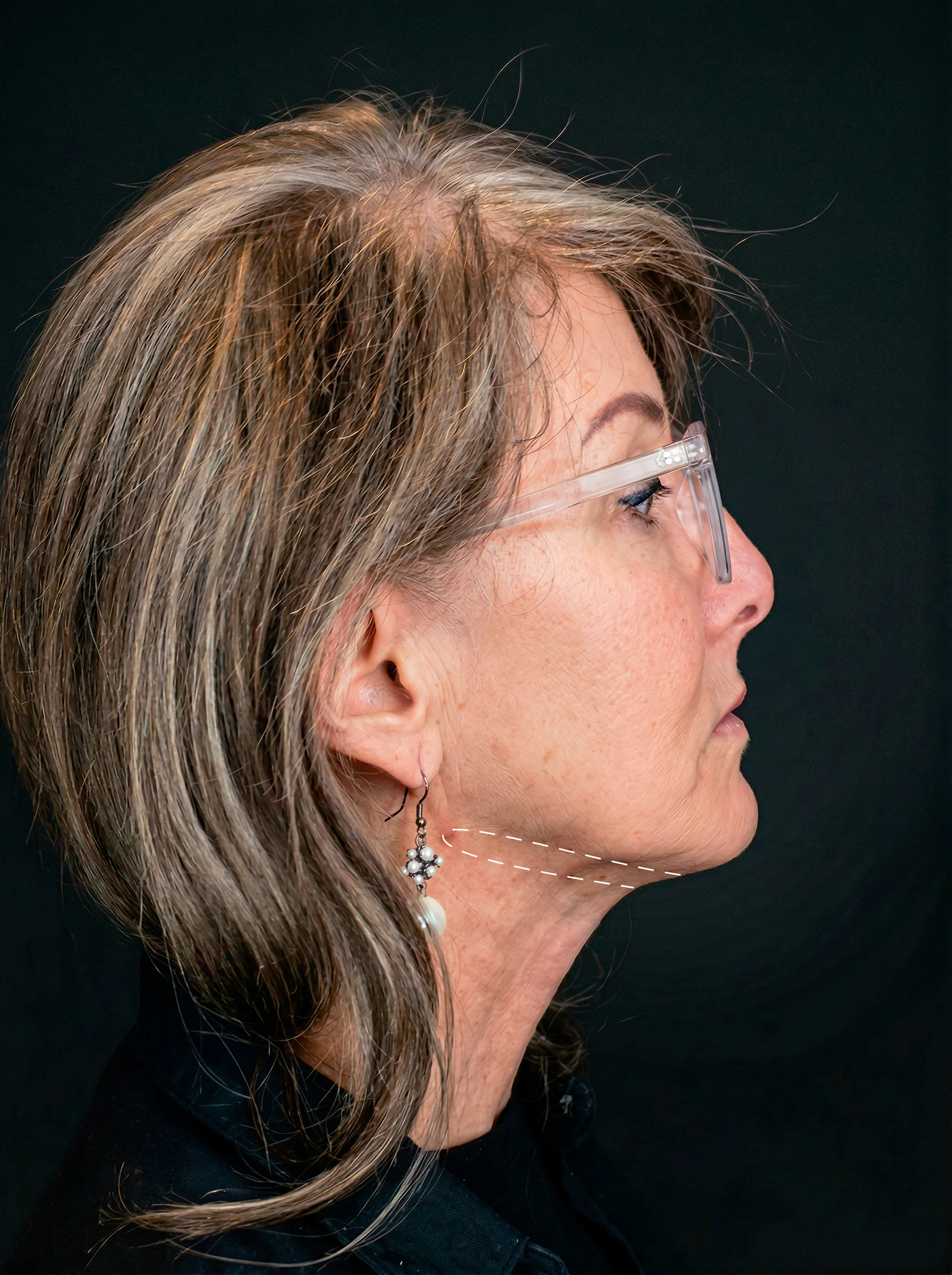
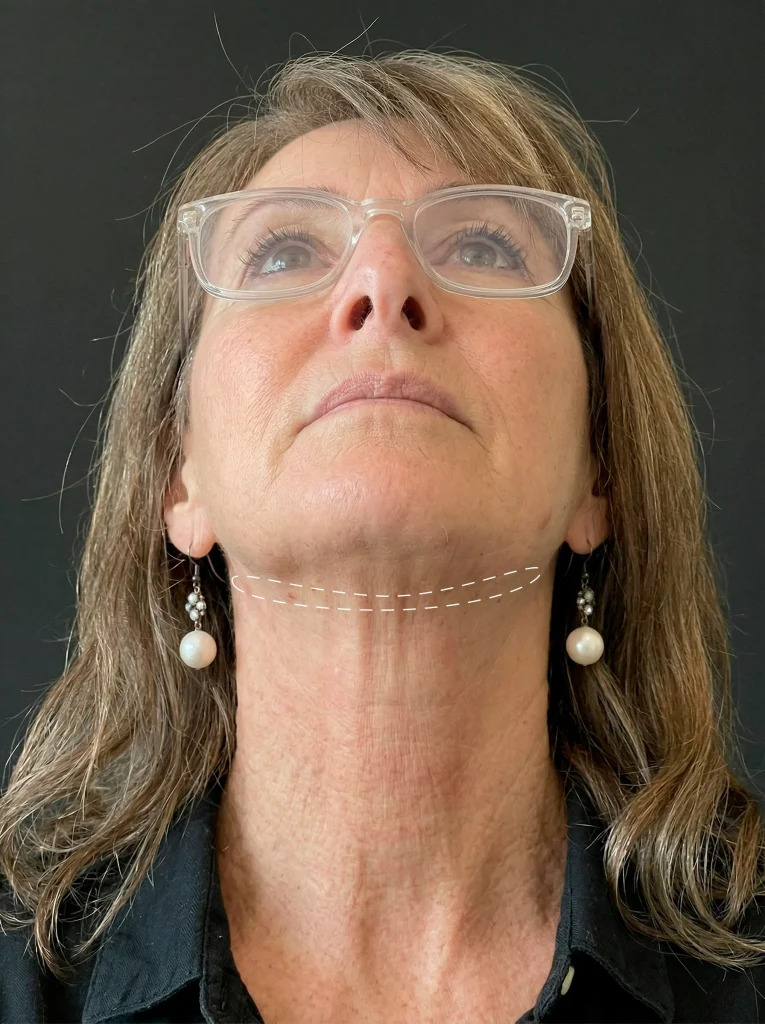
We performed a PLLA thread sling treatment under the neck to provide structural lift and support to the submental area and jawline. The rationale was four-fold: mechanical lift of descended tissue, stimulation of collagen production over time, reinforcement of lower face support without adding volume, and preservation of facial identity.
This was not a volume-based correction. It was a structural support intervention. Post-procedure, she was placed in a chin support garment to stabilize tissue during the early healing phase.
Structural Support vs. Volume Replacement
| Feature | PLLA Thread Sling | Hyaluronic Acid Fillers |
|---|---|---|
| Primary Goal | Tissue Repositioning | Volume Replacement |
| Mechanism | Mechanical Lift & Collagenesis | Hydration and Volumization |
| Indication | Submental laxity / jawline softening | Hollow areas or folds |
| Recovery | Minimal downtime | Little to none |
| Risk Profile | Different (Placement-dependent) | Different (Vascularity-dependent) |
PLLA Thread Sling
- Primary Goal
- Tissue Repositioning
- Mechanism
- Mechanical Lift & Collagenesis
- Indication
- Submental laxity / jawline softening
- Recovery
- Minimal downtime
- Risk Profile
- Different (Placement-dependent)
Hyaluronic Acid Fillers
- Primary Goal
- Volume Replacement
- Mechanism
- Hydration and Volumization
- Indication
- Hollow areas or folds
- Recovery
- Little to none
- Risk Profile
- Different (Vascularity-dependent)
Before & After
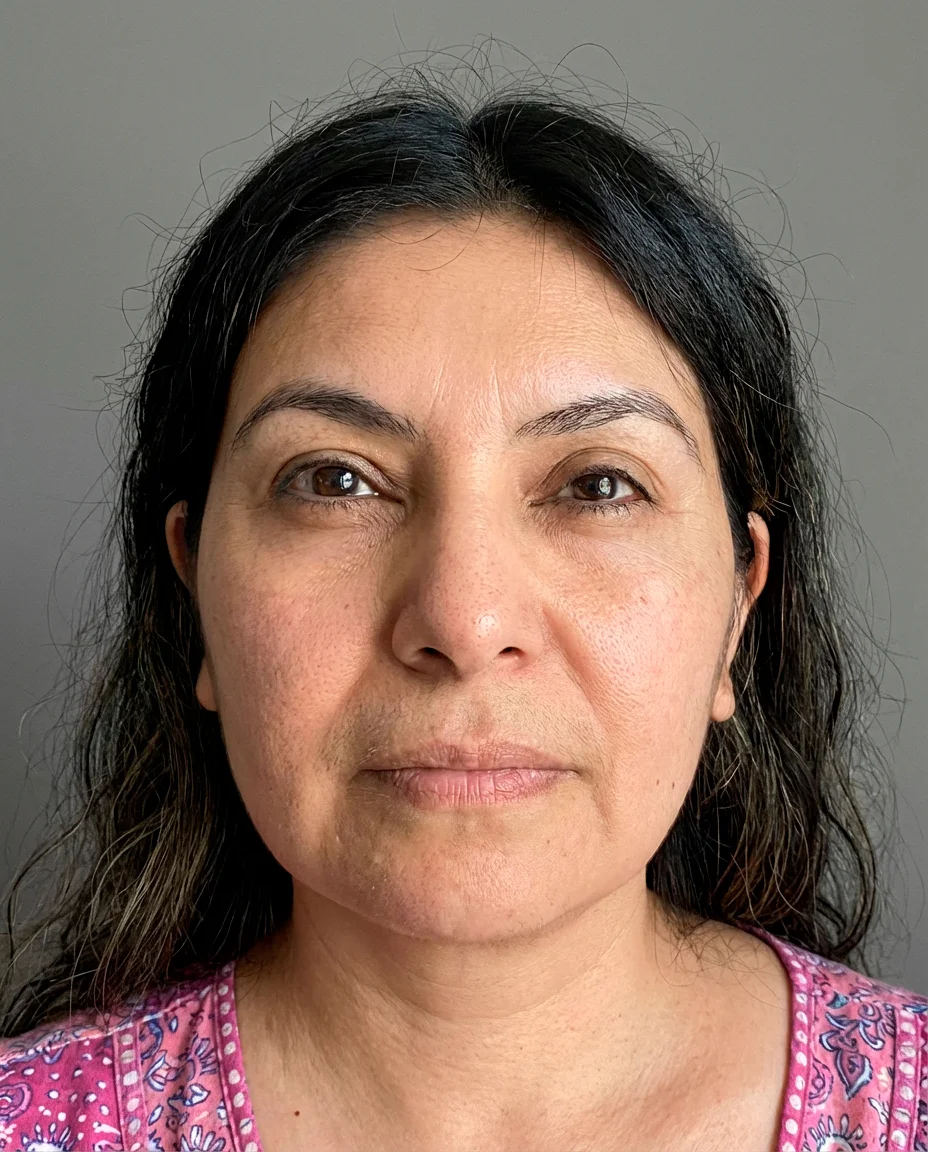
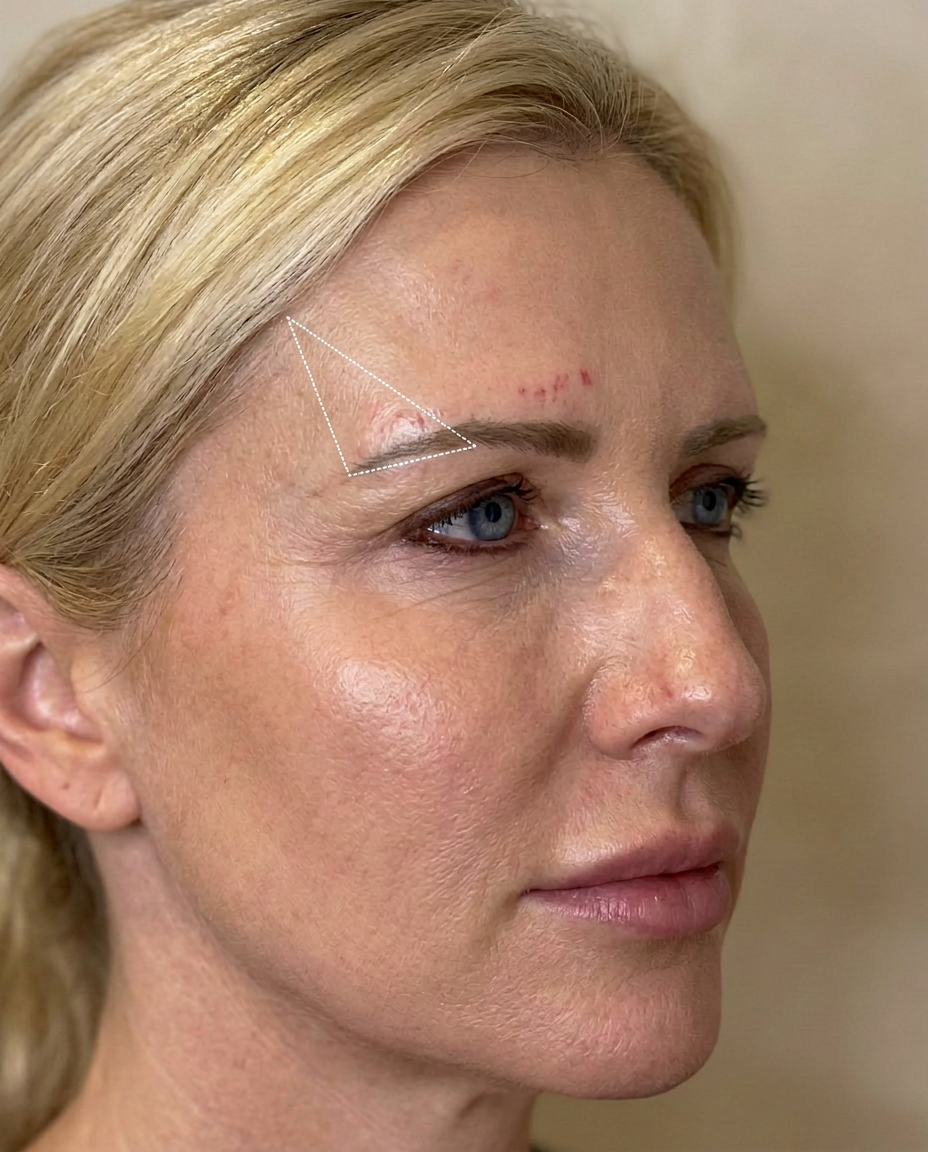
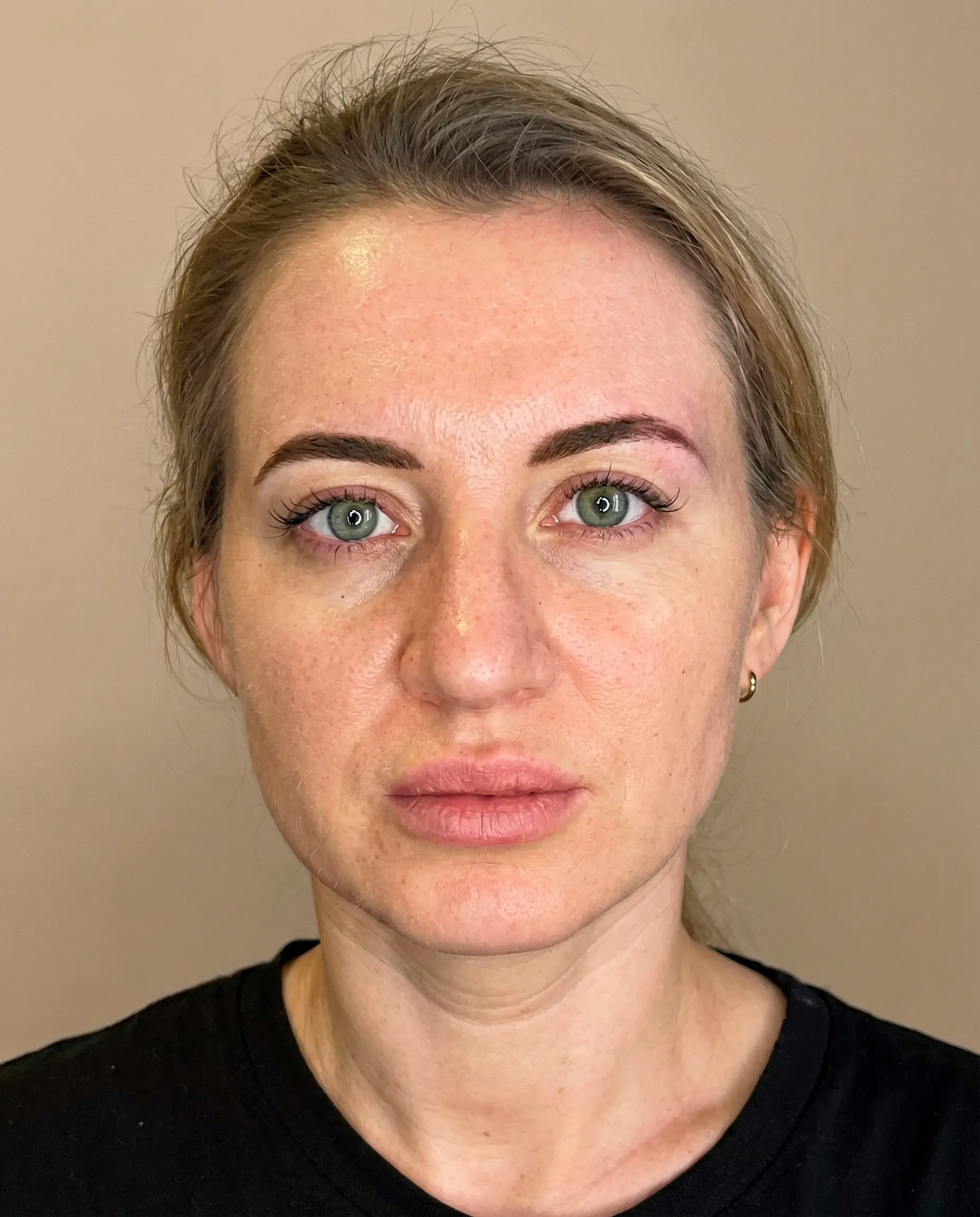
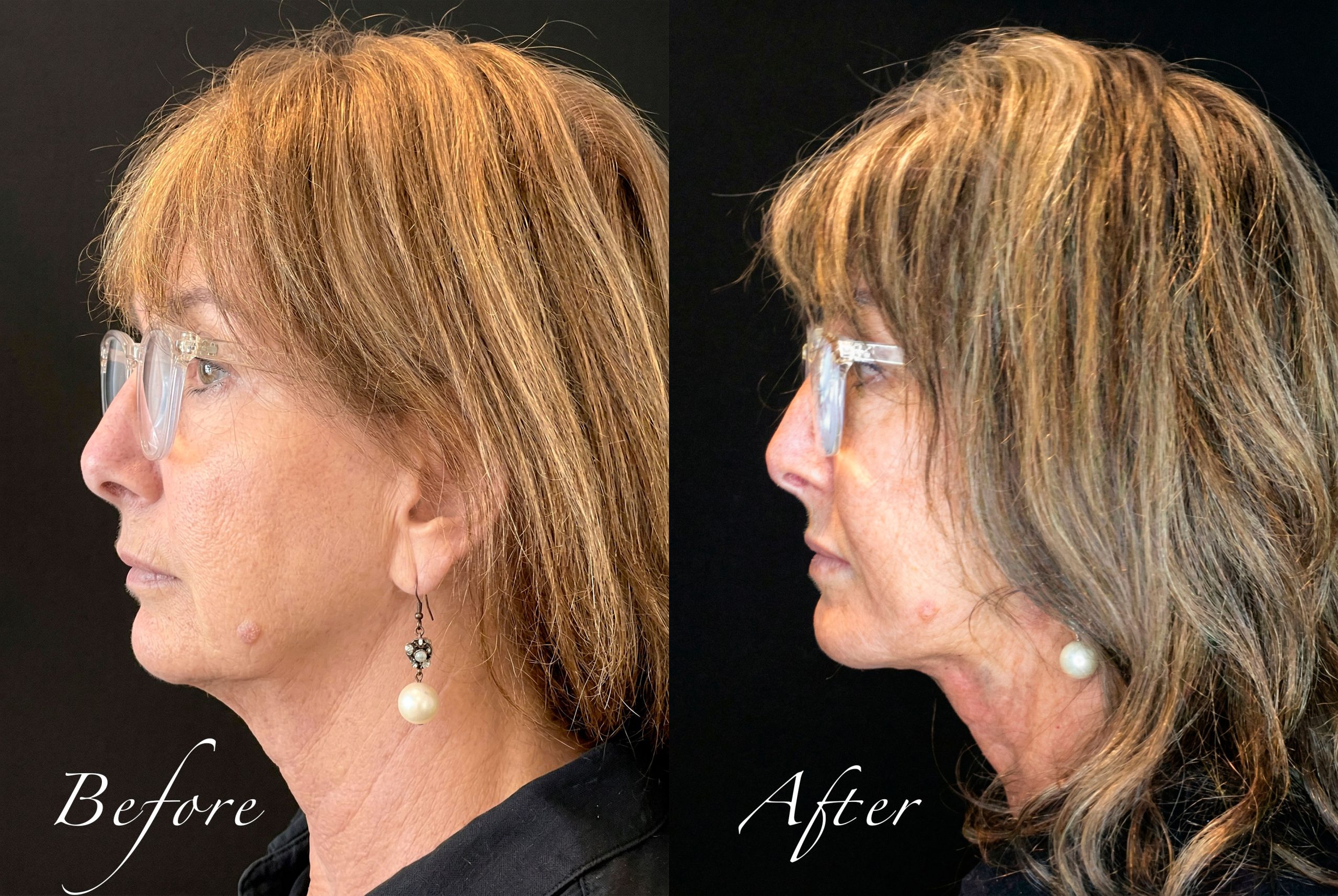
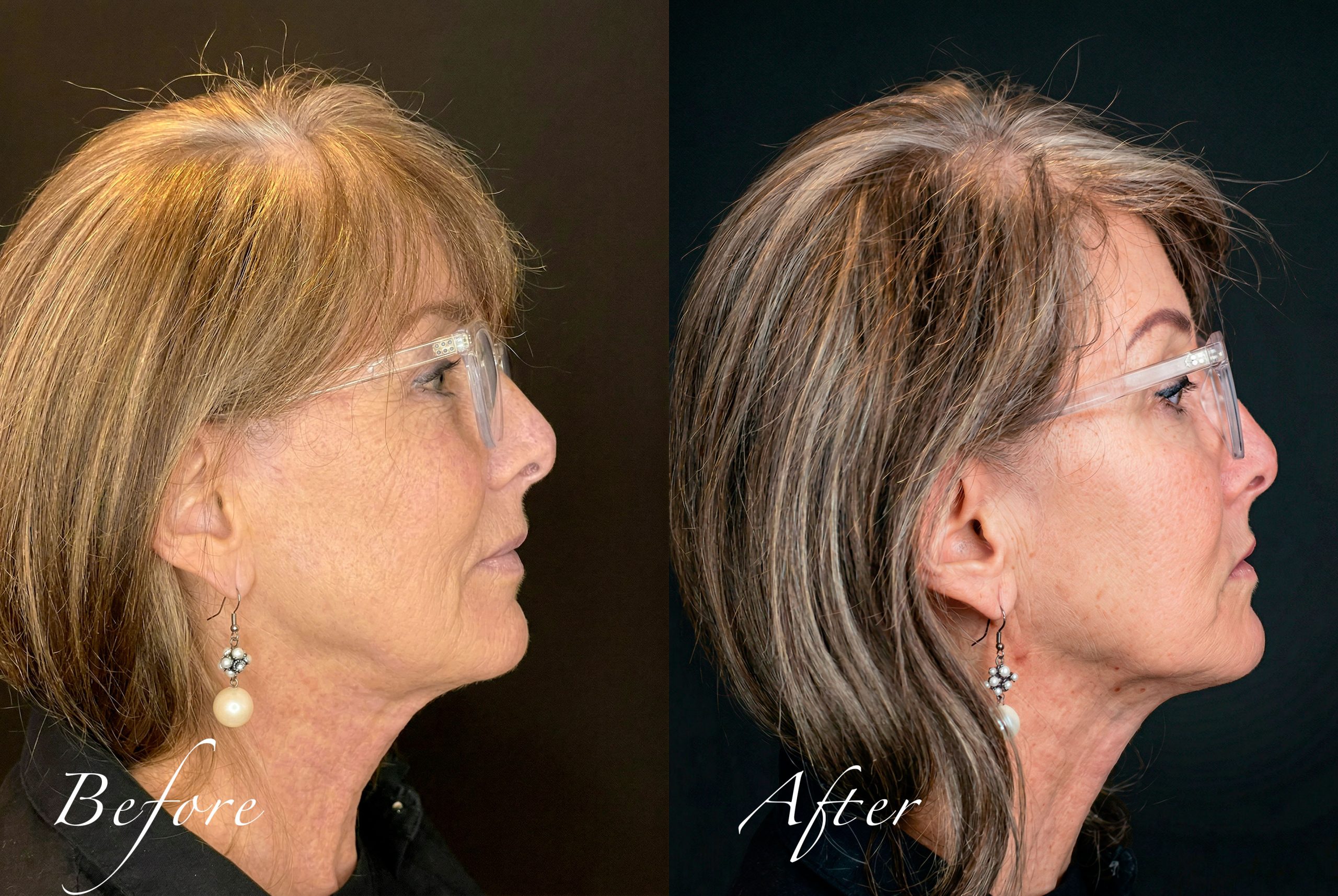
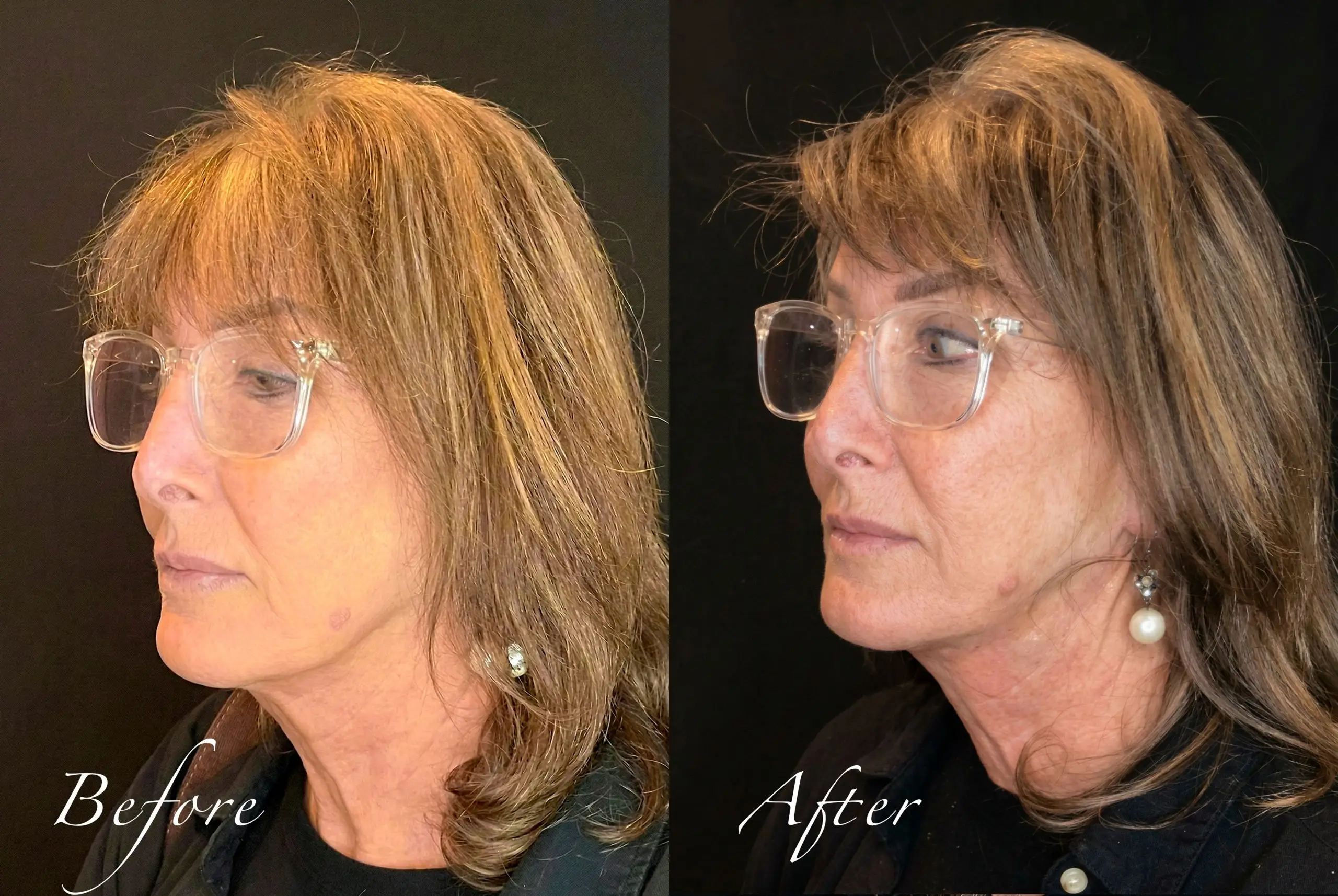
Same patient, four views — 6-month follow-up after PLLA thread sling.
 BeforeAfter
 BeforeAfter
 BeforeAfter
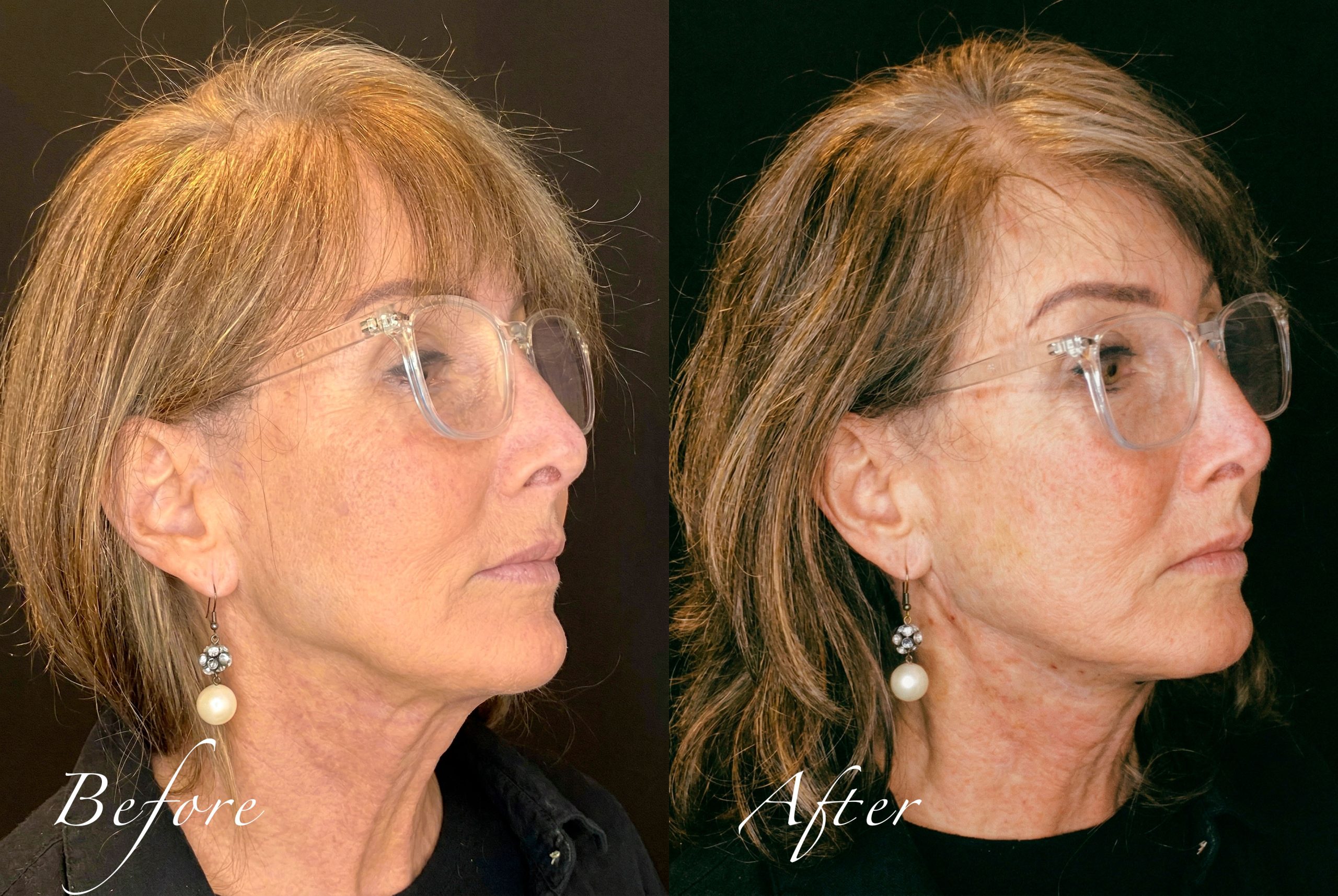 BeforeAfter
Recovery and Two-Week Follow-Up
Procedure Day
PLLA Sling Placed
Single-session placement. Chin support garment fitted to stabilize tissue during early healing.
Early Healing
Chin Support Garment
Patient wore the chin brace consistently to support the structural correction during the early integration phase.
Two Weeks
Patient-Reported Outcome
Sharper jawline definition restored and submental laxity reduced, giving a more structured lower facial contour. Patient reported significant relief, not just satisfaction.
In Her Own Words
A Note From the Patient
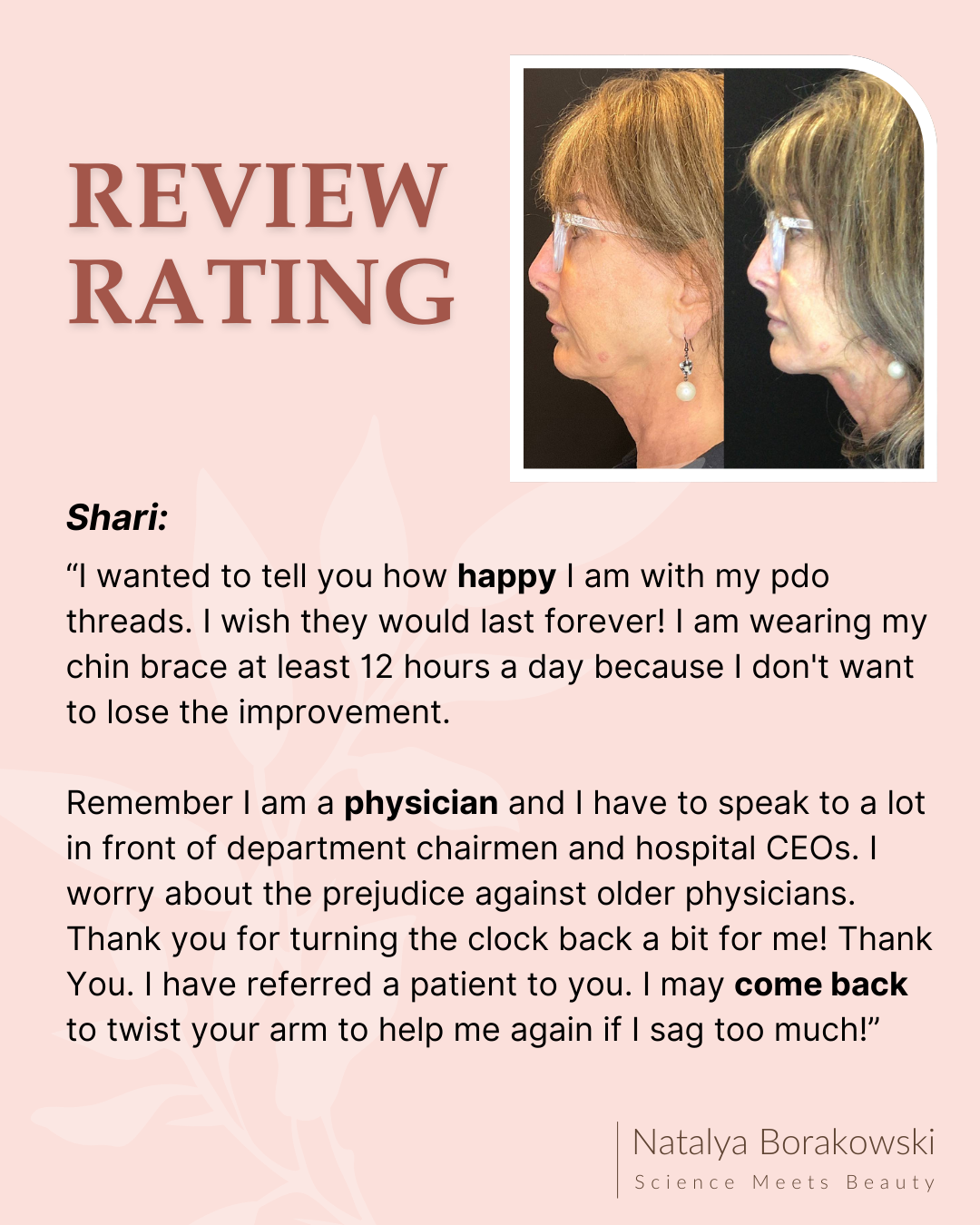
The patient sent this message in writing two weeks after her treatment (shown here). What stands out clinically is not just satisfaction — it is relief. She did not ask to look 40. She asked to feel competitive in rooms where age bias may exist, and her improvement restored sharper jawline definition and reduced submental laxity for a more structured lower facial contour.
The patient’s message uses “PDO threads” colloquially. The clinical treatment in this case was a PLLA thread sling; both terms refer to her thread-based lift.
Technical Execution and Post-Procedure Care
The PLLA sling was placed under local anesthesia in a single session. To ensure optimal results, the patient followed a disciplined aftercare protocol, including wearing a chin support garment for 12 hours a day during the initial healing phase. This stability is crucial for allowing the threads to integrate and initiate natural collagen production, which strengthens the structural lift over the following months.
Important Safety Information
Thread lift results vary by individual and are not guaranteed. Outcomes depend on age, skin quality, degree of laxity, healing response, and adherence to aftercare.
Common side effects may include bruising, swelling, tenderness, and risk of infection (rare but possible).
To reduce bruising risk, patients should avoid the following for approximately one week prior to treatment (when medically appropriate and cleared by their prescribing physician):
- Blood-thinning medications
- Alcohol
- Certain supplements (for example, fish oil and vitamin E)
Strict aftercare compliance — including wearing compression support when instructed — is essential for optimal results.
Professional Aging and Aesthetic Medicine
This case illustrates something important. Many women in leadership roles do not seek aesthetic intervention from insecurity. They seek it to remain visually aligned with their competence and authority.
Medicine offers tools to support tissue and structure. It should never reinforce fear — but it can responsibly address anatomy. The goal is not erasure of age. The goal is alignment between internal vitality and external presentation.
“She did not ask to look 40. She asked to feel competitive in rooms where age bias may exist. That is a different clinical goal — and it changes how I plan a treatment. Restraint, precision, structural support without volume. The face stays hers; the presence comes back.”
What Is the Average Cost of Non-Surgical Neck Lift Procedures?
The cost of a lower face rejuvenation using threads varies depending on the number of filaments required and the complexity of the treatment area. While non-surgical options are generally more cost-effective than surgical options, they require periodic maintenance to sustain the structural lift. At Desert Bloom, we provide a transparent, personalized quote following a comprehensive anatomical assessment and discussion of your skin goals.
Frequently Asked Questions
Why was a PLLA thread sling chosen instead of surgery?
What did the treatment specifically address?
Why is treating a 69-year-old technically more challenging?
Was this a volume-based correction?
What did the patient report at two weeks?
Who is and is not a candidate for this approach?
How effective are non-surgical neck lift treatments compared to surgery?
Can PLLA threads really lift and tighten the neck without surgery?
How long do the results of a non-surgical neck lift typically last?
How can I reduce bruising risk before a thread lift?
Are there any non-surgical treatments to address a weak jawline along with neck tightening?
This is one of several documented case studies from Desert Bloom Skincare. See all patient case studies →
Individual results vary. Patient consent obtained for case study publication. Clinical content reviewed by Dr. Natalya Borakowski, NMD. Last updated April 2026.
Other Case Studies