Hot and Dry Climates: Unique Challenges for Skin Care
Hot, dry climates significantly impact skin health, necessitating a specialized approach to care and protection. In areas with such conditions, such as the desert regions of Arizona and the subtropical zones of the United Arab Emirates (UAE), skin endures intense sun exposure and low humidity, leading to dehydration, premature aging, and other skin concerns.
Article's contents
- Why the Desert Dries Your Skin From the Inside Out
- UV in Scottsdale: Not Just Intensity — Altitude Too
- Building a Routine That Actually Works Here
- Daily Routine Adjustments for Dry Climate Living
- When Home Care Isn’t Enough: In-Clinic Options for Desert Skin
- Frequently asked questions
- Your Skin Didn’t Fail — The Environment Changed

If you’ve moved to Scottsdale and your skin started feeling like sandpaper within the first few months, you’re not imagining it — and you’re not doing anything wrong. Arizona’s desert climate is genuinely hard on skin. The combination of low humidity, extreme UV intensity, and seasonal heat creates a set of conditions that most skincare routines aren’t designed for. This isn’t about vanity. It’s about understanding what your skin barrier is up against every single day, and giving it what it actually needs.
I’ve worked with patients who moved here from Seattle, Chicago, or the East Coast and watched their skin change noticeably within weeks. The rules shift in the desert. What worked before may not work here — and that’s not a failure. It’s biology meeting geography.
Why the Desert Dries Your Skin From the Inside Out
The skin has a built-in water-retention system — the stratum corneum (the outermost layer) holds moisture partly through natural moisturizing factors (NMFs) and partly through a lipid matrix made up of ceramides, cholesterol, and fatty acids. When ambient humidity drops below about 40%, the skin begins losing water to the air faster than it can replenish it. Scottsdale’s average relative humidity sits around 20–30% for much of the year. That gap matters. The technical term is transepidermal water loss (TEWL) — your skin barrier literally losing water to the air, faster than it can replenish. In a dry climate, TEWL accelerates significantly, and if the lipid barrier isn’t intact, that process compounds over weeks and months.
What you typically notice: skin that feels tight an hour after cleansing, a dull or rough surface texture, fine lines that look more pronounced when skin is low on water, and a general “thirsty” quality that moisturizer helps but doesn’t fully resolve. This is not dry skin type — many people with naturally oily or combination skin experience it here. Dehydration is a condition, not a skin type. The desert doesn’t care what your skin was like before you moved here. It creates new challenges for everyone.
UV in Scottsdale: Not Just Intensity — Altitude Too
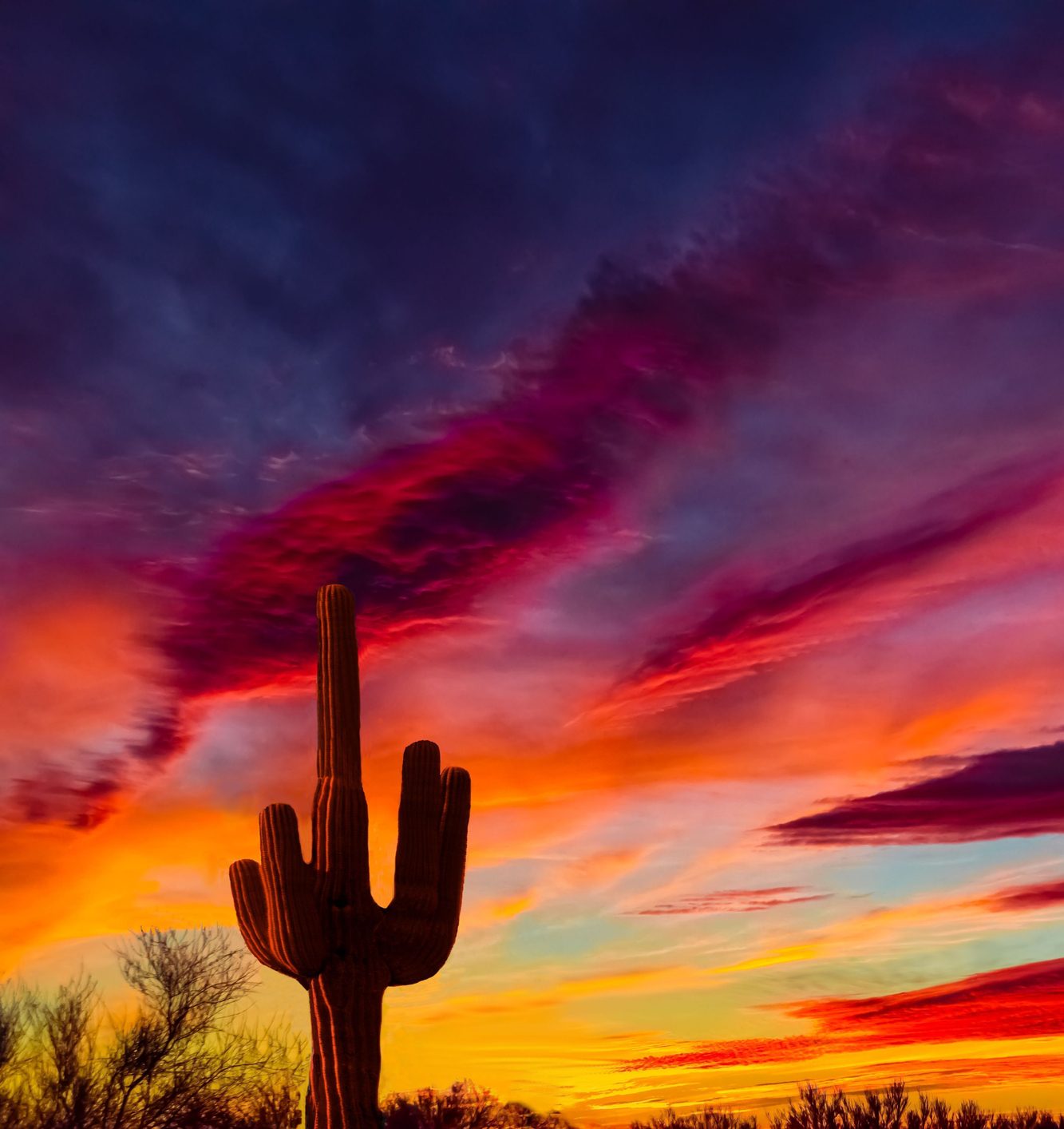
Most people know Arizona sun is intense. What’s less understood is why — and it goes beyond summer temperatures. Scottsdale sits at roughly 1,200–1,400 feet elevation. For every 1,000 feet of altitude gained, UV radiation increases by approximately 3–5%. That’s not dramatic at this elevation, but it compounds with the other factors: desert air holds less moisture and fewer airborne particles to scatter UV, cloud cover is minimal for most of the year, and the UV index regularly hits 10 or 11 during summer months (the scale technically goes to 11+, which is “extreme”). For comparison, cities like New York or Seattle rarely break 7–8 at peak summer.
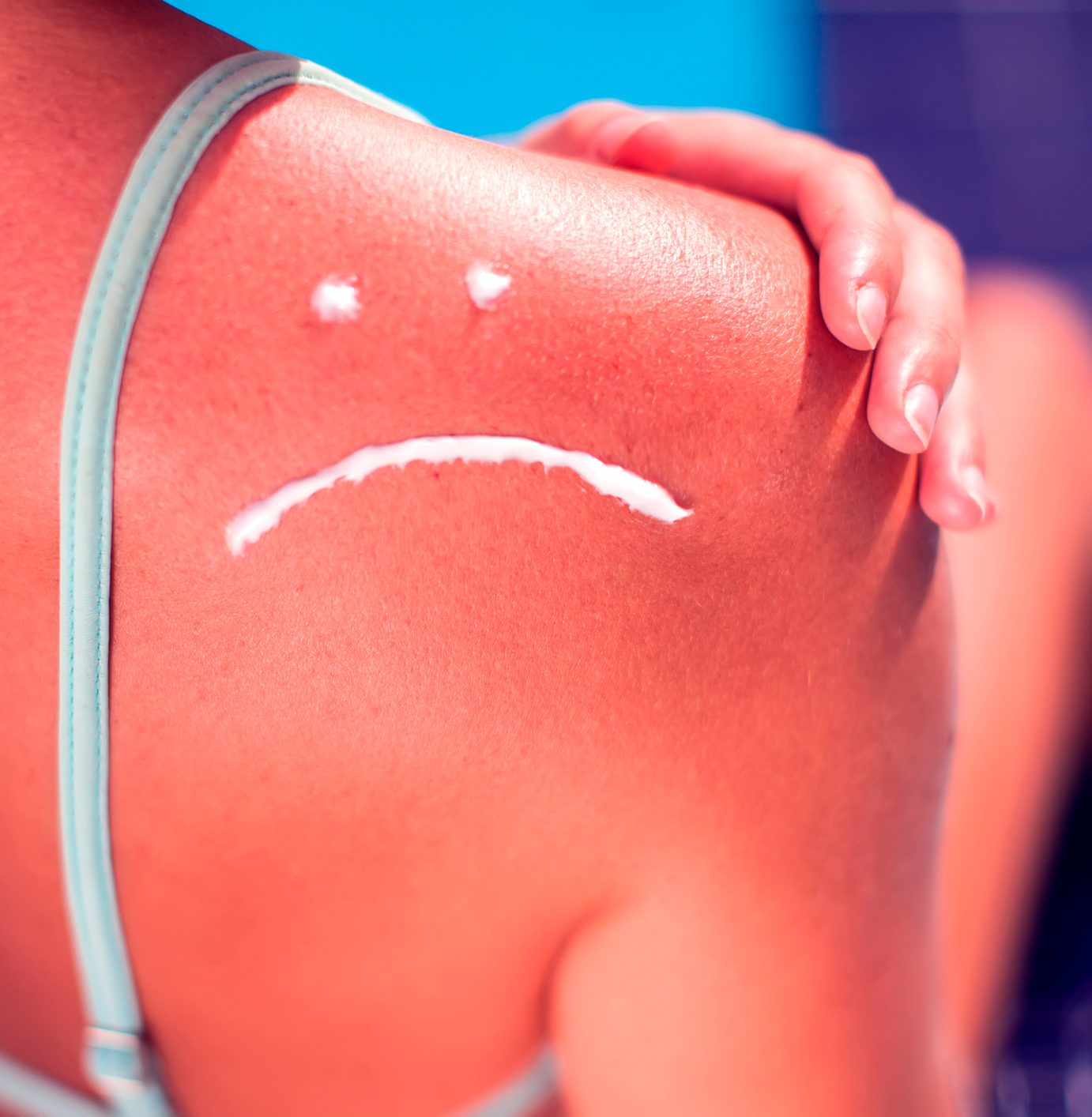
The practical consequence: UVA penetration (the aging wavelength — it reaches the dermis) is consistent year-round in Scottsdale, not just in summer. This is the radiation responsible for collagen degradation and surface pigmentation changes over time. SPF 50 earns its place in the morning routine here — not just for summer, but year-round. It’s as much a part of a morning routine as cleansing. Broad-spectrum SPF 50, applied to the face, neck, and chest — every morning, regardless of whether you’re going outdoors.
Building a Routine That Actually Works Here
The core adjustment for desert living is layering hydration, not just applying it. A single moisturizer rarely does the full job in low-humidity conditions because it’s competing with the air. The more effective approach uses a humectant — something that pulls water into the skin — followed by an occlusive that seals it in. Hyaluronic acid (HA) is the humectant most people know. Applied to damp skin, it draws moisture from the air and binds it to the surface. But here’s the thing about HA in very low humidity: if there’s barely any moisture in the air to draw from, it can actually pull water from deeper skin layers instead. The solution is to apply it on damp skin and follow immediately with an occlusive or emollient — ceramide-rich moisturizer, squalane, or a lipid-replenishing cream.
Ceramides deserve a specific mention. They’re the mortar between skin cells in the outer barrier, and they deplete in dry climates over time. Ceramide-containing moisturizers (look for ceramide NP, AP, EOP on the label) actively repair the barrier rather than just sitting on top of it. Niacinamide (vitamin B3) is worth adding too — it supports ceramide production and reduces sensitivity, which tends to increase in desert skin. And please, skip harsh cleansers. A gentle, non-foaming or low-foam cleanser morning and evening is enough. Stripping natural oils to feel “clean” just accelerates the cycle of dehydration.
Daily Routine Adjustments for Dry Climate Living
Here’s a practical framework — not a 10-step system, but a set of intentional adjustments that address what the desert actually does to skin:
| Step | What to Use | Why It Matters in AZ | What to Avoid |
|---|---|---|---|
| Cleanse | Gentle cream or gel cleanser, pH-balanced | Preserves the lipid barrier depleted by low humidity | Foaming / stripping cleansers, hot water |
| Hydrate | Hyaluronic acid serum on damp skin | Pulls moisture in before the air steals it | HA applied to dry skin in very low humidity — counterproductive |
| Seal | Ceramide-rich moisturizer or squalane oil | Occlusive layer locks in hydration; repairs barrier | Lightweight gel-only moisturizers in winter/dry months |
| Protect | Broad-spectrum SPF 50 every morning | AZ UV index 10–11 most of summer; UVA year-round | Skipping SPF indoors — UVA penetrates glass |
| Treat (PM) | Niacinamide, peptides, gentle retinoid (low-dose) | Supports ceramide synthesis, collagen maintenance | High-concentration acids daily — sensitizes barrier further |
| Weekly | Gentle enzymatic or low-acid exfoliant (1–2×/week) | Removes surface cell buildup that blocks product absorption | Daily mechanical scrubs or high-strength peels at home |
| In-clinic | In-clinic hydration treatments (see options below) | Deeper hydration + barrier support beyond home care | Aggressive laser or peel during peak summer without prep |
| Lifestyle | Humidifier indoors, increased water intake, omega-3s | Addresses TEWL from the environment and from inside | Alcohol-heavy drinks, which amplify dehydration |
| Sensitivity | Fragrance-free products, barrier-focused formulas | Desert skin flares easily when barrier is compromised | New active ingredients in summer without patch testing |
| Eyes & Lips | Dedicated eye cream, occlusive lip balm with SPF | Thin skin around eyes dries fastest; lips crack in dry air | Licking lips (further dries) or skipping eye area entirely |
When Home Care Isn’t Enough: In-Clinic Options for Desert Skin
A well-designed home routine handles daily maintenance. But the desert creates a level of chronic barrier stress that sometimes warrants professional support — not because your skin is broken, but because certain treatments deliver hydration and structural repair to depths a serum simply cannot reach. HydraFacial is the most straightforward option: it cleanses, extracts, and infuses hyaluronic acid and antioxidants simultaneously, and the immediate difference in skin texture and plumpness is real and measurable. It’s genuinely useful for people living here, not just a luxury add-on.
Mesotherapy takes a different approach — microinjections of hyaluronic acid, vitamins, and hydrating actives are delivered directly into the dermis, where topical products can’t access. For patients whose skin has become chronically dehydrated over years of desert exposure, this can reset the baseline in a way that feels different from surface treatments. SkinVive by Juvéderm is a microdroplet HA injectable specifically designed to improve skin quality and hydration — it’s not a filler in the traditional sense; it doesn’t add volume or change facial architecture. It softens surface texture and improves that internal moisture reserve that dry climates deplete. Hydrating chemical peels — lighter formulas with lactic acid or mandelic acid — can also be used seasonally to resurface without stripping the barrier. These are all tools, not prescriptions. What’s right depends on what your skin actually needs when I see you.
Frequently asked questions
Why does my skin feel dehydrated even though I drink a lot of water?
Internal hydration matters, but it’s only part of the picture. If your skin barrier is compromised — which happens gradually in low-humidity environments like Scottsdale — water still escapes through the outer layers faster than it’s replenished. Drinking more water helps support the whole system, but you also need a routine that seals moisture in topically. Humectants followed by occlusives (hyaluronic acid under a ceramide moisturizer) address the external side of the equation.I moved to Arizona from a humid climate. How long before my skin adjusts?
There’s no universal timeline, but many people notice a significant change within the first few months — and some find that the skin doesn’t fully ‘adjust’ on its own without routine changes. The desert creates conditions that exceed what most skin barriers can naturally compensate for. The good news is that with the right adjustments, most skin types can maintain a healthy baseline here. It’s about giving your barrier the support it needs, not waiting for it to adapt on its own.Is SPF really necessary every day in Scottsdale, even in winter?
Yes — and this is one of the most important habits you can build here. UVA radiation, which drives deeper skin changes over time, is consistent in Arizona year-round. It’s not dramatically lower in December than in July. UVA also penetrates through clouds and glass, so working near windows counts too. Broad-spectrum SPF 50, applied every morning before you leave (or sit by a window), is the single most protective thing you can do for long-term skin health in this climate.What’s the difference between dry skin and dehydrated skin?
Dry skin is a skin type — it produces less sebum (natural oil) and tends to be a consistent characteristic. Dehydrated skin is a condition — it lacks water, not necessarily oil, and can affect any skin type including oily or combination skin. In Arizona, many people who had normal or oily skin elsewhere develop dehydration symptoms: tightness, dullness, more visible fine lines. The treatment approach is different: dehydration responds to humectants and barrier repair, not necessarily to heavy oils.Can I use retinol in the desert? I’ve heard it dries out skin.
Yes, with the right approach. Retinoids are still valuable here — they support collagen maintenance and cell turnover. The key is starting with a low concentration (0.025–0.05% retinol), applying it at night over moisturized skin rather than bare skin, and following with a ceramide-rich moisturizer. Summer in Scottsdale can be a challenging time to introduce or increase retinoids if your barrier is already stressed from heat and sun exposure. Winter or cooler months are often a better time to build tolerance here.What in-clinic treatments are most helpful for desert skin specifically?
HydraFacial is a practical first option — it cleanses and infuses hydrating actives in one treatment with no downtime, and the results are immediately visible. For deeper hydration that lasts longer, mesotherapy (microinjections of HA and vitamins into the dermis) or SkinVive by Juvéderm (microdroplet HA that improves skin quality from within) address the chronic moisture deficit at a different level. Hydrating peels with lactic or mandelic acid can resurface seasonally without barrier disruption. We assess these individually based on what your skin is actually showing at the time of consultation.My skin is sensitive and reactive. Will the desert make it worse?
It can, because a compromised barrier is more reactive by nature — and low humidity puts chronic stress on the barrier. The good news is that a barrier-focused routine (ceramides, niacinamide, fragrance-free products) both hydrates and reduces reactivity over time. If you’re dealing with ongoing sensitivity, I’d recommend coming in for an assessment before adding new active ingredients. There’s often a short period of simplification — getting the barrier stable first — before introducing anything that treats specific concerns.Your Skin Didn’t Fail — The Environment Changed
Desert skin challenges are real, but they’re also well understood. The same environment that makes Arizona beautiful — the light, the clean air, the dramatic landscape — is also asking more from your skin than most places do. That’s not a reason to fight it. It’s a reason to understand it and adjust accordingly. If you’ve been struggling to maintain skin comfort and clarity since moving here, or if you’ve lived here for years and are noticing gradual changes you’d like to address, come in and let’s look at what’s actually happening. Sometimes a few targeted changes to a routine make the whole difference. Sometimes a treatment fills a gap that home care can’t. Usually it’s a combination of both.
Related pages worth exploring: Skin Dehydration · Sensitive Skin · HydraFacial · Mesotherapy · SkinVive by Juvéderm

“Most of my patients dealing with desert skin issues aren’t doing anything wrong — they’re applying products designed for different climates. Once we adjust for what Arizona actually demands from the barrier, the skin responds. The desert is demanding, but it’s predictable.”
Individual results vary. Clinical content reviewed by Dr. Natalya Borakowski, NMD. Last updated April 2026.