How to Find the best Aesthetic Injector


Are you considering a cosmetic treatment to enhance your natural beauty but unsure where to start? Finding the best aesthetic injector is a crucial step toward achieving the results you desire safely and effectively. This guide will help you navigate the process, ensuring you make an informed decision that boosts your confidence and well-being.
Overview
The aesthetic industry has no shortage of credentials. Almost none of them protect you.
You’ve done the research. You’ve scrolled the before-and-afters. You’ve bookmarked three clinics and talked yourself out of all of them. If this sounds familiar, you’re not being indecisive — you’re being smart. Choosing an aesthetic injector is one of the most consequential personal care decisions you’ll make, and the market has made it genuinely difficult to tell who is qualified and who just has good lighting on their Instagram page.
This is a guide for that exact moment — before you book, before you commit, while you’re still asking the right questions. Not a sales pitch for any particular clinic. An honest map of what actually separates a skilled, ethical injector from someone who could cause lasting harm.
The Credentials That Actually Protect You

Licensing in aesthetic medicine is not uniform — and that gap is where most patient disappointments (and disasters) begin. In the United States, injectors can range from board-certified physicians and naturopathic doctors to registered nurses, and in some states, to medical assistants operating under loose supervision. The title “aesthetic injector” is not a regulated credential. What matters is the specific license behind it, the scope of practice it grants, and the training the clinician has layered on top of that foundation.
Physicians (MD, DO) and naturopathic doctors (NMD) practicing in states like Arizona have full prescriptive authority, meaning they can assess, diagnose contributing anatomy, manage complications, and prescribe reversal agents like hyaluronidase on the spot — without consulting anyone else. Registered nurses can be extraordinarily skilled injectors, but their scope of practice requires physician oversight, and the quality of that oversight varies enormously by clinic. When evaluating any RN injector, the relevant question isn’t just “are they trained?” — it’s “what does their medical director relationship actually look like, and have they completed a formal, supervised injector training program beyond their nursing degree?”
| Provider Type | MD / DO / NMD | RN (with aesthetic training) | Licensed Aesthetician |
|---|---|---|---|
| Can inject neurotoxins | Yes | Yes (with MD supervision) | No — illegal in most states |
| Can inject dermal fillers | Yes | Yes (with MD supervision) | No — illegal in most states |
| Can prescribe hyaluronidase (reversal) | Yes — independently | No — requires MD order | No |
| Can diagnose vascular complications | Yes | Recognize & escalate only | No |
| Can manage emergencies on-site | Yes — full autonomy | Trained to escalate | No |
| Board certification available | Yes — ABAM, AAD, AAAM | Yes — via aesthetic nursing boards | Yes — NCEA, ABI (for facials only) |
| Typical formal training path | Medical school + residency + CME | Nursing school + aesthetic fellowship/training | Aesthetician school (600–1500hrs) |
| Can perform treatment independently | Yes | Varies by state — often yes with protocol | Facial treatments only |
MD / DO / NMD
- Can inject neurotoxins
- Yes
- Can inject dermal fillers
- Yes
- Can prescribe hyaluronidase (reversal)
- Yes — independently
- Can diagnose vascular complications
- Yes
- Can manage emergencies on-site
- Yes — full autonomy
- Board certification available
- Yes — ABAM, AAD, AAAM
- Typical formal training path
- Medical school + residency + CME
- Can perform treatment independently
- Yes
RN (with aesthetic training)
- Can inject neurotoxins
- Yes (with MD supervision)
- Can inject dermal fillers
- Yes (with MD supervision)
- Can prescribe hyaluronidase (reversal)
- No — requires MD order
- Can diagnose vascular complications
- Recognize & escalate only
- Can manage emergencies on-site
- Trained to escalate
- Board certification available
- Yes — via aesthetic nursing boards
- Typical formal training path
- Nursing school + aesthetic fellowship/training
- Can perform treatment independently
- Varies by state — often yes with protocol
Licensed Aesthetician
- Can inject neurotoxins
- No — illegal in most states
- Can inject dermal fillers
- No — illegal in most states
- Can prescribe hyaluronidase (reversal)
- No
- Can diagnose vascular complications
- No
- Can manage emergencies on-site
- No
- Board certification available
- Yes — NCEA, ABI (for facials only)
- Typical formal training path
- Aesthetician school (600–1500hrs)
- Can perform treatment independently
- Facial treatments only
Why Technique Matters More Than Location or Price
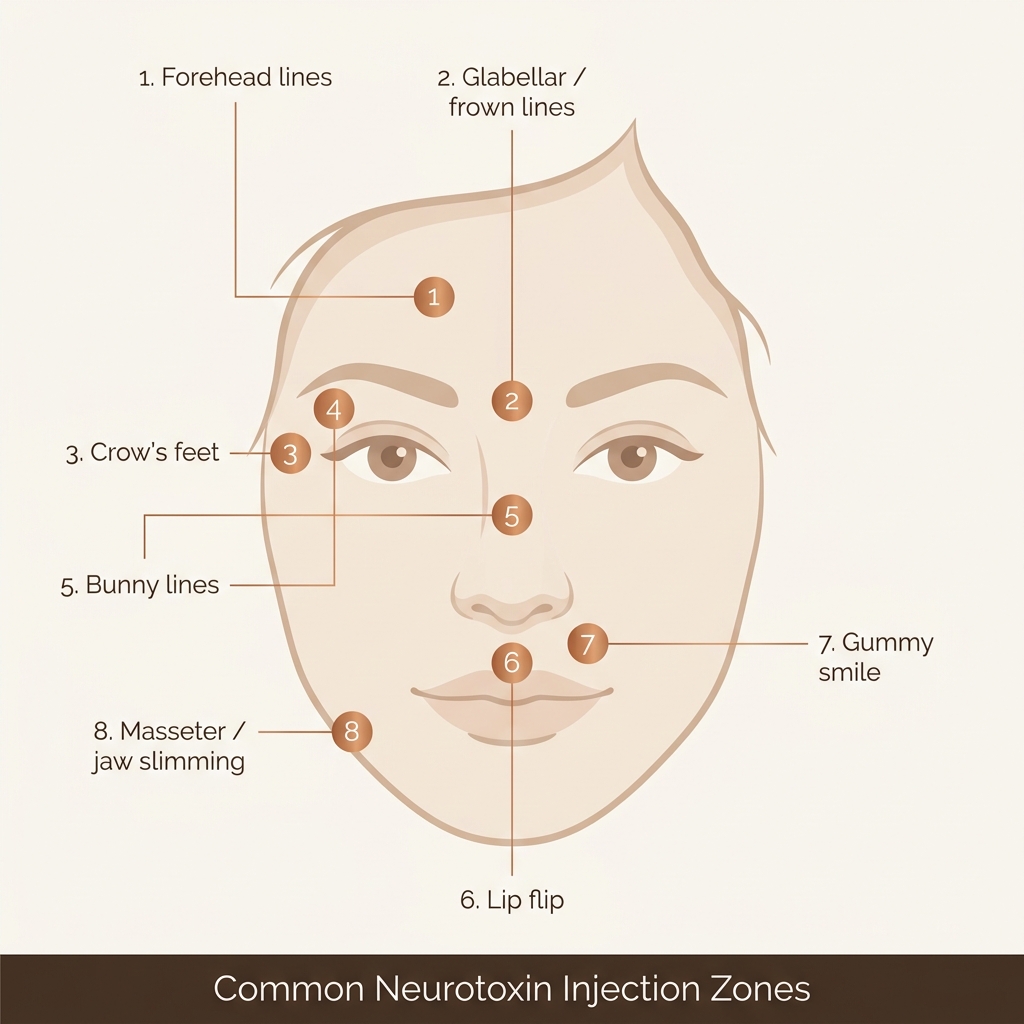
There is a version of this article that could be written entirely about finding the “best clinic in your city.” I’m not going to write that version, because it misses the point. The quality of your result depends almost entirely on the individual injector’s technique, anatomical knowledge, and clinical judgment — not the zip code, not the facility’s Instagram presence, not the discount code they’re offering this week. Two injectors at the same clinic, using the same product, can produce wildly different results on the same patient. Technique is that variable.
Skilled injectors think in three dimensions. They understand that your face isn’t a flat canvas — it has bone structure, fat compartments that shift with age, vascular territories that require precise avoidance, and zones where the same volume can look natural or unnatural depending on placement depth and injection angle. This kind of anatomical mapping is not taught in a weekend certificate course. It develops over thousands of cases, genuine mentorship, and a clinical discipline that separates injectors who follow a protocol from those who can read a face and adapt in real time. When you’re evaluating a provider, ask how many cases they’ve performed and whether they completed a supervised training program — not just a manufacturer’s seminar.
The Consultation as a Diagnostic Tool
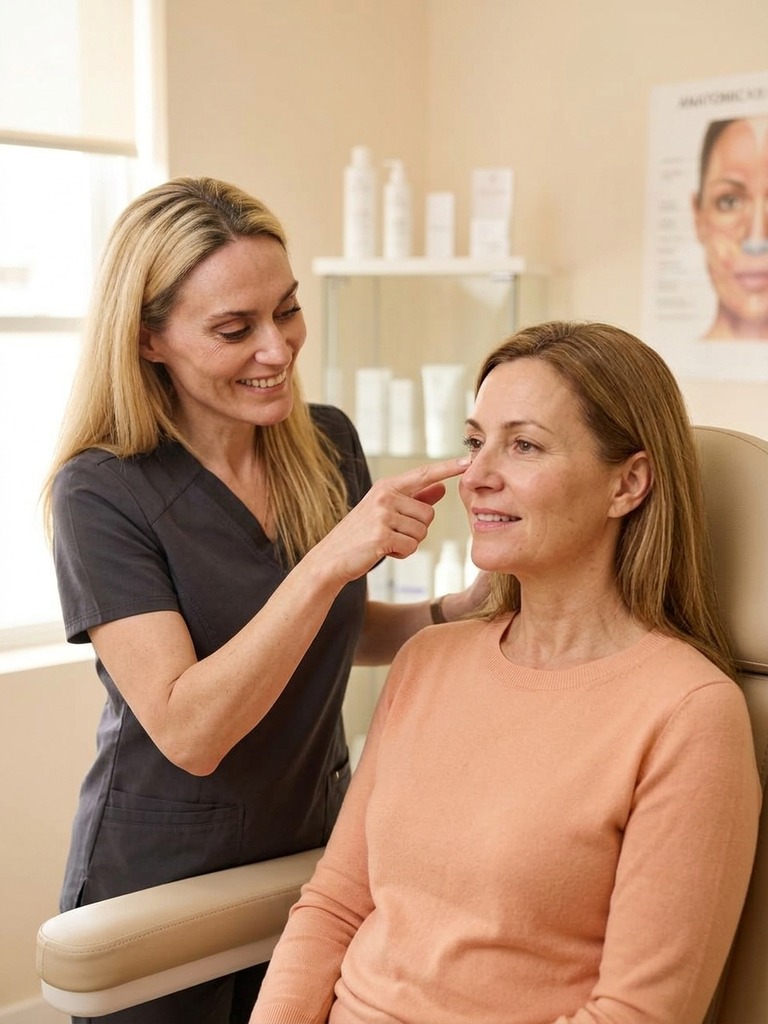
A good consultation is not a sales appointment. It is a clinical assessment — and what the injector does (and doesn’t do) in that first conversation will tell you almost everything you need to know. A qualified injector will examine your face from multiple angles, discuss what is driving the changes you’re seeing (volume loss vs. muscle hyperactivity vs. skin laxity vs. bone resorption), and present options honestly — including the option of doing nothing, or doing something different than what you came in requesting. If your consultation feels like a shopping cart transaction, that’s information.
Candidacy assessment is where clinical judgment lives. A skilled injector will sometimes refer you out — for a surgical consultation, for a different treatment modality, or simply because they don’t believe your goals can be achieved safely with the tools they have. That kind of honest referral is not a failure; it is the highest expression of clinical integrity. Conversely, a red flag is an injector who agrees to every request, suggests large volumes in a first session, or doesn’t ask about your medical history, current medications, or prior aesthetic work. These are not minor oversights. They are structural gaps that can lead to vascular compromise, tissue necrosis, or results that require expensive correction.
“The injectors I trust most are the ones willing to say 'I don't think this is right for you.' That kind of honest restraint is rarer than it should be — and it's the quality I look for most when I'm referring patients elsewhere.”
Red Flags That Are Worth Walking Away From
The aesthetic industry has low barriers to entry and high profit margins — a combination that attracts providers whose primary credential is a marketing budget. Here are the patterns worth taking seriously:
- No consultation before treatment. If you can book an appointment online and walk in for injections the same day without any prior clinical assessment, walk away. Responsible injectors require a consultation — in-person or thorough virtual — before touching a needle.
- Unmarked or vague product disclosure. You have the right to know exactly what product is being injected into your face: brand name, concentration, and volume. Any provider who is vague about this (“a premium filler”) is either using unlicensed products or doesn’t think you need to know. Both are problems.
- Deep discounts and Groupon packages. FDA-approved neurotoxins and dermal fillers have floor prices. When the cost doesn’t make sense, the product or the training is usually what’s been discounted.
- No complication management protocol. Ask directly: “If I have a complication — vascular occlusion, infection, asymmetry — what is your protocol?” A qualified injector will have a clear answer, including whether they have hyaluronidase on hand and relationships with emergency care providers if needed.
- Pressure tactics or urgency language. “This promotion ends tonight” or “I only have one opening this week” are not medical recommendations. An injector who needs to create urgency is not an injector who is prioritizing your safety.
- No before-and-after photos of their own work. Borrowed photos, stock images, or a portfolio that looks suspiciously polished without clinical context are red flags. Ask to see their personal patient cases, ideally with similar anatomy to yours.
How to Verify Training and Experience
Most states have public license lookup tools through their medical or nursing boards. Verify the license. Check that it’s current and unrestricted. Then look for supplementary credentials — not just manufacturer training certificates, but evidence of ongoing education in aesthetic medicine. Board memberships in organizations like the American Society for Aesthetic Plastic Surgery (ASAPS), the American Academy of Facial Esthetics (AAFE), or the International Master Course on Aging Science (IMCAS) indicate a provider who is staying current with evolving techniques and safety protocols.
Reviews matter — but read them critically. Look for reviews that describe the consultation process, not just the results. Reviews that mention the injector explaining the treatment plan, managing expectations honestly, or being willing to say “let’s wait on that” are more useful signals than five stars attached to “I love my lips!” You’re evaluating a clinician, not a hairdresser. The soft skill you’re looking for is trustworthiness, and it shows up in how patients describe the conversation, not just the outcome.
Questions to Ask Before You Book

You don’t need to be an expert to vet an injector — you just need to ask the right questions and watch how confidently they answer. Bring these to your consultation.
- What product and brand will you use?
- What technique do you prefer — and why?
- What happens if I have a complication?
- Can you show me cases similar to my concern?
- Who is your medical director?
Frequently Asked Questions
Does board certification matter for aesthetic injectors?
Should I always go with the cheapest option I can find?
What if I'm not happy with the results?
Can an aesthetician perform injections?
How do I know if a provider uses legitimate products?
Is it okay to go to a medspa instead of a physician's office?
What questions should I ask before booking?
When Honest Assessment Is the Treatment
The best outcome from a consultation isn’t always a treatment plan. Sometimes it’s a clear picture of what’s happening in your face, why it’s happening, and what — if anything — would address it in a way that makes sense for you. A good injector gives you that clarity whether or not you book. They map your anatomy, explain the mechanism behind what you’re seeing, and give you a realistic view of what’s possible — including the limitations. That kind of honesty is not a sign that they don’t want your business. It’s the sign that they care more about the outcome than the transaction.
You deserve to make this choice from clarity, not pressure. Not from a fear of looking wrong, not from a discount that expires at midnight, and not from a provider who sees every consultation as a sale waiting to close. When you find an injector who will tell you the truth — even when the truth is “not yet” or “not this” — you’ve found someone worth trusting with your face. That’s the standard. It’s not a high bar. It’s just often a missing one.
This article is for educational purposes only and does not constitute medical advice. Individual consultations may vary. Clinical content reviewed by Dr. Natalya Borakowski, NMD. Last updated April 2026.