Rosacea
Rosacea is a skin condition that causes redness, flushing, and visible blood vessels on the face, especially the cheeks and nose. It can also cause pimple-like bumps, and in some cases, the nose can become enlarged. Rosacea can be caused by a combination of factors such as genetics, skin type, and environmental triggers. It can be treated with various cosmetic procedures such as laser therapy, topical creams, or light-based treatments.
See all treatments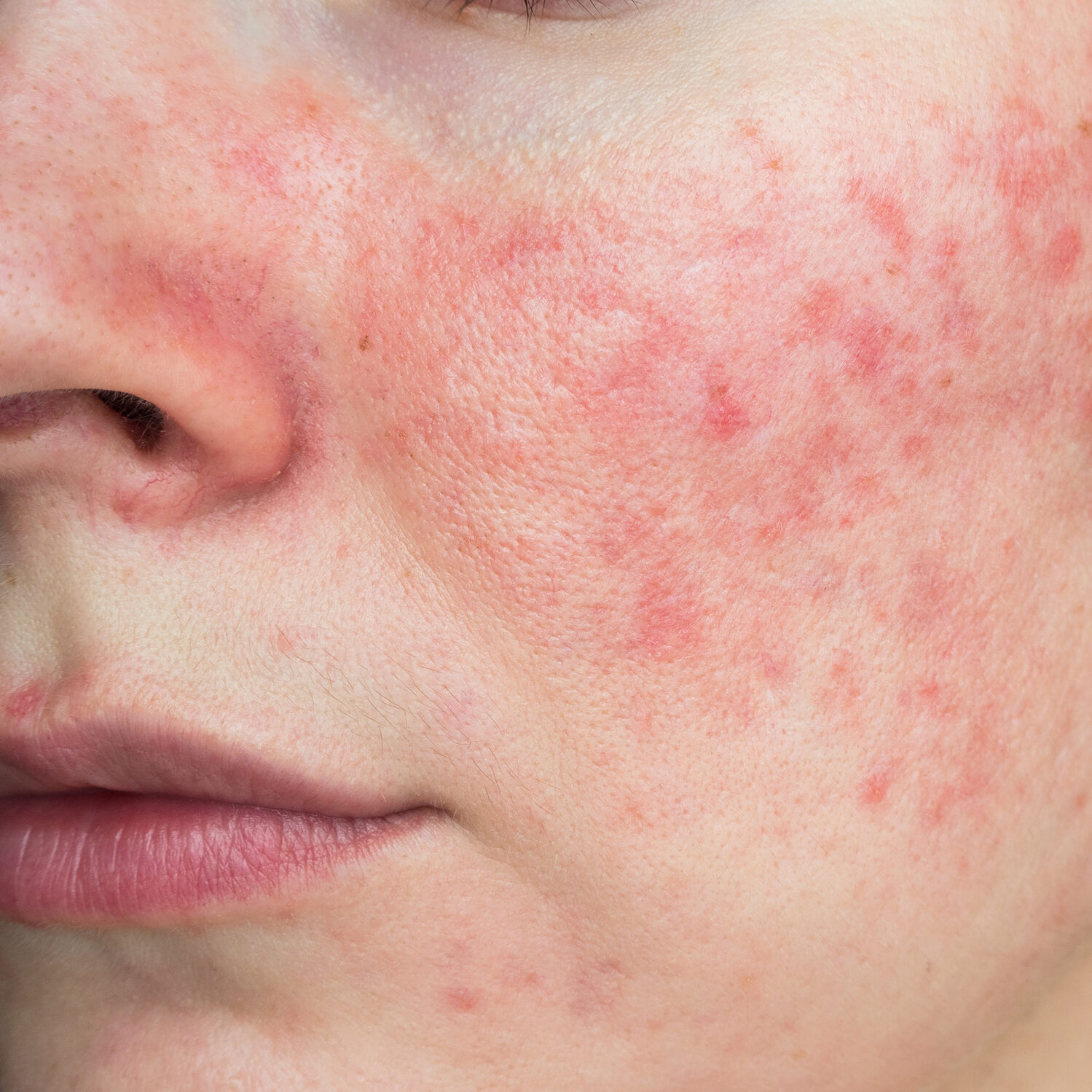
Long-pulsed Nd:YAG 1064nm and gentle facials for rosacea — physician-led routing in Scottsdale.
Find Your Treatment
Rosacea You Notice in Photos First
A persistent pink that settles across the cheeks and nose and never quite leaves. It is not the same thing as a sensitive flush or a bad sunscreen day. Rosacea is an inflammatory skin condition with neurovascular dysregulation, and in the Arizona climate — intense UV, dry heat, sudden temperature shifts — it tends to run more active than it would elsewhere.
At Desert Bloom, Dr. Natalya Borakowski, NMD approaches rosacea straightforwardly: identify whether the presentation is vascular (named vessels, diffuse background, or both), separate what an aesthetic clinic does well from what a dermatologist owns, and sequence the work so the skin calms before it gets pushed. Rosacea is managed, not cured — and the plan she builds is a long-term one.
This page sits under our broader Sensitive Skin and Rosacea hub, alongside sibling concern pages for Redness (facial flushing without a diagnosed condition) and Spider Veins (isolated vessels without underlying rosacea).
At a Glance
Scope. Two Nd:YAG 1064nm laser paths plus two gentle facials: targeted Vein and Redness Removal for focal named vessels, Elluminate Mini for diffuse background color, Pure Oxygen Soothing Facial and HydraFacial as barrier support between sessions. Most rosacea plans need 3–5 sessions over 3–6 months.
Provider & candidacy. Dr. Natalya Borakowski, NMD oversees all treatment planning. Long-pulsed Nd:YAG 1064nm is appropriate across Fitzpatrick I–VI. Alexandrite 755nm is not used for rosacea — its melanin affinity makes it unsafe across darker skin tones. Laser is deferred during active papulopustular flares; we coordinate with dermatology when needed.
Downtime & how to start. All four listed options are zero downtime. Rosacea presentations vary considerably — a 30-minute consultation is where Dr. B maps which approach applies to your specific pattern. If you have untreated inflammatory rosacea, we may recommend a dermatology visit first.
What Is Rosacea — and What Makes It Flare?
Rosacea is a chronic inflammatory skin condition characterized by persistent facial redness, dilated blood vessels, and — in some forms — small bumps and skin thickening. The signs and symptoms vary by subtype, but the core mechanism is shared: neurovascular dysregulation (meaning the small blood vessels in the facial skin become persistently reactive, dilating with little provocation), inflammation that cycles rather than resolves, and a barrier that tends to run sensitive. The symptoms of rosacea typically appear on the central face — cheeks, nose, chin, forehead, sometimes the eyelids — and the distribution is almost always symmetrical.
General facial redness and rosacea are not the same thing. Anyone can flush from sun exposure, wind, or a spicy meal; rosacea is when that flushing stops fully resolving and the color starts to stay. Risk factors for developing rosacea include fair skin and lighter Fitzpatrick types, a family history of the condition, and prolonged UV exposure — though it can appear across all skin tones. If the flush comes on in short episodes and fully settles, the more useful starting point may be our Redness page. If you have discrete raised red patches or isolated vessels without the underlying recurring pattern, Spider Veins is probably closer to what you are describing.
Rosacea flare ups are driven by a fairly consistent list of triggers — UV and sun, heat, hot or cold temperatures, hot drinks and hot beverages, alcohol, spicy foods, wind, stress, and strenuous exercise. The Arizona climate covers more than half of that list on any given afternoon, which is why people who develop rosacea after moving here often notice their rosacea symptoms flaring more frequently or lasting longer. Identifying which triggers drive your flare ups and modifying the ones you can is the first step we ask individuals to work on — before we touch a laser. Disrupted blood flow to the facial capillaries is what drives the visible response; managing triggers helps dampen that cycle.
The Four Subtypes (Briefly)
The National Rosacea Society recognizes four presentations of rosacea, and most patients have one dominant pattern with features from one or two others. Subtype matters because it changes which treatments do most of the work. Patients who come in assuming they have ETR sometimes turn out to have papulopustular involvement — and that changes the sequencing significantly.
| Feature | Vein & Redness Removal | Elluminate Mini | Pure Oxygen | HydraFacial |
|---|---|---|---|---|
| Best for | Focal named vessels, telangiectasia | Diffuse background erythema (ETR) | Barrier support, flare periods | Maintenance between laser sessions |
| Mechanism | Long-pulsed Nd:YAG 1064nm — targeted vessel | Nd:YAG 1064nm — gentler facial protocol | Oxygen infusion + calming serum | Hydration + sensitive boosters |
| Fitzpatrick range | I–VI (safest across skin tones) | I–VI (Nd:YAG 1064nm) | All types | All types |
| Sessions typical | 2–4 sessions, 4–6 weeks apart | 3–5 sessions, 4–6 weeks apart | As needed / adjunct | As needed / adjunct |
| Downtime | None | None | None | None |
| Role | First-line — focal vessels | First-line — diffuse erythema | Adjunct | Adjunct |
Rosacea in Darker Skin (Fitzpatrick IV–VI)
Rosacea in Fitzpatrick IV–VI skin presents differently: a warm, dusky central face rather than bright pink; more pronounced puffiness or tightness; a background dyschromia in the adjacent skin that gets mistaken for post-inflammatory hyperpigmentation. The condition is often diagnosed late or missed entirely in these skin tones.
Alexandrite 755nm is not used for rosacea here — too much melanin affinity for darker skin. Long-pulsed Nd:YAG 1064nm reaches the vessel without the pigment risk and is the safer lead for Fitzpatrick IV–VI. KTP 532nm is also avoided in this context. This is a conversation we want to have in person, with a test spot before committing to a series.
Medical Lane vs Aesthetic Lane
Rosacea is often a two-clinic condition. We want to be direct about what we do and what belongs with a dermatologist, because the right plan usually involves both — and patients who skip the medical lane are more likely to chase symptoms with cosmetic sessions that work less well on a flaring baseline.
Dermatology owns: diagnosis and subtype classification, prescription topical medications (metronidazole, ivermectin, azelaic acid, brimonidine gel, oxymetazoline), oral antibiotics for inflammatory rosacea (low-dose doxycycline is most common), active inflammatory flare management, and long-term decisions about the long term use of topicals or maintenance medical support. Dermatology is also the right first stop when rosacea symptoms are predominantly inflammatory — many papules, pustules, or signs of ocular involvement — rather than primarily vascular.
Aesthetic clinic owns: long-pulsed Nd:YAG 1064nm laser for named vessels and telangiectasia, Elluminate Mini Nd:YAG facial for diffuse erythema, gentle barrier-supportive facial protocols, and skincare guidance to prevent rosacea flares (avoid alcohol-based toners, fragrance, glycolic acid layering during active periods, harsh exfoliation). Knowing what can trigger flare ups — UV most of all, but also heat, alcohol, and spicy foods — and building a plan to minimize those exposures is part of what the aesthetic consultation covers. Managing triggers reduces the cycle of inflammation that feeds the underlying vascular reactivity.
If you come in with active papules and undiagnosed rosacea, we will often suggest seeing a dermatologist first — not because we cannot help, but because the laser works better on a calmer baseline, and we would rather delay a session than push through a flare. Patients who coordinate between both clinics tend to get the best outcomes. A good consultation here sometimes ends with a referral rather than a booking.
Frequently asked questions
What is the difference between rosacea and general facial redness?
Facial flush is a symptom — anyone can develop it from sun, wind, or a single spicy meal. Rosacea is an inflammatory skin condition with neurovascular dysregulation: the symptoms of rosacea persist even without a clear trigger, the vessels stay dilated, and the skin remains reactive. If the color comes and goes fully, it may not be rosacea. If it never fully settles, that points toward a diagnosis. Rosacea flare ups also tend to be more intense and take longer to calm than ordinary flushing.Can rosacea be cured?
No. Rosacea is managed, not cured. Long-pulsed Nd:YAG 1064nm laser can meaningfully reduce named vessels and diffuse background color, sometimes for years — but the underlying condition and its tendency for flare ups remain. Maintenance sessions and trigger avoidance are part of the long-term picture.What is the best laser for rosacea?
Long-pulsed Nd:YAG 1064nm. Both Vein and Redness Removal (targeted approach) and Elluminate Mini (gentler facial-style protocol) use this wavelength. Among available lasers, 1064nm is the most appropriate choice: Alexandrite 755nm is absorbed by melanin rather than the dilated vessels, making it unsuitable. IPL outcomes for true rosacea are generally inferior to focused 1064nm in our clinical protocol. Most rosacea plans use both Nd:YAG approaches in sequence.Is laser safe if I have darker skin?
Yes, with the right wavelength. Long-pulsed Nd:YAG 1064nm is safe across Fitzpatrick I–VI. Alexandrite 755nm and KTP 532nm carry a higher risk of pigmentary change in darker skin and are not used for rosacea here. Rosacea symptoms in Fitzpatrick IV–VI skin often present differently — less bright pink, more warmth and diffuse darkening — and the consultation should account for that. We want to have the device selection conversation in person, including a test spot before committing to a series.What foods trigger rosacea?
Spicy foods, hot drinks and hot beverages, and alcohol are the most commonly reported dietary triggers for rosacea flare ups. Individual patterns vary considerably. Many people find that keeping a short trigger log for a few weeks is more useful than a generic avoid-list — rosacea varies widely from case to case.Should I see a dermatologist or an aesthetic clinic?
If your rosacea is predominantly inflammatory (many papules, pus filled pimples), start with a dermatologist — prescription topicals and antibiotic therapy live there. If your rosacea is predominantly vascular (diffuse flush, named vessels, frequent blushing, flare ups tied to heat or sun), an aesthetic clinic with long-pulsed Nd:YAG laser is the more direct path. Many people work with both, sequentially.How many sessions will I need?
A typical diffuse-color course is 3–5 Elluminate Mini sessions spaced 4–6 weeks apart, with maintenance every 6–12 months. Targeted Vein and Redness Removal usually needs 2–4 sessions. Severe presentations or extensive distribution may need more. Dr. Borakowski estimates the full plan at consultation rather than per-session.Working With Dr. Borakowski on Rosacea
Dr. Natalya Borakowski, NMD has been practicing aesthetic medicine for over twenty years. Her approach to rosacea is straightforward: identify the subtype, separate what we can do well from what a dermatologist does better, and sequence the work so that the signs calm down without triggering a new flare.
She is direct with people about what laser can and cannot do. The Nd:YAG 1064nm wavelength has reproducible outcomes for named vessels and diffuse erythema — but rosacea is managed, not cured, and realistic expectations are part of the plan she builds.

“Rosacea is one of the conditions where I ask patients to bring patience, not just a credit card. The vessels we clear today will stay cleared — but the underlying reactivity is still yours to manage. Our job is to reduce the visible burden, give you a calmer baseline, and make sure the plan is realistic.”
Ready to Understand Your Rosacea in Scottsdale?
A rosacea consultation here starts with mapping your pattern — which subtype you have, what symptoms of rosacea you carry day-to-day, what triggers your flare ups, and whether the vascular component is the right starting point or whether dermatology coordination should come first.
Complimentary 30-minute consultations are available. No obligation to book a session. If we think a dermatologist visit should precede your laser work, we will tell you that directly.
References
- “Standard classification and pathophysiology of rosacea: The 2017 update by the National Rosacea Society Expert Committee.” J Am Acad Dermatol. 2018. DOI(PMID: 29089180)
- “Standard management options for rosacea: The 2019 update by the National Rosacea Society Expert Committee.” J Am Acad Dermatol. 2020. DOI(PMID: 32035944)
- “Meta-Analysis of the Efficacy of Intense Pulsed Light and Pulsed-Dye Laser Therapy in the Management of Rosacea.” J Cosmet Dermatol. 2024. DOI(PMID: 39240125)
- “Treatment of superficial cutaneous vascular lesions: experience with the long-pulsed 1064 nm Nd:YAG laser.” ScientificWorldJournal. 2012. DOI(PMID: 23028248)
- “Laser and energy-based devices for treating rosacea — a systematic review and network meta-analysis.” J Dtsch Dermatol Ges (JDDG). 2026. DOI(PMID: 41273013)
Treatments
- HydraFacial$199-$29945 minutes and up
- Laser facial$27560 minutes
- Laser resurfacing treatment$67530 and up
- Photo Facial$175-$57515 minutes and up
- Pure oxygen soothing facial$12560 minutes
- Vein and Redness Removal$275per 15 minutes
Consultation in skin care clinic
Desert Bloom Skincare Center offers personalized skincare consultation to help you achieve a flawless and radiant complexion. Book your appointment today and let our expert team of skincare professionals address your specific concerns and help you reach your skincare goals.
Visit Our Scottsdale Aesthetic Center
Address
10752 N 89th Place, Suite 122B,Scottsdale, AZ 85260.
Phone:(480) 567-8180
E-mail:info@desertbloomskincare.com
Get Directions →Location & Directions
Desert Bloom Skincare is conveniently located in the Shea Corridor of North Scottsdale, within Edwards Professional Park I — minutes from HonorHealth Scottsdale Shea Medical Center and the Mayo Clinic Scottsdale Campus.
Areas We Serve
We proudly provide expert non-surgical rhinoplasty and PDO thread lifts to patients across the Southwest:
- ScottsdaleNorth Scottsdale · McCormick Ranch · Gainey Ranch
- Paradise Valley
- PhoenixArcadia · Biltmore · North Phoenix
- Fountain Hills
- Cave Creek & Carefree