Melasma
Melasma is a common skin condition that causes dark, discolored patches on the face, typically on the cheeks, forehead, nose, and chin. It can be caused by hormonal changes, sun exposure, or genetic factors. Melasma can be treated with various cosmetic procedures such as chemical peels, laser therapy, or topical creams at an aesthetic medicine clinic.
See all treatments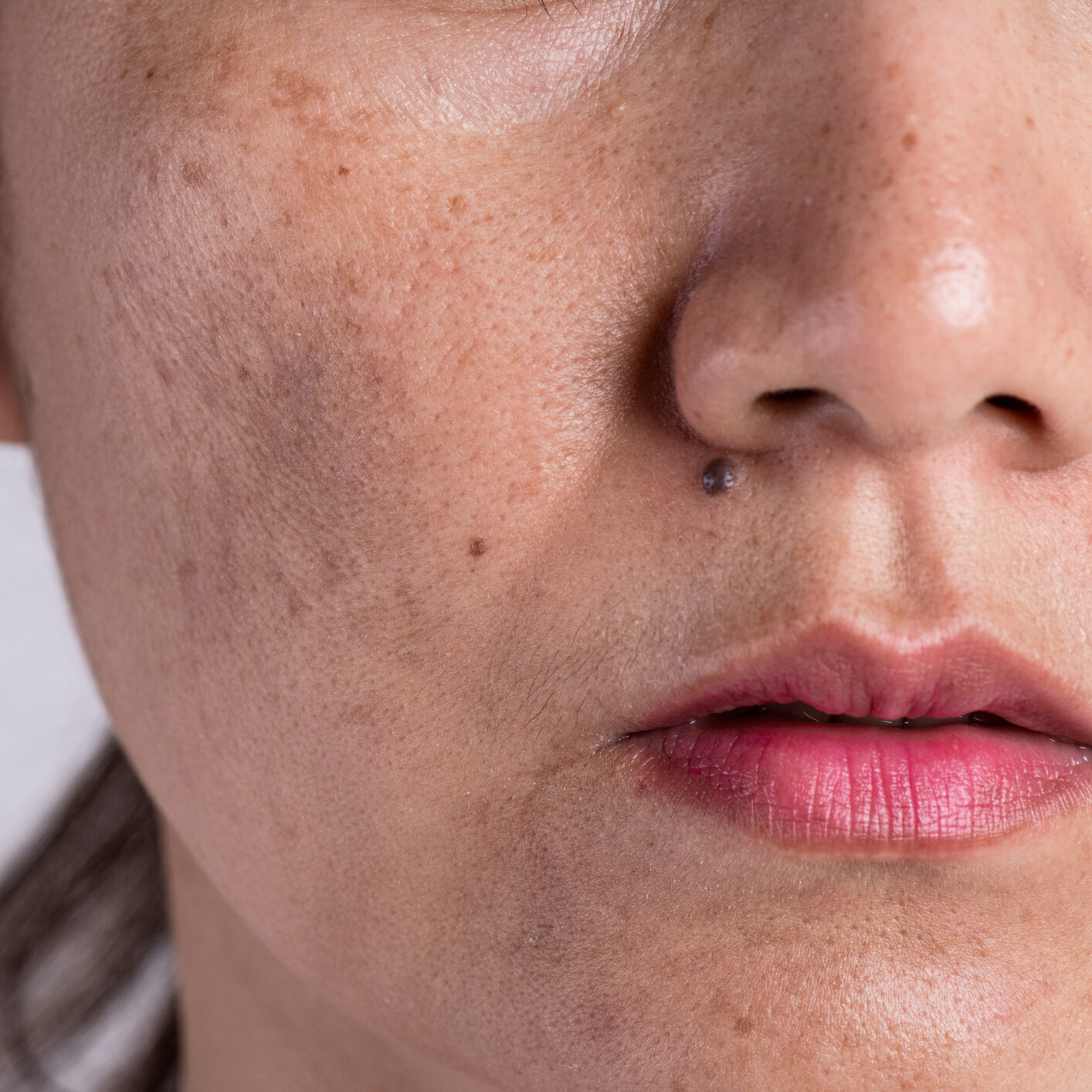
Physician-led melasma management in Scottsdale — non-heat-first protocols, Fitzpatrick-aware routing, and ongoing sun protection guidance.
Find Your Treatment
Dark Patches That Come Back Every Summer
Melasma is one of the most relapse-prone skin conditions to manage. The patchy, brown-gray discoloration that appears on the cheeks, forehead, upper lip, and chin is driven by overactive melanocytes responding to hormonal signals and UV exposure — two triggers that are difficult to eliminate entirely. That is why melasma is managed rather than cured: the goal is steady, controlled fading and a long-term prevention plan that keeps it from coming back as fast.
At Desert Bloom, Dr. Natalya Borakowski, NMD treats melasma with clinical caution — starting with the least inflammatory interventions first. Aggressive treatments, particularly those that generate heat, can trigger post-inflammatory hyperpigmentation that looks worse than the original melasma. The approach here prioritizes non-heat biorevitalization and controlled chemical exfoliation over device-first thinking.
Related concerns: hyperpigmentation hub (full pigment routing by type and Fitzpatrick), age spots, sun spots. Melasma is a specific subtype of hyperpigmentation — if you are unsure which applies to you, the hyperpigmentation hub is a useful starting point.
At a Glance
Scope. Three in-clinic routes for melasma at Desert Bloom — non-heat biorevitalization (PRX-T33 / Unicorn Facial), controlled chemical peels (Dermaquest mandelic/kojic blends), and iontophoresis with brightening actives. Photo Facial (Alexandrite 755 nm) is a limited fourth option for Fitzpatrick I–III only after non-heat treatments have been optimized. Melasma requires ongoing management; treatment series plus daily mineral SPF 50+ is the standard plan. See price-list for current pricing.
Provider & candidacy. Dr. Borakowski oversees every melasma treatment plan. Heat-based lasers — CO2, Erbium, RF, Alexandrite for Fitzpatrick IV–VI — are contraindicated for melasma. Darker skin tones (Fitzpatrick IV–VI) route exclusively to the non-laser non-heat pathway: PRX-T33, Dermaquest peels, and iontophoresis. Fitzpatrick type and melasma depth (epidermal vs dermal vs mixed) are confirmed at consultation — patients do not need to self-diagnose.
Downtime & how to start. All three primary routes are zero to minimal downtime. Melasma is a condition where results build over a series, not a single session — a realistic plan is 4–6 sessions over 3 months, followed by a maintenance cadence. A 30-minute consultation is where Dr. B confirms which pathway applies and whether Rx topical coordination with a dermatologist belongs in the plan.
What Is Melasma?
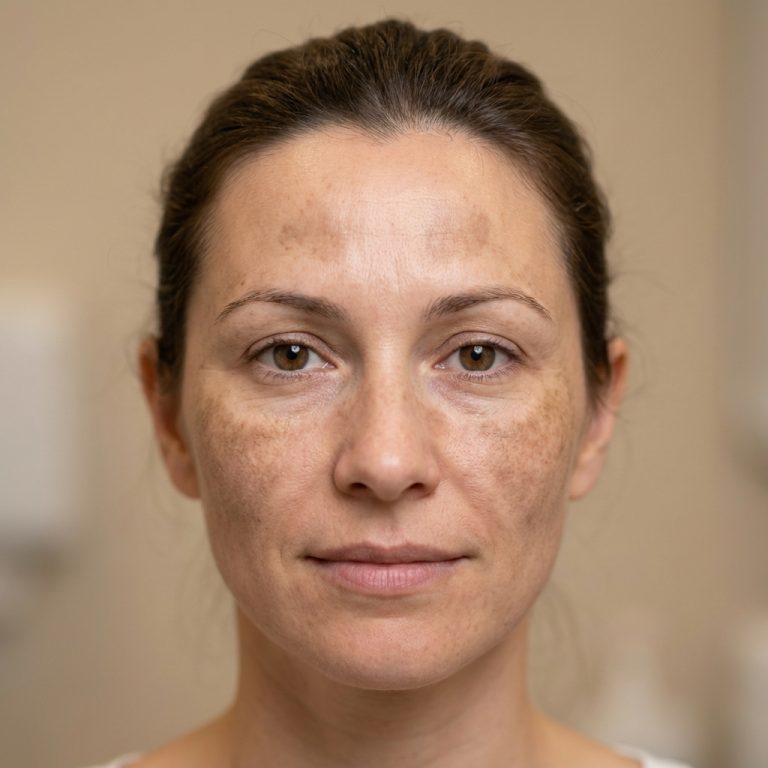
Melasma is a very common skin disorder in which overactive melanocytes — the pigment-producing cells in the epidermis — respond abnormally to hormonal triggers and ultraviolet radiation, producing excess melanin in defined patches. Melasma appears most often on the central face: cheeks, forehead, upper lip, chin, and occasionally the nose. It is almost always symmetrical. Unlike discrete sunspots or post-inflammatory hyperpigmentation, melasma lesions are diffuse, poorly defined at the edges, and tend to fade in winter and deepen in summer.
Melasma is classified by pigment depth: epidermal melasma sits in the upper layers and tends to respond better to topical treatments and peels; dermal melasma sits deeper and is more resistant; mixed melasma involves both layers and is the most common presentation. A Wood’s lamp examination at consultation helps Dr. Borakowski distinguish the pigment depth pattern before recommending a treatment plan.
Melasma is not dangerous, but its psychosocial impact is significant — the visible discoloration affects quality of life for many patients who develop melasma, particularly women during their reproductive years. The condition is more prevalent in skin tones with higher baseline melanin (Fitzpatrick III–VI), though it occurs across all skin types. In Scottsdale’s high-UV environment, even low-sun winter days are enough to exacerbate melasma if daily broad-spectrum sunscreen is not applied consistently.
What Triggers and Causes Melasma?
Melasma is a multifactorial skin condition — no single cause explains all presentations. The four clusters below drive the majority of cases that commonly occur in an aesthetic clinic setting.
Hormonal Triggers
Estrogen and progesterone fluctuations stimulate estrogen receptors on melanocytes, prompting elevated levels of melanin production. Melasma occurs most commonly during pregnancy — sometimes called the “mask of pregnancy” or chloasma — and in women taking oral contraceptive pills or birth control pills. Hormone replacement therapy (HRT) can initiate or worsen melasma at any age, including through perimenopause. This hormonal melasma pattern typically develops bilaterally and symmetrically across the cheeks and forehead.
Most common driver: pregnancy / birth control / HRTUV and Visible Light Exposure
Sun exposure is the most reliable activating trigger — ultraviolet radiation (UV rays, UVA and UVB) directly stimulates melanocyte activity and can cause melasma to develop or reactivate even after successful treatment. Visible light — particularly blue light and HEV wavelengths — has also been shown to exacerbate melasma through a separate pathway from UV. Iron oxide pigments in mineral sunscreens block both UV and visible light, which is why tinted mineral SPF 50+ is the standard recommendation rather than clear SPF products.
Key prevention: mineral SPF 50+ with iron oxide, daily year-roundGenetic Predisposition
A positive family history is a significant risk factor — identical twins frequently develop similar melasma patterns, suggesting a strong genetic predisposition. Melasma is more commonly observed in individuals of Latin American, Middle Eastern, Southeast Asian, and South Asian descent, as well as in other skin tones with higher baseline melanin (Fitzpatrick III–VI), during their reproductive years. However, melasma is not limited to darker skin tones — it develops across all Fitzpatrick types.
Risk increases with family history and higher baseline melaninHeat and Phototoxic Reactions
Heat itself — infrared radiation independent of UV — can activate melanocytes and exacerbate melasma. This is one of the reasons why heat-based laser devices are contraindicated for melasma treatment. Drug-induced pigmentation from phototoxic medications (certain antibiotics, oral contraceptive pills, topical retinoids at high concentrations, some skincare products with fragrance) can mimic melasma or exacerbate existing melasma lesions. When melasma appears or worsens shortly after a new medication is started, a healthcare provider should be consulted.
Heat devices contraindicated — even “gentle” laser heat worsens melasmaWhy Melasma Is Different from Other Facial Hyperpigmentation
Not all facial hyperpigmentation is the same condition, and the treatments are not interchangeable. Melasma’s hormonal driver makes it fundamentally different from UV-induced age spots and sun spots (discrete solar lentigines that respond well to targeted laser on lighter skin), or from post-inflammatory hyperpigmentation left by acne. The hyperpigmentation hub covers all four pigment categories; this page focuses specifically on melasma-pattern pigment.
The key clinical distinction is recurrence. A Photo Facial or laser session can clear solar lentigines in a short series with durable results, because the cause (UV damage to that specific site) is relatively fixed. Melasma comes back — the melanocytes that produced the excess pigment remain hormonally primed to produce it again, and UV exposure, heat, or a hormonal shift will reactivate them. This is why the treatment approach for melasma prioritizes long-term management protocol over aggressive single-session clearing.
Melasma also requires a different risk calculus for device selection. Skin conditions that appear on the surface respond to light-based treatment straightforwardly on lighter Fitzpatrick tones. For melasma — particularly in darker skin and in any Fitz type where dermal pigment is involved — heat-generating devices risk triggering postinflammatory hyperpigmentation (PIH) that is darker than the melasma itself, setting the patient back rather than forward. This is why the non-heat pathway (PRX-T33 biorevitalization, Dermaquest chemical peels, iontophoresis) leads the melasma protocol at Desert Bloom.
Fitzpatrick Skin Type and Heat Laser Contraindications for Melasma
No CO2. No Erbium. No RF microneedling for melasma. No Alexandrite 755 nm for Fitzpatrick IV–VI. Heat-generating devices cause thermal stimulation of melanocytes, which can trigger a rebound of pigment darker than the original melasma lesions — a worsening rather than an improvement. This applies even to devices marketed as “gentle.”
For Fitzpatrick IV–VI skin: no heat-based laser for pigment correction of any type. The Nd:YAG 1064 nm laser at Desert Bloom (Elluminate Mini) is a vascular device — it is used for rosacea and redness, not for melasma pigment. See our hyperpigmentation hub for the full Fitz IV–VI pigment routing: PRX-T33 (Unicorn Facial) → Dermaquest chemical peels → Iontophoresis Facial.
For Fitzpatrick I–III: Photo Facial (Alexandrite 755 nm) is a limited option for stable, non-inflammatory epidermal melasma in lighter skin — used only after non-heat options have been optimized first, and only when Dr. B confirms the presentation is appropriate. It is not a starting point for melasma.
Treatment Options for Melasma at Desert Bloom
Melasma treatment requires a different mindset than most pigmentation concerns. The goal is controlled, repeated improvement — not aggressive single-session clearing. Treatments that generate significant heat or inflammation can trigger postinflammatory hyperpigmentation (PIH), which may appear darker than the original melasma. Dr. Borakowski selects approaches that fade pigment steadily while keeping the skin barrier intact and melanocytes as calm as possible. All three primary routes are appropriate across all Fitzpatrick skin types. Photo Facial is a conditional fourth option for Fitzpatrick I–III only, after non-heat protocols have been optimized.
Choose this if: You have active melasma at any skin tone and want a non-heat brightening series with minimal downtime. Typically 4 sessions over 6–8 weeks.All Fitzpatrick types · No heat · First-line for Fitz IV–VI · See Unicorn Facial details →
Choose this if: You want controlled exfoliation to fade surface-level and mid-depth melasma lesions. Often combined with PRX-T33 sessions for synergistic brightening. A series of 4–6 sessions is typical.All Fitzpatrick · Non-heat · Safe Fitz IV–VI · See Chemical Peel details →
Choose this if: Your melasma is primarily hormonal (birth control, HRT, perimenopause), you have reactive or barrier-compromised skin, or you are maintaining between PRX-T33 or peel sessions. Also the primary maintenance therapy option in active melasma management.All Fitzpatrick · No heat · Hormonal melasma · See Iontophoresis Facial details →
Contraindicated for Fitzpatrick IV–VI. The wavelength has high affinity for epidermal melanin — using it on darker skin tones risks triggering post-inflammatory hyperpigmentation worse than the original melasma. Dr. Borakowski confirms candidacy at consultation and requires that the melasma is stable before any Alexandrite session.Fitzpatrick I–III ONLY · NOT for Fitz IV–VI · Escalation only · See Photo Facial details →
How it fits the plan: Used between active sessions (typically 4–6 weeks after PRX-T33 or peel) as a gentle reset. Appropriate across all skin tones. Patients actively managing melasma may include it as part of their ongoing maintenance cadence alongside consistent mineral SPF 50+ use. This is not a standalone melasma treatment — it is a skin-tone stabilizer used in between primary modalities.All Fitzpatrick · No heat · Supportive maintenance only · Not standalone melasma treatment
Medical Lane: Prescription Topicals and Dermatologist Coordination
In-clinic treatments work best when they run alongside a topical home-care protocol. Several prescription topical medications have strong evidence for melasma control, and while Desert Bloom focuses on in-clinic procedures, the most effective melasma management plans often involve both an aesthetic clinic for in-office sessions and a board-certified dermatologist for topical therapy prescription and long-term medication management.
In-office maintenance at Desert Bloom uses topical agents with demonstrated evidence for melasma: kojic acid (delivered via PRX-T33 and peel blends — a naturally derived tyrosinase inhibitor), mandelic acid peels for controlled epidermal turnover, topical vitamin C for antioxidant suppression of UV-driven melanin activation, niacinamide for barrier support and pigment-transfer inhibition, and broad-spectrum mineral SPF 50+ with iron oxide — applied daily, year-round, even on overcast Arizona days. These are the in-clinic maintenance tools Dr. Borakowski works with directly.
Rx-strength hydroquinone, tretinoin, and oral tranexamic acid are coordinated through dermatology — Dr. Borakowski refers when prescription management is the right path. Hydroquinone 4% (prescription-only above 2%) inhibits tyrosinase; tretinoin accelerates epidermal turnover but requires careful titration to avoid PIH flare in active melasma; oral tranexamic acid has emerging evidence for recurrent and hormonal melasma. These are dermatology-managed therapies, not in-clinic offerings — but they can run alongside in-office sessions when a collaborative plan is appropriate. If your melasma is driven primarily by hormonal changes — oral contraceptive pills, hormone replacement therapy, or perimenopause — the most effective long-term control often requires addressing the hormonal trigger with a healthcare provider. In-clinic treatments fade the existing pigment; hormonal drivers reactivate melanocytes unless managed at the source. A good consultation here sometimes ends with a dermatology referral — and that is the right outcome for many patients.
Compare Melasma Treatment Options
| Feature | Unicorn Facial (PRX-T33) | Custom Chemical Peel | Iontophoresis Facial | HydraFacial | Photo Facial (Alex 755nm) |
|---|---|---|---|---|---|
| Best for | All melasma types — first-line all Fitz | Epidermal + mixed melasma, PIH | Hormonal pigment, sensitive skin, maintenance | Maintenance between PRX sessions — skin stability | Stable epidermal melasma, Fitz I–III only |
| Mechanism | PRX-T33 biorevitalization — kojic acid, no peel frost, no heat | Mandelic / kojic acid peel — controlled exfoliation | Galvanic iontophoresis + sonophoresis — vit C, tranexamic acid, kojic acid | Vortex hydration + Britenol brightening booster — no heat | Alexandrite 755nm — melanin targeting, spot clearance |
| Fitzpatrick | All types including IV–VI | All types including IV–VI | All types including IV–VI | All types including IV–VI | I–III ONLY — contraindicated IV–VI |
| Sessions typical | 4 sessions / 6–8 weeks | 4–6 sessions / series | 4–6 sessions + maintenance | Between active sessions (monthly) | 2–4 sessions (if candidate confirmed) |
| Downtime | None | Minimal / 1–3 days mild flaking | None | None | None to 1 day (slight redness) |
| Role | First-line — all tones | Non-heat stack — all tones | Hormonal + maintenance | Supportive maintenance only | Escalation — Fitz I–III only |
Frequently asked questions
What causes melasma to appear or come back?
Melasma is triggered by the combination of hormonal influences and UV or visible light exposure. The most common triggers are pregnancy (chloasma / mask of pregnancy), oral contraceptive pills and birth control pills, hormone replacement therapy (HRT), and prolonged sun exposure. Heat itself — including heat from devices — can also exacerbate melasma. A positive family history increases risk. In Arizona, the high-UV environment means even partial sun exposure on cloudy days is enough to reactivate melasma lesions in someone who is hormonally primed. The condition commonly occurs during the reproductive years and is more prevalent in Fitzpatrick III–VI skin tones.Can melasma be cured permanently?
No — melasma is managed, not cured. The melanocytes that produce the excess pigment remain primed to produce it again if the triggering conditions return. Consistent in-clinic treatment (PRX-T33, chemical peels, iontophoresis) combined with daily broad-spectrum mineral sunscreen (SPF 50+ with iron oxide) can significantly reduce visible melasma and keep it controlled. If a hormonal driver like birth control pills or HRT is contributing, addressing that with a healthcare provider is part of the long-term plan. Most patients need ongoing maintenance therapy rather than a one-time series.Is melasma treatment safe for darker skin tones (Fitzpatrick IV–VI)?
Yes, with the right treatments. The non-heat routes used at Desert Bloom — PRX-T33 (Unicorn Facial), Dermaquest chemical peels, and iontophoresis with brightening actives (vitamin C, topical tranexamic acid, kojic acid) — are safe and effective across all Fitzpatrick types including IV–VI. Heat-based lasers and Alexandrite 755 nm are contraindicated for Fitzpatrick IV–VI melasma because they risk triggering post-inflammatory hyperpigmentation darker than the original melasma lesions. Nd:YAG 1064 nm (Elluminate Mini) is a vascular device at Desert Bloom used for rosacea and redness — it is not used for melasma pigment correction.Is melasma related to pregnancy?
Yes. Pregnancy is one of the most common triggers for melasma onset, driven by estrogen and progesterone elevating melanocyte-stimulating hormones. The pattern is sometimes called chloasma or the mask of pregnancy. In some pregnant women it fades after delivery; in others it persists and requires ongoing treatment. Treatment during pregnancy should be discussed with an OB and a dermatologist — most in-clinic acid peels and PRX-T33 are deferred during pregnancy. Daily mineral SPF 50+ sunscreen is the primary tool during this period.What sunscreen should I use for melasma?
A mineral broad-spectrum sunscreen — SPF 50 or higher — with iron oxide pigment. The iron oxide is critical: it extends protection into the visible light (blue light / HEV) spectrum, which has been shown to exacerbate melasma through a separate UV-independent pathway. Clear mineral SPFs protect against UV but do not block visible light. Apply daily, year-round, including on overcast days. Wide-brimmed hats provide additional physical protection for time outdoors during peak hours. Sun protection is non-negotiable alongside any melasma treatment and is as important as the in-clinic procedure itself.What is the difference between melasma and sunspots or age spots?
Sunspots and age spots (solar lentigines) are discrete, UV-induced marks that develop from accumulated sun damage at specific sites. They have fairly well-defined borders and respond predictably to targeted laser (Photo Facial on Fitz I–III) or chemical exfoliation. Melasma is driven by hormonal triggers and appears as diffuse, poorly defined patches — usually symmetrical — that deepen with UV or heat exposure and recur even after fading. Treating melasma the same way you would treat a sunspot risks triggering a rebound. Our hyperpigmentation hub covers the full routing map by pigment type.When should I see a dermatologist instead of an aesthetic clinic?
A board-certified dermatologist should be your first contact if: your pigmentation is changing rapidly or has irregular borders; you need prescription topical therapy (hydroquinone 4%, tretinoin, or combination Rx cream); your melasma is driven by hormonal medication that may need to be adjusted; or the condition has not responded to several months of non-prescription skincare routine. At Desert Bloom, Dr. Borakowski coordinates with dermatology when Rx topicals belong in the plan. A good consultation here sometimes ends with a referral — and that is the right outcome when the hormonal driver needs medical management first.Working With Dr. Borakowski on Melasma
Dr. Natalya Borakowski, NMD has been practicing aesthetic medicine for over twenty years. Her approach to melasma is straightforward: identify the depth and driver, confirm Fitzpatrick type, and route to the treatment that fades pigment without triggering a new response. She does not use heat devices on melasma.
She is direct about expectations: melasma requires patience and maintenance, not a one-session answer. The plan she builds accounts for your hormonal context, your skincare routine, and the Scottsdale UV environment — because all three affect how fast the pigment comes back.
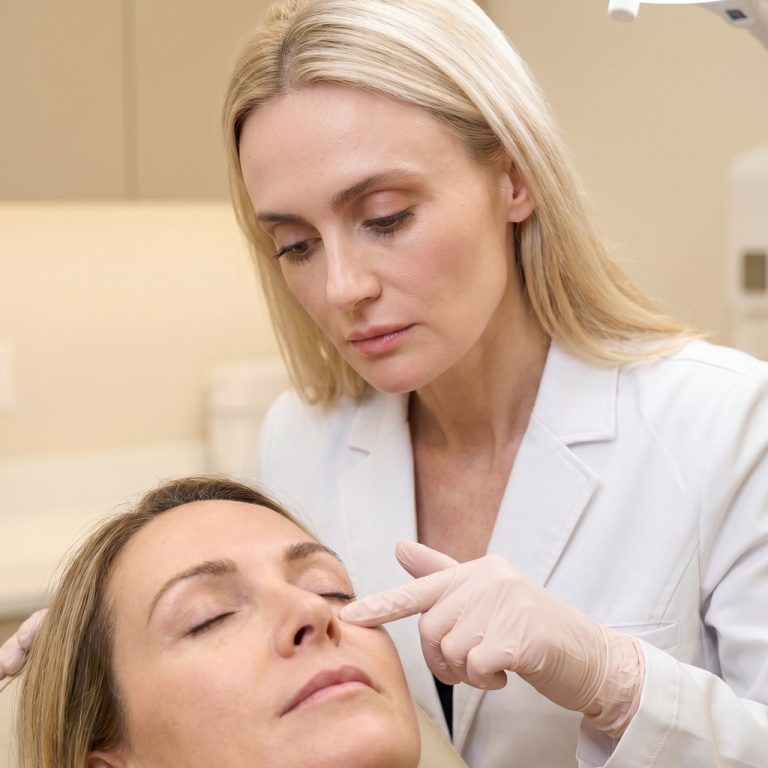

“Melasma is the condition that most often teaches patience. I can fade the patches — and I will — but the melanocytes that made them are still there. Our job is to keep them quiet, not pretend they are gone. That means the right treatments, the right skincare products with SPF, and a realistic plan for the long term.”
Ready to Build a Melasma Management Plan in Scottsdale?
A melasma consultation at Desert Bloom starts with mapping your pigment depth, confirming your Fitzpatrick type, and identifying your hormonal drivers — so the treatment plan targets the right layer with the right approach. Dr. Borakowski selects from PRX-T33, Dermaquest peels, and iontophoresis as the primary routes, with Photo Facial reserved for Fitzpatrick I–III candidates after non-heat options are optimized.
Complimentary 30-minute consultations are available. If a dermatologist referral for prescription topicals belongs in your plan, we will say so directly. No obligation to book a session on the day.
References
- “Melasma: an Up-to-Date Comprehensive Review.” Dermatology and Therapy. 2017. DOI(VERIFIED — PMID 28726212 confirmed via PubMed. DOI matches CrossRef.)
- “Comparative efficacy and safety of tranexamic acid for melasma by different administration methods: A systematic review and network meta-analysis.” J Cosmet Dermatol. 2024. DOI(REPLACED — original Lim HW 2023 ref (DOI 10.1097/JW9.0000000000000104) was hallucinated (that DOI = vulvar cancer surgery paper, no Lim HW melasma pathophysiology 2023 exists). Replaced with real systematic review on tranexamic acid for melasma: Liang et al. 2024, J Cosmet Dermatol, PMID 38059683.)
- “Melasma: a comprehensive update. Part I — Epidemiology, pathogenesis, clinical presentation, and diagnosis.” J Am Acad Dermatol. 2011. DOI(CORRECTED — DOI in draft (10.1016/j.jaad.2011.02.097) did not resolve in CrossRef. Real DOI: 10.1016/j.jaad.2010.12.046, PMID 21920241 confirmed via PubMed.)
- “The validity and practicality of sun-reactive skin types I through VI.” Archives of Dermatology. 1988. DOI(VERIFIED — PMID 3377516 confirmed via PubMed. Arch Dermatol 124(6):869-71.)
Medical disclaimer: Information on this page is educational and does not replace in-person evaluation. Individual results vary. If your pigmentation is changing rapidly, has irregular borders, bleeds, or looks atypical, consult a dermatologist before any cosmetic procedure. Treatment options and device use current as of 2026-04-28.
Content medically reviewed by Dr. Natalya Borakowski, NMD. Last updated: April 2026.
Treatments
- Custom chemical peel$10045 minutes
- Iontophoresis Facial Scottsdale AZ | No Downtime Results$24990 min
- Mesotherapy1ml-$8560 minutes
- Microneedling$199-$495120 minutes
- Photo Facial$175-$57515 minutes and up
- Salmon DNA Facial (LumEnvy PDRN)$35045–60 min
- Unicorn Facial | PRX-T33$1350 / 4 treatments
Consultation in skin care clinic
Desert Bloom Skincare Center offers personalized skincare consultation to help you achieve a flawless and radiant complexion. Book your appointment today and let our expert team of skincare professionals address your specific concerns and help you reach your skincare goals.
Visit Our Scottsdale Aesthetic Center
Address
10752 N 89th Place, Suite 122B,Scottsdale, AZ 85260.
Phone:(480) 567-8180
E-mail:info@desertbloomskincare.com
Get Directions →Location & Directions
Desert Bloom Skincare is conveniently located in the Shea Corridor of North Scottsdale, within Edwards Professional Park I — minutes from HonorHealth Scottsdale Shea Medical Center and the Mayo Clinic Scottsdale Campus.
Areas We Serve
We proudly provide expert non-surgical rhinoplasty and PDO thread lifts to patients across the Southwest:
- ScottsdaleNorth Scottsdale · McCormick Ranch · Gainey Ranch
- Paradise Valley
- PhoenixArcadia · Biltmore · North Phoenix
- Fountain Hills
- Cave Creek & Carefree