Nose Thread Lift Gone Wrong: What Causes It, What It Looks Like, and What to Do


Overview If something looks or feels off after a nose thread lift — or if you are researching before booking — this page covers what each complication actually looks like, which symptoms need same-day action, and what can be corrected. Most concerns resolve on their own. The realistic complication profile for nose thread lifting is […]
Overview
If something looks or feels off after a nose thread lift — or if you are researching before booking — this page covers what each complication actually looks like, which symptoms need same-day action, and what can be corrected. Most concerns resolve on their own. The realistic complication profile for nose thread lifting is bruising, localized swelling, palpable threads, asymmetry, and prolonged healing — the same general PDO thread profile as elsewhere on the face, with added technical demands from the nose’s thin tissue and limited anchoring.
For thread complications on the face and neck generally, see our guide to Thread Lift Gone Wrong. This page is nose-specific.
Nose Thread Complications at a Glance
- Nose-Specific Risks
- Thread migration at tip, skin-visible threads, dimpling, asymmetry, infection, localized bruising or hematoma, prolonged swelling
- Act Immediately
- Fever with discharge, worsening pain after Day 3, visible thread tip through skin, asymmetric swelling that is growing
- Most Fixable
- Visible threads, dimpling, asymmetry — most resolve as PDO absorbs (4–6 months) or via in-office removal
What “Gone Wrong” Actually Looks Like with Nose Threads
The first step is separating normal post-procedure responses from true complications. Swelling, bruising, and tenderness at the entry points are expected for the first three to five days. Mild asymmetry in week one is usually swelling — not thread migration — and typically resolves without intervention. What falls outside normal:
- Swelling that is worsening after Day 3 rather than improving
- Asymmetry that increases past the first week
- A visible ridge or cord under the nasal skin not present in the first 48 hours
- Sharp, one-sided pain that is worsening after Day 2
- Any sudden change in vision
The nose is more technically demanding than other thread lift zones for one structural reason: the soft tissue over the nasal dorsum and tip is extremely thin — a misplaced thread has almost no buffer before it becomes visible or palpable through the skin. Thread entry points are also in areas with minimal anchoring tissue, which increases migration risk compared to the jowl or cheek.
Important clinical context: PDO nose threads do not carry the vascular occlusion risk associated with nasal filler injections. Threads are never placed in the alar or lateral crus. The worst-case vascular event from PDO thread placement in the nose is a localized bruise or hematoma — not tissue necrosis or vision loss. Initial blanching after a nose thread lift is expected from the local anesthesia used during the procedure and resolves within an hour.
The Most Common Nose Thread Lift Complications
Visible or Palpable Threads
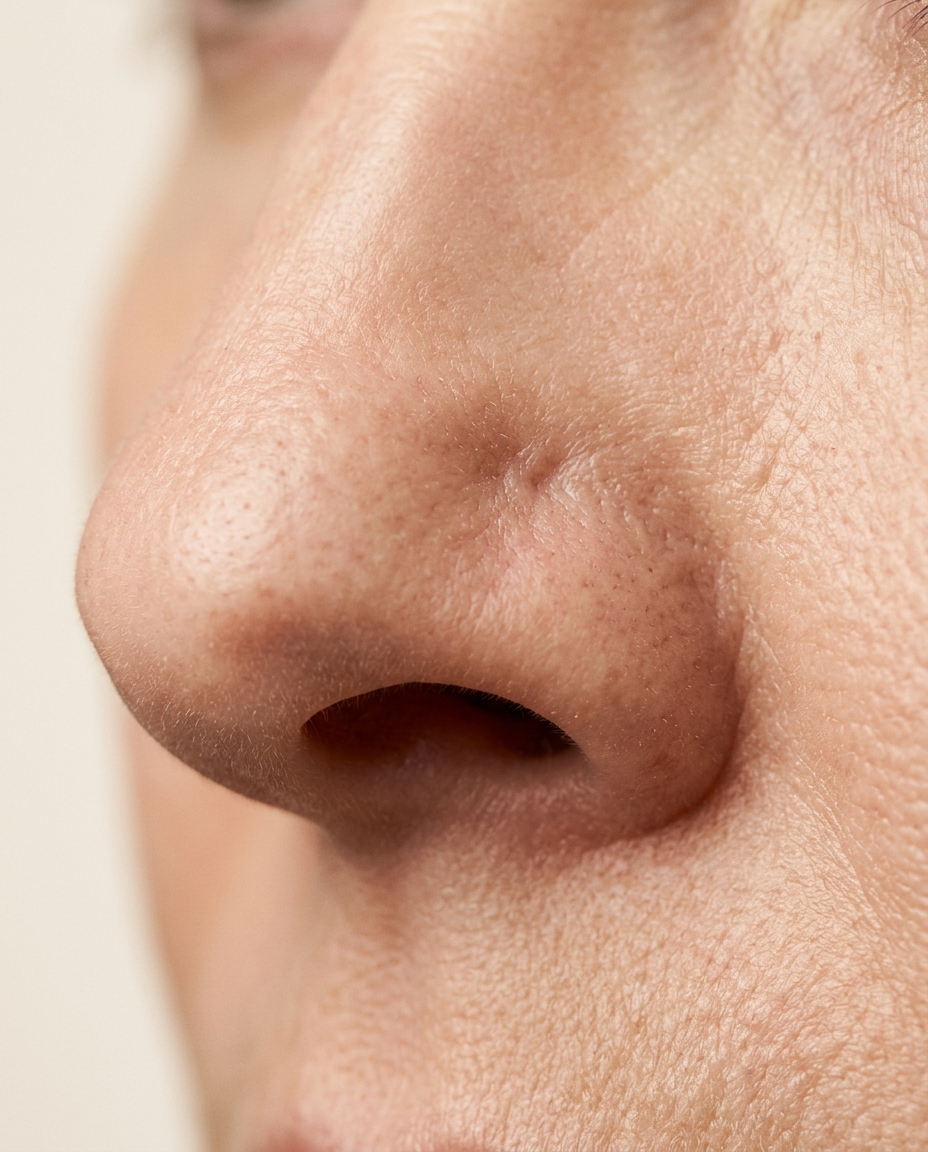
A thread placed slightly too superficially in thin nasal dermis becomes visible as a ridge or cord, or palpable when you run a finger along the dorsum. Palpable threads are more common than visible ones and usually resolve as PDO absorbs over four to six months. If a thread remains bothersome at six to eight weeks, it can be removed with a small incision under local anesthesia — a straightforward in-office procedure.
Thread Migration
Migration — when a barbed thread shifts from its original placement — is more likely at the nasal tip than elsewhere because there is minimal anchoring tissue. A migrated thread may create an asymmetric lift, a visible cord in an unexpected location, or a palpable lump that appeared after the first week. PDO absorbs in four to six months, limiting the migration window. PLLA and PCL threads persist longer — PCL up to 18–24 months — so migration issues can emerge later with these materials.
Asymmetry and Uneven Tip Lift
Even a few millimeters of differential thread tension between left and right creates a visually obvious asymmetry at the tip. Asymmetry in the first two weeks is usually swelling. True asymmetry that persists or worsens past four to six weeks is a complication that warrants provider assessment — options include observation through absorption, removal, or repositioning depending on the cause.
Skin Dimpling and Puckering
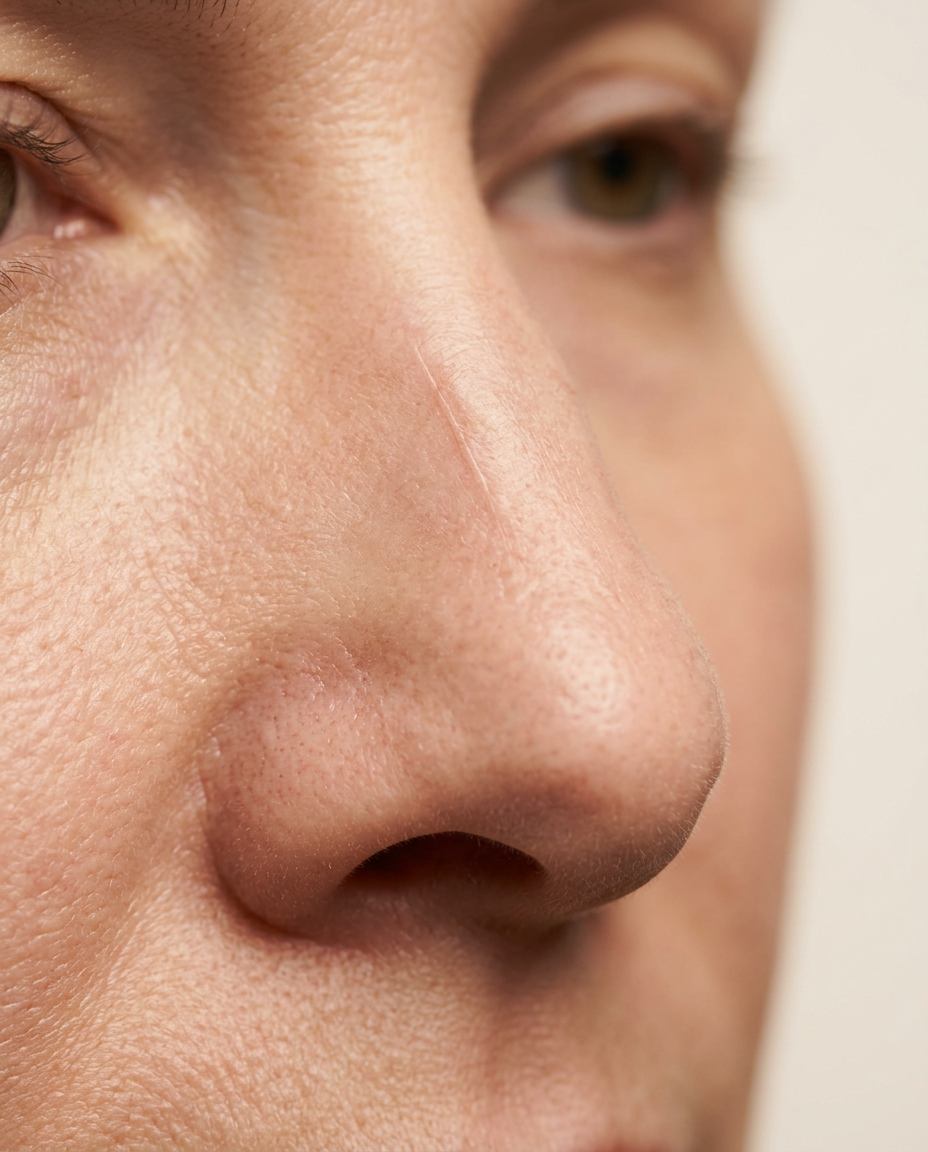
Dimpling appears as a small skin indentation at an anchor or barb point, most commonly at the tip entry point or along the dorsal line. Mild dimpling in the first two to three weeks is common as barbs engage — it usually resolves as swelling settles and tissue relaxes. Persistent dimpling at eight weeks or beyond may indicate overcorrection; most cases resolve as PDO absorbs, or sooner with thread removal.
Infection
Signs: progressive warmth and redness at an entry point after 48 hours, purulent discharge, worsening swelling, fever. A 2020 case series documented skin infections after rhinoplasty with PDO threads and found that early antibiotic intervention is critical — delay significantly worsens outcomes (Kim HJ et al., Aesthetic Plastic Surgery, 2020, PMID 31797043). Call your provider the same day if you suspect infection. Early oral antibiotics typically resolve the issue; thread removal is only needed if an abscess forms.
Thread Extrusion
Thread extrusion — when a thread breaks through the skin surface — is uncommon but requires same-day contact with your provider. Do not attempt to pull or clip the thread. Exposed tips are managed by trimming or removal in a sterile clinical setting and resolve without lasting consequence when treated promptly.
Vascular Events: What the Risk Actually Looks Like with Nose Threads
Initial nose-tip blanching after a PDO thread lift is an expected reaction to the local anesthesia used during the procedure and typically resolves within an hour. Unlike nasal filler injections, thread placement does not carry a vascular occlusion risk, so blanching at the tip is not a same-day emergency for thread patients. The worst-case vascular event from PDO thread placement is a localized bruise or hematoma — not tissue necrosis or vision loss.
The realistic vascular complication to watch for is hematoma formation — a localized collection of blood at or near the entry points that causes progressive swelling, firmness, and significant bruising beyond what is expected. This is manageable when identified early. Contact your provider if you develop rapidly expanding swelling or one-sided firmness at the nose in the first 48 hours post-procedure.
When to Act: A Decision Framework
Days 1–3
Observe
Swelling, bruising, tenderness, mild asymmetry are expected. Keep the nose clean, avoid pressure, follow aftercare. No action unless red-flag symptoms appear.
Days 4–14
Call if worsening
Increasing pain, worsening asymmetry, a new lump or cord, warmth or redness, or swelling not improving by Day 5 — call your provider for assessment within 24–48 hours.
Any time
Call today
Fever above 38°C / 100.4°F, purulent discharge or spreading redness, a thread visible through the skin, or sharp pain much worse than the day before.
Emergency
Act immediately
Rapidly expanding swelling (possible hematoma), severe disproportionate pain, a thread protruding through the skin, or active infection with fever and discharge — seek same-day care.
When Reversal Is Possible — and When It Is Not
- Visible/palpable thread: Resolves as PDO absorbs (4–6 months), or sooner via in-office removal.
- Dimpling: Most cases resolve within 6–12 weeks; persistent cases respond to thread removal.
- Asymmetry: Swelling-related cases resolve on their own. Thread-placement asymmetry may require removal and replacement. PDO cannot be dissolved — physical removal is the only option before natural absorption.
- Infection: Oral antibiotics resolve most entry-point infections when caught early. Thread removal only if abscess forms.
- Hematoma: Localized blood collection at entry points — the worst-case vascular event with nose threads. Resolves with early provider assessment; most cases drain naturally or require a brief in-office procedure if the collection is significant.
Why Provider Selection Is the Most Controllable Risk Factor
Most serious nose thread complications are preventable at the provider selection stage. The nose is one of the most technically demanding areas for threading — thin tissue and minimal anchoring create less margin for error than almost anywhere else on the face. Questions worth asking before booking:
Before you book
Questions to Ask Any Nose-Threading Provider
Anatomical training
Have you completed cadaver-based or structured anatomical training for nasal threading?
Experience & photos
How many nose thread lifts have you performed, and can you show photographs?
Complication protocol
What is your protocol if I develop unexpected swelling or a hematoma after the procedure?
Hyaluronidase on site
Do you have hyaluronidase on site? (Relevant if you have had prior nose filler — the provider should be able to assess combined tissue anatomy and dissolve filler if needed.)
For a full evaluation framework, see How to Choose a PDO Thread Lift Provider. At Desert Bloom, Dr. Borakowski completed cadaver-based nasal anatomy training and has performed nose threading in Scottsdale since 2019. Each consultation includes a full nasal anatomy assessment and review of prior filler history. See PDO Nose Thread Lift at Desert Bloom.
FAQ: Nose Thread Lift Gone Wrong
How common is it for nose thread lifts to go wrong?
Are PDO threads dangerous for the nose?
What do thread lift dimples look like on the nose?
My nose looks worse after the thread lift. Did PDO threads ruin my nose?
Is it normal to have pain two weeks after a nose thread lift?
What is a Hiko nose thread lift gone wrong?
Can you see threads under the skin after a nose thread lift?
Can a nose thread lift gone wrong be fixed?
References
- 1.
Kim HJ, Lee SJ, Lee JH, Kim SH, Suh IS. Clinical features of skin infection after rhinoplasty with only absorbable thread (polydioxanone): a case series study. Aesthetic Plast Surg. 2020;44(1):198–205; 2020.
Dr. Borakowski completed cadaver-based nasal anatomy training and has performed PDO nose thread lifts in Scottsdale since 2019. She presented non-surgical rhinoplasty outcomes research at the IMCAS World Congress in Paris in 2025.