Zepbound Facial Side Effects: What Patients Really Notice in the Mirror

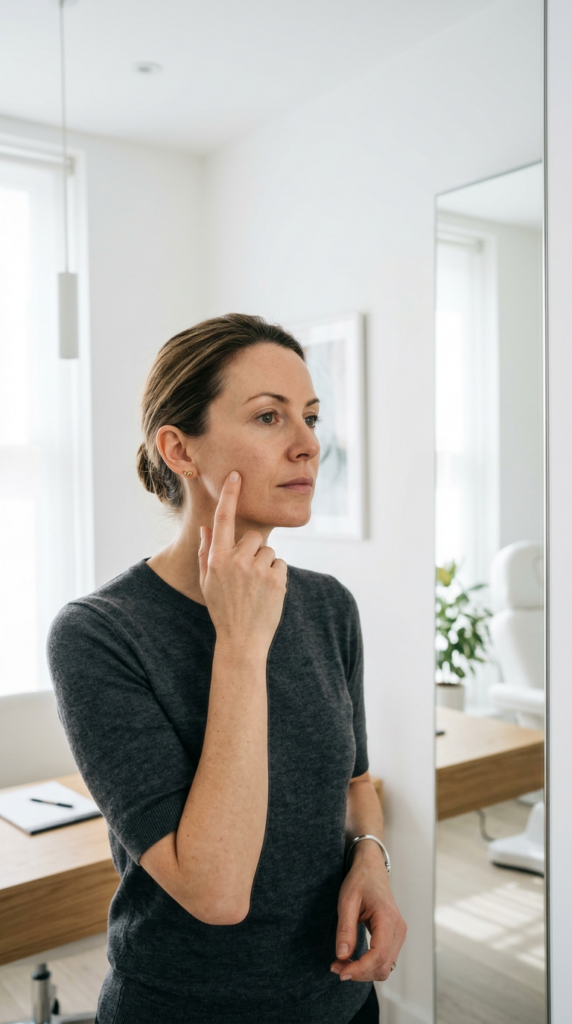
Zepbound Facial Side Effects: What Patients Really Notice in the Mirror Weight loss on Zepbound can feel like a victory—until you catch your reflectio
Key Takeaways
- Root cause
- Rapid fat loss shrinks facial fat pads — not a direct drug toxicity
- Cosmetic vs medical
- Most changes are cosmetic; facial swelling + throat tightness = emergency
- FDA boxed warning
- Thyroid cancer risk — avoid if personal/family history of MTC or MEN 2
- Non-surgical options
- Fillers, Sculptra, PDO threads, RF Microneedling at Desert Bloom
- Timing
- Coordinate prescribing physician + aesthetics provider for phased plan
Understanding Zepbound and Why the Face Changes
Zepbound, the brand name for tirzepatide developed by Eli Lilly, received FDA approval in November 2023 for long-term weight management in adults with obesity (BMI ≥30) or overweight (BMI ≥27) with at least one weight-related condition such as obstructive sleep apnea, hypertension, or type 2 diabetes. In clinical trials, participants achieved average weight reductions of 15–21% over 72 weeks.
The medication works as a once-weekly subcutaneous injection that suppresses appetite through central brain signaling and delays gastric emptying, creating a caloric deficit. Most patients experience 20–40 pounds of loss within the first 3–9 months of Zepbound treatment.
Here’s what patients often miss: facial side effects aren’t usually a direct toxic effect on skin or muscle. They’re secondary to overall fat loss, shifts in lean mass, and the skin’s inability to retract as quickly as fat disappears.
“Patients tell me, ‘I love my new body, but I hate how tired and gaunt my face looks.’ That disconnect is the core issue.”
The rest of this article separates medical safety concerns—allergic reactions, the thyroid cancer warning—from the aesthetic changes showing up in your mirror and photos.
Visible Facial Changes on Zepbound

The term “Ozempic face” refers to facial gauntness or aging following rapid weight loss with GLP-1/GIP agonists like tirzepatide. While Zepbound is the newer medication, the phenomenon is identical: accelerated facial aging that doesn’t match how healthy you feel internally.
What patients typically notice:
- Hollowed cheeks where the malar fat pads have deflated
- Deeper nasolabial folds running from nose to mouth corners
- Sharper shadows under the eyes and visible tear troughs
- Early jowling along the jawline
- Looser, crepier skin that doesn’t snap back
Rapid fat loss can cause the fat pads in the face to shrink faster than the skin can tighten. Published literature on body composition during caloric restriction suggests the face comprises only 2–3% of total body fat yet loses volume 1.5–2 times faster proportionally during rapid loss. Weight loss of 20–40+ pounds over 3–9 months is most associated with dramatic facial change; slower loss is typically less noticeable.
These changes pose no medical risk but strongly affect self-image, confidence, and how “healthy” someone appears at work or in photos.
Facial Volume Loss: Cheeks, Temples, and Under-Eye Hollowing
The face is one of the first places fat loss becomes visible. Patients report flattened cheeks that look “deflated” or sunken, hollow temples that expose underlying veins and bone structure, deeper tear troughs creating persistent dark circles, and sunken eyes even with adequate sleep.
Existing filler may appear more pronounced—almost “sitting on bone”—once surrounding fat shrinks. Hair loss (alopecia) is reported in approximately 5% of patients, likely related to the physiological stress of rapid weight loss, which compounds the overall aged appearance. If weight is regained after stopping Zepbound, some facial fat may return, but skin and ligament laxity rarely snap fully back.
Skin Laxity, Jowls, and Neck Changes
Significant weight loss often results in skin laxity, leading to jowls or a “crepey” skin texture. Skin cannot retract fast enough to match rapid fat loss, particularly after age 40 or with a history of sun exposure—common in Arizona, where cumulative UV exposure can reduce dermal thickness by 20–30% over decades.
- New jowls along the jawline
- Loose skin under the chin
- Deeper marionette lines from mouth corners to jaw
- Visible vertical neck bands (platysmal banding)
Photo angles can exaggerate these changes. Patients often first notice them in profile selfies or video calls. While skin health can be improved, significantly stretched skin may always look somewhat looser without structural support from threads, fillers, or energy-based tightening.
Changes in Facial Expression and Perceived Emotion
Weight loss may be positive, but others may comment that you look “tired,” “stressed,” or “sick”—even when you feel better than ever. Hollowing under the eyes and at the temples, combined with a lax lower face, can create a fatigued or even ill appearance. Sharp shadows at the nasolabial folds and mouth corners can mimic a “permanent frown” at rest.
This mismatch—feeling healthier but looking worn out—is a major reason patients seek facial balancing or non-surgical facelift consultations. Dermal fillers and structural treatments are often the first step in restoring that visual sense of wellness.
True Medical Facial Side Effects: What Needs Urgent Attention
Not all facial changes are cosmetic. Allergic reactions to Zepbound, while rare, can occur in less than 1% of patients and may include hives, swelling, or difficulty breathing. Severe allergic reactions require immediate medical attention.
Less severe but notable reactions include injection site reactions occurring in up to 8% of patients (redness, itching, pain), and widespread facial redness or severe itching that persists. Gastrointestinal effects—nausea (up to 29%), vomiting (up to 13%), diarrhea (up to 23%), constipation (up to 17%)—are documented in the Zepbound FDA prescribing information and most commonly occur during dose escalation.
Desert Bloom Skincare Center does not prescribe Zepbound. Any suspected systemic drug reaction must be managed by your healthcare provider or emergency department.
Thyroid Cancer Warning and Facial Symptoms
Zepbound carries an FDA boxed warning—the most serious warning category—regarding the possible risk of thyroid cancer. In animal studies, tirzepatide caused thyroid tumors including medullary thyroid carcinoma (MTC); it is unknown if this risk extends to humans.
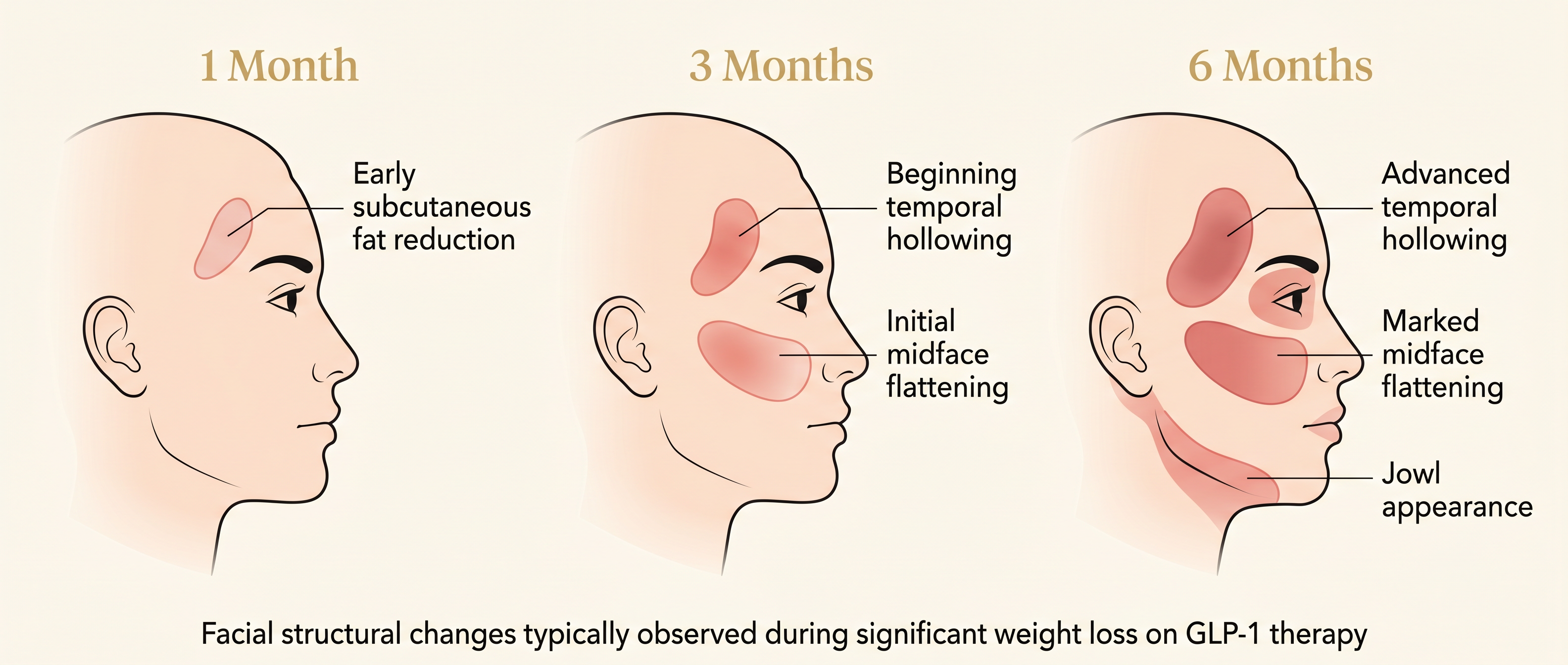
How Fast Weight Loss Alters Facial Structures Over Time
Months 1–2
Subtle slimming as superficial fat reduces
Months 3–6
More dramatic cheek and jawline hollowing with 10–20% body weight drop
Months 6–12+
Structural changes including ligamentous laxity, crepey perioral skin, and neck banding
Published dermatology literature commonly cites that collagen synthesis drops approximately 1% annually after age 30, and elastin cannot rebuild as quickly as fat disappears. This is especially pronounced in mature skin or with years of UV exposure common in Scottsdale’s 3,800 annual sunshine hours. Muscle tone can also decline if calorie intake and protein fall too low—clinical estimates suggest up to 40% of weight loss can be non-fat in protein-deficient states, worsening facial sagging.
Who Is Most Likely to Notice Facial Side Effects?
Higher-risk profiles include patients over age 35–40 (2–3x likelihood due to reduced skin recoil), those losing more than 15–20% of body weight, smokers (impaired fibroblast function reduces collagen by approximately 20%), individuals with high lifetime sun exposure, and thinner patients starting Zepbound for smaller weight reductions.
Previous aesthetic work (thread lifts, fillers) can change how the face responds to weight loss—some areas may collapse around older work, requiring dissolution or adjustment. If you fall into these categories, consider scheduling baseline facial photography and an assessment early in your weight-loss journey.
Non-Surgical Treatments to Address Zepbound-Related Facial Aging
When patients stabilize their weight and want to address facial changes, non-surgical options can help restore balance without surgery. Dr. Natalya Borakowski, NMD, has worked with patients in Scottsdale for over 17 years and leads all injectable and thread procedures at Desert Bloom Skincare Center personally. Her approach emphasizes individualized assessment.
None of these treatments treat obesity or replace Zepbound; they are adjunct aesthetic options once the patient is medically stable and cleared by their prescriber. Realistic goals involve softening gauntness, restoring balance, and improving skin quality—not trying to “look 20 again.”
Restoring Volume: Fillers, Sculptra, and PRP Biofiller
RHA Fillers & Restylane Family
Lyft, Refyne, Defyne, Eyelight, Kysse, Silk — dynamic support for cheeks, tear troughs, and lips.
Learn moreSculptra & Radiesse
Biostimulatory collagen support — studies report 20–30% collagen induction over 3–6 months.
Learn morePRP Biofiller
Regenerative approach using autologous growth factors for natural volume restoration.
Learn moreSkinVive by Juvederm
Intradermal filler for skin hydration and glow — addresses crepiness from weight loss.
Tear Trough Filler, Cheek Filler, and Temple Filler should be conservative in post-weight loss patients to avoid puffiness and irregularities. Dr. Borakowski prioritizes aesthetic facial balancing over chasing individual lines. Filler longevity may differ after major weight loss, with maintenance typically needed every 12–24 months.
Lifting and Support: PDO Thread Lift
PDO Thread Lift, Brow Lift (threads), and Neck Thread Lift reposition mildly descended tissue and define facial contours without surgery. Threads act as internal scaffolding while stimulating collagen, countering jowling and early neck laxity worsened by weight loss. They work best for mild to moderate laxity—severe sagging is referred to plastic surgery.
Patients on Zepbound should wait until weight has stabilized or loss has slowed before major lifting interventions. Thread procedures at Desert Bloom are personally performed by Dr. Borakowski, NMD, with typical recovery involving bruising and tenderness for several days.
Skin Quality and Texture: RF Microneedling and Lasers
Post-weight loss skin often looks thinner, crepier, and more lined. Virtue RF Microneedling addresses skin laxity—clinical studies show measurable tissue contraction in the 25–35% range. Key options: Virtue RF, CO2 Laser Resurfacing and CO2 Cool Peel, Erbium Laser, and Elluminate Glow for overall tone and luminosity.
Important: For Fitzpatrick IV–VI (darker skin tones), Alexandrite laser is contraindicated. Safe brightening options include PRX-T33 (Unicorn Facial), Custom Chemical Peels (Dermaquest), and Flawless Skin Iontophoresis. Facials including HydraFacial, Salmon DNA Facial, and HydroGlass Facial maintain hydration and barrier health during weight loss.
Lower-Face Contouring and Jawline Definition
Jawline Filler, Chin Filler, and Non-Surgical Facial Contouring can rebalance proportions. Radiesse (as a contouring or diluted biostimulatory agent) improves jawline structure while stimulating collagen. Dr. Borakowski often combines subtle filler with PDO threads or RF Microneedling in series rather than relying on a single procedure. Over-filling the lower face can recreate heaviness you just lost—restraint and structure-first planning are key.
Planning Your Zepbound Journey with Your Face in Mind
Document baseline photos (front, oblique, profile) before starting Zepbound to objectively track both body and facial changes. Consider scheduling an early aesthetic consultation—even before significant weight loss—to set realistic expectations and create a phased plan.
Coordination between your prescribing physician and aesthetics provider matters, especially for complex medical histories. Many facial procedures are best timed after weight has plateaued for 3–6 months, while skin health support (facials, gentle peels, skincare) can start earlier.
These habits won’t prevent all facial changes but can substantially reduce their severity.
Frequently Asked Questions about Zepbound Facial Side Effects
Can I prevent 'Zepbound face' entirely if I lose a lot of weight?
Should I stop Zepbound if I dislike what it's doing to my face?
If I regain weight after stopping Zepbound, will my face go back to normal?
Are facial fillers and threads safe while I'm still on Zepbound?
How do I know if I need a surgical facelift instead of non-surgical options?

Medically reviewed by
Founder, Desert Bloom Skincare · 17 Years Experience