Case Study: Non Surgical Jawline Contouring with Thread Lifting in a 43-Year-Old Woman

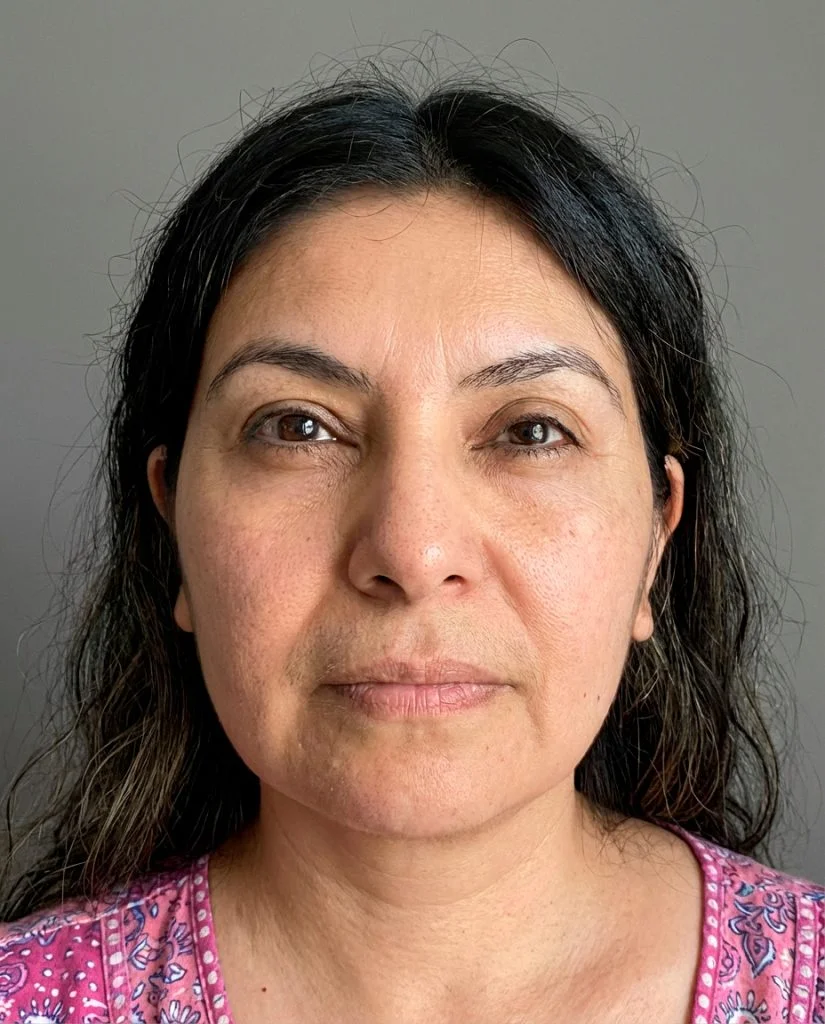
This case study explores non-surgical jawline contouring with thread lifting in a 43-year-old woman seeking subtle definition in the lower face. It highlights how anatomy, candidacy, tissue quality, and careful technique shaped a natural-looking result without added volume or surgery.
Case Overview
Improving lower-face definition is a common goal in aesthetic medicine, yet it requires a high degree of anatomical precision. As with all consultations at Desert Bloom, the discussion for this patient began with an evaluation of facial anatomy and candidacy, not procedure selection. This case study details the clinical reasoning and technical execution of non surgical jawline contouring in a patient seeking structural refinement.
Patient Profile
- Patient
- 43-year-old Hispanic woman
- Primary Concern
- Less defined jawline, particularly the submental area
- Treatment
- Absorbable threads — double sling under the chin
- Goal
- Subtle definition, not volume or dramatic change
Patient Background and Clinical Presentation
This case involves a 43-year-old Hispanic woman who presented with concerns regarding a less defined jawline, specifically in the submental (under-chin) area. Upon clinical observation, she was beginning to notice early signs of tissue descent and softening of her facial contours. Her primary goal was subtle jawline definition and improved structural support rather than added volume or dramatic results. She sought natural results that would provide a more refreshed appearance without looking “surgically altered.”
Clinical Assessment & Treatment Selection
Several jawline treatments were reviewed, including energy-based devices, dermal fillers, and surgical options. A thread lift procedure was selected as the most appropriate option based on the patient’s anatomy and tissue quality.
Key factors supporting this decision included:
- Ideal Submental Fat: She possessed a moderate amount of subcutaneous fat—sufficient to anchor the threads but not so heavy as to compromise the lift.
- Excellent Skin Quality: Her skin was firm, resilient, and well-supported, with high skin elasticity.
- Absence of Atrophy: There was no evidence of significant skin atrophy or advanced skin laxity.
In patients like this, PDO threads can effectively reposition soft tissue and enhance jawline definition without adding the volume associated with fillers such as hyaluronic acid or removing tissue through cosmetic surgery. For this patient, the procedure offered a conservative path to facial rejuvenation without the recovery profile of more invasive treatments.
Why Threads Were Selected in This Case
| Clinical factor | Patient finding | Why it mattered |
|---|---|---|
| Submental fat | Moderate amount | Enough support for threads without excess weight |
| Skin quality | Firm, resilient | Better lift potential and tissue support |
| Skin laxity | Mild / early | Suitable for conservative non surgical correction |
| Desired outcome | Subtle definition | Threads fit better than volume-based correction |
| Goal | Sharper jawline transition | Soft-tissue repositioning was appropriate |
Patient finding
- Submental fat
- Moderate amount
- Skin quality
- Firm, resilient
- Skin laxity
- Mild / early
- Desired outcome
- Subtle definition
- Goal
- Sharper jawline transition
Why it mattered
- Submental fat
- Enough support for threads without excess weight
- Skin quality
- Better lift potential and tissue support
- Skin laxity
- Suitable for conservative non surgical correction
- Desired outcome
- Threads fit better than volume-based correction
- Goal
- Soft-tissue repositioning was appropriate
When Is Thread Lifting Appropriate for Jawline Definition?
The suitability of a thread lift for improving jawline definition depends heavily on individual anatomy. In patients with resilient skin quality and moderate submental fullness, this approach offers facial rejuvenation and natural results with minimal downtime, avoiding the extensive recovery time associated with more invasive surgical procedures.
Procedure Details
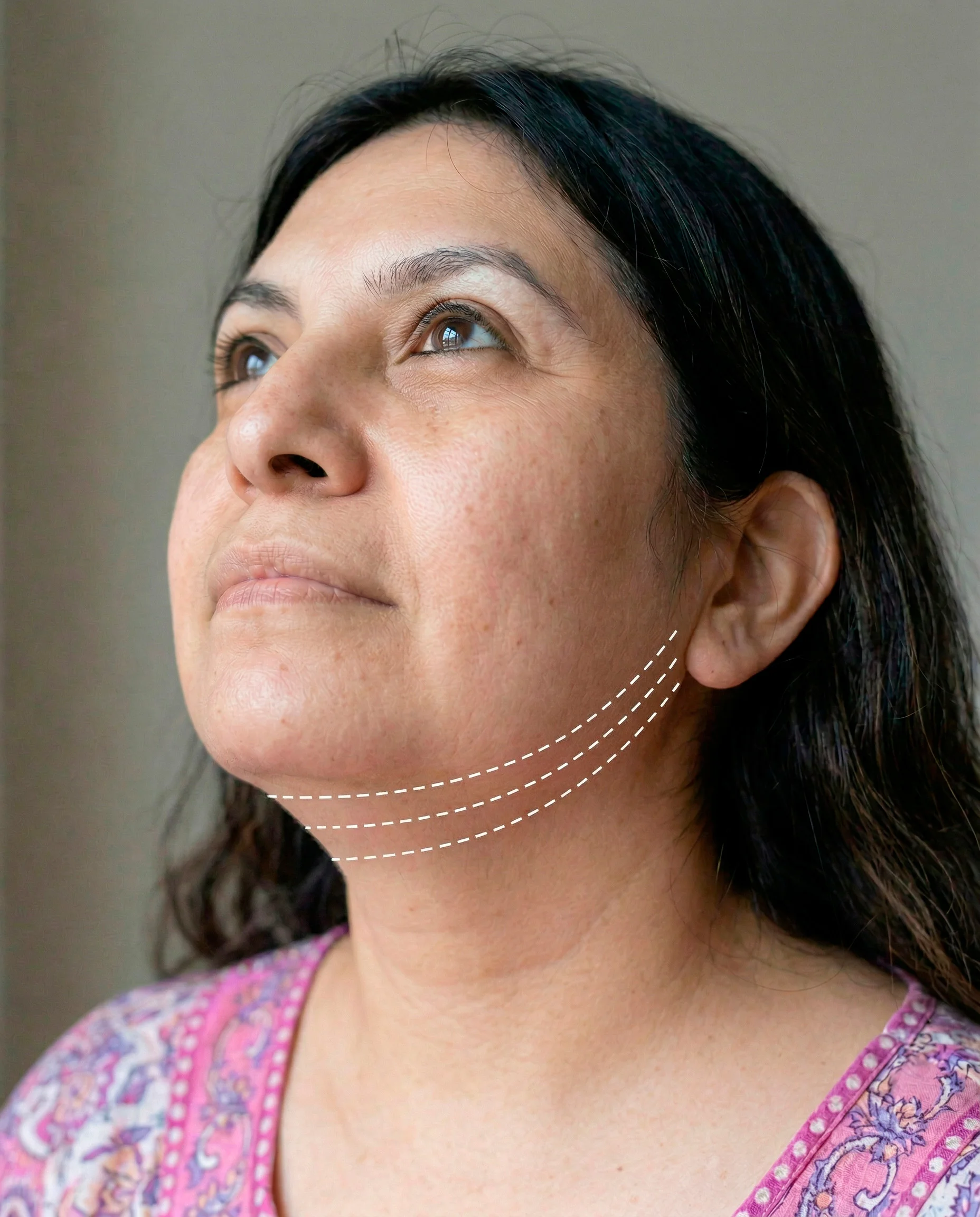
- Technique: Double sling thread placement under the chin
- Goal: Improve jawline contour through soft-tissue repositioning
- Tolerance: The patient tolerated the procedure well
- Recovery: Minimal edema and no bruising
Clinical Note on Bruising and Technique
Bruising risk in thread procedures is most often related to multiple sharp needle entry points rather than the threads themselves. At Desert Bloom, we emphasize that careful technique and appropriate patient preparation significantly reduce this risk, allowing for a faster return to normal activities. The objective was to achieve a mechanical lift while preserving the natural movement of the facial muscles, avoiding the “overfilled” appearance often seen with poorly placed dermal fillers.
Timeline of Recovery and Results
Procedure Day
Thread Placement
Threads placed under local anesthesia. The patient tolerated the procedure well.
Days 1–7
Minimal Edema, No Bruising
Minimal edema and no bruising. Port sites kept clean; exercise and strenuous activity avoided during early healing.
Weeks 2–6
Tissue Settling
Threads integrated and settled into the surrounding soft tissue.
Months 3–6
Collagen Response
Biostimulatory collagen response continues as the absorbable threads encourage new collagen production.
Long Term
Approximately Two Years
The absorbable threads gradually dissolve over approximately two years, with collagen-related improvements in skin quality persisting beyond the initial lift.
Before & After
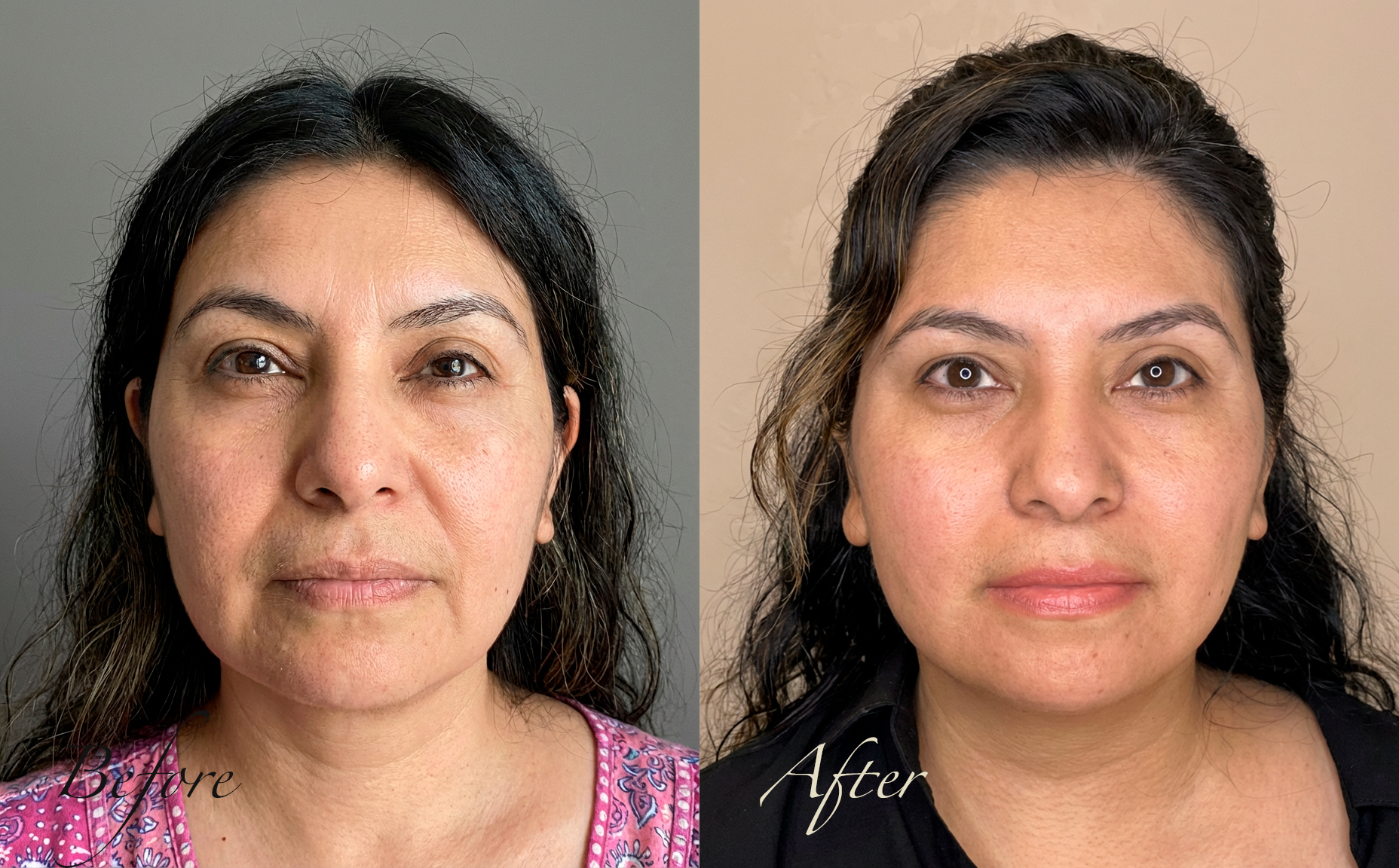
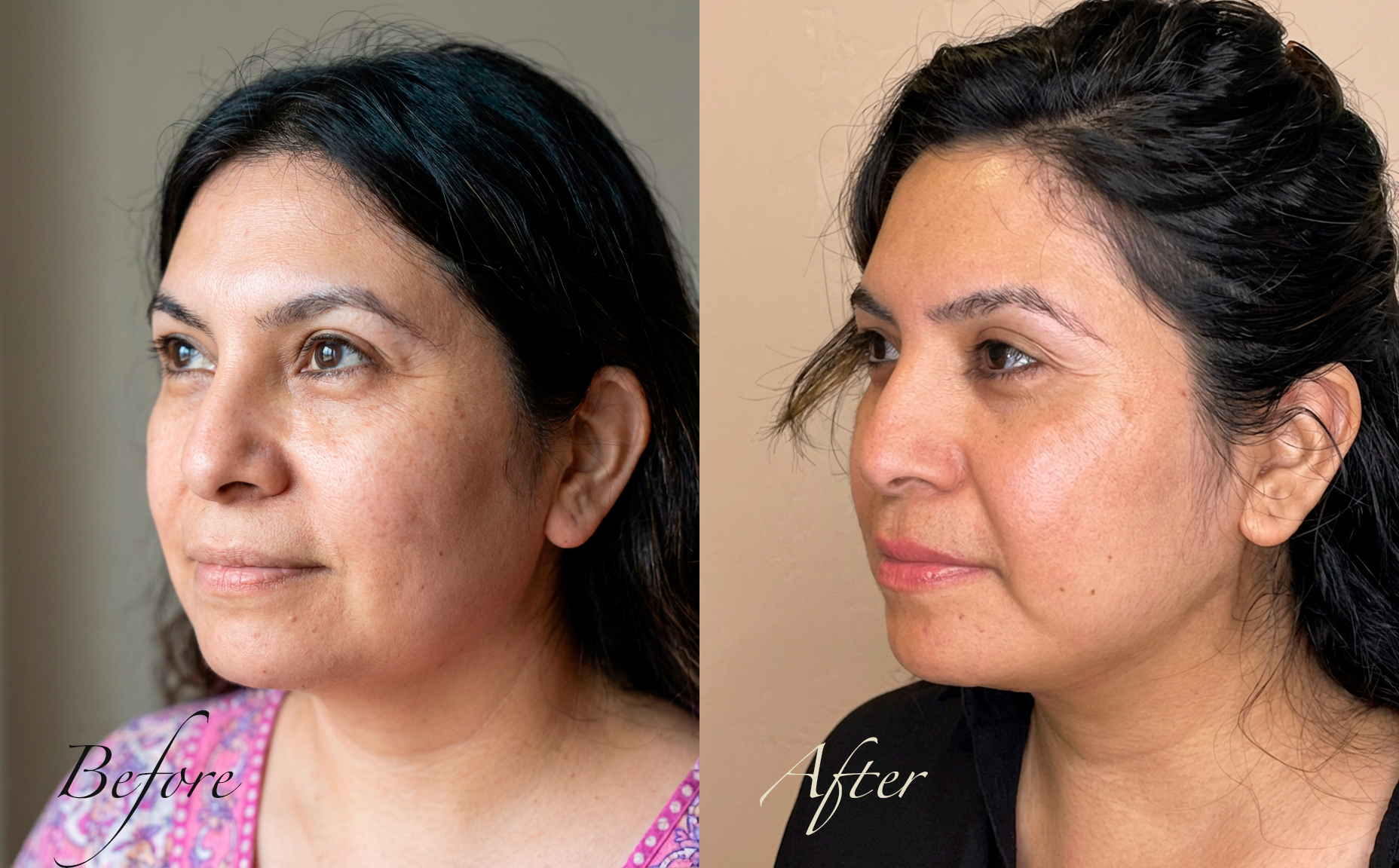
Non-surgical jawline contouring with PDO threads — same patient.
 BeforeAfter
 BeforeAfter
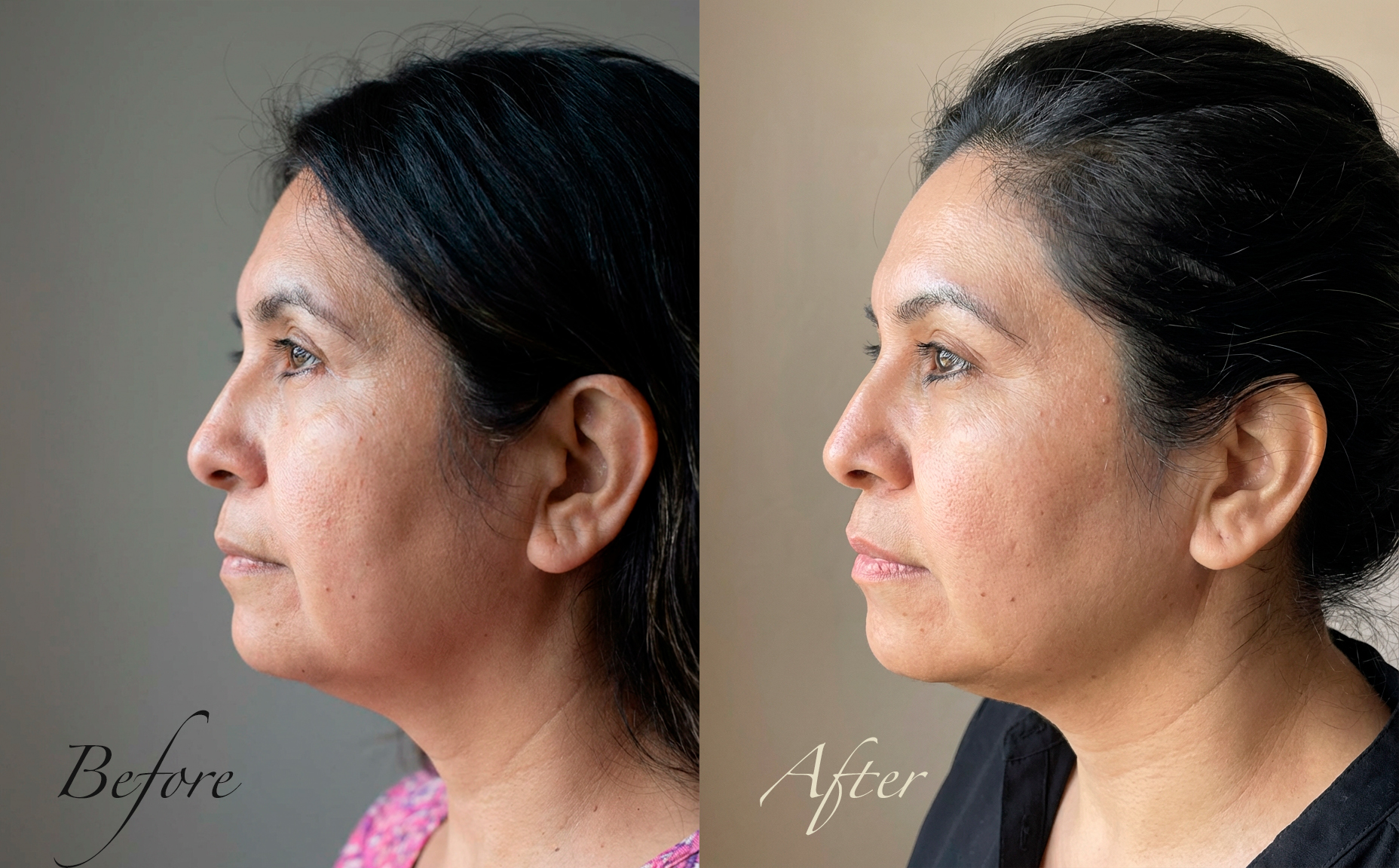 BeforeAfter
Pre-Treatment Considerations
To support the body’s natural healing response and ensure optimal outcomes, patients are advised to discontinue blood-thinning agents at least one week prior to treatment, unless medically contraindicated.
Common examples include:
- Aspirin
- Ibuprofen
- Fish oil and other omega-3 supplements
Alcohol consumption is also addressed during the consultation with the healthcare provider, as it can increase bleeding risk, promote inflammation, and delay recovery. For the best clinical results, patients are encouraged to avoid alcohol before treatment.
Aftercare and Safety in Non Surgical Jawline Lift

As with all thread-based procedures, infection remains the most serious potential complication, though it is uncommon when strict protocols are followed. To minimize side effects and protect the skin’s surface, the following post-procedure recommendations were provided:
- Keeping port sites clean to prevent contamination.
- Avoiding exercise and strenuous activity during the early healing phase.
- Following all aftercare instructions closely to ensure the full effects of the lift.
Longevity & Skin Quality Improvement
The absorbable PDO threads used in this procedure provide both immediate mechanical lifting and secondary biostimulatory benefits:
- Gradual Improvement: The threads gradually dissolve over approximately two years.
- Collagen Production: They act as biostimulatory implants, encouraging the body to produce new collagen.
- Enhanced Skin Quality: This contributes to long-term improvements in skin texture, resulting in firmer skin and a more youthful appearance that persists beyond the initial lift.
Thread Lifting vs Fillers vs Surgery
| Option | Best for | Main mechanism | Limits |
|---|---|---|---|
| Thread lifting | Mild soft-tissue descent | Repositions tissue | Not ideal for heavy laxity |
| Dermal fillers | Volume loss or contour camouflage | Adds volume | Can create heaviness in lower face |
| Surgery | Significant laxity or excess skin | Removes or repositions tissue | More downtime and higher invasiveness |
Best for
- Thread lifting
- Mild soft-tissue descent
- Dermal fillers
- Volume loss or contour camouflage
- Surgery
- Significant laxity or excess skin
Main mechanism
- Thread lifting
- Repositions tissue
- Dermal fillers
- Adds volume
- Surgery
- Removes or repositions tissue
Limits
- Thread lifting
- Not ideal for heavy laxity
- Dermal fillers
- Can create heaviness in lower face
- Surgery
- More downtime and higher invasiveness
Important Candidacy Considerations for Non Surgical Jawline Contouring
Thread lifting is not universally appropriate, and outcomes for non surgical jawline contouring are highly dependent on anatomy. Factors that can compromise results include:
- Loose skin or significant skin laxity.
- Minimal subcutaneous fat (which increases visibility of threads).
- Excessive fat deposits or a pronounced double chin.
Additionally, patients planning to lose 10 pounds or more are advised to postpone treatment until their weight has stabilized, as significant weight loss can alter soft-tissue support. In some cases, maintenance treatments may be required to help maintain the result over time.
Clinical Perspective
This case illustrates how proper patient selection—not technique alone—determines success in non surgical jawline treatments. When anatomy, skin quality, and expectations align, thread lifting can be a precise and conservative option. When they do not, restraint is part of responsible care. For this patient, the procedure achieved a meaningful clinical improvement while maintaining the integrity of her natural features.
Frequently Asked Questions
Why were threads chosen instead of filler in this case?
What made this patient a good candidate?
Why was there no bruising?
How long can results last in a patient like this?
When would surgery be more appropriate?
What is the most serious risk?
The Right Treatment Starts with the Right Candidacy
Not every jawline concern should be treated the same way. If you’re exploring non surgical jawline contouring and want a plan built around your anatomy rather than trends, we’re here to help. Together, we can assess your tissue quality, goals, and treatment options with clarity and restraint. Learn more about thread lift treatments at Desert Bloom.
“Patient selection — not technique alone — determines success. When anatomy, skin quality, and expectations align, thread lifting can be a precise and conservative option. When they do not, restraint is part of responsible care.”
Other Case Studies

This is one of several documented case studies from Desert Bloom Skincare. See all patient case studies →
Individual results vary. Patient consent obtained for case study publication. Clinical content reviewed by Dr. Natalya Borakowski, NMD. Last updated April 2026.