
Desert Bloom Skincare

The Ultimate Ingredient Checklist for “Ozempic Face” Skincare

Dr. Natalya Borakowski, NMD
Sep 24, 2025 · 7 min read FAQs
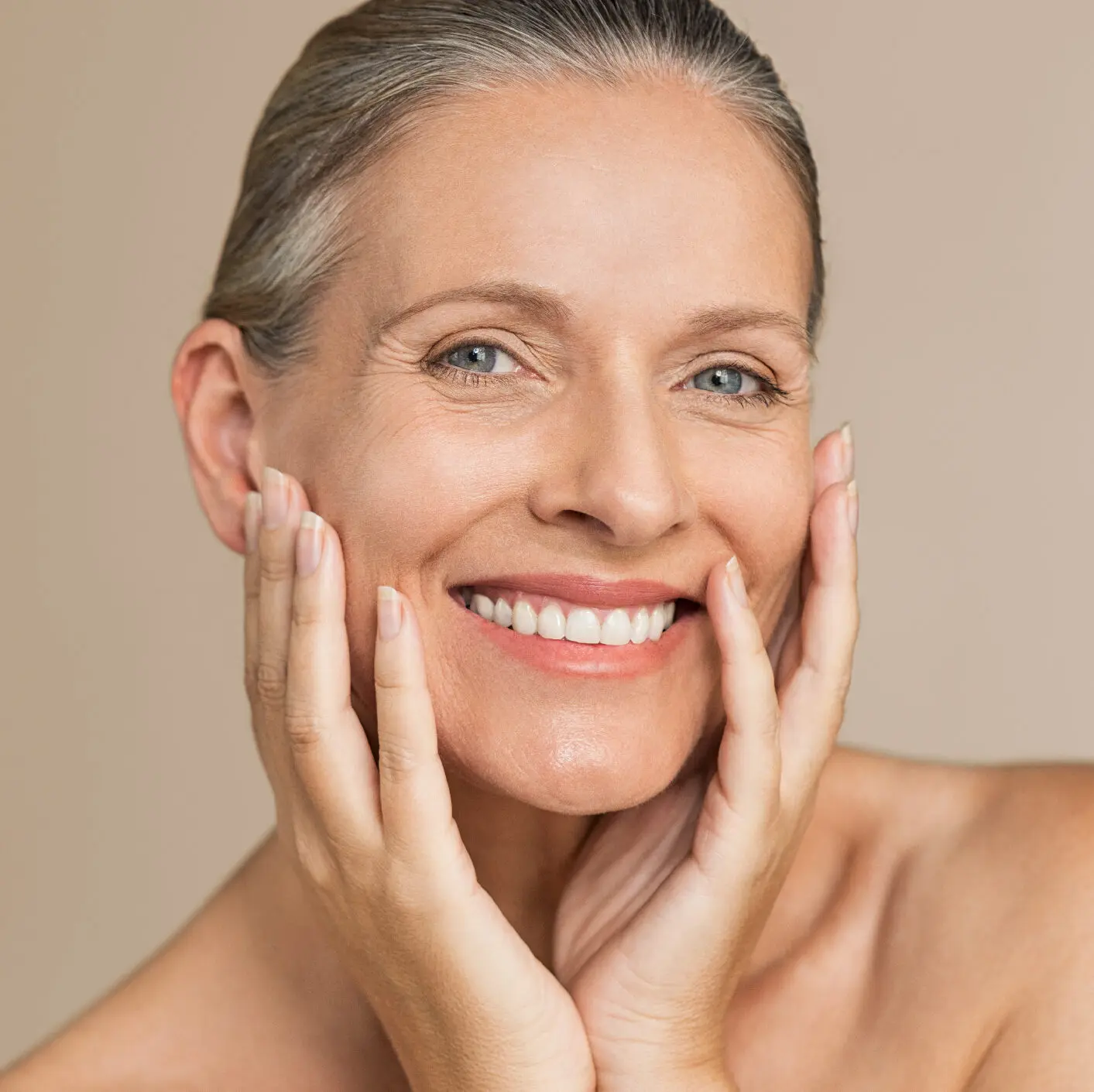
Mature woman doing her at-home skincare routine in the mirror

Forget marketing gimmicks and empty promises. When it comes to restoring facial structure after rapid weight loss, only proven ingredients work. We've created the ultimate guide to skincare's superheroes: from peptides, the "architects" of collagen, to retinoids, the builders of skin density. Learn how to build a powerful and effective routine that will restore a youthful, healthy look to your face.

Overview

When significant weight loss happens quickly — through lifestyle changes, GLP-1 medications like Ozempic, or a combination of both — the face often reflects it first. The fat pads that gave your cheeks structure and your skin a cushion to rest on are smaller now. The surface above them has less support. The tissue that used to sit on a full base is now working harder, and it shows.

This is biology — not a flaw, and nothing to be ashamed of. Your skin is just telling you what it needs next. The right ingredient strategy won’t restore facial volume — that’s the job of professional treatments — but it can meaningfully improve skin quality, barrier integrity, and collagen density over time. And that matters, whether or not you pursue in-clinic care alongside it.

If you’re still in the active weight-loss phase and want to get ahead of these changes before they fully appear, see our companion guide on preventing Ozempic-face changes. This article is for those already navigating the skin-quality shift and building a routine around it.

Ozempic-Face Skincare At A Glance

5 Must-Haves
Peptides · Hyaluronic acid · Retinoids · Niacinamide · Vitamin C
What to Skip
Alcohol-based toners, harsh physical scrubs, over-exfoliation while barrier is compromised
At-Home Routine
AM: gentle cleanser → Vitamin C → HA serum → SPF moisturizer. PM: gentle cleanser → niacinamide → peptide serum → retinoid → barrier moisturizer

Why Ozempic Face Needs a Different Strategy

Infographic showing three pillars of post-weight-loss skincare: density, hydration, and resilience
Three pillars: collagen density, hydration depth, and barrier resilience.

Most skincare routines are designed for skin that’s aging gradually. The skin that follows rapid weight loss is dealing with something more compressed: a significant reduction in subdermal fat support, a likely increase in oxidative stress from the catabolic state, and a barrier that may be more fragile than usual. Standard routines built around one or two “hero” ingredients often aren’t layered enough to address all three at once.

The strategy here isn’t more products — it’s the right ones in the right order, targeting the three things that matter most: collagen support, hydration depth, and barrier resilience. Each of the core ingredient categories below addresses one or more of these. Used consistently together, they give skin what it needs to rebuild from the inside out — as much as topicals can do that, which is genuinely meaningful, just not magical.

The Core Ingredient Checklist

Peptides: The Collagen Architecture Team

Pearly iridescent peptide serum dripping from a glass dropper onto dark slate
Signal peptides prompt fibroblasts to rebuild collagen and elastin.

Peptides are short chains of amino acids — the building blocks of structural proteins like collagen and elastin. The ones that matter most for post-weight-loss skin are signal peptides: molecules like Matrixyl (palmitoyl pentapeptide-4) and copper peptides that communicate with fibroblast cells and prompt them to produce more collagen and elastin. Think of them as a message from the surface that says: things have changed down here, let’s rebuild.

Clinical research on topical peptide formulations demonstrates measurable improvements in skin firmness and the depth of fine lines.¹ They won’t restore the subcutaneous fat you’ve lost — no topical can — but they can increase dermal density over time, which is exactly what thinner, post-weight-loss skin needs. Look for these compounds in serums applied after cleansing and before heavier moisturizers. Results take time: expect 10–12 weeks of consistent use before you see meaningful change.

Hyaluronic Acid: Hydration That Goes Deeper

Clear blue hyaluronic acid gel serum texture with tiny bubbles
Multi-weight HA hydrates the surface and the upper dermis.

Hyaluronic acid (HA) is a naturally occurring molecule in skin tissue with a remarkable ability to bind water — up to 1,000 times its weight. After significant weight loss, the levels of HA and other glycosaminoglycans (GAGs) in the dermal matrix often drop, contributing to that dry, deflated look that’s distinct from simple dehydration. Topical HA doesn’t replace the deep structural HA that’s been depleted (that’s what injectable HA fillers do), but it does meaningfully improve surface hydration, skin suppleness, and the appearance of fine lines.

The key is molecular weight. Research shows that HA serums containing multiple molecular weights are most effective: larger molecules hydrate the surface, smaller ones penetrate deeper into the epidermis.² Apply your HA serum to slightly damp skin to maximize how much moisture it draws in. Follow immediately with a moisturizer to seal it in — HA left open to dry air can actually pull moisture from the skin rather than adding to it. It’s a small but meaningful difference in how you layer.

Retinoids: Where Real Collagen Work Happens

Swirl of amber retinoid night cream on dark slate beside an aloe leaf
Start low and slow; daily SPF is non-negotiable with retinoids.

Retinoids — vitamin A derivatives ranging from gentle retinol to prescription tretinoin — are among the most evidence-backed topical ingredients in dermatology. They work at the gene-expression level, binding to retinoic acid receptors to accelerate cell turnover and stimulate collagen synthesis.³ For skin that’s experienced rapid volume loss, this matters on two fronts: newer, fresher cells at the surface improve texture and radiance, while a denser dermal collagen layer over time improves firmness and resilience.

Start low and slow — a 0.025–0.05% retinol formulation two to three nights per week is enough to generate results without stripping a barrier that may already be compromised. Redness, flaking, and dryness in the first few weeks are common and don’t mean the ingredient isn’t working; they typically resolve as the skin adapts. Daily broad-spectrum SPF is non-negotiable when using retinoids — this isn’t optional fine print, it’s how the ingredient is meant to be used. If your skin is reactive or barrier-compromised, consider a retinoid “buffer” (applying a light moisturizer first) to slow absorption and reduce irritation.

A note on AHAs and BHAs: gentle chemical exfoliants like glycolic acid (AHA) and salicylic acid (BHA) can help with surface texture and cell turnover, and they complement retinoids well — but not on the same night. When the skin’s waterproofing layer is fragile, over-exfoliation causes more problems than it solves. One or two nights a week of a low-concentration AHA or BHA, separate from your retinoid nights, is enough.

Niacinamide and Vitamin C: Barrier and Cofactors

Illustration of a Barrier Bodyguard bottle with a mesh half and an orange-slice half, symbolizing niacinamide and vitamin C
Niacinamide strengthens the barrier; vitamin C stabilizes new collagen.

Niacinamide (vitamin B3) is one of the most versatile and well-tolerated ingredients in skincare. It upregulates ceramide synthesis — the lipids that form the skin’s waterproofing layer — which directly strengthens skin resilience and reduces water loss.⁴ The same fragility discussed above in the retinoids section is more common than people realize after rapid weight loss, and it amplifies the dehydration problem: skin that can’t hold onto moisture will look and feel worse regardless of how many serums you apply on top. Niacinamide also has a well-documented effect on hyperpigmentation and mild inflammation, which is why it layers well with almost everything else on this list.

Vitamin C (as L-ascorbic acid or more stable derivatives like ascorbyl glucoside) does two things simultaneously: it’s a powerful antioxidant that neutralizes the oxidative stress generated by the catabolic state of rapid weight loss, and it’s a required cofactor for the enzymes that stabilize collagen molecules.⁵ Without adequate vitamin C activity, newly synthesized collagen is structurally weaker. In practical terms: apply your vitamin C serum in the morning, where it doubles as an antioxidant shield against UV and environmental oxidative damage throughout the day. Don’t skip the SPF after — vitamin C and sun protection work together, not interchangeably.

What to Avoid When Your Barrier Is Fragile

The ingredients above work because they support skin function — they don’t strip, shock, or overwhelm. The ingredients to be cautious of during this phase are the ones that do the opposite:

  • Alcohol-based toners and astringents — the kind that leave skin feeling “squeaky clean” are stripping ceramides and disrupting the very barrier you’re trying to rebuild. If it tingles with dryness after use, put it down.
  • Harsh physical scrubs — mechanical exfoliants with large or jagged particles create micro-tears in skin that’s already under stress. Gentle chemical exfoliation is safer and more effective.
  • Over-exfoliation of any kind — more than two to three nights of active ingredients per week (combined AHA/BHA and retinoid) is too much for a compromised barrier. The skin needs recovery time to rebuild between active nights.
  • High-concentration benzoyl peroxide — effective for acne but significantly drying. If breakouts are occurring due to stress or hormonal shifts from weight loss, a salicylic acid formula or low-percentage benzoyl peroxide is a gentler route.
  • Fragrance-heavy formulations — skin that’s stressed is more reactive. Even “natural” fragrance ingredients are among the most common contact irritants. A fragrance-free routine during this phase is the sensible default.

AM/PM Routine: How to Layer These Ingredients

Knowing what ingredients you need is step one. Knowing how to layer them — and what goes in which routine — is what makes the difference between a coherent approach and a shelf of serums you use randomly.

AM Routine

1. Cleanse
Gentle, pH-balanced cleanser
2. Antioxidant / Actives
Vitamin C serum (L-ascorbic acid or stable derivative)
3. Hydration
HA serum on damp skin
4. Treatment
5. Seal
Lightweight SPF moisturizer (SPF 30+, non-negotiable)

PM Routine

1. Cleanse
Gentle, pH-balanced cleanser
2. Antioxidant / Actives
Niacinamide serum or toner
3. Hydration
Peptide serum
4. Treatment
Retinoid (2–3×/wk) OR AHA/BHA (1–2×/wk, alternate nights)
5. Seal
Rich barrier moisturizer with ceramides

More steps do not equal better results. The skin responds to rhythm — not quantity. (The ten-product shelf is usually covering anxiety, not skin.) A consistent five-step routine done every day outperforms a ten-product collection used sporadically.

The Honest Conversation About Collagen Supplements

This comes up constantly, and it deserves a direct answer: collagen peptide powders are not doing what most people think they’re doing. Collagen molecules are too large to be absorbed intact into the bloodstream. What you’re actually consuming is hydrolyzed collagen — broken down into amino acids — which provides the raw materials for collagen synthesis, the same way eating protein does. The research on collagen peptide supplements and skin outcomes is suggestive, not conclusive, and the effect sizes reported are modest.⁶

This doesn’t mean they’re useless. If your protein intake is low (which is common in reduced-calorie phases), collagen peptides are a reasonable supplement alongside a generally protein-rich diet. But they’re not a shortcut around the topical routine above, and they’re not addressing the structural support loss in any meaningful way. A well-formulated peptide serum applied directly to the skin will do more targeted work than a powder in a morning smoothie.

For the professional-treatment side of restoring skin quality — what HydraFacial, chemical peels, and RF microneedling actually change at the cellular level — see the comeback plan for skin quality after GLP-1.

Mechanism

Signal Peptides (Matrixyl, copper peptides)
Stimulate fibroblasts to increase collagen and elastin production
Hyaluronic Acid (multi-weight)
Binds and retains water in epidermis and upper dermis
Retinoids (retinol / tretinoin)
Bind retinoic acid receptors; accelerate cell turnover and stimulate collagen gene expression
Niacinamide (vitamin B3)
Upregulates ceramide synthesis; strengthens barrier; mild anti-inflammatory
Vitamin C (L-ascorbic acid)
Antioxidant neutralizing oxidative stress; required cofactor for collagen stabilization enzymes

Best Routine Slot

Signal Peptides (Matrixyl, copper peptides)
PM serum, after cleansing
Hyaluronic Acid (multi-weight)
AM + PM, on damp skin under moisturizer
Retinoids (retinol / tretinoin)
PM only, 2–3×/week
Niacinamide (vitamin B3)
AM or PM, layered under moisturizer
Vitamin C (L-ascorbic acid)
AM only — UV exposure degrades it; layer under SPF

Evidence Level

Signal Peptides (Matrixyl, copper peptides)
Strong — multiple RCTs show measurable firmness improvement
Hyaluronic Acid (multi-weight)
Strong — well-established humectant with documented hydration outcomes
Retinoids (retinol / tretinoin)
Very strong — among the most studied topical ingredients in dermatology
Niacinamide (vitamin B3)
Strong — well-replicated barrier and pigmentation benefits
Vitamin C (L-ascorbic acid)
Strong — decades of skin-biology research on collagen synthesis and oxidative damage

When to Avoid

Signal Peptides (Matrixyl, copper peptides)
Rarely contraindicated; if irritation occurs, lower concentration
Hyaluronic Acid (multi-weight)
Not applicable for topical HA; avoid if packaging compromises formula stability
Retinoids (retinol / tretinoin)
Active eczema or perioral dermatitis; pregnancy; severely compromised barrier
Niacinamide (vitamin B3)
Very rare niacin-flush reactions at high concentrations; generally excellent tolerance
Vitamin C (L-ascorbic acid)
Cumulative acid load with AHAs raises irritation risk — use vitamin C in AM and AHA in PM, or alternate days

Frequently Asked Questions

Can I just take collagen powder instead of building a skincare routine?
Collagen powder provides amino acids — the raw materials your body uses to synthesize collagen — but the molecule itself isn’t absorbed intact. The research on collagen peptide supplements and skin firmness is suggestive but not conclusive, and effect sizes are modest. A topical routine with signal peptides, retinoids, and niacinamide works more directly on the skin’s actual structure than an oral supplement does. Both can coexist in a sensible approach, but the supplement is not a substitute for the topical work.
How long until I see results from these ingredients?
It depends on the ingredient. Hyaluronic acid provides a visible hydration effect within days of consistent use. Niacinamide shows barrier improvement within two to four weeks. Peptides and retinoids — which work by stimulating new collagen synthesis — require 10–12 weeks of consistent use before meaningful changes in firmness or skin density are visible. This is not a failure of the ingredients; it’s how long collagen remodeling biologically takes. Consistency over months matters more than which exact product you choose.
Why do I need so many products — can't I just use one?
You could simplify. But each ingredient category targets a different mechanism: HA addresses hydration, peptides and retinoids address collagen density, niacinamide addresses barrier integrity, and vitamin C addresses oxidative stress and collagen stabilization. These aren’t overlapping — they’re parallel. A product that claims to do all five things at meaningful concentrations is usually doing all five things at inadequate concentrations. The five-step routine above isn’t complicated; it just has a purpose for each step.
Is this routine safe to use while still taking Ozempic or another GLP-1 medication?
Yes. These are topical skincare ingredients with no known interaction with semaglutide or other GLP-1 receptor agonists. The one consideration: if GLP-1 use is causing significant loss of appetite and reduced food intake, protein and nutrient deficiencies can affect skin health from the inside. Adequate protein intake supports the amino acid availability that topical peptides and retinoids are stimulating fibroblasts to use. This is a dietary conversation to have with your prescribing provider, not a reason to avoid the topical routine.
Can I combine this at-home routine with in-clinic treatments?
Yes — and for more significant skin quality decline, the combination is more effective than either alone. Professional treatments like HydraFacial, chemical peels, and RF microneedling work at depths and intensities that topicals can’t reach. The at-home routine supports and extends those results between sessions. Your provider can adjust the at-home routine around treatment timing — typically you’d pause retinoids for a few days before and after more intensive in-clinic procedures.
What if my skin is very reactive right now — do I start all of these at once?
No. Introduce one new active ingredient at a time, one to two weeks apart, so you can identify what’s causing any reaction. Start with niacinamide and HA (lowest irritation risk), then add vitamin C, then peptides, then retinoids last (highest adjustment period). A compromised barrier needs patience. The goal is a routine you can sustain without constant irritation, not one you have to abandon because you overloaded a sensitized surface all at once.
Will these ingredients help with the hollowness and sagging from volume loss?
Partially and honestly. Topical ingredients can improve skin quality — texture, hydration, collagen density, and barrier function. They cannot restore the subcutaneous fat that was lost, which is what creates hollow cheeks and deep nasolabial folds. For the volume side of Ozempic face, dermal fillers and biostimulatory injectables are the tools that address the structural deficit. The skincare routine and the professional treatment options aren’t competing — they address different layers of the same problem. See our guide on dermal fillers for Ozempic face for that side of the conversation.

Where to Start When It Feels Like Too Much

The goal of this checklist isn’t to fill a bathroom shelf. It’s to give you the minimum effective toolkit — the ingredients that have enough evidence behind them to earn a place in the routine, and a clear sense of why each one is there. If the full five-step routine feels like too much right now, start with three: a gentle cleanser, a niacinamide serum, and an SPF moisturizer. That’s a foundation. Build from there once the barrier feels stable and you’re ready for more.

And if you’re wondering whether in-clinic support makes sense alongside the at-home work — that’s a reasonable question, not a sign that the products aren’t doing their job. Topicals and professional treatments address different layers of the same tissue. A conversation with us is a good place to figure out what combination is right for where you are right now.

“Skin that's been through rapid volume loss isn't damaged — it's asking for a different kind of attention. The ingredient strategy matters, but so does the patience. Collagen remodeling takes months, not days. I tell patients: build the routine, hold the line, and give your skin the time it actually needs.”
— Dr. Natalya Borakowski, NMD

Part of the Ozempic Face cluster at Desert Bloom Skincare. Related guides: What is Ozempic Face · Preventing Ozempic-face changes · Reversing Ozempic face aging · Dermal fillers for Ozempic face. In-clinic complement: HydraFacial · Microneedling.

Dr. Natalya Borakowski, NMD

Medically reviewed by

Dr. Natalya Borakowski, NMD

Founder, Desert Bloom Skincare

Have a concern like this one?

Start with a screening. We'll tell you whether a procedure is the right tool — and which one.

Visit our Scottsdale aesthetic center

Address

10752 N 89th Place,
Ste 122B · Scottsdale, AZ 85260

Phone: (480) 567-8180

E-mail: info@desertbloomskincare.com

Get directions

Location & directions

Conveniently located in the Shea Corridor of North Scottsdale, within Edwards Professional Park I — minutes from HonorHealth Scottsdale Shea and the Mayo Clinic Scottsdale Campus.

  • From the North / South: Take Loop 101 and exit at E Shea Blvd, just East of the freeway.

  • Parking: Ample free parking directly in front of Suite 122B.

Areas we serve

  • Scottsdale

    North Scottsdale · McCormick Ranch · Gainey Ranch

  • Paradise Valley

  • Cave Creek & Carefree

Book now Call us