Botox for Crow’s Feet
Botox is a popular treatment for reducing the appearance of crow’s feet, the lines that appear at the corners of the eyes, which can make you look older than you feel. This guide covers everything you need to know about Botox for crow’s feet treatment, including how it works, what to expect during and after the procedure, alternative treatments, maintaining results, and answers to frequently asked questions.
Article's contents
- Crow’s Feet Are a Muscle Story, Not an Age Story
- Quick Take
- Why Crow’s Feet Form Where They Do
- How Botox Works on the Orbicularis Oculi
- When Botox Is the Right Call — and When It Isn’t
- Botox vs. Dysport vs. Daxxify for Crow’s Feet
- What to Expect: Procedure to Maintenance
- Frequently asked questions
- If You Want to Understand What You’re Actually Looking At
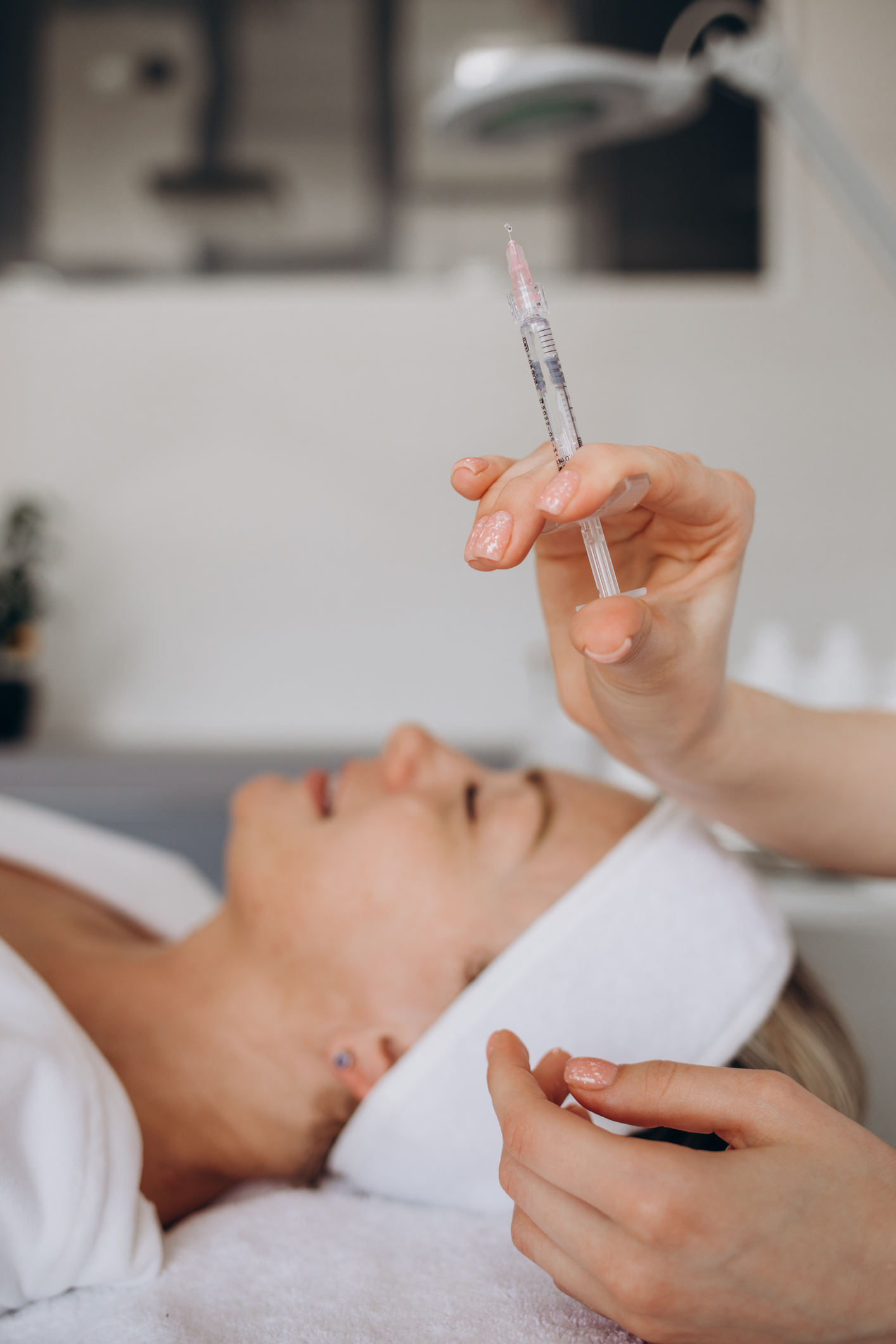
Crow’s Feet Are a Muscle Story, Not an Age Story
Those fine lines fanning out from the corners of your eyes aren’t your skin failing you — they’re your orbicularis oculi muscle doing its job. Every smile, every squint against the sun, every genuine laugh contracts that circular muscle around the eye. Over years, the skin above it develops a memory of those movements. Botox interrupts the signal that tells the muscle to contract, so the skin stops folding. It’s not reversal. It’s a pause — and a well-placed one.
At Desert Bloom Skincare in Scottsdale, crow’s feet treatment starts with an honest look at what’s actually there. Deep, static creases visible at rest respond differently than the dynamic lines you only see mid-expression. We treat what’s treatable — and we’ll tell you when something else would serve you better.
Quick Take
What it is: Botulinum toxin type A injected into the orbicularis oculi to relax the muscle responsible for crow’s feet
Best for: Dynamic crow’s feet — lines visible during smiling or squinting, or mild lines at rest
Lasts: 3–4 months; full effect visible by day 14
At Desert Bloom: 4–12 units per side; assessed individually based on muscle activity and aesthetic goals
Related reads:Crow’s Feet Hub · Botox Treatment · Dysport · Daxxify · RF Microneedling
Why Crow’s Feet Form Where They Do
The orbicularis oculi is a sphincter muscle — it encircles the eye completely and contracts as a unit every time you blink, smile, or squint. Unlike the forehead or glabella, there’s no opposing muscle here to keep it loose. So with decades of daily use, the skin directly overlying that circular muscle — thin, delicate periorbital skin without the collagen density you’d find on the cheek — develops visible folds along the lines of repeated movement.
These are called expression-driven lines, and they’re fundamentally different from static ones. A dynamic wrinkle is caused by muscle movement; a static wrinkle is present even when the face is at rest, which usually signals dermal volume loss, collagen breakdown, or both. Most people in their 30s and early 40s have primarily movement-caused creases around the eyes. By the mid-to-late 40s, a mix of both is common. That distinction matters enormously for treatment planning.
Sun exposure accelerates the timeline. Squinting against bright light — especially in a desert climate — contracts the orbicularis repetitively in ways that go far beyond emotional expression. It’s one reason the Phoenix/Scottsdale area tends to age the periorbital zone faster than more temperate cities. Good UV protection slows the pace; it doesn’t reverse what’s already there.
How Botox Works on the Orbicularis Oculi
Botox — onabotulinumtoxinA — is a purified protein that blocks acetylcholine release at the neuromuscular junction. When injected into the lateral portion of the muscle, it temporarily prevents the nerve signal from completing its trip to the muscle fibers. The muscle doesn’t contract with full force. The skin above it stops folding along those familiar creases. The crow’s feet soften — not disappear, but soften — because the repetitive load on that skin is reduced.
Dosing for crow’s feet is typically 4–12 units per side, split across 3 injection points in a lateral fan pattern. The lower end suits patients with fine, subtle lines and minimal muscle bulk. The upper end applies to those with strong activity in it — people who animate expressively, squint often, or have already developed visible rest-state lines. An experienced injector adjusts placement carefully: too medial and you risk weakening the lower lid; too superficial and you lose diffusion where it’s needed most.
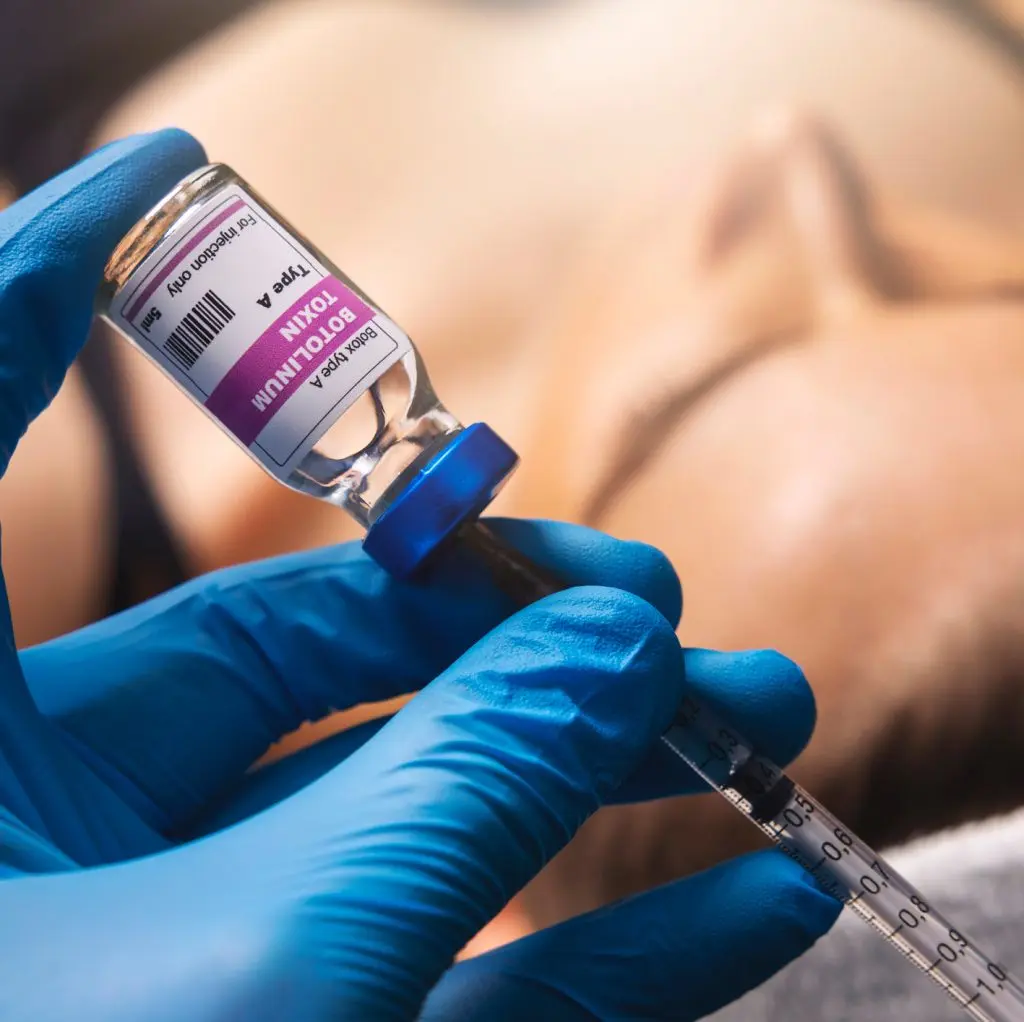
Onset begins within 3–7 days as the toxin takes effect at the injection sites. Full relaxation of the muscle is usually visible by day 14. Results typically last 3–4 months, at which point acetylcholine release gradually resumes and the muscle regains its previous function. Regular treatment over time may allow some patients to use slightly lower doses as the muscle undergoes mild atrophy from disuse — this is normal and expected, not a concern — though this varies considerably by individual.
When Botox Is the Right Call — and When It Isn’t
Botox is the right primary treatment when crow’s feet are predominantly expression-driven — lines that appear or deepen significantly during expression, and that are minimal or absent at rest. If you look in the mirror with a neutral face and the lines are subtle or barely visible, Botox alone will very likely give you a clean, satisfying result. If those same lines are prominent and etched at rest, particularly with a papery quality to the skin, you’re looking at a combination of muscle overactivity and dermal change — and relaxing the muscle alone won’t fully address the deeper structural component.
Very deep, static creases may benefit from a different approach: RF microneedling to rebuild dermal collagen in that skin, a thin filler placed carefully at the lateral orbital rim, or a combination of both alongside Botox. At Desert Bloom, we don’t push one modality as a universal answer. If I see static creases that dominate your at-rest appearance, I’ll tell you — because treating only the muscle when the skin itself needs support won’t give you what you’re hoping for. Honest assessment before the needle.
Botox vs. Dysport vs. Daxxify for Crow’s Feet
All three neurotoxins work via the same mechanism — botulinum toxin type A blocking acetylcholine at the neuromuscular junction — but they differ in formulation, unit conversion, onset speed, and longevity. For crow’s feet specifically, those differences are clinically meaningful.
| Factor | Botox | Dysport | Daxxify |
|---|---|---|---|
| Onset | 3–7 days | 2–5 days | 3–7 days |
| Full effect | ~14 days | ~10 days | ~14 days |
| Duration (crow's feet) | 3–4 months | 3–4 months | Up to 6 months |
| Typical units per side | 4–12 units | 12–36 units (1:3 ratio) | 8–12 units per side (off-label for crow’s feet — FDA approved for glabellar lines only) |
| Diffusion radius | Moderate | Wider — useful for fan pattern | Moderate |
| Best for | Standard first treatment, predictable dosing | Faster onset priority; some prefer diffusion pattern around the eye | Longer interval between treatments |
| Not ideal when | Very deep static creases alone | Lower lid laxity concern (wider diffusion requires careful technique) | Budget is primary constraint (higher per-treatment cost) |
| Available at DB | Yes | Yes | Yes |
For most new patients, Botox is the logical starting point — the dosing is well-characterized, the predictability is high, and if you’re not sure how you’ll respond to periorbital treatment, a conservative first approach sets a reliable baseline. Dysport’s slightly faster onset appeals to patients who want results within a week for an upcoming event. Daxxify is worth considering if the 3-month cycle feels inconvenient — its extended duration means fewer annual visits to maintain the same result.
What to Expect: Procedure to Maintenance
After a topical numbing assessment (usually unnecessary — crow’s feet injections are brief and the needle is very fine), 3 injection points per side in a lateral fan pattern. The whole treatment takes under 10 minutes. Avoid rubbing the area or lying flat for 4 hours.
The first signs of muscle relaxation appear. Some patients notice earlier softening; a few won’t see visible change until day 7. Normal variation. Mild redness or small bumps at injection sites typically resolve within 24–48 hours.
This is the benchmark for assessing your result. If crow’s feet are still notably present with a relaxed face, and you feel the dose was too conservative, this is the point to communicate that. Adjustments can be made at a follow-up.
Acetylcholine release gradually resumes. You’ll notice the lines returning — first with expression, then increasingly at rest if that was your baseline. This is the signal to schedule your next treatment.
Most patients maintain crow’s feet results with 2–3 treatments per year. With consistent treatment over time, some find their muscle activity moderates and dose requirements decrease. That’s normal physiology — not dependency.
Frequently asked questions
Will Botox make my smile look different?
Done well, no. The orbicularis oculi is targeted at its lateral portion — away from the zone that lifts the cheek or creates the characteristic upward pull of a genuine smile (which involves the zygomaticus major, a completely different muscle). What changes is the fan of lines that extends toward your temples when you smile. The smile itself — its shape, the cheek lift, the way your whole face participates — is not altered by a standard treatment for them. If you’ve had a bad result elsewhere that flattened your expression, that’s a dosing and placement issue, not an inherent limitation of the treatment.How many units do I actually need for crow’s feet?
The range is 4–12 units per side, and the honest answer is: it depends on your muscle. Strong muscle activity — visible deep contraction when you close your eyes or squint — generally calls for 8–12 units per side. Finer, more superficial lines with moderate muscle activity usually respond well to 4–6 units per side. At the first appointment, a conservative dose is a reasonable starting point; a 2-week follow-up lets us assess and adjust if needed. Total crow’s feet treatment is typically 8–24 units combined.What if my lines don’t go away completely?
They likely won’t — and that’s the honest expectation. Botox softens these lines; it doesn’t erase every trace of them. If you have lines that are visible at rest (particularly the papery, etched texture that comes with skin laxity), those require more than muscle relaxation. RF microneedling, careful filler placement, or a combination approach addresses the dermal component. We’ll tell you at consultation what’s realistic for your specific presentation.Does Botox prevent new crow’s feet from forming?
There’s a meaningful preventive argument. When the muscle contracts less forcefully and less frequently, the skin above it experiences less repetitive folding. Early Botox use — before lines become deeply etched at rest — can slow the rate at which expression-driven lines transition to static ones. This doesn’t mean you need to start at 25. But if you’re seeing the result deepen noticeably in your early-to-mid 30s, early treatment tends to maintain a cleaner baseline compared to waiting until the lines are established.I’ve heard Botox around the eyes can cause drooping. Is that a real risk?
Lower eyelid ptosis is a real but uncommon complication — and it’s almost always related to placement too close to the lower eyelid or too medial an injection point. At the lateral orbital area targeted for crow’s feet, the risk is low when placed correctly. True upper eyelid ptosis (hooding or drooping of the lid itself) is more associated with glabellar or forehead treatment, not crow’s feet injections. An experienced injector who respects anatomical boundaries keeps this risk very low.Can I combine crow’s feet Botox with other treatments at the same visit?
Yes — and it’s common. Crow’s feet treatment is often done alongside forehead and glabellar Botox in a full upper-face session. It can also be combined with a Dysport or Daxxify upper-face treatment, since all three use the same mechanism. RF microneedling to the periorbital skin is generally scheduled separately to allow timing of both treatments appropriately. Filler in an adjacent zone (like the tear trough) can be done the same visit with careful sequencing. We’ll map that out at your consultation.When is the right time to see if Botox is right for my crow’s feet?
When you notice the lines and they bother you — that’s the only threshold that matters. There’s no minimum severity threshold, no ‘too early’ or ‘too late’ in absolute terms. What matters is whether the lines are dynamic (driven by muscle movement) or primarily static (driven by dermal change). That’s the question a consultation answers. If they’re dynamic, Botox is a reasonable first step. If they’re primarily static, we’ll have a different conversation — about what approach actually fits what you’re seeing.If You Want to Understand What You’re Actually Looking At
Crow’s feet are a reasonable place to start with injectable treatment — the anatomy is well-defined, the response is predictable, and the risk profile at this site is low when done by an experienced provider. But the right first step is an accurate read of what type of lines you have and what’s driving them. That’s what a consultation at Desert Bloom gives you: a clear answer, not a sales pitch. Schedule a consultation and we’ll give you a clear read — not a sales pitch.

“Crow’s feet are where I most enjoy being honest — when the anatomy is right, results are clean. When it isn’t, I say so before I pick up a needle.”
Considering neurotoxin treatment? Explore the full picture at our botulinum toxin hub, or read about specific alternatives: Dysport, Daxxify. For crow’s feet driven by skin texture and collagen loss, see RF Microneedling. Concern hub: Crow’s Feet.
Individual results vary. Content reviewed by Dr. Natalya Borakowski, NMD. Last updated April 2026.