What is a dermal filler and How Do They Work for Facial Rejuvenation
Discover the non-surgical way to youthful-looking skin with dermal fillers. Learn what they are, how they work, types available, and potential risks and side effects in our blog. Find out what to expect during recovery and how to maintain your results. Get ready to achieve smooth and rejuvenated skin!
Article's contents
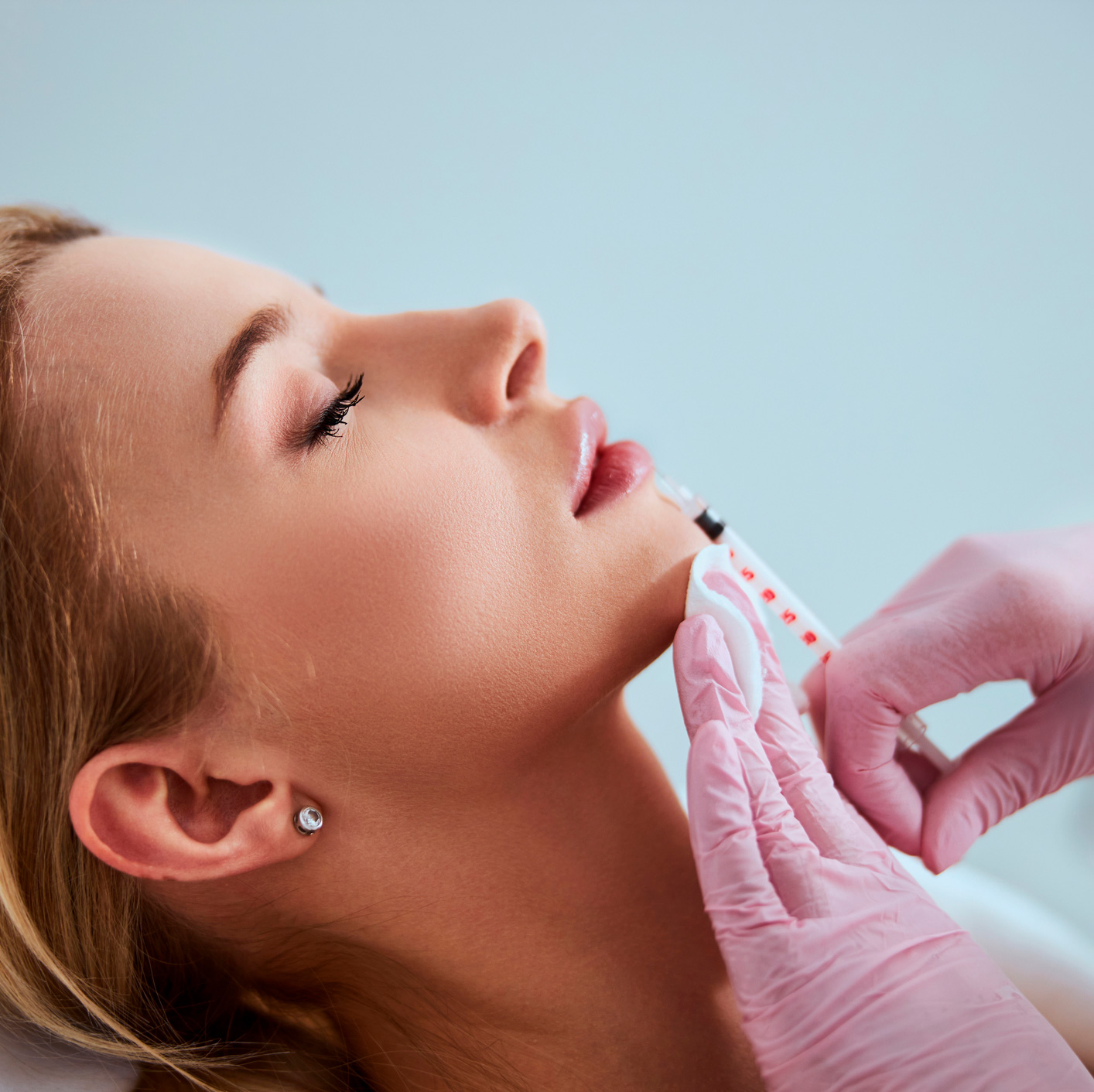
Dermal fillers aren’t one product. They’re a category — a family of injectable materials engineered for entirely different jobs. Some restore volume lost over years. Some refine a contour. Some stimulate your own collagen over months. The material inside the syringe determines everything: how it behaves, how long it lasts, and whether it can be reversed.
If you’re new to this, that distinction matters more than anything a before-and-after photo can tell you. So let’s start there.
| Category | Details |
|---|---|
| Top 5 Fillers at DB | Restylane / RHA, Radiesse, Sculptra, Bellafill, SkinVive by Juvéderm |
| Longevity range | 6 months (SkinVive) → 5+ years (Bellafill) |
| Reversible? | HA fillers only — all others permanent until absorbed |
| Full comparison | See Longevity by Material table below ↓ |
What’s Actually Inside a Filler
The most common filler ingredient is hyaluronic acid — a molecule your skin already makes to hold water in tissue. Restylane and RHA Collection are the HA fillers we use at Desert Bloom. They come in different densities: thinner gels for delicate areas like the tear trough or lip border, thicker gels for cheek volume or structural support. Because HA is naturally present in the body, it integrates gently — and because it can be dissolved with hyaluronidase, it’s also correctable. That reversibility is not a minor detail; it’s meaningful safety margin.
Calcium hydroxylapatite (Radiesse) is a different mechanism entirely. The microspheres don’t just fill — they stimulate your fibroblasts to lay down new collagen around them. This makes Radiesse useful for not just structural volume but visible improvement in skin texture — helpful in thin or crepey areas like the neck. Poly-L-lactic acid (Sculptra) works similarly, but even more gradually — each session triggers a collagen response over the following weeks, and full results emerge across typically 2–3 sessions. Polymethylmethacrylate (Bellafill) is permanent by design: tiny non-biodegradable microspheres stay in place and continue stimulating collagen for years.
How Fillers Work — and Why the Zone Matters
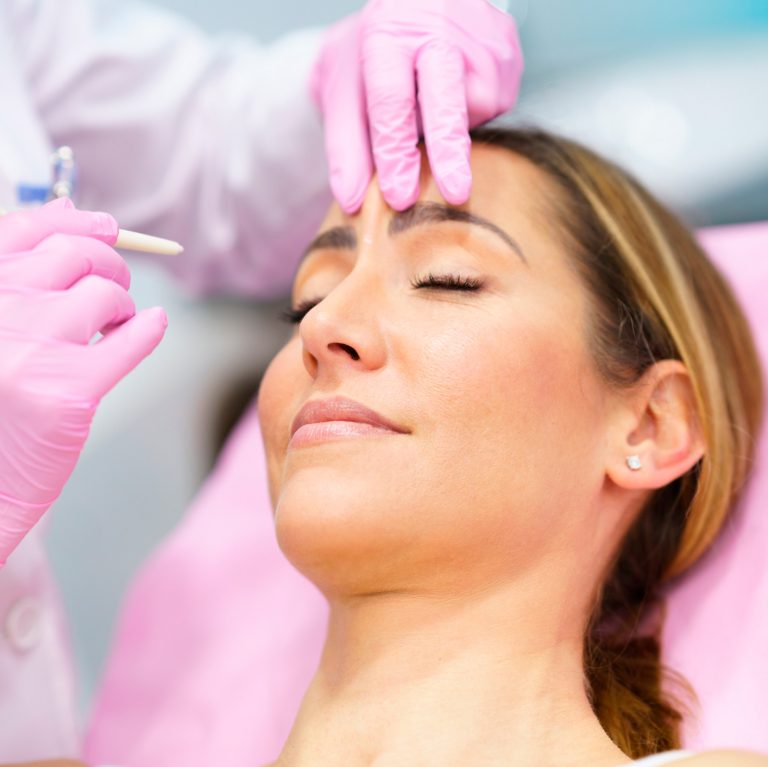
Different parts of the face have different anatomy, and what works beautifully in the cheek can cause problems in the tear trough. The under-eye is thin-skinned, highly vascular, and sits close to the orbital rim — it demands a very low-viscosity HA filler placed with precise technique. Injecting the wrong product there causes the Tyndall effect: a bluish discoloration from superficially placed HA that scatters light. The cheeks, by contrast, tolerate denser products and deeper placement where larger volumes integrate naturally. Lips need flexible gels that move with facial expression. Jawline and temple work calls for structural support with longevity.
The face zones we commonly treat: cheeks, lips, tear trough, nasolabial folds, marionette lines, jawline definition, temple hollowing, chin projection, and — with hyperdilute CaHA — the neck, chest, and hands. Each zone has its own product logic, and any consultation that skips that discussion is missing the point.
Risks Worth Knowing
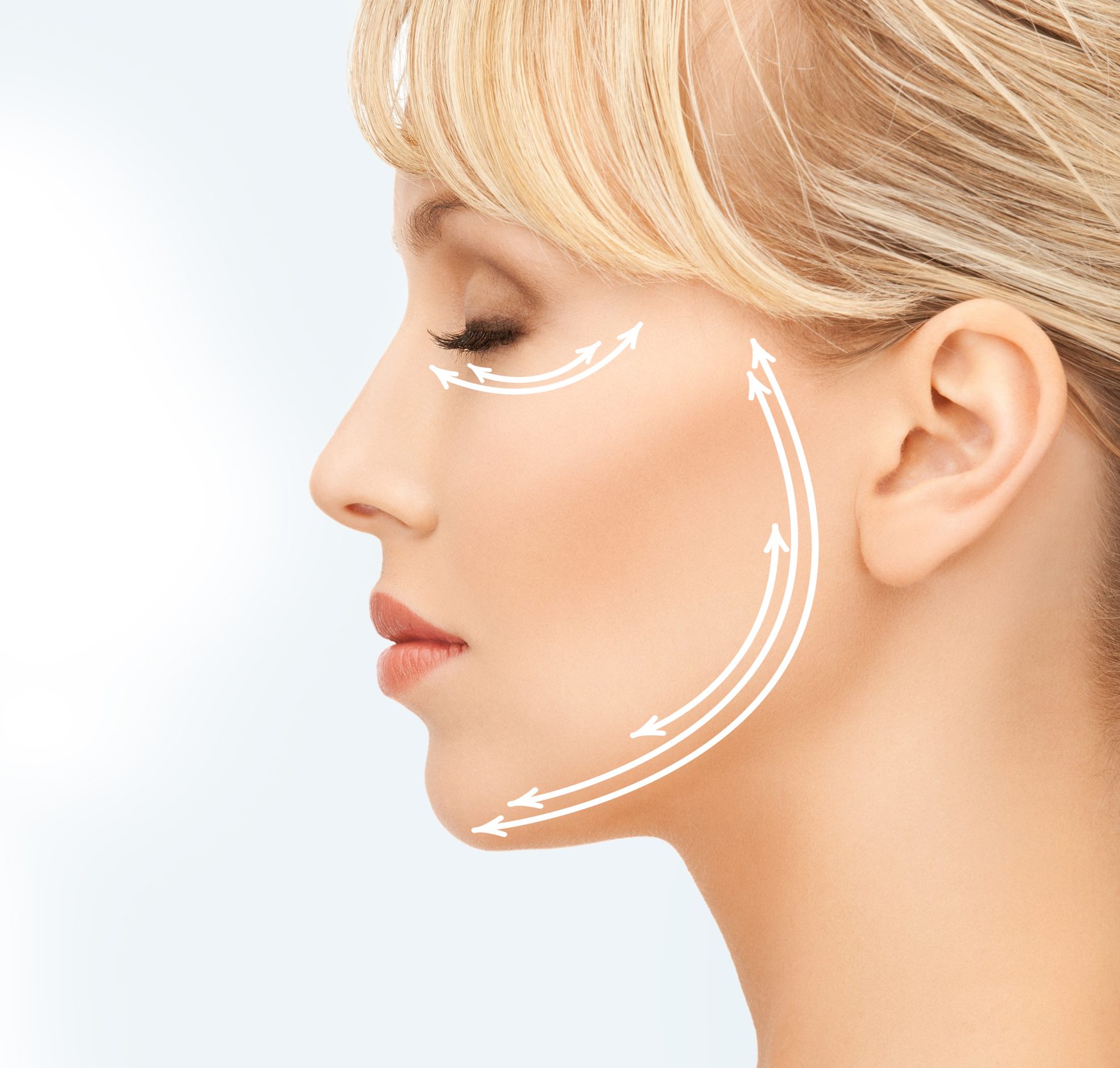
I want to be honest about this section — not to scare you, but because the risks are real and your decision should be informed. The common side effects are bruising (more likely around the lips and tear trough, where vessels are close to the surface), temporary swelling, and occasional firmness at the injection site that resolves within days to a few weeks. Tyndall effect — that blue-gray discoloration — can happen if HA is placed too superficially, particularly under the eyes. It’s correctable with hyaluronidase. Lumps or asymmetry are possible with any filler and addressable by a skilled injector.
The rare but serious risk is vascular occlusion: filler enters or compresses a blood vessel, blocking circulation to tissue or — in a very small number of documented cases — the eye. This is why provider selection matters enormously. I use blunt-tip microcannulas in high-risk zones, aspirate before injecting, and keep hyaluronidase on hand at every appointment. Allergic reactions to modern HA fillers are uncommon but not zero. Bellafill requires an allergy skin test before treatment. If you have a history of cold sores, tell us before any lip work — we’ll prescribe prophylactic antivirals. None of these risks are reasons to avoid fillers. They’re reasons to choose your injector carefully.
Longevity by Material
How long a filler lasts depends on the material, the zone treated, the volume placed, and how your metabolism processes it. Areas with more movement — lips, smile lines — break down filler faster. Deeper placements in less mobile tissue last longer. Here’s a general guide, with the caveat that individual variation is real:
| Filler Material | Brand(s) at DB | Best For | Onset | Lasts | Reversible |
|---|---|---|---|---|---|
| Hyaluronic Acid (HA) | Restylane, RHA Collection | Lips, tear trough, cheeks, lines | Immediate | 6–18 months | Yes* |
| Calcium Hydroxylapatite (CaHA) | Radiesse | Cheeks, jawline, neck, hands | Immediate + gradual | 12–18 months | No |
| Poly-L-Lactic Acid (PLLA) | Sculptra | Global volume, collagen rebuild | Gradual (weeks–months) | 2+ years | No |
| Polymethylmethacrylate (PMMA) | Bellafill | Acne scars, deep folds | Immediate + permanent scaffold | 5+ years | No |
| HA Microdroplet (hydration) | SkinVive by Juvéderm | Skin surface quality, glow | 1–4 weeks | ~6 months | Yes* |
* HA fillers are reversible with hyaluronidase. All other materials are not.
What to Expect: From Consultation Through Settled Results
We look at your facial anatomy, skin quality, volume distribution, and what you’re actually trying to achieve — not just where you think the problem is. Sometimes the source of a concern is different from where it’s visible. A good consultation takes time.
Most filler appointments take 30–60 minutes. Topical numbing is applied beforehand; most fillers also contain lidocaine. You’ll feel pressure and mild discomfort. Bruising is possible — plan around any events by at least 10–14 days.
Especially around the lips and under eyes, swelling is normal and can look like too much. Don’t judge the result yet. Avoid blood thinners, intense exercise, heat, and facial pressure. Sleep on your back if you can.
Swelling has mostly resolved. HA fillers show their shape now. Sculptra and Radiesse are still triggering their collagen response — what you see here is not the final result.
This is when to evaluate. Biostimulators (Sculptra, Radiesse) are building collagen gradually through this window. Follow-up appointments let us assess symmetry and whether additional product is needed.
HA fillers typically need refreshing every 6–18 months depending on product and zone. Sculptra is often a 2–3 session series, then maintenance every 1–2 years. Bellafill is touch-up as needed. We’ll build a schedule around your anatomy and goals.
Frequently asked questions
Are dermal fillers safe?
Fillers are among the most widely performed aesthetic procedures in the US, and serious complications are rare when treatment is performed by a trained, experienced injector. The main risks — bruising, swelling, lumps — are common and temporary. Vascular events are rare but serious, which is why provider selection matters. At Desert Bloom, we use blunt-tip cannulas in high-risk zones and keep reversal agents on hand for every HA appointment. Bellafill specifically requires an allergy skin test before treatment due to its bovine collagen carrier — that step protects against rare allergic responses.Do fillers look fake or overdone?
Overfilled results come from too much product, wrong product for the zone, or both — not from the category itself. Natural-looking filler work is extremely common. The goal at our clinic is to restore what was there, not to add what wasn’t. Most people won’t know you’ve had anything done; they’ll notice you look like yourself again.Can fillers be dissolved or reversed?
Hyaluronic acid fillers (Restylane, RHA, SkinVive) can be dissolved with hyaluronidase, an enzyme that breaks down HA rapidly. This is one of the main reasons HA is a good starting point for first-time filler patients — the safety net exists. Radiesse, Sculptra, and Bellafill are not reversible; the body gradually absorbs CaHA and PLLA over time, but there’s no dissolving agent for PMMA.How much does filler cost?
Pricing varies by product and volume. Restylane and RHA are typically priced per syringe. Sculptra is priced per vial (most patients need 2–4 vials per session across 2–3 sessions). Radiesse and Bellafill are also per-syringe. A full face consultation will give you a realistic estimate based on your specific anatomy — there’s no meaningful ballpark without seeing you first.How is filler different from Botox?
Botox (and other neurotoxins) temporarily relaxes the muscles that cause expression lines — crow’s feet, forehead lines, the 11s between the brows. Fillers replace or stimulate tissue volume. They solve different problems. Many patients benefit from both, used in complementary zones. Botox does nothing for volume loss; filler does nothing for dynamic muscle wrinkles.What happens when filler wears off?
HA fillers are gradually broken down by your body’s natural hyaluronidase over months. You return to your baseline — not worse than before treatment. Biostimulators (Sculptra, Radiesse) leave behind newly formed collagen, so even after the carrier material absorbs, some benefit remains. There’s no accelerated aging, no structural damage from stopping treatment.Am I a good candidate for fillers?
Most healthy adults concerned about volume loss, contour, or specific zones are reasonable candidates. We turn away patients whose goals require surgery (significant jowling or skin excess), who have unrealistic expectations, or who have certain medical contraindications. The consultation is where candidacy is determined — not the website.A Thought Before You Decide
A syringe of filler is not a solution to how you feel about your face. But for people with specific, anatomy-based concerns — volume that’s genuinely shifted, a contour that’s changed — it can make a real, visible difference that aligns what they see in the mirror with how they feel. The goal isn’t to look like someone else, or younger, or fixed. It’s to recognize yourself again.
If you’re curious whether any of the fillers we carry might make sense for you, the right next step is a conversation — not a commitment.

“Fillers are the most misunderstood category in aesthetics — often over-used, often misjudged, and occasionally refused out of fear based on the wrong examples. My job in a consultation is to explain the material, the anatomy, and what’s actually achievable. Then you decide.”
Schedule a filler consultation at Desert Bloom →
For a full overview of all injectable options, see our Dermal Fillers hub. Specific products: Restylane · Radiesse · Sculptra · Bellafill. Specific zones: Lip Augmentation · Tear Trough · Facial Sculpting · Why Injector Choice Matters.
Individual results vary. Content reviewed by Dr. Natalya Borakowski, NMD. Last updated April 2026.