Quick fix nose job: liquid rhinoplasty or PDO thread nose job


In this blog, we will discuss the procedures in detail, compare liquid rhinoplasty to PDO threads nose job, answer frequently asked questions, and provide information on recovery time and possible side effects so that you can make an informed decision.
Overview
Let’s start with a reframe: liquid rhinoplasty and a PDO nose thread lift are not competing versions of the same thing. They address different structural concerns, carry different risk profiles, and produce different kinds of results. Most patients who come to us asking “which one?” are really asking a prior question — what, exactly, is bothering them about their nose? The answer to that question determines the tool. Not the other way around.
Both options are non-surgical. Both are temporary. Neither can correct bone, major cartilage deviation, or functional issues like a deviated septum — if that’s what you’re working with, surgical rhinoplasty is the honest answer, and I’ll say so directly in consultation. But for mild-to-moderate cosmetic concerns? These two procedures cover a meaningful range of what patients want to address. Here’s how they actually differ — and where each one earns its place. Learn more about our liquid rhinoplasty and non-surgical rhinoplasty options.
Liquid Rhinoplasty at a Glance
- Best For
- Dorsal bumps, asymmetry, subtle tip refinement, post-surgical irregularities
- Duration
- 9–18 months (Restylane)
- Reversible
- Yes — hyaluronidase dissolves the filler
- Risk Level
- High — the nose’s vascular anatomy demands an experienced injector
Liquid rhinoplasty: what it actually does (and what it doesn’t)

Liquid rhinoplasty uses a hyaluronic acid filler — at Desert Bloom we use Restylane — injected in precise micro-deposits to reshape the external appearance of the nose. A dorsal hump can be camouflaged by filling above and below it, creating visual straightness. Subtle asymmetries, depressions, and minor tip irregularities can be softened. The procedure typically takes 15–30 minutes, requires no anesthesia beyond topical numbing cream, and has essentially no social downtime for most patients.
What it cannot do: it cannot make a nose smaller, correct functional breathing problems, or fix significant bone or cartilage concerns. And there is something I want to be honest about that some providers gloss over. The nose is the highest-risk zone for filler injection on the entire face. The nasal vasculature is dense, the vessels are small, and the consequences of intravascular injection — skin necrosis, and in rare cases, vision loss from retrograde embolism — are serious. This is not a reason to avoid the procedure. It is a reason to choose your injector with the same care you’d choose a surgeon.
PDO nose thread lift: a different mechanism

A PDO nose thread lift uses fine polydioxanone threads — the same dissolvable suture material used in surgery — inserted beneath the skin to lift a drooping tip, define the bridge, or improve the overall projection of the nose. The threads dissolve naturally over 6–8 months, but the structural effect lasts longer: 12–24 months in most patients, partly because the threads stimulate collagen as they dissolve, which provides some continued support. Results are visible immediately, with final refinement settling over 2–4 weeks as swelling resolves.
The thread approach works differently from filler — it creates lift and definition through mechanical tension and tissue reorganization, rather than volume. This means it’s particularly well-suited to tip ptosis (a drooping tip that’s descended with time) or a bridge that needs mild refinement without adding projection. It is not reversible in the way filler is — once threads are placed, they dissolve on their own schedule. Side effects are generally mild: bruising, tenderness, minor swelling. Thread migration is a real but uncommon complication, and is most preventable when threads are placed in correct anatomical planes by someone who knows the nose’s tissue layers. See our PDO thread lift overview for more.
Candidacy: the question that decides everything
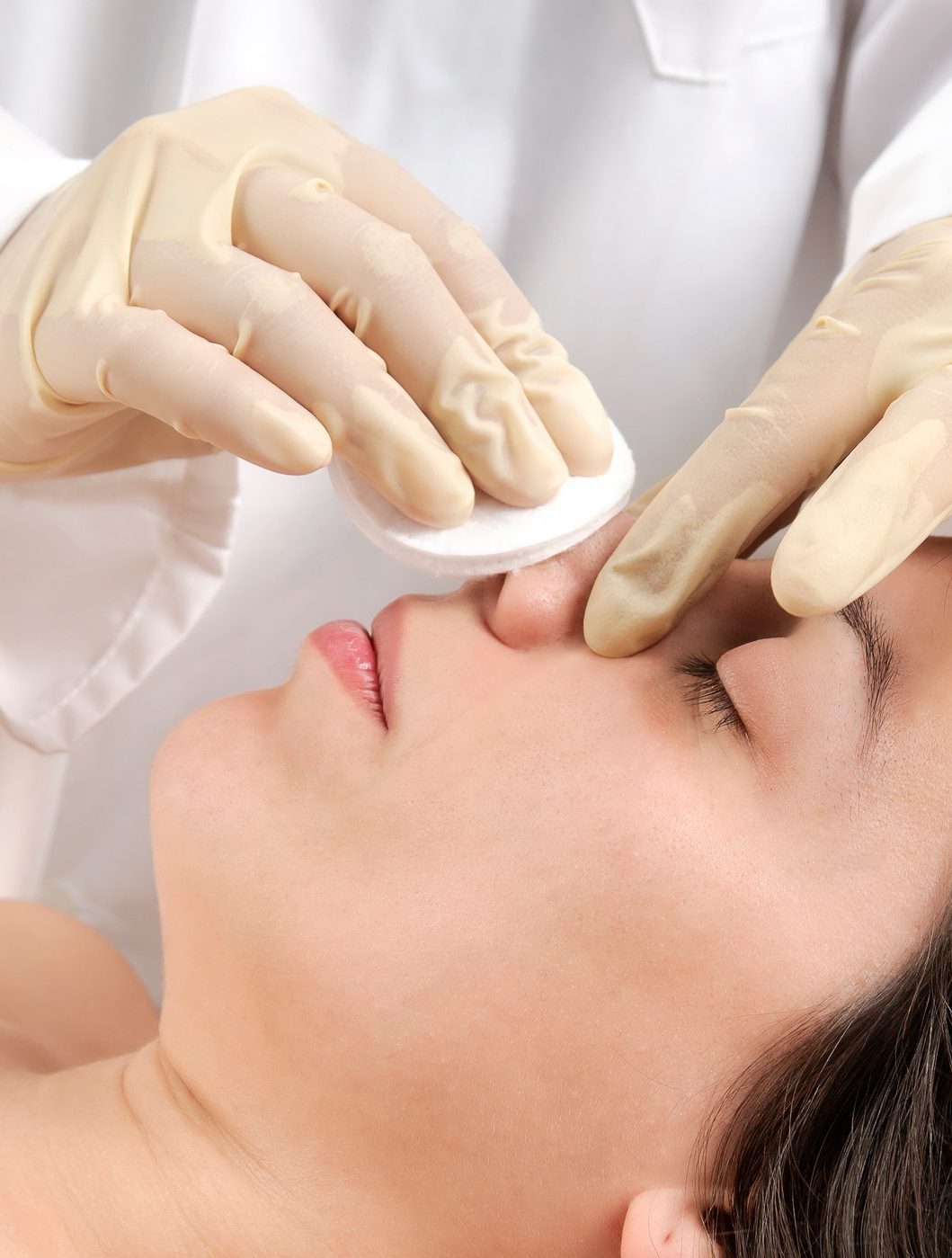
Neither procedure is universally better. Candidacy is what drives the decision. If you have a visible dorsal hump but a well-positioned tip, liquid rhinoplasty is likely the more direct solution — the filler camouflages the irregularity precisely. If your tip has dropped over time — a change many people notice in their mid-40s — and your bridge needs only light refinement, threads may give you a more natural and lasting result. In some patients, both procedures are used together in a staged plan, addressing different structural concerns with the tool best suited to each.
Neither option is appropriate for: significant bone deviation, a substantially enlarged nose (adding volume cannot reduce size), major septal problems, or patients who want results lasting more than two years without maintenance. In those cases, a surgical consultation is the right starting point, and we’ll tell you that. A good consultation does not always end with a procedure booked. Sometimes it ends with clarity about what would actually serve you — and that clarity is worth the appointment regardless of what you decide.
Liquid rhinoplasty vs. PDO threads vs. surgery
| Factor | Liquid Rhinoplasty | PDO Thread Nose Lift | Surgical Rhinoplasty |
|---|---|---|---|
| Mechanism | HA filler (Restylane) adds volume to reshape contour | Dissolvable threads lift and define via mechanical tension | Bone and cartilage reshaped surgically under anesthesia |
| Best For | Dorsal bumps, asymmetry, depressions, tip irregularities | Drooping tip, mild bridge definition, tip projection | Major reshaping, bone correction, functional issues |
| Duration | 9–18 months | 12–24 months | Permanent (with natural aging) |
| Reversible | Yes — hyaluronidase dissolves filler | No — threads dissolve naturally over time | No |
| Downtime | Minimal — light bruising/swelling 3–5 days | Mild — swelling, tenderness 5–7 days | 2–4 weeks; full healing 6–12 months |
| Vascular Risk | High — nose is highest-risk filler zone on face | Moderate — bruising, thread migration possible | Surgical risks apply; different risk category |
| Anesthesia | Topical numbing only | Topical numbing only | General or IV sedation |
| Cost Range | $600–$1,200 per session | $800–$1,500 per session | $6,000–$15,000+ |
| Maintenance | Every 9–18 months | Every 12–24 months | None required |
| Not For | Functional issues, size reduction, bone correction | Volume addition, structural bone issues | Patients wanting non-surgical options |
Liquid Rhinoplasty
- Mechanism
- HA filler (Restylane) adds volume to reshape contour
- Best For
- Dorsal bumps, asymmetry, depressions, tip irregularities
- Duration
- 9–18 months
- Reversible
- Yes — hyaluronidase dissolves filler
- Downtime
- Minimal — light bruising/swelling 3–5 days
- Vascular Risk
- High — nose is highest-risk filler zone on face
- Anesthesia
- Topical numbing only
- Cost Range
- $600–$1,200 per session
- Maintenance
- Every 9–18 months
- Not For
- Functional issues, size reduction, bone correction
PDO Thread Nose Lift
- Mechanism
- Dissolvable threads lift and define via mechanical tension
- Best For
- Drooping tip, mild bridge definition, tip projection
- Duration
- 12–24 months
- Reversible
- No — threads dissolve naturally over time
- Downtime
- Mild — swelling, tenderness 5–7 days
- Vascular Risk
- Moderate — bruising, thread migration possible
- Anesthesia
- Topical numbing only
- Cost Range
- $800–$1,500 per session
- Maintenance
- Every 12–24 months
- Not For
- Volume addition, structural bone issues
Surgical Rhinoplasty
- Mechanism
- Bone and cartilage reshaped surgically under anesthesia
- Best For
- Major reshaping, bone correction, functional issues
- Duration
- Permanent (with natural aging)
- Reversible
- No
- Downtime
- 2–4 weeks; full healing 6–12 months
- Vascular Risk
- Surgical risks apply; different risk category
- Anesthesia
- General or IV sedation
- Cost Range
- $6,000–$15,000+
- Maintenance
- None required
- Not For
- Patients wanting non-surgical options
Recovery and results week by week
Day 1–2
Immediate Post-Treatment
Light swelling and bruising are normal for both procedures. Filler patients may see some firmness at injection sites; thread patients may feel mild tenderness. Avoid touching, pressing, or wearing glasses on the nose.
Days 3–7
Settling Phase
Most bruising resolves and swelling decreases noticeably. Thread patients may feel minor tightness that fades by the end of week one. Filler shape begins settling into its final contour.
Weeks 2–4
Final Contour Visible
By week 2 liquid rhinoplasty results are essentially final as the Restylane integrates. Thread patients typically see peak lift at 2–4 weeks as swelling resolves and thread tension stabilizes.
Months 3–6
Sustained Results
Both procedures show their full effect. For thread patients PDO dissolution begins, but collagen stimulation maintains support. Filler patients may notice very gradual softening.
Months 9–24
Maintenance Window
Liquid rhinoplasty typically needs a touch-up at 9–18 months. PDO threads last 12–24 months. Patients who do well often return for maintenance rather than switching approaches.
Frequently Asked Questions
Is liquid rhinoplasty or a PDO thread lift better?
Can a non-surgical nose job make my nose smaller?
How long do the results last?
Is liquid rhinoplasty reversible?
Why is injector experience so important for the nose?
Not sure which applies to you?
Most patients who come in with nose concerns have already spent time researching online and have a hypothesis. Sometimes they’re right. Often, once we look at the actual anatomy — tip position, dorsal contour, skin thickness, nasal base — the answer is different from what they expected. Both of these tools are useful. Neither one is right for everyone. And for a meaningful percentage of patients, neither non-surgical option is the correct first step. We’d rather tell you that clearly than talk you into something that won’t serve your goals.
The nose anchors facial thirds — small changes there register faster than almost anywhere else. The patients who do best with non-surgical rhinoplasty are not the ones chasing perfection. They’re the ones with a specific, realistic concern and the patience to understand what’s actually achievable without surgery. That alignment between expectation and reality is what makes the result read as yours, not as a procedure.
“The nose is the most anatomically unforgiving zone I work in. I tell every patient: this isn’t about who has the best deal or the fastest appointment. It’s about who knows the vasculature well enough to stop if something feels wrong.”