I’ve Been Quietly Working on Something Important
I’ve been quietly writing a book called Emotional Aesthetics — a framework for understanding why changes in our face can feel so deeply emotional, and how to make aesthetic choices from self-trust instead of fear.
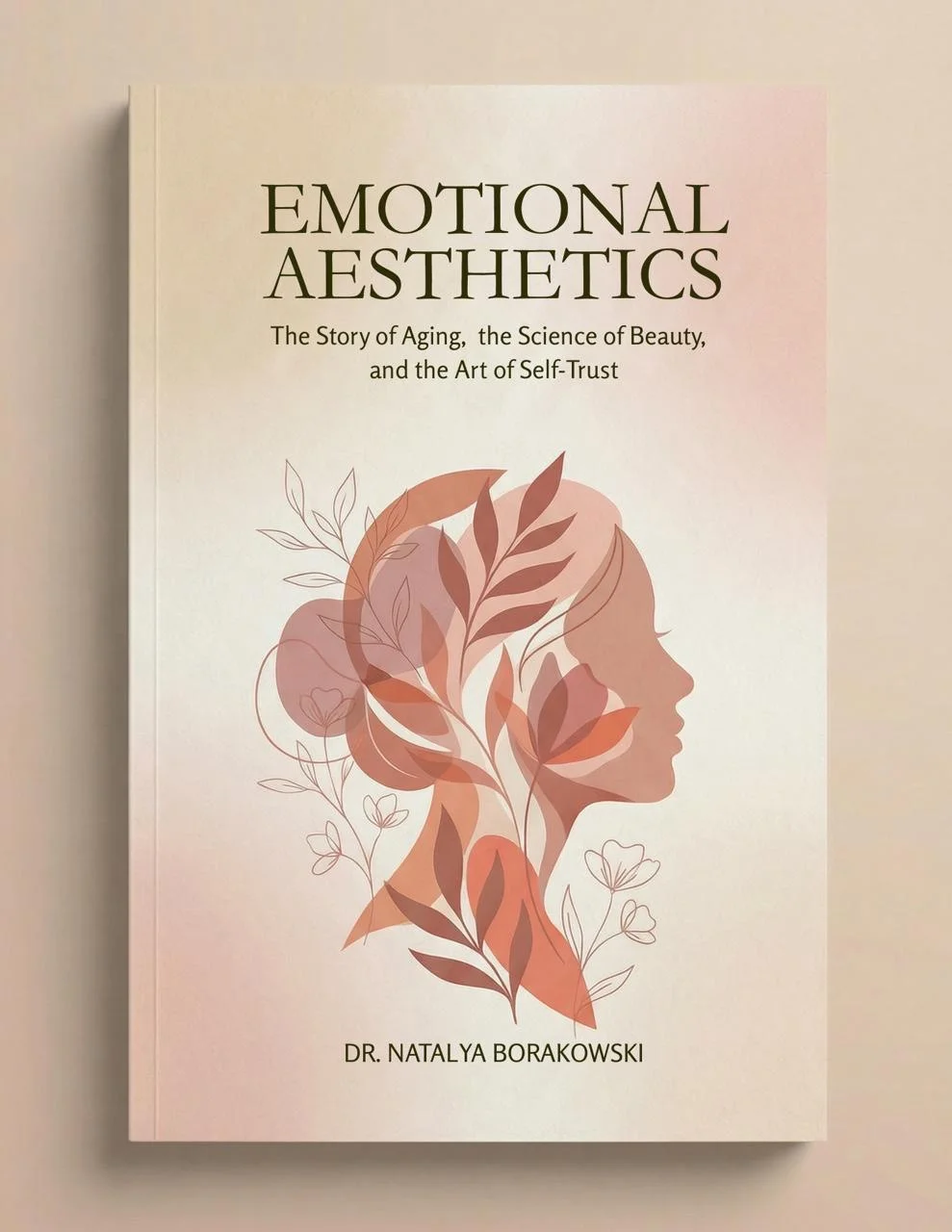
I have been quietly working on something important for me.
Not a new device.
Not a new protocol.
Not another aesthetic technique.
A book.
For years inside the treatment room at Desert Bloom, I’ve had the same conversation with women again and again — sometimes whispered, sometimes joked about, sometimes hidden behind clinical language.
“I don’t recognize myself anymore.”
“I don’t know why this bothers me so much.”
“I feel silly even caring.”
“Am I being vain?”
And what I’ve come to understand is this:
Most women are not obsessed with beauty.
They are destabilized by change.
As a naturopathic physician specializing in women’s health and cosmetic dermatology, I’ve always approached skin through biology — hormones, stress physiology, inflammation, collagen loss, nervous system load.
But over time, I began to see something deeper.
The distress wasn’t only about wrinkles or laxity.
It was about identity.
When a woman’s face changes — during perimenopause, after prolonged stress, after burnout, after caregiving years — it can feel like something essential has shifted. And no one explains why that feels so emotional.
The beauty industry offers procedures.
The wellness industry offers acceptance.
But neither explains what is happening in the brain, the nervous system, and the perception pathways when a woman stops feeling at home in her own reflection.
This book is called Emotional Aesthetics.
It explores:
Why facial changes feel personal
How hormones and stress alter perception
Why some aesthetic decisions feel relieving — and others spiral
How to separate cultural pressure from biological reality
And how to make aesthetic choices from self-trust rather than urgency
This is not an anti-aging manifesto.
It is not a “just love yourself” message either.
It is a framework for understanding the intersection between identity, biology, and aesthetic medicine — so decisions can be made clearly, not reactively.
Desert Bloom has always been built on the belief that medicine offers tools — but cultural fear should never be the driver of care.
Writing this book has been a way for me to articulate what I’ve been practicing quietly for years inside this clinic:
Care is not vanity.
Neglect is not liberation.
Fear is not a treatment plan.
If you’ve ever felt unsettled by your reflection but unsure why — this book is for you.
I’ll be sharing more about it in the coming months.
For now, I just wanted you to know what I’ve been building behind the scenes.
Warmly,
Dr. Natalya Borakowski
Founder, Desert Bloom Skincare