Razor Bumps That Keep Coming Back Are a Hair-Cycle Problem
Topicals manage the bumps. Laser ends the cycle.
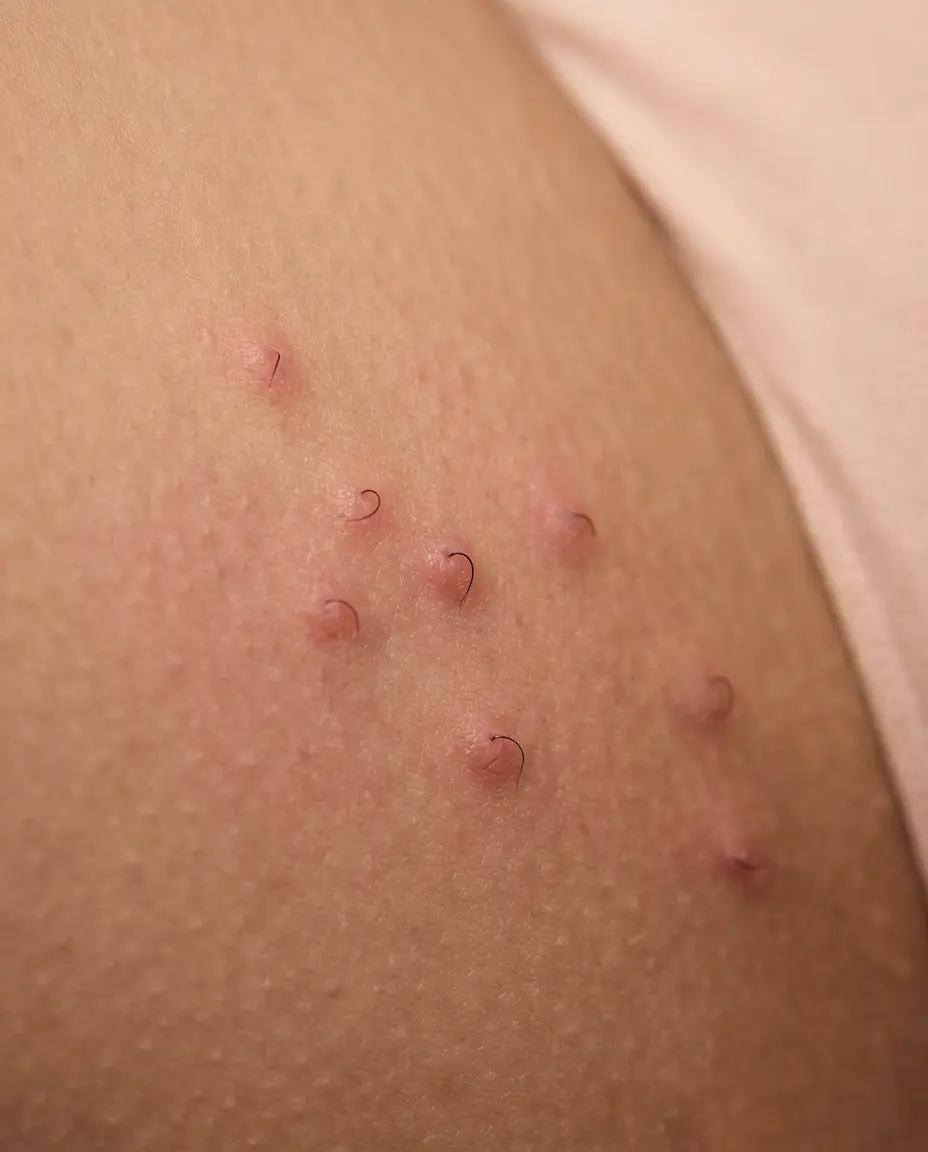
Ingrown hairs — the clinical name is pseudofolliculitis barbae — happen when a hair curls back under the skin instead of exiting the follicle cleanly. The most affected zones are the beard area and neck for men, and the bikini line, legs, and underarms for women. Patients with coarse or curly hair, and Fitzpatrick IV–VI skin in particular, carry a disproportionate burden: estimates place prevalence at 45–85% of Black men who shave regularly.
At Desert Bloom Skincare in Scottsdale, Dr. Natalya Borakowski, NMD routes ingrown-hair patients by Fitzpatrick skin type first — because the wavelength selection (Alexandrite 755nm for Fitz I–III, Nd:YAG 1064nm for Fitz IV–VI) is the clinical decision that determines safety, not just efficacy. Laser Hair Removal is the first-line answer for chronic recurrence; a Custom Chemical Peel clears active bumps and dead-skin buildup during the series; Mesotherapy and targeted peels address post-inflammatory pigment left behind by older ingrowns.
If recurring ingrown hairs have left darker marks behind, see our Hyperpigmentation hub for pigment-focused routing. Men dealing with chronic facial razor bumps will also find relevant context in Men's Skin Care.
The Mechanism Behind Recurring Ingrown Hairs
Every shave or wax leaves a sharpened hair tip that grows back into the follicle wall rather than exiting cleanly — a process called extrafollicular penetration. Coarse or curly hair, a tight follicle angle, and repeated removal all sharpen the cycle: the trapped hair triggers inflammation, the inflammation thickens the surrounding skin, and the thickened skin blocks the next hair from emerging cleanly. Topicals manage the visible symptoms; only reducing follicle density in the affected area ends the underlying cycle.
Why it recurs
- Coarse or curly hair with tight follicle angle
- Shaving against growth direction or with multi-blade razors
- Waxing and threading that leave a sharpened regrowth edge
- Dead-skin buildup at the follicle mouth blocking clean exit
Treatment menu
Three Routes That Work Together
Laser ends the cycle at the follicle. A chemical peel clears the buildup that traps hair at the surface. Mesotherapy and targeted peels address post-inflammatory pigment from older ingrowns. The right combination depends on whether the bumps are active, the pigment is residual, or both.
First-line · Prevention
Laser Hair Removal
The only treatment that ends the ingrown-hair cycle rather than managing its symptoms. By permanently reducing follicle density in the treated area, laser removes the coarse or curly hair most prone to becoming ingrown. Wavelength is selected by Fitzpatrick type: Alexandrite 755nm for Fitz I–III, Nd:YAG 1064nm for Fitz IV–VI. Typically 6–8 sessions, 4–8 weeks apart; most patients notice fewer active bumps within two to three sessions.
Adjunct · Active bumps
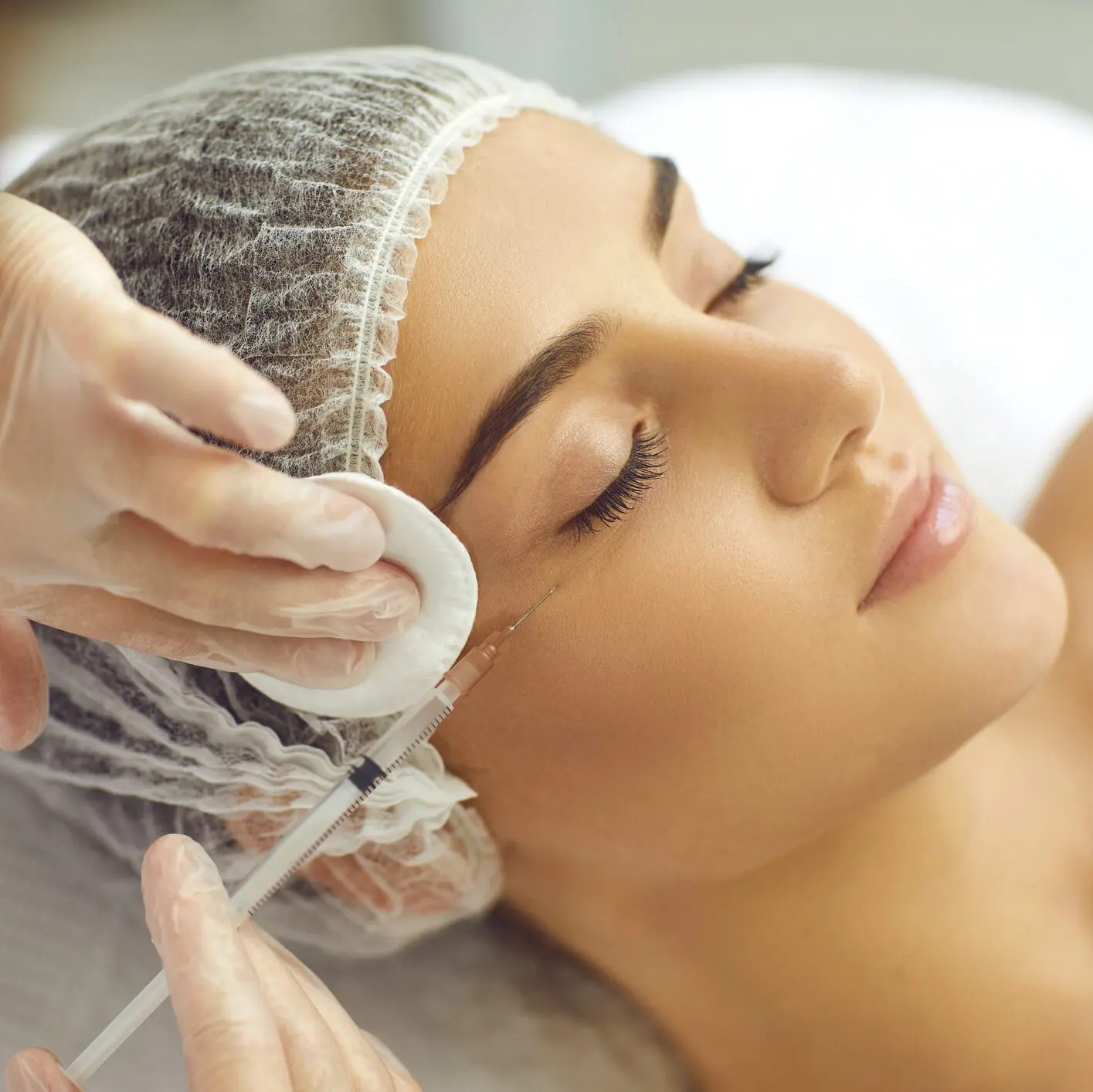
Custom Chemical Peel
A low-percentage glycolic or salicylic peel releases the dead-skin buildup at the follicle mouth, allowing trapped hair to reach the skin's surface. Used during the laser series to clear what is currently inflamed, and to soften early post-inflammatory hyperpigmentation in one visit. It is the correction option — not the prevention option.
Adjunct · PIH from old bumps
Mesotherapy & Targeted Peels
Older ingrown hairs often leave persistent post-inflammatory hyperpigmentation behind — especially in Fitz IV–VI skin. Mesotherapy delivers brightening and reparative actives into the dermis directly. Combined with serial PRX-T33 or Dermaquest peels, this is the standard pigment route once the laser series has interrupted the hair cycle.
Start here
Find Your Route
What you see today determines where the plan starts. Final sequencing is set at consultation after an in-person assessment.
"I have active, painful, inflamed bumps right now."
→Home protocol first, then laser — Calm the active inflammation before any energy-based treatment. Warm compresses, salicylic acid 2–3×/week, single-blade razor in the direction of growth, fragrance-free moisturizer. Once the skin is calmer, the laser series begins.
"The bumps keep coming back month after month."
→Laser Hair Removal — Chronic recurrence is a follicle-density problem. Permanent hair reduction ends the cycle. Wavelength selected by Fitzpatrick type at the consultation.
"The bumps are gone but the dark spots remain."
→Mesotherapy + targeted peels — Post-inflammatory hyperpigmentation from old ingrowns is an epidermal pigment problem, not a hair problem. Routes to the Hyperpigmentation hub — Alexandrite is not the answer for darker skin tones.
"There's scarring and texture from years of recurrent bumps."
→Peel series after the laser cycle — Surface scarring and uneven texture from chronic pseudofolliculitis barbae respond to a chemical peel series after laser has reduced active follicular inflammation in the same area.
Frequently Asked Questions
What is pseudofolliculitis barbae?
Is laser hair removal safe for Fitzpatrick IV–VI skin?
How many sessions do I need to prevent ingrown hairs with laser?
Can I shave between laser sessions?
What about the dark spots left behind by old ingrown hairs?
When do ingrown hairs need a dermatologist, not an aesthetic clinic?

Medically reviewed by
Founder, Desert Bloom Skincare · 17 Years Experience
References
- 1.
Ross EV, Cooke LM, Overstreet KA, Buttolph GD. Treatment of pseudofolliculitis barbae in very dark skin with a long pulse Nd:YAG laser. J Natl Med Assoc; 2002;94(10):888-893.
PMID 12408693. Foundational safety/efficacy paper for Nd:YAG 1064nm in Fitz V–VI pseudofolliculitis barbae.
- 2.
Perry PK, Cook-Bolden FE, Rahman Z, Jones E. Defining pseudofolliculitis barbae in 2001: a review of the literature and current trends. J Am Acad Dermatol; 2002;46(2 Suppl):S113-S119.
PMID 11807473. Canonical review — pseudofolliculitis barbae epidemiology and clinical features.
- 3.
Kundu RV, Patterson S. Dermatologic conditions in skin of color: part II. Disorders occurring predominately in skin of color. Am Fam Physician; 2013;87(12):859-865.
PMID 23939568. Covers pseudofolliculitis barbae and folliculitis keloidalis nuchae.
- 4.
Xia Y, Cho S, Howard RS, Maggio KL. Topical eflornithine hydrochloride improves the effectiveness of standard laser hair removal for treating pseudofolliculitis barbae: a randomized, double-blinded, placebo-controlled trial. J Am Acad Dermatol; 2012;67(4):694-699.
DOI: 10.1016/j.jaad.2011.10.029
PMID 22226431. RCT — laser plus topical adjunct for pseudofolliculitis barbae.