Frown Lines
Frown lines — the vertical creases between your eyebrows — form from repeated muscle movement and can give your face a tense look even at rest. At Desert Bloom in Scottsdale, Dr. Borakowski treats frown lines with neuromodulators and collagen-rebuilding approaches tailored to whether your lines are dynamic, static, or both.
See all treatments
Botox, Dysport, Daxxify, and RF microneedling — matched to whether your 11 lines are still dynamic or already etched, in Scottsdale.
Find Your Treatment
Those “11 Lines” Between Your Brows
Frown lines — the vertical lines that appear between your eyebrows — form from years of repeated facial expressions and the habitual pull of the corrugator and procerus muscles. Whether you call them glabellar lines, worry lines, forehead furrows, or simply “the 11s,” they can give your face a tense, tired, or angry look even when you feel perfectly relaxed. Most patients notice their 11 lines in photos long before they notice them in the mirror.
The most important distinction in any frown-line consultation is whether your 11s are still dynamic wrinkles — creases that appear in motion and fade at rest — or have become static lines etched into the skin itself. That single observation shapes the entire treatment plan. At Desert Bloom, Dr. Natalya Borakowski, NMD conducts a frown test at every glabellar consultation and builds each plan around what she actually sees, not a default answer.
Frown lines are part of the broader wrinkles family. Related sibling concerns: crow’s feet and forehead lines. All three route to our anti-aging treatments hub.
At a Glance
Scope. Three neuromodulators (Botox, Dysport, Daxxify) cover dynamic 11s; RF microneedling is added once lines stay visible at rest between toxin appointments. A microdroplet Restylane touch-up is available for deep static residual creases. Pricing from ~$300 (Botox 20u) to ~$1,200 per session (RF microneedling series). Dr. Borakowski tailors the plan to whether your glabellar lines are still in motion or have become permanent grooves.
Provider & candidacy. Dr. Natalya Borakowski, NMD oversees all injection and device planning. Neuromodulators are appropriate for Fitzpatrick I–VI with no melanin-related risk. Pregnancy, breastfeeding, active skin infection at the glabellar site, and neuromuscular disorders are absolute contraindications to toxin. RF microneedling is safe across all skin tones with appropriate settings. A medical history review is part of every consultation.
Downtime & how to start. Neuromodulator procedures take a few minutes with zero social downtime; results settle at the two-week mark. RF microneedling has 24–48 hours of redness and tenderness. A 30-minute consultation is where Dr. Borakowski performs the frown test, maps your line depth and anatomy, and outlines which procedures apply to your situation. No commitment required on the day.
Dynamic vs. Static: The Frown Test
Knowing which stage your 11 lines are at is the single most useful thing to understand before a consultation — because the treatment path depends entirely on it. The frown test is simple: frown hard, then let your face relax completely. Does the crease flatten and smooth out? That is a dynamic frown line. Does it stay visible at rest? That is a static frown line, or is transitioning to one.
Dynamic 11s
The vertical lines between your brows appear when frowning, squinting, or concentrating, but the skin smooths out at rest. The corrugator supercilii and procerus muscles are contracting and folding the overlying skin — but the collagen and elastin in the skin haven’t yet been permanently deformed. This is the stage most people are in during their late 20s and early 30s.
What helps: A neuromodulator — Botox, Dysport, or Daxxify — relaxes the corrugator and procerus pull so the skin stops being folded. Most plans start here and stay here for several years. Three to four months between appointments for Botox or Dysport; around six months for Daxxify.
First-line: Botox · Dysport · DaxxifyStatic 11s
The crease stays visible even when your face is fully at rest, and it has a textured or shadowed quality that suggests the fold has etched into the skin itself. Collagen and elastin fibers in the glabellar skin have been deformed by thousands of repeated expressions over many years. The crease is now a structural feature of the skin, not just a functional one.
What helps: A neuromodulator still addresses the muscle activity driving the crease deeper; RF microneedling is added to rebuild collagen in the crease bed. For a residual groove that remains after toxin, a microdroplet Restylane touch-up can soften the static line directly. The neuromodulator base is almost always part of the plan — it removes the force that would otherwise deepen the line further.
Plan: Neuromodulator + RF Microneedling ± RestylaneFrown Line Treatments at Desert Bloom
Three neuromodulators address the same problem — muscle-driven glabellar movement — but differ in diffusion profile and duration. The decision between them is made at consultation based on your line pattern, maintenance preference, and whether you are a first-time patient. RF microneedling and Restylane enter the plan only once dynamic treatment has been established and a static residual crease needs structural work.
Botox — First-Line Standard
Best for
First-time patients; dynamic 11s with standard glabellar anatomy; patients who prefer to fine-tune dosing before committing to a longer duration.
What makes it distinct
Onabotulinumtoxin-A was the first botulinum toxin FDA-approved specifically for glabellar lines (2002) and remains the most-studied. Standard glabellar dose is about 20 units at five injection sites. Duration: 3–4 months. Tight diffusion profile — predictable for precise corrugator/procerus targeting.
Choose this if
This is your first time treating frown lines, or you want a conservative starting point to dial in dosing before committing to a longer-acting product.
Dysport — Broader Diffusion
Best for
Patients whose 11 pattern fans wider across the brow than a clean vertical pair; those with a history of good response to abobotulinumtoxin-A; patients who prefer slightly faster onset.
What makes it distinct
Abobotulinumtoxin-A spreads more broadly from each injection site than Botox — useful when the frown pattern is wider or asymmetric. Typical glabellar dose ~50 units (aboBoNT-A ≈ 2.5:1 conversion). Duration: 3–4 months — same as Botox.
Choose this if
Your corrugator pull spreads wider than a standard “11” pattern, or your consultation history shows better results with this formulation.
Daxxify — Longer Duration
Best for
Established neurotoxin responders who want fewer annual appointments; patients comfortable with a ~6-month commitment rather than a 3–4 month cycle.
What makes it distinct
DaxibotulinumtoxinA-lanm uses a PEG-peptide stabilizer that extends effective duration to ~6 months for glabellar lines — confirmed in the SAKURA phase-3 trials. Typical dose ~40 units. Not ideal for first-time treatment because a 6-month commitment is harder to adjust if dosing needs refinement.
Choose this if
You already know your frown lines respond well to neurotoxin and prefer two appointments per year instead of three or four.
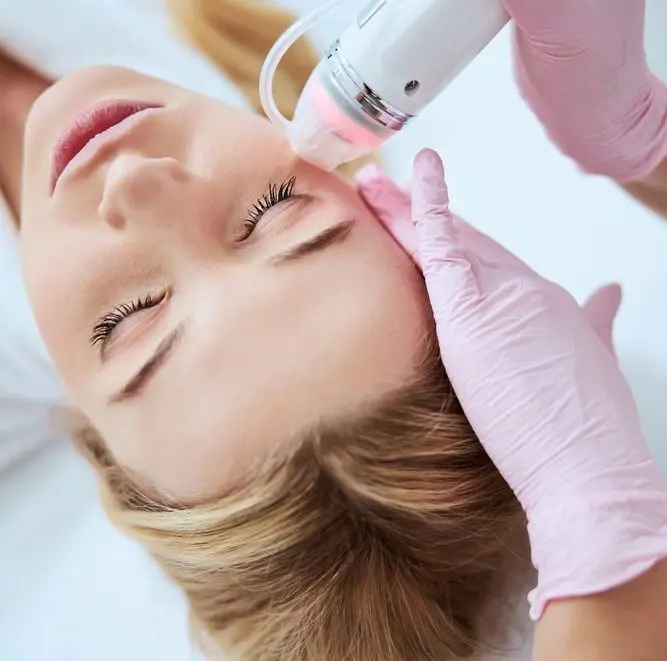
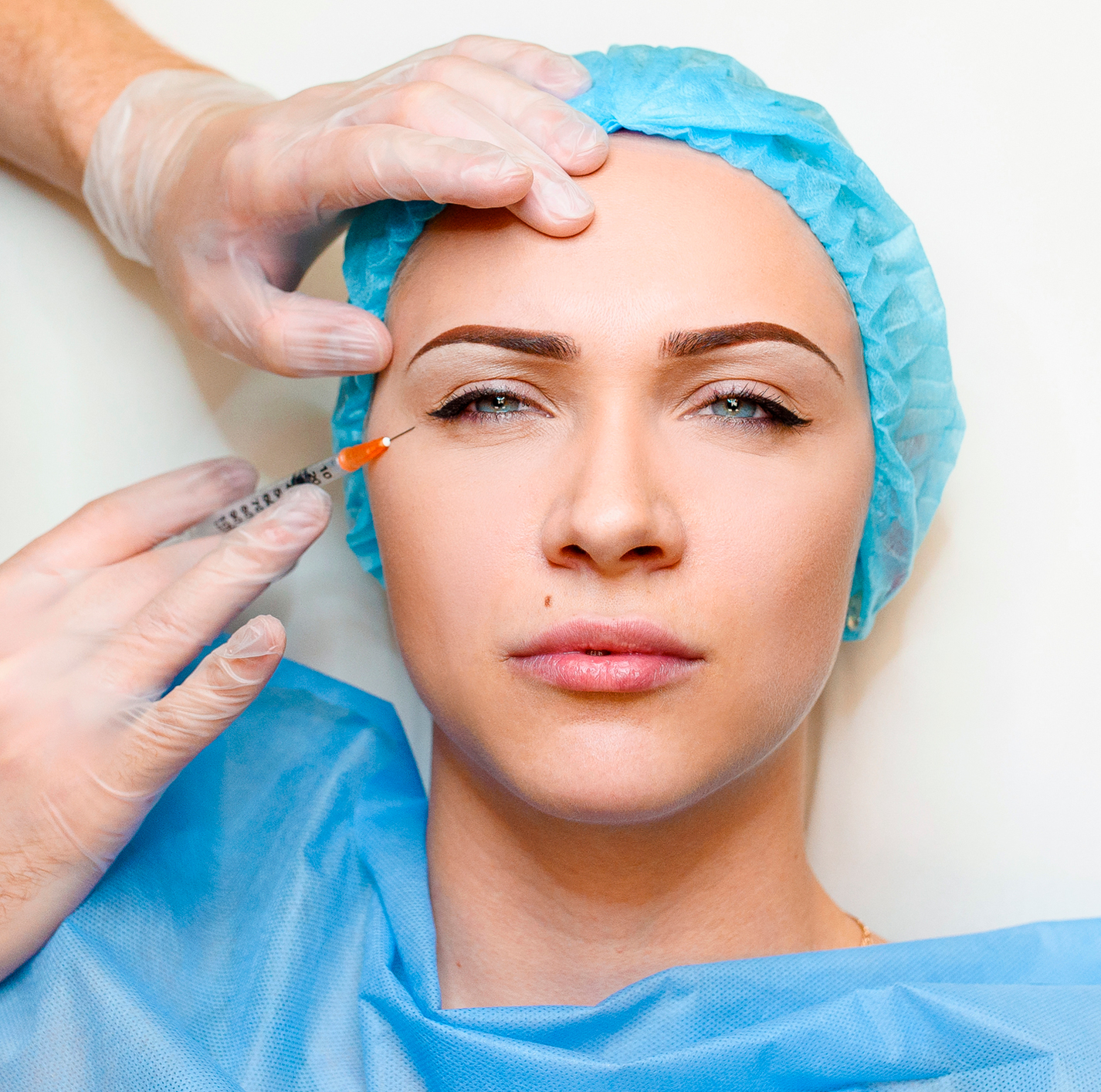
For most patients, frown-line treatment stays in the neuromodulator lane for years. The two options below enter the plan when static lines have developed — when a crease remains visible at rest despite regular toxin, or when the skin surface itself has been structurally altered by the repeated folding. A microdroplet Restylane touch-up is also available for a residual static groove that sits in the skin after toxin; this is an off-label application for patients whose anatomy warrants it. Patients with a glabellar crease that is part of a broader photoaging picture may be candidates for CO2 laser resurfacing — that decision is made at consultation and routes to the wrinkles hub.
How to Choose Your Starting Point
The most common question at a frown-line consultation is which neuromodulator to start with, and whether any structural procedure is needed. These two tracks help orient the decision before you come in.
Dynamic Track — Neuromodulator First
Your 11 lines appear most in motion. Face smooths out at rest, or close to it.
Static + Combined Track — Layer In Structure
Your 11 lines stay visible at rest between toxin appointments, or have an etched, shadowed quality.
Compare All Frown Line Treatment Options
Use this table as a starting reference. Precise dosing, session counts, and cost are reviewed at consultation based on your anatomy and goals.
| Treatment | Best For | Mechanism | Fitzpatrick | Sessions | Downtime |
|---|---|---|---|---|---|
| Botox | Dynamic 11s — first-timers | Relaxes corrugator + procerus | I–VI | 1 session, repeat every 3–4 mo | None |
| Dysport | Dynamic 11s — wider pattern | Same as Botox, broader diffusion | I–VI | 1 session, repeat every 3–4 mo | None |
| Daxxify | Dynamic 11s — fewer visits | Same mechanism, longer duration (~6 mo) | I–VI | 1 session, repeat every 5–6 mo | None |
| RF Microneedling | Static 11s — etched crease | RF energy → dermal collagen rebuild | I–VI (safe all tones) | 3 sessions, 4–6 wks apart | 24–48 hrs redness |
| Restylane (off-label) | Deep static residual groove | HA microdroplet volumizes crease | I–VI | 1 session (after toxin established) | Minimal, possible bruising |
Safety, Skin Type, and Eligibility
All three neuromodulators carry no melanin-related risk and are appropriate for Fitzpatrick I–VI. RF microneedling is similarly safe across all skin tones with appropriate settings. The glabellar area warrants particular attention for any injectable procedure — proximity to the supratrochlear and supraorbital vessels and the ophthalmic artery means that provider technique and knowledge of vascular anatomy are essential for safe injections, including the rare microdroplet Restylane application. A complete medical history review is standard at every consultation.
Pregnancy or breastfeeding. All neuromodulator and RF microneedling procedures are deferred until after.
Active skin infection at the glabellar site. Injection into or near an infected area is contraindicated; skin must be clear before proceeding.
Neuromuscular disorders (e.g., myasthenia gravis, ALS). Botulinum toxin use requires specialist coordination or is contraindicated depending on severity and medication.
Heavy upper eyelid ptosis or significant brow ptosis. When drooping eyelids or descending brows are the primary concern, the answer is usually surgical — a brow lift or eyelid surgery consultation, not toxin. Toxin can occasionally worsen ptosis if it diffuses into the levator palpebrae; Dr. Borakowski screens for this during the physical assessment.
Isotretinoin (Accutane) within 6 months. RF microneedling is deferred; neuromodulators are not affected.
The most effective way to slow frown line development between treatments is daily broad-spectrum sunscreen applied to the forehead and glabella. UV radiation is one of the leading external accelerators of collagen breakdown in the glabellar area — and in Scottsdale’s sun, squinting against bright light is one of the most common reasons 11 lines appear prematurely. Polarized UV-blocking sunglasses reduce both sun damage and the habitual squinting that drives dynamic line formation. Topical retinoids — over-the-counter retinol or prescription tretinoin — are the best-studied option for maintaining collagen turnover in areas prone to repeated folding; consistent nightly use helps the skin retain some resilience between procedures and reduces the rate at which dynamic lines transition to static ones.
Lifestyle factors that appear unrelated to frown lines also contribute meaningfully: smoking reduces skin elastin and oxygen delivery, accelerating the structural damage that causes creases to etch. Chronic stress keeps the corrugators under higher baseline tension — more hours per day of involuntary furrowing. Adequate sleep and hydration support the skin’s nightly repair processes. For patients with strong corrugator activity who notice early frown lines forming in their late 20s, preventative low-dose toxin started conservatively is often the most effective long-term strategy — stopping the repeated fold before the collagen has been permanently deformed, rather than trying to correct established creases years later.
Frequently asked questions
At what age do frown lines usually start?
Most patients notice their first dynamic 11 lines between the late 20s and mid-30s — the crease appears in motion but fades completely at rest. Static frown lines that remain visible at rest typically develop in the mid-30s onward, and earlier for patients with significant sun exposure, fair skin, or particularly strong corrugator muscles. Starting preventative low-dose toxin in your late 20s or early 30s can meaningfully delay the transition from dynamic to static lines.What is the difference between Botox, Dysport, and Daxxify for 11 lines?
All three are botulinum toxin products with FDA approval for glabellar lines. Botox (onabotulinumtoxin-A) is the most studied, with a tight diffusion profile — the standard starting point for first-time patients. Dysport (abobotulinumtoxin-A) diffuses more broadly from each injection site, which can be useful when the frown pattern fans wider across the brow. Both Botox and Dysport last 3–4 months. Daxxify (daxibotulinumtoxinA-lanm) uses a PEG-peptide stabilizer that extends duration to approximately 6 months — two visits a year instead of three or four. Daxxify is not typically recommended for first-time treatment where conservative dosing adjustments are still being made.How many units of Botox are needed for frown lines?
The standard glabellar dose is approximately 20 units of Botox, distributed across five injection sites — two medial corrugator points, two lateral corrugator points, and one procerus point. The equivalent Dysport dose is around 50 units (aboBoNT-A conversion ≈ 2.5:1). Daxxify is typically 40 units for glabellar treatment. Exact dosing varies with muscle strength; Dr. Borakowski starts conservative in first-time patients and adjusts at the two-week follow-up if needed.Can dermal fillers treat frown lines?
In a limited, specific way. When a static residual crease stays visible in the skin after botulinum toxin has taken full effect, a small amount of hyaluronic acid filler — Restylane Refyne or RHA 2/3 — can be placed in microdroplets to add volume to the groove itself. This is off-label use requiring very small volumes (roughly 0.1 mL per side) and an experienced injector because of the glabellar area’s proximity to the ophthalmic artery. It is never the starting procedure for a frown line and only enters the plan after toxin has been established and a residual static crease is confirmed.Does RF microneedling hurt on the forehead?
The glabellar area is moderately sensitive, so Dr. Borakowski applies topical numbing for approximately 45 minutes before treatment. Most patients describe the sensation during the procedure as firm prickling with heat — uncomfortable but manageable. There is mild redness and tenderness for 24 to 48 hours afterward, similar to a mild sunburn. Significant pain during the procedure is uncommon.Will I still be able to show expressions after treatment?
A properly dosed neuromodulator softens the 11 lines without freezing your appearance. You should still be able to communicate surprise, concentration, and concern with normal facial expressions — the goal is a smoother forehead at rest and reduced crease formation during movement, not a completely immobile face. Dr. Borakowski doses conservatively and adds units only if needed at the two-week follow-up. Patients who want a more natural appearance start with a lighter dose.Is there a board certified specialist I should see for frown lines?
For frown lines that are cosmetic concerns — dynamic or static glabellar lines without accompanying structural issues — an aesthetic medicine provider like Dr. Natalya Borakowski, NMD is the appropriate specialist. She has over 20 years of clinical experience in injectable and device-based treatments for the face. If you have concurrent eyelid or brow ptosis, a dermatologic surgery consultation may be needed alongside aesthetic treatment. Dr. Borakowski will tell you directly if your presentation requires that referral.Your Provider at Desert Bloom
Frown-line treatment works best when someone distinguishes quickly between a muscle problem and a skin-surface problem — and matches the procedure to the correct mechanism. Dr. Natalya Borakowski, NMD has more than twenty years of clinical experience in injectable and device-based aesthetic medicine in Scottsdale. Her approach to the 11 lines is to perform the frown test at every consultation, observe whether the crease is dynamic or static, and build the plan around what she actually sees — not a default answer based on what is trending or most convenient to offer.
Clinical evidence for the neuromodulator approach is well-established. Network meta-analysis of botulinum toxin type A formulations across randomized controlled trials confirms strong efficacy and a favorable safety profile for glabellar treatment (Li et al., 2022). The SAKURA-1 and SAKURA-2 phase-3 trials established Daxxify’s approximately 6-month duration for glabellar lines — the longest duration of any currently approved neuromodulator for this indication (Carruthers et al., 2020). Dysport’s efficacy and safety for moderate-to-severe glabellar lines has also been confirmed in meta-analysis (Han et al., 2024). For patients with etched static creases, radiofrequency microneedling is supported by peer-reviewed evidence for dermal collagen remodeling and rhytide reduction (Alexiades, 2023).
“With frown lines, the real question is almost never whether to treat — it’s recognizing when the 11s have stopped being purely dynamic. That’s the moment the plan needs to evolve, and protecting that recognition for my patients is what I care about most.”
Book Your Frown Line Assessment in Scottsdale
A consultation with Dr. Borakowski is a focused working session — she performs the frown test, evaluates whether your 11 lines are dynamic or static, reviews your anatomy and maintenance preferences, and outlines which procedures apply to your specific situation. No pressure to commit to anything on the day.
If you have been trying over-the-counter treatments for frown lines without results, or if you want to understand whether you are at the prevention stage or the treatment stage, this is where that clarity starts.
References
- “Efficacy and Safety of Botulinum Toxin Type A for Treatment of Glabellar Lines: A Network Meta-Analysis of Randomized Controlled Trials.” Aesthetic Plastic Surgery. 2022. DOI
- “DaxibotulinumtoxinA for Injection for the Treatment of Glabellar Lines: Results from Each of Two Multicenter, Randomized, Double-Blind, Placebo-Controlled, Phase 3 Studies (SAKURA 1 and SAKURA 2).” Plastic & Reconstructive Surgery. 2020. DOI
- “Efficacy and Safety of AbobotulinumtoxinA for Treatment of Moderate-to-Severe Glabellar Lines: A Meta-Analysis.” Ophthalmic Plastic & Reconstructive Surgery. 2024. DOI
- “Radiofrequency Microneedling.” Facial Plastic Surgery Clinics of North America. 2023. DOI
Individual results vary. Botox, Dysport, and Daxxify are FDA-approved neuromodulators for glabellar lines; Restylane microdroplet placement in the glabellar crease is off-label use and is performed at Dr. Borakowski’s clinical discretion. All treatments are medical procedures and carry some risk of bruising, swelling, asymmetry, ptosis, or other side effects; Dr. Borakowski reviews the complete list of risks and realistic expectations during your consultation. This content is for educational purposes and is not medical advice.
Content reviewed by Dr. Natalya Borakowski, NMD. Last updated April 28, 2026.
Treatments
- Botox in Scottsdale, AZ | Cost, Areas & Results | Desert Bloom$10.50/unit15 min
- CO2 Laser Resurfacing$150060 minutes
- Daxxify Injections Near Me | Cost & Units | Scottsdale AZ$6/unit15 min
- Dysport$3.5/Unit15 minutes
- Facial Balancing$1,600+60 min
- Glow up upgrade package$2950
- Microcurrent non-surgical facelift$11045 minutes
- Microneedling$495120 minutes
- Non-Surgical Facial MasculinizationOn demand60 min
- Non-surgical Facial FeminizationOn demand60 and up
- Restylane FillersOn demand15–45 min
Consultation in skin care clinic
Desert Bloom Skincare Center offers personalized skincare consultation to help you achieve a flawless and radiant complexion. Book your appointment today and let our expert team of skincare professionals address your specific concerns and help you reach your skincare goals.
Visit Our Scottsdale Aesthetic Center
Address
10752 N 89th Place, Suite 122B,Scottsdale, AZ 85260.
Phone:(480) 567-8180
E-mail:info@desertbloomskincare.com
Get Directions →Location & Directions
Desert Bloom Skincare is conveniently located in the Shea Corridor of North Scottsdale, within Edwards Professional Park I — minutes from HonorHealth Scottsdale Shea Medical Center and the Mayo Clinic Scottsdale Campus.
Areas We Serve
We proudly provide expert non-surgical rhinoplasty and PDO thread lifts to patients across the Southwest:
- ScottsdaleNorth Scottsdale · McCormick Ranch · Gainey Ranch
- Paradise Valley
- PhoenixArcadia · Biltmore · North Phoenix
- Fountain Hills
- Cave Creek & Carefree