Plasma Pen Treatment: Risks, Reality, and Better Options

Plasma pens are marketed for skin tightening — but the risks are real and FDA clearance is limited for aesthetic use. Learn what they actually do, why Desert Bloom does not offer them, and which treatments we recommend instead.
What Is a Plasma Pen?
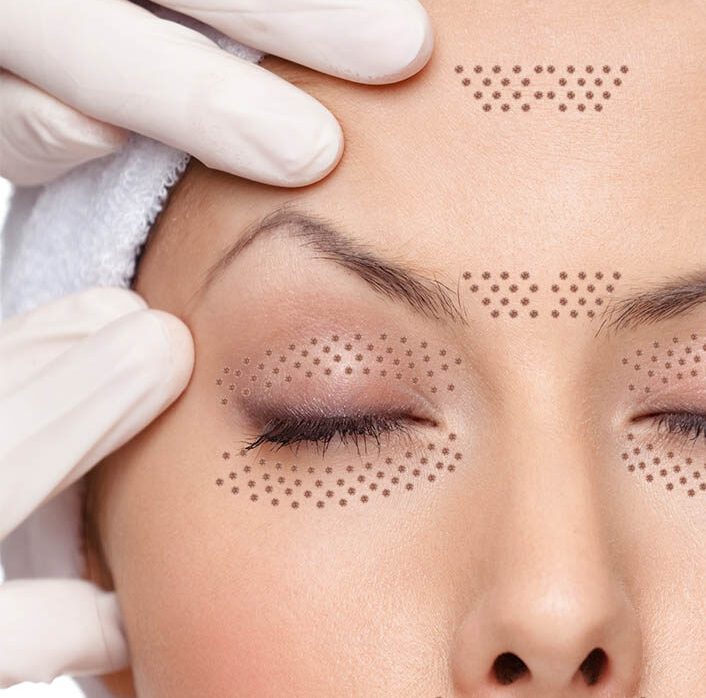
A plasma pen — also called a fibroblast pen or plasma fibroblast device — is a handheld tool that generates a small electrical arc from ionized gas. When held close to the skin without touching it, the arc causes sublimation: the top layer of skin vaporizes on contact, creating a micro-wound at the surface. The idea is that this controlled injury triggers the skin’s healing response, stimulating fibroblasts (the cells responsible for collagen production) to lay down new tissue.
Proponents market these devices for wrinkles, fine lines, loose eyelid skin, jowl laxity, and general skin tightening on the face and neck. You may also see it sold under the name “soft surgery” or “non-surgical blepharoplasty.” The marketing is compelling. The clinical picture is more complicated.
Plasma Pen at a Glance
- Device type
- Handheld ionized-arc (fibroblast) tool
- FDA aesthetic clearance
- Not cleared for facial aesthetics
- Typical downtime
- 7–14 days of scabbing
- Offered at Desert Bloom
- No — see better alternatives
How Plasma Pens Are Marketed — and What the Research Actually Shows
The appeal is understandable: a non-surgical device promising skin tightening results. But the regulatory and evidence record tells a different story.
FDA clearance status: Plasma pen devices are not FDA-cleared for aesthetic facial procedures. In September 2022, the FDA issued a warning letter to Med Pen Concepts, LLC — a plasma pen manufacturer — finding their devices adulterated under Section 501(f)(1)(B) of the Federal Food, Drug, and Cosmetic Act for lacking required premarket approval. The company itself acknowledged the devices require regulatory clearance they did not have.
What social media shows: A 2022 peer-reviewed analysis of TikTok plasma pen content found that posts promoting fibroblast pens were based on unsubstantiated claims, predominantly posted by non-medical professionals, and described uses the FDA has not cleared (Hernandez et al., J Cosmet Dermatol, 2022, PMID 35500136). Despite this, the devices continue to circulate widely in the aesthetics grey market.
There is some evidence that plasma energy can produce collagen-stimulating effects — this is not disputed. What is disputed is the consistency, predictability, and safety of consumer-grade plasma devices in aesthetic settings. No randomized controlled trial evidence supports the wide range of claims made in marketing.
Risks and Side Effects of Plasma Pen Treatment
Every procedure has a risk profile. The honest version of plasma pen’s risk profile is one of the reasons this device is no longer part of our treatment menu — and why we think you deserve to know exactly what it looks like before making any decision.
Common side effects: Redness, swelling, and scabbing are expected. The small dots of sublimated tissue form visible crusts that take 7–14 days to resolve, during which normal social activities may be uncomfortable. This is marketed as “minimal downtime” in many places — though two weeks of visible skin changes is a meaningful interruption for most people.
Thermal burns and permanent scarring: The electrical arc is not perfectly controllable at the consumer device level. A 2024 case report documented a 44-year-old woman who developed burns requiring emergency care after a plasma pen procedure, with erythematous and dyschromic scarring persisting at six-month follow-up (PMC 11610631). This is not a theoretical risk — it is documented in the medical literature.
Post-inflammatory hyperpigmentation (PIH): PIH — darker patches of skin that appear at the treatment site as it heals — has been documented following plasma procedures, including in patients with Fitzpatrick skin types II and IV (PMC 7317400). For patients with medium to deeper skin tones (Fitzpatrick III–VI), PIH risk is significantly elevated with any thermal procedure that creates surface injury.
Ocular injury risk: For periorbital use — which is among the most commonly marketed applications — a case report documented bilateral chemical eye injury when EMLA numbing cream used in preparation for a plasma pen procedure was inadvertently transferred to both eyes (PMID 32831067). Proximity to the eye makes this application particularly sensitive.
These risks increase substantially when the procedure is performed by non-licensed practitioners, using at-home consumer devices, or following tutorials on social media.
Why We Don’t Offer Plasma Pens at Desert Bloom
Desert Bloom does not offer plasma pen treatments. This is a deliberate clinical decision, not a gap in our menu.
The thermal injury zone of consumer-grade plasma devices is not predictable enough for consistent clinical results. In a practice committed to outcomes we can stand behind, “variable” is not acceptable — particularly when the alternative treatments we offer produce more reliable tissue responses with better-established safety profiles. For the concerns plasma pens are marketed to address, we have options that we are genuinely confident in: RF Microneedling, PDO Thread Lift, CO2 Laser Resurfacing, and Erbium Laser Resurfacing.
What We Offer Instead
RF Microneedling — For Skin Tightening and Texture
RF Microneedling delivers radiofrequency energy through a matrix of microneedles directly into the dermis — the deeper structural layer of the skin. This creates a precise thermal response that stimulates collagen and elastin remodeling without the surface unpredictability of plasma sublimation. It is FDA-cleared, effective across all skin types including Fitzpatrick V–VI, and consistently addresses laxity, texture irregularities, pore size, and fine lines. Downtime is typically 2–5 days.
PDO Thread Lift — For Laxity and Lifting
When the primary concern is tissue descent — jowls, brow drop, loose neck skin, or midface flattening — PDO Thread Lift addresses the structural cause directly. Absorbable polydioxanone sutures are placed beneath the skin, mechanically repositioning tissue and creating a collagen-stimulating response along the thread tract. The lift is immediate; the gradual tissue response continues for up to six months. For patients exploring plasma pen specifically because they want a “non-surgical lift,” threads are a significantly more direct and predictable solution.
CO2 Laser Resurfacing — For Surface Texture and Deeper Wrinkles
CO2 Laser Resurfacing uses an ablative wavelength to remove controlled layers of skin and trigger deep collagen remodeling. It is among the most effective treatments available for wrinkles, sun damage, uneven texture, and eyelid skin laxity — the same concerns frequently cited in plasma pen marketing. The depth of treatment is calibrated precisely. Downtime is 7–14 days. This is a more involved recovery than plasma pen, but the outcome reliability is substantially better-documented.
Erbium Laser Resurfacing — Moderate Resurfacing with Shorter Recovery
For patients who want surface resurfacing — fine lines, texture, mild laxity, sun damage — but want a shorter recovery, Erbium Laser Resurfacing offers a middle path. The Er:YAG wavelength removes tissue with less collateral heat than CO2, which generally means 5–10 days of downtime and a gentler healing curve. It is a strong option for first-time resurfacing patients and for those with moderate skin concerns who are not yet candidates for full ablative CO2.
Plasma Pen vs. Our Alternatives
How plasma pens compare to the treatments we do offer for the same concerns — side by side.
| Plasma Pen | RF Microneedling | PDO Thread Lift | CO2 Laser | Erbium Laser | |
|---|---|---|---|---|---|
| Mechanism | Ionized arc, surface sublimation | RF energy + microneedles into dermis | Absorbable sutures + collagen stimulation | Ablative laser, controlled layer removal | Er:YAG ablative, precise tissue removal |
| FDA Aesthetic Clearance | No | Yes | Yes | Yes | Yes |
| Estimated Downtime | 7–14 days | 2–5 days | 3–7 days | 7–14 days | 5–10 days |
| Works on Darker Skin Tones | Higher PIH risk (III+) | Yes — all types | Yes — all types | Caution III+ — provider assessment | Caution IV+ — provider assessment |
| Offered at Desert Bloom | No | Yes → | Yes → | Yes → | Yes → |
Plasma Pen
- Mechanism
- Ionized arc, surface sublimation
- FDA Aesthetic Clearance
- No
- Estimated Downtime
- 7–14 days
- Works on Darker Skin Tones
- Higher PIH risk (III+)
- Offered at Desert Bloom
- No
RF Microneedling
- Mechanism
- RF energy + microneedles into dermis
- FDA Aesthetic Clearance
- Yes
- Estimated Downtime
- 2–5 days
- Works on Darker Skin Tones
- Yes — all types
- Offered at Desert Bloom
- Yes →
PDO Thread Lift
- Mechanism
- Absorbable sutures + collagen stimulation
- FDA Aesthetic Clearance
- Yes
- Estimated Downtime
- 3–7 days
- Works on Darker Skin Tones
- Yes — all types
- Offered at Desert Bloom
- Yes →
CO2 Laser
- Mechanism
- Ablative laser, controlled layer removal
- FDA Aesthetic Clearance
- Yes
- Estimated Downtime
- 7–14 days
- Works on Darker Skin Tones
- Caution III+ — provider assessment
- Offered at Desert Bloom
- Yes →
Erbium Laser
- Mechanism
- Er:YAG ablative, precise tissue removal
- FDA Aesthetic Clearance
- Yes
- Estimated Downtime
- 5–10 days
- Works on Darker Skin Tones
- Caution IV+ — provider assessment
- Offered at Desert Bloom
- Yes →
Frequently Asked Questions
Is plasma pen FDA approved for facial skin tightening?
How long does plasma pen healing take?
What are the most serious risks of plasma pen treatment?
Can plasma pen cause permanent scarring?
What is the best alternative to plasma pen for skin tightening?
Does Desert Bloom offer plasma pen treatment?
- 1.
US Food and Drug Administration. Warning Letter: Med Pen Concepts LLC 632974. FDA.gov; 2022.
https://www.fda.gov/inspections-compliance-enforcement-and-criminal-investigations/warning-letters/med-pen-concepts-llc-632974-09152022
- 2.
Hernandez C, et al.. Analysis of fibroblast pen usage amongst TikTok social media users. J Cosmet Dermatol; 2022.
PMID 35500136
- 3.
Rounce E, Harrington B, Yoo J. The Dangers of Social Media as an Information Source: A Case Report of a Burn After Attempted Breast Tightening Using a PlasmaPen. Plast Reconstr Surg Glob Open; 2024.
PMC11610631, PMID 39624522
- 4.
Abinun M, et al.. Periorbital postinflammatory hyperpigmentation after plasma exeresis. JAMA Dermatol; 2020.
PMC7317400
- 5.
Yip HK, et al.. Plasma fibroblast skin tightening treatment resulting in bilateral chemical eye injury secondary to EMLA cream: a case report. J Cosmet Dermatol; 2020.
PMID 32831067
Disclaimer: This article is for informational purposes only and does not constitute medical advice. Individual results vary. All treatments at Desert Bloom Skincare are performed by or under the supervision of a licensed medical professional. Content reviewed by Dr. Natalya Borakowski, NMD — last updated April 2026.