Spider Veins
Spider veins are small, red, blue, or purple veins that appear just below the surface of the skin. They are most commonly found on the legs and face and can be caused by a variety of factors such as aging, genetics, hormonal changes, or sun exposure. Spider veins can be unsightly and a source of self-consciousness for some people. A specialist can evaluate the veins and recommend the best course of action to help minimize their appearance.
See all treatments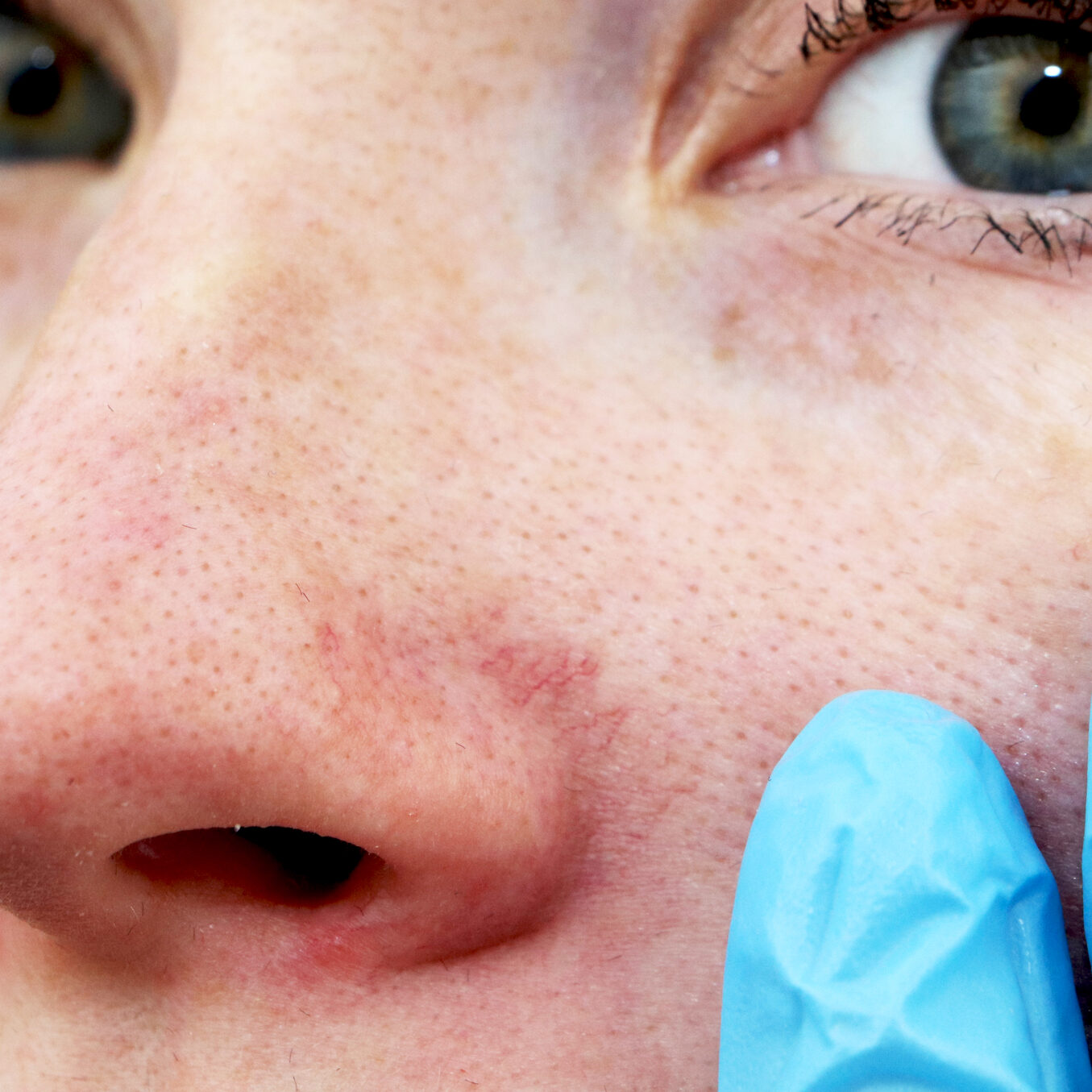
Facial and leg vascular treatment — physician-guided in Scottsdale.
Find Your Treatment
When Fine Veins Start Showing Through
Spider veins — the fine red, pink, or purplish threads that branch just under the skin surface — are one of the most common vascular concerns at Desert Bloom. They appear across two distinct anatomic zones, each with its own cause and treatment route. Facial spider veins (telangiectasia) result from UV damage, rosacea-driven vascular hyper-reactivity, hormonal influence, or genetic predisposition. Leg spider veins share genetic and hormonal drivers but are also driven by gravity and venous pressure. The distinction matters because the treatment for facial telangiectasia — energy-based vascular laser or IPL — differs fundamentally from the gold-standard for leg spider veins, which is sclerotherapy. Treating leg veins with facial laser protocols, or vice versa, produces poor results.
Dr. Natalya Borakowski, NMD approaches spider veins the same way she approaches every vascular concern: confirm the zone, confirm the skin type, then choose the right wavelength and modality. For facial telangiectasia, Desert Bloom uses the Quanta EVO system — 532nm KTP for Fitzpatrick I–III, and 1064nm Nd:YAG for all skin types including Fitz IV–VI. IPL Photofacial is added when diffuse facial redness accompanies the vessels, as is common in rosacea. For leg spider veins, Dr. B coordinates sclerotherapy referrals to vein specialty clinics and can discuss the full route at your consultation.
See also: Rosacea — facial flushing and persistent redness often accompanies telangiectasia. IPL Photofacial for diffuse vascular redness. Facial Treatments — full overview of aesthetic facial services at Desert Bloom. Men’s Skin Care — vascular concerns are common in male patients with sun exposure history.
At a Glance
Scope. This hub covers both facial telangiectasia (nose, cheeks, chin, around eyes) and leg spider veins. Facial treatment is performed in-clinic with the Quanta EVO vascular laser (KTP 532nm or Nd:YAG 1064nm) and IPL Photofacial. Leg spider veins are managed via sclerotherapy referral to vascular specialty — with Desert Bloom coordinating the referral and any adjunct laser. Facial laser sessions start around $250; IPL Photofacial packages from $350.
Provider and candidacy. Dr. Borakowski performs facial vascular laser treatment across all Fitzpatrick skin types. For Fitz I–III patients, KTP 532nm or Nd:YAG 1064nm are both available. For Fitz IV–VI, Nd:YAG 1064nm is the only appropriate laser wavelength — KTP 532nm is not used due to melanin absorption risk. Patients with large varicose veins, venous insufficiency symptoms (leg swelling, heaviness, skin changes), or sudden unexplained onset are referred to a vein specialist before any cosmetic treatment.
Downtime and how to start. Facial vascular laser: 24–48 hours of redness; purpura (bruise-like darkening) is common and resolves in 7–10 days. IPL Photofacial: mild flushing and darkening of surface vessels for 24–48 hours. Sclerotherapy (external referral): compression stockings for 1–2 weeks post-procedure. The best starting point is a consultation — Dr. B will confirm your Fitzpatrick type, assess vessel depth and location, and map the right treatment route.
What Causes Spider Veins? Four Primary Drivers
Spider veins rarely have a single cause. Genetics, cumulative UV exposure, hormonal shifts, and underlying vascular conditions interact — and identifying which driver dominates shapes not only which treatment is right but how likely the veins are to recur after treatment.
Sun Damage — The Most Preventable Driver
Cumulative UV exposure is the leading environmental cause of facial telangiectasia. UV radiation degrades collagen and elastin that support vessel walls, so they dilate and stay visible. Sun damage concentrates veins on the nose bridge, cheeks, and chin. The practical implication: treating without addressing ongoing UV exposure leads to rapid recurrence. SPF 30+ daily is part of the treatment plan, not optional post-care.
Treatment direction: Vascular laser (KTP or Nd:YAG) to close affected vessels; SPF 30+ maintained daily to prevent recurrenceGenetic Predisposition — The Strongest Single Predictor
Family history is the most reliable predictor of spider vein development. Genetic factors govern vessel wall integrity, skin thickness, and connective tissue quality. Patients with a strong family history often see facial telangiectasia in their 20s and 30s — before significant UV or hormonal exposure accumulates. Fair skin makes vessels more visible at smaller diameters, which is why Celtic and Northern European ancestry is over-represented. These patients benefit from earlier treatment and proactive maintenance schedules.
Treatment direction: Laser treatment for existing vessels; maintenance sessions as new telangiectasia form; rosacea screening if diffuse redness accompanies discrete vesselsHormonal Factors — Estrogen and Vascular Dilation
Estrogen promotes vessel dilation and increases vascular permeability — explaining why spider veins are more prevalent in women and why hormonal events trigger them. Pregnancy, hormonal contraceptives, HRT, and perimenopause are key inflection points. Patients who remain on high-estrogen therapies may see faster new vessel formation after treatment — important context for setting maintenance frequency expectations. Treatment route is unchanged; durability expectations are adjusted.
Treatment direction: Same laser or IPL routing as other facial telangiectasia; maintenance expectations adjusted for patients on hormonal therapiesRosacea and Chronic Vascular Reactivity
Rosacea causes repeated cycles of vessel dilation in response to triggers (heat, alcohol, stress). Over time these dilations become permanent — the vessel loses its ability to contract and becomes a fixed spider vein. Treating rosacea-driven vessels without addressing the underlying inflammatory pattern leads to fast recurrence. IPL Photofacial is particularly effective here because it addresses both discrete vessels and the diffuse background redness — not just the visible threads. Patients with clustered facial vessels plus erythema should be evaluated for a combined IPL + laser plan.
Treatment direction: IPL Photofacial for diffuse redness + vessel combination; vascular laser for discrete persistent telangiectasia; rosacea management ongoingLeg spider veins share the genetic and hormonal drivers above but add a third primary mechanism: chronic venous hypertension from prolonged standing or sitting. Increased pressure in the venous return system dilates the superficial venules, causing visible branching patterns on the thigh, calf, and ankle. This is why healthcare workers, teachers, and others who stand for extended periods are over-represented in leg spider vein populations. Compression stockings and regular movement reduce new formation but do not resolve existing vessels — treatment is required for that.
Treating Facial Spider Veins at Desert Bloom
Facial telangiectasia respond well to energy-based treatment — the laser or light energy is selectively absorbed by hemoglobin in the target vessel, heating it until the vessel wall collapses and is reabsorbed by the body. The key variables are wavelength selection (matched to vessel depth and skin type) and whether diffuse background redness accompanies the discrete vessels.
For patients who are unsure whether their facial redness is primarily telangiectasia, rosacea, or both — the distinction matters for treatment planning. See Rosacea for a full overview of rosacea subtypes and how vascular laser and IPL fit into a broader rosacea management plan.
Treating Leg Spider Veins
Leg spider veins require a different treatment approach than facial telangiectasia. The vessels are generally larger in diameter, under greater venous pressure, and located in a zone where laser energy delivery is less effective than direct chemical sclerotherapy. For most patients with leg spider veins, sclerotherapy — performed at a vascular specialty clinic — is the gold-standard first-line treatment. Desert Bloom can coordinate a referral and provide adjunct care.
Sclerotherapy Route (Referral)
Gold-standard for leg spider veins — performed at vascular specialty clinics.
Adjunct and Lifestyle Support
Complementary approaches for prevention, adjunct treatment, and post-sclerotherapy maintenance.
Compare All Spider Vein Treatment Options
| Feature | KTP Laser 532nm | Nd:YAG 1064nm | IPL Photofacial | Sclerotherapy (leg) |
|---|---|---|---|---|
| Best for | Isolated facial telangiectasia, fine surface vessels | Facial telangiectasia (all skin tones), small leg veins | Diffuse facial redness + spider veins, rosacea overlap | Leg spider veins — gold standard |
| Zone | Face only | Face + legs (adjunct) | Face only | Legs — specialty referral |
| Fitzpatrick | Fitz I–III ONLY — not for Fitz IV–VI | All types including Fitz IV–VI | Fitz I–III standard (IV with modification) | All types |
| Sessions | 1–3 spaced 4–6 wks | 1–3 spaced 4–6 wks | 3–5 for rosacea; 1–2 for discrete vessels | 1–3 sessions per area |
| Downtime | 24–48 hr redness; purpura 7–10 days | 24–48 hr redness; purpura 7–10 days | 24–48 hr flushing; vessel darkening | Compression 1–2 wks; walking encouraged |
Safety, Skin Type, and When to See a Vein Specialist
Most cosmetic spider vein presentations at Desert Bloom are safely treated with the protocols described above. Two categories require a different conversation before any aesthetic treatment proceeds: patients with Fitz IV–VI skin who must avoid KTP laser, and patients whose spider veins are a symptom of underlying venous insufficiency or another medical condition that requires physician evaluation first.
Fitzpatrick IV–VI — KTP 532nm is not appropriate. In medium to deep skin tones, the 532nm wavelength is absorbed by epidermal melanin as well as hemoglobin — increasing the risk of hyperpigmentation, surface burns, and uneven results. For Fitz IV–VI patients with facial spider veins, Nd:YAG 1064nm is the correct and safe wavelength. If another provider has recommended KTP for darker skin, seek a second opinion before proceeding. Alexandrite laser (755nm) is also contraindicated for vascular treatment in Fitz IV–VI.
See a vein specialist — not a cosmetic clinic — if you have any of the following: (1) Bulging, rope-like varicose veins visible above the skin surface — these indicate venous insufficiency requiring medical evaluation, not cosmetic laser or sclerotherapy. (2) Leg symptoms: heaviness, aching, swelling, or restless legs that worsen through the day — these are signs of chronic venous hypertension. (3) Skin changes around the ankle (discoloration, hardening, ulceration) — indicate advanced venous disease. (4) Sudden appearance of many new spider veins without a clear cause — may indicate hormonal, hematologic, or systemic drivers that need evaluation before treatment. Dr. Borakowski will refer you directly and can help coordinate the appropriate specialist in the Phoenix–Scottsdale area.
Frequently asked questions

“Spider veins are one of the most satisfying things to treat — patients see the results immediately, and when we select the right wavelength for their skin type, the clearance is excellent. The critical step is the skin-type assessment before treatment. For Fitz IV–VI patients, Nd:YAG is the safe route. I won’t use KTP on deeper skin tones regardless of how superficial the vessels look.”
Get Your Spider Vein Assessment in Scottsdale
Dr. Borakowski evaluates facial and leg spider veins at every new-patient consultation. The assessment includes Fitzpatrick skin type confirmation, vessel mapping, a review of any rosacea or vascular overlap, and a clear treatment recommendation — laser, IPL, referral, or combination. No commitment required at the consult.
Patients with Fitz IV–VI skin, active rosacea, or a history of prior laser treatment are encouraged to bring any previous treatment records. Knowing what wavelengths have been used before helps Dr. B make the most precise recommendation for next steps.
References
- “Skin hyperpigmentation after sclerotherapy with polidocanol: A systematic review.” Journal of the European Academy of Dermatology and Venereology. 2023. DOI
- “Treatment of telangiectasia on the cheeks with a compact yellow (585 nm) semiconductor laser and a green (532 nm) KTP laser: a randomized double-blinded split-face trial.” Lasers in Surgery and Medicine. 2019. DOI
- “Thermal Relaxation of Port-Wine Stain Vessels Probed In Vivo: The Need for 1-10-Millisecond Laser Pulse Treatment.” Journal of Investigative Dermatology. 1995. DOI
- “Long-pulsed 1064nm Nd:YAG laser in the treatment of leg veins: Systematic review.” Vascular. 2025. DOI
Consultation in skin care clinic
Desert Bloom Skincare Center offers personalized skincare consultation to help you achieve a flawless and radiant complexion. Book your appointment today and let our expert team of skincare professionals address your specific concerns and help you reach your skincare goals.
Visit Our Scottsdale Aesthetic Center
Address
10752 N 89th Place, Suite 122B,Scottsdale, AZ 85260.
Phone:(480) 567-8180
E-mail:info@desertbloomskincare.com
Get Directions →Location & Directions
Desert Bloom Skincare is conveniently located in the Shea Corridor of North Scottsdale, within Edwards Professional Park I — minutes from HonorHealth Scottsdale Shea Medical Center and the Mayo Clinic Scottsdale Campus.
Areas We Serve
We proudly provide expert non-surgical rhinoplasty and PDO thread lifts to patients across the Southwest:
- ScottsdaleNorth Scottsdale · McCormick Ranch · Gainey Ranch
- Paradise Valley
- PhoenixArcadia · Biltmore · North Phoenix
- Fountain Hills
- Cave Creek & Carefree