Tag

Ingrown Hairs

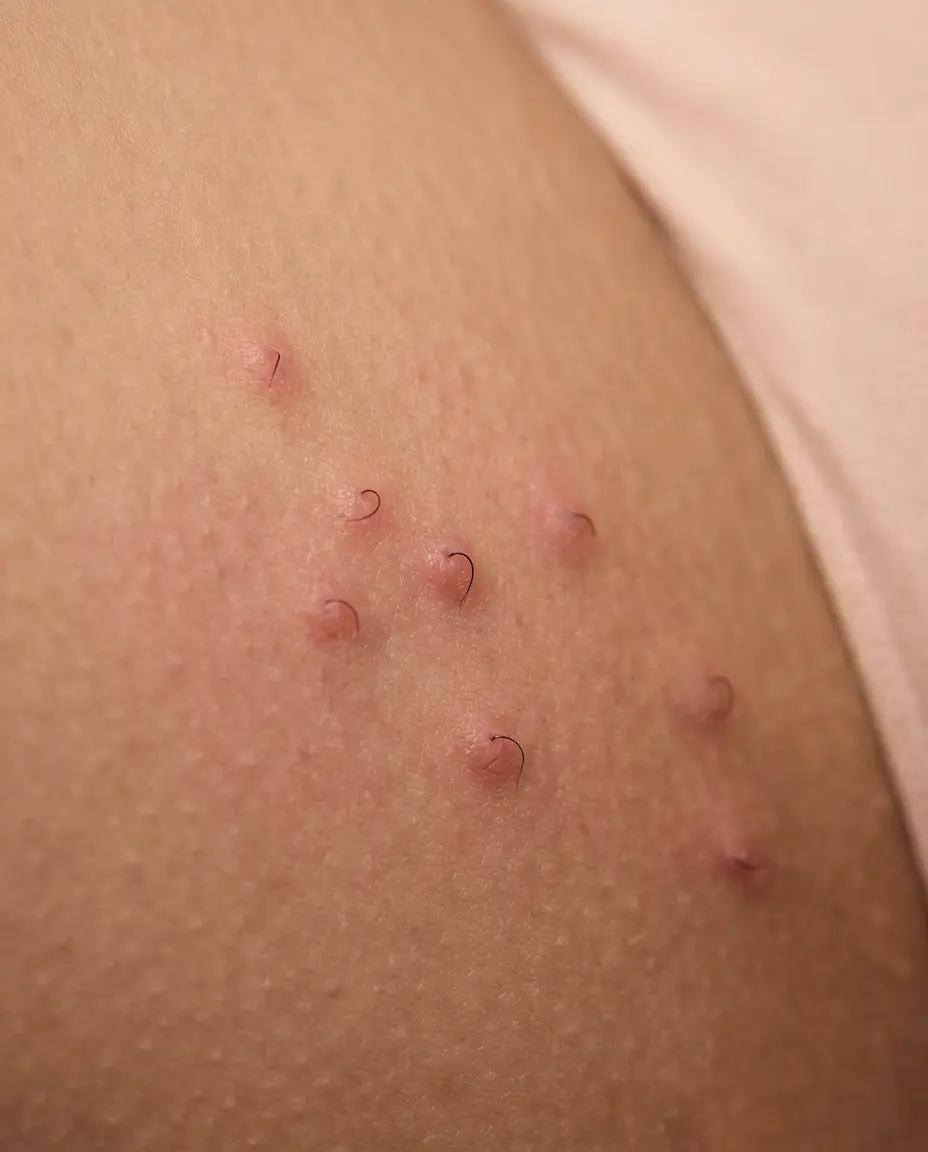
Ingrown hairs are hairs that have curled back into the skin instead of growing outward. This can cause red, irritated bumps and can be particularly problematic in areas with dense hair growth like the beard, legs, or pubic area. Ingrown hairs can be caused by hair removal techniques, skin irritation, or genetic factors. They can be treated with various procedures such as laser hair removal, chemical peels, or manual extractions.

See all treatments

Permanent prevention through laser, not ongoing management


Recurring Razor Bumps Mean the Hair Cycle Is the Problem

The same follicles keep trapping hair month after month — along the beard, bikini line, neck, or underarms. Topicals manage the visible bumps, but they don’t change the hair. Chronic ingrown hairs (pseudofolliculitis barbae) are a structural problem: coarse or curly hair, tight follicle angle, and repeated hair removal that keeps sharpening the shaft. That cycle ends with laser, not with a better razor or a new exfoliating scrub.

At Desert Bloom in Scottsdale, Dr. Borakowski routes ingrown-hair patients by Fitzpatrick skin type first — because the right wavelength (Alexandrite for Fitz I–III, Nd:YAG 1064nm for Fitz IV–VI) is the clinical decision that determines safety, not just efficacy. Laser Hair Removal is the first-line answer; a Chemical Peel clears active bumps and dead skin buildup during the early sessions; post-inflammatory pigment routes to a separate hub.

If ingrown hairs have left darker marks behind, see our Hyperpigmentation hub for pigment-focused routing. Men dealing with recurring facial razor bumps will also find relevant context in Men’s Skin Care.

At a Glance

Scope. This hub covers chronic ingrown hairs and razor bumps (pseudofolliculitis barbae), the main drivers that keep them recurring, and three clinical treatment routes: Laser Hair Removal as the only way to permanently prevent ingrown hairs at the follicle level, Custom Chemical Peel for active bumps and early post-inflammatory hyperpigmentation, and a Skincare protocol for maintenance between sessions.

Provider & candidacy. Dr. Borakowski treats Fitzpatrick I–VI skin — Nd:YAG 1064nm makes laser safe for darker skin tones where Alexandrite is contraindicated. If you have active bacterial folliculitis, recurrent deep cysts, or raised scars on the back of the neck (folliculitis keloidalis nuchae), a dermatologist should evaluate first; we say so clearly and refer when needed.

How to start. Most patients begin noticing fewer active razor bumps within two to three laser sessions. Full reduction in the affected area takes a complete series of six to eight sessions. A consultation at Desert Bloom maps the area, confirms your Fitzpatrick type, and gives you a realistic session count and cost range — no obligation.

Why Ingrown Hairs Keep Coming Back

An ingrown hair is a structural event, not a hygiene failure. Four overlapping drivers keep the cycle running — and understanding which applies to you determines which treatment does the work.

Tight Curl Pattern & Pseudofolliculitis Barbae

When the hair shaft is cut or waxed, the sharpened edge grows back and pierces the follicle wall rather than exiting cleanly — a process called extrafollicular penetration. For patients with coarse or curly hair, the tight follicle angle makes this nearly inevitable with every shave. This pattern has a clinical name — pseudofolliculitis barbae — and it disproportionately affects Fitzpatrick IV–VI skin: estimates place prevalence at 45–85% of Black men who shave regularly (Perry 2002; Kundu 2013). The trapped hair triggers inflammation; inflammation thickens the surrounding skin; the thickened skin blocks the next hair from exiting cleanly. The cycle is self-reinforcing.

Shaving Technique

Multi-blade razors cut hair below the skin’s surface, leaving a sharp angled tip that grows back into the skin before reaching the surface. Shaving against hair growth direction worsens the angle further. The single blade razor, used in the direction of hair growth with warm water and shaving gel, is the lowest-risk mechanical option while a laser series is underway — it leaves the tip above the skin line rather than below it. These adjustments reduce the frequency of new trapped hair during the series, but they are not a long-term solution. As long as hair is regrowing in the same affected area, the mechanical risk returns with every shave.

Hair Removal Method

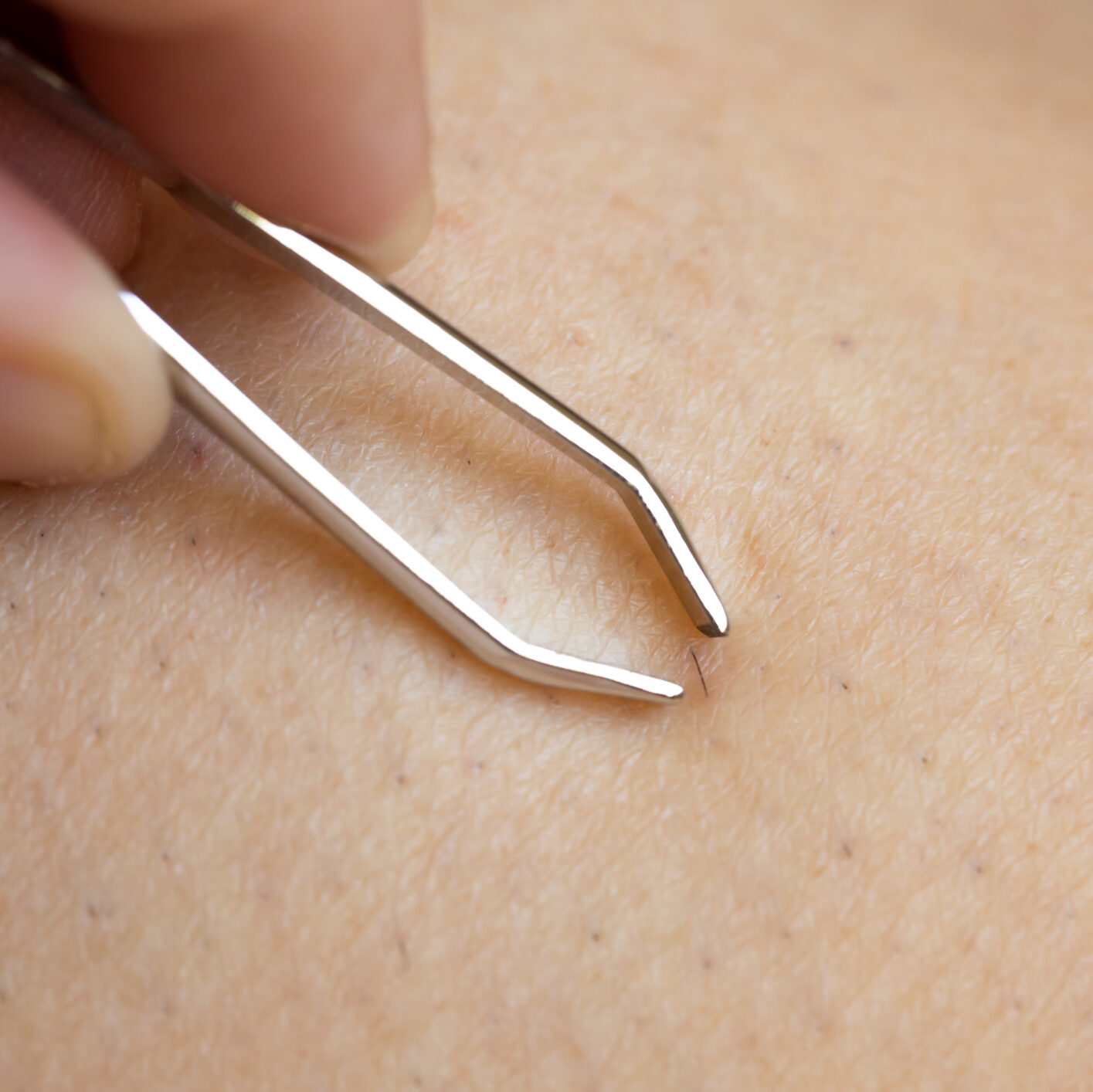
Waxing and threading pull hair from the root cleanly — but as new hair grows back, particularly in patients with coarse or curly hair, it often curls before reaching the skin’s surface and re-enters the surrounding skin from below. Hair removal cream (depilatory) softens rather than cuts, reducing sharp edges slightly, but it does not address the underlying curl pattern. Any hair removal method that allows hair to regrow creates another opportunity for re-entrapment. Other hair removal methods — including electrolysis — can reduce the problem in small areas but lack the speed and coverage of laser for treating broad zones like the beard, bikini line, underarms, or legs.

Keratin Buildup & Dead Skin Cells

Dead skin cells and debris accumulate at the follicle mouth, creating a physical barrier the hair must push through. This dead skin buildup thickens with each inflammatory cycle: the inflamed follicle heals, skin over the follicle mouth becomes denser, and the next hair grows against more resistance — making it more likely to curl back into the skin rather than emerge cleanly. The skin’s surface stays congested. Gentle chemical exfoliation — salicylic acid used two to three times per week — can remove dead skin cells at the follicle mouth and help trapped hair reach the surface, but it does not prevent the next ingrown hair from forming in a follicle that still produces coarse or curly hair.

Treatment Options for Ingrown Hairs

Three treatment routes, each with a distinct role. The goal is to end the cycle through laser, manage what is currently visible with a peel, and maintain the skin between sessions with a targeted skincare protocol.

Laser Hair Removal — First-Line PreventionThe only treatment that ends the ingrown hair cycle rather than managing its signs. By permanently reducing follicle density in the treated area, laser removes the coarse or curly hair most prone to becoming ingrown. Wavelength is selected by Fitzpatrick type: Alexandrite 755nm for Fitz I–III, Nd:YAG 1064nm for Fitz IV–VI. The Nd:YAG wavelength bypasses epidermal melanin and reaches the hair follicle selectively — making it safe for darker skin tones where Alexandrite is contraindicated (Ross 2002). Six to eight sessions spaced four to eight weeks apart is typical for most affected areas. Most patients notice fewer active bumps within two to three sessions.Role: First-line · All Fitzpatrick types · Alexandrite I–III / Nd:YAG IV–VI · See full Laser Hair Removal →
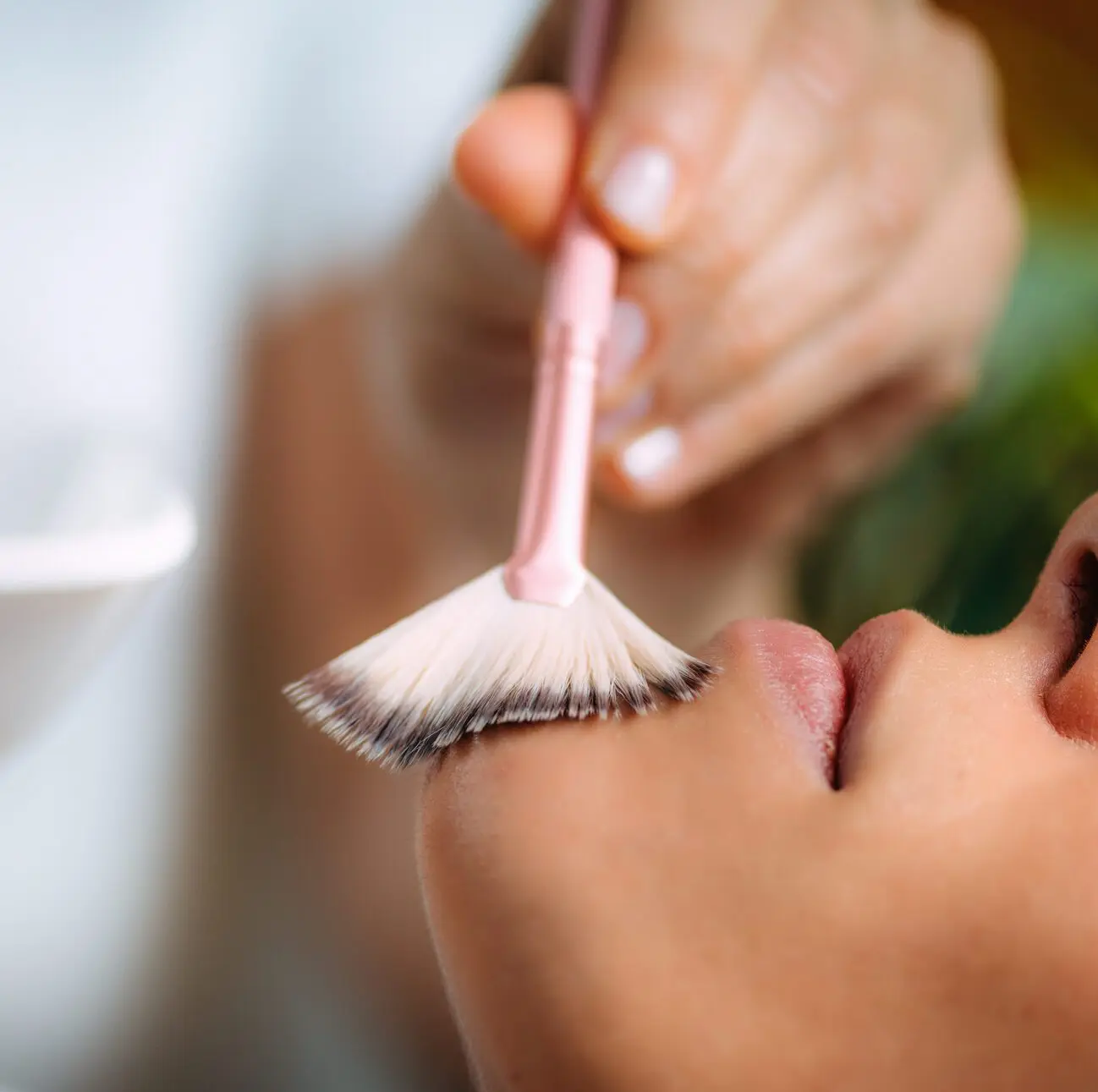
Custom Chemical Peel — Active Bumps & PIH SupportA low-percentage glycolic or salicylic peel is the interim correction tool. Chemical exfoliation releases dead skin buildup at the follicle mouth, allowing trapped hair to reach the skin’s surface, and addresses post-inflammatory hyperpigmentation from previous ingrowns in one visit. It is the correction option — not the prevention option: it clears what is already inflamed while the laser series is thinning the follicles. A chemical exfoliant can also be used at home between clinic visits (salicylic acid 2–3×/week) to gently exfoliate and reduce inflammation in the affected area.Role: Adjunct · Active bumps during laser series · PIH from ingrowns · See full Chemical Peel →
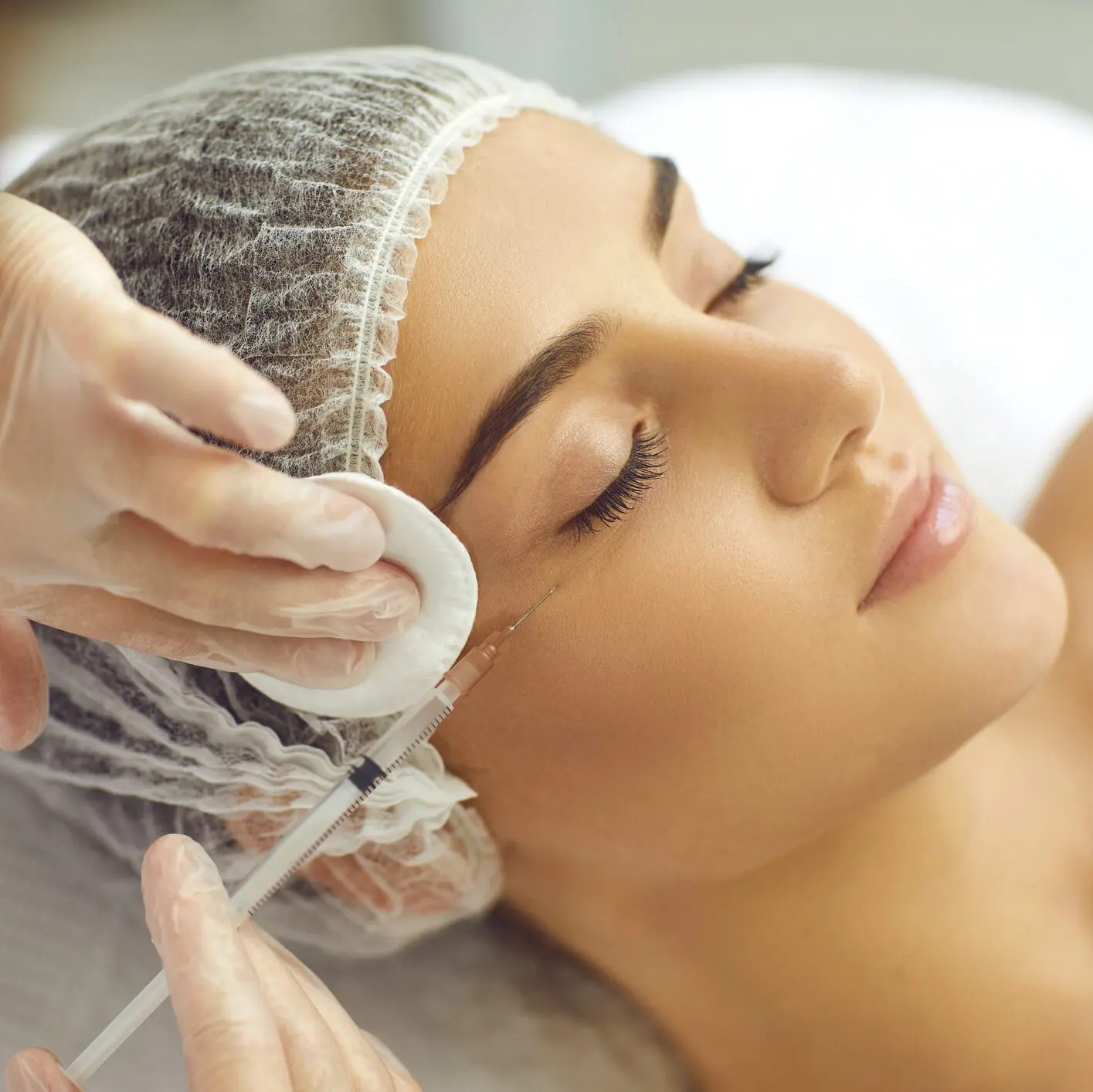
Microneedling — Scarring & Texture from Chronic IngrownsFor patients whose long-standing pseudofolliculitis barbae has left textural scarring or persistent post-inflammatory hyperpigmentation, microneedling addresses skin architecture that peels alone cannot fully correct. It is not a treatment for active ingrown hair infections or inflamed follicles — it is for the skin damage left behind after the hair cycle has been interrupted by laser. Typically introduced after the laser series has reduced active follicular inflammation in the same area.Role: Adjunct for scarring / PIH repair · After laser series completion · See full Microneedling →
Skincare Protocol — Maintenance Between SessionsBetween laser sessions: apply warm compress for a few minutes daily to areas prone to ingrown hairs — this softens trapped hair and helps it lift without trauma. Use salicylic acid two to three times per week to remove dead skin cells at the follicle mouth. If you must continue shaving, use a single blade razor in the direction of hair growth with warm water and shaving gel. Avoid tight clothing over treated zones — friction keeps follicles irritated, particularly around the pubic area, inner thighs, and underarms. Apply a fragrance-free moisturizer after every shave. Do not squeeze or use sterile tweezers to dig out a deep ingrown — that is how scarring and hyperpigmentation start. These are interim habits; once the laser series reduces follicle density in the affected area, most adjustments become unnecessary for that zone.Role: Maintenance · During laser series · Between sessions · No spoke — home protocol

Ingrown Hairs in Darker Skin

Pseudofolliculitis barbae is disproportionately common in Fitzpatrick IV–VI skin and is frequently undertreated — often because of justified concerns about laser-induced pigment change. Both the clinical reality and the routing decision are different from Fitz I–III.

Definitive: Nd:YAG 1064nm for Laser (Fitz IV–VI)

The validated wavelength for pseudofolliculitis barbae in darker skin — safe and effective for more than two decades.

Why Nd:YAG 1064nm — Not AlexandriteAt 1064nm the laser bypasses most epidermal melanin and reaches the hair follicle selectively. Alexandrite 755nm has too much affinity for melanin in the skin itself — in Fitz IV–VI skin, it creates a pigment risk, not just an efficacy question. It is not appropriate for darker skin tones.
Prevalence in Darker SkinEstimates place the prevalence of pseudofolliculitis barbae at 45–85% of Black men who shave regularly, with similar burden in Black women along the bikini line and pubic area (Perry 2002; Kundu 2013). The mechanism is the same across skin types, but the curl pattern of the hair and visibility of post-inflammatory hyperpigmentation make it more persistent and more visible in Fitz IV–VI skin.
Safety RecordLong-pulsed Nd:YAG 1064nm has been used safely and effectively for pseudofolliculitis barbae in skin types IV–VI for more than two decades (Ross 2002). The consultation at Desert Bloom covers test-spot protocol, session spacing, and wavelength confirmation — not whether laser is safe for your skin type. It is.

Maintenance: PIH After Ingrowns (Fitz IV–VI)

Post-inflammatory pigment from chronic ingrown hairs routes to the Hyperpigmentation hub — not to laser treatment.

What Nd:YAG Does Not DoNd:YAG 1064nm targets hair follicles — it is a hair removal and vascular wavelength, not a pigment treatment. Existing post-inflammatory hyperpigmentation from previous ingrown hair infections is epidermal pigment and requires a different pathway entirely.
Correct PIH Pathway for Fitz IV–VIPRX-T33 → Dermaquest peels → iontophoresis. This is the correct routing for Fitz IV–VI pigment. Alexandrite is contraindicated. Laser pigment treatment is not the answer for darker skin tones — it is the wrong lane entirely. See the Hyperpigmentation hub for the full routing.
At-Home AdjunctsAzelaic acid, niacinamide, and the Dermaquest product line support pigment maintenance between clinic visits for Fitz IV–VI skin. These reduce the severity of new post-inflammatory marks while the laser series is underway — they do not address the ingrown hair cycle itself.

Compare All Options

Four treatments across five clinical dimensions — including Fitzpatrick routing, which determines which laser wavelength is appropriate for your skin tone.

FeatureLaser Hair RemovalChemical PeelMicroneedlingSkincare Protocol
RolePrevention — first-lineCorrection — adjunctScarring / PIH repairMaintenance between sessions
Fitz routingAlexandrite 755nm Fitz I–III · Nd:YAG 1064nm Fitz IV–VIAll skin types (peel % adjusted)All skin typesAll skin types
Sessions6–8 series, 4–8 wks apart1–3 as needed during series3–6 seriesOngoing at home
DowntimeNone to minimal1–3 days (mild peel)24–48 hrsNone
Ends the cycleYesNoNoNo
RolePrevention — first-line
Fitz routingAlexandrite 755nm Fitz I–III · Nd:YAG 1064nm Fitz IV–VI
Sessions6–8 series, 4–8 wks apart
DowntimeNone to minimal
Ends the cycleYes
RoleCorrection — adjunct
Fitz routingAll skin types (peel % adjusted)
Sessions1–3 as needed during series
Downtime1–3 days (mild peel)
Ends the cycleNo
RoleScarring / PIH repair
Fitz routingAll skin types
Sessions3–6 series
Downtime24–48 hrs
Ends the cycleNo
RoleMaintenance between sessions
Fitz routingAll skin types
SessionsOngoing at home
DowntimeNone
Ends the cycleNo
1 / 4
swipe to compare

When to See a Dermatologist First

Most chronic ingrown hair infections are mechanical and respond well to laser hair reduction. A smaller group presents with signs that need medical evaluation before any aesthetic treatment — and we want to be direct about it.

When to See a Dermatologist First — Not an Aesthetic Clinic

Pus, spreading redness, or fever. Active bacterial folliculitis — painful pus-filled bumps with systemic signs — needs culture and antibiotics, not laser. See a dermatologist before any aesthetic treatment in that area.

Raised scars on the back of the neck. Folliculitis keloidalis nuchae is a keloid-spectrum condition. The wrong intervention makes it worse. Medical management must come first.

Recurrent deep cysts. Deep-seated, recurring cystic lesions may indicate hidradenitis suppurativa — a medical condition, not a laser indication. A dermatologist rules this out before we treat.

Suspicious or changing lesion. Any rapidly growing, ulcerated, or pigment-changing lesion in a prior ingrown-hair area should be biopsied before any energy-based treatment.

Frequently asked questions

Dr. Natalya Borakowski, NMD
Medically reviewed byDr. Natalya Borakowski, NMDFounder, Desert Bloom Skincare
“When I see a patient with chronic pseudofolliculitis barbae, my first question is always Fitzpatrick type — not because laser is unsafe, but because the wavelength selection is the clinical decision that makes it safe. Nd:YAG 1064nm has been the right answer for darker skin for more than two decades. The laser series is the foundation; the peel and skincare work is the bridge that gets the skin there comfortably.”

Book Your Ingrown Hair Consultation in Scottsdale

At the consultation, Dr. Borakowski assesses the affected area, confirms your Fitzpatrick skin type, selects the appropriate wavelength, and outlines a realistic session count with area-specific pricing. If the presentation points to a dermatology evaluation first, she says so — and we coordinate rather than treat through.

The consultation is the right first step — no pressure, no obligation. Most patients leave with a clear treatment plan and a session timeline that fits their schedule.

References

  1. Ross EV, Cooke LM, Overstreet KA, Buttolph GD “Treatment of pseudofolliculitis barbae in very dark skin with a long pulse Nd:YAG laser.” J Natl Med Assoc. 2002. (PMID 12408693. Foundational safety/efficacy paper for Nd:YAG 1064nm in Fitz V–VI PFB.)
  2. Perry PK, Cook-Bolden FE, Rahman Z, Jones E “Defining pseudofolliculitis barbae in 2001: a review of the literature and current trends.” J Am Acad Dermatol. 2002. (PMID 11807473. Canonical review — PFB epidemiology and clinical features.)
  3. Kundu RV, Patterson S “Dermatologic conditions in skin of color: part II. Disorders occurring predominately in skin of color.” Am Fam Physician. 2013. (PMID 23939568. Covers PFB + folliculitis keloidalis nuchae.)
  4. Xia Y, Cho S, Howard RS, Maggio KL “Topical eflornithine hydrochloride improves the effectiveness of standard laser hair removal for treating pseudofolliculitis barbae: a randomized, double-blinded, placebo-controlled trial.” J Am Acad Dermatol. 2012. (PMID 22226431. RCT — laser plus topical adjunct for PFB.)

Treatments

  1. Back Facial$105
    60 minutes
  2. Detox acne treatment$100
    60 minutes
  3. HydraFacial$299
    45 minutes and up
  4. Laser Hair RemovalOn demand
    15 and up

Consultation in skin care clinic

Desert Bloom Skincare Center offers personalized skincare consultation to help you achieve a flawless and radiant complexion. Book your appointment today and let our expert team of skincare professionals address your specific concerns and help you reach your skincare goals.

Visit Our Scottsdale Aesthetic Center

Address

10752 N 89th Place, Suite 122B,
ScottsdaleAZ 85260.

Phone:(480) 567-8180

E-mail:info@desertbloomskincare.com

Get Directions →

Location & Directions

Desert Bloom Skincare is conveniently located in the Shea Corridor of North Scottsdale, within Edwards Professional Park I — minutes from HonorHealth Scottsdale Shea Medical Center and the Mayo Clinic Scottsdale Campus.

↑↓
From the North / South: Take Loop 101 (Pima Freeway) and exit at E Shea Blvd. We are located just East of the freeway.
From Paradise Valley: Head East on E Shea Blvd toward North 90th Street.
P
Parking: Ample free parking is available directly in front of Suite 122B.

Areas We Serve

We proudly provide expert non-surgical rhinoplasty and PDO thread lifts to patients across the Southwest:

  • ScottsdaleNorth Scottsdale · McCormick Ranch · Gainey Ranch
  • Paradise Valley
  • PhoenixArcadia · Biltmore · North Phoenix
  • Fountain Hills
  • Cave Creek & Carefree

Contact usDo you have any questions?