Brown Spots That Don't Fade On Their Own
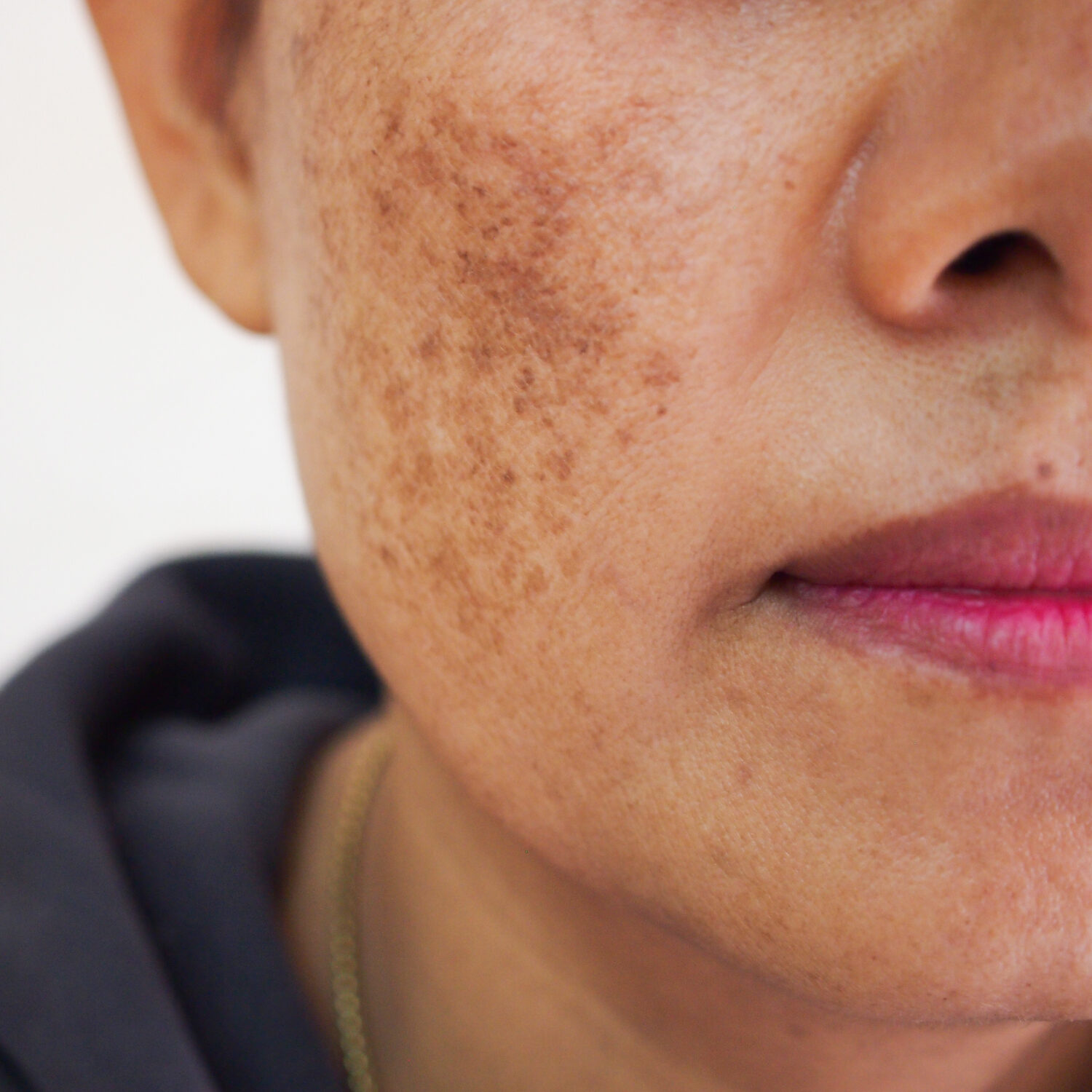
Age spots — clinically called solar lentigines, often known as liver spots or sun spots — are flat, well-defined brown patches that form where cumulative UV exposure has outpaced your skin's natural repair cycle. They are not freckles, not melasma, and unlike post-inflammatory marks, they do not fade on their own. Each spot is a discrete cluster of melanin sitting in the upper dermis: a record of years of sun. In Scottsdale, where the UV index runs high year-round, they tend to appear earlier and more densely than in lower-UV climates.
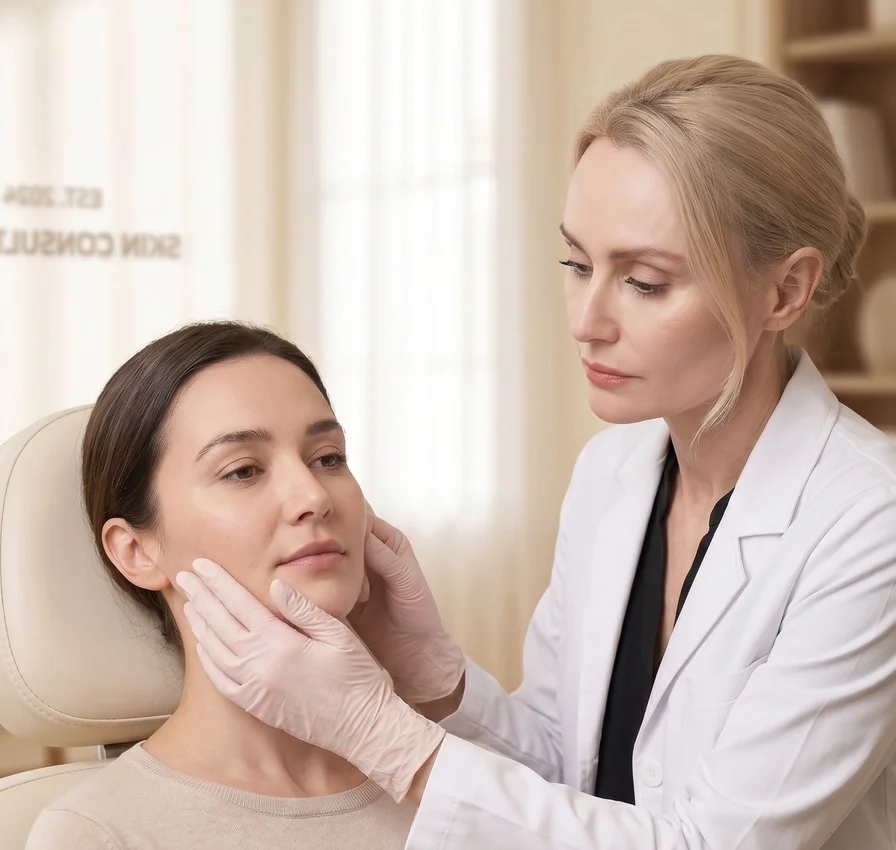
The first decision in age spot treatment is not which device — it is your Fitzpatrick skin tone. The correct path for lighter skin is fundamentally different from the safe path for medium-to-dark skin. At Desert Bloom, Dr. Natalya Borakowski, NMD assesses spot depth, density, and Fitzpatrick type at consultation before any device or peel is selected.
Lentigines, Ephelides, or PIH? Why the Distinction Matters
Most patients arrive having self-diagnosed. The problem is that solar lentigines (true age spots — discrete, flat, sharply bordered, UV-driven, stable), ephelides (freckles — appear in childhood, fade seasonally, Fitz I-II), and post-inflammatory hyperpigmentation (PIH — follows acne or injury, more persistent in medium-to-dark skin) all look like “brown spots” in a mirror but route to different treatments. Treating PIH with heat-based light, for example, can generate more PIH. Getting the type right before selecting a device is not a formality — it is the whole decision.
Age Spot Treatments at Desert Bloom
Five in-clinic options across two Fitzpatrick-gated paths. Each card links to the full treatment page with procedure detail, candidacy, downtime, and Scottsdale pricing.

Fitz I–III · First-line
Photo Facial (Alexandrite 755nm)
Selective photothermolysis targets discrete melanin clusters. Spots darken briefly over 7–14 days and shed. 1–3 sessions for isolated spots. Not for Fitz IV–VI.
All skin tones · First-line for Fitz IV–VI
Unicorn Facial (PRX-T33)
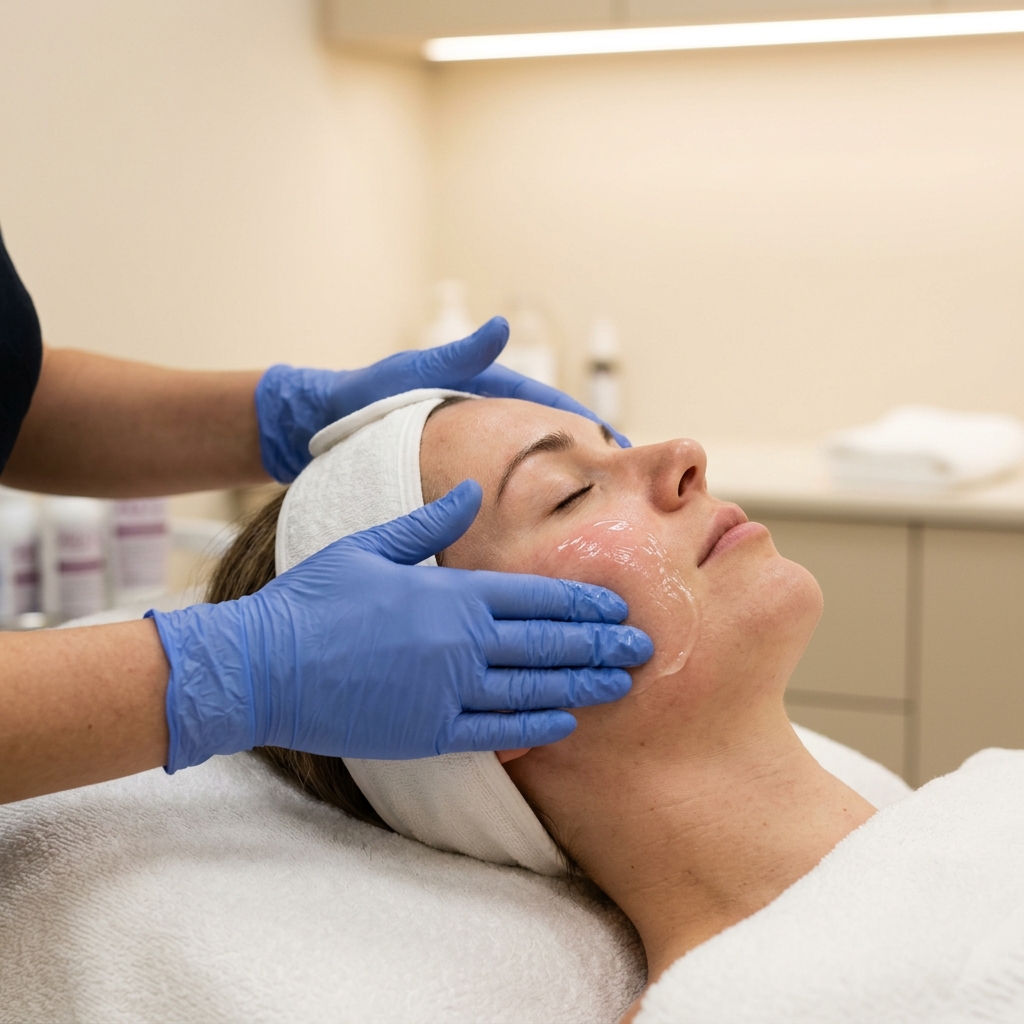
Biorevitalization with TCA, hydrogen peroxide, and kojic acid. Suppresses excess melanin without ablation or thermal injury. 3–5 days of light surface peeling; 3–5 sessions for full tone-evening.
All skin tones · Stepwise
Custom Chemical Peel
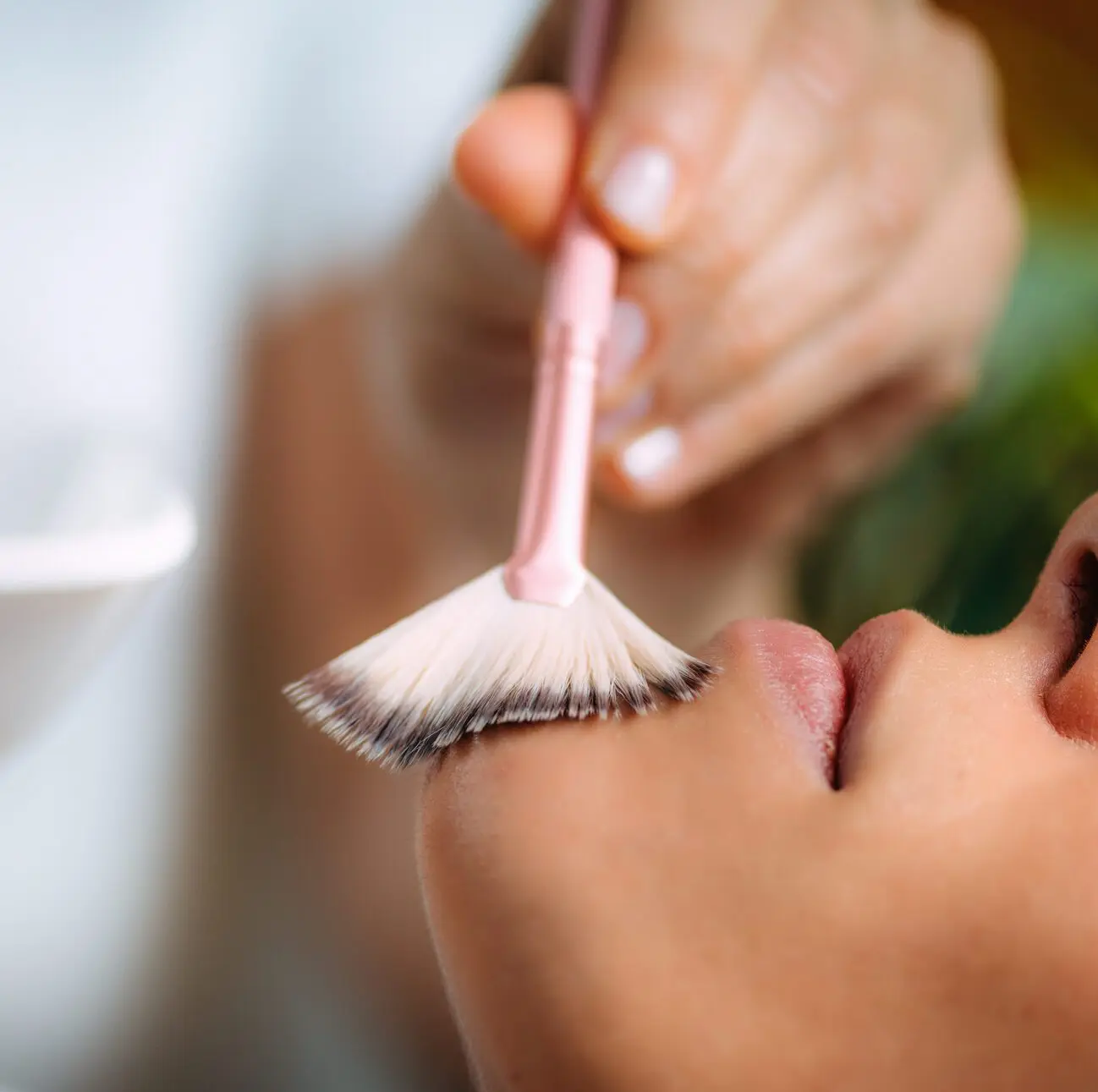
Mandelic acid is selected for Fitz IV–VI (larger molecule, slower penetration, less PIH risk). TCA addresses moderate pigment on lighter skin. Used as primary correction, prep for Photo Facial, or maintenance. 3–7 days light peeling.
Fitz I–III · Deeper resurfacing
Erbium Laser Resurfacing
Ablative erbium for deeper photoaging where pigment sits alongside texture and fine lines. Single session with 5–10 days of focused recovery. Not appropriate for Fitz IV–VI pigment.
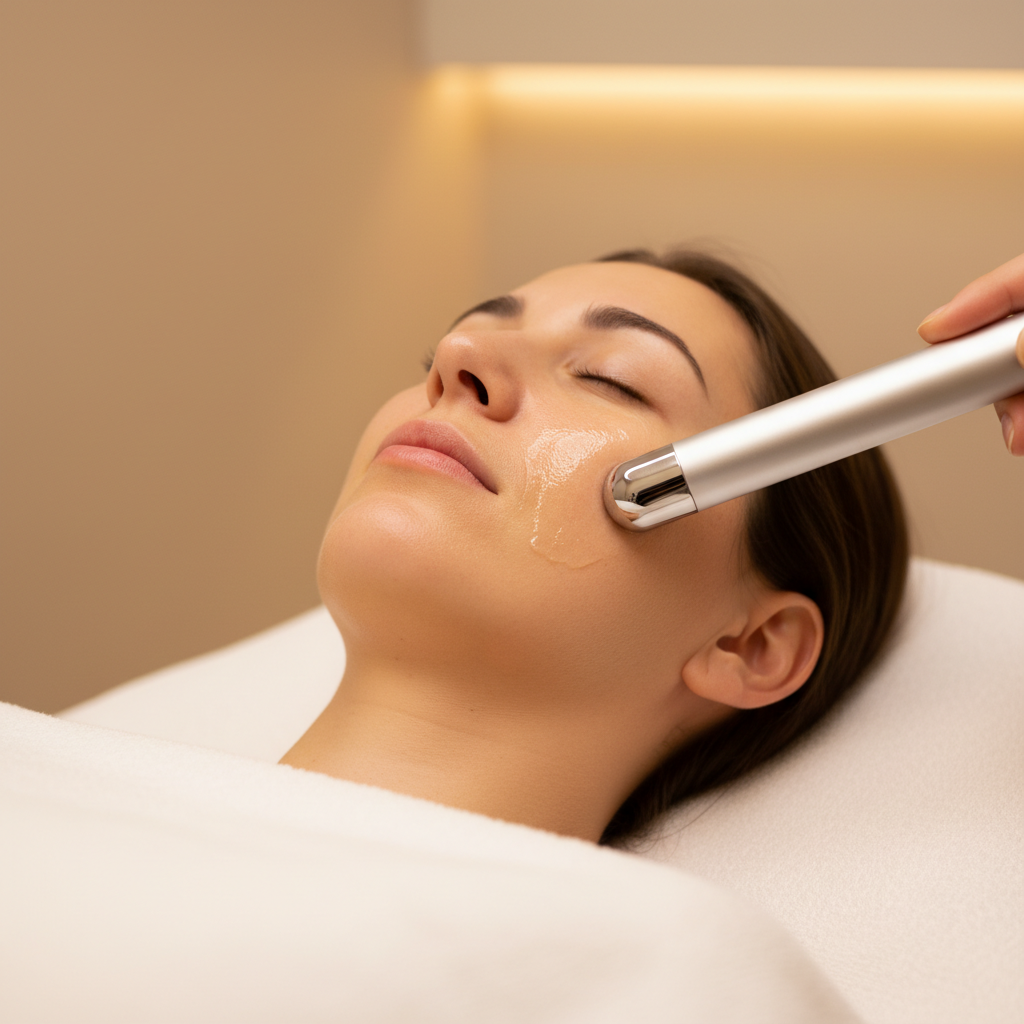
All skin tones · Zero downtime
Iontophoresis Facial
Low-current delivery of vitamin C, tranexamic acid, and niacinamide below the surface. Safe on all Fitzpatrick types. Best as monthly maintenance alongside primary correction; also suppresses new pigment formation.
Skin-tone gated routing
Which Path Is Safe for Your Skin?
Fitzpatrick skin type determines the safe device choice, not what you call the spots. Photo Facial is precise on lighter skin; on darker skin its melanin affinity becomes a liability, and the correct path is non-laser.
My skin is Fitzpatrick I–III (light, burns easily, sometimes tans)
→Start with Photo Facial — Alexandrite 755nm targets discrete melanin clusters with high precision. Chemical peels and iontophoresis support and maintain results between sessions.
Non-laser onlyMy skin is Fitzpatrick IV–VI (medium to dark, rarely burns)
→Start with Unicorn Facial — Non-laser path: PRX-T33 (Unicorn Facial) is first-line, supported by mandelic chemical peels and iontophoresis with brightening actives. No thermal risk.
When to See a Dermatologist First
True age spots are flat, uniformly tan-to-brown, stable, and regularly bordered. Any pigmented lesion that shows Asymmetry, irregular Border, multiple Colors within a single lesion, Diameter larger than 6 mm, or Evolution (recent change in size, color, or texture) needs dermatologist assessment to rule out lentigo maligna or other atypical pigmented lesions before any cosmetic treatment. Bleeding, itching, or raised texture over a previously flat spot is also a reason to pause cosmetic treatment and seek a medical evaluation first.
At Desert Bloom, Dr. Borakowski reviews the morphology of every pigmented lesion at consultation and refers to a dermatologist when a spot shows any atypical features. Aesthetic treatment is not initiated on any lesion with a suspicious clinical history — that sequence keeps it safe.
Age Spots — Frequently Asked Questions
Can age spots be removed completely?
Are age spots and liver spots the same thing?
Is Photo Facial safe for darker skin tones?
How many sessions does age spot treatment take?
Will the spots come back after treatment?
How are age spots different from melasma or PIH?
What is the difference between age spots and skin cancer?

Medically reviewed by
Founder, Desert Bloom Skincare · 17 Years Experience
References
- 1.
Ortonne JP, Pandya AG, Lui H, Hexsel D. Treatment of solar lentigines. J Am Acad Dermatol; 2006;54(5 Suppl 2):S262-71.
- 2.
Passeron T, Picardo M. Melasma, a photoaging disorder. Pigment Cell Melanoma Res; 2018;31(4):461-465.
DOI: 10.1111/pcmr.12684
- 3.
Watanabe S. Basics of laser application to dermatology. Arch Dermatol Res; 2008;300 Suppl 1:S21-30.
- 4.
Grimes PE, Green BA, Wildnauer RH, Edison BL. The use of polyhydroxy acids (PHAs) in photoaged skin. Cutis; 2004;73(2 Suppl):3-13.
PMID 15002656
- 5.
Davis EC, Callender VD. Postinflammatory hyperpigmentation: a review of the epidemiology, clinical features, and treatment options in skin of color. J Clin Aesthet Dermatol; 2010;3(7):20-31.
PMID 20725554