PDO Thread Lift Side Effects: What to Expect Day 0–7


Overview Most PDO thread lift side effects are mild, predictable, and resolve on their own within a week. Swelling, bruising, and tenderness are not signs that something went wrong — they are signs that the procedure worked and your tissue is responding. Knowing what is normal on Day 1 versus Day 5 is the most […]
Overview
Most PDO thread lift side effects are mild, predictable, and resolve on their own within a week. Swelling, bruising, and tenderness are not signs that something went wrong — they are signs that the procedure worked and your tissue is responding. Knowing what is normal on Day 1 versus Day 5 is the most useful thing you can walk away with from this guide.
This article is about expected side effects — the temporary discomfort that comes with any tissue-repositioning procedure. For true complications (thread migration, infection, extrusion), see our guide to PDO thread lift complications. The two categories are meaningfully different, and conflating them is what leads to unnecessary anxiety in the first week after treatment.
Side Effects at a Glance
- Normal Side Effects
- Swelling, bruising, tenderness, tightness, minor puckering — all expected and self-limiting
- Peak Discomfort
- Days 1–3; most patients are presentable by Day 5–7
- Call Your Provider
- Fever, spreading redness, worsening pain after Day 3, visible thread tips, numbness or asymmetric swelling that does not improve
- Related Reads
- PDO Thread Lift · Thread Lift Gone Wrong · Neck Thread Lift
Quick answers
Quick Answers — People Often Ask
How long do PDO thread lift side effects last?
Most swelling and tenderness peaks in Days 1–3 and is largely resolved by Day 7–10. Mild tightness can linger for 2–3 weeks. Minor dimpling or puckering usually settles within 2 weeks as tissues relax.
Is bruising normal after a PDO thread lift?
Yes. Bruising is expected, especially near entry points. It typically peaks around Day 2–3 and fades by Day 7–10. Arnica and cold compresses help speed resolution. Bruising that spreads or worsens after Day 3 should be evaluated.
Can I feel the threads under my skin?
Mild awareness of tightness or a slightly “pulled” sensation near entry points is normal, especially in the first two weeks. You should not feel a sharp cord or see anything protruding through the skin — those are different findings that warrant a call to your provider.
What is the fastest way to recover from a PDO thread lift?
Sleep with your head elevated on two pillows, avoid chewing hard foods and exaggerated expressions for the first week, skip high-impact exercise for 7–10 days, and apply cold compresses (not ice directly) for the first 48 hours. Acetaminophen is preferred over NSAIDs (ibuprofen thins blood).
When should I be worried about side effects?
Any fever, spreading redness, pain that worsens after Day 3 instead of improving, visible thread tips at the skin surface, one-sided asymmetric swelling that is growing, or any numbness/muscle weakness warrants same-day contact with your provider.
What Side Effects Are Normal After a PDO Thread Lift?
A PDO thread lift repositions living tissue using fine sutures inserted through small needle entry points. The body treats this as minor controlled trauma — which is exactly the point. The inflammatory response triggered by the threads is responsible not only for the initial lift but also for the collagen remodeling that sustains results over 12–18 months after the threads themselves dissolve.
The most common side effects observed at Desert Bloom and in published thread lift literature are:
- Swelling (edema) — The most universal side effect. Typically mild to moderate, most pronounced under the eyes and along the jawline where threads apply upward vector force. Peaks at 24–48 hours and subsides significantly by Day 5–7.
- Bruising — Occurs at needle entry points and along thread tracks. More pronounced in patients who take blood-thinning supplements (fish oil, vitamin E, aspirin). Usually resolves within 7–10 days.
- Tenderness and soreness — Expected for 3–7 days. Pressure or chewing may amplify this. Acetaminophen 500–1000 mg every 6–8 hours is usually sufficient for management.
- Tightness — The sensation of “pulled” skin is normal and often perceived as the lift working. Most patients report it as mildly uncomfortable rather than painful. Fades over 2–3 weeks.
- Minor puckering or dimpling — Small skin irregularities at entry points or along the thread path are expected in the first 1–2 weeks. Gentle massage (only if instructed by your provider) and time usually resolve these.
- Mild asymmetry — One side may swell or respond more than the other in the first week. This is usually positional and resolves as edema settles.
The clinical complication rates from published literature (Niu et al., 2021) help put this in context: edema occurs in approximately 35% of patients, dimpling in 10%, paresthesia (temporary altered sensation) in 6%, and visible threads in 4%. Infection (2%) and extrusion (2%) are less common and fall into the true complication category — different from the expected side effects described above.
Day-by-Day Recovery: What to Expect
Recovery does not progress uniformly. Here is a practical timeline based on what Dr. Borakowski observes clinically and what patients typically report:
PDO Thread Lift Recovery Timeline
Day 0
Treatment Day
Local anesthesia wears off over 2–4 hours. Mild soreness, tightness, and swelling begin. Entry points may be slightly red. Sleep elevated. Do not touch or massage the treated area unless instructed.
Days 1–2
Peak Swelling
Peak swelling and bruising. Tightness is most noticeable. Some aching along the thread vectors when smiling or chewing. Cold compresses (wrapped in cloth — never ice directly on skin) reduce edema. Arnica gel can be applied gently around (not over) entry points.
Days 3–4
Plateau Begins
Swelling starts to plateau or decrease. Bruising may look worse as it shifts color (yellow-green = healing). Most patients return to desk work by Day 3–4 if makeup is permitted. Avoid intensive cardio, saunas, and steam rooms.
Days 5–7
Presentable Again
Most patients feel presentable. Residual tightness and mild tenderness are common but manageable. Bruising is typically fading. Mild surface irregularity, if present, is beginning to soften. Gentle walking resumes; avoid vigorous exercise through Day 10.
Week 2–3
Tightness Resolves
Tightness resolves in most patients. Any residual puckering is usually gone by end of Week 2. Collagen remodeling is beginning — results continue to improve gradually over the following 6–12 weeks.
Weeks 4–8+
Results Settle
This is when most patients see the most pleasing results — swelling is fully gone, the initial “over-tightened” look has settled, and collagen support is building. PDO threads dissolve over 4–6 months; the collagen response sustains improvement for 12–18 months.
Why These Side Effects Happen
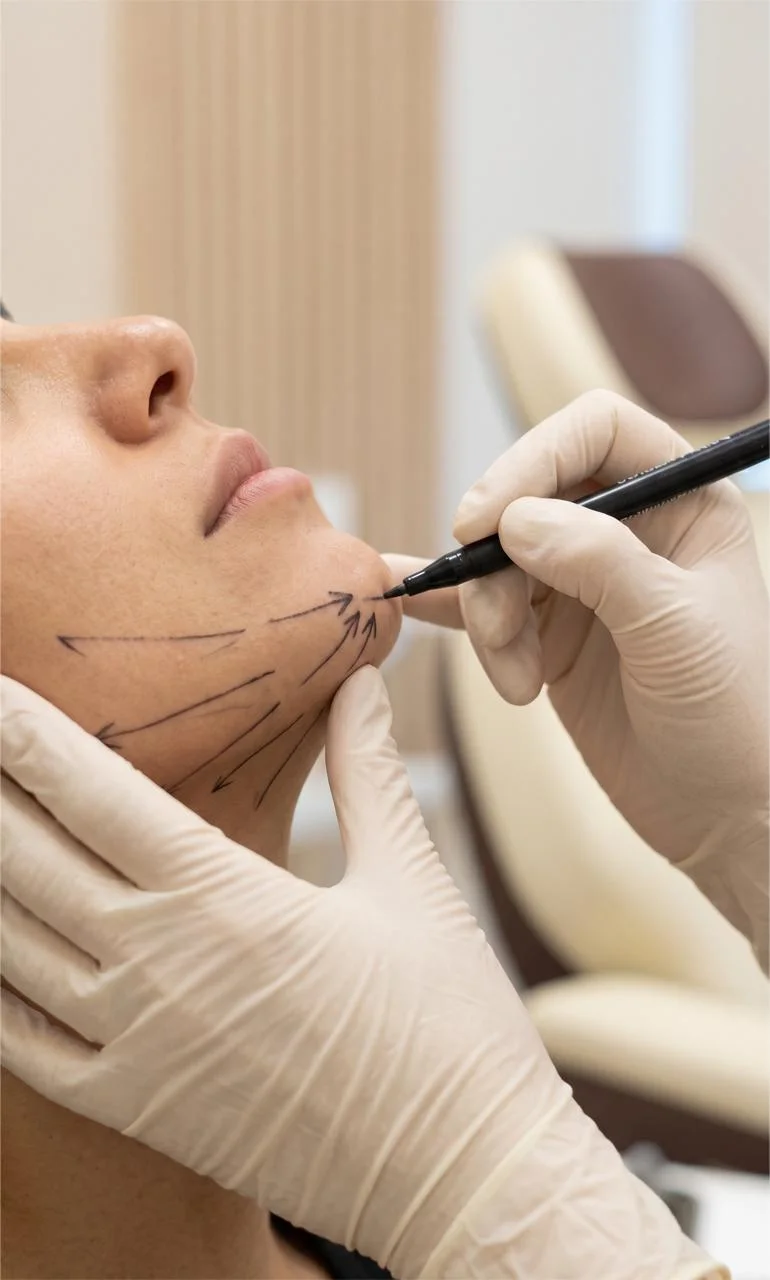
Understanding the mechanism makes the side effects easier to tolerate mentally. When Dr. Borakowski inserts barbed PDO threads through small entry points and repositions tissue, two processes begin simultaneously.
The first is mechanical: the barbs anchor in the subcutaneous tissue and physically reposition soft tissue toward a more lifted vector. This immediate lift is what you see on procedure day — and it is also why the area feels “tight” in the first week.
The second is biological: your immune system recognizes the PDO suture as a foreign body and mounts a controlled healing response. Edema, tenderness, and warmth are all part of that response. Fibroblasts migrate to the thread and begin producing new collagen around it. This is not a flaw in the treatment — it is the mechanism by which thread lifts produce longer-lasting results than the thread’s physical lifespan (4–6 months). The collagen scaffold remains after the PDO has dissolved.
This is also why patients with excellent collagen production (typically under 45) tend to have the most prominent and sustained results — and why patients with thin, fragile skin require more conservative thread tension to avoid persistent dimpling.
How to Reduce Side Effects at Home
Dr. Borakowski provides written aftercare instructions at each appointment. The essentials:
- Sleep elevated (two pillows under your head) for the first 3–5 nights to reduce facial edema.
- Cold compresses for the first 24–48 hours, 15 minutes on / 15 minutes off. Never apply ice directly to skin — wrap in a soft cloth.
- Avoid blood-thinners — no ibuprofen or aspirin for pain management (use acetaminophen instead). If you are on prescription blood thinners, do not stop them; discuss with Dr. Borakowski beforehand.
- Soft diet for the first 5–7 days. Avoid hard, chewy foods that activate the jaw muscles used in thread vector areas.
- No exaggerated facial expressions — wide smiling, extreme mouth opening, and animated talking all put tension on thread vectors in the first week.
- No massage unless specifically instructed. Well-meaning rubbing can displace threads before they anchor.
- No high-impact exercise for 7–10 days. Elevated heart rate and blood pressure increase edema and bruising risk.
- No sauna, steam rooms, or facial treatments for 2 weeks (heat and manipulation both affect thread stability).
- Sun protection at entry points — SPF 30 or higher prevents post-inflammatory hyperpigmentation at healing entry sites, particularly important for Fitzpatrick IV–VI skin.
Normal Side Effects vs. Red Flags: Know the Difference
The most important skill post-treatment is distinguishing self-limiting expected side effects from true complications that require prompt evaluation. This table summarizes the key differences:
| Symptom | Normal — Watch and Wait | Red Flag — Call Provider |
|---|---|---|
| Swelling | Peaks Days 1–3, improving by Day 5 | Worsening or asymmetric after Day 3 |
| Bruising | At entry points, fading by Day 7–10 | Spreading, darkening, or warm to touch |
| Tenderness | Sore when pressed, improving daily | Sharp, escalating pain after Day 3 |
| Tightness | “Pulled” sensation, resolves by Week 3 | Visible cord or thread tip at skin surface |
| Dimpling | Small surface irregularity, resolves Week 1–2 | Persists beyond Week 3 without improvement |
| Sensation | Mild altered sensation (paresthesia) in first 2 weeks | Numbness, muscle weakness, or facial asymmetry |
| Redness | Pink at entry points Day 0–2 | Fever + spreading redness = possible infection |
Normal — Watch and Wait
- Swelling
- Peaks Days 1–3, improving by Day 5
- Bruising
- At entry points, fading by Day 7–10
- Tenderness
- Sore when pressed, improving daily
- Tightness
- “Pulled” sensation, resolves by Week 3
- Dimpling
- Small surface irregularity, resolves Week 1–2
- Sensation
- Mild altered sensation (paresthesia) in first 2 weeks
- Redness
- Pink at entry points Day 0–2
Red Flag — Call Provider
- Swelling
- Worsening or asymmetric after Day 3
- Bruising
- Spreading, darkening, or warm to touch
- Tenderness
- Sharp, escalating pain after Day 3
- Tightness
- Visible cord or thread tip at skin surface
- Dimpling
- Persists beyond Week 3 without improvement
- Sensation
- Numbness, muscle weakness, or facial asymmetry
- Redness
- Fever + spreading redness = possible infection
Area-Specific Considerations
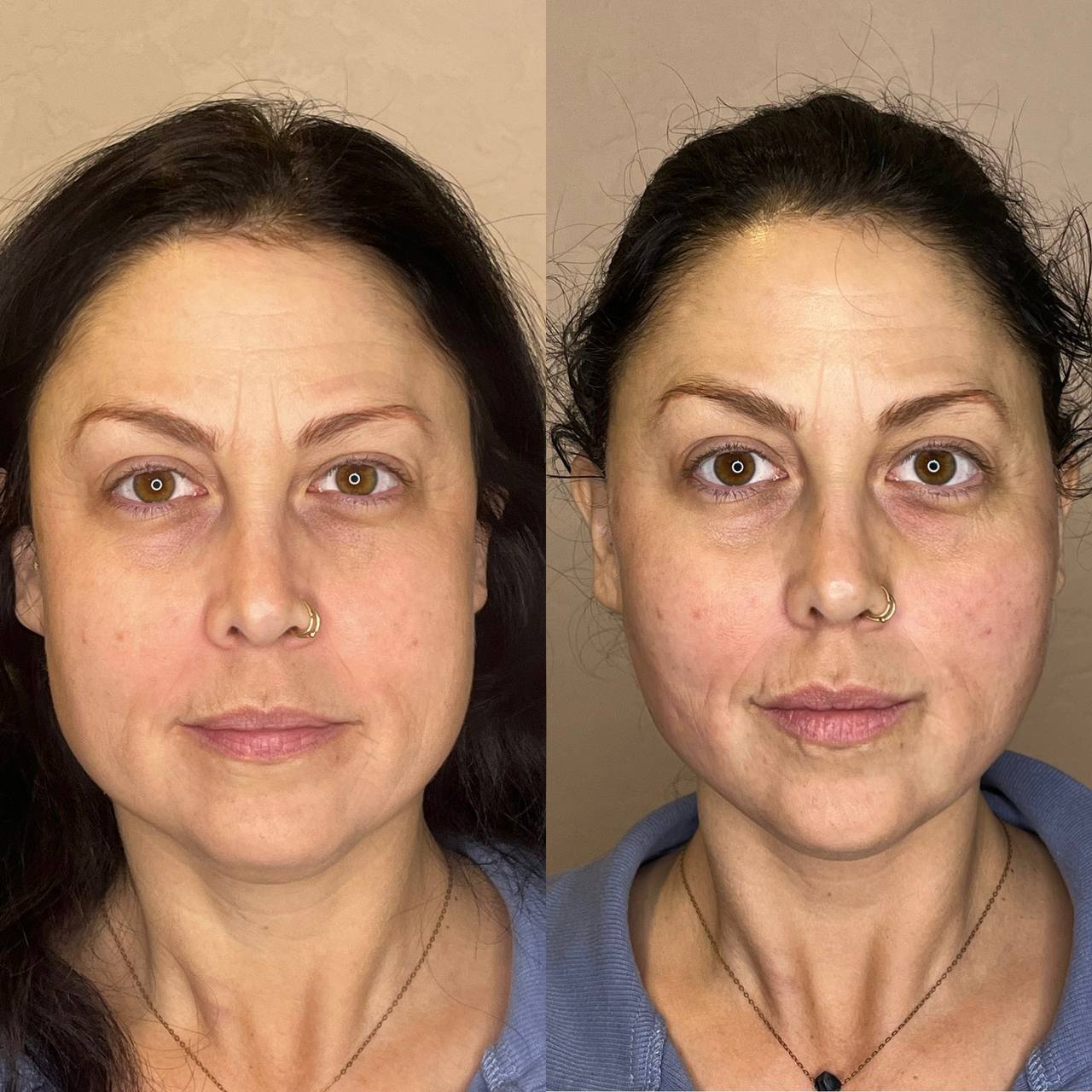
Side effects can vary by treatment area. Neck thread lifts tend to produce more prominent swelling and stiffness than jaw or brow lifts, given the thinner skin and muscle activity in that zone. Brow lift threads are close to the hairline, where some patients notice mild scalp tenderness. Nose thread lifts (rhinoplasty threads) have very little associated edema but higher sensitivity during the first week.
Patients with Fitzpatrick IV–VI skin should follow sun avoidance instructions carefully for 2–4 weeks after any thread procedure. Entry points heal with a small inflammatory response that can darken if exposed to UV. SPF 50 physical sunscreen (zinc oxide/titanium dioxide) applied gently over healed entry sites is appropriate.
A Note on Setting Realistic Expectations
One of the most important pieces of aftercare is mental: do not judge your results at Day 3. The over-tightened, swollen look in the first week is temporary, and it bears almost no resemblance to how you will look at Week 6–8 when everything has settled and collagen is building. Many patients who contact their provider in a panic on Day 2 are delighted with results by Week 4.
At Desert Bloom, Dr. Borakowski schedules a follow-up at 2–4 weeks post-treatment specifically to evaluate the settled result, address any residual concerns, and discuss collagen-supporting maintenance treatments if appropriate.
“The patients who recover most smoothly are the ones who follow aftercare closely and don’t try to rush back to their normal routine too fast. A week of careful aftercare protects months of results. The tightness you feel in the first few days is the procedure working — that scaffold is exactly what triggers the collagen response.”
Frequently Asked Questions About PDO Thread Lift Side Effects
Is a PDO thread lift painful?
Can I wear makeup after a PDO thread lift?
How much swelling is too much after a thread lift?
Will I look natural after the swelling goes down?
Do PDO thread lift side effects get worse the second time?
For questions about what happens when side effects exceed the normal range, our guide to PDO thread lift complications covers migration, infection, dimpling, and asymmetry in detail. If you are considering a thread lift for the first time, our PDO thread lift page walks through candidacy, pricing, and what to expect at Desert Bloom.
References
- 1.
Niu Z, Zhang K, Yao W, et al.. A Meta-Analysis and Systematic Review of the Incidences of Complications Following Facial Thread-Lifting. Aesthetic Plastic Surgery; 2021.