Weak Chin
A weak chin, also known as a recessed chin, is a condition where the chin appears smaller or less pronounced in relation to the rest of the face. This can result in a lack of facial balance and symmetry, and can also cause problems with bite and dental function. A weak chin can be corrected with cosmetic procedures.
See all treatments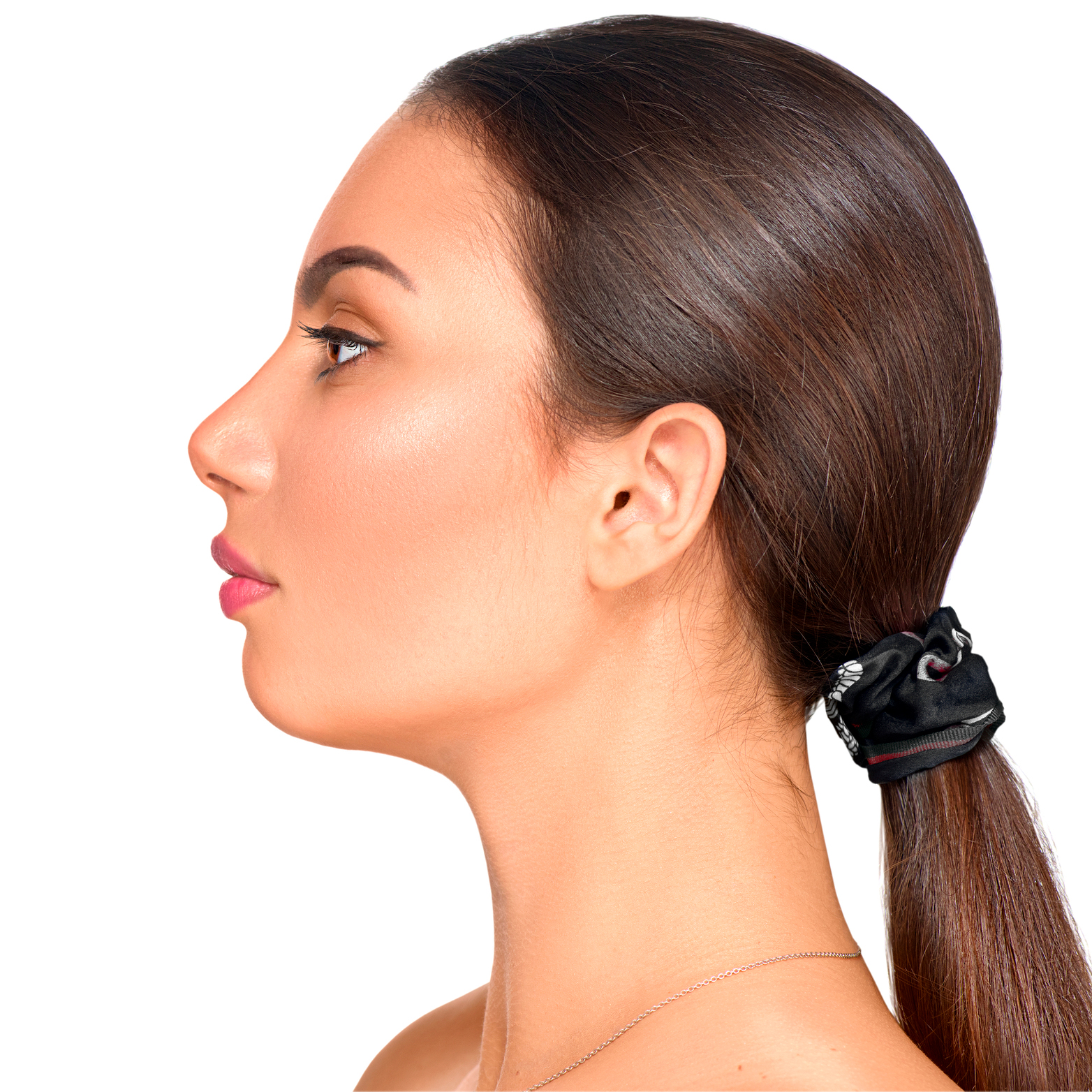
Non-surgical chin augmentation and lower-face balancing — physician-led evaluation for weak, recessed, or retruded chin in Scottsdale.
When Your Profile Doesn’t Add Up
A chin that doesn’t project forward enough changes how the whole lower face reads — not just the chin itself. It can compress the apparent neck, soften a defined jawline, and throw off facial proportion even when every other feature is well-balanced. Most patients notice it in profile photos first, and most cases are correctable without surgery.
Dr. Natalya Borakowski, NMD approaches a weak or recessed chin as a proportional decision, not a product decision. Before any filler is placed, she reads the profile — chin projection relative to the lower lip and nose, the mandibular plane angle, and how the chin relates to the jawline behind it. The goal is facial harmony, not forward projection for its own sake.
Part of our Aesthetic Facial Balancing hub — see also Jawline Filler, Square Jaw, and Asymmetrical Face.
At a Glance
Scope. Chin filler (HA: Restylane / RHA), Radiesse, Aesthetic Facial Balancing, and PDO Thread Lift as adjunct. Surgical referral (sliding genioplasty, chin implant) for skeletal / functional cases that fall outside non-surgical scope.
Provider & candidacy. Dr. Borakowski sees all Fitzpatrick types for chin work. Best candidates have mild-to-moderate retrusion, no uncorrected bite issues, and realistic expectations about filler versus surgical projection. First-time patients start with reversible HA to confirm their target shape.
Downtime & how to start. Chin filler — mild swelling 24–48 hrs. PDO adjunct — 3–5 days social downtime. A consult evaluates profile proportion, product selection, and whether surgery is a better conversation. No obligation; honest referral when non-surgical scope doesn’t apply.
What Causes a Weak Chin?
Chin projection is largely determined by the position of the mandibular symphysis — the bony tip of the lower jaw — relative to the rest of the lower face. When the chin bone sits behind the vertical line dropped from the lower lip, the profile shows the characteristic pushed-back appearance patients recognize as a weak or recessed chin. Clinically this is sometimes called mandibular retrognathia, though most cases are milder than the term implies. Several distinct drivers produce that result, and the driver shapes the treatment plan.
Skeletal Microgenia (True Bone Deficiency)
The mandibular symphysis sits too far back relative to the lower lip — the defining feature of retrognathia. Congenital and often hereditary: a small chin can run in families for generations. Shows most on profile; the front view is subtler. Mild-to-moderate cases respond well to HA filler; severe skeletal deficit belongs in a surgical consultation.
Treatment direction: Chin filler (HA) for mild–moderate; surgical referral for skeletal Class II deficitSoft-Tissue Volume Loss with Age
As soft tissue over the chin thins in the 40s and 50s, a chin that once projected adequately begins to read as weaker — not because the bone has moved, but because the cushion above it has. Hyaluronic acid filler provides the clearest, most immediate correction for this driver because the deficit is volume, not position.
Treatment direction: HA filler for volume restoration at the chin tipFat-Pad Atrophy Around the Chin
Fat pads around the chin and lower face remodel and thin over time. This is loss of volume at and around the chin tip — distinct from submental fat (under the chin), which is the opposite problem. Distinguishing atrophy from fullness matters because the treatment paths are completely different. If your concern is fat under the chin rather than lack of forward projection, double chin is the right page.
Treatment direction: HA filler for atrophy; Kybella or CoolSculpting for submental fat — not interchangeableMandibular Asymmetry
One side of the lower jaw projects or defines differently than the other — creating a chin that reads off-center or uneven in addition to being set back. Genetics, dental history, and facial trauma all contribute. When asymmetry is the dominant complaint alongside weak projection, the routing shifts toward a coordinated Aesthetic Facial Balancing session that addresses the whole lower-face framework. See also: Asymmetrical Face.
Treatment direction: Aesthetic Facial Balancing — mapping both projection and asymmetry in one sessionTreatment Options for Weak Chin at Desert Bloom
The right answer depends on how much projection the chin actually needs, whether reversibility matters on a first decision, and whether the chin is the only concern or part of a larger lower-face balance plan. Most patients start with reversible HA filler to confirm the shape they want before considering longer-duration products like Radiesse. A smaller group — those with severe skeletal retrognathia or functional symptoms — belongs in a surgical consultation from the start.
Most patients with a weak chin are good candidates for a non-surgical plan that starts with HA chin filler and escalates in duration or scope only if they choose to. After the patient has confirmed their target shape with HA, longer-lasting options like Radiesse (calcium hydroxylapatite — not dissolvable, longer duration) or Bellafill (PMMA — long-commitment endpoint) become a conversation. These are a later step, not a first choice.
Non-Surgical vs. Surgical Chin Augmentation
Most patients asking about a weak chin are candidates for non-surgical correction. A smaller group — identifiable at the first consultation — belongs in a surgical conversation. The decision framework is straightforward.
Non-Surgical Projection Path
For mild-to-moderate retrusion driven by soft-tissue deficit or mild skeletal variation. No downtime, no incisions, no permanence required.
Surgical Referral Path
For skeletal Class II deficit, functional symptoms, or cases where filler projection is anatomically insufficient. Desert Bloom refers these directly.
Compare All Non-Surgical Treatment Options
| Feature | Chin Filler (HA) | Radiesse (CaHA) | Aesthetic Facial Balancing | PDO Thread Lift |
|---|---|---|---|---|
| Primary use-case | Mild–moderate retrusion; first-time treatment | Shape confirmed by HA; wants longer duration | Chin + jawline + harmony concern | Weak chin + laxity or early jowling |
| Mechanism | HA filler adds projection, vertical height, chin-tip definition | CaHA scaffold — firmer, longer-lasting in bone-adjacent placements | Combined HA filler across chin, jaw, sometimes midface | PDO sutures lift lateral jaw; collagen stimulation |
| Longevity | 9–12 months (Restylane / RHA) | 12–18 months | 12–18 months (maintained annually) | 12–18 months |
| Reversible? | Yes — hyaluronidase dissolves HA | No | HA components reversible; full plan is not | Not reversible but temporary |
| Best candidate | New to chin work; wants to confirm shape; reversibility matters | Patient who has trialed HA, knows their target, wants fewer top-ups | Profile is off — not just the chin | Chin is weak AND jaw/lower face has early laxity |
When Chin Augmentation Requires a Surgical Conversation
Non-surgical chin augmentation corrects most mild-to-moderate cases — but it has honest limits. A severely retruded chin driven by skeletal Class II deficit, where the lower jaw itself sits too far back, is not fixable with filler alone. The following signs at consultation point toward a surgical referral rather than a filler plan.
Surgical referral triggers — filler is not the right conversation if: your chin deficit is part of an uncorrected skeletal Class II malocclusion; you have obstructive sleep apnea or difficulty chewing that has not been evaluated by a physician; you have been told by an orthodontist or dentist that your bite requires jaw surgery; you have significant mandibular hypoplasia where bone advancement (sliding genioplasty) is the clinically indicated correction; or your chin implant / genioplasty consultation has already been recommended by another provider. Dr. Borakowski will identify these presentations at the initial consult and refer you directly to an oral and maxillofacial surgeon. The honest answer matters more than the in-house answer.
Frequently asked questions

“A weak chin almost always looks better with non-surgical augmentation — but the starting point is reading the profile correctly, not placing product immediately. How much projection, how much vertical height, and how the chin relates to the jaw behind it: that evaluation takes five minutes and shapes the entire treatment plan.”
Book Your Chin Consultation in Scottsdale
Dr. Borakowski evaluates chin projection relative to the lips, nose, and mandibular plane — not in isolation. The consult covers which driver is producing the weak chin appearance, whether non-surgical correction applies, what product and volume makes sense for your anatomy, and whether a surgical referral is the honest answer.
Complimentary. No obligation. Honest referral if non-surgical scope doesn’t apply.
References
- “Safe and Effective Chin Augmentation With the Hyaluronic Acid Injectable Filler, VYC-20L.” Dermatologic Surgery. 2020. DOI(Juvederm product cited as class evidence for HA chin augmentation safety/efficacy; Desert Bloom does not stock VYC-20L. Page never implies this product is used here.)
- “Calcium Hydroxylapatite (Radiesse).” Aesthetic Dermatology (Karger). 2017. DOI(Supports longer duration of CaHA vs HA in bone-adjacent placements including chin.)
- “The stair step genioplasty: a modification of the oblique sagittal sliding genioplasty.” British Journal of Oral and Maxillofacial Surgery. 2019. DOI(Surgical referral framing; provides clinical context for genioplasty as the indicated procedure in skeletal Class II deficit.)
- “3D Sliding Genioplasty and Its Role in Facial Feminization Surgery.” Otolaryngologic Clinics of North America. 2022. DOI(Supports genioplasty surgical referral framing for severe skeletal retrognathia.)
Treatments
- Chin Filler$600-$72045–60 min
- Facial Balancing$1,600+60 min
- Facial Sculpting$545-$85015 minutes and up
- Jawline Filler$600+45 min
- Non-Surgical Facelift$250060 and up
- Non-Surgical Facial MasculinizationOn demand60 min
- PDO Thread Lift$160-$118015 minutes and up
- Radiesse Filler$60030 min
- Restylane FillersOn demand15–45 min
Consultation in skin care clinic
Desert Bloom Skincare Center offers personalized skincare consultation to help you achieve a flawless and radiant complexion. Book your appointment today and let our expert team of skincare professionals address your specific concerns and help you reach your skincare goals.
Visit Our Scottsdale Aesthetic Center
Address
10752 N 89th Place, Suite 122B,Scottsdale, AZ 85260.
Phone:(480) 567-8180
E-mail:info@desertbloomskincare.com
Get Directions →Location & Directions
Desert Bloom Skincare is conveniently located in the Shea Corridor of North Scottsdale, within Edwards Professional Park I — minutes from HonorHealth Scottsdale Shea Medical Center and the Mayo Clinic Scottsdale Campus.
Areas We Serve
We proudly provide expert non-surgical rhinoplasty and PDO thread lifts to patients across the Southwest:
- ScottsdaleNorth Scottsdale · McCormick Ranch · Gainey Ranch
- Paradise Valley
- PhoenixArcadia · Biltmore · North Phoenix
- Fountain Hills
- Cave Creek & Carefree