Thinning Hair
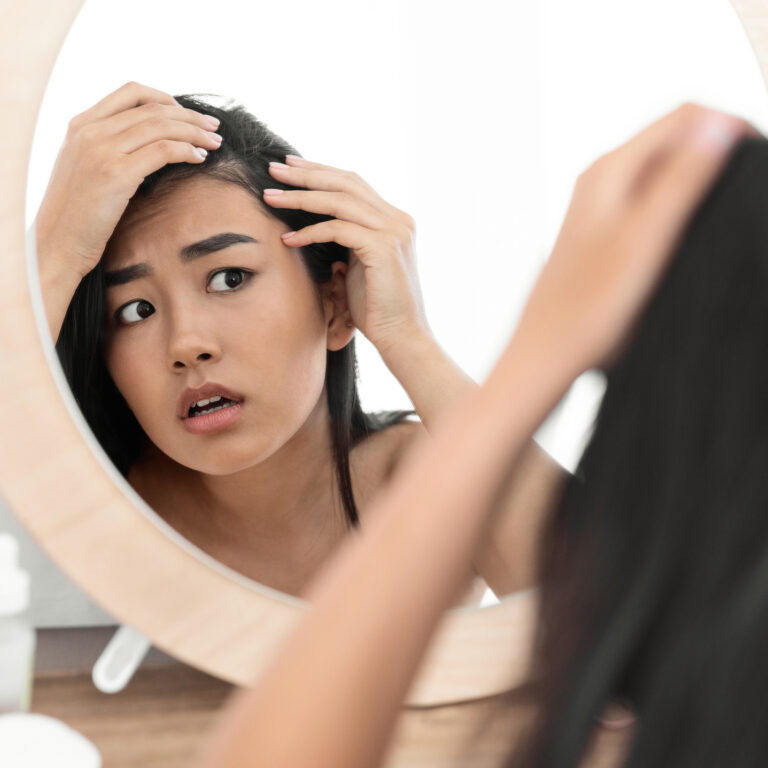
Thinning hair refers to a reduction in the volume and thickness of hair on the scalp, leading to visible hair loss. It can be caused by a variety of factors such as genetics, aging, hormonal changes, or medical conditions. Thinning hair can be a source of insecurity and self-consciousness for some people. A specialist can evaluate the scalp and recommend the best course of action to help achieve a fuller and more youthful hair appearance.
See all treatments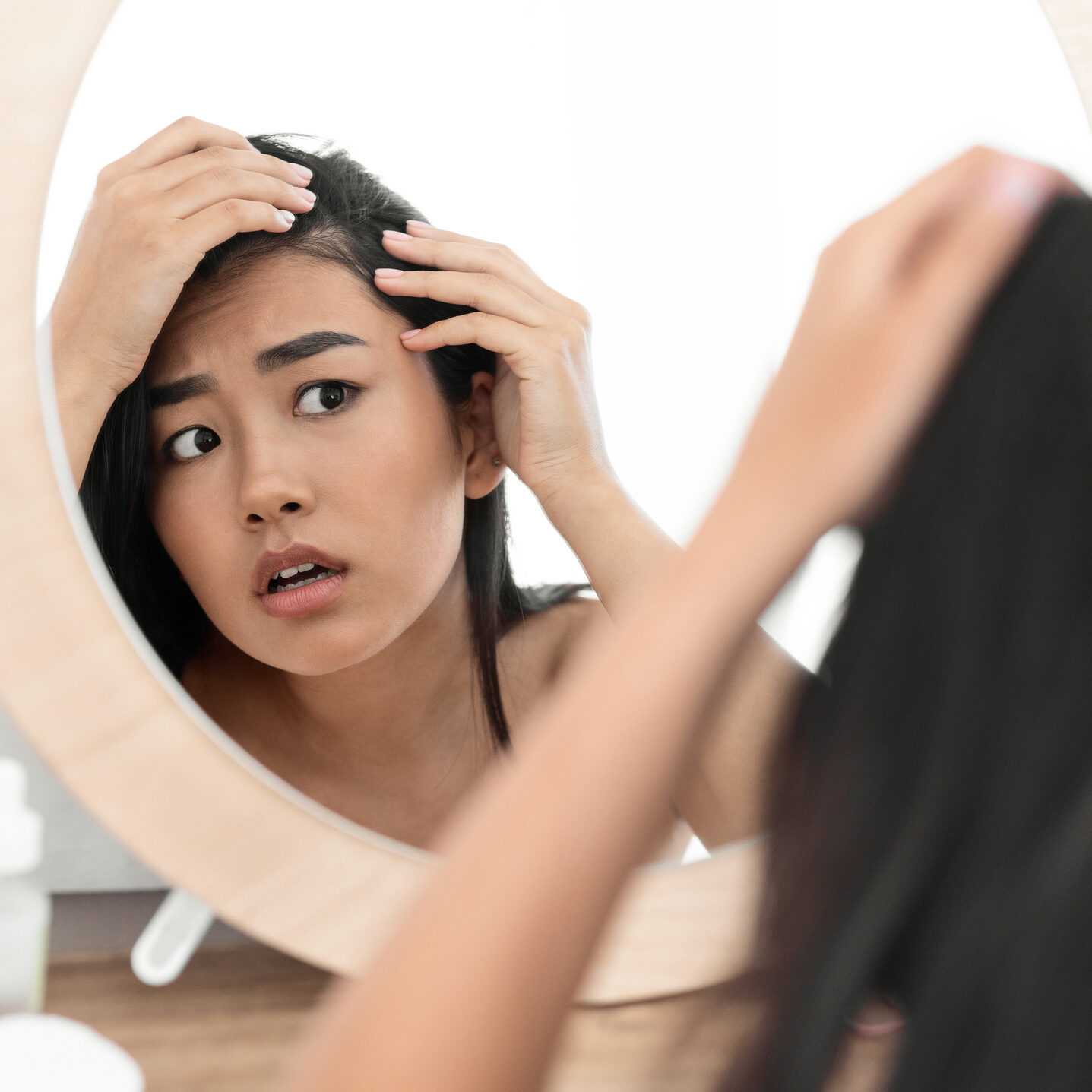
Scalp-based PRP and mesotherapy for thinning hair — physician-led root-cause evaluation in Scottsdale.
Find Your Treatment
More Hair in the Brush Than There Used to Be
A widening part. A ponytail that sits thinner than it used to. More strands on the pillow. Most patients notice thinning hair in photographs first — then realize they had been compensating in the way they styled for months.
Dr. Natalya Borakowski, NMD works from one principle: the treatment that works depends on the cause. She will not start PRP when the likely driver is low ferritin, an unaddressed thyroid, or an autoimmune pattern — and will say so directly. Identifying your category is the first real decision.
Part of our Hair Rejuvenation hub — see also PRP for Hair and Mesotherapy for Hair Growth.
At a Glance
Scope. In-clinic injectable pathway: PRP hair restoration (Velora) and mesotherapy for the scalp, both delivered directly where follicles live. Not offered here: hair transplants, in-clinic laser caps, or oral prescription medications (finasteride, dutasteride, spironolactone).
Provider & evaluation. Dr. Borakowski evaluates cause — genetic, hormonal, nutritional, autoimmune — before recommending a protocol. Living follicles respond; scarred ones do not. If workup points to dermatology or internal medicine, she refers before treatment begins.
How to start. Reduced shedding at 4–6 weeks, density improvement by months 3–6. Full pricing, session spacing, and the compounded topical (5% minoxidil, 1% finasteride, biotin) are at the Hair Rejuvenation hub.
What Causes Thinning Hair?
Thinning happens when follicles shift into shedding faster than new growth replaces them, or when they miniaturize and produce finer strands instead of terminal hairs. Which mechanism is driving yours shapes everything that follows.
Androgenetic Alopecia (Hereditary Pattern)
Follicles become sensitive to DHT and miniaturize over time. Male pattern thins at the crown and hairline; female pattern produces diffuse thinning with a widening part. About one in two men and one in three women develop this — it is genetic from both sides of the family. Men dealing with this pattern often find relevant context at our men’s skin care hub.
Treatment direction: PRP + compounded topical (5% minoxidil / 1% finasteride) — managed at /hair-rejuvenation/Telogen Effluvium (Trigger-Based Shedding)
A physiological shock — childbirth, surgery, illness, rapid weight loss, or a new medication — pushes follicles into the shedding phase at once. The shed typically appears three to four months after the trigger, not at the time of the event. Most cases resolve in six to nine months once the cause is addressed.
Treatment direction: address the trigger first; PRP considered if density loss persists after resolutionHormonal & Nutritional Drivers
Thyroid imbalances, PCOS, menopause, post-partum shifts, and hormonal birth control changes all produce diffuse thinning. Nutritional gaps matter too: ferritin below 50 ng/mL affects hair growth even without clinical anemia. These require blood work to identify — not a cosmetic consult as the first step.
Treatment direction: PCP / endocrinologist / OB-GYN for workup; DB injectables adjunct once workup is currentScarring, Autoimmune & Traction — Refer Out
Alopecia areata is autoimmune — immune cells target follicles, producing bald patches. Scarring alopecias (cicatricial) permanently destroy follicles; injectables cannot restore what is already gone. Traction alopecia from chronic tight styling reverses early, scars late. All three require dermatology evaluation before any aesthetic injection.
Treatment direction: board-certified dermatologist — scalp biopsy, Dx, systemic Rx if indicatedWhen to See a Doctor First
Thinning hair is sometimes an aesthetic question, and sometimes a medical one. The two lanes are not interchangeable — treating a cause you have not identified is how patients cycle through treatments that were never going to work.
A board-certified dermatologist typically owns: diagnosis of alopecia areata and scarring alopecias; scalp biopsy when the pattern is atypical; prescription oral medications (finasteride, spironolactone, dutasteride); long-term management of autoimmune or inflammatory hair loss.
A primary care doctor, endocrinologist, or OB/GYN typically owns: blood work (ferritin, TSH, vitamin D, CBC, hormonal panels); thyroid evaluation; hormonal assessment for PCOS, menopause, or post-partum changes; identifying and treating medical conditions driving hair loss.
Desert Bloom typically owns: PRP and mesotherapy for living follicles; the compounded nightly topical (5% minoxidil, 1% finasteride, biotin); protocol design for patients whose medical cause has been addressed or ruled out. A good consultation here sometimes ends with a referral.
Treatment Options for Thinning Hair
Two injectable approaches for scalp hair restoration, both delivered into the dermis where follicles live. Neither replaces surgical transplantation or oral medications — but for early-to-moderate thinning, these are the primary non-surgical tools used here.
Most plans combine PRP with a compounded nightly topical — mesotherapy layered in when the scalp needs nutritional support. Not offered here: hair transplants, laser caps, or oral prescription medications. For broader context see the general mesotherapy page.
Compare Treatment Options
| Feature | PRP for Hair (Velora) | Mesotherapy for Hair | Combined Protocol | Compounded Topical |
|---|---|---|---|---|
| Primary use-case | Early-to-moderate thinning, biological-first approach | Scalp microenvironment nutritional support | Maximum stimulation — PRP + mesotherapy same session | Daily at-home adjunct between in-clinic sessions |
| Mechanism | Patient’s own platelets — growth factors signal follicle shift from rest to growth | Vitamin / amino acid / peptide cocktail injected into scalp dermis | Layered: platelet signaling + direct nutrient delivery | Minoxidil (vasodilator) + topical finasteride + biotin — nightly |
| Sessions | 3 initial sessions (4–6 wks apart), then maintenance q3–6 mo | 3–6 sessions, often timed with PRP | Same session as PRP — no additional visit | Daily — continuous use required |
| Visible onset | Reduced shedding 4–6 wks; density improvement 3–6 mo | Scalp texture improvement within 4–8 wks; density 3–6 mo | Same as PRP but often more pronounced scalp response | Shedding reduction 2–4 mo; density response 6–12 mo |
| Best candidate | Living follicles, androgenetic or post-TE thinning, workup current | Thinning + brittle or slow-growing hair; scalp is dry or reactive | Early-moderate thinning wanting full non-surgical protocol | Anyone in an in-clinic protocol — not a standalone treatment |
| Pricing / scheduling | See /hair-rejuvenation/ for per-session and package pricing | See /hair-rejuvenation/ for pricing | Bundled into the full protocol — see /hair-rejuvenation/ | Managed via compounding pharmacy through hub |
When to Seek Medical Evaluation Before Booking
Sudden patchy loss or discrete bald spots. Round patches of complete hair loss, or a pattern that appeared quickly over days to weeks, suggests alopecia areata — an autoimmune condition. PRP and mesotherapy are not the first-line response here. A dermatologist diagnoses, manages, and often prescribes systemic treatment first.
Scarring or inflammation visible on the scalp. Redness, scaling, tenderness, or a scalp that looks and feels different in areas of hair loss may indicate a scarring (cicatricial) alopecia. Scarred follicles do not regenerate — injectables do not restore what is already gone. Dermatology evaluation is required before any treatment.
More than 50% diffuse shedding in less than 6 months, or new systemic symptoms. A new thyroid diagnosis, heavy menstrual periods with suspected low iron, unexplained fatigue alongside hair loss, or rapid whole-scalp diffuse shedding warrants internal medicine or endocrinology evaluation first — not a cosmetic consultation. Injectables will not work if the hormonal or nutritional driver is still active.
Frequently asked questions

“My approach to thinning hair starts with the cause, not the treatment. PRP is not the right first step when the driver is low ferritin, an unaddressed thyroid issue, or an autoimmune pattern — and I am comfortable saying so at the consultation. The patients who do best are the ones who arrive with a workup done, or who are willing to do one before we start.”
Book Your Thinning Hair Consultation in Scottsdale
Dr. Borakowski sees thinning hair across all pattern types. The consultation covers pattern identification, workup review, and an honest assessment of whether PRP, mesotherapy, or a referral is the right next step. Complimentary. No obligation.
References
- “Minoxidil and its use in hair disorders: a review.” Drug Design, Development and Therapy. 2019. DOI(Mechanism and clinical use of minoxidil in androgenetic alopecia and other hair disorders; supports compounded topical narrative. PMID 31496654.)
- “Efficacy of non-surgical treatments for androgenetic alopecia: a systematic review and network meta-analysis.” Journal of the European Academy of Dermatology and Venereology. 2018. DOI(Network meta-analysis of non-surgical AGA treatments; frames the non-surgical treatment landscape. PMID 29797431.)
- “Platelet-Rich Plasma for Androgenetic Alopecia: A Systematic Review and Meta-Analysis of Randomized Controlled Trials.” Journal of Cutaneous Medicine and Surgery. 2023. DOI(Systematic review and RCT meta-analysis supporting PRP as first-line injectable for androgenetic alopecia. PMID 37533146.)
- “Evidence-based (S3) guideline for the treatment of androgenetic alopecia in women and in men — short version.” Journal of the European Academy of Dermatology and Venereology. 2018. DOI(Authoritative S3 evidence-based guideline for AGA management in both sexes; care framework reference. PMID 29178529.)
- “Scalp Condition Impacts Hair Growth and Retention via Oxidative Stress.” International Journal of Trichology. 2018. DOI(Scalp microenvironment and oxidative stress impact on follicle health; supports mesotherapy scalp rationale. PMID 30783333.)
Consultation in skin care clinic
Desert Bloom Skincare Center offers personalized skincare consultation to help you achieve a flawless and radiant complexion. Book your appointment today and let our expert team of skincare professionals address your specific concerns and help you reach your skincare goals.
Visit Our Scottsdale Aesthetic Center
Address
10752 N 89th Place, Suite 122B,Scottsdale, AZ 85260.
Phone:(480) 567-8180
E-mail:info@desertbloomskincare.com
Get Directions →Location & Directions
Desert Bloom Skincare is conveniently located in the Shea Corridor of North Scottsdale, within Edwards Professional Park I — minutes from HonorHealth Scottsdale Shea Medical Center and the Mayo Clinic Scottsdale Campus.
Areas We Serve
We proudly provide expert non-surgical rhinoplasty and PDO thread lifts to patients across the Southwest:
- ScottsdaleNorth Scottsdale · McCormick Ranch · Gainey Ranch
- Paradise Valley
- PhoenixArcadia · Biltmore · North Phoenix
- Fountain Hills
- Cave Creek & Carefree