PDO Nose Thread Lift in Scottsdale, AZ 85260

PDO Nose Thread Lift in Scottsdale, AZ
Most patients who ask about a non-surgical nose job are not trying to change who they are. They have something specific in mind: a tip that drops when they smile, a bridge that looks flat in certain lighting, a small asymmetry that shows up more in photos than in the mirror. They want refinement — not transformation. And they want to avoid surgery if they can.
About the Procedure
A PDO nose thread lift uses absorbable medical sutures to reposition the nasal tip or bridge — no incisions, no general anesthesia, no surgical recovery. The procedure takes under an hour. Recovery is measured in days. Results are real, but they are not unlimited.
This page explains exactly what this procedure can and cannot change, how it compares to filler and surgery, and whether you are a realistic candidate. Read it before you book — not after.
All PDO thread procedures at Desert Bloom | Book Your Complimentary Assessment
What Is a PDO Nose Thread Lift?
The procedure works on soft tissue, not bone — and that distinction defines both its potential and its limits.
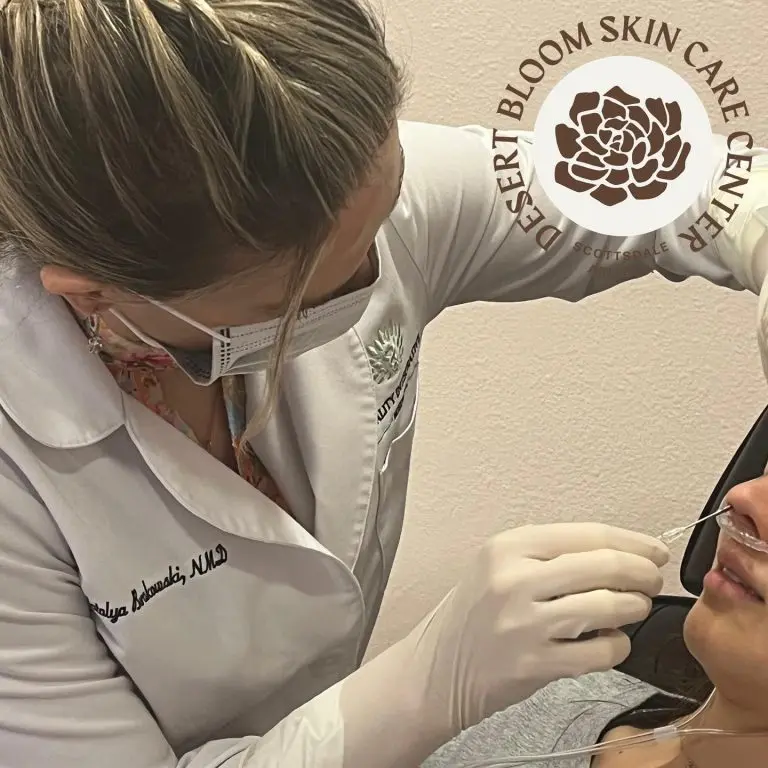
PDO (polydioxanone) is a synthetic, absorbable polymer used in surgical sutures for more than 30 years — the same material used to close cardiac incisions. It is not a “natural sugar thread,” despite how it is sometimes described online. It dissolves in the body over approximately four to six months, leaving no permanent material behind.
In nasal threading, smooth PDO sutures are guided through a single small entry point at the base of the nasal tip and positioned within the soft tissue. No incisions are made. No bone is altered. No cartilage is removed.
Two things happen when threads are placed. First, a mechanical effect: the tissue is repositioned immediately, visible the same day. Second, a biological effect: as the sutures dissolve, they stimulate a controlled healing response that increases collagen production. A 2018 systematic review in Plastic and Reconstructive Surgery found that this collagen response contributes to aesthetic improvement that outlasts the physical presence of the thread. That is why results do not disappear suddenly — they soften gradually over time.
PDO sutures are FDA-cleared for soft tissue approximation. Their use in aesthetic nasal thread lifting is an off-label application performed by trained medical professionals — a distinction that matters clinically and legally.
What a PDO Nose Thread Lift Can — and Cannot — Do
This is where clarity matters more than marketing.
What it can address
- Drooping nasal tip (ptotic tip): the most common indication, particularly noticeable during smiling or speaking — though for tip drop during dynamic movement, Botox is often the first-line treatment and may resolve the concern entirely without threads
- Tip projection: building forward projection without adding width
- Bridge height: adding vertical definition to a flat nasal bridge, particularly effective in patients with a low nasal dorsum
- Subtle asymmetry: minor positional correction of soft tissue asymmetry (not structural asymmetry from the septum)
- Tip refinement: narrowing the appearance of a wide or bulbous tip through soft tissue repositioning — not reduction
What it cannot do
- Reduce overall nose size: threads do not remove tissue. No volume is reduced.
- Narrow the nasal bones: bone structure is not addressed by sutures in soft tissue
- Correct a deviated septum: functional or structural septal deviation requires surgery
- Fix severe asymmetry: significant asymmetry caused by cartilage irregularity or trauma is outside the scope of this procedure
- Address breathing problems: this is a cosmetic procedure, not a functional one
The right candidate sees the procedure for what it is: a proportionate, reversible-in-time refinement. Patients seeking dramatic transformation — a significantly smaller nose, a complete profile change — are better served by surgical rhinoplasty, and we say that directly at consultation.
Are You a Candidate for a PDO Nose Thread Lift?
Review these questions honestly before deciding to proceed.
Are You a Candidate?
Review these questions honestly before deciding to proceed.
- Are you unhappy with a drooping, flat, or minimally asymmetrical nasal tip?
- Do you want a subtle change — improved proportion — rather than a dramatically different nose shape?
- Are you realistic about results lasting 12–18 months, not permanently?
- Is your skin in reasonable health (no active infection, no keloid history at the nose)?
- Are you willing to follow post-procedure care instructions for several weeks?
- Would you accept a consultation where the answer might be ‘threads are not the right choice for your anatomy’?
A note about tip drop during smiling
If your primary concern is a nasal tip that drops when you smile, laugh, or speak, Botox is often the most effective first-line treatment — and in many cases eliminates the need for nose threads entirely. The depressor septi nasi muscle pulls the tip downward during facial expression, and a small amount of botulinum toxin can relax that pull without any structural procedure.
At Desert Bloom, Dr. Borakowski assesses this at consultation and will recommend Botox first when the anatomy supports it. PDO threads are considered when Botox alone is not sufficient to achieve the desired correction — not as a default starting point.
When a PDO Nose Thread Lift Is Not the Right Choice
Known keloid-forming tendency
Bleeding disorders or current anticoagulant therapy
Pregnancy
Autoimmune conditions in active flare
Permanent filler already present in the nasal zone (incompatible with thread placement)
When surgical rhinoplasty is the more appropriate path
A PDO nose thread lift is not a substitute for surgery — it is an alternative for patients who are not surgical candidates or do not want surgery. Surgery is the more appropriate choice when:
- The nose is objectively too large for the face and reduction is the goal
- Cartilage reshaping is needed
- The deviation is structural and affects breathing
- Previous rhinoplasty created an outcome that requires corrective structural work
When patients come to Desert Bloom and their goals clearly exceed what threading can deliver, we say so and refer to skilled rhinoplasty surgeons in the region. A consultation that ends with “not the right candidate” is still a productive consultation.
PDO Threads vs. Dermal Fillers for the Nose
The nose is the highest-risk injection zone in aesthetic medicine. The nasal dorsum, tip, and columella sit near blood vessels with direct anatomical connections to the ophthalmic circulation. An intravascular filler injection — even by an experienced injector — can result in a filler particle traveling backward through blood vessels toward the eye (retrograde embolization), blocking blood supply (ophthalmic artery occlusion), and causing permanent vision loss. This is not theoretical. A case report published in European Journal of Ophthalmology described complete visual loss following hyaluronic acid injection for non-surgical rhinoplasty, with a diagnosis of ophthalmic artery occlusion.
PDO threads placed subcutaneously do not carry this mechanism of injury. They are not injectable — they are guided into the soft tissue via a cannula and do not enter the vascular system.
| Feature | PDO Nose Threads | Hyaluronic Acid Filler |
|---|---|---|
| Vascular occlusion risk | Not present (mechanical, not injectable) | Present — anatomically connected to ophthalmic artery |
| Placement | Soft tissue via cannula | Injectable into tissue planes |
| Migration | Does not migrate | Can migrate over time |
| Duration | 12–18 months typical | 6–12 months (HA), varies |
| Reversibility | Not reversible before dissolution | HA reversible with hyaluronidase |
| Tissue response | Collagen stimulation | Volume fill only |
Dermal fillers still have a role in non-surgical nose refinement — specifically for minor contour corrections in patients with appropriate anatomy and experienced injectors. For a full overview of filler-based nose reshaping, see our liquid rhinoplasty page. At Desert Bloom, the default choice for nasal augmentation is PDO threads, on safety grounds, for patients who are candidates.
PDO Nose Thread Lift vs. Surgical Rhinoplasty
| Feature | PDO Nose Thread Lift | Surgical Rhinoplasty |
|---|---|---|
| Anesthesia | Local (topical + injectable) | General |
| Recovery | Days | 2–4 weeks initial; months for full resolution |
| Results | Subtle structural improvement | Significant structural change possible |
| Duration | 12–18 months | Permanent |
| Size reduction | Not possible | Possible |
| Bone reshaping | Not possible | Possible |
| Revision | Repeat procedure when results attenuate | Revision surgery carries higher complexity |
| Best for | Tip ptosis, bridge flatness, minor asymmetry | Structural reduction, functional correction |
The choice depends on what you want to change and how permanently. For subtle, reversible nose refinement without surgical downtime, threading is a practical option. For significant structural change — size reduction, cartilage work — surgery is the appropriate path.
Not sure which option fits your anatomy?Book a complimentary assessment — Dr. Borakowski will tell you directly.
The Procedure — Step by Step
The procedure takes 30–45 minutes and is performed in the clinic under local anesthetic. No overnight stay, no sedation, no surgical dressing.
Before your appointment
At the consultation, Dr. Borakowski assesses nasal anatomy, discusses your specific goal, and confirms candidacy. If Botox for the depressor septi nasi is appropriate, she may recommend trying that first. If you are a candidate for threads, she will ask you to:
- Stop anti-inflammatory medications (ibuprofen, aspirin) and blood-thinning supplements 5–7 days before the procedure
- Avoid vitamin E supplements for one week prior
- Eat a normal meal before your appointment
- Inform the clinic of any known allergies to materials used in the procedure
During the procedure
A topical numbing cream is applied to the nasal skin. After it takes effect, a small injectable anesthetic block is placed at the insertion site.
A single small entry point is created at the base of the nasal tip. There are no incisions.
Smooth PDO sutures are guided through the entry point and positioned within the soft tissue via a cannula. Most patients describe pressure rather than sharp pain.
Dr. Borakowski assesses symmetry and positioning, making adjustments as needed. The process typically takes 30–45 minutes.
Mild swelling and firmness are noticeable immediately after. No surgical dressing is required. You leave the clinic the same day.
Pro-Nox (nitrous oxide) is not used for nose procedures — the anatomy of the treatment area does not allow gas delivery during placement.
View real patient results — Before & After Gallery
Recovery — Day by Day
Swelling at the tip, mild tenderness, possible bruising at the insertion point. Sleep with head elevated.
Swelling begins to resolve. Early structural results become visible. The nose may feel firm.
Threads settle into position. Minor dimpling or skin irregularity, if present, typically resolves.
Results stabilize into a natural appearance. Most social restrictions lift.
Collagen formation phase. Structural support deepens as fibroblast activity peaks.
Peak result. Gradual softening begins as threads complete dissolution.
What to avoid
- Glasses resting on the bridge: OK after 2–3 days if there is no bruising on the bridge. If bruising is present, wait until it resolves.
- Strenuous activity and exercise: 2 weeks
- Nose manipulation and rubbing: 2 weeks
- Facial massages or procedures involving pressure on the nose: 4 weeks
Pain that worsens after 72 hours instead of improving
Redness, warmth, or discharge at the insertion point
A visible ridge or protrusion that looks like a thread under the skin
Infection following PDO nasal threading is uncommon but documented. A 2020 case series in Aesthetic Plastic Surgery reviewed skin infections following PDO-only thread rhinoplasty, noting that abscess formation is possible and underscores the importance of sterile technique and clear aftercare instructions.
Results — What to Expect
Results from a PDO nose thread lift are visible the same day, though the initial appearance includes mild swelling that resolves over the first week. The final result stabilizes within three to four weeks as threads settle and the early collagen response begins.
Typical improvement lasts 12–18 months. The PDO sutures themselves dissolve in approximately four to six months, but the collagen they stimulate during degradation continues to provide structural support beyond that point. Results do not disappear abruptly — they soften gradually as the collagen envelope matures and eventually remodels.
A clinical report in Dermatologic Surgery found that 93.5% of patients reported satisfactory results following combined PDO threading for rhinoplasty, with low complication rates. Individual outcomes vary based on skin quality, collagen response, and anatomical factors.
Duration also depends on the individual. Patients with thicker skin, stronger baseline collagen, and realistic goals tend to see the most sustained results.
Before & After — Non-Surgical Rhinoplasty
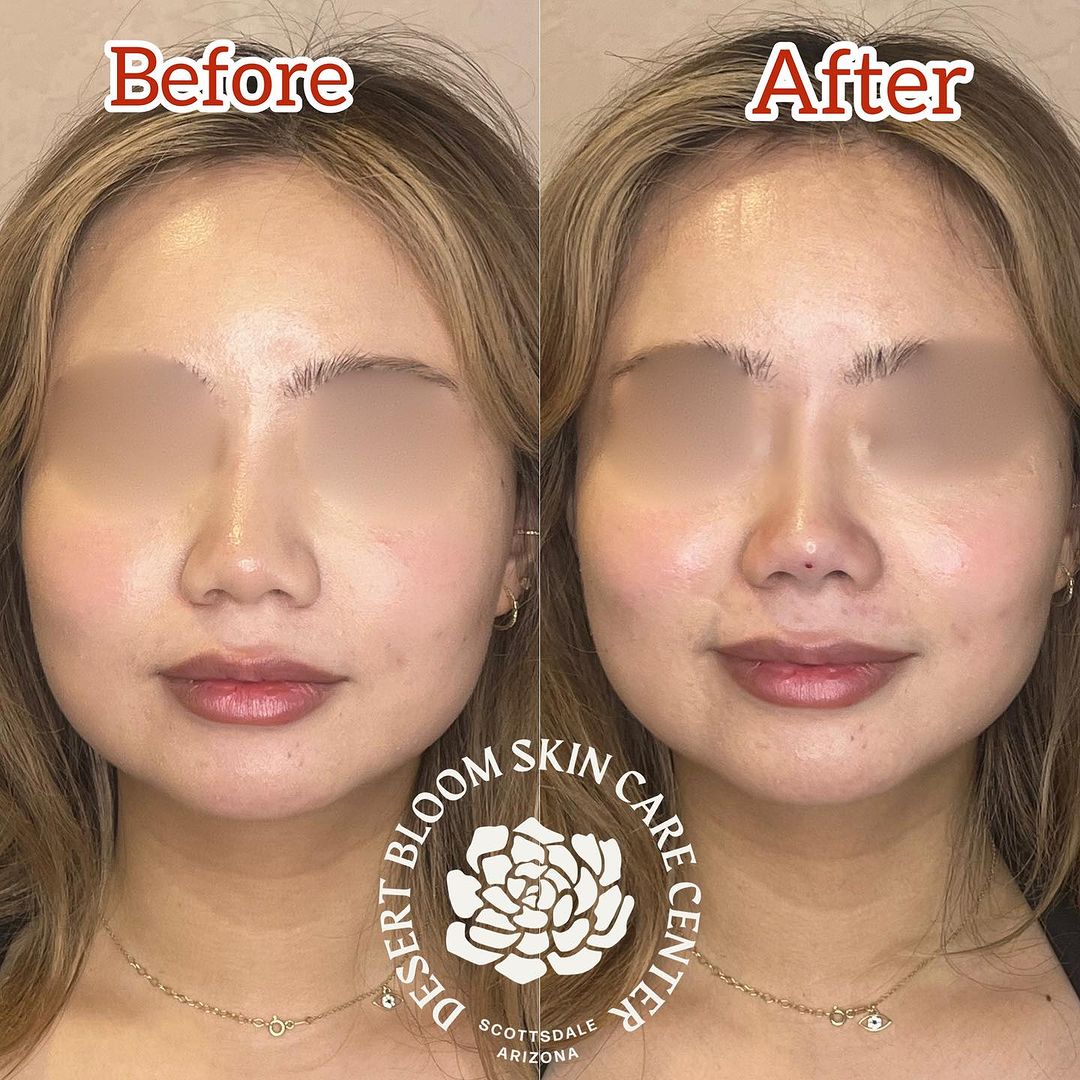 Full Face View
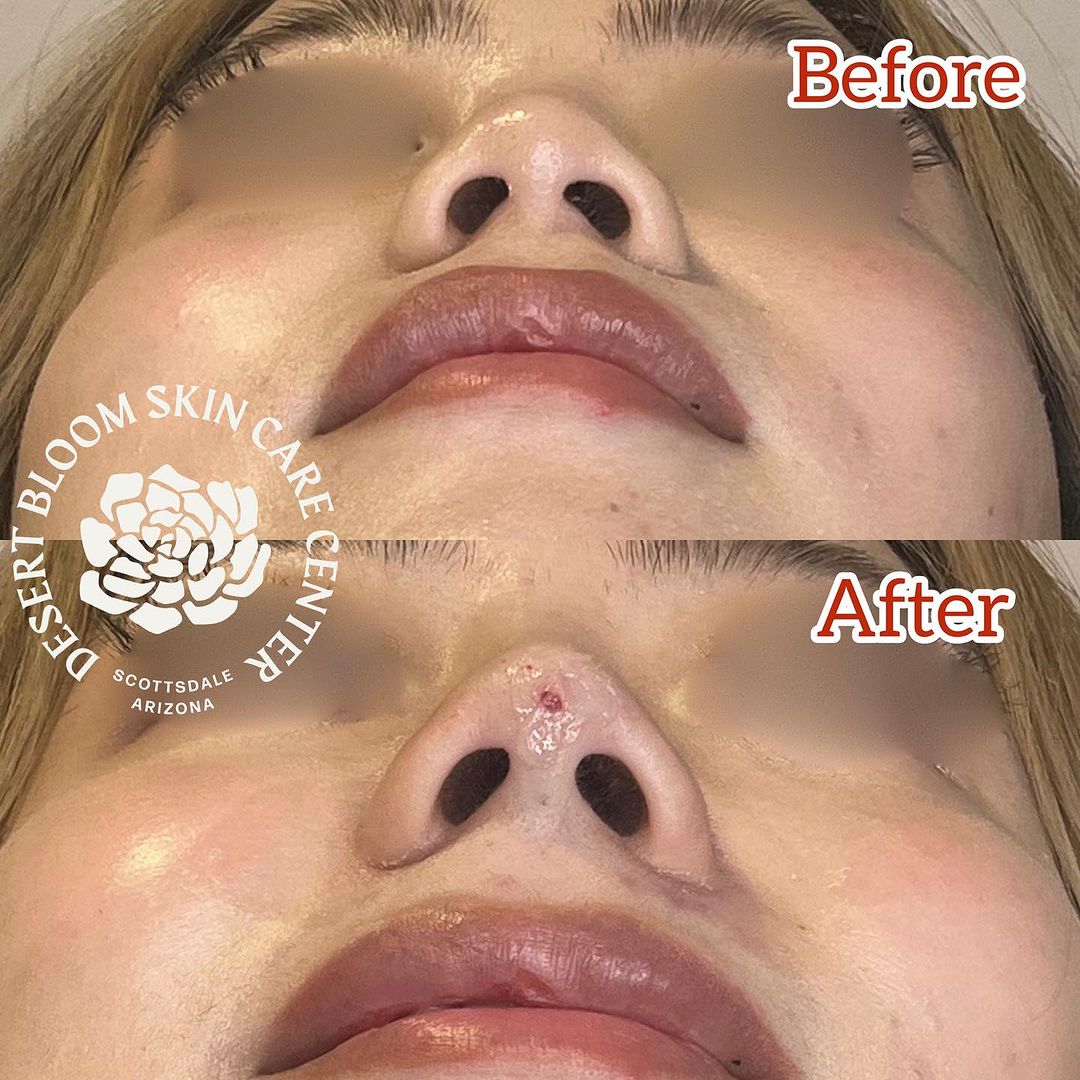 Nose Tip Detail
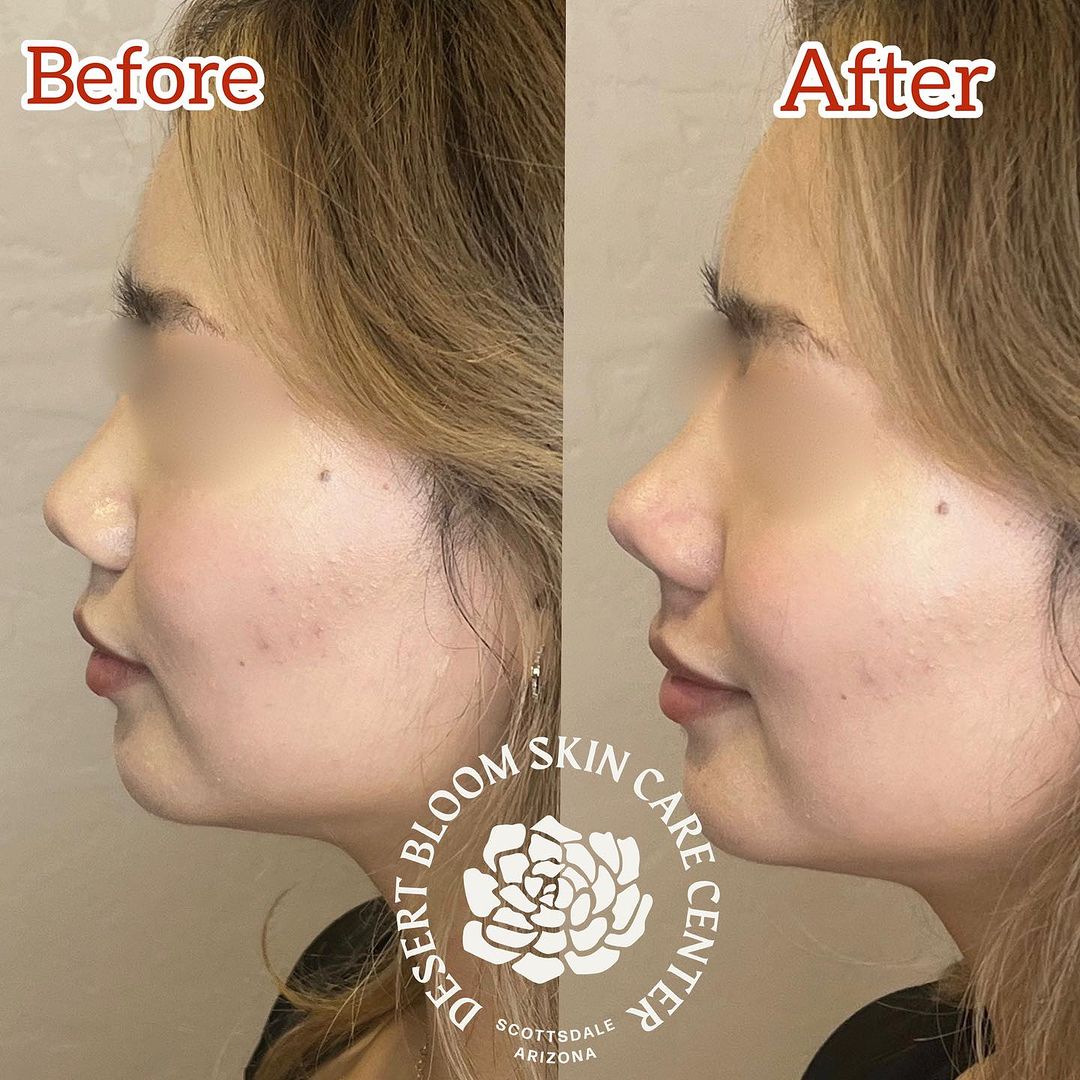 Left Profile
Cost of a PDO Nose Thread Lift in Scottsdale
At Desert Bloom, PDO nose thread lifting starts at $1,250. The final cost depends on the complexity of the anatomy, the number of threads required, and whether additional zones are addressed in the same session.
Factors that affect pricing:
Number of threads placed (more threads = more complex anatomy, higher cost)
Combination with bridge augmentation vs. tip-only treatment
Exact pricing is confirmed at your consultation, once Dr. Borakowski has assessed your anatomy and discussed your specific goals. There are no fees for the consultation.
See our complete treatment price list
Combination Treatments
PDO nose threading is frequently part of a broader treatment plan rather than a standalone procedure. Common combinations include:
Often addressed first for dynamic tip drop. If threads are still needed, Botox and threading complement each other for comprehensive nasal refinement.
Learn more →Coordinated lift across cheeks and nose in the same session for balanced facial rejuvenation.
Learn more →Upper face balance alongside nasal refinement for harmonious proportions.
Learn more →Full profile improvement from neck through nose in a coordinated treatment plan.
Learn more →Comprehensive multi-zone threading plan that addresses the entire face and neck together.
Learn more →The specific combination and timing are determined at consultation. Not every patient needs multiple procedures — sometimes the nose is the only concern, and that is perfectly appropriate.
Why Scottsdale Patients Choose Desert Bloom for Nose Thread Lifting
In January 2025, Dr. Borakowski presented a hands-on rhinoplasty masterclass at IMCAS World Congress in Paris — one of the largest aesthetic medicine conferences in the world. The focus of that masterclass was the specific techniques she uses for nasal thread lifting. This is not a service offered as an add-on. It is a procedure she has trained extensively in and teaches to other practitioners internationally.
Her approach to the nose is conservative by design. The nose is the centerpiece of the face. A correction that improves proportion without drawing attention to itself is a better outcome than one that is noticeable.
She also assesses candidacy honestly — including whether Botox alone might resolve the concern before threads are considered. Not every nose anatomy is suited to thread lifting. Some patients benefit more from Botox for dynamic tip drop, some from a small amount of filler, and some need a surgical referral. The consultation is an assessment, not a sales appointment.
Desert Bloom is a clinical aesthetics practice — not a med spa — located at 10752 N 89th Place, Suite 122B, in North Scottsdale.
Your Provider
Dr. Natalya Borakowski, NMD is the founder of Desert Bloom Skincare in Scottsdale, AZ, with 17 years of experience in aesthetic medicine.
She holds a Naturopathic Doctorate from Southwest College of Naturopathic Medicine and a degree in Cell Biology and Genetics from Arizona State University. Dr. Borakowski trained directly with Dr. Murat Tsintsadze, plastic surgeon — one of the world’s foremost authorities on thread lifting technique — in Tbilisi, Georgia. She presented PDO thread techniques at IMCAS World Congress in Paris and serves as adjunct faculty at the University of Bridgeport, teaching aesthetic medicine and regenerative dermatology to licensed practitioners. Learn more about Dr. Borakowski →


“When I assess a patient for nose threading, the first question I ask is not ‘what do you want changed’ — it is ‘what specifically bothers you.’ Sometimes the answer is a tip that drops when they smile — and the right treatment for that is often Botox, not threads. Getting that distinction right before we begin is more important than the procedure itself.”
Content reviewed by Dr. Natalya Borakowski, NMD. Last updated: March 2026.
Watch the Procedure
See Dr. Borakowski perform a PDO nose thread lift at Desert Bloom Skincare in Scottsdale.
Frequently asked questions
How long do PDO nose thread lift results last?
Results typically last 12-18 months. The PDO sutures dissolve in approximately four to six months, but the collagen they stimulate continues to provide structural support beyond that point. Duration varies by individual based on skin quality, collagen response, and anatomical factors.Does a PDO nose thread lift hurt?
Mild discomfort, well-managed. A topical anesthetic is applied to the skin first, followed by a small injectable block at the insertion site. During thread placement, most patients feel pressure rather than a sharp sensation. Tenderness at the nasal tip is common for the first two to three days and responds to over-the-counter analgesics.What is the recovery like after nose thread lifting?
The first three days involve mild swelling and tenderness at the nasal tip. Most patients return to daily activities within 24-48 hours. Glasses can go back on the bridge after 2-3 days if there is no bruising. Strenuous exercise should be avoided for two weeks. Full results stabilize within three to four weeks.Can Botox fix a drooping nasal tip instead of threads?
Yes, and in many cases it is the better option. When the tip drops primarily during smiling or speaking, the cause is usually the depressor septi nasi muscle pulling the tip downward. A small amount of Botox can relax that pull and lift the tip. At Desert Bloom, Dr. Borakowski evaluates this at consultation and recommends Botox first when appropriate. PDO threads are considered when Botox alone does not achieve sufficient correction.Why does Dr. Borakowski prefer PDO threads over fillers for the nose?
The nose is the highest-risk zone for injectable filler. Blood vessels in this area connect to the ophthalmic circulation, meaning a displaced filler particle can travel to the eye and cause vision loss. PDO threads are placed mechanically via a cannula, do not enter the vascular system, and cannot cause intravascular occlusion. For nasal augmentation, this safety difference is significant.Can a PDO nose thread lift fix a crooked or asymmetrical nose?
Subtle soft-tissue asymmetry, where one side of the tip sits slightly differently, can often be improved. Asymmetry caused by a deviated septum, asymmetric cartilage, or a previous fracture is structural and outside what threading can address. Dr. Borakowski assesses this at consultation and will tell you directly which type you have and whether threading is appropriate.What happens when the PDO threads dissolve?
As the threads degrade, the body’s collagen response fills in the structural support they provided. The aesthetic result does not disappear abruptly. It softens gradually over 12-18 months. There is no sudden collapse, no foreign material left behind, and no removal procedure required.Am I a good candidate if I’ve had rhinoplasty before?
Prior surgical rhinoplasty introduces scar tissue that changes the anatomy and can complicate thread placement. Revision procedures are generally more complex than primary ones. Dr. Borakowski will assess the degree of scarring, current tissue quality, and whether your goals are achievable with threading. It is not an automatic disqualifier but requires a more thorough assessment.Can I combine nose thread lift with other treatments?
Yes, in the right sequence with appropriate recovery time between procedures. A common approach combines PDO nose threading with Botox for the depressor septi nasi. Nose threading is also frequently paired with a PDO thread lift for the midface, a thread brow lift, or a neck thread lift as part of a coordinated non-surgical facelift plan. Combination and timing are determined at consultation.What is a hiko nose thread lift?
Hiko is a brand name for a type of PDO nose thread lift that originated in South Korea. The procedure is functionally similar, using absorbable PDO threads placed through the nasal tip to lift and support the nose. At Desert Bloom, we use medical-grade PDO sutures and focus on technique and placement rather than a specific brand system.What if a nose thread lift goes wrong?
Complications from PDO nose threading are uncommon but documented. The most frequently reported issues are mild asymmetry, thread visibility under thin skin, and rarely, infection at the insertion site. Unlike nose filler, PDO threads do not carry the risk of vascular occlusion or blindness. If you experience worsening pain, redness, or visible thread protrusion after the procedure, contact the clinic immediately.How is a PDO nose thread lift different from a liquid rhinoplasty?
A liquid rhinoplasty uses injectable dermal filler to reshape the nose by adding volume. A PDO nose thread lift uses absorbable sutures to reposition and support soft tissue without adding volume. The key clinical difference is the vascular risk profile: filler injections in the nose carry a documented risk of vascular occlusion, while threads placed via cannula do not. Both are non-surgical and temporary.Ready to Find Out If PDO Nose Threading Is Right for You?
At Desert Bloom, every plan starts with a 30-minute assessment — not a sales pitch. Dr. Borakowski will tell you directly what threading can realistically change, whether Botox might resolve your concern first, and whether another approach would serve you better.
Call (480) 567-8180 or book your complimentary assessment online.
References
- “Thread-Lift Sutures: Still in the Lift? A Systematic Review of the Literature.” Plastic and Reconstructive Surgery. 2018. DOI
- “Nonsurgical Rhinoplasty With Polydioxanone Threads and Fillers.” Dermatologic Surgery. 2020. DOI
- “Visual Loss Following Non-Surgical Rhinoplasty.” European Journal of Ophthalmology. 2021. DOI
- “Clinical Features of Skin Infection After Rhinoplasty with Absorbable Thread (Polydioxanone).” Aesthetic Plastic Surgery. 2020. DOI
This page is for informational purposes only and does not constitute medical advice. Results vary by individual. All medical procedures carry risks. A consultation with a qualified provider is required before any treatment. PDO sutures are FDA-cleared for soft tissue approximation; their use in aesthetic nasal threading is an off-label application.
PDO Nose Thread Lift price
- $1250 and up60-90 minutes
Consultation in skin care clinic
Desert Bloom Skincare Center offers personalized skincare consultation to help you achieve a flawless and radiant complexion. Book your appointment today and let our expert team of skincare professionals address your specific concerns and help you reach your skincare goals.
Similar treatments


Visit Our Scottsdale Aesthetic Center
Address
10752 N 89th Place, Suite 122B,Scottsdale, AZ 85260.
Phone:(480) 567-8180
E-mail:info@desertbloomskincare.com
Get Directions →Location & Directions
Desert Bloom Skincare is conveniently located in the Shea Corridor of North Scottsdale, within Edwards Professional Park I — minutes from HonorHealth Scottsdale Shea Medical Center and the Mayo Clinic Scottsdale Campus.
Areas We Serve
We proudly provide expert non-surgical rhinoplasty and PDO thread lifts to patients across the Southwest:
- ScottsdaleNorth Scottsdale · McCormick Ranch · Gainey Ranch
- Paradise Valley
- PhoenixArcadia · Biltmore · North Phoenix
- Fountain Hills
- Cave Creek & Carefree