
PRP Facial | Biofiller Services in Scottsdale, AZ
PRP facial Scottsdale with Velora HA-PRP biofiller: your platelet-rich plasma + hyaluronic acid. Restores volume, boosts collagen. $1,500/session.
Cost$1,500Procedure time60–90 minRecovery time1–3 days swelling
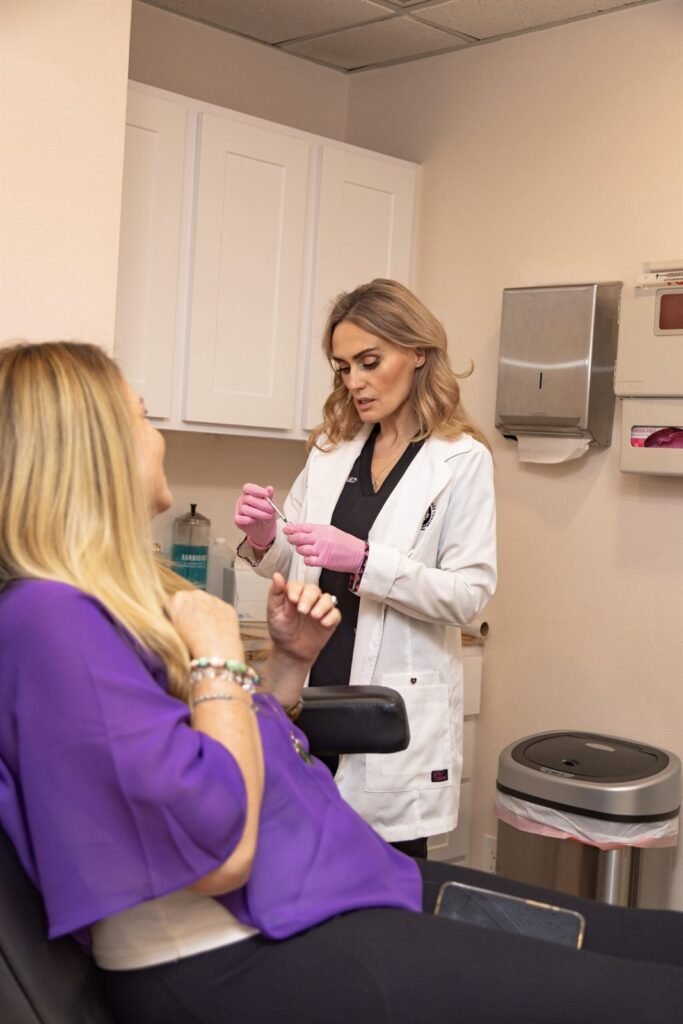
Key facts about PRP Biofiller
Scope. What: PRP biofiller, which is your own PRP combined with non-cross-linked hyaluronic acid (Velora HA-PRP Kit). Treats: Under eyes, nasolabial folds, cheeks, temples, lips, marionette lines, straw lines and jawline. Sessions: Often 2–3, commonly spaced 12 weeks apart depending on treatment plan.
Provider & candidacy. Results: Often last several months or longer; most patients do annual maintenance, but no one can predict how long your own collagen will last. Downtime: Minimal, with mild swelling for 1–3 days.
Downtime & how to start. Provider: Dr. Natalya Borakowski, NMD (every session, personally). Consultation: Complimentary. Book Your Consultation.
What is PRP Biofiller?
Some patients have used traditional filler and want a softer, more regenerative option. Others are simply drawn to treatments that rely more on their own biology and less on synthetic volume. Either way, the question is thoughtful: can volume restoration look natural and still support the skin over time?
PRP biofiller is one of several regenerative injectable options at Desert Bloom, alongside Sculptra collagen biostimulator, Radiesse calcium-based filler, and Bellafill long-lasting filler. Explore all dermal filler options at Desert Bloom.
PRP biofiller is a regenerative injectable gel created from your own blood combined with hyaluronic acid. Unlike traditional synthetic fillers, the regenerative platelet component comes from your own blood, while the hyaluronic acid helps create the gel structure and immediate volumizing effect.
At Desert Bloom, Dr. Borakowski uses the Velora HA-PRP Kit: a medical-grade system that combines your platelet-rich plasma with pre-filled hyaluronic acid to create a smooth, injectable PRP biofiller. The concentrated PRP supports tissue regeneration, while the HA provides immediate structure and hydration.
What sets PRP biofiller apart from standard PRP is structure. Standard PRP is a liquid that adds no volume and dissipates within days. The Velora system produces a viscous PRP gel that provides both immediate volume from the HA scaffold and sustained growth factor release that stimulates collagen production over months, gradually improving skin texture, fine lines, and firmness.
How PRP Biofiller Is Made
Your PRP biofiller is prepared fresh in office from a simple blood draw. The Velora system (Rize Up Medical) uses sterile blood collection tubes pre-filled with 2 mL of non-cross-linked hyaluronic acid, a gel separator, and 0.5 mL citric acid anticoagulant. Each tube is triple-sterilized and non-pyrogenic. The biofiller is made fresh from your own blood sample and has no shelf life.
A small blood sample is collected in office using the Velora kit.
The sample is spun to separate and concentrate platelet-rich plasma and growth factors.
The concentrated PRP and hyaluronic acid first go through LED activation, then are heated to a certain temperature and cooled. The result is a semi-firm gel ready to inject into your face.
The PRP biofiller is injected into targeted treatment areas using 32G mesotherapy needles or a blunt cannula, depending on treatment area and anatomy.
The HA provides immediate volume, while the PRP stimulates fibroblasts to produce collagen and elastin. This gives sustained skin rejuvenation from your own biology, building on the scaffold over the following months.
What Areas Can PRP Biofiller Treat?
A single PRP biofiller session typically yields sufficient product to address multiple facial areas.
- Under eyes / tear troughs: treated as part of the full-face PRP biofiller treatment, not on its own. Because the platelet component comes from your own plasma, some patients prefer it over fully synthetic filler approaches in this delicate area. Whether PRP biofiller or pure PRP/PRF is the better fit for your under-eye anatomy depends on degree of hollowing, skin quality, and other factors, and Dr. Borakowski reviews this at consultation. See tear trough filler for dark circles.
- Nasolabial folds: softens lines from nose to mouth as midface volume loss causes cheek tissue to descend.
- Cheeks / midface: restores soft contour and volume support in the midface. See facial sculpting with dermal fillers.
- Temples: softens hollowing in an area that often shows age-related volume loss earlier than many people expect.
- Lips: subtle plumping and softening of fine lines around the mouth; marionette lines.
- Facial acne scarring and texture concerns: may be considered in select cases when PRP biofiller is appropriate for the patient’s skin quality, anatomy, and treatment goals.
The PRP Biofiller Treatment at Desert Bloom
| Step | What happens | Time |
|---|---|---|
| Consultation | Dr. Borakowski evaluates your concerns, reviews health history, and discusses PRP biofiller goals | 15–20 min |
| Blood draw | A small sample is collected in office using the Velora kit | 5 min |
| Processing | Sample is centrifuged, then the PRP and HA are activated with LED light, heated and cooled into a gel | ~40 min |
| Injections | The PRP biofiller is injected into targeted treatment areas using fine needles or cannula | 30–60 min |
| Recovery | Minimal downtime, with mild swelling and possible bruising for 1–3 days. Most people resume normal activities the same day. Avoid blood thinning medications (aspirin, ibuprofen) several days before. Avoid strenuous exercise for 24 hours after treatment. | Not applicable |
Each batch is made fresh from the patient’s own blood, so there is no pre-made product and no shelf life. At Desert Bloom, a clinical practice, not a med spa, every step is supervised by Dr. Borakowski. The procedure takes 60–90 minutes, and the whole visit about 2 to 2.5 hours.
Wondering if PRP Biofiller suits your skin? Book a consultation with Dr. Natalya Borakowski, NMD
Who is a good candidate for PRP Biofiller?
Am I a Good Candidate for PRP Biofiller?
Good candidates for PRP biofiller
If several of these apply to you, PRP biofiller may be a good fit
- Mild-to-moderate facial volume loss, including cheeks or temples, with a preference for autologous treatment
- Patients who have had repeated filler treatments and prefer to reduce cumulative synthetic volume
- Patients experiencing progressive facial volume loss, including medication-associated facial slimming sometimes described as “Ozempic face”
- Patients who want regenerative skin rejuvenation alongside volume restoration
Have active infection at the treatment site.
Are pregnant or breastfeeding.
Have active autoimmune conditions or are on immunosuppressive therapy. This may be a contraindication; please discuss your specific diagnosis with Dr. Borakowski before treatment.
Have active cancer or recent cancer history.
Want dramatic immediate contouring (HA fillers better suited).
Patients interested in full-face volume may also explore aesthetic facial balancing. Those transitioning from synthetic fillers can learn about filler removal and correction. Every plan begins with a complimentary consultation.
Pairs Well With
Combining PRP biofiller with microneedling supports surface texture improvement alongside volumetric and regenerative effects.
Learn moreSculptra adds deeper, long-duration collagen biostimulation; PRP biofiller brings autologous regenerative signaling to the same treatment plan.
Learn moreHA fillers give precise contour where predictable volume is needed; PRP biofiller supports overall skin quality.
Learn moreWhat to expect during PRP Biofiller
The PRP biofiller procedure at Desert Bloom takes about 60 to 90 minutes, and the whole visit about 2 to 2.5 hours. Dr. Natalya Borakowski, NMD draws a small blood sample, spins it to concentrate the platelet-rich plasma, activates it with the hyaluronic acid from the Velora HA-PRP Kit using LED light and gentle heat, and injects the gel into the planned areas at the same visit.
- Consultation, 15 to 20 minutes: Dr. Borakowski reviews your health history and goals.
- Blood draw, 5 minutes: a small sample is taken in the office.
- Processing, about 40 minutes: the sample is centrifuged, then the PRP and hyaluronic acid are activated with LED light, heated and cooled into a gel.
- Injections, 30 to 60 minutes: topical numbing goes on first, then the gel is placed with fine needles or a blunt cannula.
Before your visit, avoid blood thinning medicines such as aspirin and ibuprofen. Plans often include 2 to 3 sessions, commonly 12 weeks apart.
What results can you expect from PRP Biofiller?
PRP biofiller results develop in two phases: immediate mild improvement from the HA scaffold on treatment day, then growth factor activity that sustains collagen stimulation over the following months, gradually improving skin texture, fine lines, and firmness. Growth factors from the platelet concentrate stimulate collagen production, contributing to smoother skin contours and improved skin quality over time.
Mild improvement from the hyaluronic acid scaffold; some swelling is normal.
Growth factors from the platelet concentrate begin stimulating fibroblast activity.
Collagen stimulation sustains improvement in skin texture, fine lines, and firmness.
Most patients do annual maintenance, but no one can predict how long your own collagen will last.
Often 2–3 sessions, commonly spaced 12 weeks apart depending on treatment plan. Each session builds on the last, so volume restoration and skin rejuvenation progress gradually by design. View biofiller before and after results.
PRP Facial | Biofiller Services at Desert Bloom
Price: $1,500. Your consultation covers your goals, the plan and the exact cost before anything is booked.
What is recovery like after PRP Biofiller, and what are the risks?
Recovery after PRP biofiller is short, and most people return to normal activities the same day. Mild swelling, and sometimes bruising or soreness at the injection points, lasts 1 to 3 days. Because the platelet part of the gel comes from your own blood, the risk of an allergic reaction is generally considered low.
- Avoid strenuous exercise for 24 hours.
- Some fullness on treatment day is swelling, not your final result.
- Bruising and soreness usually settle within 3 days.
Any injection into the face carries a small risk of vascular compromise, where product affects a blood vessel. Dr. Borakowski reduces this risk through product choice, injection depth and needle or cannula selection. Call Desert Bloom at (480) 567-8180 right away if swelling, bruising or pain gets worse instead of settling.
Questions about downtime or aftercare? Call us on (480) 567-8180
How does PRP Biofiller compare with other treatments?
PRP Biofiller vs Traditional Fillers
The right choice depends on your goals, health history, and preference for natural versus synthetic treatment options.
| Feature | PRP Biofiller (Velora HA-PRP) | HA Fillers (Restylane / RHA) | Sculptra |
|---|---|---|---|
| Material | Your PRP + hyaluronic acid | Synthetic hyaluronic acid | Synthetic PLLA |
| Allergic risk | Very low; patient-derived platelet component | Very low but possible | Very low |
| Immediate volume | Moderate (HA scaffold) | Strong, predictable | None (gradual) |
| Collagen stimulation | Yes (growth factors) | Minimal | Yes |
| Reversible | No, degrades naturally | Yes (hyaluronidase) | Degrades naturally |
| Results duration | Often several months or longer | 6–24 months | 2–3 years |
| Sessions | Often 2–3 | 1 per area | 2–4 |
The Velora HA-PRP Kit is not FDA-approved as a dermal filler device. The term “biofiller” describes its volumizing behavior, not a regulatory classification.
For precise, predictable contouring, hyaluronic acid dermal fillers remain the stronger choice. For regenerative volume restoration with autologous biology, PRP biofiller offers results built from your own body, with smooth, gradual improvement that enhances natural skin texture over time. Learn more about Sculptra collagen biostimulator, Bellafill long-lasting filler, and Radiesse calcium-based filler.
Who performs PRP Biofiller at Desert Bloom?
Your Provider: Dr. Natalya Borakowski
Dr. Natalya Borakowski, NMD personally performs every PRP biofiller session at Desert Bloom Skin Care. With 18 years in aesthetic medicine and a background in cell biology and genetics, her approach is anatomy-first and conservative by design, aiming for regenerative volume restoration that looks natural rather than overfilled.
“PRP biofiller is one of those treatments I believe in on a foundational level: you’re using your own biology to restore what time has shifted. The Velora system gives me a way to combine immediate structure with regenerative signaling in the same session. I review every candidate individually, because not every area responds the same way, and I want the results to be honest.”
Price
How much does PRP Biofiller cost in Scottsdale?
- PRP Biofiller$1,50060–90 min
PRP biofiller at Desert Bloom is $1,500 per session. The price is for the whole face. Your exact plan is confirmed during consultation based on treatment area, anatomy, and goals. Visit our treatment pricing page or call (480) 567-8180.
Questions
Frequently asked questions
What is PRP biofiller?
PRP biofiller is an injectable gel combining your own platelet-rich plasma with hyaluronic acid. It restores volume and stimulates collagen production using growth factors from your own blood. At Desert Bloom, Dr. Borakowski uses the Velora HA-PRP system by Rize Up Medical. Because the platelet component comes from the patient’s own blood, allergic reaction risk is generally considered low. The Velora HA-PRP Kit is not FDA-approved as a dermal filler device, and the term “biofiller” describes its volumizing behavior rather than a separate FDA dermal filler classification.
Is PRP biofiller the same as PRP?
No. Standard PRP is a liquid with no volume, and it dissipates within days. PRP biofiller combines concentrated PRP with hyaluronic acid to create a viscous PRP gel that provides both immediate volume from the HA scaffold and sustained growth factor release over months. The HA is what allows PRP biofiller to create filler-like volume and support skin rejuvenation, which standard PRP cannot do.
How long does PRP biofiller last?
Results often last several months or longer, and most patients do annual maintenance, but no one can predict how long your own collagen will last. Duration depends on treatment area, age, and individual response.
Does PRP biofiller hurt?
Most people report minimal discomfort. Topical numbing is applied before injections. Some bruising or soreness may appear at injection sites and typically resolves within a few days. Because PRP biofiller uses the patient’s own plasma, allergic reaction risk is generally considered low.
Can PRP biofiller be used under the eyes?
Yes, as part of the full-face treatment. PRP biofiller is a full-face treatment that includes the under-eye area; it is not used under the eyes on its own. Because the platelet component comes from your own plasma, some patients prefer it over fully synthetic filler approaches in this delicate area. However, whether PRP biofiller or pure PRP/PRF is the better approach for your specific under-eye anatomy depends on degree of hollowing, skin quality, and other factors. Dr. Borakowski reviews this individually at consultation.
Is PRP biofiller a natural injectable alternative to filler?
For some patients, yes. PRP biofiller restores volume and stimulates collagen using your own plasma combined with hyaluronic acid. The regenerative component comes from your own blood rather than from donor tissue or synthetic biostimulating polymers. It produces smoother skin gradually through cellular regeneration and collagen growth, making it a more autologous option for patients who prefer less reliance on synthetic volume.
How many PRP biofiller sessions do I need?
Often 2–3 sessions, commonly 12 weeks apart depending on treatment plan. Each session builds results as growth factors continue stimulating collagen production. Most people notice progressive improvement in skin texture and volume with each treatment, and the best results come from completing the full protocol.
Ready to talk it through? Book a consultation and we will look at your goals, explain your options and give you a clear plan and price.