PDO Threads for Neck & Turkey Neck | Scottsdale | Desert Bloom

PDO thread lift for neck and turkey neck at Desert Bloom Scottsdale. See how it works, real results and cost. Non-surgical solution by Dr. Borakowski.
Article’s contents
- Understanding PDO Thread Lift for the Neck
- Benefits of a PDO Thread Lift for the Neck
- 1. Skin Rejuvenation and Texture Improvement
- 2. Safe, Convenient Alternative to Surgery
- Comparing PDO Threads to Other Neck-Tightening Options
- Recovery and Aftercare
- Recovery Timeline
- Potential Complications
- Who Is a Good Candidate?
- PDO Thread Lift Cost for the Neck
- Frequently asked questions
- Is a PDO Neck Thread Lift Right for You?
Most people notice it in photos before they notice it in the mirror. The neck starts to shift before the face does, and skincare can’t reach it. For mild to moderate laxity, the non-surgical PDO neck thread lift is one of the few tools that lifts the soft-tissue/superficial fascial plane without taking you out of life for two weeks. The right candidate sees a meaningful refresh; the wrong candidate is told so honestly.
Understanding PDO Thread Lift for the Neck
Polydioxanone (PDO) thread lifting is a minimally invasive alternative to a surgical neck lift. Dissolvable threads are placed beneath the skin to lift and tighten sagging tissue along the jawline and neck. The threads stimulate collagen production over the following months, leading to improved skin elasticity and a more defined contour. Unlike surgical options, the procedure requires no general anesthesia and minimal downtime.
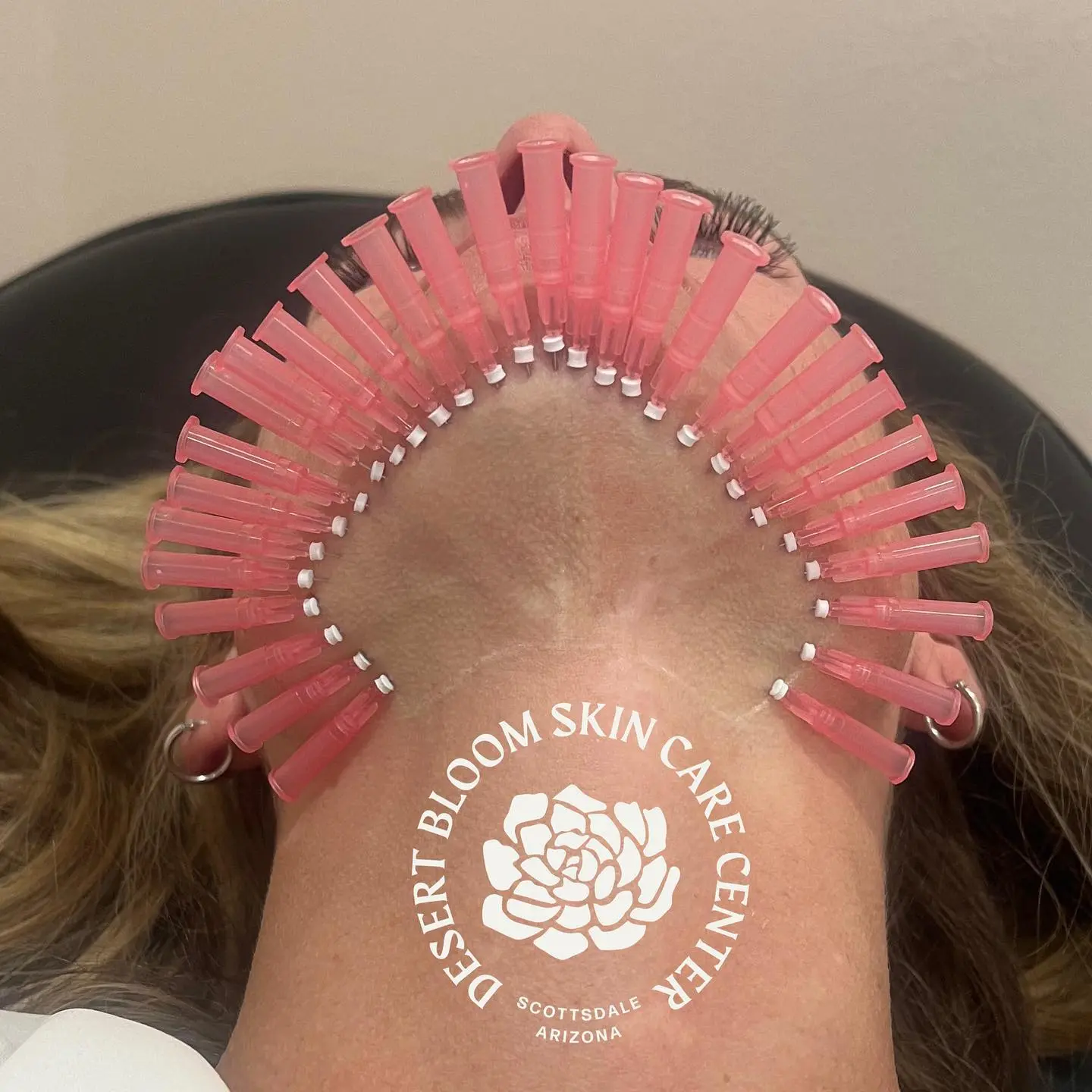
How it works: under local anesthetic, dissolvable threads are inserted with a fine cannula, then gently pulled to create the lifting effect. Over the next several months, the threads dissolve while the body’s collagen response continues, resulting in firmer skin that lasts well beyond the initial mechanical lift.
Have a question about your own skin? Book a consultation at Desert Bloom in Scottsdale
Benefits of a PDO Thread Lift for the Neck
1. Skin Rejuvenation and Texture Improvement
Beyond lifting, PDO threads improve the skin’s texture by reducing fine lines and supporting collagen remodeling at the dermal level. When combined with treatments like CO2 laser resurfacing or photofacials, results are even more pronounced because the plan addresses both sagging and surface concerns.
2. Safe, Convenient Alternative to Surgery
Unlike traditional facelifts requiring general anesthesia, PDO thread lifting uses only local anesthetic, which means less downtime, minimal discomfort and a quicker recovery. The procedure can also be combined with Botox or dermal fillers for more complete rejuvenation when clinically appropriate.
Comparing PDO Threads to Other Neck-Tightening Options
The range of non-surgical neck-tightening options has expanded significantly. Each option works on a different mechanism, and choosing the right one depends on the dominant tissue concern: laxity, surface skin quality or submental fat.
| Option | PDO Thread Lift | Surgical Neck Lift | RF Microneedling |
|---|---|---|---|
| Best for | Mild to moderate laxity, jawline softening, early turkey neck | Significant laxity, excess skin, advanced descent | Surface skin quality + mild texture issues |
| Mechanism | Mechanical lift + collagen induction | Excision and repositioning | Radiofrequency heat stimulates collagen |
| Anesthesia | Local | General | Topical / local |
| Recovery | Days to a week | 2–4 weeks | 1–3 days |
| Results last | Up to 2 years | Years (definitive) | 6–12 months per series |
Recovery and Aftercare
Proper aftercare is essential for the best result. To reduce swelling and bruising, apply cold compresses to the treated area for 10–15 minutes at a time during the first 48 hours. Avoid strenuous activities, exaggerated facial movements, saunas, and sun exposure for the first one to two weeks.
Sleep on your back when possible, follow your provider’s skincare guidance, and attend the scheduled follow-up appointment. With disciplined aftercare and stable weight, results typically last up to 2 years, and the collagen scaffold continues supporting the contour beyond the threads’ dissolution.
Recovery Timeline
Mild swelling and tenderness around insertion points. Cold compresses, rest, no strenuous exercise. Most patients return to desk work the next day.
Residual tightness or pulling sensation as tissue accommodates the threads. Bruising (if present) resolves. Resume light activities.
Threads integrate with surrounding tissue. Initial mechanical lift is visible and refining. Patients may resume normal exercise routines after week 2.
Biostimulation phase. New collagen forms around the dissolving threads, gradually improving skin firmness, texture, and contour.
Final results visible at 6 months and maintained through the collagen scaffold for up to 2 years total. Reassessment recommended around the 12-month mark.
Potential Complications
Every medical procedure carries potential risks, and a PDO thread lift is no exception. Bruising and swelling are common and easily managed. Infection is less common, and correctly placed threads do not migrate. See our companion guide on thread lift complications and how to handle them for details on what to watch for and how to respond.
The single biggest factor in reducing complication risk is choosing a qualified, experienced practitioner. Verify credentials, ask about thread types and technique, and discuss any previous facial procedures during your consultation.
Who Is a Good Candidate?
The ideal PDO neck thread-lift candidate has mild to moderate skin laxity, generally good skin quality, and realistic expectations. Patients with significant excess skin, advanced laxity, or substantial submental fat are typically better served by surgery or a combined approach: fat reduction first (RF microneedling), then threads to address residual laxity once weight and tissue are stable.
PDO threads tighten the soft-tissue envelope of the neck, but they don’t address heavy platysmal bands directly. If your primary concern is the cord-like vertical bands, the better-matched treatment is Botox into the platysma muscle or, for severe cases, a surgical neck lift. Threads can complement those approaches once the band itself is calmed.
Thread selection also matters: we use cog/barbed PDO, PLLA and PCL threads for lift and mono threads for skin-quality tightening. The combination is selected based on your tissue quality and primary concern.
If your primary issue is jawline softening rather than the neck specifically, see our jowling page. If submental fat is the dominant concern, see double chin. The right starting point matters as much as the technique itself.
PDO Thread Lift Cost for the Neck
The cost varies depending on the practitioner’s expertise and the number of threads used. At Desert Bloom Skin Care in Scottsdale, the procedure starts at $1,800. Practitioner experience matters more than price; complications far more often trace back to technique than product.
Frequently asked questions
Is a PDO neck thread lift painful?
The procedure is performed under local anesthetic, so most patients describe the experience as tolerable rather than painful. Some pressure and minor discomfort during thread placement is normal. Mild tenderness, tightness, or pulling sensation is common in the first week as the tissue accommodates the threads.
How long does a PDO neck thread lift last?
Most patients enjoy results for up to 2 years. The threads themselves dissolve over approximately 6 months, but the collagen scaffold they help build continues to support the lift well beyond that. Reassessment is recommended around the 12-month mark to plan maintenance.
How does a PDO thread lift compare to a surgical neck lift?
A surgical neck lift produces dramatic, long-lasting correction by removing excess skin and repositioning tissue, and it is the right choice for advanced laxity. A PDO thread lift is for mild to moderate laxity, with significantly less recovery (days vs. weeks) and lower cost, but more conservative results that don’t replace surgery for heavier descent.
Can a PDO thread lift fix a double chin?
Not directly. Threads address skin laxity, not submental fat. If a double chin is the primary concern, fat reduction comes first, with RF microneedling or surgery. Threads can then be added to address residual laxity once fat reduction is complete and weight is stable.
What can go wrong with a PDO neck thread lift?
Common minor issues include bruising, swelling, and short-term tenderness. Infection is less common, and correctly placed threads do not migrate. Our full guide on thread lift complications walks through warning signs and corrective options.
Can PDO threads fix platysmal bands (neck cords)?
No. PDO threads work on the soft-tissue envelope around the neck and do not directly address the platysma muscle bands that cause those vertical cord-like lines. If banding is your primary concern, Botox injected into the platysma (platysmal Botox) is the first-line non-surgical approach. For heavy or persistent bands, surgical correction may be necessary. Threads can complement either of those approaches once the band itself is treated, but they are not a substitute for addressing the muscle directly.
Will I see results immediately?
Yes, a mechanical lift is visible the same day. However, the most polished outcome appears at 3–6 months, after the collagen response has caught up to the initial lift. Photos taken right after the procedure overstate the early effect; six-month comparisons are more meaningful.
Have a question about your skin? Book a consultation at Desert Bloom in Scottsdale and we will explain your options, what to expect and the cost.