
Uneven Texture
Improve uneven skin texture at Desert Bloom Skin Care Scottsdale: Desert Reset treatments, microneedling, laser resurfacing for smoother, refined skin.
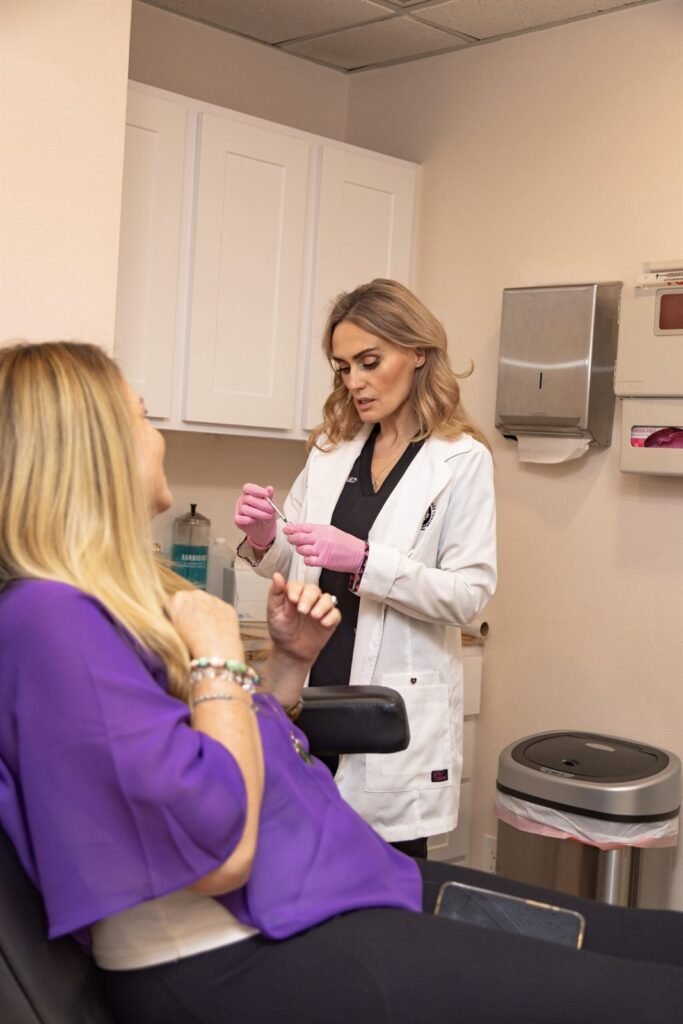
When Your Skin Feels Rougher Than It Looks in the Mirror
Uneven skin texture covers rough patches, a bumpy surface that looks like orange peel in certain light, visible pores that makeup settles into, and a dull, uneven tone that doesn’t respond to your regular skincare routine. The cause is rarely just one thing. Dead skin cell buildup, photoaging, enlarged pore congestion, and post-acne scar tissue can all produce the same rough feel with very different underlying causes.
Dr. Natalya Borakowski, NMD and our team approach textured skin the same way: identify the dominant driver first, then choose the treatment depth. Prescribing CO2 resurfacing when the issue is dead skin buildup, or a surface facial when the issue is deep acne scarring, produces the wrong result. Your treatment plan starts with a texture consult, not a procedure booking.
See also: Large Pores, Acne Scarring, and Hyperpigmentation.
Not sure which treatment fits? Book a consultation and get a plan for your skin
At a Glance
Scope: Desert Reset treatments, Elluminate Mini laser facial, PRX-T33, microneedling, RF microneedling (Virtue RF), and CO2 or Erbium resurfacing, chosen by texture driver and depth. Most concerns: 1–3 sessions.
Provider & candidacy: Dr. Borakowski and Veronika Morozova, aesthetician. Most treatments suit all Fitzpatrick types. CO2/Erbium ablative laser: Fitz I–III only. RF microneedling and PRX-T33 are the safer alternatives for Fitz IV–VI.
Downtime & how to start: Desert Reset treatments and Elluminate Mini: none. PRX-T33: no surface peeling. RF Microneedling: 1–3 days. CO2: 5–7 days (CoolPeel) to 10–14 days (deeper); Erbium: 5–10 days. Start with a skin texture consultation, where Dr. Borakowski maps the driver before any treatment is scheduled.
What Causes Uneven Skin Texture?
Most uneven texture has more than one driver, such as dead skin buildup layered on collagen loss, or pore congestion compounded by mild acne scar tissue. Understanding which driver dominates changes the treatment choice entirely.
Dead Skin Cell Buildup & Slow Cell Turnover
When the stratum corneum doesn’t shed evenly, dead cells accumulate and create a rough, dull surface. Dryness, dehydration, and a compromised skin barrier all slow cell turnover and worsen the rough feel. This is the most common and most correctable driver, and it is often addressed in a single session.
Treatment direction: Desert Reset treatments (HydraFacial Syndeo plus a gentle peel), Elluminate Mini laser facialSun Damage & Photoaging
Cumulative UV exposure degrades collagen and elastin in the dermis, causing the skin’s surface to lose smoothness and structural integrity. Pores appear enlarged, textural lines develop, and post-acne dark spots become more visible. Sun damage texture worsens over time with continued UV exposure and collagen loss.
Treatment direction: PRX-T33, CO2/Erbium Resurfacing (Fitz I–III), RF MicroneedlingLarge Pore Congestion & Excess Sebum
Sebum combined with dead skin cells stretches and fills pores, creating the orange-peel or bumpy texture visible on the nose, cheeks, and forehead. Closed comedones and milia add to the surface irregularity. Oil production and pore size are partially genetic, but congestion is highly treatable.
Treatment direction: Desert Reset treatments for extraction, RF Microneedling for pore tighteningAcne Scarring & Post-Inflammatory Texture
Shallow ice-pick, boxcar, or rolling scars from prior breakouts (especially cystic acne) leave a rolling, uneven skin surface that doesn’t respond to surface exfoliation alone. This is structural texture at the dermal level, requiring collagen stimulation or ablative resurfacing to address the scar tissue.
Treatment direction: RF Microneedling, Microneedling, CO2 Laser (Fitz I–III only), PRX-T33Treatment Options for Uneven Texture at Desert Bloom
Six treatments address uneven skin texture, from surface refresh with zero downtime to deep collagen build with a recovery window. Which treatment fits depends on which driver is dominant and how deep the texture concern sits in the skin.
Surface Refresh vs Deep Collagen Build
Improving skin texture requires matching treatment depth to the depth of the problem. Surface buildup clears with surface treatments. Acne scar tissue and photoaging collagen loss need collagen stimulation or ablative resurfacing to produce lasting results.
Surface Refresh
When texture is at the skin’s surface: dead cell buildup, pore congestion, dull uneven tone. Zero to minimal downtime.
Deep Collagen Build
When texture is driven by collagen loss, acne scarring, enlarged pore walls, or photoaging at dermal depth. Downtime varies by treatment.
Compare All Texture Treatment Options
| Feature | RF Microneedling | Microneedling | CO2 Laser | PRX-T33 | Desert Reset |
|---|---|---|---|---|---|
| Primary use-case | Acne scar texture, enlarged pores, laxity + texture | Surface + mid-dermal texture, acne scars, barrier | Deep photoaging, severe acne scar texture | Uneven tone, PIH, mild acne texture | Pore congestion, dead skin buildup, surface dullness |
| Texture depth addressed | Mid-to-deep dermal | Mid-dermal | Deep ablative | Dermal stimulation, no surface peeling | Surface |
| Fitzpatrick suitability | All types incl. Fitz IV–VI | All types | Fitz I–III ONLY | All types, especially IV–VI | All types |
| Sessions typical | 3 to 4 (spaced 4 to 6 wks) | 3–6 (spaced 4 wks) | 1–2 | Series of 4 | Maintenance monthly |
| Downtime | 1–3 days | 1–2 days | 5–7 days (CoolPeel) to 10–14 days (deeper) | None | None |
| Best candidate | Acne scar texture; Fitz IV–VI needing deep treatment | Mild to moderate texture; all skin types | Severe photoaging or acne scar depth; Fitz I–III | Uneven skin tone + texture; all skin types | Pore congestion + hydration; no recovery needed |
Safety, Skin Type, and Contraindications
Most texture treatments at Desert Bloom suit all skin types, but ablative laser resurfacing has Fitzpatrick restrictions that must be applied before scheduling. Disclose your full skin type, medication history, and any active skin concerns at the consult.
CO2 and Erbium ablative laser resurfacing are contraindicated for Fitzpatrick IV–VI skin types due to post-inflammatory hyperpigmentation risk. If you have medium-to-deep skin tone, RF Microneedling (Virtue RF), Microneedling, and PRX-T33 address deep texture and acne scar concerns safely across all Fitzpatrick types. Dr. Borakowski will confirm your skin type and appropriate treatment path at the initial consultation.
Active skin flare or open wounds: Active acne breakouts, open skin injuries, active rosacea flares, or use of isotretinoin within the past 6 months are contraindications for resurfacing treatments. Disclose all topical and oral medications at consultation, including retinoids.
Recent scar tissue: Textured skin from recent injury, surgery, or prior procedure requires a minimum of 6 months healing before any resurfacing treatment is considered. Premature treatment can worsen scar texture and increase risk of complications.
Questions
Frequently asked questions
What actually causes rough, bumpy skin texture?
Texture is rarely one thing. The most common drivers are dead cell buildup (slow turnover, no exfoliation), collagen loss in the dermis (post-30 thinning), past or active acne with scarring, sun damage that’s roughened the surface, and barrier compromise that’s left skin reactive and uneven. A patient might have two or three of these stacked. The first step in any consult is mapping which driver is dominant, because that determines whether you need surface treatment, dermal remodeling, or both.
Can I improve uneven skin texture at home?
Yes, partially. Consistent use of retinoids, AHAs (lactic, glycolic), and BHAs (salicylic) over 3–6 months can meaningfully improve mild surface texture. Mechanical exfoliation (a soft konjac sponge, not aggressive scrubs) helps too. What home care can’t do: rebuild collagen at the dermal level, treat boxcar or icepick scars, or address texture from sun damage that’s already structural. If you’ve been using retinol for a year and your skin still feels rough, the issue is past the reach of topicals.
Which treatment is best for acne scar texture?
It depends on scar type, scar depth and your Fitzpatrick skin type. Atrophic boxcar scars usually respond well to RF microneedling (Virtue RF), where needles and radiofrequency stimulate collagen at variable depths. Deeper icepick scars often need fractional CO2 laser, which suits Fitzpatrick I–III. Rolling scars respond to subcision combined with microneedling or RF microneedling. For Fitzpatrick IV–VI, RF microneedling and microneedling are the primary options. Post-acne dark marks (PIH) need a different approach, such as PRX-T33 or pigment-targeted treatment. Dr. Borakowski maps the scar pattern at the consult and chooses the treatment with the best evidence for your texture.
Is CO2 laser safe for darker skin tones?
CO2 and Erbium ablative laser resurfacing carry a higher risk of post-inflammatory hyperpigmentation in melanin-rich skin, so Desert Bloom recommends them for Fitzpatrick I–III. Patients with medium to deep skin tones have effective alternatives: RF microneedling, microneedling and PRX-T33 address deep texture and acne scarring without ablating the surface. Dr. Borakowski confirms your Fitzpatrick type before any resurfacing recommendation.
How many sessions does it take to see real results?
Microneedling and RF microneedling typically need 3–4 sessions spaced 4–6 weeks apart for visible texture improvement, with collagen remodeling continuing for 3–6 months after the last session. Fractional CO2 laser is often a single session, with results visible at 6–8 weeks once healing completes. PRX-T33 is a series of 4 treatments. Maintenance for stable results is usually every 6–12 months, depending on age and skin behavior. Texture work is structural, so a realistic timeline matters.
What is the recovery time for texture treatments?
It varies by treatment. Desert Reset treatments and PRX-T33: no downtime. Microneedling: 24–72 hours of redness, with normal makeup the next day. RF microneedling: 2–3 days of redness with small pinpoint marks at needle sites. Fractional CO2 laser: 10–14 days of significant downtime (peeling, oozing, redness), followed by 4–6 weeks of pinkness as new skin matures. We walk through the recovery commitment for each option at the consult so you can plan around weddings, work events, or travel.
How many sessions does it take to see results?
Surface treatments (the Desert Reset treatments and Elluminate Mini) show results immediately after a single session. PRX-T33 is a series of 4 treatments. Microneedling and RF microneedling typically require 3–6 sessions, with clear improvement visible after the second or third session. CO2 laser resurfacing produces dramatic results from a single treatment, with final results apparent after 3–6 months of healing. Multiple sessions are standard for any deep collagen-building treatment.
What is the recovery time for skin texture treatments?
Recovery ranges widely by treatment. Desert Reset treatments and Elluminate Mini: no downtime. PRX-T33: no surface peeling. Microneedling: 1–2 days of mild redness and sensitivity. RF Microneedling: 1–3 days. CO2 or Erbium ablative resurfacing: 5–14 days of significant peeling and redness, with sun sensitivity for weeks afterward. Dr. Borakowski discusses the full recovery protocol at consultation so you can plan timing around your schedule.
Ready to talk it through? Book a consultation and we will look at your goals, explain your options and give you a clear plan and price.